President Lincoln’s Misunderstood Ethics Crisis: The Great Sioux Uprising

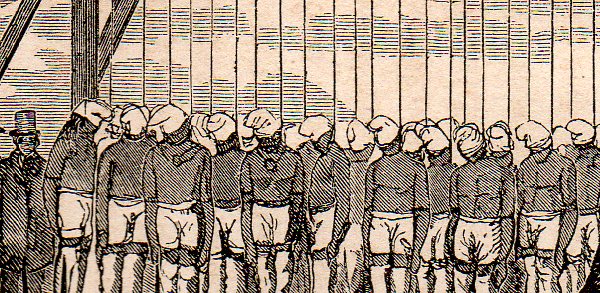
Dakota hanging

As part my so-far futile efforts to leave Ferguson in the rear view mirror, let’s revisit one of the Abraham Lincoln’s great ethical dilemmas during the Civil War, in which today’s date, December 1, was pivotal.

Minnesota’s Great Sioux Uprising, now usually called the Dakota-U.S. Conflict, was among the bloodiest Indian wars in the West, with hundreds of Native Americans, settlers and military casualties. The Sioux were defeated soundly, and the U.S. Army tried 303 Native Americans by military commission, finding them guilty of war crimes and sentencing them to death by hanging. Federal law required Presidential approval of the death sentences, and this was a problem Abraham Lincoln, the President at the time, did not need.

For it was 1862, and the Civil War was raging. This was a year full of Union defeats, indeed, disasters, like Fredericksburg, and both the war and Lincoln’s ability to lead it were in peril. Lincoln was also calculating all the political angles before issuing the Emancipation Proclamation. On top of the burdens of war and politics, he was coping with personal tragedy: his young son Willy had died nine months earlier, and Mary Todd Lincoln was teetering on emotional collapse from grief.
Now he had to decide whether to allow the execution of more than 300 Indians convicted in trials that were no better than kangaroo courts. Few Americans were concerned about the fate of the Native Americans, but Lincoln, with all of his other worries, took on the task of reviewing the trial records. What he found was manifest injustice.  Continue reading

Israel’s Home Razing Policy: You Disappoint and Depress Me

bulldozer

There are times, not many, but a sufficient number to make my existence significantly grayer than I wish it to be, when I feel as if my professional endeavors have been in vain, and indeed, a waste of time. One such instance was the widespread defense of torture during the Bush administration. Another has been the reaction of some readers here to my post about Israel razing the homes of the families of presumed terrorists. I do not see how anyone who grasps the basic principles of ethics as they are explored and explicated on Ethics Alarms daily can pronounce such a policy as justified, justifiable, or anything other than unethical. If regular readers hear can come to a different conclusion, I am either not doing my job well, or the job itself is not worth doing.

Yesterday, Human Rights Watch called on Israel to stop razing the homes of Palestinians accused of attacking Israelis. The group called it a war crime, and I don’t like the concept of war crimes generally. The New York based organization’s argument, however, is irrefutable:

“Israel should impose an immediate moratorium on its policy of demolishing the family homes of Palestinians suspected of carrying out attacks on Israelis. The policy, which Israeli officials claim is a deterrent, deliberately and unlawfully punishes people not accused of any wrongdoing. When carried out in occupied territory, including east Jerusalem, it amounts to collective punishment, a war crime.”

Putting the war crime label aside, it is wrong enough that the act punishes those who have done nothing wrong other than be associated with a wrongdoer. There is no ethical system under which such an act is ethically defensible. It is an abuse of power. It fails any standard of Kantian ethics, using human beings as a means to an end, and proposing a standard that would, if universally adopted, send civilization into barbarism. It even fails extreme utilitarian ethics, for this means doesn’t even achieve a desirable end. The Israeli army believes that the razings do nothing to stem terrorist attacks, and there is no way that contention can be disproved. It is simply Old Testament justice of the most irrational and brutal kind. Continue reading

The Harvard Law Student’s Formula For An Ethical Life

Yes, I hate my job, and yes, my clients are the scum of the Earth, and yes, my life sucks. But think of all the kids I can help get de-wormed!

Yes, I hate my job, and yes, my clients are the scum of the Earth, and yes, my life sucks. But think of all the kids I can help get de-wormed!

When I heard about the Harvard Law Record’s essay by law student Bill Barlow titled “Want To Save The World? Do Biglaw,” I mistakenly  assumed that he had made a persuasive, or at least coherent, utilitarian argument. After all, some fairly distinguished blogs took notice, and set about rebutting him. I was shocked when I actually read the piece. From what I can tell, Barlow understands nothing he was writing about—not the profession of law, not charity, not careers, not values, not law firms, not ethics, not money, not life. Why is someone who thinks like this in law school? What are law schools accepting people capable of writing this? Why is Harvard allowing someone this naive and shallow to display a Harvard degree?

This is literally all there is of substance to the article:

“So there you have it—be a corporate lawyer, donate 25% of your post tax income to charity, and save 150 lives a year, or de-worm 25,000 kids.  Alternatively, go into Public Interest, Government, or Academia, and feel warm and fuzzy about yourself.  Sadly, when people at this school talk about public service, they mean the latter, rather than the former.  If only people applied the same amount of cognitive skill used in just one LSAT logic game to the most critical question of what to do with their law degree, hundreds of lives could be saved.”

Ugh. Where to begin? Continue reading

The Third Circuit Rejects Judicial Immunity In The Case Of An Unethical One Man Justice System

crazy-judgeAs I predicted at the time, many readers became upset at the spectacle of judges declaring other, clearly unethical judges immune from civil suit as a result of the judicial immunity doctrine. They will be cheered, then, by this unusual decision by the Third Circuit in a decidedly odd case out of New Jersey.

The Third U.S. Circuit Court of Appeals ruled that a civil rights suit could process against Municipal Judge Louis DiLeo of Linden, New Jersey, who was not reappointed to his post after the incident sparking the action. The lower court judge had denied DiLeo’s motions to dismiss on the grounds of absolute judicial immunity  the 3rd Circuit agreed, saying that the plaintiff had made  a plausible claim that DiLeo’s actions “went beyond legal error, such that he was no longer functioning in his judicial capacity,” the appeals court said in the its opinion . Continue reading

The NCAA Withdraws Its Unethical Sanctions On Penn State

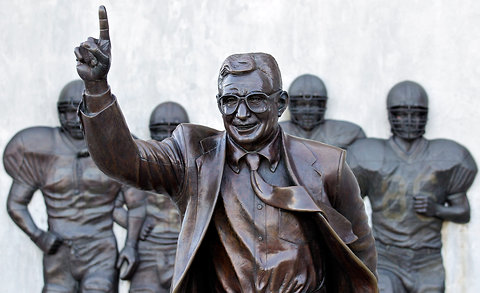
Paterno  Statue

To clear our palates of the nasty aftertaste from the welter of Ethics Train Wrecks crashing though our skulls of late, I thought it might be calming to note the latest settling of the wreckage from one of the worst ETW’s of them all: the Jerry Sandusky-Joe Paterno-Penn State Express.

Yesterday, the NCAA prematurely lifted its remaining sanctions on Penn State, deceptively declaring a victory and retreating because its sanctions were about to be declared illegal. I’m not going to write as much as I normally would about this, because I’d like to send you here, to Glenn Logan’s blog A Sea of Blue, where he covers the matter superbly. Glenn is a longtime visitor at eEthics Alarms, but his own blog keeps him too busy to comment as often as he once did. Not only is he ethically astute and a fine writer, he also is one of the rare bloggers who engages his commenters on a regular basis, a practice I obviously endorse.

When the NCAA decided to ignore its charter and the limits of its powers to slap Penn State with draconian punishment for conduct that had less to do with college athletics and more to do with the ability of a role model’s ability to corrupt a culture, I called it a capitulation to the mob, and wrote… Continue reading

Angelina Jolie’s Worse-Than-Useless Syrian Lament

JolieAngelina Jolie has a solution to the Syrian civil war, the strategy Barack Obama is searching for! She said, solemnly, I’m sure:

“We need to see a new attempt to resolve the conflict and greater efforts to support more than 13 million Syrians who are in desperate need. The reputation and credibility of the international system is at stake with so many thousands of lives threatened in Syria.

Yes! Why didn’t anyone think of that? We need to resolve the conflict! Of course, Jolie would never approve of armed intervention, because she believes in non-violence. No, what is needed is, well, an attempt. You can read the rest of her noble, fatuous, narcissistic plea here.

I’m certain this will further enhance Ms. Jolie’s status as a humanitarian among the actress’s many sensitive, peace-loving followers. It would not surprise me if she adds to her list of awards because of it. Her words are worthy of the Pope, but to be fair, making empty, inspiring statements full of non-committal goodness is his job.

Whatever Jolie thinks she is accomplishing by making such an obvious, useless, pointless statement and having the news media duly report it as if she knew anything whatsoever about geopolitical tensions or could begin to suggest what “attempts” would consist of,  what she is in fact doing is exploiting an international tragedy to gild her own perceived virtue. Her statement advances no objective or contributes any wisdom. Indeed, it interferes with legitimate efforts to deal with this difficult situation, because such statements mislead the public about the painful, indeed ugly trade-offs and choices necessary to deal with despots and evil in the world.   I’m sure, if pressed to suggest what attempts she, in all her Hollywood-infused wisdom regarding foreign affairs, would advocate, she would insist that they be humanitarian in nature, and take into consideration the needs of all parties, as well as the root causes that lead to such violence and disruption. In other words, something. Continue reading

Wishing Ethics: What Should We WANT The Outcome To Be In Ferguson?

finger-crossed

The simple answer to the question in the headline is: we should all want the truth to come out, whatever it is, and be dealt with honestly and justly. I don’t think that result is possible, unfortunately, just as it proved impossible in the Martin-Zimmerman tragedy.If the truth could be determined, however…if an experimental, advanced video recorder just happened to capture everything that occurred between Officer Wilson and Mike Brown, including in the squad car; if it captured the incident from all angles, and we could hear and see everything that transpired between them, what would we want that to be, recognizing that the tragedy cannot be undone?

Would we want it to show that Mike Brown was murdered, that he was fleeing for his life when he escaped the car, then turned, fell to his knees ( as at least one witness claims) and was gunned down with his hands in the air? Obviously many Americans, including Brown’s family, the Ferguson protestors, many African-Americans, civil rights activists, police critics, politicians and pundits, have an interest in seeing this be the final verdict of investigators, for a multitude of reasons. The grieving family wants their son to be proven innocent of any fault in his own death. Others, especially those who prematurely declared Officer Wilson of guilty of “executing” Brown, have a strong interest in being proven right, for even though it would not excuse their unfair and irresponsible rush to judgment, such a determination would greatly reduce the intensity of criticism leveled at them.

[Side Note on Ethics Dunce Jay Nixon: That won’t stop the criticism here, however: Whatever the facts prove to be,  Gov. Jay Nixon’s comments are indefensible, and inexcusable. Now the Democrat is denying that they meant what he clearly meant to convey: calling for “justice for Brown’s family” and a “vigorous prosecution” can only mean charging Wilson, and that is what those calling for Wilson to be arrested took his comments to mean. If the Governor didn’t mean that, as he now claims, then he is 1) an ignoramus and 2) beyond incompetent to recklessly comment on an emotion-charged crisis in his state without choosing his words carefully.]

Or should we hope that the facts exonerate Wilson? After all, shouldn’t we want the one living participant in this tragedy to be able to have some semblance of a life without being forever associated with villainy? Certainly his family and friends, as well as member of the Ferguson police force who want their own ranks to be vindicated, and police all over the nation who have had their profession attacked and denigrated in the wake of the shooting, fervently hope that the narrative pushed by the demonstrators is proven wrong. Others want to see Wilson proven innocent for less admirable reasons. They want to use the incident to condemn police critics, and undermine and discredit civil rights advocates, especially long-time ideological foes like Al Sharpton. They want Eric Holder to look biased, (he looks biased anyway, because he appears to be taking sides) and to make the case—one that a single episode neither supports nor can possible rebut—that police do not have itchy trigger fingers when their weapons are pointed at young black men.

From the standpoint of ethics, which means that the best outcome will be the one that does the most good for society, the choice is complex.  Continue reading

When Ethics Becomes Impossible: Captain Johnson’s Ferguson “Solution”

Ron Johnson

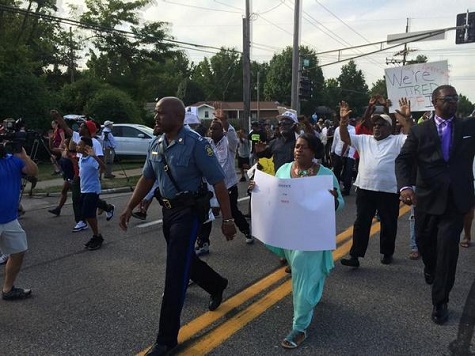
Yesterday,  Ferguson, Missouri’s newly appointed police commander, Capt. Ron Johnson of the Missouri State Highway Patrol, walked with those protesting the shooting of African American teenager Michael Brown.The police shooting in Ferguson this week and its aftermath became an instant Ethics Train Wreck, its carnage seeded by tragedy, local tensions, growing distrust of police nationwide, worsening race relations exacerbated by Democrats and the media resorting to race-baiting to stifle criticism of the Obama administration, as well as such episodes as Occupy confrontations with police in Oakland and the Trayvon Martin-George Zimmerman fiasco.

Johnson’s actions calmed what had been escalating violence, with community protests spilling over into looting, irresponsible and inflammatory statements being made by both police and protesters, and an excessive, military-style response by St.Louis police that treated sometimes over-enthusiastic demonstrating as if it was Rodney King-style rioting. What Johnson did worked, in other words, and that’s both the best and the worst that can be said about it. Ethically, it was the best available option. When a situation reaches the ethics chaos stage that Ferguson has, however, this is rough utilitarianism at best. Continue reading

Sparing Bin Laden: Ethics Lessons From Bill Clinton’s 2011 Admission

In an alternate universe, this missile strike prevented 9-11. It doesn't matter.

In an alternate universe, this missile strike prevented 9-11. It doesn’t matter.

Sky News host Paul Murray revealed a previously unreleased audio recording of Bill Clinton speaking to a group of Australian businessman in Melbourne (undoubtedly for an obscene fee, since the Clintons were poor as church mice back then, but I digress) on September 10, 2001.  Clinton’s fascinating answer to an audience question about terrorism has raised a lot of eyebrows:

“Osama bin Laden — he’s a very smart guy, I’ve spent a lot of time thinking about him, and I nearly got him once. I nearly got him. And I could have gotten, I could have killed him, but I would have to destroy a little town called Kandahar in Afghanistan and kill 300 innocent women and children. And then I would have been no better than him. And so I didn’t do it.”

Observations from an ethics perspective: Continue reading

Oh, NO!!! “The Mikado” Ethics Again (Political Correctness Division)!

[Here…listen to this while you read the post.]

I am apparently the official protector of Gilbert and Sullivan’s “The Mikado” from ridiculous accusations of ethics offenses, so once again, I will charge into the breach. No thanks needed, Mr. Gilbert, Sir Arthur—I owe you debts that can never be repaid.

In a brain-endangering op-ed for the Seattle Times, expresses the opinion that the operetta is a “racial caricature,” and thus “every snap of the fan was a slap in the face.” The nature of the complaint has old origins: the original show in 1885 nearly caused an international incident, as Japan registered an official complaint to Great Britain claiming a grievous insult to its people. W.S. Gilbert, who was skilled at such things (a few years later he stifled French indignation over a song in “Ruddigore” that pretended to make fun of the French while actually ridiculing British bravado), explained that “The Mikado” in no way ridicules anything about Japan or its people, but is entirely a witty and original satire on everything British. This was true then, and is true now. Then, however, people, including the Victorian era Japanese, were able to see distinctions, and were not seeking victim status and leave to play public censor under the authority conferred by political correctness. Today, people like Ms. Chan are not so easily calmed.

Thus is art harmed, entertainment stifled, laughter stilled and music forgotten. A good argument could be made that “The Mikado” is the greatest musical comedy entertainment ever written.* It certainly caused the biggest international sensation (the closest rival is another Gilbert and Sullivan classic, “H.M.S. Pinafore”): it is estimated that by the end of 1885, at least 150 companies in Europe and the U.S. were producing the satire. As recently as the 1960s, it was credibly claimed that a “Mikado” was going on somewhere in the world every minute of the day.

The show is fun in every respect: comedy, music, lyrics, satire, characters. It is also fun to act in and produce, for children as well as adults. Unfortunately, several factors have led to the gradual scarcity of productions in recent years, from the cyclical (Gilbert and Sullivan go out of style, but always come back) to the ridiculous ( it seems like every production has to cope with some absurd controversy, like the 2011 Montana production that was accused of threatening Sarah Palin’s life). Political correctness aversion has been the biggest factor in making the very best G&S show rare while productions of Broadway musical junk flourish, however. Since the characters are supposedly “Japanese,” shouldn’t all the singers be Asian? Isn’t Asian make-up offensive like blackface? Oh, hell, let’s just do “The Pirates of Penzance.”

From Ms. Chan: Continue reading