Penn State Primer: 15 Ethics Alarms on the Duty to Rescue and the Bystander Problem

Tiring of the smug and remarkably vicious Paterno defenders who have designated Mike McQueary for infamy because he failed to stop the Penn State child rapist in action, and who have accused me of supporting such inaction in rescue situations when my position, record, writings, belief and life experience proves the opposite, I offer these previous Ethics Alarms posts on the topics of rescue and bystander inaction. It is a useful, if sometimes disturbing review of various aspects in a complex issue. I don’t really expect the commenters previously referenced to allow rational thought to interfere with their certitude and vendetta, but most visitors here are not so wired.

A new post, focusing especially on McQueary, will be along soon, but today is Veterans Day, and I have my own duty to attend to: honoring Maj. Jack Marshall, Sr., 1920-2009, WWII veteran, Silver Star, Bronze Star and Purple Heart veteran, a true hero his entire life, in every way imaginable.

I am quite confident that he would not only have stopped Jerry Sandusky from molesting the boy, he might well have shot him.

Here are the 15 selected essays: Continue reading

Character, American Values and the Defiant Driver

"Drive, you say? OK, jerk, I'll drive. Watch THIS!!!"Character, the good kind, is a foundation of traits, instincts and values that support, inspire and activate ethical conduct.

A person may know the right thing to do, but without the courage to do it, it will not get done. Empathy, similarly, is a necessary quality if the Golden Rule is going to be any guidance at all. Determination and diligence are not ethical by themselves, for one can be determined and diligent in the pursuit of evil ends. Not applying diligence to a task one has taken on, however, will lead to a breach of trust. Although they are not exactly components of what we call character, intelligence and common sense are essential to the character trait of competence, which in turn is indispensable to behaving ethically, for it is difficult to make ethical decisions without the ability to make good decisions.

I was prompted to think about the links between character and ethics when I read a news story out of Kansas City. A woman driving her car in traffic was stunned when a man suddenly jumped on the hood of her vehicle, pointed a gun at her, and told her to drive. Continue reading

Ethical Quote of the Week: Angels Pitcher Jered Weaver

Is enough ever enough?

“How much more do you need? Could have got more, whatever. Who cares? If $85 million is not enough to take care of my family and generations to come, then I’m pretty stupid.”

—Los Angeles Angels pitching ace Jered Weaver,after signing a 5 year, $85 million contract to stay with Angels.

Weaver hardly signed for chicken feed, but his statement should be heeded by greedy athletes and corporate executives alike. After next year, he probably could have demanded another two or three million dollars a year or more from the highest bidder for his services, in exchange for leaving a team and a city where he is appreciated and comfortable, putting additional pressure on himself, and using funds that otherwise could pay the salaries of many lower paid club workers who might end up with no jobs at all. Continue reading

The Saga of Heidi Montag and Spencer Pratt: Life in a Culture That Values Lies

Post-surgery Montag, trying to stay famous

If you have taste, a job, and a brain, or don’t read a lot of “Us” and “People” in doctors’ offices, you may never have heard of Spencer Pratt and Heidi Montag. They were stars of the once popular TV reality show “The Hills,” and despite being two vacuous and shallow individuals of minimal common sense, talent or education, they presumed that they could ride the “famous for being famous” gravy train in celebrity-and-media obsessed America indefinitely. They couldn’t.

The Daily Beast features a horrifying interview with the pair, which is worth reading for its ethics lessons on several levels. For one thing, the degree to which the culture of dishonesty has progressed in America  surprises even me. Allowing yourself to be presented to the public as a completely manufactured personality in exchange for fame and fortune has always been part of the celebrity experience, but the reality show phenomenon has removed it from everything else—now the lie is all there is. And there are thousands upon thousands of attractive, young dimwits who actually aspire to such ersatz enshrinement in the culture as their life’s pursuit. Paris Hilton and the Kardashian sisters are these deluded individuals’ goddesses, despite the fact that 1) there are not 500 IQ points among the four of them and 2) they all have the benefit of rich trust funds to fall back on, so their jaunts as pop culture comets are more like diversions than careers, though profitable ones. Continue reading

Wanted, Desperately Needed, and Lacking: Professionals, Adults and Values in the Media

What? Is there something wrong?

There is not a lot to say about the graphic above, other than:

  1. It is crude.
  2. It is funny.
  3. It is intentional.
  4. It is inappropriate for a general audience newspaper
  5. A competent editor should have caught it, and
  6. The graphic artist needs a warning and a reprimand.

The media, its staff, celebrities and assorted vulgarians and boors seem to be determined to make public square America as uncivil as a locker room, as crude as a peep show, and as juvenile as a junior high school farting contest. Professionals, including USA Today editors and publishers, can either do their duty and discourage this intentional rudeness in their products and services, or shrug it away. Similarly, our culture needs to decide if we are going to just define our deviancy down some more, and accept gratuitous sexual innuendo that will gradually make the whole population into a bunch of snickering Beavises. Continue reading

Ethics Malpractice from “Dear Margo”: The Tale of Witchy, Tubby and Sue

"Well sure---his inner qualities are much more important to me now that he's so hot!"

I read a lot of advice columns, which often involve ethical issues and very often expose the ethical incompetence of the supposed experts who write them. Some advice columnists are ethically spot-on with regularity, like The Washington Post’s Carolyn Hax. Some, like the past and present”Ethicists” of the New York Times, are off-base almost as often as they are on. Then there are the advice mavins like “Margo,” in the Boston Globe. I don’t know how such people get to be advice columnists, but I suspect it either involves picking names out of a hat or the exchange of sexual favors. [Full disclosure: I give out personal ethics advice myself over at AllExperts.com, when a legitimate questioner can find me—ethics isn’t listed as one of the site’s topics—and when the question isn’t a thinly veiled homework question, which it usually is.]

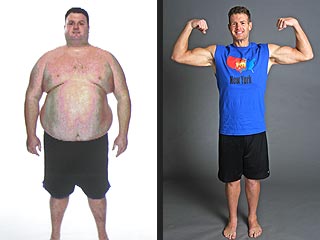
As an example of ethics malpractice, consider this question posed to Margo. “Sue” wrote that she had broken up with her ex-boyfriend over arguments about his weight and eating habits, which “grossed her out.” Eight months later, he’s fit and fabulous, and has a new girlfriend.  “I really would like him back because he’s hot and slim,” Sue writes, plaintively. “How can I step on his witchy new girlfriend so I can get him back?” Continue reading

No Excuses and No Mercy For Lance Armstrong

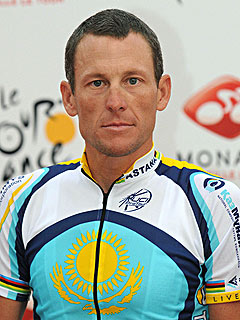
Sorry, Lance…good guys don’t cheat.

Back when Barry Bonds was still playing baseball, a sportswriter mused about why it was that everyone assumed  Bonds was a performance-enhancing drug cheater despite his protestations to the contrary, while most Americans and sports journalists brushed away similar allegations regarding Lance Armstrong. Both competed in sports with acknowledged steroid abuse problems; indeed, the problem in bicycle racing was presumed to be more pervasive than in baseball. (A few years later, with the banning of multiple Tour winners, the presumption became a certainty.) Both athletes had improbable late career improvements in their performance to reach previously unimaginable dominance in their respective sports. Both had to explain or deflect multiple credible accusations of cheating and circumstantial evidence that suggested that they were doping. Both claimed they had never failed drug tests, and there were good reasons to doubt the denials.

So why was Bonds a villain by consensus and Lance an untouchable hero? The sportswriter explored many theories (Apologies: I cannot locate the article. If someone can, please send it), among them the greater popularity of baseball over cycling, Bond’s startling physical transformation into a behemoth while Armstrong remained cyclist-sinewy,  Armstrong’s inspiring story as a cancer survivor, Armstrong’s philanthropic work,and the fact that Bonds, unlike Armstrong, was black. The biggest difference, however, and to the writer the key one, was that Armstrong acted the role of a hero, while Bonds refused to. Armstrong was friendly and accommodating, while Bonds was angry, intimidating and antagonistic. Armstrong seemed like someone who played by the rules, and who lived his ethical values. Bonds seemed like a rebel, one who wouldn’t hesitate to break the rules for his own benefit. In short, the public wanted Armstrong to be the hero he seemed to be, so they ignored the evidence linking him to performance-enhancing drugs.

After last Sunday, the disparate public perception of Bonds and Armstrong, always illogical, became unsustainable. Continue reading

Comment of the Day: “The Atheist, the Graduation, and the Prayer”

Tgt, the Ethics Alarms resident atheist, backs graduating high school senior Damon Fowler, voting for “hero” rather than the jerk-in-training assessment of my original posts on the topic, to be found here and here.

“I think impeding the encroachment of religion into schools is important, especially when it is unpopular to do so. While Damon is not actually hurt from school backed prayer, some of the other listeners will be: anyone who gets the impression that the school and government back Christianity, anyone who feels they must believe to fit in.

“The danger in this prayer isn’t that Damon will be hurt or his rights violated. The danger is to the weaker people unwilling or unable to stand up against this behavior. The danger is to the children not yet graduated, that they will learn in an environment that sees a place for superstition and pandering at a ceremony that should be celebratory.”

More on “The Atheist, the Graduation, and the Prayer”

Damon Fowler, School Adminstrator-In-Training?

Either by design, bias, or because I was not sufficiently clear (always a distinct possibility), a lot of readers seem to have misunderstood the central principle in my post about Damon Fowler, the Louisiana high school senior who singled-handedly bluffed his school out of including a prayer in his graduation ceremonies. Let me clarify.

The post is only incidentally about atheism vs. religion. The ethical issue arose in that context, but it just as easily could have been raised in other circumstances. The ethical values involved here were prudence, tolerance, self-restraint, proportionality, consideration, generosity, and empathy. Fowler’s actions assumed that preventing what he believed was a violation of the Constitution’s prohibition on the government favoring one religious belief over another justified ignoring all of these. They don’t, and the same conclusion applies whether we are discussing a technical legal violation, a breaching of organizational rules, or personal misconduct.

Anyone who reads Ethics Alarms knows that I believe that the culture only becomes and stays ethical if all its participants accept the responsibility of flagging and, when necessary, condemning and stopping harmful societal conduct, as well as unethical personal conduct that will be toxic to society if it becomes the norm. Nevertheless, society becomes oppressive and intolerable if every single misstep, offense, violation, possible violation, arguable violation or mistaken judgment is cause for confrontation, conflict and policing, without regard for context and consequences. Indeed, much of the challenge in ethical analysis involves deciding what kind of misconduct matters, even once the question of whether something is misconduct has been settled. Continue reading

Abuse of Power and Press Intimidation At The White House

"Hey, Herald! Get with the program!"

In response to a complaint by the Boston Herald about the limited access its staff would have to President Obama during his visit to Boston,  Matt Lehrich, an Obama aide, attributed the treatment to the White House’s objections to a front page opinion article by former Massachusetts Governor Mitt Romney in which he attacked the administration’s job-creation record. “I think that raises a fair question about whether the paper is unbiased in its coverage of the president’s visits,”  Lehrich told the Herald in an email.

And maybe it does. Then again, there is a mountain of evidence that hundreds of media outlets, including four of the five major TV news organizations, the New York Times, The Washington Post, and many others, are also biased in their coverage of everything this president does–favorably. Apparently the White House, which has already disgraced itself by repeatedly attacking the one critical network by name for the state offense of not falling into line, can’t abide the fact that some print journalists are as prone to be critical of him as Chris Matthews is likely to get tingles up his leg every time Obama opens his mouth. Their response? Make it harder for the unfavorably biased journalists to cover the news. Continue reading