Pearl Harbor Day, 2025

Remember.

I have nothing unique to add about the attack by the Japanese on Pearl Harbor on this date in 1941, except to note that the lack of mention of it in the news media today is disheartening and, I believe, inexcusable. I’m estopped from complaining too much however: to my amazement and shame, Ethics Alarms has never devoted an entire post to the event since I began writing it 16 years ago. I’ll begin my amends now.

Here is the History Channel’s article on the attack, one of the rare, epochal  events of which it can be said without dispute changed everything….

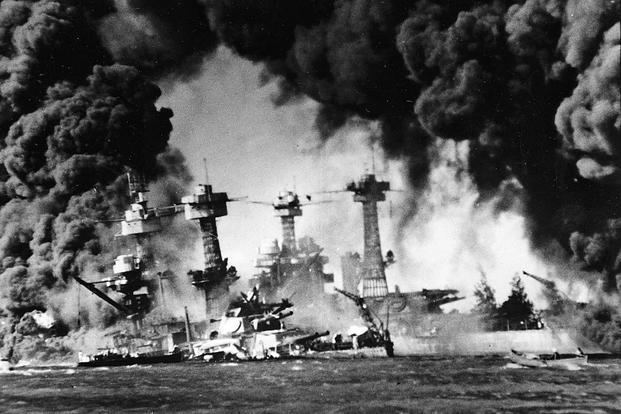
On December 7, 1941, at 7:55 a.m. Hawaii time, a Japanese dive bomber bearing the red symbol of the Rising Sun of Japan on its wings appears out of the clouds above the island of Oahu. A swarm of 360 Japanese warplanes followed, descending on the U.S. naval base at Pearl Harbor in a ferocious assault. The surprise attack struck a critical blow against the U.S. Pacific fleet and drew the United States irrevocably into World War II.

With diplomatic negotiations with Japan breaking down, President Franklin D. Roosevelt and his advisers knew that an imminent Japanese attack was probable, but nothing had been done to increase security at the important naval base at Pearl Harbor. It was Sunday morning, and many military personnel had been given passes to attend religious services off base. At 7:02 a.m., two radar operators spotted large groups of aircraft in flight toward the island from the north, but, with a flight of B-17s expected from the United States at the time, they were told to sound no alarm. Thus, the Japanese air assault came as a devastating surprise to the naval base.

Much of the Pacific fleet was rendered useless: Five of eight battleships, three destroyers, and seven other ships were sunk or severely damaged, and more than 200 aircraft were destroyed. A total of 2,400 Americans were killed and 1,200 were wounded, many while valiantly attempting to repulse the attack. Japan’s losses were some 30 planes, five midget submarines, and fewer than 100 men. Fortunately for the United States, all three Pacific fleet carriers were out at sea on training maneuvers. These giant aircraft carriers would have their revenge against Japan six months later at the Battle of Midway, reversing the tide against the previously invincible Japanese navy in a spectacular victory.
The day after Pearl Harbor was bombed, President Roosevelt appeared before a joint session of Congress and declared, “Yesterday, December 7, 1941—a date which will live in infamy—the United States of America was suddenly and deliberately attacked by naval and air forces of the Empire of Japan.” After a brief and forceful speech, he asked Congress to approve a resolution recognizing the state of war between the United States and Japan. The Senate voted for war against Japan by 82 to 0, and the House of Representatives approved the resolution by a vote of 388 to 1. The sole dissenter was Representative Jeannette Rankin of Montana, a devout pacifist who had also cast a dissenting vote against the U.S. entrance into World War I. Three days later, Germany and Italy declared war against the United States, and the U.S. government responded in kind.

Boy, One Of Our Most Deified Presidents Sure Agreed To Some Bone-Headed Ideas…

As I have mentioned here many times, there is no way around ranking Franklin Roosevelt as one of our top five Presidents: his handling of World War II from the U.S. perspective and his leadership during the Great Depression, which didn’t so much fix the economic problems as raise the public’s faith in our system of government when it easily could have collapsed, are so important and momentous that all of his missteps and blunders pale by comparison. Nevertheless there were many of these, some quite damning.

I only recently learned about one of them that I somehow had missed all these years—probably because our historians have been and are still overwhelmingly left-biased and inclined towards hagiography where FDR is concerned.

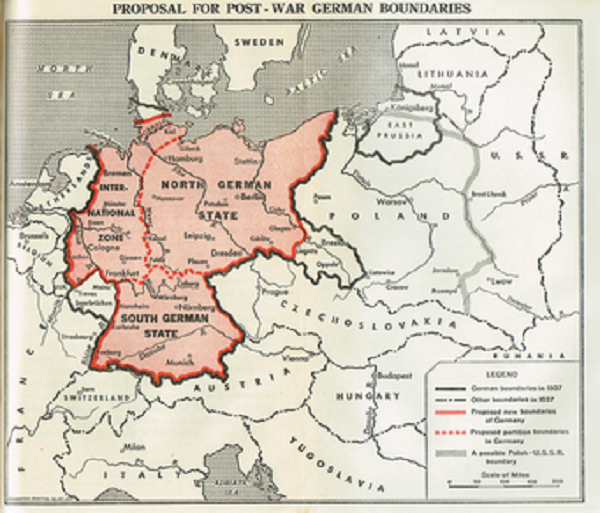
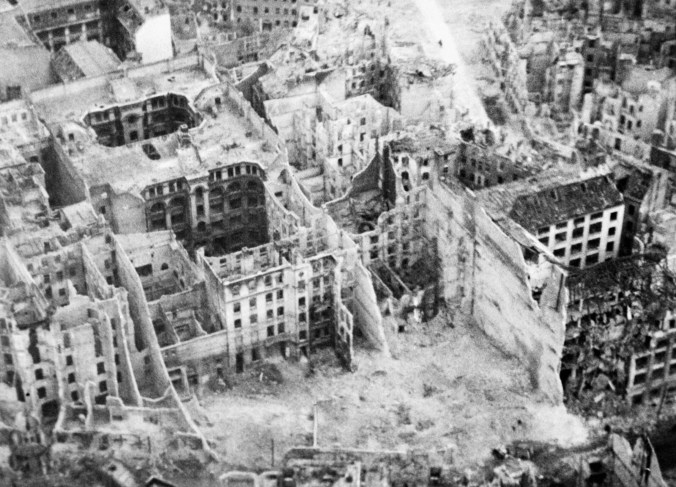
Henry Morgenthau Jr. was Roosevelt’s Secretary of the Treasury from 1934 until FDR’s death. He was a trusted advisor whose scope of interest and influence far exceeded the usual territory of his office. In 1944, Morgenthau got far over his metaphorical skis and proposed a scheme for the post-war world, specifically, as he said, “I want to make Germany so impotent that she cannot forge the tools of war – another world war.”

You know, because that strategy worked out so well the first time, after World War I…

Continue reading

Comment of the Day: “As the NYT Enables Terrorism and Anti-Israel Hate With ‘Think of the Children!’ Porn: The Sequel”

This is an unusual Comment of the Day by Chris Marschner (on the post,“As the NYT Enables Terrorism and Anti-Israel Hate With ‘Think of the Children!’ Porn”), but it makes an important point, indeed, the crucial point that exposes the intellectual dishonesty of the Times’ “Think of the Children!” campaign to demonize Israel as it tries to defend its right to exist.

***

I reworked the original Times story to reflect a similar situation in the mid-20th century. All I did was change the name and the players. If the Times had written its report this way, then the Brits, the French, the Poles, the Czecks and others would be goose-stepping to their new bosses and Israel would not exist.

It is obvious to any rational thinker that when a nation faces existential peril from zealots who believe they are the rightful heirs of the entire region and that no one except the devout believers of Mohammed may live peacefully there, that when they are attacked they must eliminate the immediate as well as the long term threat in order to minimize civilian losses. We did this twice in the Pacific and Europe when despots saw opportunities for empire building.

My NYT rewrite:

Continue reading

The Murder Of Private King

My father told me he was certain that there were incidents like this during World War II, but that the military covered them up.

The Army Board for Correction of Military Records has changed the death record of African-American WWII Private Albert H. King to list him as having died “in the line of duty.” King, a 20-year-old black soldier with the Quartermaster Corps, was in fact murdered on March 23, 1941, by a white member of the military police, Sgt. Robert Lummus, who shot King five times as he walked on the main road at Fort Benning toward his barracks. King had tried to escape a mob of whites intent on beating him on a bus. Sergeant Lummus claimed self-defense and just 13 hours after shooting King, was found not guilty by a military court.

A thorough investigation had taken place, clearly.

Continue reading

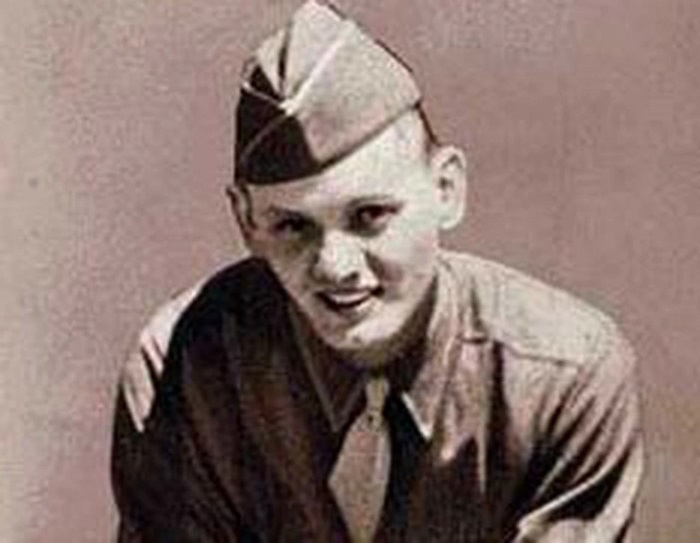
‘Making An Example’ Ethics: The Condemnation Of Eddie Slovik

Eddie Slovik

Last year, when I noted this story in the December 23 warm-up, I was asked if there would be more on the topic. Here is more. It deserves it.

During World War II, U.S. Army Pvt. Eddie Slovik was tried for desertion. On this date in 1944 he was found guilty in his court martial and condemned to death by firing squad. It was the first such sentence against a U.S. Army soldier since the Civil War, and Slovik was the only soldier executed for desertion in World War II. In the intervening years between then and now, his death has become a point of ethical controversy, never resolved, and generally debated before the public from an emotional rather than an ethical, legal or even a military perspective.

I was first told the story of Eddie Slovik by my father, a decorated army veteran and officer during the war. A fervent admirer of General Eisenhower, he still disagreed with Ike’s much criticized decision to allow Slovik’s execution by firing squad to go forward. Dad was not supportive of the command principle of using a particularly blatant example of a crime to send a message to others considering similar conduct, and having had several Eddie Sloviks to contend with under his command, he did not like the resolution of the Slovik dilemma.

I argued the point with him many times over the years. “The question isn’t whether it was fair for Slovik to have been shot,” I told him. “It was. The question is whether many more deserters should have been shot as well.”

Private Eddie Slovik was a draftee, and not a good bet to be a good soldier. He had been classified 4-F because he had spend time in prison for a felony (grand theft auto), but was deemed draftable as the Allied war effort required quantity even more than quality as the conflict dragged on. He was trained to be a rifleman, though Slovik claimed that he hated guns.

In August of 1944, the Army shipped Slovik to France to fight with the 28th Infantry Division, which had suffered massive casualties. When he experienced being under heavy fire for the first time, Slovik concluded that he would not make it in combat. Though the current trend is to say that he and a friend “got lost,” it seems more likely that they were hiding before they turned themselves in to the Canadian military police. The Canadians returned the two to the Americans after about a month and a half.

Slovik asked the company commander if “getting lost” again would be considered desertion. Despite being warned that it would be, he went AWOL, then the next day turned himself in at a nearby field kitchen. He handed the cook this statement:

Continue reading

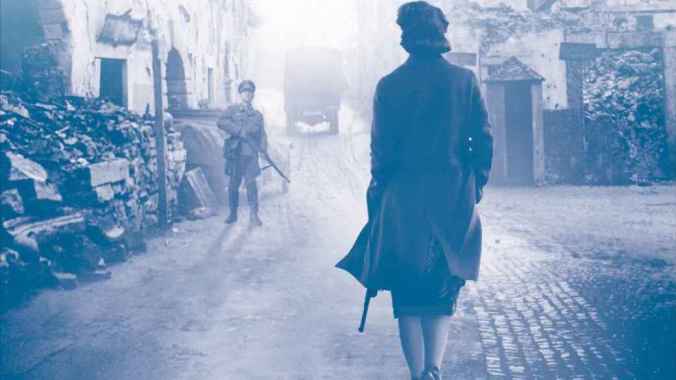
Ethics Hero Emeritus: Rose Valland (1898-1980)

Rose-Valland

The remarkable 2008 documentary “The Rape of Europa” tells the story of the Nazi plundering of fine art across Europe. It is full of many accounts of heroism, none more impressive than that of Rose Villand, a meek-looking librarian out of central casting, who is as perfect and example of how ordinary people can rise to extraordinary levels of courage and innovation in times of crisis.

Rose Valland was born in Saint-Étienne-de-Saint-Geoirs, France on November 1, 1898. She earned two degrees in the arts from the École des Beaux-Arts in Lyon and also studied at the École des Beaux-Arts in Paris, then added degrees in art history from both the École du Louvre and the Sorbonne. Her academic credentials, however, did not immediately advance her career, as Valland began work at the Jeu de Paume Museum in Paris as an unpaid volunteer.

In October 1940, during the Occupation of Paris, the Nazis commandeered the Jeu de Paume Museum and converted it into the headquarters of the Einsatzstab Reichsleiter Rosenberg, or ERR, the Nazi art looting organization created by frustrated artist Adolf Hitler. There The Nazis stored paintings and other works of art stolen from private French collectors and dealers, including thousands of works taken from Jewish-owned galleries. The museum’s collaborating curator, Andre Dézarrois, fell ill in the summer of 1941, and in a stroke of fate for civilization, Valland became the de facto director of the museum. Jacques Jaujard, Director of the French National Museums including the Louvre, gave Valland a daunting assignment: she was to use her post in the museum to spy on the Nazi art theft operation.

The Germans, as explained in “The Rape of Europa,” took scant notice of the “little mouse” of a woman who kept her head down, seldom spoke, and appeared to follow orders. They didn’t even realize that she spoke German, but under their noses she was acquiring crucial information from the conversations of drivers, guards, and packers relating to the looted art treasures…60,000 of them. Villand witnessed the frequent shopping trips of Nazi Reichsmarshal Hermann Goering as he made more than twenty separate visits to the Jeu de Paume to select works of art for Hitler’s planned Führermuseum in Linz, Austria, and his own personal collection. Possessing a remarkable memory for details, she recorded her discoveries regarding the movements, names of the victims, number of pieces and where they were going, names of the agents responsible for transfers, names of the carriers, brands of the boxes, numbers and dates of convoys,as well as the names of the artists and the dimensions of the pieces that passed before her. She relayed the information to Jaujard and the French Resistance while keeping her own meticulous records. She warned the Resistance of convoys containing important artworks so that they would be spared, all while knowing that she would be executed as a spy if her activities were discovered by the Nazis—and at least twice, they nearly caught her.

Continue reading

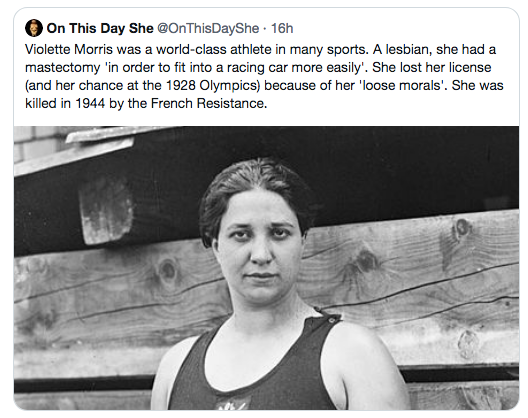
Verdict: Feminists And Lesbians Need To Find Better Role Models And Heroes

Violette Morris

“On This Day She” is a book published this year dedicated to “the women whom [sic] time has forgotten; those who didn’t make it into the history books and those whom [sic] society failed to uphold as significant figures in their own right.” There is also a website following through on the premise of the book (and promoting it), from whence the misleading tweet above emanated. Though the book does admit to including women who engaged in “the bad” and who it deems unjustly ignored by history, the tweet above undercuts that admission. The hint is in the last sentence. Why was Morris killed by the French Resistance in 1944?

She was a Nazi, that’s why, and a traitor as well. Morris, a French citizen, sourced black-market petrol for the Nazis, ran a garage for the Luftwaffe, and drove for the Nazi and Vichy hierarchy. After Germany took over France, she worked to foil the operations of the Special Operations Executive, an English organization that aided the Resistance. Claims that she also engaged in spying activities and Nazi torture are disputed, but never mind: what she did do was sufficient to have her known as “The Hyena of the Gestapo” and sentenced to death in absentia. She was ultimately shot and killed—assassinated, to be technical— when her car was ambushed by the Resistance.

Good.

Continue reading

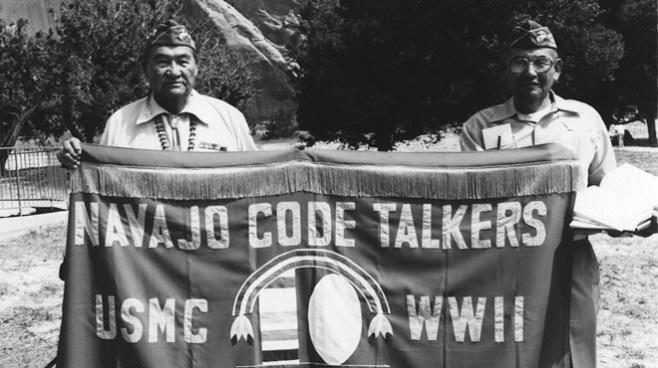
Another Vote For “The Washington Code Talkers”

The Washington Redskins ownership finally was forced to capitulate in the decades long- battle to force a beloved and fanatically supported NFL team to ditch the name that fans were beloving on the dubious theory, rejected by most native Americans and people capable of  critical thought, that despite all outside appearances having a team carrying a  Native American name dishonors Indians rather than keeps their story up front and vital in American consciousness and culture. Because the decision was a sudden biproduct of the George Floyd Freakout, the D.C. team wasn’t prepared for a change, and had no names in reserve. (It apparently had a shot at the name “Warriors,” which alliterates at least, but was late moving on the copyright and trademarks, so that name has, as they say, left the wigwam.

Meanwhile, gag names are flying around like arrows at the Little Big Horn, so ending the mockery is urgent. We are hearing calls for the Washington Weasels, the Washington Swamp-Dwellers, the Washington Investigators, the Washington Slime, The Washington Bootlickers…even the retro “Washington Murderous Savages.”  (I was an early advocate for “The Washington Concussions.”) However, one serious suggestion offered by the President of the Navajo Nation Jonathan Nez is brilliant: the Washington Code Talkers.

I second, with enthusiasm.

Few professional sports team have nicknames carrying any historical significance. Most are generic animals, birds, even reptiles. Some of the oldest names are meaningless, like “Red Sox.” Just a few refer to or referenced history: the now defunct Chicago Fire, the San Francisco 49’ers, the Philadelphia 76ers, and a few others. One great virtue of the Code Talkers, in addition to keeping the Native American connection to the D.C. team, is that it would compel the team’s fans to learn some history for a change. (I assume that the 2002 Nicholas Cage bomb, “Windtalkers,” did not have sufficient reach to educate most Americans.)

Who, or what,  were the Code Talkers? Continue reading

Ethics Hero Emeritus: Virginia Hall (1906-1982), “The Limping Lady”

World War II continues to be the richest source of forgotten or obscure ethics heroes, and no figure fits that description better than American super-spy Virginia Hall.

Only in the last few years, as newly intense focus has been placed on  women’s contributions to society and history, has Hall’s story come out of the shadows: three books about Hall have been published, and  two movies are awaiting release, one to be streamed on Netflix. In Hall’s case, her anonymity was substantially her own doing. She had no interest in fame or accolades, and decisively rejected them. Hill left no memoirs, granted no interviews, and spoke rarely about her exploits, even to her family.

She was born into a wealthy and privileged Baltimore clan that assumed its daughter would follow the well-trod path of a debutante and eventually the wife of an appropriate young man from her own class. But Virginia was different, “capricious and cantankerous” in her own words.  She liked guns and adventure. She once went to school wearing a bracelet made of live snakes, just to shake up her teachers and class mates.

Hall attended Radcliffe and Barnard, then went abroad to study in Paris. She wanted to be a diplomat or even an ambassador, but received no support from the State Department. There were only six women among the 1,500 U.S. diplomats at the time, so she settled for a clerical job at a U.S. consulate in Turkey. While hunting birds in her spare time, she accidentally shot herself in the foot, and gangrene set in. Her left leg was amputated below the knee. Hall named the wooden leg that became her constant companion thereafter “Cuthbert.”

In 1937, she again applied to the Department of State to enter the diplomatic corps , this time being turned down because of a rule against hiring people with disabilities as diplomats, an especially odd restriction for a nation led by a disabled President. She quit her job as a consular clerk two years later, and at 34, joined the war effort before America did, becoming an ambulance driver in France in 1940. When France was invaded by the German army, Hall fled to Great Britain.  By purest chance she came in contact with a representative of British intelligence. Hill offered her services to the British Special Operations Executive (SOE), which trained her in weapons, communications, security, and resistance activities.

So it was that an American woman with a wooden leg  became one of the first British spies sent into Nazi-occupied France in 1941, posing as a reporter for the New York Post.

Primarily working out of Lyon, Hall organized agent networks and recruited French men and women to run safe houses, all while evading the Gestapo, which called her “The Limping Lady.” She became a master of disguise, often changing her appearance several times in a day and managing to become invisible despite the impediment of “Cuthbert.” She even had her nice, straight, American teeth ground down so she could pass as an elderly peasant woman, which was a favorite false identity. Continue reading

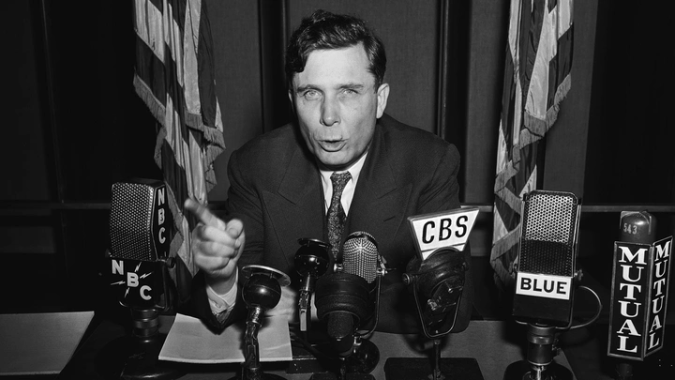
Before The Rot Set In: Wendell Willkie And James Beggs [Corrected]

A quote in an obituary for long-time NASA chief James Beggs, who died this week at the age of 94, shocked me into realizing once again how alien basic ethics have become to our leaders in business, government, politics…hell, just about anywhere.  And once again, I’m wondering what good I’m doing, and why I bother.

Beggs had overseen more than 20 successful space shuttle launches, but he was on administrative leave due to an investigation of his conduct when the Challenger launched and exploded in 1986. As we have discussed on Ethics Alarms, a landmark example of failed ethics and decision-making caused the temporary leadership of NASA to ignore dire warnings from two engineers and send the shuttle and its precious human cargo up in dangerously cold weather.  Indeed Beggs called NASA  from his exile that fateful day to express his concern about icing. He resigned from NASA in 1986, about a month after the Challenger disaster.

Beggs was reluctant to criticize his former agency’s culpability in the accident, but he was adamant that “they shouldn’t have launched.”  “Whether I would have done anything different at the time, I’ve thought about that,” he said. “I think I would have, but that’s pure conjecture.”

Remarkable. How often does a critic of a past decision have the intrinsic fairness and integrity to say that? The Wuhan virus landscape has been polluted by extravagant and unjust second-guessing from the start, as everyone from politicians to pundits to plumbers are just certain that they would have known how to handle an unprecedented situation with significant unknown factors and substantial risk. They would have reached a different, quicker,better approach than the individual who actually had to make the call.

It’s a disgusting spectacle, and an unethical one. The “right” decision can always be made to seem obvious after the fact; critics cannot possibly know what their state of mind would have been at the actual time the decision had to be made by someone else. Beggs’ acknowledgement of that, in a situation where he could have credibly second-guessed his colleagues without equivocation, demonstrates the character of a decent and ethical professional determined to do and say the right thing even when opportunities are present for personal gain.

That story, in turn, reminded me of…Wendell Willkie. Continue reading