Ethics Hero: World War II Vet Burke Waldron

It is a day late, but I finally have my Memorial Day post.

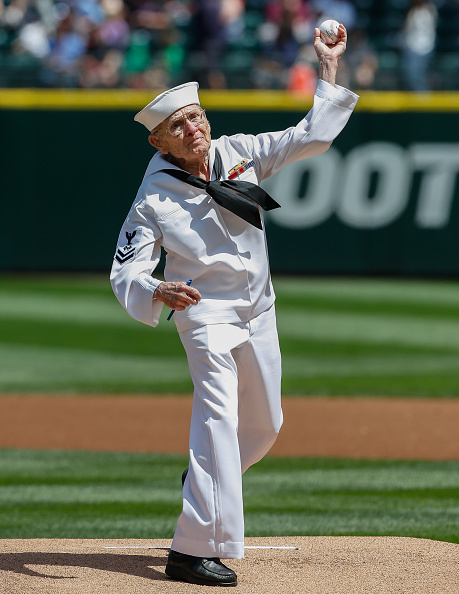
Thank-you, Burke Waldron, for your service, for making me feel young, and for having the integrity not to embarrass yourself, your contemporaries, and everyone else by making pathetic attempt at throwing a baseball.

I’m not sure which elements of Ethics Hero 92-year-old WW II veteran Burke Waldron displayed yesterday, as he threw out the ceremonial first pitch at the Seattle Mariners game on Memorial Day. Call him a holistic hero. He’s a hero, like all of the fallen soldiers—including my dad—of past wars, because he risked the horrors of combat to defend our nation and the values it stands for…well, at least until Donald Trump is President.

He’s a hero because he represented his generation yesterday with style, verve and energy, running to the pitcher’s mound—in his uniform!as thousands cheered. Most of all, to me, he’s a hero because he took his assignment seriously, and didn’t emulate the pathetic rockers, politicians and even retired athletes who defile their first pitch honors by throwing the ball like a 7-year-old T-ball player, because they couldn’t be bothered to practice. Petty Officer, 2nd Class Waldron threw a strike to his catcher…

…just like another war hero, Ted Williams, did in his last appearance on a baseball field, at the 1999 All-Star Game in Boston. Continue reading

Ethical Quote Of The Week: President Obama, Threading The Needle In Hiroshima

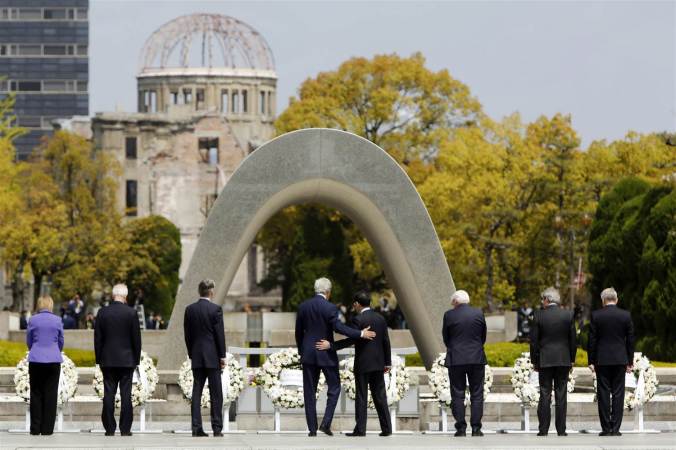
Obama at hiroshima

“We come to mourn the dead, including over 100,000 Japanese men, women, and children, thousands of Koreans, a dozen Americans held prisoner.”

—-President Obama, speaking at the Hiroshima’s Peace Memorial Park in Japan, in a controversial visit to the site of the Unites States’ decisive use of the atom bomb to defeat Japan without an invasion in 1945.

Good job. Whoever drafted the speech—it may well have been Obama himself—perfectly threaded the needle, simultaneously making a compassionate diplomatic gesture and yet including an unmistakable reference to who was really at fault for the carnage. Those Korean casualties were captured and enslaved citizens of a sovereign nation, acquired as Imperial Japan swept over Asia like locusts. Those prisoners were prisoners of war, and horribly mistreated ones.

The passage of time made Obama’s subtlety more appropriate than President Harry Truman’s typically blunt response to an Aug. 9, 1945 telegram from  Samuel Cavert, the general secretary of the Federal Council of the Churches in Christ in America, saying he was “greatly disturbed” by Truman’s use of the bomb: Continue reading

Ethics Quote Of The Week: Secretary of State John Kerry

Kerry Hiroshima

“It is a stunning display. It is a gut-wrenching display. It is a reminder of the depth of the obligation every one of us in public life carries … to create and pursue a world free from nuclear weapons.”

—-Secretary of State John Kerry in Japan, as he toured the Hiroshima Peace Memorial and Museum this week before meeting foreign ministers at the G-7 Summit.

I couldn’t quite bring myself to call this an unethical quote, though it is an infuriating one. It is certainly a stupid quote, but we all know John Kerry’s verbal and intellectual deficiencies, and he was indeed in a tough spot. What would have been an appropriate statement to make in this setting, that would not risk insulting his hosts and setting off yet another debate about Hiroshima that would be a distraction from the G-7 Summit’s objectives?

While I agree philosophically with the editors of the Federalist that it would have been more satisfying if Kerry had said that the display was “a reminder of the depth of the obligation every one of us in public life carries to stop extremist regimes like Iran from obtaining nuclear weapons” or perhaps that it was “a reminder of the depth of the obligation every one of us in public life carries to ensure that we are well prepared for the next force that threatens peace,” each carried its own diplomatic and political risks. So would “Sorry you made us do this, but we didn’t bomb ourselves at Pearl Harbor,” which is what I would have been tempted to say. I’m no diplomat, however, as you may have noticed. Continue reading

Ethics Quiz: Japan’s Official Apology To The Korean “Comfort Women”

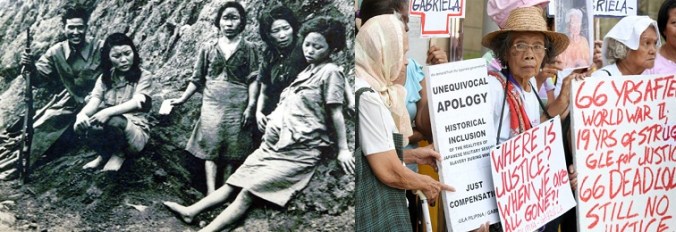
comfort-women

Before and during World War II, the Imperial Japanese Army forced an estimated 400,000 women and girls from occupied territories, primarily Korea, China, and the Philippines, into sexual slavery for the convenience and “comfort” of Japanese soldiers. That the women were kidnapped, raped, and in many cases murdered is not in dispute, but for cultural and political reasons the Japanese government has never accepted full responsibility for the nation’s mass crime, or acknowledged its true nature. To the contrary, Japan has protested memorials to the Comfort women in various locales, including the United States. Japan officially maintains that the women were ordinary prostitutes, and that no crimes were committed toward them. This is a long, bitter controversy between South Korea and Japan particularly.

Pressure from the United States on both Japan and South Korea to resolve the issue had been building, and on December 29, 2015, the two nations reached an agreement by which the Comfort Women issue was considered “finally and irreversibly” resolved. Under the agreement, the Japanese government issued this negotiated statement:

The issue of comfort women, with an involvement of the Japanese military authorities at that time, was a grave affront to the honor and dignity of large numbers of women, and the Government of Japan is painfully aware of responsibilities from this perspective. 

As Prime Minister of Japan, Prime Minister Abe expresses anew his most sincere apologies and remorse to all the women who underwent immeasurable and painful experiences and suffered incurable physical and psychological wounds as comfort women.

As part of the resolution, the Japanese government pledged to contribute one billion yen (about $8.3 million), out of the Japanese government’s budget to a foundation established by the Korean government dedicated to assisting the surviving Korean Comfort Women. Forty six survive. They had no part in the agreement discussions.

The deal is unpopular in South Korea. Critics immediately complained that the agreement is inadequate. Of course it is. $8.3 million would be moderate damages in the U.S. for a single woman who was kidnapped and forced into sexual slavery. Japan is not going to accept full responsibility for the war crimes, and that should be obvious after so many decades and such stubborn denial.

The ethics question that is a bit more challenging is whether the apology is worth the paper it is printed on, or even a true apology. After the agreement, Prime Minister Shinzo Abe  stated: “there will be no future reference at all to this issue [the Comfort Women issue]. We will not raise it in the next Japan-Korea summit meeting. This is the end. There will be no more apology.” Many Koreans feel that an official apology followed immediately by a statement that says, in essence, “There, that should shut them up!” is cynical and worthless. As a Korean issues website put it, “If an apology is not followed by contrition and self-reflection, but instead by gloating—-does that apology mean anything?”

Good question! Let me rephrase that as the Ethics Alarms Ethics Quiz of the Day:

Is the official Japanese apology for the crimes against the Korean Comfort Women ethical?

Continue reading

The Seventh Annual Ethics Alarms Awards: The Best of Ethics 2015, Part I

Sweet Briar montage

Welcome to the Seventh Annual Ethics Alarms Awards, our blog’s retrospective of the best and worst in ethics over the past year, 2015.

It was a rotten year in ethics again, it’s fair to say, and Ethics Alarms, which by its nature and mission must concentrate on episodes that have lessons to convey and cautionary tales to consider probably made it seem even more rotten that it was. Even with that admission, I didn’t come close to covering the field. My scouts, who I will honor anon, sent me many more wonderfully disturbing news stories than I could post on, and there were many more beyond them. I did not write about the drug company CEO, for example, who suddenly raised the price of an anti-AIDS drug to obscene levels, in part, it seems, to keep an investment fraud scheme afloat. (He’ll get his prize anyway.)

What was really best about 2o15 on Ethics Alarms was the commentary. I always envisioned the site as a cyber-symposium where interested, articulate and analytical readers could discuss current events and issues in an ethics context. Every year since the blog was launched has brought us closer to that goal. Commenters come and go, unfortunately (I take it personally when they go, which is silly), but the quality of commentary continues to be outstanding. It is also gratifying to check posts from 2010 and see such stalwarts who check in still, like Tim Levier, Neil Dorr, Julian Hung, Michael R, and King Kool.  There are a few blogs that have as consistently substantive, passionate and informative commenters as Ethics Alarms, but not many. Very frequently the comments materially enhance and expand on the original post. That was my hope and objective. Thank you.

The Best of Ethics 2015 is going to be a bit more self-congratulatory this year, beginning with the very first category. Among other virtues, this approach has the advantage of closing the gap in volume between the Best and the Worst, which last year was depressing. I’m also going to post the awards in more installments, to help me get them out faster. With that said….

Here are the 2015 Ethics Alarms Awards

For the Best in Ethics:

Most Encouraging Sign That Enough People Pay Attention For Ethics Alarms To Occasionally Have Some Impact…

The Sweet Briar College Rescue. In March, I read the shocking story of how Sweet Briar College, a remarkable and storied all-women’s college in Virginia, had been closed by a craven and duplicitous board that never informed alums or students that such action was imminent. I responded with a tough post titled “The Sweet Briar Betrayal,” and some passionate alumnae determined to fight for the school’s survival used it to inform others about the issues involved and to build support. Through the ensuing months before the school’s ultimate reversal of the closing and the triumph of its supporters, I was honored to exchange many e-mails with Sweet Briar grads, and gratified by their insistence that Ethics Alarms played a significant role in turning the tide. You can follow the saga in my posts, here.

Ethics Heroes Of The Year

Dog Train

Eugene and Corky Bostick, Dog Train Proprietors. OK, maybe this is just my favorite Ethics Hero story of the year, about two retired seniors who decided to adopt old  dogs abandoned on their property to die, and came up with the wacky idea of giving them regular rides on a ‘dog train” of their own design.

Ethical Mayor Of The Year

Thomas F. Williams. When the Ferguson-driven attacks on police as racist killers was at its peak (though it’s not far from that peak now) the mayor of Norwood, Ohio, Thomas F. Williams, did exactly the opposite of New York Mayor Bill de Blasio in response to activist attacks on the integrity of his police department. He released a letter supporting his police department without qualification. At the time, I criticized him for his simultaneously attacking activists as “race-baiters.” In the perspective of the year past, I hereby withdraw that criticism.

Most Ethical Celebrity

Actor Tom Selleck. In a terrible year for this category, Selleck wins for bravely pushing his TV show “Blue Bloods” into politically incorrect territory, examining issues like racial profiling and police shootings with surprising even-handedness. The show also has maintained its openly Catholic, pro-religion perspective. Yes, this is a redundant award, as “Blue Bloods” is also a winner, but the alternative in this horrific year when an unethical celebrity is threatening to be a major party’s nominee for the presidency is not to give the award at all.

Most Ethical Talk Show Host

Stephen Colbert, who, while maintaining most of his progressive bias from his previous Comedy Central show as the successor to David Letterman, set a high standard of fairness and civility, notably when he admonished his knee-jerk liberal audience for booing  Senator Ted Cruz

Sportsman of the Year

CC Sabathia

New York Yankee pitcher C.C. Sabathia, who courageously checked himself into rehab for alcohol abuse just as baseball’s play-offs were beginning, saying in part,

“Being an adult means being accountable. Being a baseball player means that others look up to you. I want my kids — and others who may have become fans of mine over the years — to know that I am not too big of a man to ask for help. I want to hold my head up high, have a full heart and be the type of person again that I can be proud of. And that’s exactly what I am going to do.”

Runner-up: MLB Commissioner Rob Manfred, who dismissed the ethically-addled arguments of Pete Rose fans to reject his appeal to be have his lifetime ban for gambling lifted.  For those who wonder why football never seems to figure in this category: You’ve got to be kidding.

Ethics Movie of the Year

SpotlightTIFF2015

“Spotlight”

Runner-up: “Concussion”

Most Ethical Corporation

Tesla Motors, the anti-GM, which recalled all of its models with a particular seatbelt because one belt had failed and they couldn’t determine why. Continue reading

Ethics Mystery: What Was So Wrong With Curt Schilling’s Muslim Tweet?

schilling-tweet

ESPN pulled former baseball pitching star Curt Schilling from its Little League broadcast team yesterday after becoming aware of his tweet above, saying in a statement:

“Curt’s tweet was completely unacceptable, and in no way represents our company’s perspective. We made that point very strongly to Curt and have removed him from his current Little League assignment pending further consideration.”

Schilling then tweeted this apology: “I understand and accept my suspension. 100% my fault. Bad choices have bad consequences and this was a bad decision in every way on my part.” This appears to be a #1 on the Ethics Alarms Apology Scale...“An apology motivated by the realization that one’s past conduct was unjust, unfair, and wrong, constituting an unequivocal admission of wrongdoing as well as regret, remorse and contrition, as part of a sincere effort to make amends and seek forgiveness.” 

If I had delivered it, however, it might have been a #7: “A forced or compelled version of 1-4, in which the individual (or organization) apologizing may not sincerely believe that an apology is appropriate, but chooses to show the victim or victims of the act inspiring it that the individual responsible is humbling himself and being forced to admit wrongdoing by the society, the culture, legal authority, or an organization or group that the individual’s actions reflect upon or represent.”

What was it exactly that Schilling’s tweet showed, implied, suggested or stated that was” completely unacceptable,  in no way represent ESPN’s  perspective, and that justified his employer’s action? Curt Schilling is an inquisitive, politically active and opinionated man, and has always annoyed sportswriters because 1) he’s openly conservative 2) he’s a devout Christian, and isn’t shy about talking about it, 3) he can write and speak coherently and was capable, while playing, of challenging their criticism, and 4) he’s a lot smarter than most of them. I am assuming in this inquiry that nothing in Schilling’s contract or agreement with ESPN restricted his right to express non-sports opinions on his own time.

Here are some possibilities: Continue reading

Hiroshima Ethics And The Washington Post’s Misleading “Five Myths” Feature

Atom bomb cloud

The Washington Post’s Sunday “Five Myths About…” feature is a weekly irritation, as it begins with a misleading definition, and proceeds to a series of dubious and sometimes dishonest conclusions. In spirit it is like the fact-checking columns,  (though, ironically, the Post’s less than most) in that it claims to “disprove” opinions. This week’s installment, however, was too much.

Gregg Herken was this week’s guest bloviator, and the Post gave the emeritus professor of U.S. diplomatic history at the University of California a chance to plug his books on the atomic bomb, so I don’t blame him for taking it. I do blame him for allowing the column’s format and the editors to turn what could have been informative and edifying into lazy scholarship, sophistry, and nit-picking. Now I don’t want to read his books.

His entry was called “Five myths about the atomic bomb.” As is typically the case, no myths were debunked. Myths, in the parlance the Post is evoking, are a “traditional stories of ostensibly historical events that serve to unfold part of the world view of a people or explain a practice, belief, or natural phenomenon.” They are, by definition, false. Herken, however, neither identifies nor disproves any true myths. What he does is offer contrary opinions to those of others that are as provable as true as the opinions he claims to be debunking, which is to say, not provable at all. That means that the headline/title states an unprovable assertion as fact: “These statements are untrue.” Herken cannot ethically say that, but he does anyway.

Bad historian. Bad.

Herken starts off well:

“On Aug. 6, 1945, the United States dropped an atomic bomb on the Japanese city of Hiroshima. Another bomb fell Aug. 9 on Nagasaki. Decades later, controversy and misinformation still surround the decision to use nuclear weapons during World War II. The 70th anniversary of the event presents an opportunity to set the record straight on five widely held myths about the bomb.”

His first myth is that “The (Hiroshima) bomb ended the war.” Continue reading

Ethics Hero Emeritus: Sir Nicholas Winton (1909 – 2015)

winton and child

Another hero of the Holocaust has died. Nicholas Winton organized and substantially financed the last-minute escape of 669 Jewish children from Czechoslovakia on the eve of World War II, but never sought the fame and public accolades that Oskar Schindler and Raoul Wallenberg received. He got the accolades anyway, especially in his native Great Britain and Czechoslovakia, once his heroics were publicized long after they occurred.

I had never heard of him or his exploits until the news reports of his death. Continue reading

“The Longest Day,” Darryl F. Zanuck, D-Day, And Us

title_longest_day_bluray

Today is June 6, the anniversary of the Allies’ invasion of Normandy, the audacious military strike that changed the course of history. I’ll be interested in seeing how it’s commemorated this year, 71 years later, especially by the news media. A lot of Americans under the age of 40 know almost nothing about it, or worse, the values it represents to the United States.

Fortunately, there is an easy and entertaining way to teach a young American about what happened on this day 71 years ago. That is to have him or her watch “The Longest Day,” producer Darryl F. Zanuck’s epic film based closely on historian (and sole credited screenwriter) Cornelius Ryan’s 1959 book. (You can get it at Amazon, here.)I usually find understanding military battles nearly impossible; written accounts completely confound me, and few movies about any battle make a serious effort to explain the tactics and strategy without reducing the facts to pablum. (I remember how much my father, who fought in the Battle of the Bulge, detested the big budget movie of the same name, which he found outrageously sloppy, and which he summarized as “Henry Fonda won the war.”)

Not “The Longest Day,” however. Since seeing the movie with my father as a kid, I have learned a lot about what was left out, but the movie is remarkably clear and accurate about what happened and why without being either too detailed or too simplistic. It’s also just a great, inspiring movie.

That we have “The Longest Day” is entirely due to the courage of one of Hollywood’s most dynamic, flamboyant and successful studio moguls, Darryl F. Zanuck. The original producer of the adaptation of Ryan’s book (which is terrific ) gave up on the project when 20th Century Fox refused to allow him an adequate budget. Zanuck, who was still producing films but no longer ran the studio he had built,  bought the rights, and was determined to do the story, the event, and the men who fought the battle justice by mounting a production almost as ambitious as the invasion itself. Continue reading

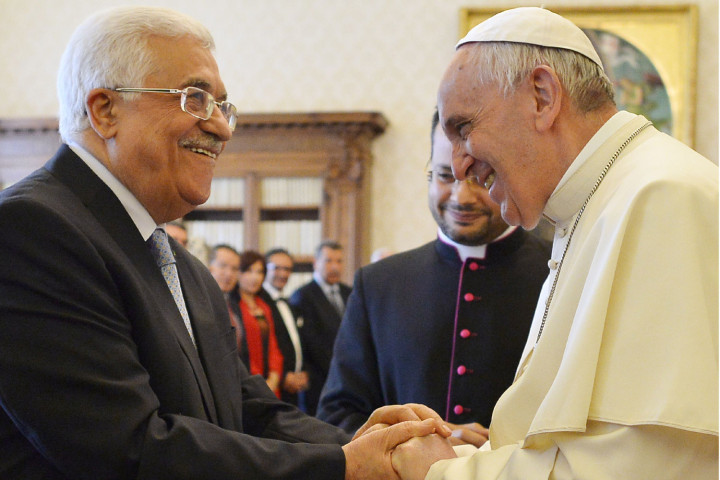
Ethics Dunce: Pope Francis

The Pope and "the Angel of Peace"...

The Pope and “the Angel of Peace”…

Sigh.

I apologize in advance to all the Catholics and others who will be offended by this post. I wish I didn’t have to write it. But I just read one too many “nyah, nyah, nyah conservatives and Republicans, you’re so big on waving God at us and now the Pope says you’re full of crap” Facebook posts from someone who would no more set foot in a church than Damien in “The Omen.”  The Pope is as fair game for criticism when he abuses his influence and power as Kylie Jenner, who was the subject of the previous post, and for similar reasons. To those who say that it is disrespectful for me to compare the Pope’s ethics to those of an ignorant 18-year-old minor celebrity drunk on her own fame, my answer is that the Pope needs to stop acting like one.

I’m going to try to avoid the mocking tone I used with Kylie, I really am.

With great power, the saying goes, comes great responsibility. What I see in this Pope is a very, very nice and well-meaning man who suddenly was given the power to have his every opinion on any subject immediately plastered all over newspapers across the world and recited by news readers as significant, and literally can’t stop himself. He told an Argentinian journalist last week that he just wants to be remembered as “good guy.”  Mission accomplished: I believe he is a good guy. He’s also an irresponsible guy, who knows or should know that his pronouncements will be exploited for political advantage by people and parties that could not care less about his Church, God and religion generally, but who will use his words  to persuade voters who feel the need to know no more about a subject that what the “Vicar of Christ” tells them.

It may be “good to be Pope,” to paraphrase Mel Brooks, and it’s also not “easy being Pope,” to paraphrase Kermit the Frog. I don’t care: he accepted the job, and with it the duty to do it responsibly. Being a responsible Pope means not shooting off your mouth about every topic that occurs to you. In that same interview, Pope Francis opined that humans care too much about pets. I get it: poverty is, by his own assessment, the single most important aspect of the Church’s mission, so it’s natural for the Pope to believe that the money spent on movies, cable TV, make-up, CDs, and Jack Russell terriers should all be given to the Clinton Foundation or his Church instead. That’s a facile opinion from someone who has a staff catering to his every whim, and who sits on billions in the Vatican Bank. Does the Pope understand loneliness? Does he have any compassion for those suffering from it? Does he understand the needs of my sister, divorced and with both children gone, and her desire to have some unconditional love in the house when she returns to an otherwise empty home,  love that  takes the form of a happy, loyal, Havanese? “Care for pets is like programmed love,” the Pope told the interviewer. “I can program the loving response of a dog or a cat, and I don’t need the experience of a human, reciprocal love.”

My response: “Shut up. You don’t know what you’re talking about, and millions of people will assume you got this point of view straight from God.” Continue reading