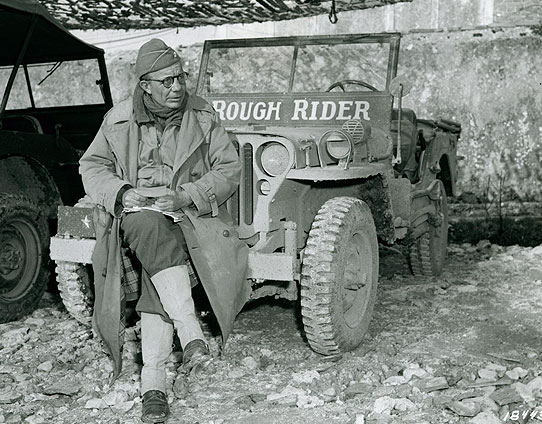
Memorial Day Ethics Hero Emeritus: Theodore Roosevelt, Jr., 1887–1944

Teddy Jr

The latest inductee into the Ethics Alarms Heroes Hall of Honor has a familiar name that burdened him with exorbitant expectations his entire life. Yet against all odds, he managed to add to its prestige.

With some notable exceptions that you can probably name, being the son of a President of the United States has proven to be a burden and often a curse. Being the oldest son of our most flamboyant President was particularly hard on Teddy Roosevelt’s boy who shared his name, and through young adulthood, Theodore Roosevelt, Jr.  experienced migraine headaches and other symptoms of anxiety and stress. The President was even cautioned by a family friend and physician that his constant badgering was ruining his son’s health.

Young Ted still followed his father’s path to fame by enrolling at Harvard, then became a partner in a Philadelphia investment banking firm. With the U.S. entry into the Great War, Roosevelt enlisted in the army, fought in Europe, rose to the rank of lieutenant colonel, and was gassed and shot in the kneecap in 1918.  Roosevelt received the Distinguished Service Cross. He was renowned for his courage under fire as well as his unusual concern for the men under his command: at one point, he personally purchased new boots for his entire battalion. After the war, Roosevelt was instrumental in the founding the American Legion in 1919. Continue reading

Memorial Ethics: Under Armour’s “Disrespect”

Underarmor

The Horror…

Just in time for Memorial Day comes this depressing example of how timid and wan Americans have become when free speech and expression are under attack. This is how acceptance of the Universal Veto of the Officious Offended will reduce the U.S. to a barren, humorless, imagination-free culture dominated by political correctness bullies and exploitive self-anointed, power-seeking “victims.”

Under Armour advertised a “Band of Ballers” tee-shirt showing a silhouette of men in backwards baseball caps raising a basketball hoop in the iconic pose of the U.S. Marine Corps Memorial, in which combat weary soldiers are frozen in the act of raising an American flag after the Marine’s bloody victory at Iwo Jima.

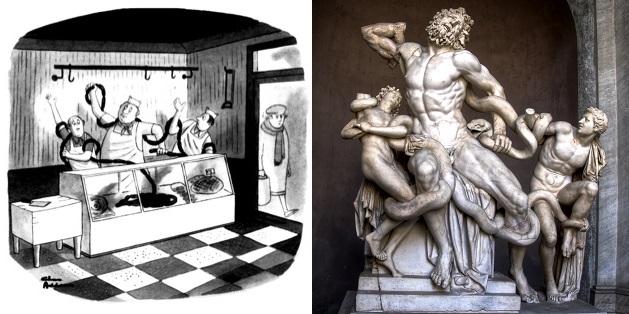
There is nothing remotely wrong with this design. It is not disrespectful It is satire. It is a parody. It is using the status of the image to extol basketball; only a fool could read the image as an effort to denigrate veterans or the American flag. Personally, I think it’s clever, just as I like Charles Addams’ cartoon showing butchers wrestling with sausages in the pose of the famous statue of Laocoon and his sons being devoured by serpents…

Addams Cartoon

…or parodies of Washington crossing the Delaware, like this ad for HBO’s “Veep”… Continue reading

Ethic Quiz: Is Eva Kor An Ethics Hero, Or An Ethics Dunce?

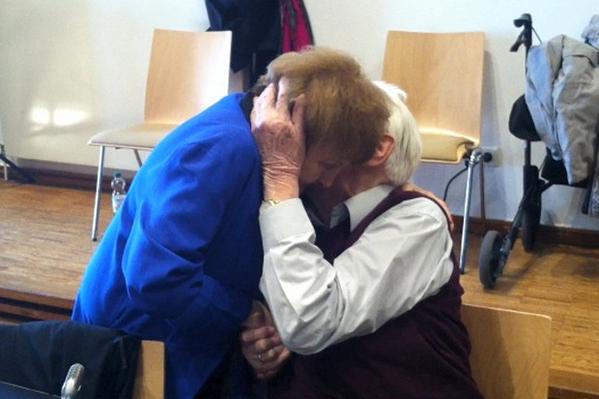
Kissed by a murderous Nazi. Yum.

Kissed by a murderous Nazi. Yum.

81-year-old Holocaust survivor Eva Kor recounted her memories of being one of Dr. Josef Mengele’s human guinea pigs  in a letter to Oskar Groening, a former member of the SS at Auschwitz-Birkenau who is on trial in Germany for 300,000 counts of accessory to murder:

In May 1944, when we were taken to Auschwitz, my name was Eva Mozes. My family and I were part of the Hungarian transport. My family included my father Alexander Mozes, 44 years old; my mother Jaffa Mozes, 38 years old; my older sister Edit, 14 years old; my middle sister Aliz, 12 years old; and my twin sister, Miriam, 10 years old. Within thirty minutes after arriving on the selection platform, Miriam and I were ripped apart from our family forever. Only she and I survived, because we were used in experiments conducted by .

Within half an hour we became part of a group of twin girls aged two to sixteen: thirteen sets of little girls and one mother. We were taken to a processing center where they cut our hair short and took our clothes away. That evening they returned them with a red cross at the backs. Then they lined us up for tattooing. When my turn came, I decided to cause them as much trouble as a ten year-old could. Two Nazis and two women prisoners restrained me with all their force. They began by heating a needle. When the needle got hot, they dipped it into ink and burned into my left arm, dot by dot, the capital letter A-7063. Miriam became A-7064…

For the next two weeks I only have one clear memory: I was crawling on the floor because I could no longer walk. I was crawling to reach a faucet with water because they did not even give us water anymore.

In 1984, Kor founded CANDLES (Children of Auschwitz Nazi Deadly Lab Experiments Survivors), in an effort to locate other surviving Mengele twins; and in 1995 she opened the CANDLES Holocaust Museum and Education Center in Terra Haute, Indiana. She calls herself a “forgiveness advocate,” teaching children:

1. Never give up on yourself or your dreams. I did not know how to survive Auschwitz, but I was determined to do it. Here I am 70 years later because I never gave up.

2. Treat people with respect and fairness to eliminate prejudice from your life.

3. Forgive your worst enemy and forgive anybody who [h]as ever hurt you. I forgave the Nazis and I forgave everybody who hurt me.

Kor is one of the Holocaust survivors testifying at Groening’s trial. On its first day, Groening told the court that  “it is beyond question that I am morally complicit. This moral guilt I acknowledge here, before the victims, with regret and humility.”  Kor told him, “I appreciate the fact that you are willing to come here and face us.” She offered the defendant her hand, and he took it, brought her into a near embrace, and kissed her on the cheek. 

Your Ethics Alarms Ethics Quiz as this week ends is…

Is Eva Kor an Ethics Hero, or an Ethics Dunce?

Continue reading

A Presidents Day Celebration (PART 4 and Final): The Wild, Wild Ride From FDR to W.

smiling-presidents

All of the Presidents (except FDR) in this last section were alive and kicking while I was, and so to me they are both more real and less fascinating to some extent. Familiarity breeds, if not contempt, a tendency not to idealize. These leaders are no more flawed than their predecessors, they just seem that way thanks to mass media.

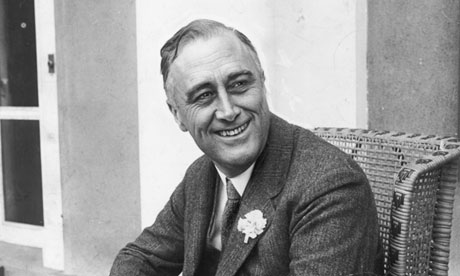
Franklin D. Roosevelt

Franklin Roosevelt

Three terms plus, a World War, a Depression, a transformative Presidency and an epic life spent in public service: FDR is another President who can’t be summed up in an anecdote, one book, or a hundred. He accomplished enough great things to be a deserving icon; he committed enough wrongs to be judged a villain. (He was pretty clearly a sociopath, but a lot of great leaders are, including a fair proportion of ours, including some of the best.) The only completely unfair verdict on this Roosevelt is not to acknowledge the importance and complexity of his life. Here are some of my favorite items about him:

  • FDR wrote down a plan when he was still in school outlining the best way for him to become President. The plan was essentially to follow his distant cousin Theodore’s career steps: Harvard, Assistant Secretary of the Navy, Governor of New York, Vice-Presidential candidate, and President. (He skipped “Rough Rider.”) Amazingly, he followed it, and it worked.
  • Conventional wisdom holds that FDR’s polio transformed his character, and that without that crisis and challenge he would have been content to be a rich dilettante. I doubt it, but there is no question that he fits the Presidential survivor template, and that his ordeal made him stronger, more formidable and more determined.
  • Many Presidents had strong mothers, especially, for some reason, many of our Chief Executives from Roosevelt to Obama. Franklin’s mom, however, wins the prize. It’s amazing Eleanor didn’t murder her. But Mrs. Roosevelt is why Eleanor was there in the first place: all of our Presidents raised by strong mothers married very strong wives.
  • If a computer program were designed to create the perfect American leader, it would give us FDR. He was the complete package; his charisma, charm and power radiate from recordings and films that are 90 years old. That smile! That chin! That head! That voice! He is one of the very few Presidents who would be just as  popular and effective today as the era in which he lived.
  • And just as dangerous. FDR is also a template for an American dictator, which, I believe, he would have been perfectly willing to be. It’s no coincidence that Franklin was the only President to break Washington’s wise tradition of leaving office after two terms.
  • Political and philosophical arguments aside, at least four of Roosevelt actions as President were horrific, and would sink the reputation of most leaders: 1) Imprisoning Japanese-Americans (and German-Americans, too); 2) Ignoring the plight of European Jews as long as he did, when it should have been clear what was going on; 3) Handing over Eastern Europe to Stalin, and 4) Knowing how sick he was, giving little thought or care to who his running mate was in 1944.
  • Balancing all that, indeed outweighing it, is the fact that the United States of America and quite possibly the free world might not exist today if this unique and gifted leader were not on the scene. Three times in our history, the nation’s existence depended on not just good leadership, but extraordinary leadership, and all three times, the leader we needed emerged: Washington, Lincoln, and Franklin. I wouldn’t count on us being that lucky again.

I left the bulk of reflection about the character and leadership style of Theodore Roosevelt to one of Teddy’s own speeches to embody, and I’ll do the same for his protege.

On September 23, 1932, New York Governor Franklin D. Roosevelt gave a speech at Manhattan’s Commonwealth Club. (Everyone, conservative, liberal or moderate, should read it….here.) It was a defining statement of progressive principles and modern liberalism, redefining core American values according to the perceived needs of a changing nation and culture.  It is a radical speech, and would be regarded as radical by many today, even after much of what Roosevelt argued was reflected in the policies of the New Deal.

After sketching the origins and progress of the nation to the present, he flatly stated that the Founders’ assumptions no longer applied:

A glance at the situation today only too clearly indicates that equality of opportunity as we have know it no longer exists. Our industrial plant is built; the problem just now is whether under existing conditions it is not overbuilt. Our last frontier has long since been reached, and there is practically no more free land. More than half of our people do not live on the farms or on lands and cannot derive a living by cultivating their own property. There is no safety valve in the form of a Western prairie to which those thrown out of work by the Eastern economic machines can go for a new start. We are not able to invite the immigration from Europe to share our endless plenty. We are now providing a drab living for our own people….

Just as freedom to farm has ceased, so also the opportunity in business has narrowed. It still is true that men can start small enterprises, trusting to native shrewdness and ability to keep abreast of competitors; but area after area has been preempted altogether by the great corporations, and even in the fields which still have no great concerns, the small man starts with a handicap. The unfeeling statistics of the past three decades show that the independent business man is running a losing race. Perhaps he is forced to the wall; perhaps he cannot command credit; perhaps he is “squeezed out,” in Mr. Wilson’s words, by highly organized corporate competitors, as your corner grocery man can tell you.

Recently a careful study was made of the concentration of business in the United States. It showed that our economic life was dominated by some six hundred odd corporations who controlled two-thirds of American industry. Ten million small business men divided the other third. More striking still, it appeared that if the process of concentration goes on at the same rate, at the end of another century we shall have all American industry controlled by a dozen corporations, and run by perhaps a hundred men. Put plainly, we are steering a steady course toward economic oligarchy, if we are not there already.

Clearly, all this calls for a re-appraisal of values.

So Franklin Roosevelt re-appraised them: Continue reading

Ethics Hero Emeritus: Irena Sendler (1910-2008)

Sendler

I missed learning about the death of Irena Sendler (Irena Sendlerowa) in 2008, and this occurred because the mass news media barely took note of it. Lots of celebrities died that year whose passing prompted extended mourning in the press and examinations of their legacies: Paul Newman, Heath Ledger, Sir Edmund Hillary (a member of the Ethics Alarms Heroes Hall of Honor), Charlton Heston, Aleksandr Solzhenitsyn, and many others. There was no room for a final appreciation of the life of Irena Sendler, apparently. Today, the website Bio.com doesn’t list her among the notable deaths of that year, though it finds room for Fifties stunt singer Yma Sumac—remember her? She had a four octave range! And Arthur Showcross: he murdered 11 women from 1988 to 1990 in upstate New York, earning the nickname “The Genessee River Killer.”

All Irena Sendler did was save 2500 children from the Treblinka death camp. Continue reading

For You, Dad.

Jack Marshall Sr Army portraitI lost my dad, Jack Marshall, Sr., five years ago today, and for some reason the loss feels especially sharp right now. This has been another miserable birthday, but not so miserable as that one, and I found myself once again revisiting my father’s favorite poem, which was a personnel credo for him and which has often served me well in hard times too. It is linked in the “Inspiration” section on the  Ethics Alarms home page, as well as quoted in my post here on the day my father was buried in Arlington National Cemetery.

Nonetheless, I am going to post Rudyard Kipling’s “If” once again. My father’s favorite line was…

If you can meet with Triumph and Disaster
    And treat those two impostors just the same;   
That was Dad to the core. He never looked back, never cursed his luck, never thought too highly of himself (or anyone else), always believed in tomorrow, and that no victory was final, and no defeat was forever. And I know he was right, though it doesn’t often feel like it. So this is for you, Dad. Thanks for everything.

“If”

If you can keep your head when all about you

Are losing theirs, and blaming it on you,

If you can trust yourself when all men doubt you,

But make allowance for their doubting too;

If you can wait, and not be tired by waiting,

Or being lied about, don’t deal in lies,

Or being hated, don’t give way to hating,

And yet, don’t look too good, nor talk too wise:

If you can dream – and not make dreams your master;

If you can think – and not make thoughts your aim;

If you can meet with Triumph and Disaster

And treat those two imposters just the same;

If you can bear to hear the truth you’ve spoken

Twisted by knaves, to make a trap for fools,

Or watch the things you gave your life to, broken,

And stoop, and build ’em up, with worn-out tools:

If you can make one heap of all your winnings

And risk it on one turn of pitch-and-toss,

And lose, and start again at your beginnings

And never breathe a word about your loss;

If you can force your heart and nerve and sinew

To serve your turn, long after they are gone,

And so hold on when there is nothing in you

Except the Will which says to them: “Hold on!”

If you can talk with crowds and keep your virtue,

Or walk with Kings – nor lose the common touch,

If neither foes nor loving friends can hurt you,

If all men count with you, but none too much;

If you can fill the unforgiving minute

With sixty seconds’ worth of distance run,

Yours is the Earth and everything that’s in it,

And—which is more—

You’ll be a Man, my son!


D-Day Ethics: Honoring The Strange And Courageous Duty Of Bill Millin, “The Mad Piper of D-Day”

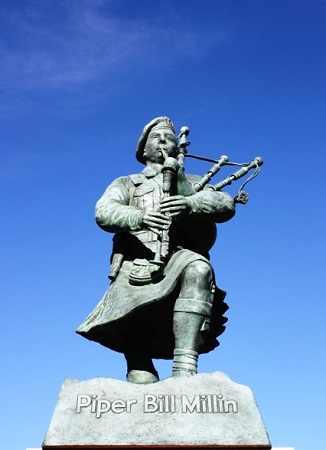
Millin statue

If you watch “The Longest Day” this weekend, as I am sure to do, you will see a portrayal of Bill Millin, though only fleetingly and without his character being identified. Although I have seen the film countless times over many decades, it was only recently, this morning, in fact, that I focused on this remarkable warrior and the unusual brand of courage he showed the world on D-Day.

Bill Millin is the apparently daft bagpiper you can see leading the troops of Lord Lovat (played by Peter Lawford) ashore on Sword Beach, and later blowing his infernal instrument as the 1st Special Service Brigade relieved the troops holding the crucial strategic crossing known as the Pegasus Bridge. Lovat, who, like Millin, was Scottish, defied the British War Office orders banning pipers in battle (too many of them had been killed in World War I), and directed his friend to play traditional tunes, including marches and bawdy drinking songs (including one with a chorus that ended with the shout,“Up your arse!”) , as the rest of his comrades were engaged in battle and under fire. His only weapon was a ceremonial dagger, and except for an incident when the men were in the sites of a sniper’s rifle and forced to take cover, he never stopped playing.

It will not surprise you to know that he was the only one who did this on June 6, 1944. Continue reading

June 6, 1944

D-Day-facts-Landing-on-Beach

If a Terminator wanted to get rid of me and Ethics Alarms, all he would have had to do, perhaps, would be to go back to June 2, 1944, and throw himself on the hand grenade that exploded and blew a hole in Jack Marshall, Sr.’s foot that day. The wound kept my dad in an Army hospital when he was scheduled to hit the beaches at Normandy, 7o years ago today. (He recuperated sufficiently to request a return to active duty, and ended up in the middle of the Battle of the Bulge.)

Thus it is that I have special appreciation and reverence for the American, Canadian* and British soldiers who risked, and in many cases lost, their lives winning a crucial battle in a war about freedom and human rights on June 6, 1944, and empathize with all the sons and daughters, and grandsons and grand-daughters, whose chances at existence were ended that day, while mine, by the sheerest luck, was not.

And I find myself wondering, as America retreats from its traditional ideal as the nation that stands up to evil, chaos, persecution and tyranny in the world, and as our government devalues “hero” and “service with honor” to the status of gratuitous application to a soldier who voluntarily abandoned his comrades on the field of battle, if our culture, our young, and our increasingly self-absorbed society would support the equivalent of a Normandy invasion today.  If not, the world is in greater peril than it knows.

I’m an optimist, and a firm, though shaken, believer in the unique cultural values of the United States of America. I believe that we are one admirable, wise, courageous leader of character away from getting back on the ennobling course charted by Washington, Lincoln, Roosevelt, Kennedy and Reagan.

I just wish that I could see, even faintly, such a leader coming over the horizon. I wish he…or she…would hurry the hell up.

* I stupidly omitted mentioning our Canadian allies when I first posted this, and was properly corrected. No slight intended. My apologies.

Comment of the Day: “Comment of the Day: ‘An Unethical Website, Golden Rule Malpractice And The Worst Anti-Bullying Program Ever'”

Atom bomb cloud

Responding to according2grayson’s passionate defense of non-violence and the Golden Rule while encountering bullies (as well as while opposing despots on the march), Steve-O-in-NJ enriched Ethics Alarms with an epic response including historical perspective, ethics and personal experience.

Here is his terrific post—long but not to be missed—and the Comment of the Day, on Comment of the Day: “An Unethical Website, Golden Rule Malpractice And The Worst Anti-Bullying Program Ever”:

I question this litany of life experiences, since it sounds a bit too pat and a bit too neat to be real, or at least it sounds sanitized/incomplete. Those with truly outstanding records usually don’t feel the need to trumpet them. That said, I wasn’t there, so maybe it is all true.

I know I tried the non-violent approach a few times, and it just lead to more bullying. I also tried the fight-back approach, smashing one bully’s head against the sidewalk and nearly strangling another, and it frankly didn’t get much more done beyond getting the bullies off my back temporarily. That said, a temporary respite from abuse is better than absorbing abuse every day without a respite. What really broke one group of problem people was a combination of finally going to the authorities and the people overreaching.Despite the justified criticism of Catholic schools (a whole separate discussion), they did have one very big thing going for them: no one who was enrolled had to be, or had any right to be, and dismissal or necessary discipline was easily accomplished. Continue reading