The Real Legal Ethics Conundrums In “Bridge of Spies”

bridge-of-spies

Quite a few readers have written that they would enjoy some of the problems I present in my seminars on legal ethics. I try to please, so here are some difficult legal ethics issues that arose in the screenplay of last year’s Oscar-nominated film “Bridge of Spies.”

I wrote about the film earlier this year, here.

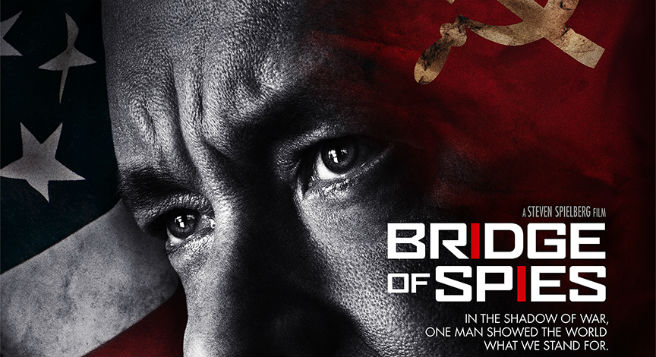
The film tells the true story of Jim Donovan, an insurance lawyer who is recruited, in 1957, by his New York bar association to take on the representation of the accused Soviet spy Rudolf Abel, a job that we see Donovan not only do bravely and competently, but one that he takes all the way to the Supreme Court. He loses, and Abel goes to prison.

Legal ethics points:

  • That ends the representation, and Abel is no longer Donovan’s client, but a former client.
  • Lawyers still have duties to former clients: they must keep all of the confidences learned during the representation and after, and not use these against the interests of the ex-client, or reveal them ever, even after the ex-client is dead and buried, except under rare circumstances.
  • A lawyer is also not allowed to become adverse to the interests of a former client in a substantially related matter to the one he (or she) handled for the client.

Because when representing Abel, Donovan had argued against executing the spy on the grounds that he might a useful  bargaining chip if an American was captured by the Russians—an argument he made to save Abel’s life, not to provide unsolicited advice to the government—the capture of U2 pilot Gary Powers after he was shot down in a spy plane makes the lawyer a candidate to make his own scenario come true. An East German official sends Donovan a letter claiming to be able to broker an exchange of Powers for Abel. When the CIA learns about the letter, they ask Donovan to go to East German and negotiate the deal. Continue reading

The First Thing We Do, Let’s Slime All The Lawyers…

the-blob-88

In election years I tell all my legal ethics seminar classes to start teaching their non-lawyer neighbors and relatives ABA Model Rule 1.2 b, which reads,

(b) A lawyer’s representation of a client, including representation by appointment, does not constitute an endorsement of the client’s political, economic, social or moral views or activities.

This, combined with the principle of zealous representation of one’s client, as expressed, for example, in D.C. Rule of Professional Conduct Rule 1.3…

(a) A lawyer shall represent a client zealously and diligently within the bounds of the law.
(b) A lawyer shall not intentionally:

(1) Fail to seek the lawful objectives of a client through reasonably available means permitted by law and the disciplinary rules; or
(2) Prejudice or damage a client during the course of the professional relationship….

…means that lawyers represent clients, and are bound to seek those clients’ objectives when those objectives are legal whether the lawyer likes or agrees with those objectives or not.

It means that it is ignorant, wrong and dangerous to the rule of law as well as the right of citizens to be the beneficiaries of laws in a democracy and not the servants of them, for unscrupulous political opponents to attack lawyers for the positions, objectives and needs of the clients they represented. It means that it is disgusting for maleducated journalists to misinform the already disturbingly confused public by using a matter that a lawyer-turned-candidate’s client needed legal advocacy for as an excuse to impugn the candidate’s character.

Lawyers do not have to agree with or like their clients’ positions, objectives or character, is that clear? Everybody? Lawyers are not to be held accountable for their client’s motives, conduct or legal objectives. Bill Cosby’s lawyers do not approve of rapists. Johnnie Cochran did not support the hobby of ex-wife knifing.

Yet this happens every election cycle, without fail: cheap shots directed at candidates who are lawyers based on one or more of their unsavory clients.  There are two lawyers left in the current primary competition, and guess what?

You guessed it.

Hillary’s ancient defense of a rapist was used to slime her all the way back in 2014. The unfair attack raised its misshapen and empty head last week on CNN, when a Trump supporter brought it up. What we know about Clinton is that she defended a child rapist she was appointed to represent pro bono in 1975, and did an excellent job. She used all the tactics that she was allowed to use. She attacked the credibility of the twelve-year-old victim, and threw sufficient doubt on the the chain of evidence that Clinton got an advantageous  plea bargain for her client, who served just ten months in prison. Sure, he was guilty, and Hillary knew it.  It was her job to make the prosecution prove its case with sufficient evidence, and they failed. The victim, we are told, has had a hard life because of the experience. That is not in any way Clinton’s fault or responsibility.

Now it’s on to Ted Cruz. Here is Slate’s click-bait, misleading, deceitful headline to further the “Ted Cruz is a some kind of sexually repressed weirdo” trope the left-biased media is peddling: Continue reading

Ethics Quote Of The Month: “Bridge of Spies”

bridge-of-spies-656

The shooting script for the Academy Award nominated film “Bridge of Spies” is now online. Written by Matt Charman and the Coen brothers, it, like the film that Steven Spielberg made out of it, provides an unusually accurate and nuanced portrayal of ethical lawyering. The movie is worth seeing, better more than once, and I expect that I will use many issues raised in it for class discussion as I teach legal ethics to lawyers this year.

There is one howlingly wrong scene, in which the lawyer, Jim Donovan (played by Tom Hanks) has a private discussion with the judge who will be sentencing his client, a convicted Russian spy. Donovan argues against a death sentence. If this happened, and I doubt it, it would have been an egregious ethics breach: this is called ex parte contact, and is strictly forbidden.

The film redeems this misstep many times over, especially in a scene that neatly explores both the duty of confidentiality and the duty of loyalty, as well as the crucial role of rules in society, and why “the ends justify the means” as well as those who advocate that philosophy must be rejected. “Ethics Bob” Stone told me that he now uses the scene in his business ethics classes.

The scene begins with Donovan meeting in a restaurant with a man who has been following him…. Continue reading

Ethics Observations On My 2013 Ethics Observations On The “Affluenza” Sentence, Now That The Teen Sociopath Is On The Lam

Ethan Couch

Ethan Couch

You may recall the so-called “Affluenza” case of 2013, which I wrote about here.

Ethan Couch a Texas teenager from a rich family, killed four people in a drunken-driving crash (he also had no license) and crippled a friend riding with him. Instead of jail time, the 16-year-old was given probation mandating expensive counseling and treatment by a judge who found herself vilified far and wide. Now this, from his lawyers, Reagan Wynn and Scott Brown:

“We have recently learned that, for the last several days, the juvenile probation officer has been unable to make contact with Ethan or his mother with whom he has been residing.”

A video surfaced showing Couch playing beer pong, which is a violation of probation that could send him to prison. The assumption is that he had fled to avoid that result, and may have even left the country. The Washington Post reports that The FBI and U.S. Marshals Service have joined the search for Couch, who is now considered a fugitive.

So, I am asked, how do the Ethics Alarms observations on the original sentence stand now, since it is clear that the judge’s attempt to reform Ethan without locking him up has failed?

The answer is, having read what I wrote initially again, that I wouldn’t retract a word.

Here’s what I wrote, and my comments now: Continue reading

Lowe’s, The Rights Of Racist Customers, And Why Lawyers and Doctors Aren’t Like Deliverymen

Now, if Lowe's drivers had law degree's, this would be a different story....

Now, if Lowe’s drivers had law degree’s, this would be a different story….

A fascinating story unearthed by master ethics sleuth Fred:

In Danville, Va., a customer specifically asked that a Lowe’s delivery be administered by delivery personnel who was not an African American. Marcus Bradley, the black driver assigned to the delivery, was called back to the store, and replaced. When the woman who made the request was interviewed, she said, “I got a right to have whatever I want and that’s it…No, I don’t feel bad about nothing.”

For hiss part, Bradley said that he was surprised that the store didn’t stand up for him, but that he would stay in his job. “I mean I gotta work. I’m going to keep going to work like I’ve always done. But I would think Lowe’s would take it into consideration to think about what they’re doing next time,” he said.

Lowe’s corporate office, when informed about the incident, released a statement that said in part… last week, and they said they’d look into it. Wednesday, we received this statement: Continue reading

Legally Competent, Ethically Bankrupt: The Zealous, Despicable Monique Pressley, Esq.

cosby-women-new-york-magazine-w724

Bill Cosby’s lawyer Monique Pressley decided to become a hybrid attorney-publicity agent yesterday, and in doing so provided an impromptu seminar on why people hate lawyers, and often should. She was carefully spinning and dissembling on behalf of her client without breaching the ethics rules against lying, parsing words and phrases with skill and deftness, all in the service of a serial sexual abuser and perhaps the greatest hypocrite pop culture has ever produced.

Brava!

Also, Yeeccch!

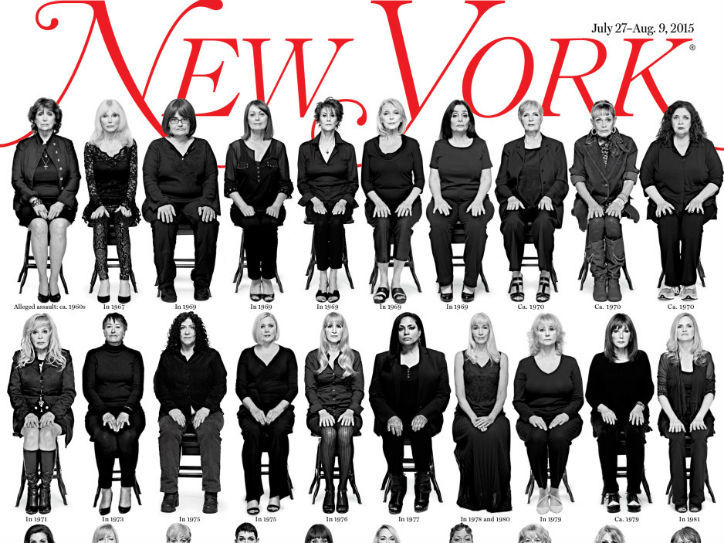
The impetus for her media spin tour, for that is all it was, is the New York magazine issue that features the stories of 35 of Cosby’s accusers. First Pressley told CNN’s Ashleigh Banfield that the women were comparable to a lynch mob: Continue reading

Ethics Alarms Mailbag: Is Arguing In The Alternative Unethical?

No, it isn’t, but I understand why it might  seem that way.

 “I didn’t do it, no one saw me do it, and you can’t prove anything!”

“I didn’t do it, no one saw me do it, and you can’t prove anything!”

An email from ethics issue scout Fred calls my attention to the case of  transgendered female Leyth O. Jamal, 23, who filed a sexual discrimination suit in September claiming that managers at a Saks store in Houston  referred to her as a man, made her to use the men’s restroom and pressured her to dress as a man despite being aware of her transgender identity. She also claimed a male colleague repeatedly asked her whether she was a prostitute in front of customers and colleagues, and threatened her. Saks fired Jamal after she brought a complaint to the Equal Employment Opportunity Commission.

In federal court this week, Saks withdrew its Dec. 29, 2014, court filing asserting that transgender workers are not covered by the gender discrimination ban in Title VII of the Civil Rights Act of 1964. The company  still denies that it discriminated, and has made statements about how it “believes that all persons are protected against sex discrimination under Title VII” of the Civil Rights Act of 1964, which prohibits discrimination by employers on the basis of race, color, religion, sex or national origin. It had argued, however that the plaintiff had based her case not on sex discrimination but on the issue of gender identity and transgender status, which Saks believed fell outside of Title VII’s mandate.

Now Saks is only disputing that there was any discrimination, not that such discrimination was legal. The question posed to me: does this U-turn this look bad for Saks? Is it cynical and unethical? How can you simultaneously argue that what the client alleges isn’t actionable because there’s no law against discriminating against someone for gender identity, and that you didn’t discriminate on that basis, or any basis, anyway? Continue reading

A Lawyer Argues “Do No Harm” Should Be Added To The Legal Ethics Rules, Thus Proving Herself To Be A Hopelessly Unethical Lawyer

This is Alexa. She'll let you know if your client is good or bad, and whether you should help him. Just ask.

This is Alexa. She’ll let you know if your client is good or bad, and whether you should help him. Just ask.

Lawyer Alexa Van Brunt contributed a jaw-dropping op-ed to the Washington Post over the holidays. It was titled “The ‘torture’ memos prove America’s lawyers don’t know how to be ethical,” and argued that the legal profession needs the equivalent of the medical profession’s “First do no harm” ethical standard.

It was irresponsible for the Post to print such a piece, because it made its readers, most of whom are thoroughly confused about legal ethics already, even more confused. So far, I have yet to find any lawyer who regards Van Brunt’s theory as anything other than laughable, tragic, shocking, or proof that ideology rots the brain. She cannot possibly understand legal ethics or even what the duties of the legal profession are and compose such an embarrassing piece.

Alexa Van Brunt is, we are told, an attorney at the Roderick and Solange MacArthur Justice Center, a Clinical Assistant Professor at Northwestern University Law School and Center, and a Public Voices Fellow with The OpEd Project. This explains a lot. She is a public interest lawyer on a mission, and thus represents only causes that she thinks are good, right and important. Apparently she missed the part of law school where you learn that one of a lawyer’s jobs is to assist non-lawyer clients as they try to accomplish their goals, which they believe are good, right, and important. These often involve engaging in controversies with others, and zero-sum results. Someone is going to suffer “harm.”

In medicine, what “do no harm” means is frequently clear: make the patient better, not worse. There are usually not competing patients, where a limited amount of health must be allotted among suffering human beings. Thus a doctor will not ethically take a healthy heart from a living patient to give to another. In law, however, “Do no harm” would render many disputes beyond legal assistance. Is a defense lawyer who refuses to let a guilty client be convicted by insufficient evidence, jury bias and wrongful interpretation of the law doing harm by freeing a criminal, or is it harm to allow prosecutions to violate due process? Is a real estate lawyer who assists as a company purchases virgin land for the building of a factory doing harm to the environment, or is the lawyer for the environmental group that tries to block it doing harm to the economy?

Van Brunt’s primary focus is the torture issue, but even there, what is “harm” is muddy. Those who supported the use of torture believed that precluding it would place the U.S. population at risk. Alexa defines “harm” as violating international law and the Constitution, but the Constitution, some scholars believe, does not prohibit torture as the CIA practiced it, and in war, doing harm is necessary to win. Who decides whether a litigant who wants to sue for police brutality is going to do harm to public safety, or whether defending a police officer accused of murder will encourage police executions of unarmed men? Who decides, when it comes to  finding that a lawyer violated this new, sensitive ethics rule, what constitutes “harm”?

Why Alexa, of course! She and all those other good people who know with absolute certainty what is right and just in every case—they know what harm is. Just ask them. Meanwhile, client confidentiality is out, because sometimes a lawyer keeping his client’s secrets may cause harm to others. Providing legal advice to banks, defense contractors, auto manufacturers, gun-makers, processed food manufacturers, McDonalds, pharmaceuticals, the Defense Department, the CIA, pro-life organizations (abortion providers don’t harm anyone, of course), the NRA, the Republican Party, this all causes harm…by Alexa’s standards, and she knows best. We don’t need judges or juries, just let the consciences of lawyer and their associations decide which clients are virtuous enough to be worthy of legal representation.

The op-ed is not just absurd, but ignorant and alarming. How can anyone this warped and lacking in understanding of the law and the ethical duties of the profession be teaching at a law school, where she can assist in the minting of new lawyers as ignorant, arrogant and unethical as she is?

Talk about doing harm.

 

Banning The “Gay Panic Defense”

Last year, the American Bar Association House of Delegates passed a controversial resolution calling on states to ban the so-called gay panic defense. The defense arises (when it does arise, which is rarely), in cases of a heterosexual accused of an assault on a gay individual when the defense attorney argues that his client was so shocked and terrified by a homosexual advance of a romantic or sexual nature that he was overcome with disgust, anger and fear, and was launched into a psychotic state that compelled violence. Many judges refuse to allow it, because there is no accepted scientific evidence that “gay panic” exists as a legitimate prelude to temporary insanity.

The ABA resolved:

 That the American Bar Association urges federal, tribal, state, local and territorial governments to take legislative action to curtail the availability and effectiveness of the “gay panic” and “trans panic” defenses, which seek to partially or completely excuse crimes such as murder and assault on the grounds that the victim’s sexual orientation or gender identity is to blame for the defendant’s violent reaction.

Such legislative action should include:

(a) Requiring courts in any criminal trial or proceeding, upon the request of a party, to instruct the jury not to let bias, sympathy, prejudice, or public opinion influence its decision about the victims, witnesses, or defendant s based upon sexual orientation or gender identity; and

(b) Specifying that neither a non – violent sexual advance, nor the discovery of a person’s sex or gender identity, constitutes legally adequate provocation to mitigate the crime of murder to manslaughter, o r to mitigate the severity of any non – capital crime.

It should be no surprise that California was the first state to follow this plan, with Gov. Jerry Brown signing an anti-gay panic defense bill into law in September. Now New Jersey has a similar law under consideration. Continue reading

Unthical Quote of the Week: Bill Cosby Attorney Martin Singer

lying-lawyers“The new, never-before-heard claims from women who have come forward in the past two weeks with unsubstantiated, fantastical stories about things they say occurred 30, 40 or even 50 years ago have escalated past the point of absurdity.These brand new claims about alleged decades-old events are becoming increasingly ridiculous, and it is completely illogical that so many people would have said nothing, done nothing and made no reports to law enforcement or asserted civil claims if they thought they had been assaulted over a span of so many years.  Lawsuits are filed against people in the public eye every day. There has never been a shortage of lawyers willing to represent people with claims against rich, powerful men, so it makes no sense that not one of these new women who just came forward for the first time now ever asserted a legal claim back at the time they alleged they had been sexually assaulted. This situation is an unprecedented example of the media’s breakneck rush to run stories without any corroboration or adherence to traditional journalistic standards. Over and over again, we have refuted these new unsubstantiated stories with documentary evidence, only to have a new uncorroborated story crop up out of the woodwork. When will it end?

—-Martin Singer, one of comedian Bill Cosby’s lawyers, trying to quell the public relations storm that threatens to blow the 77-year-old icon’s career and reputation apart.

Wow.

I advise lawyers not to make sweeping, emphatic statements like this, for several reasons. First, it comes very close to violating the ethical prohibition against dishonesty, misrepresentation, fraud and deceit. If the lawyer wants to say such words on behalf of his client, that’s one thing, and legitimate representation, though I would prefer to see such statements come from a publicist. For Singer to say something like this on his own behalf, however, harms all of his other clients by scarring his credibility. I don’t believe him, and when it becomes indisputable that Cosby is guilty and that his lawyers had to know, no one will be able to believe him again. Lawyers are supposed to tell the truth, and to represent even the most despicable clients without behaving unethically themselves, within the standards of the profession. That can be difficult, as in this instance. That is why lawyers get the big bucks, however. They should be able to walk that tightrope.

Singer falls right off: Continue reading