The Death of Raymond Zack: No Heroes, Only Bystanders

50-year-old Raymond Zack waded into the surf on an Alameda, California beach and stood calmly in the 54-degree water, apparently waiting to die. His suicide took nearly an hour, but eventually he drowned, with no rescue attempts from any of the 75 San Franciscans who gathered on the shore to watch the entire tragedy.

Why didn’t anyone try to rescue the man?

Apparently it was because nobody was paid to do it. You see, stopping Zack from killing himself wasn’t anyone’s job.

The media’s focus in reporting yet another disturbing incident with echoes of the murder of Kitty Genovese has been exclusively on the inert Alameda police and firemen who witnessed Zack’s suicide. “Fire crews and police could only watch,” wrote the Associate Press.

What does the AP mean, “they could only watch”?  Were they shackled? Held at gunpoint? Were all of them unable to swim? They didn’t have to watch and do nothing, they chose to watch and do nothing, just like every one of the bystanders who weren’t police or firemen chose to be passive and apathetic when saving a life required action and risk. Continue reading

Ethics Challenge: Two Mothers, Young Love and Deception

A good friend—call her Julia— with a teenage daughter (she’s 16) recently  asked me for help with an ethical dilemma.

Julia’s daughter is quiet, seemingly conservative, and socially restrained. She has never had a boyfriend, and has been on few dates, until now. She has been seeing a young man—call him Ishmael— her own age (well, he’s 17) who seems to match her to perfection in every respect. He’s sensitive, polite, and witty,  and on top of everything, he’s really cute, the object of every one of her friends’ and rivals’ awe.

Of course, there is a problem. Ishmael’s mother is fanatically protective: he is not supposed to date until he is 18, and has to check in with her every hour when he is out of the house. The relationship with my friend’s daughter only exists through an elaborate subterfuge, involving complicit friends and relayed phone messages. Once, in order to facilitate a special date to go to a concert, Julia allowed the boy to sleep overnight (in the guest room), when he was supposedly staying a male friend’s house.

My friend wanted to know if she should tell the boy’s mother about his web of lies. A parent has a right to have his or her own rules respected, and not undermined by other parents. The Golden Rule, applied to Ishmael’s mother, yields a demand that she be told; Julia would want to be told if her child was systematically defying her.

On the other hand, she firmly believes that the mother’s restriction on her son are excessive, and she has never known her daughter to be so happy.  She is worried that informing the mother will cause a serious rift with her daughter, and perhaps worse. “What is the ethical course?” she asked me. “What should I do?” Continue reading

Recognition and Gratitude Time

Despite the lightest traffic Ethics Alarms had experienced since Christmas in the week running up to Memorial Day, May 2011 will break the blog’s previous record for most visits, and end up approximately 300% busier than May 2010.

My heartfelt thanks to regulars and occasional visitors too—even those who still want to argue about the Tide commercials—with Acti-Lift!—for making my efforts here seem, if not especially influential, not entirely unappreciated either.


Comment of the Day: “Murder House Ethics and the Validity of Feelings”

"Oh THAT! You would have cared about THAT?"

Tgt, the ghosts of whose earlier argument in series of comments haunted me prompted a revisit to the issue of murder houses and a seller’s obligation to reveal their history to potential buyers, came back with this Comment of the Day, thought-provoking, as usual:

“…I still want to know the line that determines what ethically does and does not need to be disclosed. It was never settled. This post generally boils down to another emotional appeal that something should be done in some cases. I want to know which cases and why those. Otherwise, my argument holds fast. I don’t see multiple murders (the latest clearly having nothing to do with the earlier ones) as being any more relevant than one murder.

“I also believe Jack misrepresented my position on emotion in general. Us rational humanists still mourn our dead, though we try to celebrate their lives more than anything else. While humans are not special in the concept of the Universe, we understand that we are special to ourselves and in our relations with other people. Humanism is about celebrating human life and relationships.

“As for death specifically, I see no need of a grave or burial rites. A dead body is just decomposing flesh. It does not need to be prayed for and cleansed. The person though, the lasting effects they have had on others, the memories of them – these are all important. I cried when a somewhat distant high school friend died in a freak accident at 17. I sent his family flowers on the anniversary of his death for the next 2 years. Why? Because it let his family know that he wasn’t forgotten, that he made an impact on other lives. It let them knew that people cared… people they only knew by name. I cherish the cards they sent in response. Continue reading

Ethics Train Wreck at the French Open: The Saga of the Over-Eager Ballboy

John McEnroe slams a player for not being an exemplary sportsman. Wait...WHAT?

Sparking a mini-ethics train wreck at the French Open, an overenthusiastic ballboy, thinking a point was over when it was not, ran onto the court in the middle of the tennis match between Andy Murray and Viktor Troicki, forcing a replay on a point that appeared to have been won by Troicki.

Crash!

  • Andy Murray happily accepted his good luck and won the replay. He was wrong. The tradition of tennis, unlike most other sports (but like golf), is for the competitors to be gracious in such situations, as when a player knows that an umpire mistakenly called a good point by his opponent out of bounds. True, these days that tradition is observed less and less frequently. It would still have been the right thing to do, the ethical response.
  • Commenting on the match on The Tennis Channel, John McEnroe criticized Murray for not giving Troicki the point. This may win him the Gall of the Year Award, sports division. Yes, people can change, and it is not strictly hypocritical for one of the most unsportsmanlike players in tennis history to criticize a current player for not being an exemplary sportsman, now that the brat has mellowed and learned the error of his ways. At very least, however, if Mac was going to criticize another player for not doing something he would have never considered when he was competing himself, McEnroe was obligated to admit that he was advocating a standard he didn’t embrace when he had the chance. Continue reading

Dancing With Thomas Jefferson: How Assholes Make the Law Spoil Life For Everyone

Coming to a place of honor and reflection near you.

On Saturday, the U.S. Park Police forcefully arrested five “Code Pink” protesters under the dome of the Jefferson Memorial for defying a recent Federal Appeals Court ruling that dancing at federal monuments was not constitutionally protected expression.

Perhaps you missed that ruling earlier this month, which was, I presume, made necessary by the realization that a flash mob could break out at any moment at the Lincoln Memorial or the Alamo. That was not the threat in 2008, however, when Mary Oberwetter was arrested, also at the Thomas Jefferson Memorial, for hoofing to celebrate Thomas Jefferson’s birthday.

She sued the National Park Service for violating her First Amendment rights, and on May 17 the U.S. Court of Appeals for the D.C. Circuit held that the Jefferson Memorial should have a “solemn atmosphere” and that dancing, silent or otherwise, was an inappropriate form of expression there. The appellate judges concurred with the lower court that the memorial is “not a public forum,” and thus demonstrators must first obtain a  permit. Demonstrations that require permits in the Park Service’s National Capital region are defined as

“…picketing, speechmaking, marching, holding vigils or religious services and all other like forms of conduct which involve the communication or expression of views or grievances, engaged in by one or more persons, the conduct of which has the effect, intent or propensity to draw a crowd or onlookers. [The] term does not include casual park use by visitors or tourists which does not have an intent or propensity to attract a crowd or onlookers.”

The Appellate Court wrote: Continue reading

Ethics Dunces: Joe Klein and Chris Matthews

John Edwards agrees with Chris Matthews

Journalist Joe Klein has been a candidate for an Ethics Dunce award for a long time, because he has been ethically suspect or worse for a long time. His defining integrity moment came when he lied about his authorship of the Bill Clinton roman-a-clef, “Primary Colors.” Since that time, Klein has gradually evolved into a shamelessly biased and ethically muddled political commentator from the left. Too bad. He’s a perceptive guy and a wonderful writer, but he makes his living now shooting from the hip, so we seldom get the benefit of his best qualities.

It was inevitable that the Chris Matthews Show would allow Klein’s ethical blindness to reach full flower.  Matthews has been on his own journey of self-diminishment since MSNBC decided to become the anti-Fox; where once he could be counted on to treat the issues of the day fairly and avoid partisan cheerleading, the Obama years have seen him abandon any effort at objectivity or even-handedness. Matthews’ Sunday morning panel show now eschews ideological balance and has Matthews posing questions to a rotating group of reliable conservative-bashers, with an occasional straight journalist mixed in who at least pretends to be neutral.  On Sunday, Matthews asked his panel about the appropriateness of the Justice Department’s prosecution of uber-cad John Edwards for violations of the federal election laws. It’s not a bad question, and reasonable people can disagree about the answer. The charges against Edwards stem from solicitation of large cash gifts from two long-time friends and supporters while he was simultaneously running for president and trying to cover up the existence of his love-child with Rielle Hunter and the adulterous affair that spawned her.  The money was given directly to Hunter, raising a legal question as to whether it was really a campaign contribution at all. Continue reading

When An Apology Proves You’ll Say Anything: Ed Schultz’s Amazing Mea Culpa

"Hey Ed! Your masks are showing!

After MSNBC had announced that it was suspending Ed Schultz for a week without pay for calling conservative talk-show host Laura Ingraham a “slut” on his syndicated radio show, its boorish left-wing star delivered an on-air apology. Schultz certainly seemed sincere and contrite, saying solemnly that his “vile and inappropriate language” was wrong and uncalled for.  “I am deeply sorry, and I apologize,” he said. “I apologize to you, Laura, and ask for your forgiveness…It doesn’t matter what the circumstances were. It doesn’t matter that it was on radio and I was ad-libbing. None of that matters. None of that matters. What matters is what I said was terribly vile and not of the standards that I or any other person should adhere to…..And I have been in this business since 1978, and I have made a lot of mistakes. This is the lowest of low for me. I stand before you tonight in front of this camera in this studio in an environment that I absolutely love. I love working here. I love communicating with all of you on the radio and the communication that I have with you when I go out and do town hall meetings and meet the people that actually watch. I stand before you tonight to take full responsibility for what I said and how I said it, and I am deeply sorry.

“My wife is a wonderful woman,” Ed continued, getting emotional. “We have a wonderful family. And with six kids and eight grandkids, I try to set an example. In this moment, I have failed. And I want you to know that I talked to my sons especially about character and about dignity and about the truth. And I tell you the truth tonight that I am deeply sorry and I tell them every day that they have to live up to standards if they want to be a successful human being in life. And I have let them down. I have never been in this position before to the point where it has affected so many people. And I know that I have let a lot of people down…. Continue reading

Ethics and the Case of the “Large-Breasted Woman”


Now SHE'S what you call a distraction...

Illinois attorney Thomas W. Gooch III became the object of great hilarity in legal circles this week when he reacted to what he felt was an unethical courtroom tactic by his opposing counsel in a lawsuit by filing this motion in limine:

 Defendant’s counsel is anecdotally familiar with the tactics and theatrics of Plaintiff’s counsel . . . . Such behavior includes having a large breasted woman sit next to him at counsel’s table during the course of the trial. There is no evidence whatsoever that this woman has any legal training whatsoever, and the sole purpose of her presence at Plaintiff’s Counsel’s table is to draw the attention of the jury away from the relevant proceedings before this court, obviously prejudicing the Defendant’s in this or any other cause. Until it is shown that this woman has any sort of legal background, she should be required to sit in the gallery with the rest of the spectators and be barred from sitting at counsel’s table during the course of this trial.

Not surprisingly, the motion failed, and predictably, Gooch has become the latest villain in the gender wars, reducing a competent legal professional (according to attorney Dmitry Feofanov’s answer to the complaint) to the size of her bra cup and denigrating women generally. Continue reading

Comment of the Day: “Schadenfreude, Ethics, and Those Fanatics Inside Us All”

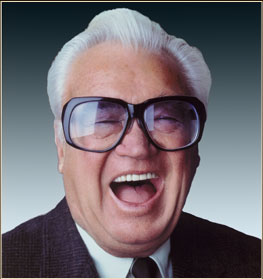
Maybe "The Broadcaster" was all Harry had inside...

Rick elaborates nicely on the theme of my post on handling those fanatic personas that reside in each of us, and in the process takes the ethical measure of an iconic baseball broadcaster whose charms always escaped me…the late Harry Carey.

“It strikes me that there’s another part of the equation, which you only hint at here, but which you have mentioned in other posts. That’s the “ethics alarm” (to coin a phrase) that goes off, or should, when the director or the Red Sox fan or whoever That Guy is says or does something unethical. Part of it is “heat of the moment” stuff: the egoism that slips out in a moment of excitement. No, of course you didn’t want Thurman Munson to die, but yes, he did play for the hated Yankees, and their team just got worse. You’re forgiven the fist-pump. Once. And provided you (Jack, as opposed to Red Sox fan) didn’t mean it.

“I was watching a Cubs game on WGN sometime in the mid-1980s when news came over the wire that Montreal Expos infielder Hubie Brooks had suffered a season-ending injury. Brooks had been a favorite of mine when he’d played for the Mets (“my team”), and I continued to follow his career with some interest, so the news was doubly sad for me: a player had been seriously injured, and that player was Hubie Brooks.

“In contrast, Cubs announcer Harry Carey proclaimed “well, if it helps the Cubs win, it’s OK by me.” I remember the exact words 25 years later. What struck me was not that they were uttered, but that no one—not Carey himself, not his broadcast partner, no one—made the slightest attempt to walk them back. That was the official verdict: a season-ending injury (Brooks was never the same again, by the way) was a good thing if it happened to somebody in a different uniform. I mentioned the incident to a couple of friends—Cubs fans—and they laughed and said “oh, that’s Harry.”

“Everyone understood that Carey was a Cubs fan first and an announcer second. That was, I am told, part of his charm—I never saw it, but others did. Still, I was sort of hoping that there would be a human being in there somewhere. On that particular day, at least, I was disappointed. We lived in WGN country for another seven years. I never watched another Cubs game without turning off the sound.”