You’ve probably heard or read the story by now.
Wait! Maybe he’s Cherokee!
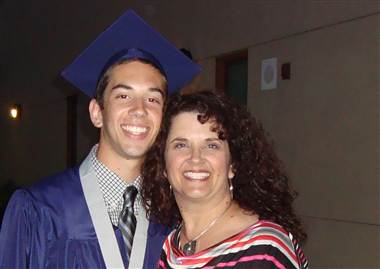
17-year-old Jeffrey Warren rose to accept the $1,000 college scholarship awarded by the local Martin Luther King Senior Citizens Club during seniors night at Martin Luther King High School in Riverside, California, and provoked both laughter and awkward gasps. He was obviously white—as white as Elizabeth Warren—and the scholarship for intended for black students, though Warren didn’t know that when he applied.
Later, Warren decided to give back the money. His family said they didn’t want the African-American women who gave out the award to be foiled in their attempt to help young black scholars, and that it was the right thing to do. I would say that it was a right thing to do, and showed exemplary kindness, compassion, empathy, generosity, charity and altruism. Jeffrey had every right to accept the money. The Club’s requirements were vague, and did not make it clear that he was not eligible when he applied. If he and his parents had wanted to make a political and philosophical statement about the hypocrisy of a race-based scholarship in the name of Martin Luther King, this was an ideal opportunity, and an argument could be made that this would have been the “right” thing to do as well, if not “righter.”
He’s an excellent student: why doesn’t the Martin Luther King Senior Citizens Club want him to have the honor? Because he’s white? Does that mean they respect him less? That his achievements don’t count? That his color makes him less of a worthy young man? What if he could show that he was 1/32 black, or if not show it, claim that he had always been told that he had African-American heritage to the same extent that entitles the Democratic candidate for U.S. Senator in Massachusetts to encourage universities to count her as a “woman of color”?
I’d like to hear someone in the club try to explain their reasoning and square it with Dr. King’s ideals without sounding ridiculous or like a bigot. I would have been tempted to make such an explanation a pre-condition of returning the scholarship award. Jeffrey, however, made the same point in a more subtle, quieter, kinder way, and allowed the runner-up, an African-American girl, to get the money, which I’m sure she deserved too.
We’ll see if that was the better course. It will be if defenders of race-based distinctions in 21st Century America are challenged to explain why Jeffrey wasn’t being discriminated against, and real discussion commences in which the challengers aren’t the ones being called racist. Special kudos, at any rate, are due Wall Street Journal blogger James Taranto, whose crusher at the end of his commentary on the story was this: How embarrassing for the Martin Luther King Senior Citizens Club that they accidentally judged someone by the content of his character.
Touché.
_________________________________________
Source and Pointer: James Taranto
Facts and Graphic: MSNBC
Ethics Alarms attempts to give proper attribution and credit to all sources of facts, analysis and other assistance that go into its blog posts. If you are aware of one I missed, or believe your own work was used in any way without proper attribution, please contact me, Jack Marshall, at jamproethics@verizon.net.
 Ethics Alarms
I love this.
I scanned the title a bit too quickly and thought Warren Jeffs (!?!) had been declared an ethics hero. I like the actual story about Jeffrey Warren much better.
The club did not ask for the money back. Some individuals felt that they should, but the majority of the club members noted that it was not an award explicitly restricted by race, and decided not to ask for the money back. The refund of the money was a voluntary move on the young man’s part, as he himself felt he did not qualify. But he would have been well within his rights to keep it.
Oh, the club couldn’t ask for its money back, and anyone with a bait-shop law degree could have told them so. Plus it would have looked terrible.
Would it have been *a* right thing to do – and showing exemplary kindness, compassion, empathy, generosity, charity and altruism – if the Citizens Club, instead of accepting Warren’s return of the prize, had requested that he simply donate the money to another scholarship fund of his choice?
I don’t think so. Either he’s eligible, or he isn’t. He decided that he wasn’t, so he returned it. The club *couldn’t* say he was ineligible, because they’d have to say why, and he helped them to save face by doing so.
But for the club to turn around and give it not to a student at all, but to some charity… what would even be the point? That would feel to me like the money was tainted, and they didn’t want to deal with it.
No, the club should either let him keep it (which they did) because he qualified for it, or take it back and award it to another student because he didn’t qualify (because it’s racist money). *Anything* else is pandering and spin control, not altruism.
Pingback: Ethics Hero: Jeffrey Warren | Ethics Alarms « Ethics Find
Noted on another version of this story on FB that the club was rewriting its rules to be sure this doesn’t happen again. Bigots?
A tough issue. On one hand, why shouldn’t a group from the North End of Boston be able to set up a scholarship for a smart Italian kid? On the other hand, the motives behind a whites only scholarship are inherently suspicious. I do know this: if we allow all-black scholarships, we should allow all-white scholarships. Let the African-American groups make the choice.