Quick Ethics Quiz….

I routinely edit blog comments for typos and minor grammatical mistakes, both to assist with clarity and reading and also as a Golden Rule exercise—I have typo issues myself, as regular readers well know.

This comment just turned up on Edward Carney’s Comment of the Day (from September of 2011) about flying the Confederate flag:

“I know what the confederate flag means. I am not racist. I wanted to show that I am not for whats going on in this country. Their is a lot of people like me.You cannot change history.You can make new history with it.”

I was tempted not to fix it (there are four errors) but I decided that would be unfair.

Should I have left it as it was?

To The Un-American Secessionists

Led by Texans, the White House is being deluged with petitions from all around the nation asking that various states be allowed to secede from the U.S. because the prospect of another four years of President Obama is so heinous. My immediate reaction is that this proves that conservatives are lazier than progressives, whose solution to a similar disappointment with parties reversed in 2004 was to pack up and move to Canada, or at least to make noises about it.  Conservatives apparently want to stay at home and leave the U.S.too. How convenient.

In 2004, when liberals and Democrats were acting like spoiled brats, I posted the following essay entitled “Escape to Canada and the Ethics of Democracy.” I think it is instructive to re-publish this post unedited to clarify what is wrong with the conservative tantrum of 2012. Oh, I could have changed “left” to “right,” Canada to Texas and Bush to Obama and Alec Baldwin to Ted Nugent, but it hardly seemed necessary, for my diagnosis and conclusions are exactly the same, just with a different group. It also seems prudent to leave the essay in its original form to remind smug liberals like Jon Stewart, now having a ball mocking Republicans, that Democrats disgraced themselves in a similar manner not that long ago. Being a hysteric, an alarmist, a bad citizen and a poor loser isn’t confined to members of one partisan group—it just seems that way at the moment. Now the conservatives are the silly people who are rejecting the principles of self-government that they were fervently  lecturing us about, because, you see, those principles didn’t work out their way…this time.

Here is “Escape to Canada and the Ethics of Democracy,” from The Ethics Scoreboard on November 17, 2004: Continue reading

Meet the Grants!

Hmmm…I wonder who’ll play Jennifer in the Lifetime movie?

If this developing story from Seattle was a Lifetime Network movie, I would regard it as proof positive that LMN was running out of plausible plots. Since it appears to be real, I regard it as proof positive that life is running out of plausible plots.

Meet the Grants. They make fun couple David Petraeus and Paula Broadwell look like Mike and Carol Brady.  Described as a Seattle “power couple”, he’s a successful lawyer, and she’s city prosecutor. He’s also an accused serial rapist.

Dan Grant faces seven charges of raping Chinese women working as massage therapists, and another charge for first-degree burglary. He has pleaded not guilty to all charges. The chances that there is sufficient evidence to charge a Seattle lawyer as a serial rapist and that the evidence is nonetheless erroneous are slim, as are the chances that the police would charge the husband of a prosecutor without an air-tight case. Still, the word alleged needs to be attached to all of this. This isn’t just alleged, however: a recently released search warrant shows that prosecutor Jennifer Grant moved her husband’s SUV from in front of the massage parlor where he allegedly raped one of the Chinese women to a location far away from both the parlor and the Grants’ home. Gee, thanks, honey! Now why would she do that? The Good Wife Prosecutor swears that she took no evidence from the SUV except a garage key card, but a search warrant affidavit indicates that police believed that the vehicle contained a knife, condom wrappers, phony police ID and DNA. Continue reading

Gen. Allen, Lockheed, John Edwards, Restraint Bias,and Further Musings on the Petraeus-Broadwell Ethics Train Wreck

Run away!

In no particular order:

  • In a tack that is being duplicated by other commentators on the left, MSNBC’s Rachel Maddow essentially pronounced the scandal as much ado about nothing (Columnist E.J. Dionne dismissively referred to Petraeus’s affair as his “little secret”). See, as long as an incident involves sex, the Left’s default position is that it can’t be that bad. Maddow mocked the actions of Jill Kelley, the woman who Broadwell threatened and who alerted the FBI, saying, “Who contacts the FBI because of threatening e-mails? If I did that, they would have to set up a special division just for me.” Ha ha.  How many of your threatening e-mails credibly suggested that the head of an intelligence agency was having an illicit affair with an unstable wacko, Rachel? Kelley did the responsible, intelligent thing given the possible national security implications. But it’s certainly good to know that you wouldn’t…because it’s only sex, of course.
  • Other pundits are complaining that the FBI became involved when what Petraeus did “wasn’t a crime.”  Yes,  it’s the “It’s legal” rationalization. Why people who can’t comprehend that dangerous, destructive, serious misconduct can occur without breaking any laws are allowed to write newspaper columns, I’ll never understand. Petraeus’s affair was a violation of the ethics rules, in an intelligence agency with major responsibilities in national security. That is serious, inherently dangerous, and easily could have led to security breaches that were illegal. If a leader materially, knowingly and publicly violates an ethics rule, he cannot lead. This is why Petraeus, who understands this, resigned, despite the certainty that the Rachel Maddows of the media would have been happy to shrug off his actions as “no big deal.” because it’s only sex, and “it’s legal.”
  • Kelley still boarded the ethics train wreck, not because of her actions in response to Broadwell’s threat, but in light of the revelation that she was maintaining a hot e-mail relationship with Gen. John R. Allen, the commander of U.S. and NATO troops in Afghanistan. The FBI has uncovered between 20,000 and 30,000 pages of primarily e-mails containing “potentially inappropriate” communication between Allen and Kelley. Wait, what? Between 20,000 and 30,000 pages? What the hell is going on with our generals? This is obsessive, unhealthy behavior, even if he’s just writing her limericks and recipes. Something is serious amiss in the ethical culture of the U.S. military leadership Continue reading

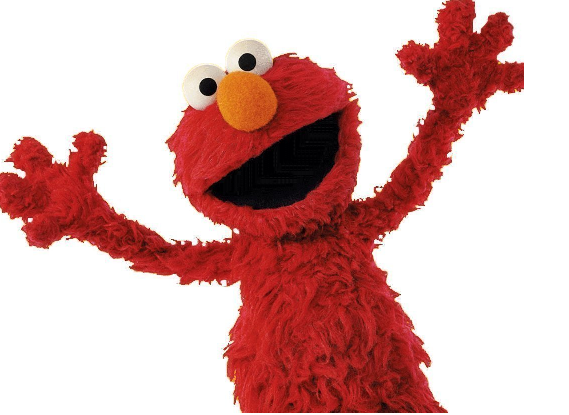
Ethics Quiz: Elmo’s Problem

And now, Muppet ethics.

Sorry, Elmo.

Kevin Clash is the voice and operator of beloved Elmo, the cute lttle red monster  on “Sesame Street.”  A young man has accused Clash of molesting him when he was a teen.  Clah denies the allegations, claining that the relationship was between consenting adults. The Children’s Television Workshop says its investigation did not substantaite the accusation; nonetheless, Clash is being disciplined for says the show, is being disciplined for “inappropriate use of company email,” and is unlikely to have his hand in Elmo any time soon, if ever again. The alleged victim is probably not through with Clash, and this could get ugly.

Your Ethics Quiz challenge, should you choose to accept it, is this:

Assuming nothing illegal is proven regarding Clash’s sexual relationship with the accuser, and it remains a “he said/he said” dispute, should Clash remain the voice and puppeteer behind “Sesame Street’s” most innocent character? Continue reading

Comment of the Day: “The Idiot, the Ex, and the Consequences”

I’ve been remiss in posting “comments of the day” of late; it is not a reflection on comment quality, which has been excellent, but rather on my own distractions. Here is a new one at last, from new commenter Kathryn. It appeals to me because it nails the subtext of the original post, and like most Comments of the Day, takes the original topic to the next stage of analysis. I hope we hear more from her. Here is Kathryn’s Comment of the Day on the post, “The Idiot, the Ex, and the Consequences.”

“I am waiting, perhaps overly optimistically, for culture to catch up with information availability and develop new ways of handling privacy outside of responding to information when it is made public, regardless of the source or context for that information. Everyone says/does something particularly unwise/unwell/without grace during their life. Technology is getting to the point that these moments, rather than being forgotten or a story told among friends, are fairly permanently in the public record. (The Internet is public, whatever Facebook settings attempt to convince you.) Continue reading

The Idiot, the Ex, and the Consequences

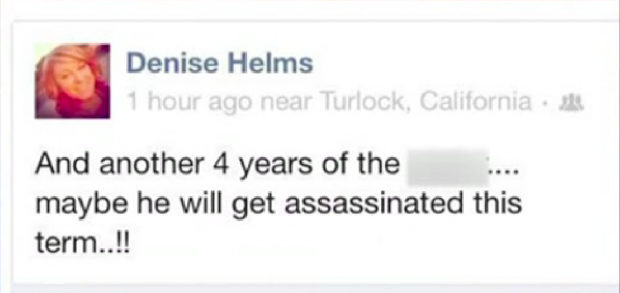
Denise Helms, who will probably not look like this the next time you see her if she knows what’s good for her.

My position would usually be this: for an employer to use a privacy setting Facebook post as justification for firing an employee is unfair. That applies to vacation photos of an elementary school teacher holding a beer and looking bleery-eyed at a pub, a Sunday school teacher doing a strip tease at a bachelor party, and political posts of a radical, vulgar or offensive nature. Two factors can change the equation, though. Action may be justified if the posting reasonably calls into question the trustworthiness of the employee in his or her job duties, or if the posting becomes public, subjecting the employer to embarrassment or undermining the employee’s ability to do her job, as in the naked teacher cases.

Denise Helms, the idiot referenced in the title above, posted this on her Facebook page, intended only for her closest, presumably most racist or most idiotic friends:

Continue reading

Be Careful What You Wish For Dept.: “Occupy” May Finally Have a Plan, and Sure Enough, It’s Ethically Bats

Oh, yes,THIS is bound to work out well…

The core of my objection to Occupy Wall Street and its progeny was and is that it never had the discipline, cohesion or communications skills to make it clear what the “movement” really wanted to accomplish, other than generally blaming all the world’s ills on the wealthy and successful. This was the reason for its failure, though Occupy fans like to say that it “succeeded” by starting a national dialogue about corporate executive salaries and the growing disparity in income levels between the richest and the poorest Americans—as if that dialogue hadn’t been ongoing long  before the first sign went up in Zuccotti Park.

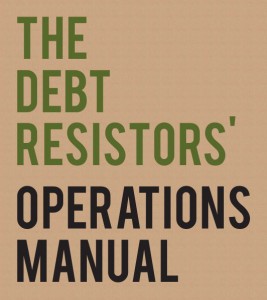
Now there are signs that the Occupy bitter-enders are hard at work launching a real, substantive effort with a specific goal, albeit and insane one: to bring down the financial system with a “debt strike.” ( In These Times headlined its story about this “You Are Not A Loan.” Pretty clever!) The idea is to refuse to pay back the interest or principal on outstanding debt, and to insist that all loans and interest  be forgiven, since the debt system is inherently corrupt and rigged to transfer wealth from the poor to the rich.

We shouldn’t have to expend a lot of argument on why this is unethical. People, companies and nations in serious debt reach that point because they spend more money than they have. They borrow money promising to repay, agreeing to pay an additional fee, interest, for the privilege of using money that doesn’t belong to them. The vast majority of debt is not amassed by desperate debtors who have to deal with the equivalent of Loan Shark Larry and risk broken legs or death unless they pay unconscionable fees. Most debt comes from wanting something before you can pay for it. While laws are in place to minimize predatory lending and to provide a safety net (in the form of bankruptcy) so people and companies don’t end up destitute and in debtor’s prison, essentially the system, like society itself, exists on trust, the cornerstone of all ethics.  Lenders give their money to trustworthy loan-seekers, and charge higher interest rates to those who they deem less trustworthy. That is fair. Continue reading

Ten More Hollywood Ethics Cures For A Post-Election Hangover (Part 2)

Here are the final five ethics movies, making 25 on the Ethics Alarms list so far. Except for the last, they are a sober batch. I think I now understand why they are at the back end of my list of 25; this group is darker than the first 15 and more tinged with defeat than hope. Their ethics lessons, however, remain inspiring, or if not quite that, thought-provoking:

6. The Insider (1999)

Another true story, one that explores the murky area of whistleblowing and whistleblowers as well as the conflict between the business of journalism and the profession of journalism.

Ethical issues highlighted: confidentiality, whistleblowing, law vs. ethics, sacrifice, courage, media ethics, integrity, honesty, trustworthiness, betrayal

Favorite quote: “You’re in a state of conflict. Here’s how it lays out. If you have vital insider stuff that the American people for their welfare need to know and you feel compelled to disclose it and this violates the agreement – that’s one thing. On the other hand, if you want to honor the agreement, it’s simple. Say nothing. Do nothing. The only guy who can figure this out is you, and that’s you all by yourself.” Lowell Bergman (Al Pacino) Continue reading

Ten More Hollywood Ethics Cures For A Post-Election Hangover (Part I)

A year ago, the combination of the erupting Penn State scandal (and Penn State’s students’ scandalous reaction to it) and our dysfunctional government led me to list my “15 Hollywood Cures…,” my favorite movies dealing with ethics themes that I reflexively turn to when the world’s ethics alarms look frozen and broken. I had to leave some of the best ethics films off that list (Part I is here; Part II is here), and this seems like a good time to remedy that injustice. Here are ten more excellent films to prime our ethics alarms with minimal preaching and maximum entertainment value, bringing the Ethics Alarms movie list to 25. It will get larger, I’m sure:

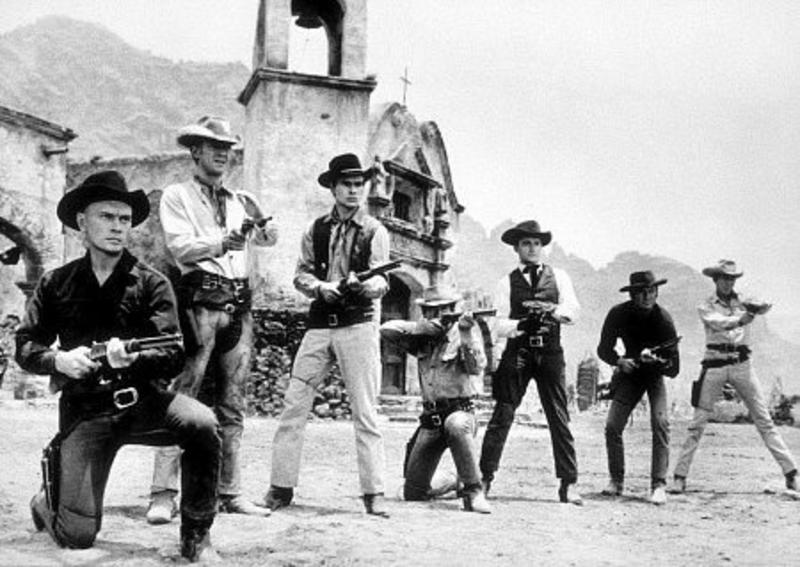
1. The Magnificent  Seven (196o)
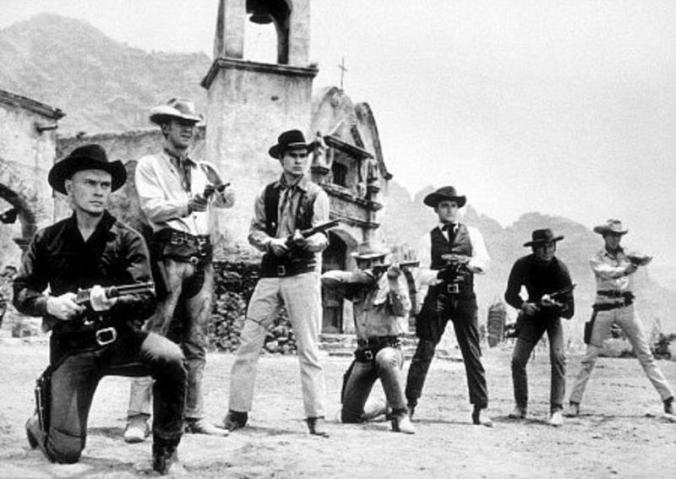
Ethics Bob Stone’s favorite ethics movie, and he has a good case. A group of seven hired gunslingers help an impoverished Mexican town fight off looting bandits, each of the seven for a different reason, facing their own ethical dilemmas and contradictions.

Ethical issues highlightedaltruism, bullying, charity, courage, integrity, teamwork and the importance of prioritizing values.

Favorite quote:

Harry (Brad Dexter): “There comes a time to turn mother’s picture to the wall and get out. The village will be no worse off than it was before we came.”

Chris (Yul Brenner): “You forget one thing — we took a contract.”

Vin (Steve McQueen): “It’s not the kind any court would enforce.”

Chris: “That’s just the kind you’ve got to keep.” Continue reading