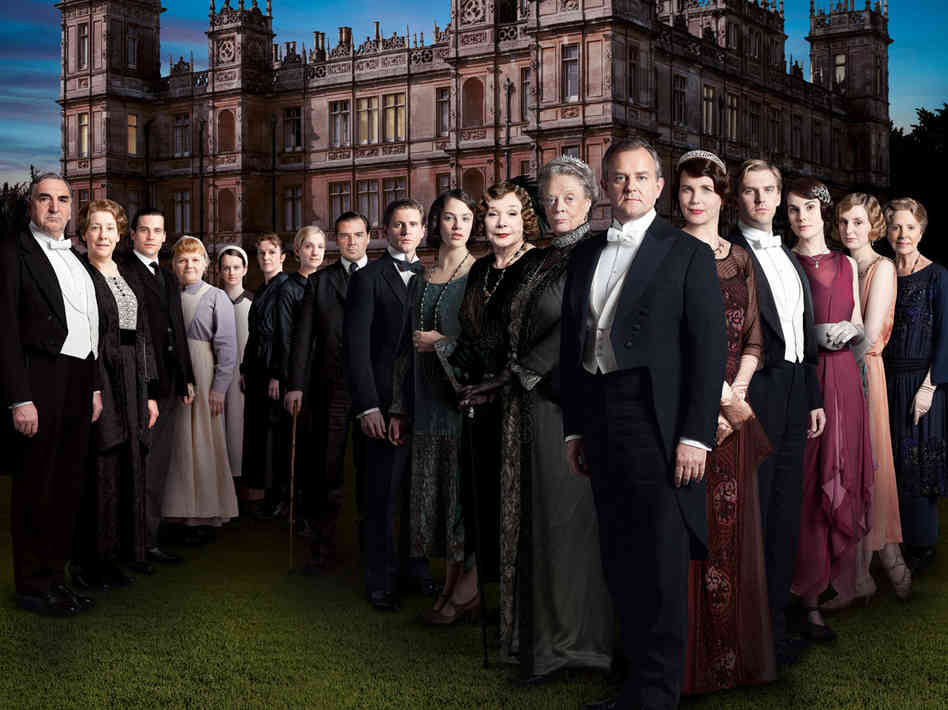
The fourth episode of the PBS sensation “Downton Abbey” provided a clinical examination of how bias of all kinds can rule the most important decisions in our lives, and how moral luck so frequently determines our conclusions about whether those decisions were right, wrong, or really, really wrong. It also shed some light on the current policy conundrum of how best to consider medical malpractice suits—as a fair and necessary means of rewarding the victims of professional errors, or as a decidedly unfair device that distorts the practice of medicine and inflates its costs without improving treatment.
For those who have not caught the trans-Atlantic mania of following the saga of the Earl of Grantham and his extended family as they try to maintain their life of luxury as members of the landed aristocracy post-World War I, here are the relevant plot points of the most recent episode (in the U.S.; Great Britain is a season ahead of us):
Sybil, the much loved but rebellious daughter of the Earl is staying at the family estate (all right, castle) as she prepares for childbirth. (She and her Irish revolutionary husband Tom are on the lam from British authorities, but never mind that). The Earl naturally wants the best medical care for his daughter, and rejects the long-time family physician, Dr. Clarkson, for the task, because he has made some faulty diagnoses of late that led to all kinds of sorrow in last season’s drama. So the Earl calls in a renowned surgeon to the upper crust who is upper crust himself, Sir Philip Tapsell. (He appears to be an arrogant, pompous jerk, but the show’s writers show him giving sage and well-worded advice to the Earl’s non-Irish revolutionary son-in-law on the delicate matter of his sperm count, so we know he’s not a fraud as well.)
The Earl’s American but far too deferential wife Cora (in case you wondered whatever happened to the cute Elizabeth McGovern from “Ordinary People,” the answer is, “This!”) seeks to rescue Dr. Clarkson from a stinging snub by insisting that he come to Downton Abbey and be present for the childbirth as what we would call a consulting physician to Sir Philip, who doesn’t want one. Two head-strong doctors and hostile doctors looking after the same patient—yes, this will work out well.
Sure enough, Sybil’s pregnancy takes an ominous turn. Her ankles are swollen (“Perhaps she has thick ankles!” huffs Sir Philip, pooh-poohing the symptom. “She does not!” replies loyal Dr. Clarkson), her mental state is confused, and there is protein in her blood. Clarkson concludes that Sybil is toxemic and believes she could suffer eclampsia if she isn’t taken to the hospital immediately for a Caesarian section. Sir Philip dismisses him as a hysteric hack, and insists that Sybil’s pregnancy is normal and fine. Since Caesarians were risky in the 1920’s, often resulting in the deaths of the mother, the baby, or both, he believes Dr. Clarkson is giving irresponsible advice. As critical minutes tick away, Lord Grantham asks Clarkson if he can guarantee that Sybil will survive the ordeal of a Caesarian. “There are no guarantees,” he replies, correctly. Not hearing what he wanted to hear, the worried father turns to Sir Phillip and asks how certain the blue-blood doc is that the operation is unnecessary. “Completely certain,” is the ridiculous reply.
Announcing that certainty is a better bet than equivocation, Lord Grantham decrees that Sybil will remain at the castle to have her child, which she promptly does. All seems to be well, too, with a healthy baby, a beaming mother, a relieved family, and a smugly gloating Sir Phillip. But then Sybil goes into the violent seizures characteristic of eclampsia, and it is too late to save her. She dies. Dr. Clarkson’s diagnosis was correct. The family is devastated; Sir Philip is stunned, Cora is furious at both him and her husband, and the Earl of Grantham is feeling guilty.
Got that?
Cora’s anger, the Earl’s guilt and the vindication of Dr. Clarkson are all the result of a bad-tasting recipe of hindsight bias and moral luck. Sybil might have not gone into convulsions. She might not have survived the Caesarian, in which case Dr. Clarkson would be the one looking incompetent, Sir Phillip would say “I told you so,” and Cora would be furious at a different doctor but the same decision-maker, her husband, who would still be sleeping in the guest room.
Biases determined all aspects of the decision-making process in this episode. The Earl was predisposed to trust the knighted doctor over his country doctor counterpart for reasons having nothing to do with their respective medical skills. He was also biased against Clarkson because the doctor had not managed to save key characters during the Spanish Flu epidemic, not that any other doctor was doing much better. In the fateful showdown between the physicians, Lord Grantham fell victim to confirmation bias—Sir Philip’s opinion that “everything is all right” was what he wanted to hear, so he believed that.
The worst ethics transgression in this sequence of events was Sir Philip’s declaration that he was “certain” that Sybil was in no danger, an unprofessional over-statement that was sparked by an outbreak of pure ego: it was more important for him to “win” over the rival doctor than to take proper care of his patient. Today, that breach of duty would cost him dearly, for any physician who guarantees a good result might as well just hand over his bank account numbers at the same time. Even so, only moral luck made him look like a miscreant and a fool.
That is the real ethics and policy point to ponder in this episode. Should the current medical malpractice system make doctors and hospitals liable in the millions according to the vicissitudes of moral luck? While there are certainly clear-cut cases of genuine malpractice, insurance companies frequently pay settlements in the millions for supposed negligence that is really an inevitable part of practicing medicine: it is not an exact science, and sometimes a doctor is unlucky or wrong without being negligent. The current torts system operates as a form of welfare, using the myth of medical infallibility to shift millions in sympathy payments to victims of medical and health misfortune, using the money of deep-pockets doctors and hospitals to do it. In 21st Century America, it is likely that any scenario that ended with Sybil’s death would result in a malpractice lawsuit and settlement, especially if her father was a construction worker instead of an Earl.
The human ethics lesson is that blaming people for decisions based on what happens is often unfair, and the instinct to do so destroys friendships, businesses and marriages. The Earl had two doctors arguing about medical matters that he knew nothing about. He chose the wrong one to trust, perhaps based on biased perceptions, but there really was no way for him to know who was right, though I would have told him that when one doctor says he is 100% sure, trust the other one. This is the great trap of consequentialism, determining that a decision was wrong based not on how it was made, but whether it worked. Cora should forgive her husband.
Should she forgive Sir Philip too?
 Ethics Alarms
The medical establishment didn’t really have a decent understanding of medical uncertainty until the ’20s or ’30s at the earliest (at the higher levels). If you’re judging by practitioners in general, I’d set the turnaround to the ’50s and ’60s.
In this context, it’s worth noting that Downton Abbey is set in the ’20s. Sir Philip fell for an illusion of certainty when he probably lacked the background to understand it *was* an illusion, and certainly lacked a decent understanding of the sources of said illusion.
Was he biased? Did he let his feelings interfere with his judgement? Well… yes. Did he understand either confirmation bias, hindsight bias, or motivated reasoning in anything approaching the modern sense? No.
Of course, I haven’t watched the episode (and don’t care to). If I was Cora, however, I would probably forgiven the doctor… after giving him a stern talking to about making sure that he learns from the affair.
Making a medical misjudgement under soap-opera-esque circumstances? Forgivable. Not learning from such a mistake? Far less so.
Good analysis. The show is really quite good, but if you’re going to watch it, you should start with the first season.
I’m sure we could find lots of examples in literature, psychology and philosophy predating the 20’s in which confirmation bias, hindsight bias, or motivated reasoning were described, though no so labelled. I wouldn’t be so sure that Sir Philip wouldn’t be aware of those traps—not that it always helps to be, even now.
Oh, you’ll find references to things like that (in various forms) dating back centuries, possibly even millennia. Hell, I’m pretty sure that there are references in ancient Chinese writings.
They weren’t, however, understood in the way that we understand them now… and their magnitude was consistently underestimated. More, they weren’t well understood in the context of medicine and clinical decision-making. Doctors weren’t trained in how to overcome such problems, and clinical decision-making models (such as they existed) didn’t incorporate attempts to compensate for them.
Or, put another way, there’s a reason that I qualified my statement with the phrase “in anything approaching the modern sense”.
The *big* item, however, is the illusion of certainty — and, again, it wouldn’t be reasonable to expect him to be aware of that (except maybe in the form of sayings by old Zen philosophers and the like). I mean, if we’re going to get into details — statistics was still in its infancy, Popper’s key works had yet to be published (much less translated)… and while Florence Nightingale had done some key pioneering work in the application of statistics to medicine (which Sir Philip was almost certainly aware of), her arguments involved very little by way of an attempt to quantify the uncertainty inherent in her inferences.
Doctors at the time were, by and large, absurdly overconfident in their judgement… at least by modern standards.
My initial reaction is that, medically, it would depend on the standard of care in the 1920s. In that regard, it looks like she was adequately served: 2 physicians, with a home delivery, to the manor born, at a time when very little was known for certain about these risks.
Even today, substandard prenatal care represents an unacceptable risk in maternal healthcare.
Statistically, all the biases cited were pretty much prevalent back then. Yet, even today books are churned out regularly by economists, psychologists, and decision theory people that continually point out these same mistakes made by experts and regular folks regularly. Two of my favorites recent works that address this: “Thinking Fast and Slow” by Daniel Kahneman & “The Signal and the Noise” by Nate Silver.
Should she forgive him? Then and now patients will accept mistakes made by doctors who admit them and/or demonstrate good bedside manner. Even if the doctor is less than average, which half of them are. I missed the episode, but if he has, she should a
nd will.
Violet Crawley, the matriarch of the family, had the right response, I think, when she said to Robert that women die in childbirth all the time and that Sybil just happened to be one of them. She wasn’t just saying that to ease her son’s conscience; as an elderly lady, she’d seen enough of the contingencies of life to know that medical science can’t cure everything and can’t ultimately save us from death. It seems that everyone else in the situation, except the humble and sensible Dr. Clarkson, were laboring under the illusion that medicine can heal all — an illusion that the medical field is largely responsible for.
I’m not sure what Cora is more angry about — the death of her daughter, the presumption of certainty on the doctor’s part, or the class bias that led her husband to believe that certainty. Perhaps she’s just angry at herself for not telling the men that they were out of their league and insisting that Sybil go to the hospital. After all, she’d given birth to three children and had to have known, on some level, that Sybil’s condition was not a normal part of childbirth — and that childbirth was (and is) a potentially life-threatening process.
Well said! I think she’s also recalling the last time Lord Grantham relied on expert opinion and lost her family fortune.
Having now seen the episode online, I was taken by the way Dr. Clarkson adjusted his decision (he initially said Sybil was in normal health) and used observation and testing to arrive at a diagnosis. At that point though, plan B, a trip to the hospital and a C-section is fraught with complication, to mother and child. Both could have died. On the other hand, mortality of a 24 y/o woman in childbirth was and is a rare event and she might have survived despite Sir Phillip: the wrong diagnosis, good outcome.
That said, the helplessness demonstrated by both physicians at the end was pretty appalling, almost unbelievable. Even a midwife would have been better in that situation.
Arguments can and have been made that our knowledge base, reliance on technology, and pace of development have made us more susceptible to certainty bias than ever.
Certainly, we have far more reason than we used to for being confident in our understanding of the universe. This is especially true for doctors.
On the other hand, we also have far better understanding of the *limits* of our knowledge, and modern doctors are trained — explicitly and extensively — in the nature of said limits. They are trained to — and expected to — question their judgements in ways that doctors back then simply weren’t.
This training is my ethical point above, really — if he’d had modern medical training, Sir Phillip’s actions would have gone directly against it, and we could have held him ethically accountable for doing so. The problem is that he *didn’t* have that training… and, back then, professionals (such as doctors) often operated under a sort of false certainty in their professional judgement — an illusion that *their* judgements were special and privileged because *they* were the *professionals*.
And, while expertise has its value… what I’m talking about goes well beyond that.
Surely, though, any sane and competent doctor in the 1920’s had to know he could justify less certainty than modern physicians, wouldn’t he?
No. He really, really wouldn’t.
I am, as it happens, drastically understating the degree to which physicians historically overestimated the value of expert judgement, the extent to which they have institutionally overestimated their own abilities, and the extent to which they have institutionally underestimated the factors which bias their decisions. If you’re interested in studying the history of this, I’d suggest Wootton’s Bad Medicine as a place to start; if you’re interested in studying the factors I’m talking about, I’d suggest Testing Treatments ( http://www.testingtreatments.org ; the website offers a free PDF of the book).
The short version, however, is that not only would he have not been trained to second-guess his own judgement and keep the inherent uncertainty of the situation in mind… his training would have actually pushed him in the *opposite* direction.
We have probably the best trained physicians in the history of the world yet medical errors continue to plague the profession. From prescribing errors to misinformation published in refereed journals to routine misdiagnoses – all this stuff is taught in medical schools, yet the mistakes keep coming.
Sir Philips’ warning about transferring Sybil to a hospital was a good one: as was brought home last year in a WSJ article http://online.wsj.com/article/SB10000872396390444620104578008263334441352.html,”if medical errors were a disease, it would be the sixth leading cause of death in America.” Or try The Institute of Medicine’s 1999 report: “To Err is Human,” where “100,000 patients die a year of preventable medical error,” doubtless a conservative figure and despite our greater awareness and attempts at addressing.
The times may have been different – we may know more now – but the issues sadly remain. The only certainty is uncertainty, a timeless principle.
My Mom was killed by a killer bug she caught while being hospitalized with an unrelated (and non-life threatening) infection. My grandfather use to say it was insane to go the hospital. “Look at the place!” he’d say. “Everyone there is sick!”
I’m personally much more fond of a story I once read about Archie Cochrane and an initiative to build some specialty heart wards (read in this book: http://www.wiley.com/WileyCDA/WileyTitle/productCd-0727911511.html ).
As I remember the story (it’s been a while and I can’t find my copy at the moment, although there seems to be a PDF at http://www.nuffieldtrust.org.uk/sites/files/nuffield/publication/non-random_reflections_on_health_service_research.pdf — I’d double-check if it was searchable and/or the computer I’m typing this message from would let me efficiently scroll in it ), some physicians had the idea of starting a series of special, intensive-care wards for recovering heart patients. These wards would be staffed entirely by the best specialists they could find… etc., etc., etc.
Cochrane, being, well, Archie Cochrane, decided to test whether they were worth the effort by comparing how well patients did in them (as opposed to outpatient care). Many of the people behind the idea opposed this — on ethical grounds (any such trial would, by necessity, involve randomly assigning people to outpatient care and thus depriving them of the more intensive and presumably better intensive ward).
After a while, Cochrane got preliminary data and presented it to the doctors involved in the project. Seeing a clear trend for increased survival in the hospitalized patients, the doctors called for Cochrane to put a halt to the trial and let the outpatients get the improved care offered in the hospital setting.
Then Cochrane revealed his trick: realizing the doctors’ biases, he’d switched the data — and the trend really ran in the opposite direction.
Correction: the trial was for coronary care units in general. The account I was remembering (surprisingly accurately) can be found on Page 8 of the book. A version can also apparently be found in Cochrane’s autobiography, which I was reminded that I haven’t had the opportunity to read yet. Into the queue it goes…
Incidentally, the cardiologists who opposed the trial refused to participate, forcing Cochrane to run the trial elsewhere. There’s a lot of interesting ethical implications of the incident in general, and going to the source on it is highly recommended.
Finally: Generalizing the results to modern coronary care units isn’t recommended. While I’m not familiar with the current data (I’m not a cardiologist or even an MD, and as such have no real reason to keep up with it), this study was conducted sufficiently long ago that the standard of care has likely changed nearly to the point of being unrecognizable.
Well, my wife convinced me to start watching Downton Abbey with her. I started on episode 5 of season one and we’re about halfway through season 2. I’m so far impressed (and I don’t really go for British shows centered on their odd hyper-manners and Edwardian regimentation of social roles). I’ve enjoyed it and ever episode could open an ethics discussion.
I should also note, the series has done well so far not having every single character be a vicious Machiavellian monster or weak hapless victim like most period dramas do. Rather, the handful of decent people with the power the enact their decency, makes it an enjoyable story amidst the modern trend of “every character is really just a bad person”.
It’d be neat to see more ethics discussions about the different episodes. I’m also glad that the show writers didn’t go the lazy route and depict Grantham as some sort of evil, aloof, abusive stereotyped capitalist…but rather with the realistic approach of a typical “small business CEO” who cares about his employees.
I agree all the way, Michael. My only real problem with the show was its anachronistic sympathy with gays expressed by the Earl, at a time when homosexuality was illegal in the UK. But there were plenty of ethics issues, indeed, particularly around the treatment of class.