William Wordsworth (April 7, 1770-April 23, 1850)
Sherman Alexie is the editor of the 2015 edition of Best American Poetry, an annual anthology that came out this week. One of his choices for inclusion was “The Bees, the Flowers, Jesus, Ancient Tigers, Poseidon, Adam and Eve” by Yi-Fen Chou.
After being informed by Alexie that his short poem, previously published in a small journal, had been honored with selection, Yi-Fen Chou contacted Alexie to reveal that he wasn’t Yi-Fen Chou, but boring, white, privileged Michael Derrick Hudson of Fort Wayne, Indiana.
Hudson explained to Alexie, and in his bio for the anthology, that he had posed as an obscure Asian poet rather than as an obscure WASP poet after his poem was rejected by 40 different journals when it was submitted under his real name. He decided to test his theory that the poem would suddenly seem better to editors if it had a little pro-diversity, cultural bias behind it. He was right. Now two editors had favored it.
Alexie left the poem in the collection, with the poet’s real name, and has been attacked for doing so, from all sorts of angles. Hudson has received criticism as well. Alexie wrote a heartfelt, thoughtful, and self-contradictory explanation of why he thought he did the right thing. Read it, if you can stand it. Also worth reading is Jesse Singal’s essay, inspired by this rhyme-crime, in New York Magazine about bias. His most useful statement—“It can feel threatening to acknowledge that we are all susceptible to bias. The reality is that it’s simply a part of being human”—is wise. Otherwise, he is far too kind to Alexie simply because he was transparent and thoughtful in analyzing his conduct. Transparent and thoughtful Alexie is. He is also wrong.
Observations:
1) Hudson lied in his original submission as a Chinese bard, and should have been disqualified on that basis alone. He had a right to use a pen name, of course, but that came with an obligation to reveal that it was a pen name. He sought to benefit by deceiving the editor of the journal that had published him, and to get his poem published for reasons other than its literary merits. Ding. This isn’t even a close call.
2) Was Hudson’s deception justified because it revealed unfair bias and a lack of integrity in the selection process? No, although it did, because he sought to benefit from the bias while exposing it. An ethical path would have been to reveal his name, pull his poem himself, and disclose what happened publicly. As it was, his conduct was no different from the episodes where whites have falsely claimed to be minorities—Senator Warren! It’s an honor to have you here! Meet Rachel Dolezal! —to gain academic or employment benefits. It’s fraud. There is nothing virtuous about it.
3) Affirmative action has no place in publishing, journalism, or any aspect of the writing business when it comes to identifying quality. Alexie, in his article (I’m sorry, I hate it, and I find the attitude of the person writing it insufferable), goes to great lengths to explain how he tried to eliminate bias from his poetry choices, citing eleven rules. If he really wanted to eliminate bias, he would choose poems blind, without any names attached. Rule #5 is blatantly pro-bias:
Rule #5: I will pay close attention to the poets and poems that have been underrepresented in the past. So that means I will carefully look for great poems by women and people of color. And for great poems by younger, less established poets. And for great poems by older poets who haven’t been previously lauded.
This is just a rationalization to excuse including less than the best poems for reasons unrelated to the quality of the poetry. The volume is titled “Best.” If this isn’t the criteria, then call the book “Quota-Determined American Poetry by Types of Poets Whose Works Haven’t Been Published As Often As Other Types, Whatever The Reason.” What is “underrepresented” supposed to mean? Presumably inferior poems aren’t underrepresented among poetry collections, so this rule embraces a dubious proposition, which is that if a particular racial, ethnic, or other group doesn’t have as much poetry published as their numbers would suggest, then dark forces must be afoot, and it’s up to Alexie to put his thumb on the scales. This is unethical thinking, unfair and irresponsible to all, including readers. The genetic code of a poet doesn’t make his or her poetry any better or worse. Like all art, a poem must and should stand on its own.
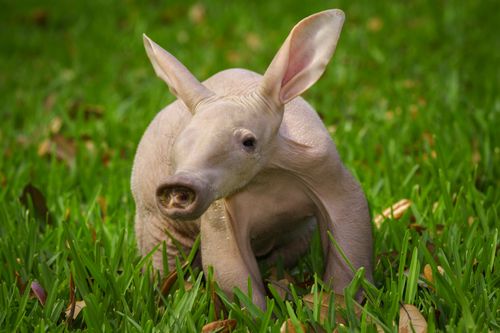
I don’t care if Wordsworth was an aardvark, and neither should you.
4) Alexie admits that his bias caused him to choose a poem by Yi-Fen Chou. He writes:
I’d been drawn to the poem because of its long list title (check my bibliography and you’ll see how much I love long titles) and, yes, because of the poet’s Chinese name. Of course, I am no expert on Chinese names so I’d only assumed the name was Chinese. As part of my mission to pay more attention to underrepresented poets and to writers I’d never read, I gave this particular poem a close reading. And I found it to be a compelling work. In rereading the poem, I still found it to be compelling. And most important, it didn’t contain any overt or covert Chinese influences or identity. I hadn’t been fooled by its “Chinese-ness” because it contained nothing that I recognized as being inherently Chinese or Asian. There could very well be allusions to Chinese culture that I don’t see. But there was nothing in Yi-Fen Chou’s public biography about actually being Chinese. In fact, by referencing Adam and Eve, Poseidon, the Roman Coliseum, and Jesus, I’d argue that the poem is inherently obsessed with European culture. When I first read it, I’d briefly wondered about the life story of a Chinese American poet who would be compelled to write a poem with such overt and affectionate European classical and Christian imagery, and I marveled at how interesting many of us are in our cross-cultural lives, and then I tossed the poem on the “maybe” pile that eventually became a “yes” pile.
Do you see what happened?
I did exactly what that pseudonym-user feared other editors had done to him in the past: I paid more initial attention to his poem because of my perception and misperception of the poet’s identity. Bluntly stated, I was more amenable to the poem because I thought the author was Chinese American.
Here, I could offer you many examples of white nepotism inside the literary community. I could detail entire writing careers that have been one long series of handshakes and hugs among white friends and colleagues. I could list the white poets who have been selected by their white friends for each of the previous editions of Best American Poetry. But that would be just grandstanding. It’s also grandstanding for me to accuse white folks of nepotism without offering any real evidence. This whole damn essay is grandstanding.
So what’s the real reason why I’m not naming names? It’s because most white writers who benefit from white nepotism are good writers. That feels like a contradiction. But it’s not.
And, hey, guess what? In paying more initial attention to Yi-Fen Chou’s poem, I was also practicing a form of nepotism. I am a brown-skinned poet who gave a better chance to another supposed brown-skinned poet because of our brownness.
So, yes, of course, white poets have helped their white friends and colleagues because of nepotism. And, yes, of course, brown poets have helped their brown friends and colleagues because of nepotism. And, yes, because of nepotism, brown and white poets have crossed racial and cultural lines to help friends and colleagues.
Nepotism is as common as oxygen.
Yes, I see what happened too, and I see what’s happening: Alexie is running through the rationalizations list. as if seeking the warmth we feel from a field of flowers, as we sit in the sun and bask for hours.
First he tries #2. The “They’re Just as Bad” Excuse, or “They had it coming,” then goes on to #7. The “Tit for Tat” Excuse, meanders through #19. The Perfection Diversion: “Nobody’s Perfect!” or “Everybody makes mistakes!,” and finally, with his last sentence, settles on “Everybody Does It.”
That’s neither an explanation nor a justification, but a smug shrug. (The whole essay is a smug shrug.) Biased based of skin color, and proud of it!
5) Alexie finally descends into ethics gibberish when he explains why he didn’t cut the fraudulent poem:
But I had to keep that pseudonymous poem in the anthology because it would have been dishonest to do otherwise. If I’d pulled the poem then I would have been denying that I gave the poem special attention because of the poet’s Chinese pseudonym. If I’d pulled the poem then I would have been denying that I was consciously and deliberately seeking to address past racial, cultural, social, and aesthetic injustices in the poetry world. And, yes, in keeping the poem, I am quite aware that I am also committing an injustice against poets of color, and against Chinese and Asian poets in particular. But I believe I would have committed a larger injustice by dumping the poem. I think I would have cast doubt on every poem I have chosen for BAP. It would have implied that I chose poems based only on identity.
In a word, What? So Alexie has to leave in a poem that he mistakenly gave special attention because of the fake name, to prove he gave it special attention because of a fake name, even though in doing so he commits an injustice to deserving poets of color whom he is trying to avenge for past wrongs by choosing inferior poems by people of color even if they aren’t really people of color.
This, you see, is another reason why affirmative action programs go horribly wrong. They tend to be administered by people who reason like this.
6) The critics of Hudson, alias Yi-Fen Chou, are no better. Here’s poet and Chapman University professor Victoria Chang telling the Washington Post why she finds what he did despicable, and why Alexie was wrong to include the poem:
“When you’re doing this from a position of entitlement, you’re appropriating an ethnic identity that’s one, imaginary, and two, doesn’t have access to the literary world. And it diminishes categorically all of our accomplishments. He sort of implies that minorities are published because we’re minorities, not because of our work. That’s just insulting because it strips everything we’ve worked so hard for.”
No, Victoria, handing out distinctions based on color rather than merit is what diminishes your accomplishments. Hudson didn’t just “sort of imply that minorities are published because we’re minorities, not because of our work,” he proved that this is indeed sometimes the case.
______________________________
Pointer and Source: Washington Post
Sources: New York Magazine,
 Ethics Alarms
His Rule #5 is a betrayal of the title of his annual publication. If it is a collection of “the best,” deliberately representing marginalized populations should not be part of the decision making process. The poetry ought to be reviewed with the names hidden. Even in high school, we knew that this was the fair way to evaluate the poetry of our peers. When I edited my high school’s literary journal, that’s how we evaluated the submissions. Frankly, we allowed almost anything in that collection; it had to be really bad or offensive to be excluded. But we didn’t know the names of the really bad poets/writers — just the names of the ones we selected for publication, and only AFTER we had selected them. If Alexie wants to give publication opportunity to under-represented minorities, great! Publish another annual collection with that as the goal.
A blind test would make sense, but I really enjoy the fact that the “authors” actions brought forward a bias.How many others walked off with prizes not based on merit but ethnicity?
I believe I saw something similar a few years back with a Nobel Peace Prize.
Though Obama didn’t submit himself with a Palestinian name….
I laughed my butt off when the “Peace Prize” was awarded to an Arab Terrorist, then followed up by giving it to a community organizer because he was half-black.
re: “Hudson lied in his submission.” Writers don’t submit work to the Best American series; the series “selects notable works from hundreds of periodicals.” He lied to the Prairie Schooner journal, where he submitted the poem, and when it was selected for the Best American series, he told the truth.
He lied in his submission to the Prairie Schooner journal. He lied in his submission.
Hudson was collecting data on several prominent literary magazines, and if he had revealed his pen name to Ploughshares, Prarie Schooner, or any of the others, that would have been the end of collecting data on them. If he had pulled the poem from Best American, we wouldn’t be having this conversation. Maybe he should return the $100 he got from Best American.
What’s your point? That the ends justified the means? Is he a poet, or a whistleblower? He claims to be a poet.
He appears to be a librarian. I’m addressing the first two of the ethical points you made in your original post. I agree that there is no place for affirmative action in publishing (point three), but don’t see how this sort of bias would be uncovered without gathering data (point one) and bringing it into a public forum (point two). The “benefit” was to get banned from publishing again, and vilified for revealing what he found — and $100.
“So, yes, of course, white poets have helped their white friends and colleagues because of nepotism. And, yes, of course, brown poets have helped their brown friends and colleagues because of nepotism. And, yes, because of nepotism, brown and white poets have crossed racial and cultural lines to help friends and colleagues.
“Nepotism is as common as oxygen.”
This gets right to the heart of the progressive grievance argument, in that it ignores that most poets of any color anywhere have never been juiced in enough to take advantage of nepotism from the gatekeeper poets. Progressivism embraces the nepotism as a given, while distributing the gatekeeper positions among the approved interest groups.
I was going to try to contrast this to a minority member who made sure to appear as white on applications to overcome racist editors, med school admissions directors, or HR screeners. If they were selected for interviews, and the interviewer said “Well, I looked at your application because I thought you were white, but you are actually a good fit for this. You’re in”, do they have an obligation to turn it down because they lied?
I see no difference in the two scenarios. The author was deceptive to overcome a racist selection procures, came clean about the deception, and was told that their work was good enough to be in the collection on its own merits.
Of course, the flaw in this argument is that we DON’T have minorities pretending to be white to get jobs, or college admissions. If this really is such a racist country, it makes you wonder why.
How would one appear white in the context of college admissions?
It is owing to the all-seeing, eternal vigilance of our protectors.
My answer: “Obviously you don’t trust me, and because you deceived us to get here, I don’t and can’t trust you.”
“Get out of my office.”
If that is the standard, then I would have to say that at least 80% of college freshmen need to be dismissed from college. That is the percentage that admits that they cheated on their tests in high school, falsifying their grades. For comparison, 97% of college freshmen admit that they cheated on homework in high school. Ethically, we probably should expel 97% of the college students, then. Practically, we need to train people for skilled professions and if we do this, we won’t have enough people.
Which is why cheating gets worse, and why “everybody does it” is near to justifying cheating. When that happens, a society is on the slipprty slope to corruption. It’s like illegal immigrants. You start by introducing less draconian punishments, probations, shaming. We didn’t get here overnight, and we can’t reverse the trend over night. But it is not a ratchet. We are not helpless, and we don’t have to accept it.
But what do you do when you reach 100% corruption? Now that we are pretty much there in education, what do we do? That is why the accreditation bodies are focused on ‘assessment’. It is just a distractor to keep people from seeing the joke classes, the joke majors, and the miserable performance of many of the schools. Unfortunately, we are required by law to submit to these requirements. I have been lucky that I am in an area where faculty are expected to fail students who don’t perform. Even with that, it has just kept me from getting fired, it hasn’t protected me from retaliation for educating students.
I needed a good laugh today. This story did it. Poetic justice writ large. Alexie’s justification gymnastics are worth their weight in gold. Yes, they are. Chang’s outrage is even more amusing. It reminds me of the whole Dolezal Conundrum: Can a white person ever really be a particular minority? According to the literary and poetic outrage, the answer would be no.
Yet, in the immortal words of my 11 year old son, “I hate poetry”. Methinks he is on to something.
jvb
You’re so right about Alexie’s self-indulgent screed: it’s like a brilliant parody
I could understand it if Alexie came out and said “Yes, Hudson lied, but his poem is great, and since I’m looking for the Best American Poetry, that’s all that matters. Here’s the poem, and I hope you enjoy it as much as I do.” Alas, that’s not what he said, and I don’t understand it.
Oh, what a tangled web we weave
When identity politics we believe…
Perspective Lost.
When everything is a parody nothing is real.
“The Colosseum sprouts and blooms with leftover seeds
pooped by ancient tigers.” Surely this guy is having a laugh. Isn’t he?
He is the poopee, in my assessment.
Biologically, it’s basically incorrect (tigers rarely eat fruit, so rarely crap seeds) but I like the line in spite of that. It reminds me of Shakespeare’s quips about how a king may pass through the guts of a beggar.
More interestingly, Rome had few contacts with India. Did not have tigers in the “colosseum”, had lions. Ergo, also historically incorrect.