Why sheepish? Well, for an authority on rationalizations, it’s pretty embarrassing to have one of the most famous and oldest rationalizations of them all not appear until the 91st entry on a list being compiled for ten years.
Most people would guess that the old saying comes from Shakespeare. Nope: household name John Lyly, a poet, included the idea in his novel “Euphues: The Anatomy of Wit,” published in 1579, about ten years before the Bard wrote his first play. The novel recounts the romantic adventures of a wealthy and attractive young man, and includes the quote “the rules of fair play do not apply in love and war.”
As often happens, I stumbled on this prominent hole in the list while on another mission. A reader had questioned my criticism of George Bailey and his mother in the Ethics Alarms guide to “It’s a Wonderful Life,” in which they plot to snatch the lovely Mary (Donna Reed) away from George’s obnoxious (“Hee haw!!”) old childhood friend and wheeler-dealer, Sam Wainwright. The reader’s argument was that Mary and Sam had made no commitment, and that she was obviously looking for a better match, so she was fair game for George. This sent me back to the movie, which I watched again last night. The key scene is this one: George is talking to his mother party for younger brother Harry and his new bride… Continue reading →
1. A bad habit, like picking your nose in public, but more harmful. At some point, when I’m back to feeling strong, spiffy, and more or less immune to nausea, I am planning on posting an overview of the 2016 Post-Election Ethics Train Wreck, the major feature of which has been the Angry Left-sparked acceptance of denigrating our nation’s leader in personal terms on a daily basis. As I have found on social media, refusing to participate in this divisive and self-destructive national pastime gets you attacked, and calling attention to how wrong and stupid it is gets you accused of being a racist, a xenophobe, or worse, someone who takes orders from Sean Hannity.
Of late I’ve been randomly calling various social media fools on their bad habit; some are “friends,” some are “friends of friends.” The news media literally presents a “let’s hate President Trump for this” item every day, and yesterday’s was that the President, indulging his peculiar trolling obsession, said that he was thankful for himself. ( I thought that was pretty funny, myself. If I were President and the news media refused to give me credit for what I was doing right and the policies that appeared to be working, I might make a similar assertion just to show that the barrage of endless, often unfair criticism wasn’t getting to me.) One Facebook friend posted the article, and the predictable pile-on transpired, with one creative soul writing, searching for a wave of “likes” so she would know that she had signaled her virtue sufficiently, wrote, “He is a self-centered boor!” I replied,
Why do you feel it is necessary to spew out ad hominem insults to the President of the United States on a regular basis? Are you just fishing for favor from the large majority of angry Trump-haters on Facebook? Yeah, he’s a self-centered boor, and this was evident, oh, ten years ago at least. The necessary number of your fellow citizens decided to elect him him President anyway, and the process is that those who disagree nonetheless respect the process and their fellow citizens and extend at least a minimal level of respect for the office. I’m not a Trump fan, to say the least, and I am a lifetime student of the Presidency and its occupants: in my assessment, Barack Obama was an utter failure as POTUS and a very damaging one as well. He was (and is) also an arrogant narcissist. This was also obvious early on, but I didn’t go on Facebook repeatedly to call him names.It has no positive effects to do so, and just unnecessarily makes civil discourse difficult.
“Republican Rep. Adam Jarchow… said he would fire the [Department of Natural Rresouces] warden tomorrow if he could for ‘being complicit in putting firefighters at risk, over a stupid deer.’
‘This is a complete embarrassment and a joke,’ tweeted Jarchow…. The DNR posted a glowing statement about the incident on its website Tuesday. The release praised Warden Jesse Ashton for organizing a team of wardens and local firefighters to rescue the deer [The deer had wandered 500 yards out onto the frozen lake], saying, ‘Those little hooves are no match for slick surfaces!… Teamwork strikes again!'”
You can imagine the calumny being heaped on this monster’s head by animal lovers on social media.
But is he right? (Jarchow is himself a volunteer firefighter.)
Your Ethics Alarms Thanksgiving Weekend Ethics Quiz Of The Day is….
Should firefighters be used to rescue animals in peril?
1. A Thanksgiving Story. Yesterday, as we have in recent years since our available family has been inexorably shrinking or moving away, Grace and I, plus my son and his girl friend, went out to a favorite D.C. restaurant for our celebration. A very large party was next to our table, and when I overheard a comment or two, I figured out who it was. The extended Dole family, headed by former Senator Liddy Dole and former Senate Majority Leader, Presidential candidate and Vice-Presidential candidate Bob Dole, now 95, was having a holiday gathering with at least three generations on hand. My Dad deeply admired Dole’s military sacrifices in World War II as well as his wit, and both Doles had spent a lifetime in public service, so I decided to send the table a bottle of champaign with the Marshall family’s regards.
I expected at most a smile and a wave. Liddy Dole, however, came immediately over to our table, and chatted for quite a while, energetically expressing her and Bob’s gratitude for the gift. Later a Dole niece came over to do the same, and I got a handshake and some nice words from Bob as we left. I would have assumed that lots of tables at the packed eatery would have sent some token of appreciation the Dole’s way, but we seemed to be the only ones. Indeed, we seemed to be the only ones who knew who they were. “Sic transit gloria mundi.”
It was funny: Liddy Dole did a wonderful job covering with opening comments that could have suggested that she had met us before, a skill anyone in public office must master. I managed to make it clear in my remarks that we hadn’t met, but her gratitude appeared genuine rather than formal.
So the Marshall family had a memorable collision with political history and Washington royalty! Best bottle of champagne I ever bought…
2. If Obama wants to protect his own legacy and project a positive image of the Presidency, he really should shut up. During a summit this week for the Obama Foundation in Chicago, former President Barack Obama said,
“Climate change, we’re going to have to come up with some new technologies to solve the problem as much as we need to. Although even on something like that, right now I could take off the shelf existing technologies, we could reduce carbon emissions by, let’s say 30 percent, without any, you know, it’s not like we would have to go back to caves and, you know, live off, you know, fire. We could have electricity and smartphones and all that stuff, which would buy us probably another 20, 30 years for that technological breakthrough that’s necessary. The reason we don’t do it is because we are still confused, blind, shrouded with hate, anger, racism, mommy issues. “I mean … we are fraught with stuff.”
Stuff like, oh, reality. The U.S. is deeply in debt, in no small part due to Obama’s own mismanagement of the budget, and a trillion dollar infrastructure bill is overdue. Estimates—and on climate change, all we have is estimates, of what it would cost to reduce carbon emissions by 30% range from another 1.7 to 3 trillion dollars, and many estimates tell us that even that wouldn’t do enough, whatever “enough” is. “It’s not like we would have to go back to caves and, you know, live off, you know, fire’ is a masterpiece of “It’s not the worst thing” duplicity. OK, Big Shot, what would it mean? Of course, Obama has no idea. He’s just blathering, and at a level not much superior to the blathering President Trump gets regularly skewered for. Yes, we are indeed confused, because climate change research and hype are now indistinguishable thanks to messengers like Obama, but how the hell do “hate, anger, racism, (and) mommy issues” have anything to do with the issue other than to serve as standard left-wing insults at anyone who doesn’t agree with them?
The use of racism as a default explanation for any and all opposition has reached the point of self-parody. I wonder when the half the country not being victimized by it wakes up and sees how unfair and destructive this is… Continue reading →
I’m not exactly a fan of lawyer/muckraker/journalist Glenn Greenwald, but I’m getting there. Greenwald certainly has an ideological agenda, and it informs both his choice of topics and the slant of his reporting. However, in an age where the mainstream journalism establishment has made the tragic decision to be largely a propaganda organization for its one favored political party, and has willfully misinformed the American public in pursuit of that party’s interests, primarily power, Greenwald stands out for his non-partisan approach, his consistent standards, his integrity, and most of all of late, his refusal to participate in counter-factual condemnations of President Trump for conduct that the news media has either shrugged away or tolerated in the past from other Presidents.
The title is true beyond question; I pointed out the same fact here, writing in part regarding the Khashoggi murder and the New York Times editorial calling the Trump administration’s policy response “a guide to how they might increase their standing in the eyes of the American president as well as how far they can go in crushing domestic critics without raising American ire”:
The question of how far the U.S. should go in pursuing its own interests while excusing unethical or immoral acts by foreign governments is an enduring one the stretches at least back to the United States alliance with Stalin in World War II. Outside of the fact that [ the Khashoggi murder] involves a journalist, however, the Trump “guide,” even stated in deliberately pejorative terms, seems to me to vary not one bit from the standards used by previous administrations, including the Obama Administration. China…Cuba…Iran…and yes, the Saudis, who have overseen state-sanctioned brutality and human rights outrages affecting whole classes of people, not just one journalist, for a long as anyone can remember.
Trump’s “new blueprint,” it seems to me, varies from the old blueprint not one bit. Whether the old blue-print is necessary or defensive is another issue.
Well, that was comparatively nothin’ from me as an ethics rebuke, a pea-shooter compared to Greenwald’s tour-de force. His conclusion is uncompromising and irrefutable: Continue reading →
Some people are now conditioned to see racism in everything, and they are a menace to society, sanity, and the pursuit of happiness.
But I’m getting ahead of myself…
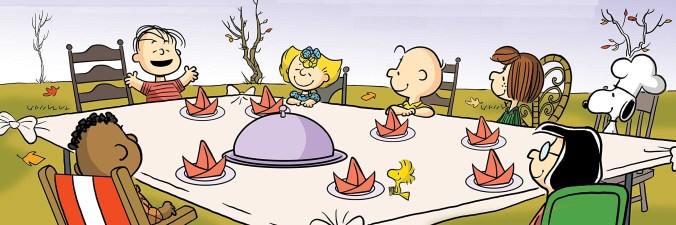
What does it mean that the above scene from ” A Charlie Brown Thanksgiving,” first aired on November 20, 1973 and every year since, suddenly struck some Americans as “racist” in 2018?
Hint: it doesn’t mean that the public is becoming more “woke” to actual racism in America. It means that the relentless effort by one segment of society and many in the news media to use the accusation of “racism” as a political wedge and a weapon to achieve power has officially reached the most dangerous level yet, and is gradually poisoning society. The idea is to make virtually anything potentially “racially insensitive”—choice of words, clothing, casting in TV shows, law enforcement, voting, socialization choices, literally anything and everything, including innocent composition choices in animated cartoons. The objective is to produce fear….fear of making a mistake, fear of offending anyone with hypersensitivity to racial slights, real or imaginary, fear of being labeled guilty of “racism,” which is now the worst crime on earth. This is a sick development that will create a sick society and a dysfunctional culture.
“Franklin, the one and only black friend in the group, is seated by himself on one side of the table while the other is crowded with the rest of the friends. On top of that, he’s sitting in a lawn chair as opposed to everyone else’s proper furniture.”
This is deceit and trouble-making:
There are six human beings at the table, one of whom is black. In fact, the diversity exceeds the percentage of blacks in the U.S. population. There is nothing racist about him being “the one and only.”
Franklin is not sitting “by himself.” He is sitting at the same table with his friends as a welcome guest at a community gathering. Is Linus, who also has one side of the table to himself, sitting “by himself” too? No, he’s a member of the group, at the same table as his friends. Is Marcy, at the opposite end, sitting “by herself?” No, she is also sitting with the group, just like Franklin.
Is having one side of a communal table considered some kind of insult? Not at any table I’ve been seated at. I love having a side to myself. It is also an advantage to be able to look at your family and friends across a table, rather than to have to talk to them by turning your head and craning around. There is a strong argument that Franklin is being treated with special consideration.
Why did the artist set up the table like that? I guarantee it was not to make a racist statement. How can I guarantee that? I guarantee that because 1) the “statement’ would be idiotic 2) because nobody out of millions of viewers saw any such statement for four decades 3) because if you wanted to be hostile to blacks, you could just skip Franklin. Franklin, a minor, (indeed transparently token) “Peanuts” character added to the comic just five years earlier, is at the gang’s celebration in place of Schroader, Violet, Pigpen, and even Lucy, all more prominent characters. So what’s the theory, that the cartoonists gave the black kid a place at the table over major, long-standing characters in order to insult him? How racially paranoid do you have to be to think like that? The answer is “pretty damned paranoid,” and that’s the state of mind malign political forces here want to promote.
Once again I am posting the Ethics Alarms Ethics Guide to Frank Capra’s 1946 masterpiece “It’s A Wonderful Life,” perhaps the greatest ethics movies of all time, as this blog’s official welcome to the holiday season. The film is commonly thought of as a Christmas movie, but it really is a Thanksgiving story. Unfortunately, the movie is so well known, so much imitated, so familiar in its tropes and cliches that we really don’t think about it very hard. We should.
The movie is exactly the kind of important shared cultural touch-point that I am advocating when I emphasize the importance of cultural literacy to our nation’s connective tissue. The film teaches about values, family, sacrifice and human failings unlike any other: its power and uniqueness disproves the assertion, made in one online debate here this year, that new cultural creations inevitably and effectively supersede older ones. No, they really don’t, and like copies of copies, eventually the cultural values conveyed get fainter and less influential. “It’s A Wonderful Life” would be an excellent basis for a middle school ethics course. I haven’t seen a better, richer film for that purpose come along since, and I’ve been looking.
I am also constantly amazed at how many people haven’t seen the movie. My son’s girlfriend admitted that she hadn’t at dinner today. A few months ago I gave a DVD to a pharmacist at our local CVS after I made a reference to the film and he had no idea what I was talking about. He said he would wait until the holidays to watch it with his family. I hope he does: he left the job soon after. There are some classic movies that parents have an obligation to make sure their children see. This is one. Despite the many ethics complexities and nuances that the film glosses over or distorts, its basic, core message is crucial to all human beings, and needs to be hammered into our skulls at regular intervals, far more often than once a year.
What I wrote about this message in an earlier posting of this opus still seems right to me:
Everyone’s life does touch many others, and everyone has played a part in the chaotic ordering of random occurrences for good. Think about the children who have been born because you somehow were involved in the chain of events that linked their parents. And if you can’t think of something in your life that has a positive impact on someone–although there has to have been one, and probably many—then do something now. It doesn’t take much; sometimes a smile and a kind word is enough. Remembering the lessons of “It’s a Wonderful Life” really can make life more wonderful, and not just for you.
I wondered about posting the guide again this year, as this feels like a year in which Ethics Alarms lost old readers rather than gained new ones. Then I read it again, and it reminded me of some important things I had forgotten, and I wrote it. I also, as is my yearly habit, edited and added to the commentary a bit. I’m smarter this year than I was last year, and I bet you are too…especially if you’ve been reading Ethics Alarms, just from figuring out how I’m wrong.
I hope you all had a terrific Thanksgiving, and that the holiday season is joyous for all.
And here we go:
1. “If It’s About Ethics, God Must Be Involved”
The movie begins in heaven, represented by twinkling stars. There is no way around this, as divine intervention is at the core of the fantasy. Heaven and angels were big in Hollywood in the Forties. The framing of the tale seems to advance the anti-ethical idea, central to many religions, that good behavior on earth will be rewarded in the hereafter, bolstering the theory that without God and eternal rewards, doing good is pointless.
Yet in the end, it is an ethics movie, not a religious one. George lives a (mostly) ethical life, not out of any religious conviction, but because step by step, crisis after crisis, he chooses to place the welfare of others, especially his community and family, above his own needs and desires. No reward is promised to him, and he momentarily forgets why we act ethically, until he is reminded. Living ethically is its own reward.
We are introduced to George Bailey, who, we are told, is in trouble and has prayed for help. One has to wonder about people like George, who resort to prayer as a last resort, but they don’t seem to hold it against him in Heaven. The heavenly authorities assign an Angel 2nd Class, Clarence Oddbody, to handle the case..He is, we learn later, something of a second rate angel as well as a 2nd Class one, so it is interesting that whether or not George is in fact saved will be entrusted to less than Heaven’s best. Some lack of commitment, there— perhaps because George has not been “a praying man.” This will teach him—sub-par service! Good luck, George!
2. Extra Credit for Moral Luck
George’s first ethical act is saving his brother, Harry, from drowning, an early exhibition of courage, caring and sacrifice. The sacrifice part is that the childhood episode costs George the hearing in one ear. He doesn’t really deserve extra credit for this, as it was not a conscious trade of his hearing for Harry’s young life, but he gets it anyway, just as soldiers who are wounded in battle receive more admiration and accolades than those who are not. Yet this is only moral luck. A wounded hero is no more heroic than a unwounded one, and may be less competent as well as less lucky. (This is not an observation that one should make in public, as President Trump learned when he made a lifetime enemy of John McCain.)
3. The Confusing Drug Store Incident.
George Bailey’s next ethical act is when he saves the life of another child by not delivering a bottle of pills that had been inadvertently poisoned by his boss, the druggist, Mr. Gower, who is addled by grief and drink after learning about the death of his own son. George’s act is nothing to get too excited over, really—if George had knowingly delivered poisoned pills, he would have been more guilty than the druggist, who was only careless. What do we call someone who intentionally delivers poison that he knows will be mistaken for medication? A murderer, that’s what. We’re supposed to admire George for not committing murder.
Mr. Gower, at worst, would be guilty of negligent homicide. George saves him from that fate when he saves the child, but if he really wanted to show exemplary ethics, heshould have reported the incident to authorities. Mr. Gower is not a trustworthy pharmacist—he was also the beneficiary of moral luck. He poisoned a child’s pills through inattentiveness. If his customers knew that, would they keep getting their drugs from him? Should they? A professional whose errors are potentially deadly must not dare the fates by working when his or her faculties are impaired by illness, sleeplessness or, in Gower’s case, grief and alcohol.
One could take the position that Mr. Gower “just made one mistake.” But trustworthy professionals don’t get to make such mistakes, not and still be trusted the next time. Trust is easily destroyed, and should be.
Mr. Gower also slaps George on the head several times. Today hitting a child like that is regarded as child abuse by a parent; when another adult hits a child, it’s grounds for arrest. This is one of many examples of evolving societal ethics in “It’s A Wonderful Life.” When the film was made, Mr. Gower’s conduct in beating a child employee was considered forgivable. If the local pharmacist slapped my son, I’d swear out a criminal complaint, and he still might end up shambling bum like Mr. Gower in the film’s alternate reality section.
4. The Uncle Billy Problem.
As George grows up, we see that he is loyal and respectful to his father. That’s admirable. What is not admirable is that George’s father, who has fiduciary duties as the head of a Building and Loan, has placed his brother Billy in a position of responsibility. As we soon learn, Billy is a souse, a fool and an incompetent. This is a breach of fiscal and business ethics by the elder Bailey as well a classic conflict of interest, both of which George engages in as well, to his eventual sorrow.
Now don’t let any “turkeys,” related or not, spoil it for you. This is a uniquely American holiday, celebrating our history, journey, values and culture, remembering the value of family, and extolling qualities that Americans should all try to embrace in their daily lives: generosity, empathy, charity, loyalty, perspective, respect and gratitude. Once it was regarded as a religious holiday, but as the culture has gradually rejected religion, for better or worse, and not without the full complicity of organized religions whose conduct would repel anyone, the holiday has struggled to find new moorings. Its value as a yearly ethical touchpoint makes that struggle worth continuing.
1. Speaking of Thanksgiving “turkeys”...A helpful Twitter-user compiled these shots from various progressive websites and blogs:
Nice.
One of the things I have long been thankful for was the excellent training I received at our family dinner table from my proudly iconoclastic father, who could argue any side of any issues, and did, just to teach his kids that they better have a firm grasp of facts, logic, language, and critical thinking before making any assertion, lest they be made to look like fools. He also taught the value of an open mind, and resisting lazy conventional wisdom without foundation, like, say “Trump is a racist.”
2. This one is Obama’s fault. Though heated political arguments were always a potential part of family gatherings, it was Obama’s administration and his allies that made the disgusting decision to weaponize the holidays, commanding their human drones to arrive at gatherings ready to argue the benefits of the Affordable Care Act, and providing brochures and videos to help them accomplish the mission. (Bulletin from Justice Roberts: “There are no Obama Thanksgivings or Trump Thanksgivings!”) Continue reading →
“We do not have Obama judges or Trump judges, Bush judges or Clinton judges. What we have is an extraordinary group of dedicated judges doing their level best to do equal right to those appearing before them. The independent judiciary is something we should all be thankful for.”
What prompted his comment: After federal judge Jon Tigar of the U.S. District Court for the Northern District of California temporarily blocked the Trump administration from denying asylum to migrants who enter the U.S. illegally, the President said that the decision was a “disgrace,” adding,
“Because every case, no matter where it is, they file it — practically, I mean practically — for all intents and purposes — they file it in what’s called the 9th Circuit. This was an Obama judge. And I’ll tell you what, it’s not going to happen like this anymore. Everybody that wants to sue the United States, they file their case in — almost — they file their case in the 9th Circuit. And it means an automatic loss no matter what you do, no matter how good your case is. And the 9th Circuit is really something we have to take a look at because it’s — because it’s not fair. People should not be allowed to immediately run to this very friendly circuit and file their case. And you people know better than anybody what’s happening. It’s a disgrace. In my opinion, it’s a disgrace what happens with the 9th Circuit. We will win that case in the Supreme Court of the United States.”
This was—I don’t think it’s unfair to characterize it as “gleefully”—gleefully reported as a rare rebuke of the President by a Chief Justice.
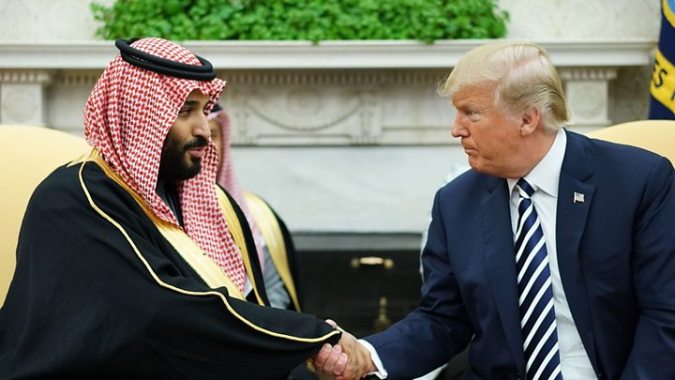
Foreign affairs is always an ethics-gray zone, with complex “ends justify the means” trade-offs amid cultural clashes and uncomfortable alliances are unavoidable. President Trump has apparently decided that the nation’s alliance with Saudi Arabia is more important than taking a hard moral-ethical stand regarding what the CIA has determined was a premeditated murder committed by a member of the Saudi ruling family against a journalist. In foreign policy, such trade-offs are the norm rather than the exception, “Everybody does it” is the operative rationalization because, for centuries, every country does do it. It’s not ethical. It’s practical. The American news media is making this episode special because a) it involves a journalist, so their interests are skewed and b) it is President Trump, and everything he does must be condemned to further the aims of the resistance.




 Ethics Alarms