Baseball Ethics Notes, Because I Know Baseball And I Know Ethics, And If You’re Not Interested, You Don’t Have To Read it

Pillar

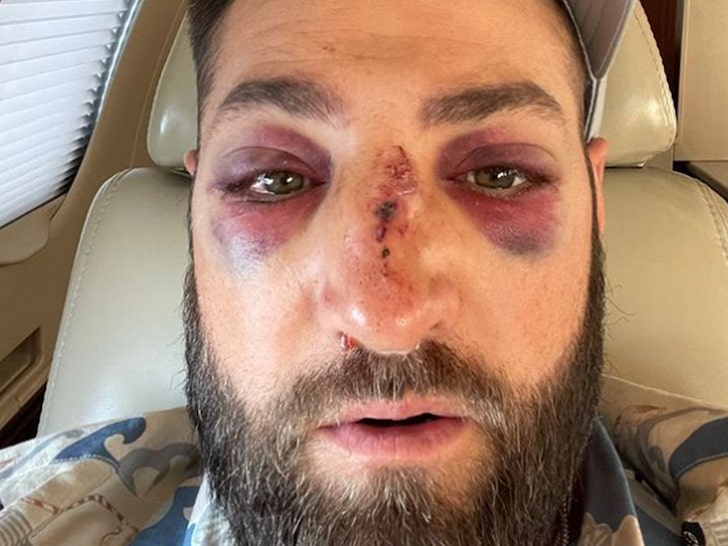
1. As predicted, Major League Baseball announced that Twins reliever Tyler Duffey has been suspended for three games and fined an undisclosed amount for “intentionally throwing a pitch behind Yermín Mercedes of the Chicago White Sox during the top of the seventh inning of Tuesday night’s game at Target Field.” Minnesota manager Rocco Baldelli was suspended for one game and fined for the incident. This all came out of the weird “unwritten rules” incident I wrote about here. Throwing at or near a player who breached an “unwritten rule” was how such rules were once enforced, and umpires allowed it. Now throwing at players deliberately is treated as the dangerous practice it always was, as the game was reminded of this week when Mets outfielder Kevin Pillar (above) was hit in the face by a fastball. Beanballs were once considered part of the game, and in fact an essential tool of the successful pitcher, and long before batters wore helmets.

2. Still more on the Mercedes incident: White Sox manager Tony LaRussa, who has been generally ridiculed for his insistence that his player should not have hit a home run on a softball league pitch when his team was ahead by 11 runs, keeps insisting that he is right and everyone else is wrong. “If you’re going to tell me that sportsmanship and respect for the game of baseball and respect for your opponent is not an important priority, then I can’t disagree with you more . . . Do you think you need more [runs] to win, you keep pushing. If you think you have enough, respect the game and opposition. Sportsmanship,” he told reporters. Well, in baseball, you never know how much you need to win. Eleven is pretty tough, but the Boston Red Sox scored 17 runs in one inning against the Detroit Tigers on June 18, 1953. You never know. It’s also sportsmanship not to cheat the fans by trying to pitch or hit as well as possible, every time, all the time. That means bad sportsmanship includes a team letting a position player pitch, which is the equivalent of a white flag. That’s how this whole thing started.
Continue reading

Comment Of The Day: “Morning Ethics Warm-Up, 5/20/21: Happy Birthday, John Stuart Mill!” [Item#5]

As I was gagging through the previous post about Mayor Lightfoot’s astounding “defense” of her deliberate discrimination against reporters of not enough color, I realized that Humble Talent’s comment deserves COTD status. One reason is that it made me realize something I never had quite focused on before.

The section of this morning’s warm-up Humble commented upon was the Alexandria Little League’s decision that baseball coaches needed to be indoctrinated into the Church of Woke’s virtue of diversity. Humble’s account of a “social audit” in his workplace revealed that his organization got black marks for not having sufficient numbers of gay—the auditors thought none—members.

I don’t know why this never occurred to me before, but prohibiting organizations and employer from discriminating against LGBTQ people is completely separate from insisting such individuals be represented in some statistically determined level to show diversity. Why? Becasue an organization cannot and should not seek to learn an individual’s sexual identity or proclivities—it’s literally none of their business. The idea that gay Americans have unique views and perspectives that distinguish them from more traditionally sexed individuals is blatant stereotyping, and in my somewhat extensive experience just plain wrong, except perhaps in the narrow field of LGNTQ politics, and maybe not even there.

Is the lesson of HT’s’ social audit that gay applicants for a job must be openly, ostentatiously gay or there will be no “diversity” benefit in hiring them? That makes no sense at all, but it appears that this is what diversity bean-counting requires. If an employee doesn’t set himself apart by acting like “Johnny” (the late Stephen Stucker) in “Airplane!,” he doesn’t help the diversity score.

Here is Humble Talent’s Comment of the Day on item #5 in “Morning Ethics Warm-Up, 5/20/21: Happy Birthday, John Stuart Mill!”

Continue reading

The Rest Of The Story, From The Ethics Alarms “What An Idiot!” Files: Mayor Lighfoot’s Justification For Her Racial Discrimination

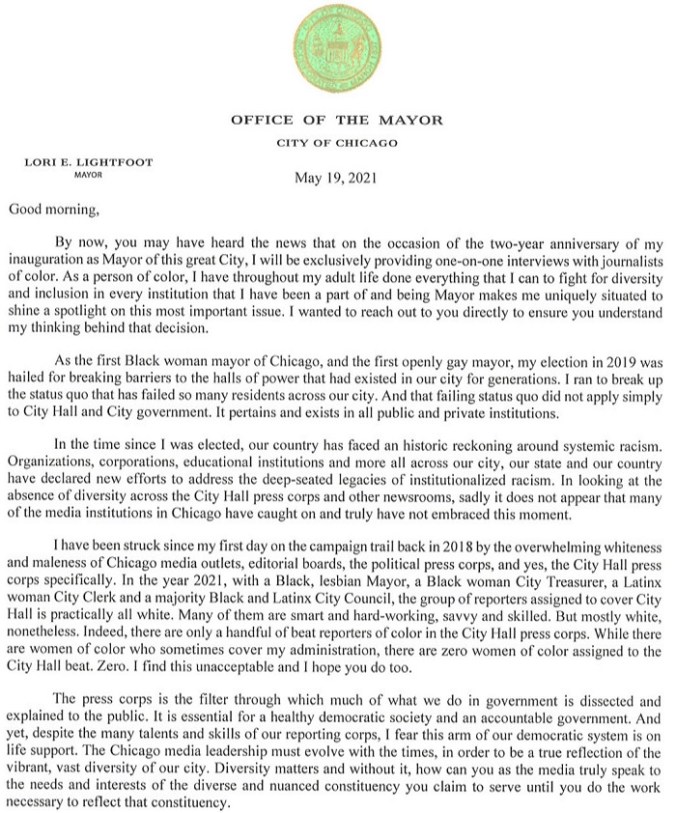
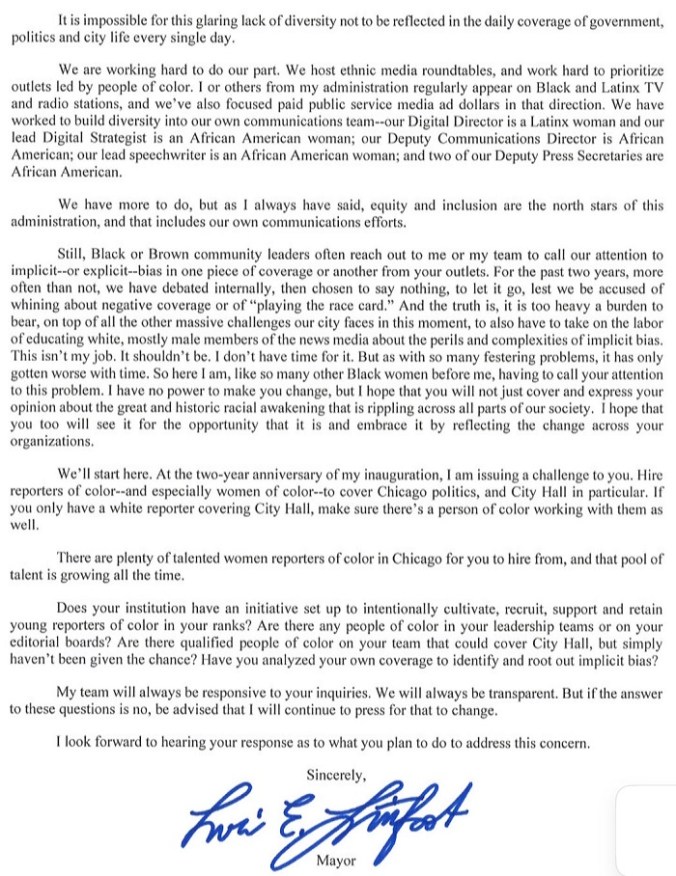
That was Chicago Mayor Lori Lightfoot’s “defense” of her action yesterday announcing that she would only do interviews with black and other non-white colored reporters. Once again, I am tempted to leave this letter from Chicago Mayor Lightfoot free of any further commentary from me, since what makes it not just unethical but a stunning demonstration of so many other deficits on her part should be screamingly, stenchingly, head-explodingly obvious. Maybe I should, in my respect for readers here who I assume can recognize the trail of a toxic dolt when they see one, just let what is res ipsa loquitur “speak for itself.” I feel like the Duke, trying to stay calm when provoked in “McClintock!” and reaching the same moment of surrender:

Continue reading

The Reverend Robert Wright Lee Car On The Confederate Statuary Ethics Train Wreck

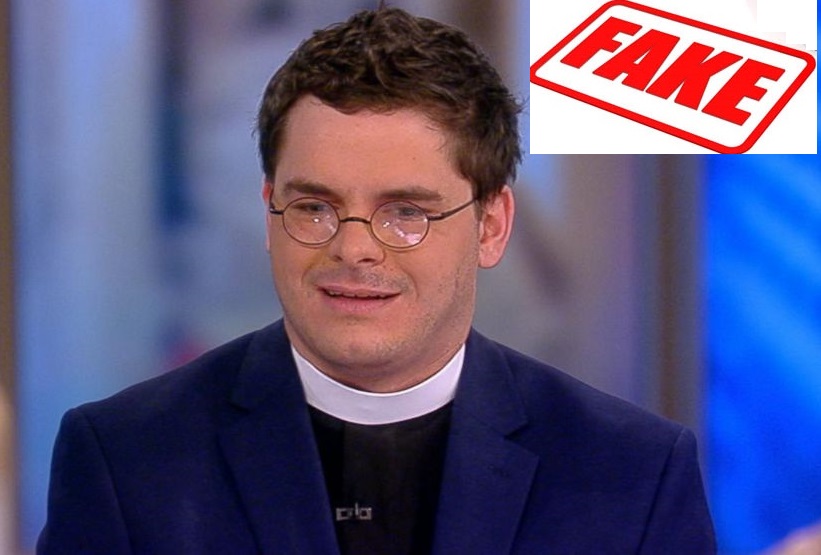
Fake Lee

I missed this, a case where refusing to subscribe to my local paper, The Washington Post, bit me. (I decided that if I have to get a flagrantly left-wing biased newspaper that has chosen to be a propaganda organ for the Democratic Party, I might as well get the best flagrantly left-wing biased newspaper that has chosen to be a propaganda organ for the Democratic Party and not #2.

Glenn Kessler, the Post’s “Factchecker” who tries to be objective but is so marinated in his organization’s biases that he fails as often as not, tried to save face for his employers by revealing that a man who has repeatedly represented himself as a descendant of General Robert E. Lee (On his website, Rob Lee describes himself as “a descendant of Confederate General Robert E. Lee.”) in order to justify toppling statues of the Confederate icon is, in fact, nothing of the kind. He is as much a relative of General Lee as Elizabeth Warren is a Cherokee. Nonetheless, the Post published an opinion piece on June 7, 2020, by Rev. Robert E. Lee VI titled, “Robert E. Lee is my ancestor. Take down his statue, and let his cause be lost.” The Post editor identified the author as the fourth great-nephew of Confederate General Robert E. Lee. The headline, the description, and the justification for publishing the op-ed were, in order, a lie, journalism negligence, and misinformation. That was a year ago. Now Kessler decides to check the facts? Nice job, Speedy.

Continue reading

Morning Ethics Warm-Up, 5/20/21: Happy Birthday, John Stuart Mill!

Mill

John Stuart Mill (1806–73), was born on May 20, not merely the most important figure in ethics to have a connection to this day, but also the most important human being born on this day in the history of civilization—yes, even more than Cher, who turns 75 today. Mill’s refined the concept of liberty that required the freedom of the individual in opposition to state control. He was the most influential proponent of utilitarianism, the crucial ethical theory developed by Jeremy Bentham. He helped reform scientific inquiry and research, recognizing the pervasive risks of confirmation bias, by clearly explaining the premises of falsifiability as the key component in the scientific method.

Mill was also a Member of Parliament and a towering figure in liberal political philosophy. You have certainly heard or read his most famous quote: “A society that will trade a little liberty for a little order will lose both, and deserve neither.”

A thorough biography and analysis of his work is here.

1. Justice Breyer doesn’t care about making sure the Supreme Court doesn’t get more conservative. Good. That’s not his job. Democrats realize that their control of the Senate is hanging by a thread, “thread” defined as a few superannuated Senators who could drop dead any second, giving the GOP a majority. Thus they are increasingly pushing Justice Stephen G. Breyer, 82, to retire now so Joe Biden can name an appropriately liberal replacement (who will also have to be female and black, vastly limiting the pool of possible choices without concern for actual legal competence.) “Breyer’s best chance at protecting his legacy and impact on the law is to resign now, clearing the way for a younger justice who shares his judicial outlook,” wrote Erwin Chemerinsky, the hyper-partisan dean of the law school at the University of California, Berkeley in The Washington Post this month. Got that? The 80+year-old Democratic Senators have to hold on to their jobs like grim death, but Breyer is being lobbied to retire. Hypocrisy, they name is Democrat! But it isn’t Breyer:

The Justice has been particularly vocal about the importance of not allowing politics to influence judges’ work, including their decisions about when to retire. “My experience of more than 30 years as a judge has shown me that, once men and women take the judicial oath, they take the oath to heart,” he said last month in a lecture at Harvard Law School. “They are loyal to the rule of law, not to the political party that helped to secure their appointment….If the public sees judges as politicians in robes, its confidence in the courts, and in the rule of law itself, can only diminish, diminishing the court’s power.”

I wonder if he’s read (or seen) “The Pelican Brief”…Meanwhile, research suggest that retirement tends to kill Supreme Court Justices. A paper in The Journal of Demography studied the effects of retirement by Supreme Court justices on their future longevity, and found that the effect of retirement was about the same as smoking two packs of cigarettes a day. The Democrats don’t care if Breyer dies sooner than later, though, as long as he does it when they can pick his successor, or after he’s quit.

Continue reading

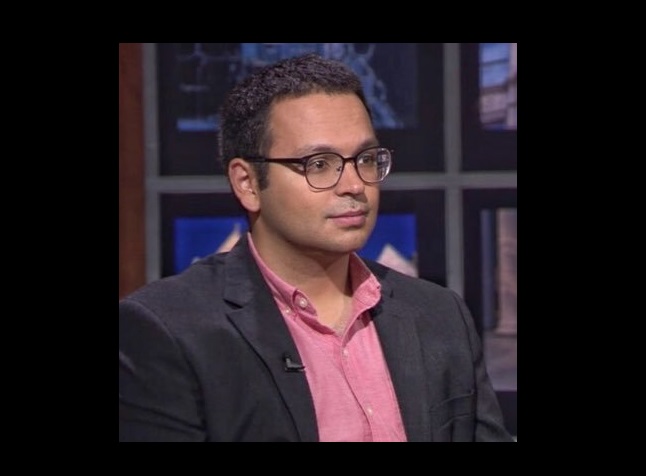
Ethics Hero: Chicago Tribune Reporter Gregory Pratt

Gregg Pratt

This was a pleasant surprise. Right before taking Spuds out for his afternoon jaunt, I read the jaw-dropping story that Chicago’s Democratic Mayor Lori Lightfoot had announced via a spokewoman that she would now grant interviews only to “journalists of color.” This was such flagrant bias and racism by Lightfoot that journalists were reluctant to believe it. But it was and is true.

As I strolled with my over-enthusiastic dog, trying to keep him from leaping to greet strangers, eating cicadas and pulling me over in his joy in being alive, I mused, “Now, if Hispanic and black reporters have any integrity at all—which is in question, since journalists in general lack integrity today—they will reject Lightfoot’s blatant discrimination, and make it clear that she will either grant interviews irrespective of race and ethnicity, or Chicago’s reporters will not interview her or anyone speaking for her at all.”

All news organizations, local and national, also have an ethical obligation to emphatically condemn Lightfoot’s divisive and un-American policy. I also wondered, as I tried to stop Spuds from rolling in the grass like Teri Garr rolling in the hay in “Young Frankenstein” (“Roll, roll, roll…”), how did the United States end up with so many unethical, incompetent mayors? New York City, Portland, Minneapolis, Washington, D.C., Seattle, Chicago, Atlanta—it’s like a horror movie.”

Continue reading

From The Ethics Alarms Mailbag: “Are Unwritten Rules Unethical?”

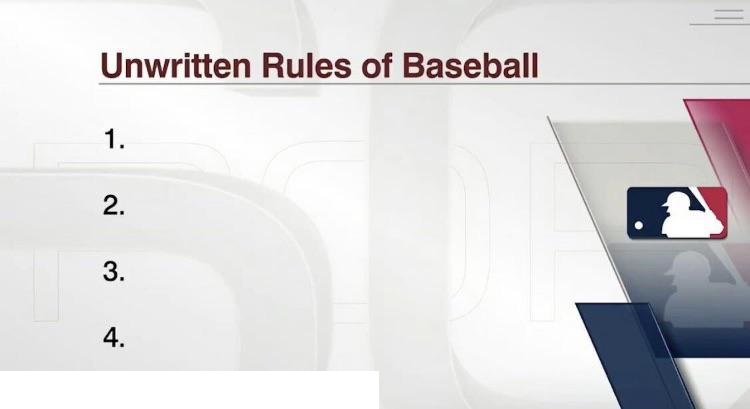
unwritten rules

The short answer is “No,” but the context of the question is fascinating, because it’s an example of the problem with unwritten rules generally. Unwritten rules are cultural norms, that’s all, and all cultures have them. They serve as manners, social balms and traditions that fill in the inevitable gaps and loopholes that formal, written rules inevitably leave uncovered. But cultures evolve, and extreme situations create exemptions where cultural norms no longer make sense.

No culture has more so-called unwritten rules than baseball, and this situation from two days ago triggered the question.

With the Chicago White Sox, currently with the best record in baseball, were ahead of the pathetic Minnesots Twins 15-4. The Twins, not wanting to waste a real pitcher on a blwo-out, turned to utility infielder Willians Astudillo to face the ChiSox in the final inning. Throwing a the classic “nothing ball” that most non-pitchers bring to the mound in such situations, Astudillo retired the first two batters but fell behind 3-0 to White Sox catcher Yermin Mercedes. On the next pitch, a lob to get the ball over the plate, Mercedes swung away blasted the 47 mph toss out of the ball parkfor a 16-4 lead.

The Twins broadcasters and many of the Twins players were offended, saying that Mercedes had breached the unwritten rule that says players shouldn’t try to “show up” the losing team in a rout. You don’t steal bases, you don’t sacrifice, and you don’t swing away at an “eephus pitch” to get a cheap home run. It’s essentially a Golden Rule based unwritten rule, though when it applies is a matter of dispute. Baseball teams have made up some very large deficits through the decades: a win is never a sure thing no matter what the score. Eleven runs, however, is certainly a big enough gap to make the rule relevant: the odds against a comeback are astronomical.

On the other hand, players are paid according to their statistics. Mercedes’ homer off of a non-pitcher will look the same in the record books as if Jacob DeGrom had thrown the ball.

But wait…there’s more! In the next game, an eventual 5-4 Minnesota win,Twins manager Rocco Baldelli andT wins reliever Tyler Duffey were ejected (they will also be fined and suspended) after Duffey threw a fastball behind Mercedes in retaliation for the “unwritten rule” breach. Baldelli, following the usual script, swore that the pitch was an accident, and that it was just a coincidence that his reliever scared the hell out of the same player who hit the controversial home run the previous night.

Then White Sox manager Tony La Russa announced that he agreed with the Twins throwing at his player, because Mercedes had broken an unwritten rule! This, in turn, was also an unwritten rule. Managers must not criticize their own players in public, and never, ever endorse the opposing team throwing at one of them. (I’ve never heard of any manager doing this.)

The White Sox did not take LaRussa’s violation well. Chicago pitcher Lance Lynn tweeted, “If a position player is on the mound, there are no rules. Let’s get the damn game over with. And if you have a problem with whatever happened, then put a pitcher out there.”

Exactly.

Unwritten rules are ethical if:

  • Everybody knows what they are
  • They have a legitimate purpose
  • It is understood that as there are always exceptions where written rules don’t apply, there are exceptions where unwritten rules don’t apply,
  • Everyone pays attention to the evolving nature of the culture involved, and
  • It is understood that unwritten rules exist to make a culture more reasonable and rational. If an unwritten rule doesn’t accomplish that, then the rule should be revoked.

___________________________

Pointer: JutGory

Continue reading

“Shrek” Ethics, Popular Culture, Critics And The Meaning Of “Good”

Shrek

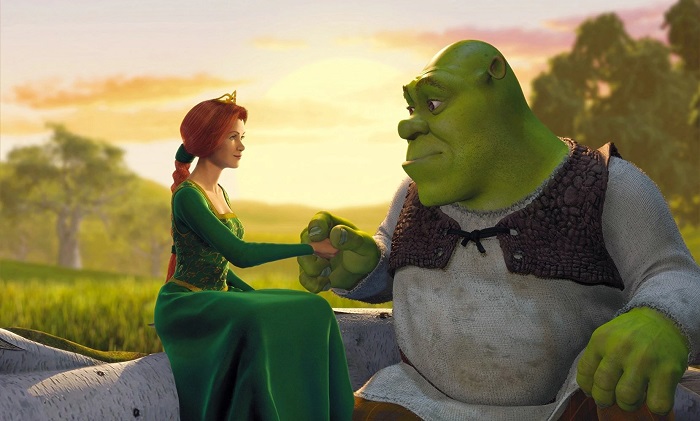
The New York Times today has a feature celebrating the 20th anniversary of “Shrek,” the Dreamworks animated film released on May 18, 2001 that quickly became a box office smash, received wide critical acclaim and went on to win the first Academy Award for best animated feature. Sayeth the Times, “Twenty years later, ‘Shrek’ is still a beloved, offbeat fairy tale whose characters and jokes continue to permeate pop culture, reaching another generation of fans.” There have already been two sequels, with another on the way.

But over at The Guardian, film critic Scott Tobias isn’t looking back on “Shrek” as a cultural watershed, but as a cynical, sloppy, artistic mess. He pooh-poohs the movie with gusto, writing in part,

It’s hard to account for why Shrek hit the cultural moment as squarely as it did – other than, you know, people seemed to enjoy it – or why it will be celebrated in 20th anniversary pieces other than this one. But it’s worth pointing out how comprehensively bad its legacy remains, opening up the floodgates for other major studios to pile celebrities into recording booths, feed them committee-polished one-liners and put those lines in the mouths of sassy CGI animals or human-ish residents of the uncanny valley. Worse yet, it encouraged a destructive, know-it-all attitude toward the classics that made any earnest engagement with them seem like a waste of time. Those once-upon-a-times were now rendered stodgy and lame, literally toilet paper….there’s an excess of anachronisms and buddy-movie riffs from [Mike]Myers and [Eddie] Murphy that have little relation to the backdrop and a woe-is-me soppiness to the love story between two lonely, misunderstood freaks. (Nothing screams “unearned gravitas” like slipping in a cover of Leonard Cohen’s Hallelujah.)…What’s left is an all-ages film that’s somehow more crude and juvenile in its appeals to adults than children. The grownups in the room can snicker knowingly at Farquaad’s name and the repeated references to his penis size while the kids are left with fart jokes and the wanton diminishment of timeless characters and stories. Last year, the National Film Registry added Shrek to the Library of Congress, which seals its canonization, but it’s remarkable how much of an early aughts relic it’s become, an amber-preserved monument to phenomena (Mike Myers, Smash Mouth, Michael Flatley) that hasn’t stood the test of time.

Continue reading

Predictable But Depressing: SCOTUS Agreeing To Consider What Is A Viable Unborn Child Triggers Emotional And Irrelevant Obfuscation From Pro-Abortion Propagandists

handmaidens

Gee, that was fast! All the Supreme Court did was agree to look at a part of 1973’s Roe v.Wade that has been rendered anachronistic by subsequent developments in science and medicine, and the pro-abortion lobby freaked out. Dobbs v. Jackson Women’s Health Organization involves the 2018 Mississippi law that bans abortions after 15 weeks of pregnancy. The case raises the obviously relevant ethical, moral and legal question of when human life can be and should be subject to law’s protection. Roe, nearly a half century-old now, based its limits regarding when an abortion was a woman’s constitutional right on when an unborn child was “viable,” a word that requires a conclusion about when human life begins as well. It is not only reasonable but necessary for the court to clarify this. Question 1 in the petition for the writ of certiorari is “Whether all pre-viability prohibitions on elective abortions are unconstitutional.” Good question.

So why the freakout? Simple: neither side in the abortion debate has ever been willing to debate the issue fairly, as both ignore the obviously relevant rights and issues of one of the two human beings involved in the abortion equation. As Ethics Alarms has pointed out before and will continue to do until the stars turn cold, this is an ethics conflict, and a difficult one. Two strong ethical principles are opposing each other, both with major societal implications. In ethics conflicts, the ethical process of balancing is required, but neither side is willing to risk balancing regarding abortion. Thus both have conducted their side of the debate by dishonestly denying the existence of the ethical realities opposing the result they want. The anti-abortion advocates refuse to give fair weight to the effect an unwanted pregnancy can have on a woman’s life and future, and women’s legitimate interests in their own autonomy (which still may not be absolute.) Pro-abortion advocates deliberately ignore the fact, and it is a fact, that abortion involves the taking of human life.

This mutual dishonesty is reflected in the euphemisms the sides of the controversy use to obscure the real problem. “Pro Choice” makes it sound like the only issue is a woman’s autonomy ( Life? What life?). “Pro Life” wrongly cuts the interests of the women involved out of the balancing act. This is the reason the abortion debate has made no progress in a hundred years. The two sides are talking about two different things, and have neither the integrity nor the honesty to deal with the balancing problem.

Roe was a badly reasoned and irresponsibly issued ruling, authored by a serial SCOTUS mediocrity, Justice Harry Blackmun. Somehow, the opinion bootstrapped abortion into being a right under the “unenumerated” Constitutional right of privacy by analogizing it to birth control. But the case in which the Court rightly found that the State had no business telling couples that they could not engage in birth control didn’t involve killing anyone. I’d call that a material distinction.

Roe was one of the most breath-taking leaps of law and logic in the history of the Court, and a throbbing example of judicial activism run amuck. Nonetheless, it has been the law of the land long enough to be regarded as stare decisus; for good and practical reasons, over-ruling the entire case would be bad judicial policy. Addressing aspects of the opinion that were based on scientific assumptions no longer valid, however, is common sense, as well as sound legal policy.

Continue reading

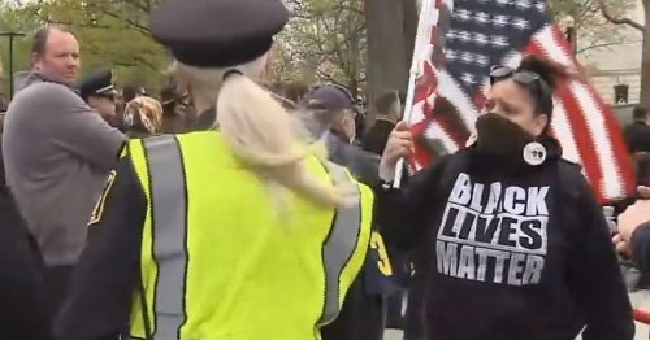
Integrity Test: What Does It Tell Us When Black Lives Matter Emulates The Westboro Baptist Church?

BLM protest

The Westboro Baptist Church, aka “the Phelpsians,” infuriated the Left and Right by disrupting services for fallen soldiers with anti-gay chants, epithets and signs. Now Black Lives Matter is adopting that despicable groups’ tactics and ethics. If you are surprised, you haven’t been paying attention.

On May 7, fallen police officers were finally honored on Capitol Square in Madison, Wisconsin at the Law Enforcement Memorial. For most of 2020 and 2021, law enforcement officers who died in the line of duty couldn’t be properly remembered because of pandemic restrictions

As reported by Madison’s WEAU-TV, six names were added to the honor roll last week as law enforcement officers and their families gathered in the square to see those heroes added to the 285 names already on the memorial. The governor and attorney general joined a police procession as the ceremony began. But minutes into the event, Black Lives Matter protesters began disrupting it and talking over the speakers . A protester with a bullhorn began shouting, “Do you support Black Lives Matter?” “How come the African-American national anthem wasn’t played?” a heckler added, in one of the more civil exclamations. “I’m begging you motherfuckerers to stop killing people that look like me!” was more typical. Rap music with lyrics like “fuck the police” was playing during a moment of silence. A pastor began to deliver a prayer, and she was booed. A protester yelled, “Murderers!”as she finished.

The courts have determined that such harassment is constitutionally protected as expressive speech: Black Lives Matter can thank the Phelpsians for that, as well as for perfecting their tactics. But both the Westboro Baptist Church and BLM exemplify the abuse of free speech, and demonstrate by their hateful and cruel behavior their deep, deep ethics rot. One group was dedicated to anti-gay bigotry; the other is advancing an anti-white, anti-police, anti-rule of law and anti-America agenda. The Phelpsians were marginal and more of an irritation than anything else. Black Lives Matter, in contrast, has a street with block letters honoring it in the middle of the nation’s capitol. Its name was emblazoned across the Fenway Park bleachers last baseball season, and featured on every NBA court. The Democratic National Committee and the current Vice-President of the United States cheered on their riots, which cost billions.

Continue reading