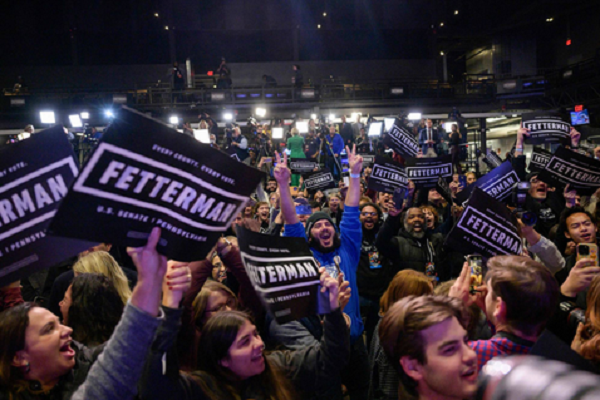
Democracy Is in Danger, but Not for the Reasons You Think

Guest post by Extradimensional Cephalopod

[I consider this excellent and thought-provoking article by esteemed commenter/philosopher Extradimensional Cephalopod part of this weekend’s Comment of the Week series, but both in scope, length and form, it is a freestanding article, originally published here. The site is worth visiting, and I highly recommend it. I wanted to hold off on posting EC’s ambitious piece until after the election; vote-counting still drags on, but the results are pretty clear now. Ethics Alarms is grateful to the author for granting permission to present it for its readers’ consideration.]

Congratulations, Earthling voter!  Your party has won the election!  The Good politicians you elected will enact Good policies, to make Good things happen and help the Good people live Good lives.  Your planet’s democracy is saved!  

You claim this government in the name of your party!  Hmm!  Isn’t that lovely, hmm?

…Or is it? 

Dun dun duuuuuuunnnnnn!

Now that I think of it, isn’t there still a whole party full of other voters who disagree with those policies you wanted?  In fact, there are enough of them that they almost elected some Ungood politicians.  

And your best plan for preventing those voters from electing those Ungood politicians was to… hope that your side had more people than theirs did?  That seems risky.  You had to give a lot of money to the Good politicians in order to help them win, and it almost wasn’t enough.  That’s frightening.  

After all, Good policies are very important.  You can’t let them fail just because so many people don’t agree that they’re Good policies.  

So how can you reduce the risk of electing Ungood politicians?  How can democracy work if people vote for Ungood things?  

You might silence the Ungood voters, preventing them from spreading their ideas and beliefs and from working together effectively.  After all, what’s the point of having rights like the freedom of speech and assembly if people are just going to use them to advocate for Ungood policies?  

To save democracy–that is, the system that governs based on the voices of the people–it seems you need to take away the voices of the people who want the Ungood things so that people are only allowed to talk about and vote for Good things.  The less freedom people have to talk about whatever ideas and values they want, the more democracy will thrive!  

Maybe some Good politicians can make Good laws about what ideas people are allowed to talk about.  I’m sure they will still allow you to voice your complaints when the Good politicians are not doing a Good job.  After all, people in charge of running countries are well-known for welcoming criticism.  

The real threat

…If you’re reading this at all, you have probably spotted the irony already, but many other people on your planet have not.  
Continue reading

One More Time: Hold Gun-Owners Criminally Liable When Something Like This Happens

We have covered such incidents before, but it bears repeating.

Tiffany Callaway, a Miami-Dade Corrections officer, left her five children unsupervised in her home while she was working. While she was gone her 13-year-old son got a shotgun out of a firearm case in the master bedroom closet. He accidentally discharged it. His eleven-year-old brother was fatally shot in the chest, and died.

In a masterpiece of gall, Callaway started a GoFundMe page to attract donations. “Imaging life without him is something we never thought we’d have to do as a family,” she said.

“Only goes to show it can impact anybody in the community,” said Miami-Dade Police Director Alvaro Zabaleta in another fatuous pronouncement that misses the point. “It” won’t “impact” anyone who doesn’t leave young children alone with access to deadly weapons.

Apparently no charges will be filed against the officer. Ridiculous.She is 100% responsible for the death of her child and the trauma to the older child who fired the weapon. She was negligent to leave them alone in the house, negligent in not training them regarding gun safety, and negligent in not having the gun secure, Police say they are investigating whether the gun was properly secured—what is there to investigate? A kid got a hold of the gun, which was loaded, and fired it! Of course it wasn’t properly secured: it it were properly secured, no one would have been killed.

No wonder anti-gun fanatics think guns just kill people all by themselves.

Watermelon-Smashing Ethics: The Sad Tale Of The Brothers Gallagher

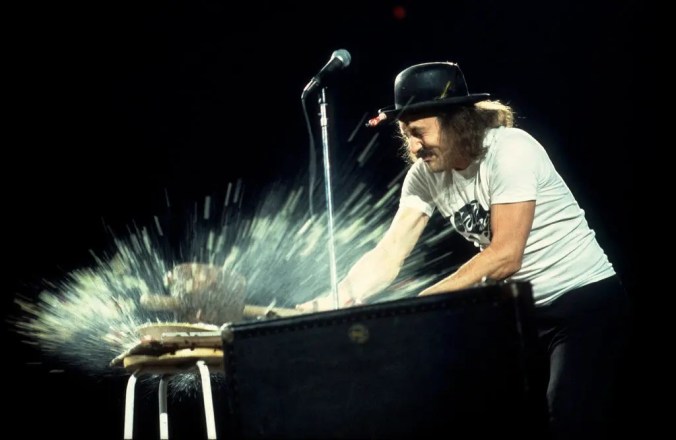
Prop comic Gallagher, once a college campus comedy superstar, died last week, reviving memories of a classic ethics family drama with many life lessons attached.

Gallagher (first name, never used professionally: Leo) was an acquired taste that I never acquired, but he had many TV specials, a famous bit (smashing things, especially watermelons, with a sledgehammer), and even ran for Governor of California. In 1987, researchers at Loma Linda University in Southern California took blood samples from medical students while they watched Gallagher’s antics. Their white blood cell levels increased the more they laughed at him. His comedy, the study concluded, strengthened their immune systems.

Why hospital staffs don’t smash watermelons in cancer wards, I don’t know. But I digress.

Continue reading

Comment Of The Week #1: “Ethics Quiz: A Horse By Any Other Name…” (Re-Posted)

(OK, it’s only tangentially related to the post, but I love this scene from “Ben-Hur,” the greatest horse scene in all of motion pictures.)

As I wrote in an earlier post, I’m backed up in excellent comments, so I’m going to try a new feature, using Saturday, when EA is seeing its streets more occupied with tumbleweeds than readers to honor the comments of the past week that I didn’t get up as Comments of the Day. These will usually come in reverse order, because it’s easier for me to track them down that way.

First up: CD-VAPatriot on “Ethics Quiz: A Horse By Any Other Name…”:

***

I don’t think there’s any obligation to change the name. The intention behind the horse’s name is clear, and intention is crucial.

I disagree with your assessment of the little girl. She said that if her horse’s name meant something bad, she wanted it to mean something good. I think that shows an intelligent child who is aware of the discord in the world around her, and instead of capitulating to the negative pressure, she wants to use her tiny platform to turn something ugly into something positive..

Professor Turley frequently says that instead of censorship, we should strive to “combat bad speech with better speech”, and I agree. Part of that is letting go of the notion that every word that might be construed as a slur IS a slur. It means the concept that schools named after historic figures (people once revered who are now torn apart for simply being a man/woman of their era) or sports teams whose names reflect something once acceptable that’s now taboo, etc.,,need to immediately change their name/logo/mascot and repent.

If we yield to every criticism by every person who claims offense to a name, an expression, a job, an idea, etc., half the world won’t be able to say/write a single word, out of fear of retribution, and when people cannot communicate freely they cannot communicate effectively, and everything from education to workplace relations to social /intimate relationships break down completely.

Where would that leave us all?

_____________________

(I’m sorry: WordPress was being weird, and I had to re-post this, losing the comments already made.)

Comment Of The Week #3 on”Open Forum (11/11/22)” Re: Armistice Day

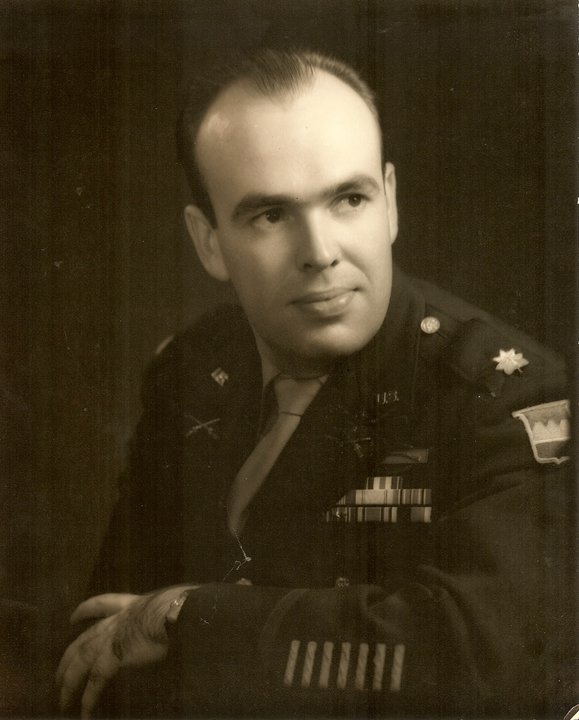
Other Bill raised another aspect of Armistice Day ethics: is there such a thing as war ethics? Ethics Alarms has barely touched on the subject, as I absorbed the values of my father on this topic among so many others. He believed, like General Sherman, that war was such hell that the only ethical way to fight it was in a manner that would end it as quickly as possible. Dad supported the dropping of the first atom bomb (he was less certain about the second), admittedly with a bias: he was preparing to be part of the U.S. invasion force when Hiroshima was destroyed. He strongly felt that the Nuremberg Trials were hypocritical, and our many debates and arguments about that controversy led to my directing “The Andersonville Trial” twice and producing “Judgment at Nuremberg” at my late, lamented professional theater company. My father also thought the Geneva Convention was unenforceable, disingenuous, and naive.

Here is Other Bill’s Comment of the Week from this week’s Open Forum:

***

Armistice Day has me thinking about war ethics. How’s that for an oxymoron? Russia has been getting crap for targeting civilian infrastructure, including apartment buildings and the electrical grid. There has been talk about the Russians destroying a dam to flood an area and deprive the Ukrainians of a river crossing.

What’s the deal? What did the U.S. destroy during shock and awe in Iraq? Other than regime change, why did the U.S. invade Iraq? During WWII, the Allied strategic bombing campaign, which included bombing cities, was intended in large part to “discomfit” the German populous, thereby reducing Germany’s industrial output (not to mention the firebombing of wooden Japanese cities, purporte ly to destroy dispersed manufacturing facilities). A famous British operation “busted” a dam and flooded large parts of the Ruhr flood plain.

Continue reading

Comment Of The Week #2: Morning Ethics Warm-Up, 11/11/2022: The Ethics Post To End All Ethics Posts Edition

My father, now in Arlington National Cemetery, would have really liked Steve-O-in NJ’s post. the second of this weekends’s Comment of the Week. The great irony of his life was, as he once mentioned, that he hated war, but had a natural aptitude for it. Jack Sr. never boasted about his many war exploits, forcing us to drag them (definitely not all, though) out of him over nearly 6 decades. Nevertheless, he was more proud of fighting the Nazis in Africa and Europe than of anything else in his life, except, perhaps, of being a good father, unlike his own father.

Dad used to imitate FDR’s famous “I …hate… war!” speech (“My wife Eleanor hates war…”) , which he felt was ponderous and insincere—The Roosevelts all liked war, he believed—and said more than once that anyone who didn’t hate war was a lunatic. (This was just one of the many reasons he detested General Patton). But my father never hesitated to display reminders of his participation in the victory over Hitler and his minions.

We had beautiful, brilliant red curtains separating our play room from the laundry area in our basement in Arlington, Mass.when my sister and I were kids; it wasn’t until long after I had moved to the Washington, D.C. area that I learned that my mother had cut them out of the giant Nazi flag my father had brought home as a trophy. He felt that using the red portion of the menacing flag as a cheerful decoration in the most humble part of his all-American home was a nice, final, private “Bite me!” to the evil losers.

Here are Steve-O’s reflections on Armistice Day, prompted by the introduction to this post…

***

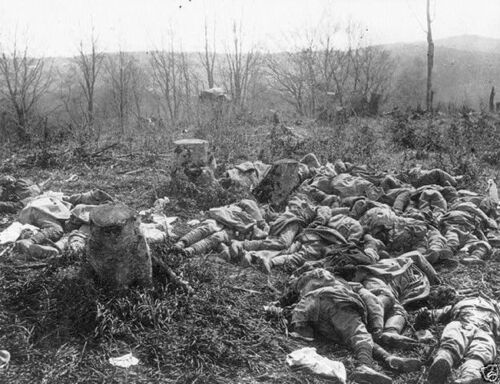
103 years ago, the guns finally fell silent at the eleventh hour of the eleventh day of the eleventh month, ending the greatest conflict to date, known as the Great War in Europe, as World War One here. The war that was supposed to end by Christmas 1914 had dragged on for more than four years, shaken civilization to its core, and thrown down no fewer than four empires, leaving chaos in their place. It had also killed six million and badly damaged a generation.

The world thought another war like this must not, could not ever happen again. In memory of what had happened, the allied nations proclaimed Armistice Day a year later, including the red poppy as the symbol of the fallen, the two minutes silence, and the continued hope for world peace.

Here’s the dirty little secret, though, the allied nations, weary of war and afraid of another one, turned their back on the problems left unresolved at the end of World War One. They made a few half-hearted attempts to deal with them, like the poorly organized Allied intervention in Russia to stop Communism before it took root, which accomplished nothing. For the most part, however, they either just looked the other way or threw up their hands. Turkey mopped up what was left of the Armenians and forced Greece into a population exchange that destroyed thousands more lives, and the allies just nodded. The Soviets attempted to conquer Poland, but they found themselves thrown back by a nation not inclined to give up the freedom it had just won under the leadership of the military and political genius Josef Pilsudski. France and the UK didn’t do or say anything. Ireland erupted in violence, and the UK all too quickly concluded a peace that left it embarrassed and Ireland bankrupt. Let’s also not forget the abandonment of the Finns, the Ethiopians, and the Austrians to tyrannical aggression. The major nations were too busy trying to come up with lofty promises and ways to prevent there from ever being a war again: the Washington Naval Treaty, signed with a smile by the Japanese and promptly violated, the Locarno Treaties, which were quickly ignored, and the Kellogg-Briand Pact, which supposedly outlawed war, and is still technically in effect, but which was ignored from its inception, and actually reads like a bad joke in hindsight.

Continue reading

Good Morning Ethics Warm-Up. 11/12/2022: Good Racism, “Bite Me!”, Morons, And Alec Being Alec

Haven’t heard from Gene, Donald and Debbie for a while. It was time. And I need them this morning…

1. Laws? What laws? This is GOOD racism… Black Minneapolis native and entrepreneur Jesse Ross is spending $3.8 million as part of his “Wealth Redistribution Project to establish a 68,000-square-foot facility to house 15 to 20 businesses, and those with white owners need not apply. There will also be even space for weddings and conferences; its unclear how or if Ross will discriminate regarding these as well. His plan is illegal, after all. One of the results of all the “diversity, equity and inclusion” virtue-signaling is that a lot of people have forgotten what illegal racial discrimination is. Ross is clearly in this category, and so are the local corporations the always ethically clueless city of Minneapolis,which have provided him with cash grants to discriminate against whites.

The news media is doing its part too. In its story about this exercise in compensatory racism, NBC’s KARE 11 says, inspirationally, that the project is “an investment reaching far beyond dreams once thought unattainable.” It IS unattainable, you fools, unless he’s allowed to break the law.

But to be fair, this basically follows the same logic as Joe Biden’s student loan forgiveness EO.

Continue reading

Let’s Play “Unethical, Obnoxious, Or Just Plain Stupid!”

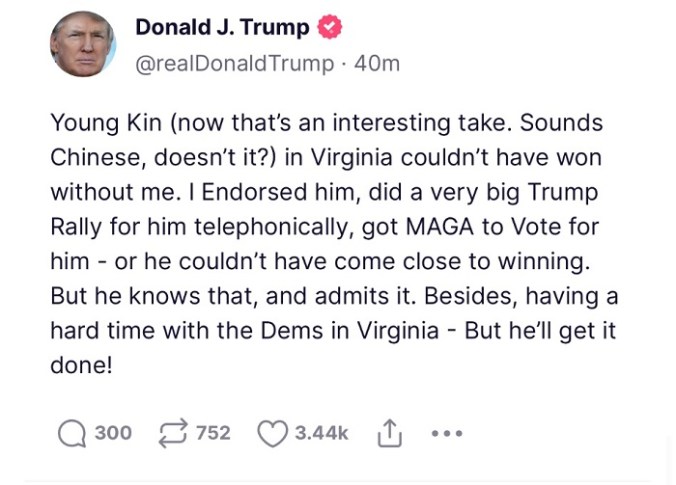
MC: Ready, contestants? For your first challenge, consider this latest controversial Truth Social post by former President (and soon to announce candidate for President in 2024) Donald Trump!

What do you say, contestants? Is this Unethical, Obnoxious, or Just Plain Stupid?

Our ethicist from Alexandia, Virginia is first to buzz in! Yes, Jack, what’s your answer?

JACK:  Wink, I say it’s all three. I’s unethical, because Trump is attacking rising conservatives in his own party for his own gain, or at least he perceives it that way. It’s disloyal, it’s irresponsible, and it can’t possibly benefit anyone but him. That kind of gratuitous attack is a Golden Rule violation, and it’s a Categorical Imperative breach as well: Trump is just using Virginia Governor Youngkin as a convenient prop to remind everyone how valuable (Trump thinks) he is as he senses hostility from Republicans after his attacks on Ron DeSantis.

The message is also obnoxious, though in a way Trump’s fans are used to: he’s boasting like a 10-year-old, taking credit for someone else’s achievements, and asserting, as usual, that everything is about him. The bit about Youngkin’s name sounding Chinese is off the charts; it’s arguably beneath a 10-year-old. I saw a pathetic defense of Trump’s message that claimed there was nothing in what Trump wrote that constituted an attack. Bias makes you stupid (not necessarily you, Wink, but this is something ethicists say, at least this ethicist): everyone knows what Trump thinks of China. If he had written “Sound Jewish, doesn’t it?” would there be any doubt about his intent? Continue reading

I May Be Overly Judgmental, But I Think A School Board Member Should Know What Racism Is….

White school board member Mike Martin read an article toward the end of a three-hour meeting of the Wilson School Board in Pennsylvania that claimed, among other things, that blacks are easily offended and adverse to “correction” when asked to pull up their pants or turn down their music.

“I think sometimes we’re afraid to discipline a group because of the recourse or their position or it might offend them, and I think that brings problems that I know that we’ve been talking about, you know, rowdiness in classrooms and discipline in classrooms because we’re afraid to take that next step,” Wilson said after reading the article, which was apparently written by a black author.

It did not go over well. When informed that the attitudes displayed in the article were racist, Martin professed shock and innocence. He told reporters after the meeting blew up,

I really did not think I was being racist. I apologize for how it came across. As horrible as it sounds, it wasn’t meant to be a horrible statement and I need to fix it….I don’t want to hurt anybody’s feeling, if it came across that way I have to apologize. I have to step to the plate. I’m really sorry that this thing blossomed into what it manifested into…Most people that really know me know that I don’t have a racist bone in my body…I know some people think I’m a closet racist and I have to live with that.

Someone explain to this guy that when one publicly and approvingly reads a document that attributes negative attitudes and offensive conduct to an entire race, that’s racism by definition.

Then someone explain to him that idiots shouldn’t serve on school boards.

Ethics Quiz: A Horse By Any Other Name…

In the pantheon of 2022 “Wait…WHAT?” headlines, “Help! I’m So Embarrassed by the Name of My Daughter’s New Horse!” is an instant classic. This comes by way of a query to Slate advice columnist “Dear Prudence,” and you have to pay to see what wise ol’ Prudence decrees. Well, I’ve read enough of Prudence’s advice over the years and have been unimpressed. I don’t care what she thinks; I care what you think (and what I think, naturally). Here’s the letter:

My 10-year-old daughter is a horse girl. She’s outgrown her first pony, so we just bought her a new horse. This horse was priced right, he’s the perfect size, age, and temperament, and he’s trained in what she wants to do—we seriously could not have found her a better horse. Except for one thing. He’s an almost entirely white Pinto, and his registered name is [Farm Name] White Flight. I don’t want to know what his breeder was thinking. My daughter thinks it’s beautiful. But I would be embarrassed to have my child showing on a horse with this name, and I want to officially change it, or at least call him by another name. I’ve explained the meaning of “white flight” to her, but she still thinks it’s a perfect name for a white showjumping horse and says she wants to use it to mean something good, instead of something bad. How can I convince her to rename her new baby? Would it be too mean to say either the name is changed, or the horse is sold and she can’t have another one?

—Whitest Problem Ever

Ah, the problems of families who can afford to buy their child two horses before she’s eleven! But I digress…

Your Ethics Alarms Ethics Quiz of the Day is…

“Is there an ethical obligation to change the name of the horse from “White Flight”?

Continue reading