WordPress Is Unethical, But It’s Not Just Them

I know I’ve mentioned this before, but the American mania for complicating processes and systems that are just fine as they are is a cultural sickness. It is also obviously unethical under the category of irresponsibility, with a dash of arrogance. It is an American mania.

Herman Kahn used to tell the story about how American jet fighters were equipped with multi-million dollar systems to prevent the aircraft from stalling, triggering alarms and lights and other automated reactions. “The Soviet equivalent was a little dial that had an arrow that went into a red zone,” he said,”and the whole system costs about five bucks. It works just as well as ours.”

Right now, I am struggling to write blog posts because the WordPress “upgrade” has become mandatory, and the thing is infuriatingly complicated and clumsy. Naturally, the company’s “explanation” of how to use it is also incompetent, using terms without defining them, telling me how easy and versatile the new system is while ensuring that it is neither by inflicting instructions that will take me hours and hours to absorb and master, if I ever can.

In one of many recent online chats with WordPress customer service agents, I was asking how I could stop having to repeatedly select the same “block” (this jargon means, I finally figured out, one of I-don’t-know-how-many shiny new packages of composition and format features a section of text could be managed with) I wanted to use, and just have a permanent, familiar formatting system for all posts, all the time—you know, like I used to have before WordPress gave me all these floating options I don’t want or need.

The answer? No! The new way was better, see, because I could shift into a new package mid post! But I don’t want or need to shift anything mid-post, and this “improvement” is costing me time and causing frustration. Frankly, it’s making me want to chuck the whole blog.

Continue reading →

Shocked—SHOCKED!— That Feminists Are Being Hypocritical In Their Criticism Of Amy Coney Barrett

The Evil HR Lady flagged the latest example of flagrant hypocrisy from progressive women in this politics drenched year, the worst being the sudden disappearance of any concern about sexual harassment with President trump being opposed by a serial practitioner even if you don’t believe the former staffer who has “credibly” accused him of finger-rape. You will recall similar criticism launched at Sarah Palin.

Here’s feminist writer Vanessa Grigoriadis:

I guess one of the things I don’t understand about Amy Comey Barrett is how a potential Supreme Court justice can also be a loving, present mom to seven kids? Is this like the Kardashians stuffing nannies in the closet and pretending they’ve drawn their own baths for their kids…And if there aren’t enough hours in the day for her to work and mother those kids, when she portrays herself as a home-centered Catholic who puts family over career, isn’t she telling a lie?

Fellow feminist and progressive writer Meaghan Daum replies on Twitter

I wonder this, too. It may be sexist to ask the question, but childcare arrangements are usually inherently sexist. Is Barrett’s husband the primary caregiver? He’s a partner in a law firm. Are the older kids raising the younger kids, one of whom has special needs?…The problem is, it’s a setup. Because if people start asking about that, she and/or her supporters will say “would you ask this of a man, even a man whose wife has a big career outside the home?” Well, probably not. But just because it’s unfair doesn’t mean it’s not worth asking.

They get away with this convenient bigotry because they are women and their target is a conservative. No male could make such criticisms, and if any conservative dared to question Democrat-nominated female judge with such observations, the long knives would be out and sharpened.

Rachel Malehorn on the always excellent human resources blog is having none of it, writing,

Continue reading →

Ethics Quiz: The Robot Dog

Robot seals work too, apparently…

From a recent New York Times story:

When Linda Spangler asked her mother, in a video chat, what she would like as gift for her 92nd birthday, the response came promptly.

“I’d like a dog,” Charlene Spangler said. “Is Wolfgang dead?” Wolfgang, a family dachshund, had indeed died long ago; so had all his successors. Ms. Spangler, who lives in a dementia care facility in Oakland, Calif., has trouble recalling such history.

So Linda, who is a doctor, got her mother a dog.

Well, Mom thought it was a dog, anyway. It was a robot dog. Sensors allow it to pant, woof, wag its tail, nap and awaken, and users can feel a simulated heartbeat.

Hmmm.

Your Ethics Alarms Ethics Quiz of the Day:

Was this ethical?

Continue reading →

“ARRGH!” [Translation: “Here Are Some Oct. 1 Ethics Notes Before I Snap After A Horrible Day!’]

And, to make the day perfect, WordPress is forcing me to use its damn new “block” system, which I do not have the time of patience to fool with. In the immortal words of Basil Fawlty,

1. JAMA says that it’s important to help people with dementia vote.

Nearly 6 million people in the US have some form of the condition, the US Centers for Disease Control and Prevention estimates, and they represent almost 2.5% of the 253.8 million US residents who are of voting age. The oldest voters, those aged 60 years or older, are more likely to vote than younger age groups, according to the United States Elections Project; the lion’s share of people with dementia fall into that demographic….having dementia doesn’t revoke a person’s fundamental right to cast a ballot.

“Alzheimer’s disease is progressive, and it evolves over many years. A person in the early stages, and even into the more moderate stages, still has the capacity to vote,” Beth Kallmyer, MSW, vice president of care and support for the Alzheimer Association, said in an interview.

They may have the capacity, but it unethical for them to exploit that capacity if their cognitive functions are impaired. Anyone with diagnosed dementia should voluntarily decline to vote. Such individuals are, of course, invitations for voter manipulation and fraud.

It should go without saying that it is also unethical to run for office when one is suffering from dementia,

2. I don’t understand this at all. The Commission on Presidential Debates has chosen Steve Scully, C-SPAN political editor and host of the network’s “Washington Journal” call-in program, to moderate the second presidential debate on October 15 in Miami. The puzzling part: When he was in college, Scully worked as an intern for  Joe Biden in the Senate. Later, he was  as a staff assistant in the late  Sen. Ted Kennedy’s communications office.

The background doesn’t mean Scully is necessarily biased, but how hard can if be to identify a qualified moderator who has no ties at all to either candidate? Continue reading →

The Great Ethics Train Wreck Of 1910

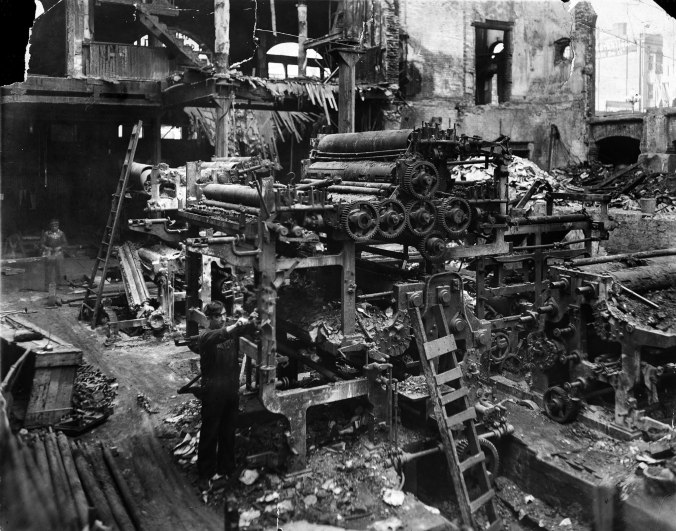
On this date, October 1, 110 years ago,  a massive explosion destroyed the Los Angeles Times building in the city’s downtown area, killing 21 employees and injuring many more. This obviously unethical act—though in the over-heated labor environment of the times, union activists would secretly defend it—set off a series of events in one of the great ethics train wrecks in U.S. history.

The explosion was a message to Los Angeles Times publisher Harrison Otis, a powerful opponent of the burgeoning labor movement in general and unions in particular. Determined to exploit the tragedy to turn public opinion against organized labor, he hired the nation’s most famous private detective, William J. Burns, to crack the case while his paper supplied an avalanche of anti-labor editorials and slanted news stories.  Otis, the leader of the Merchants and Manufacturing Association, a powerful group of business owners with extensive political connections, seemed less interested in justice for the dead than a decisive knock-out of the union movement itself.

Burns’ investigation led to the Bridge and Structural Iron Workers Union and their treasurer, John J. McNamara. Burns got a confession out of  a sketchy character named Ortie McManigal who had allegedly been the intermediary between McNamara and two bomb experts, and personally arrested John McNamara and his brother James in Indiana. Then Burns supervised the kidnapping and transportation of the brothers to California, where they could be prosecuted.

Convinced that the the McNamara brothers were being framed—some labor supporters even suspected that Otis had bombed his own building—Samuel Gompers and Eugene V. Debs pressured Clarence Darrow, then the premier labor lawyer in the U.S.,  to take on the McNamaras’ defense. Darrow had been ill and seeking to retire, but a recent stock market crash had left him broke as well. He agreed to take the case for the then unprecedented sum of $50,000 (about $1,368,000 today). The unions literally had children collecting nickels and pennies to build the defense fund.

The unions were Darrow’s clients under the existing legal ethics rules, but the brothers were also his clients, and their lives were at stake. This became a serious conflict when Darrow learned, within minutes of meeting with the McNamaras, that they were guilty.

Gompers had told him that the brothers had to be acquitted or the entire labor movement might be destroyed forever. The clients paying his fee, therefore, demanded a plea of “not guilty.” Darrow, however, became convinced that only a guilty plea would save the brothers from execution. Meanwhile, he knew that there was no way the McNamaras could get a fair trial. The Times was poisoning the jury pool daily. The prosecution was engaging in outrageous tactics, like bugging Darrow’s offices in L.A. They even had Darrow followed, and got incriminating photographs of the lawyer leaving the apartment of his long-time, off-and-on mistress, a female journalist covering the trial. Then they used the photos to try to force Darrow to withdraw from the case, threatening to show them to his wife, Ruby.

“Go ahead,” he said. “She knows all about Mary.” Darrow’s hands were hardly clean either: his agents had located the supply of dynamite in Indiana that the fatal charge had been taken from, and he hired a lawyer to hide the evidence in a safe. Continue reading →

Ethics Quote Of The Week: Paul Mirengoff

“Conservative America is disgusted with the NBA, and therefore is tuning it out. We’re disgusted ….with the embrace of the radical BLM movement by the league and its players….My problem was what was allowed, indeed encouraged, during the games. I will not watch any sports event during which the preaching of politics or ideology occurs. I guess I’m not alone.”

—Conservative lawyer and blogger Paul Mirengoff on the Powerline blog, discussing the huge fall-off in TV ratings for the current NBA play-offs.

Mirengoff is wrong to attribute this reaction only to conservatives, however. I have spoken with many sports fans who would not fit that description who are equally disgusted with the professional sports leagues. All of the leagues made a foolish assumption that by embracing the views of many progressive activists, they would at least hold on to the allegiance of  fans who agreed with those positions. ESPN and many sportswriters have made the same mistake., and it’s a stupid one. If I go out to dinner and the service staff bombard me with their political views during the evening, it doesn’t matter if I agree with what they say: I didn’t come to the restaurant to listen to political diatribes.

If you’re wondering about the ellipses, I left out a reference to the NBA’s addiction to China’s money, leading the league to ignore the despicable human rights record and political oppression in that country. That is a conservative complaint, and a valid one, but I doubt it affects NBA play-off ratings one tick.

I haven’t finished my letter to the Boston Red Sox, but I write it as I completely ignore the baseball play-offs as I will through the World Series. I want to make sure the team realizes that if its ugly promotion of Black Lives Matter could alienate me, it is in big trouble in the community. The players need to understand that as well, but it was up to management to tell employees to do what they were paid for, and not use their celebrity to make incompetent and divisive political statements. Continue reading →

Of Intent, Offense, And Uncivil Parrots

The Lincolnshire Wildlife Centre in Great Britain has a problem, or thinks it does. Billy, Eric, Tyson, Jade and Elsie, gray parrots all,  joined  to zoological park’s  flock of 200 gray parrots in August, and quickly proved to be a bad influence.  All five have a penchant for telling visitors to “fuck off,” and one reportedly has called a zoo manager a “fat twat.”  Zookeepers believe the five  were encouraging each other to be potty-beaks, and risked turning the entire group of gray parrots into little feathered versions of Bill Maher.

Can’t have that. The zoo is separating Billy, Eric, Tyson, Jade and Elsie for being  bad influences on each other and threatening to corrupt the other parrots.

This episode has special resonance with me. In 1988, I had just joined the staff of The Association of Trial Lawyers (now called, to the group’s great shame, The Association for Justice because a consultant found that people don’t like trial lawyers) to run its various profit centers. Almost immediately, I found myself in Maui overseeing the group’s winter convention at the Ka’anapali Beach Hyatt in Lahaina. That sounds nice, but my convention manager was in the process of going nuts, and I was tasked with minimizing the damage when, among other things, she locked herself in our convention headquarters weeping and screaming.

I had other responsibilities as well, including dealing with rebellious exhibitors and moderating various meetings at which virtually no members were attending, given the lure of the warm breezes and Hawaiian surf. On the day ATLA’s new Executive Director screamed at me for not being able to talk my convention manager out of her fortress of solitude, and the exhibitors ambushed me at a meeting and called me a Nazi, I was walking, disconsolate and exhausted, from a meeting room back to the exhibit hall in the late afternoon. As I walked past a large, colorful macaw in a cage, I heard a voice say, “Fuck you!” I remember freezing, turning around, and staring at the bird. “Really?” I said. “Really? That’s just what I needed to hear today.” Continue reading →

Sunset Ethics, 9/30/2020: Conflicts Of Interest, Sexual Harassment, Movies And Lies

1. Conflicts of interest on my mind. I narrowly averted a disastrous conflict of interest yesterday out of pure moral luck, so the topic is much on my mind; I’m still distracted by the near miss. Professionally, it was the equivalent of almost being picked off by a bus.

NPR Legal Affairs Correspondent Nina Totenberg reacted to the death of Justice Ginsburg with an essay on her 48-year friendship with RBG, saluting Ginsburg’s “extraordinary character.” That’s funny: Totenberg never told NPR’s listeners, nor did  NPR, that she had a personal relationship with the Justice, despite being charged with covering the Court and critiquing its decisions.  Kelly McBride, NPR’s public editor and senior vice president of the Poynter Institute, threw a metaphorical ethics foul flag,

“In failing to be transparent about Totenberg’s relationship with Ginsburg over the years, NPR missed two opportunities,”she wrote on the NPR website. “First, NPR leaders could have shared the conversations they were having and the precautions they were taking to preserve the newsroom’s independent judgment,” McBride said. “Second, having those conversations in front of the public would have sharpened NPR’s acuity in managing other personal conflicts of interest among its journalists.”

Ginsburg, who officiated at Totenberg’s wedding in 2000. Nonetheless, the correspondent,  who wears her progressive bias on her sleeve as it is, denied that the conflict compromised to her journalism, telling  the Washington Post that NPR’s listeners benefited from ther friendship because it gave her greater insight into and Ginsburg’s  thinking.

And that justifies keeping the relationship secret from listeners how, Nina?

2. From the “When ethics alarms don’t work” files: Lawyer Phillip Malouff Jr. of La Junta, Colorado, was censured for a series of episodes of unprofessional behavior and sexual harassment.

In November 2016, Malouff  winked at a magistrate judge and said, “When you get back from your vacation, I better be able to see your tan lines.” When he visiting the same magistrate’s chambers to discuss scheduling matters, he  said, according to the female judge,: “Ask your husband a question for me when you get home tonight. Ask him what it’s like to have relations with someone who wears the robe. It has always been something I’ve wanted to do, but there have never been any women judges until now.”

Malouff  was informed that his comments were unprofessional and a violation of the Colorado Judicial Department’s anti-harassment policy. Ya think?

In July 2019, Malouff asked a judicial assistant to check whether the mother in a parental rights hearing had an outstanding warrant. When the assistant replied, “She is good.” Malouff  responded, “Her husband told me that she is good.”

Wink wink, nudge nudge. Continue reading →

Ethics Observations On 2020 Presidential Debate #1 [Comments Restored!]


Ten Ethics Observations:

1. I showed a photo from the first Presidential debate in 1960 to introduce the post Chris added his comments to, earning his Comment of the Day. Maybe I should have shown a video. Jack Kennedy was a Machiavellian phony of more style than talent, and Richard Nixon was more talented but just as ruthless and more unstable. Yet both conducted themselves as dignified aspirants to an honored office and role in our government, with sober and substantive answers to neutral questions that never betrayed the intense dislike the two men had for each other. Compare that event to what was on display last night. There are reasons for it, but no excusing it. Both men harmed the nation and the office last night with their ugly attitudes toward each other. As a result, they harmed the process, and democratic institutions.

2. The lack of a handshake was inexcusable, and shame on both campaigns and the debate commission for permitting this departure from traditional civility, as well as all concerned for giving the fake excuse of caution regarding the Wuhan virus. The two adversaries could have worn gloves and masks; hell, they could have worn suits of medieval armor for all I care. They needed to signal the traditional respect of each other even if they have none.

Shame on everyone.

 3. Trump’s constant interruptions of Biden and “bullying,” as it is being described in many forums, were bad form and poor strategy: Biden was vague and sometimes incomprehensible. Ethically, the President’s rudeness raises a familiar tit for tat dilemma. In his 2016 debate with Paul Ryan, Biden’s tactic was to mug, sigh, cackle, mock, and generally do everything he could to interfere with poor, polite Paul Ryan’s attempts to talk about policy, while moderator Martha Raddatz  made Ryan look weak. Trump decided that if that was going to be Biden’s game again—and it was—he wasn’t going to make Ryan’s mistake and be passive. So he acted as rude and jerkish as Biden, and made his contempt for and distrust of the moderator clear from the beginning.

4. I suspect Biden was drugged. He looked drugged last night; his pupils looked huge. The Trump team wanted to require a drug test, and though that was partially gamesmanship, it was also a fair request, given legitimate questions about Biden’s health, which should be the equivalent in this race of what Trump’s taxes were in 2016.

5. I don’t like either of these men as personalities, as elected officials, and as leaders, potential or otherwise. The difference is that President Trump has never pretended to be any different than he appears and sounds. W.S. Gilbert had a libretto he was inexplicably obsessed with about a magic lozenge that turned people into whatever they were pretending to be. (It helped break up his partnership with Sullivan, who refused to set it to music.) If Donald Trump ate that lozenge, it would have no effect at all. If Joe Biden did, he would turn into a nice guy. His supposed appeal is that he’s decent, trustworthy official, whatever his other deficits. He isn’t, and last night it was obvious that he isn’t. I can’t see anyone who was inclined to vote for Trump being put off by last night’s debate, but I can see Biden losing the votes of those who want someone more “Presidential.” Continue reading →

Grovel Of The Year: Matthew J. Mayhew, The William Ray And Marie Adamson Flesher Professor Of Higher Education at Ohio State University

This is pathetic.

When I read the Grovel of the Year—presumably you know what a banner year 2020 has been for grovels, as executives, academics and whole companies and organizations desperately try to mollify the Black Lives Matter mobs—-I instantly thought of the Monty Python skit above, as the brilliant Michael Palin portrayed a certified public accountant attempting to be bold and assertive, only to dissolve into a puddle of blubbering doubt the second he was challenged to follow through on his decision.

We are told that Matthew J. Mayhew, the William Ray and Marie Adamson Flesher Professor of Higher Education at Ohio State University, has published more than 75 peer-reviewed articles and is a co-author of How College Affects Students: Volume 3. He recently co-authored an admittedly fatuous piece for the Journal of Higher Education  called, “Why America Needs College Football” that was published on September 24. The cancel/race-baiting/ progressive bully mobs attacked, and it took only four days for poor Mayhew to issue a Palin-worthy grovel, begging for forgiveness and rejecting what he had written just days before.

“Weenie” doesn’t begin to describe the deficits of integrity and character his capitulation represents.

Here are examples of what he and co-author Musbah Shaheen wrote ( Shaheen is an Ohio State Ph.D. student, and hasn’t been heard from. I assume he is on the run, has changed his name and is off the grid, and will soon be sharing an apartment in Antartica with Salman Rushdie):

Essentializing college football might help get us through these uncharacteristically difficult times of great isolation, division and uncertainty. Indeed, college football holds a special bipartisan place in the American heart.

and…

College football reminds many Americans of the community values that underscore higher education and by extension America itself.Americans have lost the united sense of who we are as a nation.

and…

This election season has demonstrated how stifled, polarized and dangerous our political differences have become, and college football can remind us of respect — even in the wake of deep disagreement. We can root for different teams, scream at the players, argue with the refs and question the coaches, but win or lose, at the end of the day, we leave the stadium, watch party or tailgate with a sense of respect for the game and the athletes that train so hard, leaving it all out on the field every time.

and…

Deep difference doesn’t have to lead to disrespect.

The Horror! Continue reading →