“Print the Legend” Ethics: The Unjust Obscurity of Mary Quantrell

Barbara Fritchie, as in the poem. But the Barbara in the poem was really Mary.

Today is the anniversary of the Battle of Antietam, the single most bloody day in the Civil War, with nearly 21,000 casualties on September 17, 1862.  Most of us, at least those of my generation, were introduced to the battle with a poem, “The Ballad of Barbara Fritchie,” by John Greenleaf Whittier, telling the tale of a brave old woman, ninety years old, who confronted Confederate General Stonewall Jackson’s troops as they marched through Frederick, Maryland to the battlefield, by waving Old Glory after the troops had fired at it, and saying,

Shoot, if you must, this old gray head,
But spare your country’s flag,’ she said.

Barbara Fritchie is now an icon, and has been portrayed in novels and films. Her house is a historic landmark, and the town uses her name and the poem to market everything from candy to T-shirts. And, I learned this Sunday, it is all a lie, though not old Barbara’s fault. The poet got his facts wrong, or used excessive “poetic license” because “Barbara Fritchie” pleased his ear better than “Mary Quantrell”, the name of the real flag-waver, and a 90-year old patriot made for a more colorful plot than a mere 30-something with chutzpah. Whittier also made Jackson the antagonist of the tale, when in fact the general was the less flamboyant and famous A.P. Hill. In 1876 Quantrell wrote to Whittier pleading with him to correct the record, signing her letter, in quotes, as “Barbara.” He did nothing. Continue reading

Writers Writing About Ethics, Without Any

Sorry, can’t use you.

Writer Joe Konrath has written one of those blog posts about ethics that makes me want to defenestrate myself, a post that expounds on rationalizations as a substitute for ethical analysis because he is incapable of the latter, arriving at fatuous and misleading conclusions. Naturally his post was picked up and expounded upon by another blogger, Ben Galley, who has even launched an ethics-challenged website called Ethiks to promote similar ethics rot.

Both writers are holding forth about recent scandals in the publishing world, involving so-called “sock puppetry,” where a writer anonymously praises his own books on-line or trashes the work of competitors, and writers paying for positive reviews. Both are also laboring under juvenile ethical delusions, and obnoxiously so, among them:  that “everybody does it” is a valid excuse for cheating, that the fact that a critic of unethical behavior might engage in such behavior himself under certain conditions invalidates the ethical criticism, and that unethical people insisting that unethical conduct isn’t puts such conduct in a “grey area.” None of these is true; none of these is remotely true.

The ethically-clueless tenor of both posts can be gleaned from this section, by Galley:

“Ethics in life are a grey area. No less in the book industry. To borrow JA’s analogy, the claim of “I would never kill” goes out of the window pretty quickly when protecting your family against a murderous intruder. The line of ethics is never a straight one, often zig-zagging through a charcoal no-man’s land of right and wrong. The question is this: Where does the line lie for you? It’s nothing less than personal. Some people simply shrug at the thought of sock-puppetry. Others go a shade of red and grit their teeth. Sadly, we can write all the codes and edicts we like, the point is that not everyone will a) agree, nor b) abide.”

Let me see: wrong, wrong, irrelevant, wrong, not necessarily, no it isn’t, NO, it REALLY ISN’T, and so what?

Most ethical questions are not gray at all: these definitely aren’t. They are clear as clear can be. “Sock puppetry” is dishonest and unfair. An author paying for positive reviews, and a critic accepting payment from an author to review his work, is blatantly dishonest and a conflict of interest. There is no “gray” about it; they are just wrong. Anyone who draws the “line” anywhere else is wrong too. It doesn’t matter whether everyone agrees: those who don’t agree are unethical. So are those who can’t “abide.” Their unethical conduct doesn’t alter right and wrong.

Konrath’s piece wastes our time with a long argument claiming that unless one is as pure as the driven snow, not only can’t you call unethical conduct what it is,  the fact that you can’t calls into question whether the unethical conduct is really unethical at all. Here’s his “quiz,” which Konrath presents triumphantly as if it is a real brain-buster, when anyone with a modicum of honesty, decency and common sense should be able to score 100% without straining a neuron.

Here it is, with my answers in bold: Continue reading

“Marion Berry’s Dirty Asian Summer Punch” and Attacks on Free Speech From The Left

The United States’ has to be vigilant in protecting its unique Bill of Rights from dilution, degradation and manipulation. Once the threats came from the political right, as with the Red-baiting tactics of Sen. Joe McCarthy. Now it more typically comes from the kinder, gentler, more hypocritical political left, often in the form of threats to “hate speech,” a term that can mean pretty much whatever the kinder, gentler censor wants it to mean, and is especially handy to stifle dissent.

This First Amendment assault was on view yesterday on MSNBC, as PR loud mouth Donny Deutch, columnist Mike Barnicle and University of Pennsylvania professor Anthea Butler all agreed that the makers of the anti-Muslim video now being used as an excuse to attack embassies should be indicted. Uh, no. Making a movie cannot be a crime in the U.S.: this was what Citizens United was all about, and the principle is called “Freedom of Speech.” But bigger brains than Donny’s are trying to chip away at the right that makes America America, using the ever-popular “everybody does it” rationalization to argue that European nations prosecute those who “hurt religious feelings”, in the immortal words of our Cairo Embassy, so it must be the right thing to do.

Scared yet? If not read this post, and this, from the Volokh Conspiracy, on the arguments for limiting Free Speech being made by Prof. Peter Spiro and former Yale Dean Harold Koh, the latter now working in the Obama State Department.

Or just watch how much the bureaucrats in our nation’s capital respects the First Amendment. Or understand satire. Continue reading

Irresponsible TLC, Promoting Ignorance and Fraud

She’s funny, she’s wacky, she’s setting stupid people up to be scammed.

Public ignorance and stupidity costs the nation billions of dollars, kills untold people in the hundreds of thousands, vastly increases crime and unemployment, and generally makes life far less productive, safe and enjoyable for the minority that are not ignorant and stupid, as well as for those who are. Among the most unethical and despicable among us are those who profit from the ignorance of others, and who either plot to keep them that way, or who exploit their dimness for profit. These deplorable exploiters include politicians, advertisers and merchandisers, religious groups and cults, as well as single-issue advocates on a wide range of issues. There should be an especially unpleasant corner in Hell, however, for an organization that does this under the guise of “The Learning Channel.”

The Learning Channel has already established its fondness for either making “entertainment” out of child abuse, as in its execrable reality shows, “Toddlers & Tiaras” and “Here Comes Honey Boo Boo,” or exploiting child labor, as with the “Jon & Kate plus Eight” franchise. But its “Long Island Medium” show is especially vile, as it prepares gullible fools for manipulation and fleecing by charlatans who claim to be able to contact the dead, read minds, or foresee the future. “Theresa is a typical Long Island mom who has a very special gift. She talks to the dead.,” TLC tells us on its website. Elsewhere, it describes Theresa Caputo as a “real psychic.” These are lies. Continue reading

MDA Walks Alone

They miss you Jerry.

Last year at this time, the hot news was how the Muscular Dystrophy Association had unceremoniously dumped Jerry Lewis from the organization’s annual Labor Day telethon, it highest profile event and the centerpiece of its fundraising efforts for medical research. The telethon, shortened and without Jerry’s bombast and bathos, went forward, and MDA announced that it had brought in  $61 million, 4 percent more than 2011 when Lewis was still around. I was skeptical.  The MDA had violated core ethics rules that apply all organizations: Never cut yourself off from your roots. Honor your founders. Pay your debts. Keep peace with your past.  An organization that is estranged from its past heroes is estranged from itself.

I wrote, while designating the MDA an Ethics Dunce: Continue reading

Discovered: An Ethics Hero and a Theater Code of Ethics—From 1945!

The ethicist in “Singing in the Rain”

For many years, I have been attempting to persuade the local professional theater community in Washington, D.C. to develop and adopt an official Code of Ethics. I have not been successful, and it’s not surprising. Theater, indeed professional show business of all kinds, has been almost ethics-free for centuries. These are tough pursuits, and tough pursuits easily gravitate toward the Law of the Jungle—“Kill or be killed”—unless the culture makes a concerted effort to evolve in a different direction. Theater certainly has not. There a few unwritten rules in theater that could form the backbone of a useful code, such as “The show must go on!”, and there have certainly been members of the profession who are thoroughly ethical, they tend to be very successful individuals who have taken on high ideals once the need to back-stab has lessened, people who are so talented and fortunate that the need to lie and cheat never arises, or, a special category, marginally talented but hard-working and versatile professionals whose trustworthiness is their primary asset. (This last group usually fares poorly in the end.)

Not only have I been unable to interest anyone in developing a code for the theater, I have never heard of one being developed anywhere else. Until now, that is. I recently learned that Kathleen Freeman, a great character actress* who died in 2001, wrote and adopted an ethics code for a small theater company, the Circle Players, that she established in Los Angeles when she was 24 years old. Continue reading

Introducing the Jumbo Award and Its First Recipient: John Mark Heurlin, Esquire.

Today Ethics Alarms is launching a new category, the Jumbo Award. The Jumbo is named after the famous moment in the 1935 musical (and 1962 movie adaptation)“Jumbo” in which a clown, played in both by the sublime Jimmy Durante, is trying to sneak the largest elephant in the world out of the circus, which has been seized by creditors.  A sheriff intercepts the would-be elephant-napper, and demands, “Where do you think you are going with that elephant?” To which Durante’s character replies innocently, as if the pachyderm at the end of the rope in his hand is invisible, “Elephant? What elephant?”

Henceforth, the Jumbo will be periodically awarded to an ethical miscreant who continues to try to brass his or her way out of an obvious act of ethical misconduct when caught red-handed and there is no hope of ducking the consequences. And the first recipient is faux lawyer John Mark Huerlin.

Huerlin was suspended from the practice of law, yet was caught representing himself as a lawyer in several ways, which you cannot do while you are suspended. To do so is an ethical violation in itself—dishonest, defiance of the bar, and the unauthorized practice of law. Nonetheless, he used a letterhead that referred to the “Law Offices of John M. Heurlin” and an email address that read “JheurlinLaw@Netscape.net.” But the real kicker was that Heurlin held himself out as an attorney in litigation on his own behalf, by following his name with “Esquire” on court pleadings.

Huerlin told the bar that he could explain everything. Esquire means that I’m a lawyer in good standing? My goodness! This is all a big misunderstanding, then. I didn’t use “Esquire” to indicate that I was a lawyer. I thought “Esquire” just meant that I was a subscriber to the magazine, Esquire!

Now either disbarred or soon to be, Mr. Huerlin is officially authorized to replace that confusing reference to his reading habits with a new suffix, so he can present himself as John Mark Huerlin, Jumbo.

_______________________________

Facts: ABA Journal

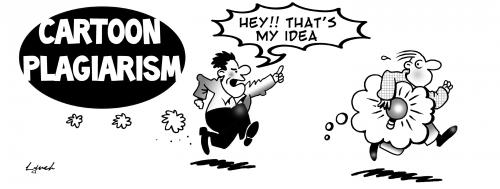
Graphic: Abracadabra

Ethics Alarms attempts to give proper attribution and credit to all sources of facts, analysis and other assistance that go into its blog posts. If you are aware of one I missed, or believe your own work was used in any way without proper attribution, please contact me, Jack Marshall, at  jamproethics@verizon.net.


Unethical Feature: “Top 10 People Who Don’t Deserve To Be Millionaires”

And leave Bubbles alone.

I know: it’s a feature, it’s a gag, it’s not meant to be taken seriously. I don’t care: the underlying attitude behind The Daily Caller’s recent slideshow, “Top 10 People Who Don’t Deserve To Be Millionaires” is too common these days to be emulated, even in half or whole jest. The belief that citizens of the U.S. “don’t deserve” to have the money they do is at the root of toxic politics, bad economic policy, class resentment and self-excused jealousy, and it shouldn’t be encouraged. If there is a genuine and persuasive argument to be made that people don’t deserve the money they earn, then make it, and you have to do better than “you didn’t build that!”

Taylor Bigler, the Caller’s entertainment editor who compiled the list, doesn’t. She just appeals to jealousy, as if nobody really really does resent people who have made more money than they have so its fine to pretend they do. “Now, some people are millionaires because they are ambitious and kept their noses to the grindstone,” she says. “Those people certainly deserve their hard-earned success. But honestly, there are many other people who are millionaires that simply don’t deserve to be.” Like? Continue reading

As Wisconsin Bans a Theatrical Production, Some Questions

“The forces of intolerance just won another victory in Wisconsin,” is how The Progressive headlines a story about a “rightwing evangelical” whose complaints prompted the Wisconsin Department of Natural Resources to cancel a planned production of  “The Bible: Complete Word of God, Abridged” in a state park. From the article:

“Vic Eliason raised a stink. Eliason is an evangelical clergyman in Milwaukee who runs the VCY (Voices of Christian Youth) America Radio Network. He has a show, “Cross Currents,” in Milwaukee, and on August 9, he dedicated his hour-long program to condemning the play as “blasphemous” and “diabolical.” He urged his listeners to contact the board members of SummerStage, and he gave out their numbers. He also urged listeners to call the businesses where some of the board members worked and ask them, “How can you have someone on the board who will literally spit in the face of the Bible?” Eliason also gave out the phone numbers of the DNR’s top two officials and told listeners to ask them why the state was allowing this play to go on, and why it was profiting from it. (The agreement with SummerStage and the Lapham Peak State Park is that 5 percent of ticket sales go to the park, Eliason said.)”

The article ridicules the state and Ellison on several grounds. The play, it notes, is “very light-hearted,” a spoof of the Bible. Ellison admits he never read the script, but that the theme of the comedy is enough. The statement of the Department in cancelling the play smacks of dishonesty: “SummerStage will not be performing ‘The Bible – the Complete Word of God, Abridged’ at Lapham Peak as the event did not meet the provision of the Department agreement requiring all productions to be family oriented,” said a spokesperson. Translation: “This was turning into a hassle with the possibility of a lawsuit, and it just isn’t worth it.”

I agree that Eliason is an officious trouble-maker, a bully who sees nothing wrong with stopping people from entertaining and being entertained if he doesn’t approve of their taste. But I have some questions: Continue reading

Ethics Quiz: Is There A “Cop Who Paints Weird Naked Women Principle”?

I know we just had an Ethics Quiz, but this is too good to pass up.

San Francisco police officer Gared Hansen has filed a lawsuit against the city. He says he was unfairly suspended because in his non-uniformed down-time, he is an artist with an unusual passion. He photographs nearly-naked women dressed, made-up, or painted to evoke mythical creatures. You know, like this:

Or this…

..or, if you prefer, this:

So here is your Ethics Alarms Ethics Quiz for this Sunday:

Is such a hobby engaged in by one of its number sufficiently damaging to the credibility, dignity and image of the SF police force that it is reasonable for the officer to be disciplined? In short, should there be a corollary to “The Naked Teacher Principle” called the “Cop Who Paints Weird Naked Women Principle”? Continue reading