Ethics Dunce: Rapper and Hip-Hop Music Mogul Ryan Leslie

I wouldn't mess with this guy. No way.

I wouldn’t mess with this guy, Ryan.  No way. But be my guest…

The real mystery for me in this silly scenario is why the rapper would think he could publicly promise a $1 million reward and not have to make good on it. Any rational theories will be received with pleasure.

Ryan Leslie, who has penned a hit song or two and performs as a hip-hop artist himself, had his laptop and external hard-drive stolen while he was on tour in Cologne, Germany two years ago. Apparently he felt that the demos and songs on the equipment had potential, because he offered $20,000 for the laptop and hard-drive’s return. When that didn’t work, he upped the reward to $1 million. A man named Armin Augstein found the computer while walking his dog in a park not far from where the computer had been taken, and he turned it over to German police. When the man claimed his reward, Leslie refused to hand it over, claiming that Augstein must have been involved in the theft, though police found no evidence supporting that allegation. Continue reading →

The Ethics Agony of Angus T. Jones

How could such a lucky kid complain?

Angus Jones, the “Half” of CBS’s resilient sitcom “Two and a Half Men, ” is receiving heavy doses of criticism and mockery in entertainment circles (and Blog World, of  course) for being so ungrateful and graceless as to post a YouTube video condemning the very TV show that has made him rich and famous over the last nine years, taking him from childhood to majority. The video was posted by the Alabama-based church Forerunner Chronicles, which apparently Baptized Jones recently. “You cannot be a true God-fearing person and be on a television show like [‘Two and a Half Men’]. I know I can’t. I’m not okay with what I’m learning, what the Bible says, and being on that television show.” He goes on to say,

“I’m on ‘Two and a Half Men’ and I don’t want to be on it. Please stop watching it. Please stop filling your head with filth.”

Is this disloyal and ungrateful conduct toward a show, a cast and employers that have given Jones wealth, celebrity and fame? Undoubtedly. If he had come by this station in life through his own efforts and fully informed choices, I would agree with the Hollywood chorus accusing the 19-year-old of “biting the hand that feeds him.” Jones, however, was indentured to “Two and a Half Men” at the age of ten, which is to say that he had little say in it or his life path so far. His parents, like the parents of most child actors, decided that his innate performing talent was worth a lot of money to them and him, and that this was reason enough to launch him into a field with a century-long track record of turning children into dysfunctional celebrity addicts, often setting them on the road to addiction, isolation, depression, failure, and death. Continue reading →

TV Ethics, Viewed From A Sickbed

This isn’t how I look. This guy looks BETTER than I look…

[ As regular readers here might have guessed, I am ill, and have been since Thanksgiving. I can barely read, can’t really research, and whatever appears below was composed in 10 minute increments with hours or days in between. I’m hoping to be catching up very soon. Thank you for your patience]

What do you do when any movement or exertion makes you cough your guts out, when you can’t sleep but have to rest, when your brain is so blurry from viruses and medication that you can’t even compose a blog post for three days? (Sorry.) If you are me, and I hope for your sake that you aren’t, you watch TV.

I got one jolt of legal ethics horror that I hadn’t remembered re-watching Kevin Costner’s “The Untouchables,” directed by Brian DePalma. In the movie’s climax, Al Capone’s trial on income tax evasion has come to a crisis point, as Elliot Ness (Costner) realizes that the jury has been bribed to acquit him. Despite documentation of that fact, the corrupt judge tells Costner that the trial will proceed, whereupon Costner extorts him to prompt “a change of heart.” Now the judge shocks the courtroom by announcing that he is trading juries with another trial next door. The new, un-bribed twelve will decide Capone’s fate.

This is, of course, beyond ridiculous. Adversary attorneys must be able to choose a jury in voir dire, where each potential juror is questioned. Trading juries just invalidates two trials. Even if they could trade juries, which they couldn’t, the Capone trial would obviously have to start all over again since the new jury wouldn’t know what was going on.

None of this occurs to Al Capone’s panicky lawyer, however, who, realizing that the jig is up, announces that “we” are changing “our” plea to “guilty.” Chaos reigns. Capone (Robert DeNiro) punches his lawyer in the face, and I don’t blame him one bit.  A lawyer can’t plead guilty against the wishes of his client! The judge couldn’t accept such a plea, and Capone wouldn’t be bound by it. This would be an embarrassing distortion of the justice system in a Warner Brothers cartoon, but for a movie based on historical figures and events to sink so low is unforgivable. (“Carrie” aside, Brian DePalma was a hack.) Continue reading →


The Complete “It’s A Wonderful Life” Ethics Guide [UPDATED]

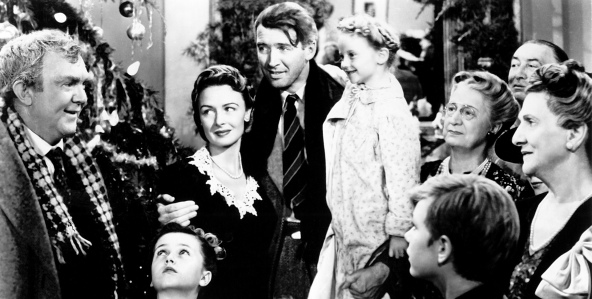
 Frank Capra’s 1946 masterpiece “It’s A Wonderful Life” is one of the great ethics movies of all time, perhaps the ethics movie of all time. In 2011 I prepared a guide through its complex ethics thicket. The post was divided into three separate posts, and I eventually combined them s0 readers can have the pleasure, if one can call it that, of watching the film like I do: having ethics arguments the whole way through. And now, here is your guide. Additions are welcome and encouraged.

1. “If It’s About Ethics, God Must Be Involved”

The movie begins in heaven, represented by twinkling stars. There is no way around this, as divine intervention is at the core of the fantasy. Heaven and angels were big in Hollywood in the Forties. Nevertheless, the framing of the tale advances the anti-ethical idea, central to many religions, that good behavior on earth will be rewarded in the hereafter, bolstering the theory that without God and eternal rewards, doing good is pointless.

We are introduced to George Bailey, who, we are told, is in trouble and has prayed for help. He’s going to get it, too, or at least the heavenly authorities will make the effort. They are assigning an Angel 2nd Class, Clarence Oddbody, to the job. He is, we learn later, something of a second rate angel as well as a 2nd Class one, so it is interesting that whether or not George is in fact saved will be entrusted to less than heaven’s best. Some lack of commitment, there—then again, George says he’s “not a praying man.” This will teach him—sub-par service!

2. Extra Credit for Moral Luck Continue reading →

Ethics Quote of the Day: Sesame Street

“Sesame Workshop’s mission is to harness the educational power of media to help all children the world over reach their highest potential. Kevin Clash has helped us achieve that mission for 28 years, and none of us, especially Kevin, want anything to divert our attention from our focus on serving as a leading educational organization. Unfortunately, the controversy surrounding Kevin’s personal life has become a distraction that none of us want, and he has concluded that he can no longer be effective in his job and has resigned from Sesame Street. This is a sad day for Sesame Street.”

—— The producers of “Sesame Street,” announcing Kevin Clash’s resignation and the end of his close association with Elmo. A second man just accused Clash of molesting him when he was underage, and Clash’s original accuser, Sheldon Stephens, recently recanted his recantation of  his allegations.

“Goodbye, my friend.”

This ending was pre-ordained from the beginning of the scandal, and Clash’s guilt or innocence was and is irrelevant. Sesame Street’s duty is to Elmo and his fans, not Kevin Clash. “Innocent until proven guilty” also has no application. Clash, if nothing else, is guilty of not being innocent enough to be the voice of the most innocent Muppet on Sesame Street.

Elmo and the One Recant Rule

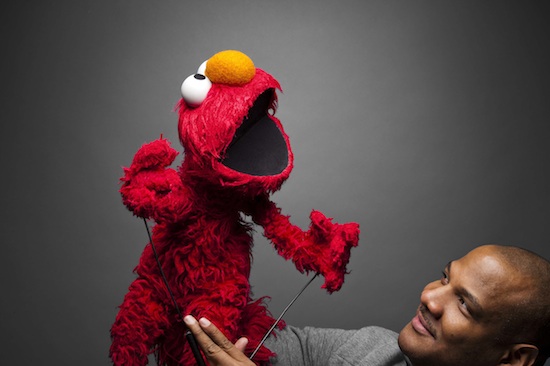
When we last left the sad saga of Kevin Clash, the Muppets puppeteer whose voice and hands give cute little Elmo his panache, the 23-year-old man who had accused Clash of having underage sex with him had recanted, agreeing with Clash’s defense that their relationship was consummated later, when both were consenting adults. I opined that this would do little to rescue Clash’s career, as the most innocent Muppet on Sesame Street could not survive being operated by a man who was now associated with gay sex, consensual of not. This likely result seemed unfair to Clash, but is nonetheless a responsible decision on the part of Clash’s employers, the Children’s Television Workshop, whose duty is to their mission and core audience, not to one unmasked Muppet.

Clash’s prospects have not improved. It was revealed last week that the recant was bought and paid for by Clash, who handed Sheldon Stephens $125,000 to deny his previous accusation and never to raise it again. Needless to say, a recant induced by monetary compensation is not a reliable one, and leaves as many questions open as the original claim, if not more. In a settlement, the accuser is paid to drop any legal action, but doesn’t agree to retract the original claim. What Clash did is called “buying testimony,” or ” a pay-off.” Continue reading →

Ethics Quiz: Elmo’s Problem

And now, Muppet ethics.

Sorry, Elmo.

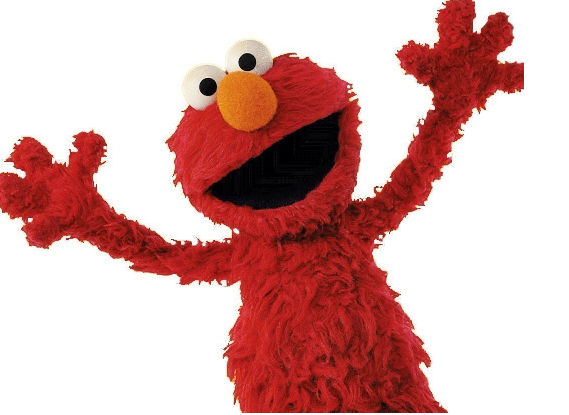
Kevin Clash is the voice and operator of beloved Elmo, the cute lttle red monster  on “Sesame Street.”  A young man has accused Clash of molesting him when he was a teen.  Clah denies the allegations, claining that the relationship was between consenting adults. The Children’s Television Workshop says its investigation did not substantaite the accusation; nonetheless, Clash is being disciplined for says the show, is being disciplined for “inappropriate use of company email,” and is unlikely to have his hand in Elmo any time soon, if ever again. The alleged victim is probably not through with Clash, and this could get ugly.

Your Ethics Quiz challenge, should you choose to accept it, is this:

Assuming nothing illegal is proven regarding Clash’s sexual relationship with the accuser, and it remains a “he said/he said” dispute, should Clash remain the voice and puppeteer behind “Sesame Street’s” most innocent character? Continue reading →

Ten More Hollywood Ethics Cures For A Post-Election Hangover (Part 2)

Here are the final five ethics movies, making 25 on the Ethics Alarms list so far. Except for the last, they are a sober batch. I think I now understand why they are at the back end of my list of 25; this group is darker than the first 15 and more tinged with defeat than hope. Their ethics lessons, however, remain inspiring, or if not quite that, thought-provoking:

6. The Insider (1999)

Another true story, one that explores the murky area of whistleblowing and whistleblowers as well as the conflict between the business of journalism and the profession of journalism.

Ethical issues highlighted: confidentiality, whistleblowing, law vs. ethics, sacrifice, courage, media ethics, integrity, honesty, trustworthiness, betrayal

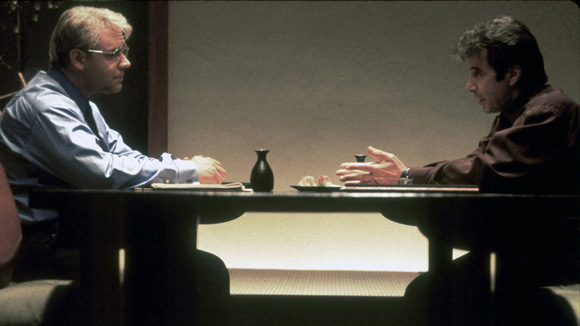
Favorite quote: “You’re in a state of conflict. Here’s how it lays out. If you have vital insider stuff that the American people for their welfare need to know and you feel compelled to disclose it and this violates the agreement – that’s one thing. On the other hand, if you want to honor the agreement, it’s simple. Say nothing. Do nothing. The only guy who can figure this out is you, and that’s you all by yourself.” Lowell Bergman (Al Pacino) Continue reading →

Ten More Hollywood Ethics Cures For A Post-Election Hangover (Part I)

A year ago, the combination of the erupting Penn State scandal (and Penn State’s students’ scandalous reaction to it) and our dysfunctional government led me to list my “15 Hollywood Cures…,” my favorite movies dealing with ethics themes that I reflexively turn to when the world’s ethics alarms look frozen and broken. I had to leave some of the best ethics films off that list (Part I is here; Part II is here), and this seems like a good time to remedy that injustice. Here are ten more excellent films to prime our ethics alarms with minimal preaching and maximum entertainment value, bringing the Ethics Alarms movie list to 25. It will get larger, I’m sure:

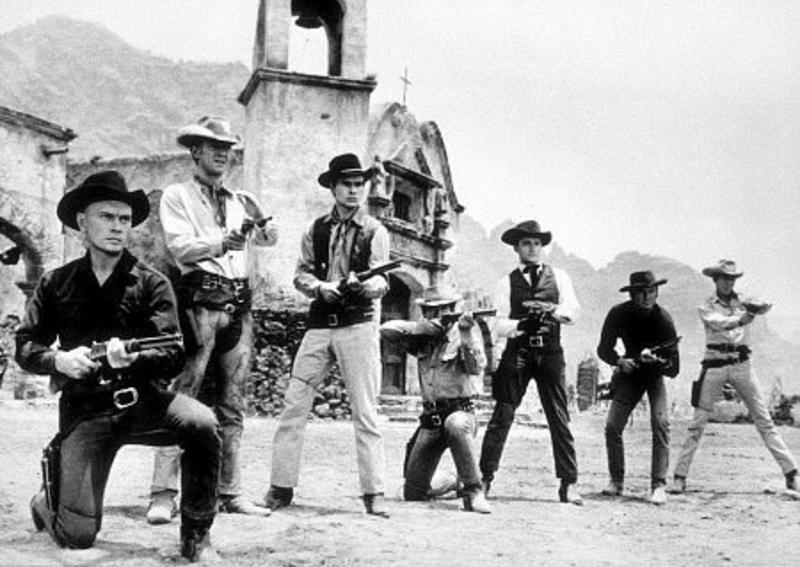
1. The Magnificent  Seven (196o)

Ethics Bob Stone’s favorite ethics movie, and he has a good case. A group of seven hired gunslingers help an impoverished Mexican town fight off looting bandits, each of the seven for a different reason, facing their own ethical dilemmas and contradictions.

Ethical issues highlighted: altruism, bullying, charity, courage, integrity, teamwork and the importance of prioritizing values.

Favorite quote:

Harry (Brad Dexter): “There comes a time to turn mother’s picture to the wall and get out. The village will be no worse off than it was before we came.”

Chris (Yul Brenner): “You forget one thing — we took a contract.”

Vin (Steve McQueen): “It’s not the kind any court would enforce.”

Chris: “That’s just the kind you’ve got to keep.” Continue reading →

Porn and the NFL: In Search of A Biased Referee

With condoms, what, 2.5 X’s?

55% of California voters decided yesterday to make porn stars wear condoms on the job—good for their health, bad for the health of the state’s booming XXX film industry. It is a reasonable guess that injecting condoms into the proceedings will put California’s porn products at a significant competitive disadvantage, and also a reasonable guess that the voters who enacted the measure couldn’t care less. So legal enterprises may go bust, their employees may lose their careers, and consumers may lose a form of entertainment they crave because of the policy priorities of those who hold all three in low regard, and who are unlikely to apply any kind of balancing standard. It’s safer for all concerned to require condoms, that’s all. Porn companies, porn careers, porn lovers—who cares about what they want? Continue reading →