Ethics Footnotes, 1/17/21:Well, I’M Reading, Anyway…

Boy, only diehards are on Ethics Alarms today, yesterday too. I don’t get it; it’s a long weekend, but so what? It’s not like everyone is traveling on long weekends while American are still trembling in terror over the Wuhan virus. Must ethics take a holiday? Apparently so...

1. How can anyone have sympathy for New Yorkers? The city is falling apart. Crime is up, the wealthy are fleeing, corporations are fleeing, the mayor has eliminated admission tests for much of the public school system and stated that his goal is to redistribute wealth, Times Square has returned to pre-Rudy squalor, and tourism was falling like a rock even before the pandemic. They voted for a confessed socialist as mayor (and for his communist, conflict-of-interest flaunting wife)—perhaps acceptable as a novelty—then re-elected him after a disastrous first term. Now, six months ahead of this year’s Democratic mayoral primary that will decide who the next mayor will be because the city’s minorities wouldn’t vote for a Republican if he was running against Nero, the natives are getting restless. Polls show that New Yorkers regard de Blasio’s pet issues of combating climate change and pollution on the bottom of their priority list, but only 56% of respondents said they hold a “very or somewhat unfavorable” view of the guy that was the architect of the city’s collapse. Why isn’t it more like 90%? I suppose for the same reason they elected him twice. In democracy, you get what you deserve. Civic literacy is the individual’s ethical responsibility, nobody else’s.

2. Now THIS is an incompetent elected official…Pennsylvania Lt. Gov. John Fetterman (D) actually said in a video posted last week—I wouldn’t kid you!-–“This idea that saying that Pennsylvania was ‘rigged’ or that we were ‘trying to steal the election,’ that’s a lie. And you do not have the right, that is not protected speech.” Fetterman goes on to say that Twitter should have immediately removed any tweet from President Donald Trump that questioned the integrity of the election, and, in the immortal mark of someone who doesn’t know the First Amendment from a Yorkshire Terrier, compared Trump’s claims to “yelling fire in a crowded theater when there is none.”

This idiot is reportedly considering a run for the U.S. Senate in 2022.

To be fair, Fetterman’s view of the free speech,which is to say “there is none unless progressives approve,” appears to be on the way to becoming the predominant one in the Democratic Party.

Don’t blame me, I voted for Kodos…
Continue reading

Saturday Ethics Alerts, 1/16/21: “Nevermore!” If Only…

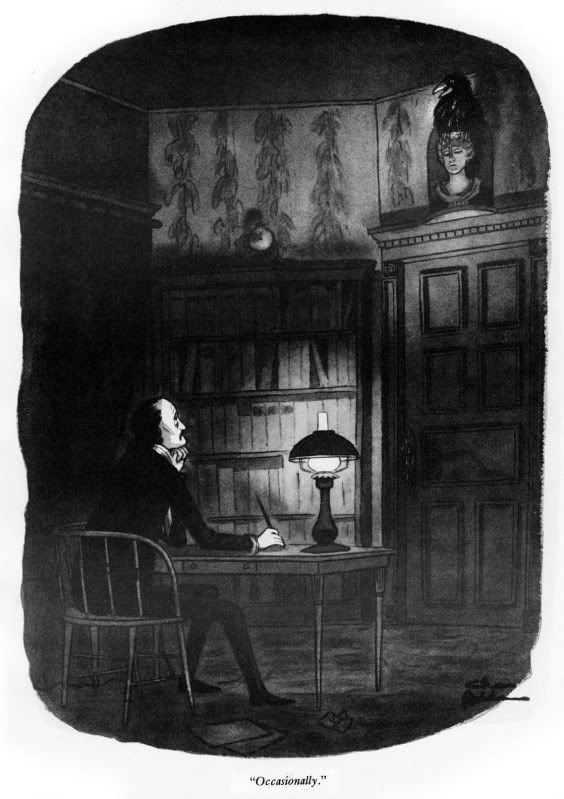
Raven Addams

The 18th Amendment to the U.S. Constitution, prohibiting the “manufacture, sale, or transportation of intoxicating liquors for beverage purposes,” was ratified by the requisite number of states on this date in, 1919. It was a great, botched, ethics experiment. Alcohol was too far embedded in the culture for too long and in too many ways, and the laws prohibiting alcohol were badly drafted and engendered public resentment and contempt. Still, as the Ken Burns documentary on the topic made clear, the damage being caused by alcohol abuse before Prohibition was permanently slowed down and reversed by the ban, though the ban itself was doomed from the start.

1. Quote of the Day: I just finished watching “We Bought A Zoo” again, and it reminded me of the quote, alluded to in the film, by the real life English man who did buy a zoo, and whose story was transferred to America in the film staring Matt Damon. Benjamin Mee said in his book (with the same title as the film) about the adventure, “You know, sometimes all you need is twenty seconds of insane courage. Just literally twenty seconds of just embarrassing bravery. And I promise you, something great will come of it.”

He’s absolutely right, and this principle has enriched my own life too many times to count.

Continue reading

When Tommy Lasorda Coached “Danny Kaye”: An Ethics Tale

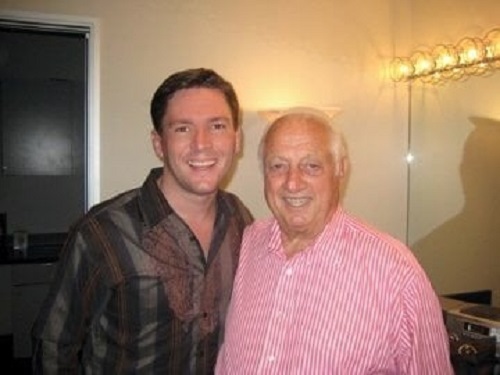
Brian and Tommy

I wrote about my friend Brian Childers, a brilliant actor, singer, and all-around great guy, in this post, “An Act Of Kindness, Danny Kaye And Me : An Ethics Case Study,” from five years ago. It’s worth reading, if you haven’t already or don’t remember it. Brian continues to have a thriving career in New York City, with a successful album, roles in plays and musicals, and periodically, thrilling audiences with his dynamic recreation of Danny Kaye’s legendary one-man performances, the legacy of an adventure he and I set out upon over two decades ago.

I was recently tagged in a Facebook post by Brian, who related for the first time a revealing encounter he had with Tommy Lasorda, the Hall of Fame manager of the LA Dodgers for many years and legendary for his leadership abilities, lovable personality and positive attitude. Tommy died recently at the age of 93, and baseball fan that I am, I had been trying to justify mentioning him in an ethics post. Well, Brian took care of that with his usual flare.

He wrote in part,

I had the enormous privilege to meet this sports legend while performing at the Hollywood Bowl for 3 nights in 2008. The event was called “A Ball at the Bowl” and it was celebrating 50 years of the Dodgers in LA. I was there to sing Danny Kaye’s “D-O-D-G-E-R-S” song and one other with the LA Philharmonic.

Tommy’s dressing room was right across the hall from mine. On the first night, Tommy, whom I had never met, surprised me by knocking on my dressing room door. He introduced himself and was incredibly friendly. When he asked what I was doing in the event, I said I would be singing Danny Kaye’s Dodgers song with the orchestra.

He was ecstatic, but IMMEDIATELY put on his coach’s hat. “ You gotta go out there and you gotta sing great! You gotta go out there and knock em dead, Just focus on the song and you are gonna knock it out of the park,” he said, just like I was a rookie getting ready to play my first game. I thanked him for his encouragement.

While I was performing, I could hear Tommy in the wings yelling and clapping. When I walked off stage, he pounded me on the back, shouting, “Great job! You hit a home run buddy!”

Continue reading

Art Ethics: The South Carolina Toilet Brush Flag

SC flag design

You would think it’s such an easy principle to understand and execute. In art, as with all products and services, it is the quality of the work that matters, not the artist, creator or provider. But in the era of The Great Stupid, where woke sensibilities routinely turn logic and wisdom on their heads and inside out, something as intrinsically sensible as this suddenly becomes hard to grasp.

Take, for example, the new South Carolina flag design, as fine an example of “bias makes you stupid” as one could imagine. You see, the South Carolina flag has long consisted of a crescent moon and a palmetto tree, but designs varied. Why a palmetto tree? Also known as the Sabal palmetto, cabbage-palm, cabbage palmetto, blue palmetto, Carolina palmetto, common palmetto, swamp cabbage and sabal palm…

Palmetto

…the tree is native to the southern United States, as well as Cuba and the Bahamas. In the Revolutionary War, South Carolina palmettos played a key role in the defeat of the British fleet at Fort Moultrie on Sullivan’s Island. The fort was constructed out of palmetto logs, which efficiently absorbed the impact of cannon balls, according to the State Legislature’s website. Col. William Moultrie’s 2nd South Carolina Regiment wore uniforms of deep indigo, so Moultrie used the color as the background for the moon and the tree when he designed the first South Carolina flag. Since 1940, however, South Carolina has had no required design for its state flag, leading to an infinite number of variations on flags, logos, posters, mugs, T-shirts, and other merchandise. See?

Continue reading

Mid-Day Ethics Warm-Up, 1/5/2021: Zombie Lawyers! Imaginary News! Dead Ethics Alarms! Wrong Numbers!

zombie-hand

1. The Florida Bar, protecting us all against unethical zombie lawyers...Last month, the Florida Supreme Court approved that Florida Bar’s decision to disbar Sabrina Starr Spradley, a 41-year-old attorney in private practice in Delray Beach, Florida. She died more than a year ago. The rules do not require another attorney or family member to tell the bar when a lawyer being disciplined has died, so poor Sabrina had to suffer the post mortem indignity of being labeled an unethical lawyer.

“We do have 108,000 lawyers in Florida,” a Florida Bar spokesperson explained. “There are a lot of individuals that we regulate. We rely on people to inform us.”

Why? How hard is it to routinely check the obituaries before wasting the Supreme Court’s time?

2. For the fake news Hall of Fame. Because President Trump is “reportedly” (whatever that means) “considering” flying to Scotland instead of attending Joe Biden’s inauguration on January 20, the Independent reports that Scotland won’t allow him in, because it wouldn’t be “essential” travel. Can a news headline (“Trump not allowed into Scotland to escape Biden inauguration, Sturgeon warns” ) be built on fewer facts than this?

Incidentally, there’s no law requiring an outgoing President to attend the inauguration of a President, and if Trump declines to do so, he would not be the first. He’d be the fourth, following John Adams, John Quincy Adams, and Andrew Johnson. A gracious transfer of power is always in the best interest of the nation, and Trump would do himself a favor if he just sucked it up and pretended to be a statesman. I doubt that he will.

Continue reading

From The Law Vs. Ethics Files: This Controversy Has Everything—Fine Art, Nazis, Lawsuits, Sheep…

stolen painting

The painting above is “La Bergère,” or “Shepherdess Bringing in Sheep,” by Camille Pissarro, a renowned French Impressionist. The 1886 painting, like so many other priceless works of art, was stolen by the Nazis in 1941, when they looted the French bank where the Jewish family who owned, the Meyers, it had placed the painting for safe-keeping. Dr. Léone Meyer, whose mother, grandmother, uncle and brother died in Auschwitz, searched for her family heirloom ever since the end of World War II. Finally, in 2012, she traced the painting to the Fred Jones Jr. Museum of Art at the University of Oklahoma.

In 2016, she negotiated a compromise to trade the painting back and forth between the university and a French museum, but the controversy was re-opened when Dr. Meyer decided that she wants the painting permanently dispalyed in France. Now the courts are involved, on two continents. A judicial tribunal in Paris is deciding whether to block the work from being shipped out of France, and ordered Dr. Meyer and the university to meet with mediators. A federal judge in Oklahoma, meanwhile, has threatened to hold Dr. Meyer in contempt if she continued to pursue litigation in France. A trial is scheduled for January 19 in Paris to hear Dr. Meyer’s arguments for keeping the work there, and a second hearing is set for March on whether to prohibit the painting’s trip back to where the the wind comes sweeping down the plain.

Continue reading

Ethics Perspective: When The Weavers Had To Sign A Loyalty Oath To Appear On The Jack Paar Show

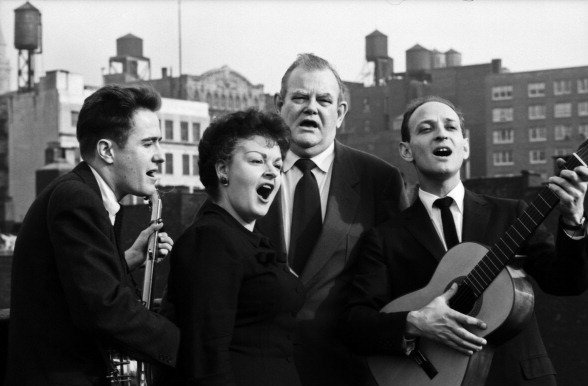
Weavers

It has become a fad to bid goodbye to 2020 while proclaiming it “the worst year ever.” Of course, and I say of course realizing that most people have no idea why I would say “of course,” one only thinks it was the worst year ever if one doesn’t know much about all the other terrible years, thanks in part to our atrocious education system’s inability to teach either the substance of history or its importance to new generations.

The delusion fits nicely into the Left’s Big Lie that everything was terrible because Donald Trump was President. But as bad as the year behind us was, and there is no question about that, liberty and the identity of America were facing equally dire threats when the nation had been terrified out of its metaphorical gourd by Communist propaganda and Right Wing doomsayers. Luckily for us, “cooler heads prevailed,” but that was just luck. Let’s look back on a largely forgotten incident that occurred on this date in 1962, one of the really bad years.

On January 2, 1962, the reunited folk group the Weavers (Ronnie Gilbert, Lee Hays, Fred Hellerman, and Pete Seeger) was scheduled to appear on The Jack Paar Show. Paar, if his name doesn’t ring a bell for you, was the most quirky and intellectually complex of the “Tonight Show” hosts, and in 1962 had a quirky, intellectually complex hour-long prim -time show on NBC following Johnny Carson’s taking over the late night franchise.

Before taping, the Weavers were told by NBC officials that their appearance was contingent upon their signing a statement disavowing the Communist party. Every member of the Weavers refused to sign, and the appearance was cancelled.

Some perspective is necessary. The Weavers were one of the most popular performing and recording groups of the 1950s, but they were undoubtedly radically Left by the standards of the time. Founder Pete Seeger wasn’t just pro-union; it would be fair to say he was pro-Stalin, in the dreamy-eyed, naive way that other American liberals were (Bernie Sanders comes to mind). But he was a brilliant performer and song-writer, and his group sensibly confined its material to non-political topics: the Weavers’ big hits were “Goodnight Irene,” a #1 record for 13 weeks in the summer and fall of 1950, “Midnight Special” and “On Top of Old Smoky.” But the Red Scare of the early 1950s still hit them hard. During the 1930s when Communism was “in,” the members of the group were all enthusiasts. When news of the pre-Weavers Weavers’ political past got out, they were, in modern terms, canceled. A planned television show was killed. The group’s four members were placed under FBI surveillance. Seeger was grilled by the House Un-American Activities Committee. Decca cancelled their recording contract in 1951; concert venues refused to book them, and their records were pulled from the radio. Two years later, virtually blocked from performing, The Weavers broke up.

Continue reading

New Year’s Ethics Warm-Up, Entertainment Edition

Thats enter

1. “That’s Entertainment!” Once again, Turner Movie Classics ran all of the “That’s Entertainment!’ series as its New Year’s Eve programming. Last time TCM did this, primary host Ben Mankiewicz won ethics points for having the guts to say, as his fellow hosts were gushing about MGM musicals between “That’s Entertainment!” 1 and 2, that he regarded movie musicals as in the same category as super-hero movies today: diverting fluff, but not cinematic masterpieces. I don’t completely agree with him, but as Mankiewicz has shown before, he has integrity as an expert analyst, and does not hesitate to register opinions that his audience might not like. (Where Ben is wrong in his comparison is that the old movie musicals showcase astonishing talents that we are unlikely to see the like of again—Judy Garland, Fred Astaire, Gene Kelly, Danny Kaye, Julie Andrews and others—while the super-hero movies merely display special effects that we are doomed to see repeated for the rest of our lives. In support of Ben’s point, I have to admit that watching “That’s Entertainment” one is struck by how few truly great movie musicals there were.

Last night, Ben scored again as a truth-teller. After mouthing the conventional wisdom that Gene Kelly and Fred Astaire were regarded as the greatest dancers in Hollywood history, he added, “Of course, Eleanor Powell and the Nicholas Brothers might disagree.” As an early clip in “That’s Entertainment!” shows, a dance-off between Astaire and Powell, she could match Fred step for step. The Nicholas Brothers, who only appear briefly in TE1, never had a chance to impress white audiences, but when you watch them, it is hard to avoid the conclusion that they could perform feats of feet that neither Kelly nor Astaire could match.

2. “That’s Entertainment!” (cont.) The series is as good an example as one could find of why sequel are cheats most of the time. The first in the series was perfectly conceived: at a time of national cynicism in the wake of Watergate and Vietnam, during a period where movies were becoming violent and bloody and MGM, once the “Dream Factory,” was being sold off. Jack Haley, Jr, the son of Judy Garland’s Tim Man and an MGM executive, had the idea of using old clips and old stars from Hollywood’s Golden Age to show a new generation what thrilled their parents and grandparents. In part because of Haley’s clever choices of material and his editing, the movie worked better than anyone could have imagined. I saw it in D.C. grand Uptown theater (it just closed it doors forever, killed by the lockdown) with a packed house of Baby Boomers. During the opening credits, the audience broke into spontaneous applause as each names of the co-hosts, past their primes all (except for Liza Minnelli), appeared on the screen. Donald O’Connor! (Applause)…Mickey Rooney! (Applause). I’ve never witnessed anything like it.

Continue reading

Last Gasp Ethics, New Year’s Eve 2020

Happy New Year, Everybody!

1. A late entry in the “Most Unethical Lawyer of 2020” competition! McGinnis E. Hatfield was stripped of his license to practice law by the West Virginia Supreme Court. What did he do? Well, this section of a transcript of his conversation with a female client explains things pretty well:

Female: “I thought like when we first started out, I was just going to pay you. I didn’t know that you wanted sex out of the whole thing.”

Hatfield: “Well, I’d have to charge you like $1,500 bucks. You don’t have $1,500, do you?”

Female: “No.”

Hatfield “So come on out here. Just come. What time do you want to come?… [I]t’s just not going to work unless you do what I say.”

Female: “What do you want me to do?”

Hatfield: “… “Well, I want you to let me eat your pussy, and then I want you to let – I want you to suck my dick, and then, you know, I just have to – I’m as straightforward as I can be. And if you don’t want to do that, then fine. I don’t have any- I like you. And if you don’t want to do that, then we’ll just have to call it off.”

Female: “Is that not – all right. That’s fine. Whatever.”

Hatfield: “Is that okay?”

Female: “I mean no, not really because I’m not a whore.”

Hatfield: ” … And like I said, if you won’t want to do that, then that’s fine by me. I wish you luck. And if you don’t want to do that, then I’m not going to try to represent you. So that’s a benefit for you. And I’ll give you some money, too[.]”… You know, I’m shooting straight with you. I told you from the beginning that sex was important to me. I want some now. Nobody’s tried to trick you. And it would be safe, too. But anyway, if you don’t want to do it, that’s fine by me, honey, but you’ll have to get somebody to help you with your divorce, too.”

Female: “Okay, That’s fine.

Of course, it’s not fine. Lawyers are prohibited from having sex with clients in most jurisdictions. Lawyers cannot encourage individuals, including clients, to commit a crime. Mr. Hatfield compounded his problems when he flunked the easiest part of a disciplinary inquiry, telling the judge who asked Hatfield whether in retrospect, he found his behavior inappropriate or unethical,

“I think my conduct in this whole situation is human. And that’s the only defense I’m offering. Lord knows, we all need that. So that’s as far as I’ll go with that.”

The judge tried again, asking, “Are you remorseful?” Hatfield replied, “No. I have no remorse. I feel like I’ve been victimized.”

What an idiot.

It put me in mind of the Steven Wright line, “How did the fool and his money get together in the first place?”

Continue reading

The Unethical Abuse Of Great Music

In “A Clockwork Orange,” Alex, the violent anti-hero, is captured and subjected to a brutal re-conditioning process to stop his enjoyment of raping, beating, and killing. Unfortunately, the disturbing images he is shown as part of his treatment are accompanied by the works of his favorite composer, Beethoven. Alex begs his captors to stop the treatment saying “It’s a sin! He did no harm to anyone! Beethoven just wrote music!” At the end of his ordeal, Alex is released, and whenever he tries to commit an act of violence he gets so sick that he wants to die. As an unintended consequence of his treatment, Beethoven’s 9th Symphony has the same sickening effect on him, so Alex can no longer listen to the composer he loves.

The process that ruined Beethoven for Alex is a basic cognitive dissonance scale exercise.

Cognitive Dissonance

Linking music that is high on Alex’s scale to images and experiences he finds repulsive or upsetting, along with pain and discomfort—these are all are low, in negative territory— inevitably brings Beethoven down to the point where he can no longer experience pleasure from his compositions.

Many great and popular works of music have been damaged this way, most recently this Christmas in Nashville, when a strange man named Anthony Quinn Warner blew up a city block and died in the blast.

Moments before it blew up,Warner’s parked RV broadcast Petula Clark’s iconic 1964 hit “Downtown“:

When you’re alone and life is making you lonely

You can always go

Downtown!

When you’ve got worries, all the noise and the hurry

Seems to help, I know,

Downtown!

Then the explosion came, ripping through a downtown Nashville block, injuring at least eight people and damaging more than 40 buildings.

Continue reading