“Predator,” “White Christmas” And “Ma Rainey’s Black Bottom”: Among Other Benefits, Freedom Of Expression Is Just A Lot Easier Than Creating And Enforcing Taboos

arnold-mud-face

We were watching “Predator” over the weekend, and saw Arnold Schwarzenegger color his skin black—using mud—to escape the deadly alien’s heat-based vision. Now, why doesn’t this qualify as blackface, thus threatening Arnold with “cancellation” and the film, an action classic, with permanent shelving? Don’t tell me it’s because there is a good reason for Arnold, who is as white as you can get, darkening his skin. We have been told that intentions don’t matter when it comes to this crime against racial justice. Fred Astaire wearing dark make-up to honor his black tap teachers in “Top Hat” is per se racist. Wearing black make-up to portray a black historical character in a private Halloween party is racist. Lawrence Olivier wearing dark make-up to play Othello is racist. Robert Downey, Jr. wearing dark make-up to satirize actors who go to excess to get in character for their roles is racist. Where is the “Exception for someone trying to avoid being killed by a hunter from outer space” written down?

Continue reading

Once Again, America’s Best-Known Scientist Demonstrates Why We Can’t Trust Scientists, Especially If They Are Progressive, Pandering, Political Correctness-Obsessed Jerks Who Apparently Get Their Information From Cartoons [Corrected]

Not for the first time, astrophysicist Neil deGrasse Tyson, the anointed successor to the far more serious and reliable Carl Sagan, abused his reputation as the nation’s most-recognized scientist by grandstanding for the progressive mob, his allies and pals.

On Christmas Eve, he tweeted,

“Santa doesn’t know Zoology: Both male & female Reindeer grow antlers. But all male Reindeer lose their antlers in the late fall, well-before Christmas. So Santa’s reindeer, which all sport antlers, are therefore all female, which means Rudolf has been misgendered.

One of the annoying things about Tyson is that he is a know-it-all, and like most know-it-alls, he doesn’t know as much as he thinks he does. When someone sporting the mantle of scientist is delving into the accuracy of the alleged features of Santa’s reindeer, he should be aware of the origin of the assertions he is debunking. Tyson obviously isn’t. Indeed, he is apparently illiterate.

The first mention of Santa’s reindeer is in the 1822 poem “A Visit from St. Nicholas,” better known today as “The Night Before Christmas.” He refers to “eight tiny reindeer.” Reindeer aren’t tiny, at least the reindeer we know about. If Santa’s reindeer are indeed tiny (in the poem they are pulling a “miniature sleigh”) , then they must be a species unknown to us and science, and thus the male members of the breed might retain their antlers. We have little information on this question. Scientists are supposed to investigate such things, not leap to conclusions. Tyson just assumed tiny reindeer are the same as the usual kind, or, more likely, he didn’t consider the issue at all. That’s sloppy, agenda-driven science, and malpractice by Tyson.

Continue reading

Merry Christmas, Everyone! And Here Is the Final Chapter of “Miracle On 34th Street,”An Ethics Companion, As Kris Kringle Gets His Day In Court [Updated]

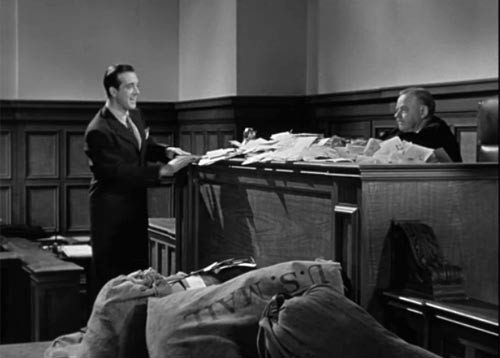
It could be argued that the hearing (it’s not a trial) that serves as the dramatic climax to “Miracle on 34th Street” is the most memorable courtroom scene in movie history. That tells us something, though I’m not sure what. A more legally and ethically absurd spectacle would be difficult to imagine.

When we last saw Kris Kringle—if that indeed is his name—he was preparing to go to a hearing in which his sanity would be determined by a judge. (Insert Marx Brothers “Sanity Clause” joke here.) Lawyer Fred Gailey actually quits his law firm to take on the case, which he is handling pro bono. The hearing will he presided over by a judge played by Gene Lockhart, who has impeccable Christmas movie credentials, having played Bob Cratchit in one of the adaptations of “A Christmas Carol.”

The logical, legal and ethical aspects of the story go off the rails quickly, never to return. Mr. Macy orders Sawyer to have the case dropped, which makes no sense: if Sawyer were suing Kris for assault and battery, of if Macy’s had pressed criminal charges, Macy would have some say. But this is the state of New York saying that Kris is a threat to himself and others because he’s deluded. It’s a state matter now.

Sawyer goes to Fred and tries to get him to drop the case, saying “I represent Mr. Macy.” What, he’s a lawyer now? Not only does Macy have no role in this matter, Fred’s defending Kris, not prosecuting the case.

When Sawyer mentions that Macy’s wants to avoid publicity, Fred sees a little light bulb go on in his skull. “Very interesting,” he says out loud. “Publicity. Hmm. That’s not a bad idea! If I’m going to win this case… I’ll have to have plenty of public opinion!” Except that’s unethical. From New York’s Code of Professional Conduct, which wasn’t in force when the film was made but the principles were:

DR 7-107 [1200.38] Trial Publicity.
A. A lawyer participating in or associated with a criminal or civil matter, or associated in a law firm or government agency with a lawyer participating in or associated with a criminal or civil matter, shall not make an extrajudicial statement that a reasonable person would expect to be disseminated by means of public communication if the lawyer knows or reasonably should know that it will have a substantial likelihood of materially prejudicing an adjudicative proceeding in that matter….

Saying that one’s client will need publicity to influence public opinion is a clear statement of intent to violate the spirit if not the letter of the ethics rules. Fred breaches the rules again when he goes to see the judge to persuade him not to sign Kris’s commitment papers. In an adversary proceeding, a lawyer must not meet with a judge without opposing counsel present; that an ex parte communication, and strictly forbidden. Of course, it’s also unethical for the judge to let him do it.

That’s not all in the realm of judicial ethics. After suggesting that the fact that Kris says he’s Santa Claus makes his insanity a forgone conclusion, Judge Harper, who is apparently an elected judge (a situation I regard as a “pre-unethical condition”) is visited by his campaign manager, Charlie, an old pol played by none other than William Frawley, now immortal for co-starring in “I Love Lucy” as Fred Mertz. He suggest that Harper withdraw from the case:

“This Kringle case is dynamite. Let some judge handle it that isn’t coming up for reelection..I’m no legal brain trust. I don’t know a habeas from a corpus. But I do know politics. That’s my racket. I got you elected, didn’t I? And I’m gonna try to get you reelected….You’re a Pontius Pilate the minute you start!”

Then the judge’s grandchildren make a convenient entrance, and snub him because he’s being mean to Santa. Later, when the hearing somehow is turned into a referendum on whether Santa is real, Charlie returns with a dire warning:

Continue reading

“A Christmas Carol”

-A-Christmas-Carol2

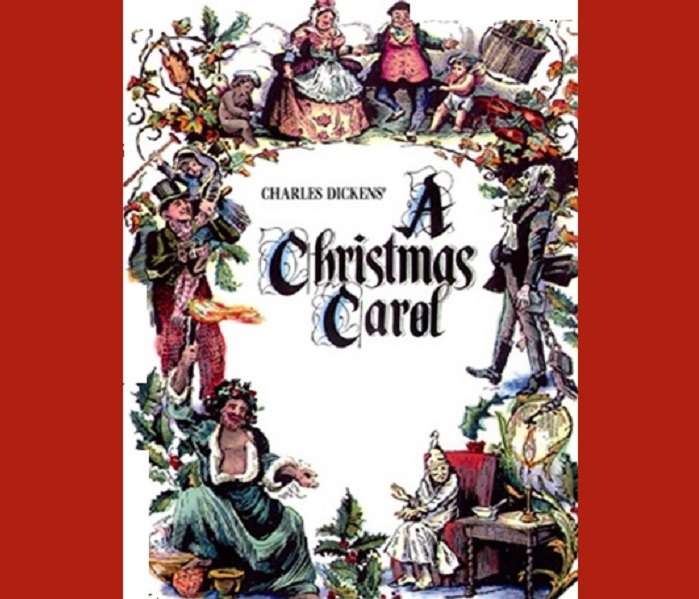
The entire text of “A Christmas Carol” is and has been for a long time listed under Inspirations on the Ethics Alarms homepage. If you haven’t read it (preferably out loud, to your family) recently, I urge you to do so. It is wonderful, and still, after all the movies and TV specials and songs and rival Christmas-themed stories, the best of the genre. It is also delightful literature, and, because I am an incurable romantic, a sap, and a Christmas addict, the story and Dickens’ telling of it gets to me every time.

The first version of the film adaptations of “A Christmas Carol” I saw when I was knee-high to Robert Reich was the version starring Alistair Sim. Many aficionados of “A Christmas Carol adaptations think it is still the best, and I won’t argue with them. Because the movie is in black and white and has been superseded by so many other versions, it is hard to find it on TV now except for the streaming services. Even the much inferior version starring Reginald Owen (with the entire Lockhart family, including young pre-“Lassie,” pre-“Lost in Space” June, as the Cratchits) is shown more than the classic Sim film. In these cynical times, the version of “A Christmas Carol” most likely to be available, sort of, is Bill Murray’s “Scooged.” It’s not the worst version—the musical starring Albert Finney wins that booby prize (“Thank you very much! Thank you very much!” Yecchh.)—but cynicism and dark humor really don’t belong in this story

My personal choice for the best adaptation goes to the 1984 George C. Scott version, if you don’t count “Mr. Magoo’s Christmas Carol,” and you probably shouldn’t, though I love it. The 1984 film has David Warner as Bob; Edward Woodward is the best Ghost of Christmas Present ever; and I think this is the scariest version of Marley.

Here it is…

And THIS Is Why Celebrities Should Shut Up And Act, Sing, Dance, Look Good, Or Whatever They Did To Get Famous . . .

Banks

Elizabeth Banks, a B+ movie actress whose career zenith was either playing Jeff Bridges’ wife in “Sea Biscuit” or a supporting role in “The Hunger Games” movies, decided to rant about “Stand your ground” laws last week. The impetus was the Ohio legislature passing a version of the law, thus joining about half the states. Banks responded by tweeting, to her

“Stand Your Ground is BS. We used to play hide and seek all over the neighborhood on summer nights. Intent was to play. We were kids but some of my cousins were big guys. There were a few easily-jumped fences in the neighborhood but also houses with no fences at all. A new neighbor moved onto our street. Apparently he mistook us hiding behind trees in his unfenced yard at 9pm for … burglars? Predators?” All of a sudden, an arrow was shot into the tree behind which we hid. From a professional bow and arrow. This guy didn’t yell out ‘who’s there’ or ‘get off my property or I’m calling the cops’ or any other question or warning. He just shot at children. He hit the tree so it was seemingly a warning shot. Message received, WE yelled out that we were just playing and could he let us please run away without shooting. Then we ran.”

“Also sometimes our dog got loose. We would go into yards looking for her. All I can think about when people pretend Stand Your Ground is about anything other than permission to kill people are those moments when I myself stepped onto a neighbor’s property. Where is the evidence that Stand Your Ground does anything but endanger your neighbors, their dogs, their kids? It helps nobody but people who want justified reasons to use a deadly weapon. If I’d been shot and killed playing hide and seek, would that new neighbor have been able to just shrug his shoulders while living across the street from my grieving parents? With laws like this, probably yes.I don’t want to live in a world where we fear our neighbors so much that we can’t freely lose a ball/dog/frisbee or cut through somebody’s yard to avoid harassment — all things I have done. What yards did you wander into and why?”

Observations:

Continue reading

Ethics Quote Of The Week: Heather MacDonald [Expanded]

Swan Lake

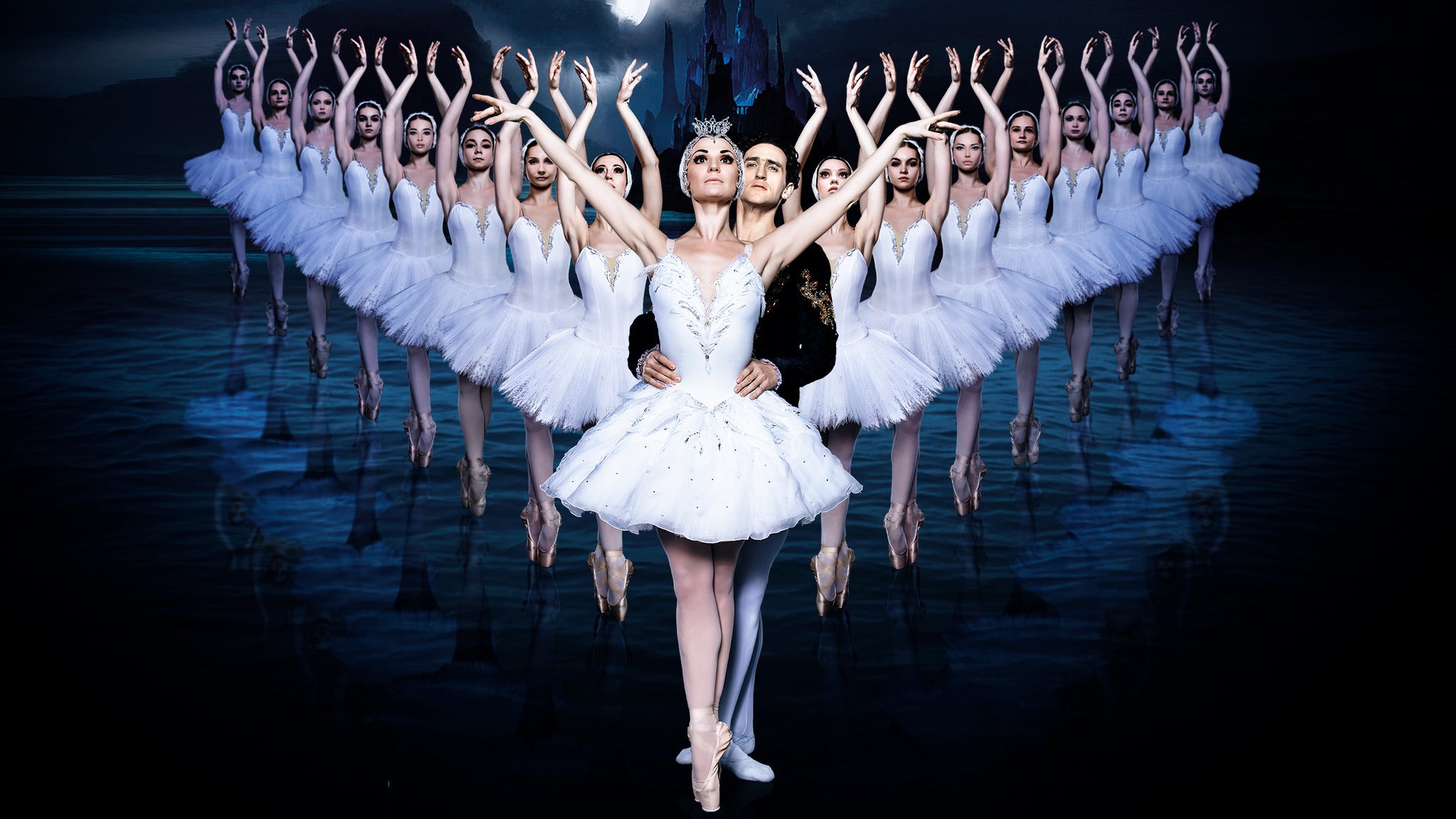
“The destruction being carried on in this post-George Floyd moment cannot be overstated. Everything in the West’s cultural inheritance, whether in music, literature, or art, is coming down….Visual and kinetic uniformity in a corps de ballet was an aesthetic ideal; it, too, had nothing to do with race. Yet that uniformity must now fall so that no individual ballet dancer feels that her precious diversity currency is devalued.”

Social commentator Heather MacDonald, in her depressing report, “Beside the Pointe:
Diversity and bias obsessions come for ‘Swan Lake’

It’s a fascinating case study of how the George Floyd Freakout, combined with ruthless determination of minority activists to exploit that tragedy to grab power, and the utter failure of sniveling organization leaders to demonstrate the requisite spine that any institution requires in its leadership, is resulting in cultural carnage with few countervailing benefits.

The iceman cometh late for the weird world of classic ballet, as MacDonald, obviously a fan (I am not) points out:

Classical ballet has largely escaped the revisionist destruction that hit the opera and theater stages years ago. Amazingly, audiences could still see Swan Lake and La Bayadere as their choreographers and composers intended them, with all the conventions and costumes of nineteenth-century fairytale intact…. the adolescent politicizing that has been inflicted on defenseless operas has been absent from the ballet stage. That immunity has undoubtedly now ended. Expect to see classical ballets wrenched awkwardly into dumbshows about social justice.

Oh, I do, I do. She relates a race controversy from two years ago, when the Staatsballett Berlin mounted “Swan Lake,” in which white body paint has traditionally been used on the ballerinas to create the illusion that the dancers are swans. The company’s ballet mistress told the company’s one black dancer to use the body make-up like the rest of the dancers. When she protested that she’d never look white, the mistress responded, “Well, you will have to put on more than the other girls.”

Continue reading

The “White Christmas” Ethics Guide 2020

2020 Introduction

I have some very dear friends who are still angry with me for writing this admittedly harsh analysis of their favorite Christmas movie. Maybe that’s why I didn’t post it last Christmas season; I don’t know. It really is an ethics mess, however, and as I’ve stated elsewhere this week on Ethics Alarms, if you are going to make an ethics movie, someone involved ought to have functioning ethics alarms. The heartwarming ending—I still get misty when the old general played by Dean Jagger, gets saluted and serenaded by his reunited army unit—doesn’t make up for all the gratuitous lying and betraying going on in the rest of the film.

I have never mentioned this here before, but the movie was the result of an ethical act by one of the most unlikely people imaginable, Danny Kaye. If you search for Danny here, you will find that I have more connections to him than to any other entertainer, primarily through my co-writing and direction of an original musical about him, written by his long-time publicist and my friend. I credited Kaye with my interest in performing, musicals, and comedy, but my research into the real man was disheartening: in stark contrast to his persona and his public image, Danny was a miserable, paranoid, selfish, mean and insecure sociopath when he wasn’t playing “Danny Kaye,” which could be on stage or off it. “White Christmas” had been conceived as a re-make of “Holiday Inn” with the same cast, Bing Crosby and Fred Astaire. Fred couldn’t do the project, so his part was re-written for Donald O’Connor, who became ill so close shooting that there was no time to retool the script and have the film ready for its target holiday release. In desperation, the producers asked Kaye if he would play Bing’s side-kick even though it meant 1) playing a support, which he had never done in a movie since becoming a star 2) playing a role that couldn’t highlight his special talents 3) subordinate himself to Bing Crosby, who was indeed the bigger star and box office draw, and most daring of all, expose his own limitations by doing dance numbers created for Donald O’Connor. Kaye was not a trained dancer, just a gifted mimic and athlete who could do almost anything well. Danny (actually Sylvia, his wife, agent and and career Svengali) had his price for the rescue: he demanded $200,000 and 10% of the gross.

Everyone around Danny Kaye was shocked that he agreed to all of this. Not only did he agree, he also amazed everyone by not playing the under-appreciated star on set, by doing O’Connor’s choreography as well as he did, and by knowing how not to steal focus from the star, something he infamously refused to do when he was in “Lady in the Dark” with Gertrude Lawrence. The movie was the top grossing film of 1954, and the most successful movie musical up to that time.

Danny’s good deed was punished, because today it is by far the most seen of his films, and is likely to be the source of his public image as time goes on. Yet it is not his best movie, or a fair representation of what made him a unique and popular supporter. Like Darren McGavin, a fine and versatile dramatic actor cursed to be remembered only as the father in “A Christmas Story,” Danny’s slice of immortality also minimizes his legacy and talent. Watch “The Court Jester.” With your kids or grandchildren.

1. The First Scene

Continue reading

“Miracle On 34th Street,”An Ethics Companion,Chapter 5: Boy, This Guy Sure Doesn’t ACT Like He’s Santa!

Bellevue ride

(The Introduction is here.; Chapter I is here.;Chapter 2 is here; Chapter 3 is here; Chapter 4 is here.)

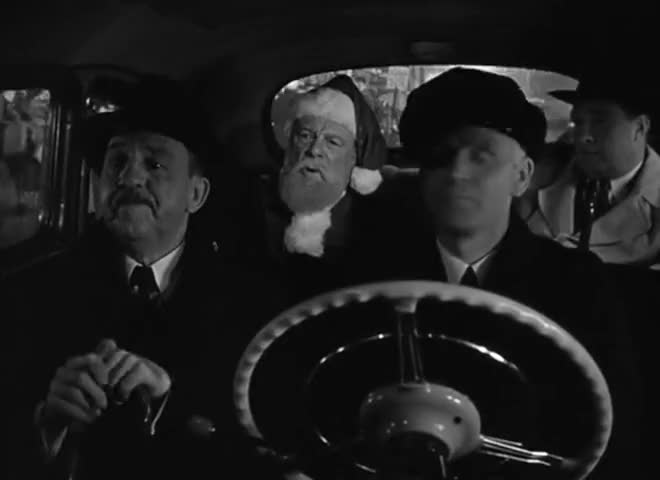
Everything so far has been laying the foundation for the climactic and justly famous courtroom scene. But before that can happen, there needs to be a pretext for getting the story into court. Of course, the fact that Kris committed assault and battery on Mr. Sawyer would normally be enough to get him there on a criminal charge, but that wouldn’t have anything to do with Santa Claus, so we have a lot of dubious plot machinations that make no sense at all. in rapid succession—got to get to that courtroom scene!—we get…

Sawyer’s Perfidy

First, Sawyer acts like he’s been grievously wounded so he can credibly insist that Kris be committed. He’s a liar as well as a weasel. He’s also not very bright. He knows Macy’s has been using Kris a public relations cornucopia. He has to know that in any feud with a store Santa Claus who has made money for Macy’s, he’ll lose. Sawyer’s antipathy towards Kris to his own likely detriment makes no sense at all.

Doris’s Failure

Doris refuses to have anything to do with sending Kris to Bellevue, the NYC mental hospital, to be examined. She is, however, unlike Sawyer, responsible for Kris, and has said as much. Her duty is to Macy’s, and her employee attacked someone. This is where conflicts of interest get you in the workplace, and she should have seen this coming. Her job is to fix the problem, and instead she acts helpless. I find this to be nascent sexism in the film: “just like a woman,” Doris is being sentimental when she needs to be practical and decisive.

Actress Maureen O’Hara, a notorious tough proto-feminist, must have been seething.

Continue reading

Thoughts On The Entertainment Industry’s Cultural Brainwashing Regarding Diversity.

15interracial

Statistics on this are inherently inexact, but approximately 8-9% of the marriages in the U.S. are interracial, and that’s including Hispanics and Latinos as “non-white.” However, if you have been watching movies, TV shows or commercials made in 2020, you would get the impression that the percentage is closer to 80-90%, and maybe higher. This parallel universe has been a special bonanza for actors of Indian extraction, who seem to be the default “lovers of color” that casting agents use when they have decided that another African-American-White mixed race couple would be boring.

I really don’t care if Hollywood and Madison Avenue want to create their own fantasy U.S. and madly virtue-signal at the same time, except that I don’t like having my arm twisted, metaphorically or for real. I would happily volunteer to be permanently dyed whatever generic color was decided upon if we could just stop all the posturing, excuse-making and drama over race; the sooner everyone is the same shade the better say I. It is, however, not the job of entertainers and ad execs to shove diversity down our throats., and that’s exactly what’s happening.

Right now, the situation is literally laughable. When we are watching a recent production in which a white character is about to introduce his or her significant other, my wife and I try to guess whether the Mystery Friend will be black, Asian, Hispanic. Indian, or just some kind of unidentifiable non-white. If a white actor shows up, our first thought is, “oh-oh, something’s wrong with this pair.”

The clear message being sold is that if you aren’t part of a mixed race couple, then you’re a racist.

That message is not fair or true.

Continue reading

Comment Of The Day: “’Miracle On 34th Street,’An Ethics Companion,Chapter 3: Kris Joins The Macy’s Family!” And An Explanatory Note On The Holiday Movie Ethics Guides

Grinch

As promised, I am finally completing the “’Miracle On 34th Street’ Ethics Companion,” which I began a year ago and took so long to complete that I ran out of 2019 holidays. As a refresher, I am also, in this post, presenting a Comment of the Day on Chapter Three from all the way back to January 1 of 2020, an excellent analysis of a feature of the story that I missed, by A.M. Golden.

Yesterday’s latest installment attracted some flack from commenters. “Wow, what a Christmas downer, Jack. Channeling Scrooge or the Grinch?” wrote one. “I suspect we could poke holes in any film with respect to morality and ethics if we wanted to.” On the last observation,

  • I want to, because it’s my job
  • Movies are excellent for tuning up ethics alarms
  • Christmas movies, which are seen by children, have a special obligation to teach the right lessons, both prominently and subliminally, and
  • No, in fact you can’t poke holes in any film, at least not fairly.

I suspect this will be the last of the traditional holiday film fare to get the ethics work-over, along with “It’s A Wonderful Life” and “White Christmas,” which will have the annual Christmas season re-posting with updated text up today. The three classics were chosen for different reasons. IAWL was designed as an ethics movie with very important and profound ethics messages, and the more one examines it, the more there is to think about. Nonetheless, its cheats on the way to its most important messages are pretty flagrant—justified, but flagrant—and deserve to be flagged. “White Christmas” is different: it’s a musical, for one thing, and musicals never make sense (why are these people singing?), but it also is story about ethics, so it is fair to examine it on that basis. Moreover, one doesn’t need to poke holes in it, the story is full of ethics holes. None of them bothered me before I became a full time ethicist: Bing Crosby and Danny Kaye are two of my favorite entertainers of all time, and the ending still moistens my eye. But the movie is almost impossible to watch now, with my ethics alarms on, and even with my brain on. I had an obligation to dissect it. As for “Miracle,” I accept it as a classic, but the story was constructed to reach the climactic trial gimmick, and scant attention was given to consistency or playing fair. Moreover, I am a legal ethics expert, after all. You can’t honestly expect me not to analyze a trial like that.

You will never see me try to “poke holes” in the greatest of all Christmas stories, and arguably the best ethics story period, “A Christmas Carol,” because it is pretty close to perfect. (AND I now see that the link to the text on the home page has gone bad; I’ll be fixing it ASAP!). “A Christmas Story” is off my list because it is seen through a child’s eyes, and ethics has nothing to do with it. Critiquing “Holiday Inn” would be like shooting ethics eels in a barrel, but it’s just not worth the trouble.

There are also holiday films and ethics films that are written superbly, and have few if any ethics holes to find. Among these are “Toy Story,” “Finding Nemo” (most of the Pixar movies, in fact), “Mary Poppins,” “The Sound of Music,” “Babe,” and even “Groundhog Day.” I’m not the Grinch, but if you set out to make an ethics movie, you had better pay attention to ethics.

Now here almost a year late, is A.M. Golden’s Comment of the Day on the post, “’Miracle On 34th Street,’An Ethics Companion, Continued…Chapter 3: Kris Joins The Macy’s Family!”

Continue reading