“Miracle On 34th Street,”An Ethics Companion,Chapter 4: Is Kris Crazy, Or What? [Corrected]

Miracle-on-34th-Street-2

(The Introduction is here.; Chapter I is here.;Chapter 2 is here; Chapter 3 is here.)

When we last saw Kris Kringle, he had become a big hit at Macy’s by sending shoppers to Gimbel’s, and even was making inroads on young Susan’s precocious skepticism after she heard him speak Dutch. The story really begins going off the ethics rails at this point.

Doris decides that it would probably be responsible to have Kris checked out by the company psychologist, Mr. Sawyer, since her Santa is, after all, nuts. Yah think? In truth, it is per se irresponsible for Macy’s to knowingly employ a Santa Claus operating under the delusion that he is really Santa. The first authority a store would consult in real life, yes, even in the 1950s, would be a member of the legal department. If anything happened to a child in Macy’s store while sitting on the lap of a man who openly claimed to be a mythological figure, the lawsuits would write themselves. Thus the story really takes a turn toward an indictment of capitalism and corporate ethics: Macy’s is willing to put children at risk for some extra profit. Luckily, nobody has noticed in the past half-century.

Here we have a famous breach of competence by the screenwriter, George Seaton. While boasting to Doris about all the mental acuity tests he has passed, Kris says,

“I’ve taken dozens of them. Never failed one yet. Know them by heart. “How many days in the week?” Seven! “How many fingers do you see?” “Four!”….No damage to the nervous system! “Who was the first President of the United States?” George Washington! “Who was Vice-President under John Quincy Adams?” Daniel D. Tompkins! I’ll bet your Mr. Sawyer doesn’t know that!”

He doesn’t know that because it isn’t true. Tompkins was Vice-President under James Monroe, the fifth President, not Adams, #6. It drives me crazy when Hollywood allows historical misinformation to pollute the minds of the historically ignorant public, because there’s no excuse for it. Even before the internet, this fake fact could have been checked using any dictionary or encyclopedia. Nobody cared enough to bother. To make the mistake worse, John Quincy Adams’ VP was, unlike Thompkins, an important historical figure, John C. Calhoun.

Continue reading

Monday Ethics Warm-Up, 12/14/2020: Last Week Before Getting Freaked Out Over Christmas Edition

Anxious Santa

1. American companies doing China’s censorship for a buck. The Chinese government pulled the American film “Monster Hunter” from theaters because a childish pun was deemed racist. “Look at my knees!” says an American soldier played by a Chinese-American rapper known as MC Jin as he rides in a military vehicle. “What kind of knees are these?” Then he answers his own question: “Chi-nese!”

Based on that, the movie was attacked and censored, so the line was removed, and German production company that co-produced the film (Sony is the U.S. distributor) apologized.

I am increasingly convinced that the media edict that it was racist to refer to the Wuhan-originating virus as the Wuhan virus was entirely motivated by corporate media interests in Chinese revenue. If U.S. companies won’t represent U.S. values in their dealings abroad, then the role of the U.S. as a beacon of democracy and human rights in the world is a sham.

I intend to call the pandemic the Wuhan virus forever.

2. Are absurd gay stereotypes unethical? Late night talk show host James Corden is being pilloried for his performance in Netflix’s musical The Prom. He plays an openly gay Broadway actor who describes himself as “gay as a bucket of wigs” in the Broadway musical’s film adaptation that premiered last week. I haven’t seen the film, but I know what gay stereotypes look like, from the Flaming gay director (and his even more flaming assistant) in Mel Brooks’ original “The Producers” to Martin Short’s event planner in “Father of the Bride.” The new name for this kind of performance is “gayface,” an obvious reference to blackface.

Continue reading

Ethics Warm-Up, 12/8/2020: Yet Another Date That Lives in Infamy

It’s not Pearl Harbor, but the assassination of John Lennon in Central Park 40 years ago today by a deranged fan is one of the saddest days in popular music history, on the level of the premature deaths of George Gershwin and Buddy Holly.

I really don’t want to talk about it.

1. Scary. The New Yorker’s Steve Coll wrote that”Those of us in journalism have to come to terms with the fact that free speech, a principle that we hold sacred, is being weaponized against the principles of journalism.” David Harsanyi writes at The National Review,

If you believe Americans are too stupid to hear wrongthink, transgressive ideas, and, yes, fake news, you’re not a fan of the small-l liberal conception of free expression. That’s fine. Those ideas seem to be falling into disfavor with many. But the sanctity of free speech isn’t predicated on making sure people hear the right things, it’s predicated on letting everyone have their say. Because as always, the question becomes who decides what expression is acceptable. I’m not keen on having the fatuous media reporters at CNN or activist “fact-checkers” at the Washington Post adjudicating what is and isn’t permissible for mass consumption…this kind of selective esteem for sacred ideals is becoming popular on the contemporary Left. Religious freedom is wonderful when the government protects Native Americans who want to smoke peyote, but it is “weaponized” when an order of nuns decides it’s not interested in chipping in for condoms or an Evangelical business owner decides he’d rather not participate in a gay marriage. Due-process rights are foundational to American life, unless they are being “weaponized” by college students accused of sexual assault….For four years, journalists acted as if Donald Trump was an existential threat to free expression because he berated and insulted reporters. Trump’s tone was certainly unpresidential, but it needs to be said that he did absolutely nothing to hinder anyone from criticizing him or reporting about him. Contra the self-canonized Jim Acosta, it was not a particularly dangerous time to tell the truth. Indeed, reporters were not only free to accuse the president of being a fascist, they could concoct entire fake scandals surrounding the Russians, and Trump was powerless to stop them….

As I will be saying for the next four years as often as possible: This is what those who voted for Joe Biden have endorsed in their determination to express their tantrum over a President whose style they found obnoxious. I really don’t know how they will be able to live with themselves.

Continue reading

Two Ethics Movies For The Holidays

I typically use this time of year to catch up on or revisit ethics movies, especially since the ones in the Christmas sub-category are embedded in my brain already. Two ethics movies that I recently watched again are Ben Affleck’s “Gone Baby Gone” from 2007 and “Seven Days in May” (1964).

“Gone Baby Gone” is the more obvious ethics movie thanks to its famous ending, which sparked thousands high school essay assignments at the time of its release. I can’t write too much about that ending without spoiling the film for you if you’ve never seen it; let me just state that the climactic decision made by the film’s protagonist, played by Ben’s brother Casey, is or should be an ethics no-brainer. It’s depressing to me that so many viewers agreed with the character’s ethically clueless, emotion-driven girlfriend that his solution to an admittedly wrenching ethics conflict made him a monster. There is literally no ethical system that would legitimately support her argument, which can only be backed by using an army of rationalizations. That a large proportion of the public, perhaps a majority, would back her analysis shows how miserably the education system and our culture has failed in teaching basic ethics problem-solving skills.

“Seven Days in May” presents more diverse and complex ethical issues to consider, and also is old enough after almost 60 years that I have no hesitation in revealing the plot: if you have never seen it, you should have.

That movie is also fascinating as a period piece, flashing ideas and images that seem surprisingly familiar in today’s context in rapid juxtaposition with moments that are hard to imagine today. Silent protests in front of the White House? Women picketing in dresses and men in suits and ties? I found a review of the film from The Harvard Crimson in 1964 that featured this:

[T]he film has a civil rights tinge. The producer has dutifully used Negroes in minor roles wherever he deemed it appropriate. A Negro in the Pentagon running an automatic door receives a good deal of film footage. Negroes sit in the airports. They march in the pro and anti-treaty lines before the White House. Finally, there are Negroes at the President’s press conference as the film closes. These are simply kowtows to the New Republic set; if the producer had real guts he could have cast Sydney Poitier in Kirk Douglas’ role. But then Producer Edward Lewis would have been troubled by the script’s implication that Douglas will some day sleep with Ava Gardner, who plays Lancaster’s former mistress. Miscegenation might have confused the good guys and the bad guys, particularly for southern audiences. Anything that controversial would have detracted from the film’s propaganda force.

Fascinating, don’t you think? Today, mixed-race couples on TV and movies are de rigeur, even when it makes no historical sense whatsoever. Today, it takes courage to resist the political correctness edicts that “actors of color” be gratuitously shoehorned into stories and casts based on skin-hue and little else. But today the motivation isn’t “civil rights” but rather affirmative action and “racial justice.” I really don’t care that in Netflix’s “Enola Holmes” blacks turn up in highly unlikely roles for Victorian England, I really don’t. OK, it’s a misrepresentation of history, but the film is a fantasy. However, such blatant virtue-signaling and diversity box-checking does take me out of the story for a moment, and that’s just bad direction. (How many black female martial arts tutors were there in Victorian England, I wonder?)

But I digress. “Seven Days in May” was indeed anti-war, nuclear disarmament propaganda in 1964 at the height of the Cold War, but that’s not one of the ethics issues central to the film.

Continue reading

Morning Ethics Warm-Up, 12/7/2020: The Day That Will Live In Infamy

Pearl Harbor

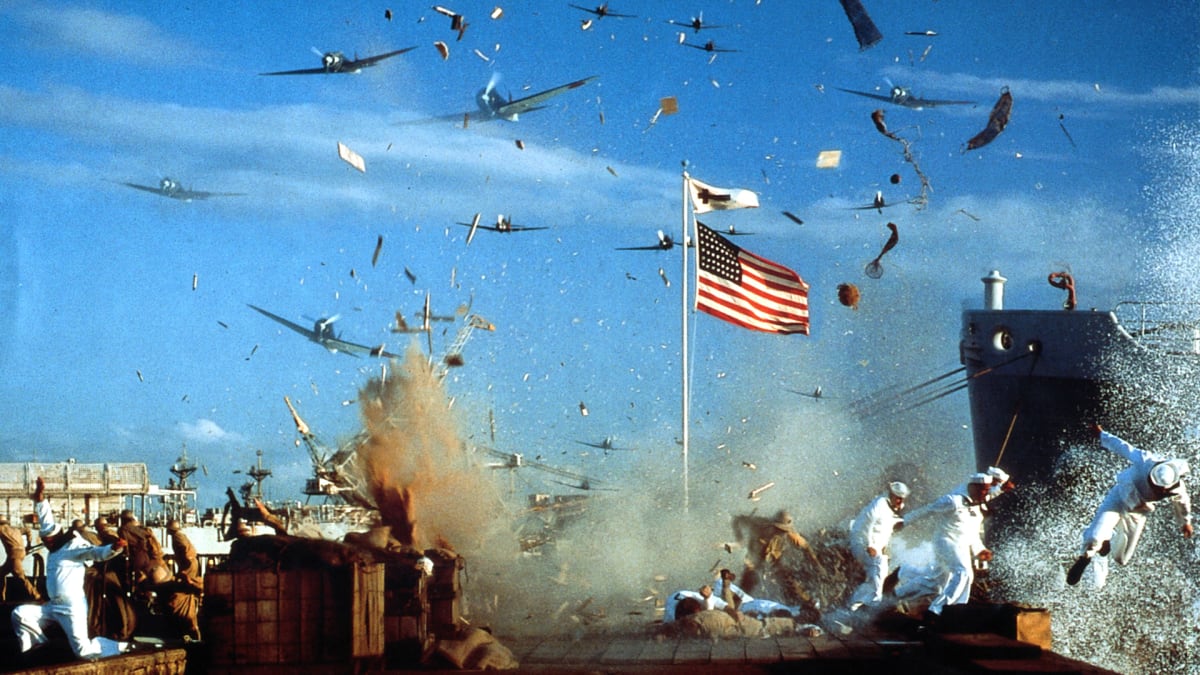
Today, of course, is the anniversary of the Japanese sneak attack on Pearl Harbor on December 7, 1941.

At 7:55 a.m Hawaii time, a Japanese dive bomber emerged out of the clouds above the island of Oahu. 360 Japanese warplanes followed in a devastating attack on the unsuspecting U.S. naval base at Pearl Harbor. The U.S. Pacific fleet was nearly obliterated: Five of eight battleships, three destroyers, and seven other ships were sunk or severely damaged; more than 200 aircraft were destroyed; 2,400 Americans were killed and 1,200 were wounded. Japan lost just 30 planes and fewer than 100 men. By the sheerest luck, all three Pacific fleet aircraft carriers were out of the harbor and at sea on training maneuvers, allowing the U.S. to use them to turn the tide of the Pacific war against Japan at the Battle of Midway six months later.

I always felt connected to the tragedy at Pearl Harbor through my father. At the dedication of the World War II Memorial in Washington, D.C., Dad introduced me to a veteran who had survived the attack, and just shaking his hand was a moving experience I shall never forget.

1. I’m glad I’m not a South Korean ethicist, because this would make my head explode. More than 200,000 young men each year​ have to interrupt their studies or careers in South Korea to join the military, for mandatory conscription is seen as crucial to the country’s vigilant defense against North Korea. Men must enlist for about 20 months once they turn 28. Last week, however, pop star Kim Seok-jin, the oldest member of the global K-pop phenomenon​ BTS​, turned 28 knowing that he could keep on singing, recording, touring and making money: South Korea’s Parliament passed an exception to the country’s Military Service Act​ to allow top K-pop stars like Mr. Kim postpone their ​military ​service until they turn 30.

There’s just no excuse for this classic “laws are for the little people” move, only rationalizations. “It’s a sacred duty to defend our country, but that doesn’t mean that everyone has to carry a weapon,” Noh Woong-rae, a senior lawmaker in the governing​ Democratic Party, ​said in a fatuous statement supporting the special treatment. The bill to craft pop stardom exception the Military Service Act was first introduced in September, after BTS became the first South Korean group ever to top the United States Billboard Hot 100 singles chart with its song “Dynomite.”

Here is the song that helps defend South Korea:

Continue reading

Ethics Quiz: The Marilyn Monroe Statue

MM statue

Alternate title: “At Last A Statue Everyone Can Get Behind!”

At least this statue ethics controversy has nothing to do with the Civil War.

Palm Springs, California’s City Council voted last month to place a giant sculpture of Marilyn Monroe, her white skirt blown up above her waist and her mouth poised in the semi-erotic smile everyone remembers from the classic movie moment, in the middle of the city. For three years, 2012 to 2014, the sculpture by Seward Johnson enlivened downtown Palm Springs, and now it will be coming back with financing from a local hotel consortium. The 26-foot high “Forever Marilyn,” turned up as a short-term tourist attraction in other cities in the intervening years (many visitors enjoyed posing for photographs between MM’s feet, looking up) but now Palm Springs is offering it—her?— a permanent home.

Ah, but all statues are controversial now. Marilyn will stand across from the entrance to the Palm Springs Art Museum, and its executive director Louis Grachos objects. “You come out of the museum and the first thing you’re going to see is a 26-foot-tall Marilyn Monroe with her entire backside and underwear exposed,” Grachos pointed out to the council. “We serve over 100,000 school-age children that come to our museum every single year. What message does that send to our young people, our visitors and community to present a statue that objectifies women, is sexually charged and disrespectful?” The museum’s previous three directors, Elizabeth Armstrong, Steve Nash and Janice Lyle, designer Trina Turk and others issued a joint op-ed in The Desert Sun condemning the statue as “blatantly sexist.”

Your Ethics Alarms Ethics Quiz of the Day is...

Is Johnson’s statue of Norma Jean unethical public art?

Continue reading

Daybreak Ethics Warm-Up,12/4/2020: An Ancient Judge, A Non-Binary Actor, An Idiotic Team, An Icky Teacher, And An Absurd Columnist Walk Into An Ethics Bar…

1. Political, not logical, honest or competent…Actress Ellen Page, 33, best known for her performance as the pregnant teen in “Juno,” announced this week that she was “non-binary” trans. “My pronouns are he/they and my name is Elliot. I feel lucky to be writing this. To be here. To have arrived at this place in my life,” she wrote. Immediately, Netflix began changing Ellen Page’s name to Elliot in the credits all Netflix movies and series she had participated in. Now, for example, the IMDb page for the Netflix original series “The Umbrella Academy” says Elliot Page was in the cast. This is being called an “update.” It isn’t an update. It’s a lie, and airbrushing history.

When Al Hedison starred as “The Fly” in the original horror movie, that’s who he was. Later, Al changed his name to David Hedison for some reason, and that was the actor we watched in “Voyage to the Bottom of the Sea,” Irwin Allen’s wonderfully cheesy Sixties TV sci-fi series, and as one of the many Felix Leiters in the James Bond films. They didn’t change his credit on “The Fly.” Nor do you see the name Jack Palance in the credits as the evil gunslinger in “Shane” In that film, the actor we now know as Jack was going by “Walter.” And that’s who he was…then.

Identities are not retroactive. Actress Linda Day had a substantial career in television before she met and married actor Christopher George in 1970. Thereafter, she performed under the name of Linda Day George, but no one changed her credits on the shows she had previously performed in as Linda Day, because Christoper George was barely a twinkle in her eye then. This isn’t hard. Netflix is rushing to retroactively alter history not because doing so is accurate or true, but to demonstrate that the company is “woke,” and thus supporting Page as well as trans people everywhere. It’s virtue-signaling, and a particularly dumb and misleading version of it.

Oh, I should mention that Olympic athlete Bruce Jenner was not Caitlyn Jenner when he won his Gold medals in male events. Olympic records were not changed to claim a falsehood and an impossibility.

2. “Was that wrong? Should I not have done that?” The New York Daily News reports that a Staten Island high school teacher, so far unnamed, was seen naked and masturbating during a Zoom conference this week.

Apparently he tried to invoke Rationalization #3, The Unethical Role Model: “He/She would have done the same thing,” pointing out that “Jeffrey Toobin did it!” (Kidding!)

As with Toobin, I don’t understand the thought process, if you could call it that, that could produce such conduct. I also don’t understand the various statements in the aftermath of the Staten Island incident as described in the story. It wasn’t clear if the teacher intentionally exposed himself or if the video call involved students, the Daily News noted. So what? The conduct is nuts and requires firing for cause either way. I suppose intentionally behaving like this on Zoom is a crime, or more likely, evidence of mental illness.

I also enjoyed the Captain Obvious aspect of the statement by the school:

Continue reading

List Ethics Case Study: “The 25 Greatest Actors Of The 21st Century (So Far)”

Lists are fun (that’s why “The Book of Lists” was a runaway best seller); they also drive me crazy. Unless the lists are based on incontrovertible statistics and identifiable features (American League batting champions since 1900; states that begin with the letter “N”) they are essentially a stranger’s arbitrary opinions misrepresenting themselves as facts. I’ve posted about this a couple of times, first in 2011. That one concluded (in part), “I know these lists are all intended in good fun. When one is dealing with history, however, fun doesn’t excuse advancing misinformation at the cost of enlightenment.”

The list in question today involves subjective aesthetic judgments, not history, but it still has ethical problems. It was compiled by the New Your Times film critics—you know: experts!”—and purports to show us the “25 greatest actors of the 21st Century (so far).” That’s a lie. I guarantee that the authors themselves do not believe these are the 25 greatest actors by any standards.

Let’s look at the list:

Continue reading

Ethics Alarms’ Annual Holiday Re-Posting Of The Complete “It’s A Wonderful Life” Ethics Guide, Updated And Reconsidered, With A New Introduction

Clarence

2020 Introduction

There is no better year to watch Frank Capra’s masterpiece “It’s a Wonderful Life.” I sincerely hope that President Trump screens it again, assuming he has ever seen it.

“It’s A Wonderful Life,” as I wrote last year, “would be an excellent basis for a middle school ethics course. I haven’t seen a better, richer film for that purpose come along since, and I’ve been looking. Despite the many ethics complexities and nuances that the film glosses over or distorts, its basic, core message is crucial to all human beings, and needs to be hammered into our skulls at regular intervals, far more often than once a year.”

But in addition to being a movie about ethics, it is also a movie that is itself a result of an ethical instinct.

Director Frank Capra was already known as Hollywood’s master of celebrating common Americans doing extraordinary things, the nation’s families, the power of love and American exceptionalism. They called his movies “Capra Corn”: “Mr. Smith Goes To Washington,” “Meet John Doe,” and other critical and box office hits. He spent World War II making inspirational documentaries about the war effort. When the war was over, he sensed the dark mood in much of the nation, despite the exhilaration of victory. Returning soldiers found the culture changed and their emotions raw. Families whose .loved one had died or returned with disabling wounds struggled to believe that their sacrifices were justified. The atom bombs that ended the war also opened up a dangerous new era of paranoia and fear.

The post-war movie that seemed to capture the mood of much of the nation was William Wyler’s “The Best Years of Our Lives,” a film my World War II veteran father refused to watch for fear that it would send his mind and memories to dark places he struggled not to go.

Capra had a new production company, and decided that “It’s A Wonderful Life,” based on an idea by author Philip Van Doren Stern. Unable to get his short story published, he had sent it to friends as a 21-page Christmas card. Film producer David Hempstead read it, and bought the movie rights for Capra’s company. The story was just what America needed, Capra reasoned, to restore its belief that what the nation had accomplished was worth the pain, loss and sacrifice, and that the nation itself had led a “wonderful life.” The new film could restore the nation’s flagging optimism, pride and hope.

Capra immediately thought of actor and now war hero James Stewart to play protagonist George Bailey. Three years of flying bombing raids against the Nazis in the US Air Force had left the the 37-year-old suffering from post traumatic stress syndrome. He returned home in 1945 to find that everything had changed: his contract with MGM had run out, his agent had retired, and other stars had taken his place. He trusted Capra, even though the story he described sounded depressing. Stewart signed on.

Production finally began on the film in April of 1946, and the cast and crew felt they were making an important movie. Bedford Falls became one of the largest American film sets ever created to that point at four acres, with 75 fake stores and buildings, a three-block main street, and 20 full-grown oak trees. To avoid the traditional problem of fake-looking snow, the special effects department invented a new and more realistic process.

The story also touched the cast, especially Stewart, who was still suffering from the effects of the war and at times was close to quitting. In the scene where George, in a roadside bar, desperate and defeated, is praying to a God he doesn’t believe in. He rubs a trembling hand against his mouth, and starts to cry. The gesture wasn’t in the script, or requested by Capra. It was real.

Stewart explained years later,

“I felt the loneliness, the hopelessness of people who had nowhere to turn, and my eyes filled with tears. I broke down sobbing. That was not planned at all.”

Stewart felt it was his best performance (it is) and Capra believed he had made his best film. “I thought it was the greatest film I ever made,” he said later. “Better yet, I thought it was the greatest film anybody ever made.”

But it was a catastrophic flop. The New York Times critic Bosley Crowther wrote that “the weakness of this picture is the sentimentality of it”, describing George Bailey as “a figment of simple Pollyanna platitudes”. The New Republic’s Manny Farber accused Capra of taking “an easy, simple-minded path that doesn’t give much credit to the intelligence of the audience”. The movie lost money and crippled Capra’s production company. His career never retained its former status, and what he believed was his greatest work was forgotten for decades. Republic Pictures, which owned the film’s copyright, didn’t bother to renew the rights in 1974. It was essentially free to local television channels, and they began showing it constantly.

Well, all you have to do is see it. Capra was right, Stewart was right, the cast and crew were right. It is a classic. The story accomplishes just what Cara intended it to accomplish. In a Times piece about the movie by a self-professed cynic, Wendell Jamieson wrote about seeing the movie for the first time as teen in a classroom showing, and confessed,

It’s something I felt while watching the film all those years ago, but was too embarrassed to reveal.

That last scene, when Harry comes back from the war and says, “To my big brother, George, the richest man in town”? Well, as I sat in that classroom, despite the dreary view of the parking lot; despite the moronic Uncle Billy; despite the too-perfect wife, Mary; and all of George’s lost opportunities, I felt a tingling chill around my neck and behind my ears. Fifteen years old and imagining myself an angry young man, I got all choked up.

And I still do.

Yeah, me too.

  In an earlier version of The Guide I described the message of the film this way:

Everyone’s life does touch many others, and everyone has played a part in the chaotic ordering of random occurrences for good. Think about the children who have been born because you somehow were involved in the chain of events that linked their parents. And if you can’t think of something in your life that has a positive impact on someone–although there has to have been one, and probably many—then do something now. It doesn’t take much; sometimes a smile and a kind word is enough. Remembering the lessons of “It’s a Wonderful Life” really can make life more wonderful, and not just for you.

Lets’s try to make what’s left of the holiday season as epiphenal and joyous foreveryone in our lives as it was for George Bailey.

And away we go…

Continue reading

2020 Election Ethics Train Wreck Update: Well THIS Doesn’t Bode Well…

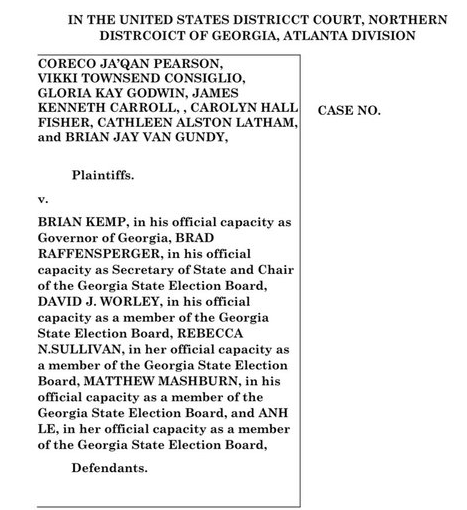
spelling problem

That’s the embarrassing first sheet of the more than 100 page lawsuit filed by lawyer Sidney Powell asking that 96,000 ballots (“at minimum”) in Georgia be disqualified. This is apparently the attack on the Georgia election that Powell referred to as releasing “the Kraken.”

Nobody seems to feel it’s necessary to explain that “Release the Kraken” is a reference to the semi-cheesy Ray Harryhousen stop-action film “Clash of the Titans,” which starred “LA Law’s” Harry Hamlin as Perseus, the Greek mythological hero. In the movie (though not in mythology), Perseus defeats the monstrous Kraken, which is released by the bad guys to kill him and Andromeda (it’s complicated). For some reason Perseus, in addition to carrying around Medusa’s head (which turns the Kraken to stone), rides the winged horse Pegasus. Pegasus was the transportation of a different Greek myth hero, Bellerophon. Neither Bellerophon nor Perseus had anything to do with the Kraken, which is not even a Greek myth monster. It’s Scandinavian, and is basically a giant squid.

Observations:

Continue reading