Clarence Darrow’s Reflections On His Birthday

Today I’m going to indulge myself here, as it is Cognitive Dissonance Day, December First, my birthday and the 9th anniversary of my biggest birthday surprise, finding my 89-year-old father, Jack Sr., dead in his favorite chair when I arrived to pick him up to go out for dinner. Even though I know, and knew then, that the end was well timed, exactly as Dad would have wanted, and perhaps even self-willed, it’s a tough day for me, added to the only periodically dawning realization that I’m not going to be around forever myself. Dad was a lifelong iconoclast, loner, idealist, joker, cynic, optimist, hero and seeker of truth, and the best role model any son ever had. After he died, his doctor told me that normal men would have been in bed for months. “All sorts of things were killing him, and he was in a lot of pain,” he told me. “His attitude was ‘Just keep going, and nobody wants to hear old people complaining.'”

But I digress. Here’s today’s first installment of Ethics Alarms self-indulgence, frequent guest here Clarence Darrow’s reflections on his birthday. The SOB called himself an old man at 61. He was a kid!

I have always yearned for peace, but have lived a life of war. I do not know why, excepting that it is the law of my being. I have lived a life in front trenches, looking for trouble.

If I had known just what I was to run into here I would have worn a gas mask. A man is never painted as he is. One is either better or worse than the picture that is drawn. This is the first time that I have felt that I was worse. No one ever gave me a dinner like this before, and I really do not know how my friends happened to take into their heads to do it this time. I am sure it has been pleasant, although in spots more or less embarrassing; still on the whole I prefer the embarrassments incident to this dinner, rather than the ones I often get.

Like most others who reach the modest age of sixty-one, I have hardly noticed it. Still this morning for the first time in more than twenty yeas I felt a twinge of rheumatism, a gentle reminder on this birthday that I am no longer a “spring chicken.” On the whole the years have passed rapidly. Some of them, it is true, have dragged, but mainly they have hurried as if anxious to finish the job as soon as they possibly could. So quickly have they sped that I hardly realize that so many have been checked off, in fact I have scarcely thought about it as they went by.

I have been congratulated a good many times today, no doubt on the fact that I am so nearly done with it all. One scarcely feels as they go along that they are getting–well older. Of course I know my intellect is just as good as it ever was; I am sure of that. Everyone tells me that I am looking younger. I had my hair cut about a month ago; a friend remarked, “It makes you look ten years younger,” so I had it cut again. Perhaps I shall keep on getting it cut. Of course, one more or less doubts the truthfulness of thee old friends, when they say you are getting younger, but at the same time you try to believe them and do not contradict.

Perhaps it would be proper at a time like this to reminisce more or less, but I am always afraid to do it. I am never quite sure whether I might not have said the same things before . Neither am I certain that I shall not say something I had better leave unsaid. If one has lived an active life, as he grows old he finds that he has gathered a large fund of facts and fictions that he should keep to himself; and yet he always feels an urge to tell. Then I have had Tolstoy’s frightful example before me all my days. You know he lived a busy, useful life, getting about all there was out of it, and then after he got–well, past sixty-one, he grew good and began to moralize I presume Tolstoy did not know just what was the matter with him. Continue reading

Comment Of The Day: “Sick-Bed Ethics Warm-Up, 11/14/18: Ethics Among the Sneezes” (Item #6)

I’m still catching up on Comments of the Day, and they won’t be arriving in strict chronological order. This one comes from Tim LeVier, one of the three longest-running commenters on my two ethics websites, the now off-line (but soon returning) Ethics Scoreboard and Ethics Alarms. Tim was bringing some perspective to the infamous Baraboo High School photo, used by various commentators and pundits to further all sorts of agendas while creating a perhaps permanent stain on the reputations of the participants.

Here is his Comment of the Day on Item #6 in the post, Sick-Bed Ethics Warm-Up, 11/14/18: Ethics Among the Sneezes:

What I wanted to do was give some hard numbers on this. I count 64 distinct individuals that can be seen. If one were to use this photo as an indictment, then you have to look at each person as an individual to see what they’re doing. 32 of the 64 could be said to be doing something that looks like a Hitler salute, but most of them are pretty poor. Some are spot on. Another 12 of the 64 are so poor or different that you couldn’t say they were a Nazi salute, such as fists in the air, bent arms, looks like they’re waving. 20 of the 64 simply can’t be seen, don’t have their arm up, or have the wrong arm up or have both arms up.

So, overall, it’s a 50% gotcha of the 64 boys. Continue reading

Ethics Dunce: Rep. Barbara Lee (D-Ca)

This is rich. Ethics Alarms has previously flagged the apparently uncontrollable race-baiting by Democratic Congresswoman and Congressional Black Caucus member Barbara Lee, But I did not see this coming. After she lost her bid today to become the first black woman elected to a House leadership position when she lost the vote to lead the Caucus to Rep. Hakeem Jeffries of New York, Lee blamed ageism and sexism, since, of course, blaming race would have been ridiculous.

“I’m a black woman and the institutional barriers are still there, so we just keep fighting,” Lee said.

It would do well for our rising generations, especially in the black community, for their elected leaders to model personal accountability rather than establishing the perpetual Get Out Of Responsibility Free card of “Everybody is biased against me because I’m ____________,” which is how Lee, and to be fair, most of the Congressional Black Caucus handles virtually every defeat, every argument, and every piece of criticism.

The real reason Lee didn’t have the votes is that victim-mongering is just about the only tool in her box: she isn’t very bright, and has uttered some of the most laughable statements on any member of Congress, which is quite an accomplishment. My personal favorite was when she opposed any military opposition to ISIS, saying, “I support strictly humanitarian efforts to prevent genocide in Iraq.” In 2014, I wrote, “An elected official who would utter such intellectually and morally bankrupt gibberish in public has disqualified herself for responsible office, as it makes almost everything about her qualifications suspect—her intelligence, her honesty, her judgment, her education, her sanity.” I strongly suspect that no one who works with Lee in or out of the Democratic Party has any illusions about her abilities.

No, Congresswoman. It’s not racism, sexism or ageism. It’s you.

Mississippi Stinking

Gee, I wonder why feminists aren’t cheering the Cindy Hyde-Smith victory in the Senate run-off in Mississippi yesterday.  After all, she is the first female U.S. Senator in the state. And she’s a woman, and weren’t we told in the 2016 election that this alone mandated voting for a candidate, and nothing else should matter?  Admittedly, Hyde-Smith was an especially stinky candidate—inept, unqualified, addicted to sticking her foot in her mouth—but then so was Hillary Clinton. Why does being a woman outweigh all that baggage when the candidate is a Democrat but not when she’s a Republican? Or is the theory that electing a black Senator cancels out the “vote for any woman over any man”  rule?

I need this written down, I guess.

Of course, the losing Democratic candidate, Mike Espy, was pretty stinky himself, corrupt and dishonest, as well as addicted to race-baiting when the opportunity arose. He was required to quit Bill Clinton’s Cabinet after multiple accusations of corrupt dealings and illegal gift-accepting, then accepted a $750,000 consulting deal from former Ivory Coast president Laurent Gbagbo’s government in 2011. Espy’s former client is now standing trial for “crimes against humanity.” After Espy came under scrutiny for lobbying for Gbagbo, he claimed he had dropped the  contract once he learned that Gbagbo was a “bad guy.”  Continue reading

The Vagina Epilogues [Updated]

The progress of ethics and wisdom in  civilization generally gets better over time, though it may take some screwy routes to get there. I presume gender ethics will eventually get better too, but right now, it’s hard to be optimistic. Take the vagina, and the absence thereof:

  • According to blogger Amy Dyess, lead singer for Big Dyke Energy, there is a movement to condemn lesbians who aren’t sexually attracted to trans women, the kind without vaginas. She writes on Medium, “Lesbians have the right to a word that defines who we are. We have a right to exist and take pride in our boundaries. Our existence doesn’t invalidate trans people. Plenty of pansexual and queer folks are attracted to trans people, and that’s awesome. There’s nothing hateful about being a homosexual, yet extremists don’t want homosexuality to exist.” Here’s an example of the argument that holds that one’s sexual orientations are a form of bigotry:


Writes Dyess, “Being a trans ally doesn’t mean you have to tolerate or promote homophobia. Being a homosexual isn’t anti-trans. It’s unreasonable to expect lesbians to be pansexual. Sexual orientation is sex-based for homosexuals, bisexuals, and heterosexuals. Extremists can’t handle that words have meaning. Boundaries aren’t being respected.”

Well, welcome to the Extreme Left Planet, Amy. It isn’t enough to ensure that people have rights regardless of their differences, its is officially unacceptable to acknowledge that those differences exist of involve any real world handicaps at all. However, special privileges that only those with the special qualifies are always just.

Conservative and liberal are rapidly diverging into two distant corners labelled: REALITY and FANTASY, with the FANTAST side taking no prisoners….or as Amy Alkon says, “Yes, sexual preference has become a form of bigotry in Social Justice Crazytown.”

  • The furied elevation of Women Without Vaginas as a special class continued at Eastern Michigan University, where a scheduled performance of “The Vagina Monologues”was  cancelled because, according to the university’s release, “not all women have vaginas.”  The Women’s Resource Center EMU halted production of Eve Ensler’s iconic 1994 play because of its “lack of trans-sensitivity”, and “overall lack of diversity and inclusion.” According to Ann Arbor News, survey respondents opposed to the production consistently cited that “the play centers on cisgender women, that the play’s version of feminism excludes some women, including trans women, and that overall, “The Vagina Monologues” lacks diversity and inclusion.”

Notice how the extreme Left inevitably arrives at censorship and the suppression of free speech.. It is the totalitarian tilt of the entire ideology: the nail that sticks out must be pounded down. Nah, there’s no difference at all between women with vaginas and women without them, and, I assume the logic goes, women with penises instead. They are as like other women as two blades of grass, and since they are, any opinion or artistic expression that says otherwise, hint otherwise, or in any way supports one who believes otherwise is not merely a lie, but a form of hate speech that should not be permitted in a woke society anyway.

Have I got that about right? I think so.

Many surveyed  wanted to see the play modified to reflect better diversity and inclusion, particularly related to transgenderism. That’s part of the pattern too. You can’t indoctrinate a population if old ideas and opinions are still available. Ban those books, plays, artwork and movies, or cut and paste them into Truth. The past not only has to be ignored and forgotten, it needs to be edited so all of the poison—because SJW’s now KNOW what is right, and the arguments are settled–can’t confuse anyone else.

In the new Broadway musical based on “King Kong,” the female lead doesn’t scream when menaced by a 30 foot gorilla, because we all know a woman would never scream in such a situation. (I might, however…)

EMU is not the first campus to cancel a  production of “The Vagina Monologues.” American University substituted an event called the  “Breaking Ground Monologues”, in order to “broaden the focus from specifically female genitalia to multiple identities and bodies.” In 2015 ,a student group at the women’s university Mount Holyoke College ended its tradition of presenting an annual performance of the play, claiming the play is exclusive of the experiences of transgender women who don’t have a vagina. According to an email sent to students from the group Project: Theater, “At its core, the show offers an extremely narrow perspective on what it means to be a woman.”

It’s funny: I was always excluded by the original  version of the play, but I always had the old-fashioned idea that screenwriters and playwrights should be able to write for all audiences and all points of view. No, now the Left has decided that old way was best: works of thought and art should be banned if authorities conclude that they’re not good for us, just like the censors once banned Henry Miller, D.H. Lawrence, and “Huckleberry Finn.” The key thing they’ve learned is that this only works if the right people are “the authorities.”

I had a really punchy but uncivil, vulgar, sexist and totally deserved ending for this post, and this story makes me angry enough to use it. I won’t, though.


Sunday Ethics Rundown, 11/25/ 18: Liberty Games

Good Morning!

1. Baraboo hangover. Apparently the Wisconsin male high school students who gave a Nazi salute in an off-campus photo will not be punished. The superintendent overseeing Baraboo High, Lori Mueller of the Baraboo School District, said in the letter that the district was “not in a position to punish the students for their actions” because of their First Amendment rights. That’s right from a Constitutional viewpoint, and something good will come of the incident if it means that schools will stop punishing students for what they post on social on their own time. Here is the photo, in case you have forgotten…

The Times article sure is full of dissembling and nonsense, however. Peter Gust, the jerk who took and posted the photo, claims that it had been modified by “malevolent behavior on the part of some in society.” Sure. Jordan Blue, the boy in the upper right hand corner in the red tie, has embraced the role of ethics hero in the media, and is grandstanding and virtue signaling like mad, saying that he didn’t have time to leave the photo but that he didn’t raise his arm because “I knew what my morals were and it was not to salute something I didn’t firmly believe in.” Uh, that should be “firmly didn’t believe in,” Jordan. Then there is Brock Turkington, also  in the photograph, whose story is that  “As we were about to take that photo, the photographer instructed the boys to give a ‘high-sign.” The photographer instructed us to extend our arms out, no one knew what a ‘high-sign’ was. I asked another student next to me ‘What are we doing?’ He responded, ‘Stick your arm out.’” But that’s not a “high-sign.” That’s a Heil-sign.

2. I won a bet with myself! Cracked, the list and pop culture commentary website that evolved out of a cheap Mad Magazine rip-off from the Sixties, has a feature called “5 Laws From Other Countries (The USA Should Totally Steal).” Cracked is dominated by smug, if clever, social justice warriors, so I made a bet with myself that the list would contain  several concepts that were unconstitutional or that would advance the Left’s dream of perpetual power. (By the way, you can’t “steal” a law.) Sure enough, the tally was three out of five. I win!!! Continue reading

The Complete “It’s A Wonderful Life” Ethics Guide, Updated And With A New Introduction For 2018

Once again I am posting the Ethics Alarms Ethics Guide to Frank Capra’s 1946 masterpiece “It’s A Wonderful Life,” perhaps the greatest ethics movies of all time, as this blog’s official welcome to the holiday season. The film is commonly thought of as a Christmas movie, but it really is a Thanksgiving story. Unfortunately, the movie is so well known, so much imitated, so familiar in its tropes and cliches that we really don’t think about it very hard. We should.

The movie is exactly the kind of important shared cultural touch-point that I am advocating when I emphasize the importance of cultural literacy to our nation’s connective tissue. The film teaches about values, family, sacrifice and human failings unlike any other: its power and uniqueness disproves the assertion, made in one online debate here this year, that new cultural creations inevitably and effectively supersede older ones. No, they really don’t, and like copies of copies, eventually the cultural values conveyed get fainter and less influential. “It’s A Wonderful Life” would be an excellent basis for a middle school ethics course. I haven’t seen a better, richer film for that purpose come along since, and I’ve been looking.

I am also constantly amazed at how many people haven’t seen the movie. My son’s girlfriend admitted that she hadn’t at dinner today. A few months ago I gave a DVD to a pharmacist at our local CVS after I made a reference to the film and he had no idea what I was talking about. He said he would wait until the holidays to watch it with his family. I hope he does: he left the job soon after. There are some classic movies that parents have an obligation to make sure their children see. This is one. Despite the many ethics complexities and nuances that the film glosses over or distorts, its basic, core message is crucial to all human beings, and needs to be hammered into our skulls at regular intervals, far more often than once a year.

What I wrote about this message in an earlier posting of this opus still seems right to me:

Everyone’s life does touch many others, and everyone has played a part in the chaotic ordering of random occurrences for good. Think about the children who have been born because you somehow were involved in the chain of events that linked their parents. And if you can’t think of something in your life that has a positive impact on someone–although there has to have been one, and probably many—then do something now. It doesn’t take much; sometimes a smile and a kind word is enough. Remembering the lessons of “It’s a Wonderful Life” really can make life more wonderful, and not just for you.

I wondered about posting the guide again this year, as this feels like a year in which Ethics Alarms lost old readers rather than gained new ones. Then I read it again, and it reminded me of some important things I had forgotten, and I wrote it. I also, as is my yearly habit, edited and added to the commentary a bit. I’m smarter this year than I was last year, and I bet you are too…especially if you’ve been reading Ethics Alarms, just from figuring out how I’m wrong.

I hope you all had a terrific Thanksgiving, and that the holiday season is joyous for all.

And here we go:

1. “If It’s About Ethics, God Must Be Involved”

The movie begins in heaven, represented by twinkling stars. There is no way around this, as divine intervention is at the core of the fantasy. Heaven and angels were big in Hollywood in the Forties. The framing of the tale seems to advance the anti-ethical idea, central to many religions, that good behavior on earth will be rewarded in the hereafter, bolstering the theory that without God and eternal rewards, doing good is pointless.

Yet in the end, it is an ethics movie, not a religious one. George lives a (mostly) ethical life, not out of any religious conviction, but because step by step, crisis after crisis, he chooses to place the welfare of others, especially his community and family, above his own needs and desires. No reward is promised to him, and he momentarily forgets why we act ethically, until he is reminded. Living ethically is its own reward.

We are introduced to George Bailey, who, we are told, is in trouble and has prayed for help. One has to wonder about people like George, who resort to prayer as a last resort, but they don’t seem to hold it against him in Heaven. The heavenly authorities assign an Angel 2nd Class, Clarence Oddbody, to handle the case..He is, we learn later, something of a second rate angel as well as a 2nd Class one, so it is interesting that whether or not George is in fact saved will be entrusted to less than Heaven’s best. Some lack of commitment, there— perhaps because George has not been “a praying man.” This will teach him—sub-par service! Good luck, George!

2. Extra Credit for Moral Luck

George’s first ethical act is saving his brother, Harry, from drowning, an early exhibition of courage, caring and sacrifice. The sacrifice part is that the childhood episode costs George the hearing in one ear. He doesn’t really deserve extra credit for this, as it was not a conscious trade of his hearing for Harry’s young life, but he gets it anyway, just as soldiers who are wounded in battle receive more admiration and accolades than those who are not. Yet this is only moral luck. A wounded hero is no more heroic than a unwounded one, and may be less competent as well as less lucky. (This is not an observation that one should make in public, as President Trump learned when he made a lifetime enemy of John McCain.)

3.  The Confusing Drug Store Incident.

George Bailey’s next ethical act is when he saves the life of another child by not delivering a bottle of pills that had been inadvertently poisoned by his boss, the druggist, Mr. Gower, who is addled by grief and drink after learning about the death of his own son. George’s act is nothing to get too excited over, really—if George had knowingly delivered poisoned pills, he would have been more guilty than the druggist, who was only careless. What do we call someone who intentionally delivers poison that he knows will be mistaken for medication? A murderer, that’s what.  We’re supposed to admire George for not committing murder.

Mr. Gower, at worst, would be guilty of negligent homicide. George saves him from that fate when he saves the child, but if he really wanted to show exemplary ethics, he should have reported the incident to authorities. Mr. Gower is not a trustworthy pharmacist—he was also the beneficiary of moral luck. He poisoned a child’s pills through inattentiveness. If his customers knew that, would they keep getting their drugs from him? Should they? A professional whose errors are potentially deadly must not dare the fates by working when his or her faculties are impaired by illness, sleeplessness or, in Gower’s case, grief and alcohol.

One could take the position that Mr. Gower “just made one mistake.” But trustworthy professionals don’t get to make such mistakes, not and still be trusted the next time. Trust is easily destroyed, and should be.

Mr. Gower also slaps George on the head several times. Today hitting a child like that is regarded as child abuse by a parent; when another adult hits a child, it’s grounds for arrest. This is one of many examples of evolving societal ethics in “It’s A Wonderful Life.” When the film was made, Mr. Gower’s conduct in beating a child employee was considered forgivable. If the local pharmacist slapped my son, I’d swear out a criminal complaint, and he still might end up shambling bum like Mr. Gower in the film’s alternate reality section.

4. The Uncle Billy Problem.

As George grows up, we see that he is loyal and respectful to his father. That’s admirable. What is not admirable is that George’s father, who has fiduciary duties as the head of a Building and Loan, has placed his brother Billy in a position of responsibility. As we soon learn, Billy is a souse, a fool and an incompetent. This is a breach of fiscal and business ethics by the elder Bailey as well a classic conflict of interest, both of which George engages in as well, to his eventual sorrow.

5. George’s Speech.

Continue reading

Thanksgiving Day Ethics Warm-Up, 11/22/2018: Turkeys And Vampire-Slayers

Happy Thanksgiving!

Now don’t let any “turkeys,” related or not, spoil it for you. This is a uniquely American holiday, celebrating our history, journey, values and culture, remembering the value of family, and extolling  qualities that Americans should all try to embrace in their daily lives: generosity, empathy, charity, loyalty, perspective, respect and gratitude. Once it was regarded as a religious holiday, but as the culture has gradually rejected religion, for better or worse, and not without the full complicity of organized religions whose conduct would repel anyone, the holiday has struggled to find new moorings. Its value as a yearly ethical touchpoint makes that struggle worth continuing.

1. Speaking of Thanksgiving “turkeys”...A helpful Twitter-user compiled these shots from various progressive websites and blogs:

Nice.

One of the things I have long been thankful for was the excellent training I received at our family dinner table from my proudly iconoclastic father, who could argue any side of any issues, and did, just to teach his kids that they better have a firm grasp of facts, logic, language, and critical thinking before making any assertion, lest they be made to look like fools. He also taught the value of an open mind, and resisting lazy conventional wisdom without foundation, like, say “Trump is a racist.”

2. This one is Obama’s fault. Though heated political arguments were always a potential part of family gatherings, it was Obama’s administration and his allies that made the disgusting decision to weaponize the holidays, commanding their human drones to arrive at gatherings ready to argue the benefits of the Affordable Care Act, and providing brochures and videos to help them accomplish the mission. (Bulletin from Justice Roberts: “There are no Obama Thanksgivings or Trump Thanksgivings!”) Continue reading

Morning Ethics Warm-Up, 11/21/18: BREAKING! Bill Clinton Harassed Women!

Good morning!

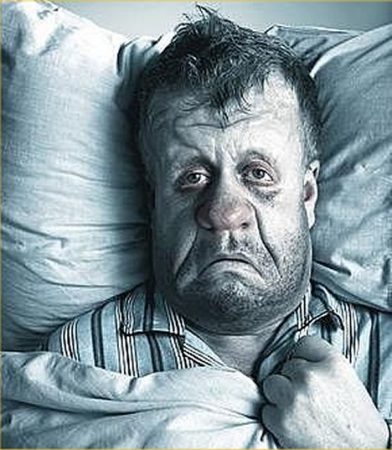
Me? I’m thankful that I’ve had the Warm-Up to fall back on when I’m too busy trying to sleep off this ^$$@!#^& endless chest cold, so I can at least keep a little bit current on Ethics Alarms. Today, the hell with it! Mind over matter, exhaustion be damned, I’m going to work, shop, make delayed client calls and research until I drop, literally. Time to stop being a weenie. Then tomorrow I can be thankful that I’m still alive.

1. Do not let the Clinton defenders off the hook.  For me, this is head exploding: the New York Times is crediting an A&E series about “The Clinton Affair” with suddenly, remarkably, making it possible to see that Paula Jones, as well as Katherine Willey and Juanita Broaddrick, were not just “right wing conspiracy”- primed bimbos weaponized to bring down Bill Clinton. Ah! Now, through the sudden clarity provided by the #MeToo movement, the Times and the rest of the mainstream media feels that the truth, so impenetrable all those years ago,  has been revealed! Jones was credible! Willey and Broaddrick were (and are) credible! What a shock! Who knew?

Excuse me if I barf. I knew, and, I submit, so did the New York Times et al,, including my hypocritical feminist lawyer friends at the Association of Trial Lawyers of America, where I worked during the Clinton years. “I believe Anita Hill!” boasted the button worn by the association’s first female President. “Really?” I asked her? Then why didn’t you believe Paula Jones? Clinton has had a history of sexual harassment and predator allegations; Clarence Thomas hasn’t.” Her answer was, to paraphrase, “Humina humina humina…’ She had no answer. She knew she had sided with a powerful man against a powerless woman for purely political reasons, and credibility and justice had nothing to do with the calculation. So did the New York Times. All of the defenses of Clinton were rationalizations—all of them, every one. I argued, and I taught at the time, that the Lewinsky affair was classic workplace harassment where the disparity of power made true consent impossible, even as such feminists as Gloria Steinem denied it, because, you see, Bill supported abortion rights. Of course he did. I’ll bet those rights served him well at one or more junctures in his rise.

Now, though, the realization of what Clinton was really doing has come into focus, as if it wasn’t deliberately blurred by the same forces now proclaiming it. In her essay for Vanity Fair earlier this year, Monica wrote that #MeToo had given her a “new lens” for seeing her own story, writing “Now, at 44, I’m beginning (just beginning) to consider the implications of the power differentials that were so vast between a president and a White House intern.”

Well, you’re slow, Monica, but at least you have an excuse. The New York Times is simply covering up a lie. It has no new lens: it was just pretending, along with the Democratic Party and most of the news media, that it didn’t know what was obvious to anyone with a neutral perspective. Bill Clinton was a serial harasser and sexual predator. He used his power in office to abuse women, and then to cover up his misconduct. Hillary Clinton was his accomplice, for her own gain. The President lied under oath in the Jones suit, a genuine, proven, “high crime.” It was not personal conduct, but professional, official, workplace misconduct, by well-accepted standards in the employment law field. That other Presidents, notably Kennedy, hasalso been sexual predators was not an valid excuse or a defense. The Democratic Party’s alleged feminism and dedication to women’s rights has been pure hypocrisy and cynical misrepresentation as long as the Clintons were embraced as allies and icons, a situation which existed right up through the 2016 election.

How dare the Times pretend all of this was unfathomable before 2018? Are Times readers really this corrupt and gullible? I know I especially resent it, because everything the paper says is suddenly, amazingly “in focus” was clear to me 20 years ago, and I got the same sneering condescension from my left-corrupted friends then that I get from them now, though on different topics. I’m thankful for the Clinton Ethics Train Wreck, because it started me writing about ethics on-line. But I am not letting these liars and hypocrites off the hook. Neither should you. Continue reading

Shouting “Heil Trump!” In A Crowded Theater

Anthony Derlunas, 58, a drunken idiot attending a performance of “Fiddler on the Roof” in Baltimore, suddenly started shouting “Heil Hitler, Heil Trump!”  He told police that his display was motivated by his hatred of the President.

Is it fair to call this “Trump Derangement”? I think so. I think that’s fair.

He told an officer he “had been drinking heavily throughout the night” before his performance at the Hippodrome Theatre, which understandably unsettled the audience, many of whom apparently thought that another anti-Jewish massacre was underway like the one in the Pittsburgh synagogue last month that killed 11 people. Some people started running, other wept.  According to the police report, Derlunas explained that the final scene of the musical before intermission,  depicting a Jewish wedding celebration disrupted by a Russian pogrom, reminded him of his hatred for the President—I know I’m always reminded of Donald Trump when I see “Fiddler on the Roof”—prompting his outburst. Derlunas was surprised, he said, when people around him became angry.  You can certainly understand his confusion: all he was doing is shouting “Heil!” during a musical about Jewish history and culture. Somepeople get offended so easily.

Baltimore Police escorted Derlunas out a few minutes later, a police spokeswoman said, and the show continued.

He wasn’t charged with anything, though the theater has banned him for life. “As reprehensible as those words are, they are considered protected free speech because nobody was directly threatened,” police spokesman Matt Jablow said in an email. Continue reading