Ethics Heroes: The Baseball Hall of Fame Era Committee

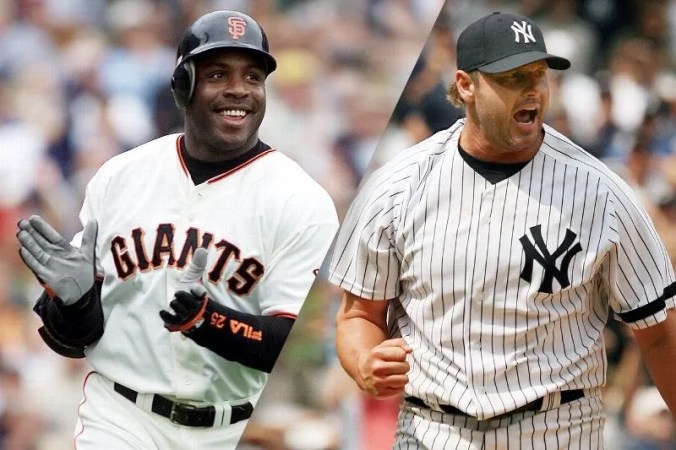
A new 16-member committee was charged with voting on the Hall of Fame membership cases of eight select players who had failed to acquire the necessary number of votes in their years on the main Hall ballots, which are cast by, ugh, baseball’s sportswriters. The results of their deliberations were announced yesterday: of the seven, only one, former Blue Jays first baseman Fred McGriff received the required twelve votes. He is deserving beyond a doubt, but the bigger story and even better news from an ethics perspective is that Barry Bonds, the King of the Steroid Cheats, the game’s career and single season record-holder in home runs, was rejected again. Also seeing their otherwise Hall-worthy career achievements rejected were Bond’s fellow PED-tarnished colleagues Roger Clemens and Rafael Palmeiro, both of whom, like Bonds, received few votes from the committee members.

Continue reading

“The Ethicist” Had A Long Answer To This Question. I Have A Short One…

, the New York Time’s advice column ethicist who really is an ethicist, was atsked with this query from “Name Withheld”:

I am a Black woman and I signed up as a mentor for a law-student-mentoring program at my alma mater. I made a request for a Black mentee, but I was paired with a white woman. Now I’m second-guessing participating in the program. Black attorneys make up less than 5 percent of all attorneys and continue to face horrific experiences in law school and in the legal community.

This is whom I envisioned myself supporting when I registered for the program as a recent graduate. I imagined deep conversations about law professors and law-firm culture, and sharing how I’ve learned to navigate them as a Black woman. Not only will these conversations not apply to my mentee the same way, but I can’t help wondering if assisting them will ultimately contribute to my own oppression.

There are so many factors in her favor that I don’t really want to help give her even more of a leg up in my free time. On the other hand, I don’t have anything against her, and law school is universally scary during the first year. Should I be thinking about this differently? Is it wrong to bow out?

Continue reading

Worst of Ethics Award 2022: Most Unethical Lawn Sign Or Car Sticker. And You Thought “Baby On Board” Was Bad…

I’ve been steaming about this one for a while.

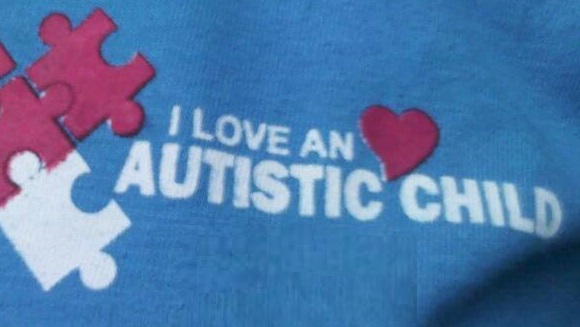
That’s not exactly the sign I saw stuck on the rear window of an automobile with Virginia tags that was in front of me for about 20 miles last month; the one I had to look at had the heart in place of “love.” I also couldn’t find anywhere online that sells such a thing, which is encouraging.

I found myself wondering what kind of person would display that message. It is virtue-signaling of the worst variety, simultaneously obnoxious, arrogant, stupid and self-defeating. It is self-defeating because there is nothing virtuous about someone who would proclaim “I love an autistic child.” What does this jerk want, applause? Pity? “Awwwwwww!”? Continue reading

Ethics Dunce: Elon Musk

I’ve never seen this before: the Ethics Alarms Ethics Hero of the Year making an Ethics Dunce of himself the same month I awarded him the honor. Depressing. Not entirely surprising in Elon Musk’s case, but depressing.

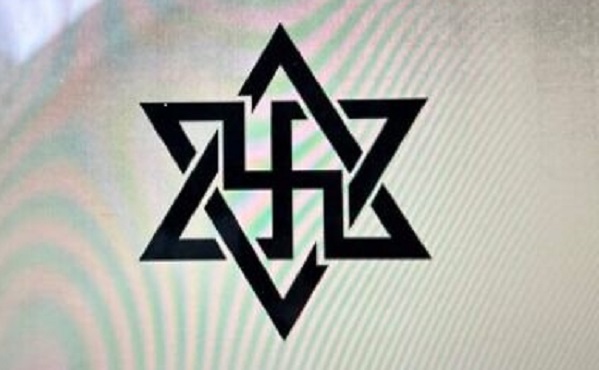
In the catalyzing development, Kanje West (or “Ye”) has set out to also make Ethics Alarms look foolish by awarding Donald Trump its 2022 “Asshole of the Year” award. West, who is disqualified from that distinction because he is clearly mentally ill, decided to visit Alex Jones and babble on about how much he liked Hitler, who had done some “good things.” Being roundly condemned for this revolting opinion wasn’t enough for the allegedly genius rapper: he then posted the design above on his recently restored Twitter account, a Nazi swastika entwined with the Star of Israel.

Quick like a bunny, Musk tweeted,

“I tried my best. Despite that, he again violated our rule against incitement to violence. Account will be suspended.”

I assume that Musk’s reaction was impulsive, because he constantly is impulsive. However, he had stated that he is a free-speech absolutist within reasonable parameters, and condemned the arbitrary, left-biased moderation policies of the previous Twitter regime. He did not “try his best”; Musk’s principles broke down the first time they were seriously challenged. West did not violate the rule against incitement to violence; in fact, I would not be surprised if he posted the ambiguous symbol to see if Musk could control himself. Continue reading

It’s Asshole vs. Jerk vs. Troll, And May The…No, Let’s Hope They All Lose

It now appears that the controversial dinner former President Trump had with suddenly radioactive wacko Kanye West and racist, sexist, proto-fascist Nick Fuentes was a diabolical trap set by the “deliberately offensive former Breitbart editor, alt-right cheer-leader, misogynist and professional troll Milo Yiannopoulos, whom Ethics Alarms foolishly assumed was kicked to the curb for good (and I do mean good) when a tape surfaced of him making light of pederasty in an interview. Milo lost a book deal and his star status on the Conservative Creep Speaking circuit as a consequence. In declaring his professional demise, I wrote (in 2017), “Society and political discourse will be better off and more ethical without Milo’s hateful bile polluting them. That is a good thing.”

What do I know? Milo got himself hired as a staffer by Republican Georgia Rep. Marjorie Taylor Greene, herself an Ethics Alarms designated waste of space. Ethics Alarms, 2021: “This, my friends, is a crazy person, and no party can ignore or tolerate a House member who embodies the worst and most fevered stereotypes spread by that party’s opposition. Rep. Greene…needs to be marginalized and isolated in Congress so that not only can she do as little damage as possible, but so that when she says ridiculous and offensive things, nobody can say that this loose cannon speaks for the party.”

Milo, who is also apparently “Ye’s” Presidential campaign manager (of course he is!), takes full responsibility for setting up the dinner that has even former Trump lackeys calling the hopeful Presidential candidate a fool for hosting. Milo:

Continue reading

Who Would Have Suspected That A Historic Appointment Like Sam Brinton Would Embarrass The Biden Administration?

I wish I could say “I told you so,” but I didn’t, exactly. The last time Ethics Alarms discussed Sam Brinton, Energy Department’s chief of nuclear waste disposal, it was in an Ethics Quiz that asked, “Is it competent and responsible for someone like Sam to hold an executive  position of trust in a Cabinet Department?” To this I added,

“Within this quiz are several other questions, like “Should an individual representing the administration, the Energy Department and the U.S. government be publicizing his kinky ways?” and “Is the judgment of an official who behaves in pubic like Sam inherently questionable?” and “Is there a Simulated Sex with Puppies Deputy Assistant Secretary Principle?”

Yes, one of Sam’s passions is simulated sex with puppies. But he’s just pretending.

I said I would reveal my answers after the commentariat weighed in, but I never did. Now comes the news that Brinton, who was hired by the administration in February, was filmed allegedly stealing a woman’s roller bag at the airport’s baggage claim area by security cameras on Sept. 16, according to a criminal complaint filed on Oct. 27. Security footage also showed Brinton taking the woman’s luggage from the baggage carousel and then removing the tags before leaving the scene at a “quick pace,” according to the complaint. Brinton initially told police that be grabbed the bag and no clothes or objects had been removed. Later he changed his story. The contents of the bag, valued at $2000, have not been found.

Continue reading

Ethics Observations On Trump’s Dinner With Kanye (And Nick)

Last week Donald  Trump  had dinner at Mar-a-Largo with Kanye West—I’ll start calling him by his new name, Ye, once I’m convinced that it’s not just another gimmick, or in other words, “never”—as well as Nick Fuentes, a 24-year-old leader of an annual white-supremacist event called the America First Political Action Conference, and Karen Giorno,  a veteran political operative who worked on Trump’s 2016 Presidential campaign. Never in my memory has the identity of dinner companions ever been used by the media as a supposed smoking gun against the dinner’s host. West, you may recall, had a much publicized meeting with Trump when he was President; he has recently been “cancelled” for making what seemed like anti-Semitic comments. (Kanye, it is fair to say, is mentally unstable and a publicity addict, and is likely to say anything at any time.) Fuentes dining with Trump, however, has been the focus of most of the criticism from the media, political figures, and others. The Times’ house anti-Trump specialist, Maggie Haberman wrote,

Even taking at face value Mr. Trump’s protestation that he knew nothing of Mr. Fuentes, the apparent ease with which Mr. Fuentes arrived at the home of a former president who is under multiple investigations — including one related to keeping classified documents at Mar-a-Lago long after he left office — underscores the undisciplined, uncontrolled nature of Mr. Trump’s post-presidency just 10 days into his third campaign for the White House.

She (and her co-reporter Alan Feuer) also quoted several figures who condemned Trump’s guest list:

  • “To my friend Donald Trump, you are better than this,” David M. Friedman, who was Mr. Trump’s longtime bankruptcy lawyer and then his appointee as ambassador to Israel, wrote on Twitter. “Even a social visit from an antisemite like Kanye West and human scum like Nick Fuentes is unacceptable. I urge you to throw those bums out, disavow them and relegate them to the dustbin of history where they belong.”
  • “This is just another example of an awful lack of judgment from Donald Trump, which, combined with his past poor judgments, make him an untenable general election candidate for the Republican Party in 2024,” said Chris Christie, a former governor of New Jersey who is considering a candidacy of his own.
  • “Matt Brooks, chief executive of the Republican Jewish Coalition, said, ‘We strongly condemn the virulent antisemitism of Kanye West and Nick Fuentes, and call on all political leaders to reject their messages of hate and refuse to meet with them.’”
  • Jonathan Greenblatt, the C.E.O. of the Anti-Defamation League, condemned Mr. Trump’s meeting with Mr. Fuentes, [saying], “Nick Fuentes is among the most prominent and unapologetic antisemites in the country…He’s a vicious bigot and known Holocaust denier who has been condemned by leading figures from both political parties here, including the R.J.C….[that  Trump ]“or any serious contender for higher office would meet with him and validate him by sharing a meal and spending time is appalling. And really, you can’t say that you oppose hate and break bread with haters. It’s that simple.”

Observations:

Continue reading

The Ethics Alarms 2022 “It’s A Wonderful Life” Ethics Guide, Revised And Updated

2022 Preface

I had this year’s introduction all written in my head—that’s how I write, you know—and then discovered hat it was what I wrote last year. No wonder it seemed so obvious. Well, never mind: there are still plenty of new matters to consider.

The main one is that “It’s a Wonderful Life” is a Thanksgiving film as much as it is a Christmas story. In the end, it is all about being thankful and grateful for life, family, friends, being lucky enough to live in the United States, and avoiding bitterness and regret. George Bailey is a good man who is nearly destroyed by bitterness, anger, frustration and regret, and Frank Capra, who directed and partly wrote the screenplay, is telling us that this is no way to live, or even survive. It’s a tough lesson: I have been tempted many times to fall into that trap. Regular readers here have seen me do it. Like George, I often feel like I didn’t achieve and experience what I could have, that my choices too often didn’t pan out, that I barely missed the breaks that I needed when I most needed them. I feel this way even though my father constantly lectured me, really all the way through our relationship, never to fall into George’s pit of despond. As long as you’re breathing, he said, there is always opportunity and hope. Reflecting on what might have been is foolish, depressing and paralyzing.

Ironically, Capra’s fable shows a man for whom revelations of what might have been are decisive evidence that his life, however disappointing to him, nonetheless had meaning. “It’s A Wonderful Life” is perhaps the first screen time travel parable, a forerunner of “Back to the Future,” and anticipated chaos theory long before Edward Lorenz figured out how chaos works. Harry’s toast at the finale, as I wrote last year,

states a life truth that too many of us go through our own lives missing. What makes our lives successful (or not), and what makes makes our existence meaningful is not how much money we accumulate, or how much power we wield, or how famous we are. What matters is how we affect the lives of those who share our lives, and whether we leave our neighborhood, communities, associations and nation better or worse than it would have been “if we had never been born.” It’s a tough lesson, and some of us, perhaps most, never learn it.

I’m not sure I have learned it yet, to be honest with myself. Intellectually, perhaps, but not emotionally.

I just watched the film again today; every time I notice something new, which is reflected in the updated guide  below.  I am also convinced that this is the greatest, riches, most complex ethics movie of all time.  “A Man For All Seasons” was long my winner in this category, but having watched that film too again recently, it doesn’t measure up to Capra’s masterpiece. Recalling the the real Thomas More burned heretics alive rather takes the sheen off Paul Scofield’s marvelous performance.

I also realized that this is very much an adult film. Kids don’t get it; indeed, I wonder if anyone under 40 really does. That makes it a strange Christmas movie. I grew up without seeing the film; the period when it was sold at junk prices to local TV stations which then resuscitated it reputation by wide exposure (I live when that happens) began while I was in college. Now that I think of it, I don’t know if my son has seen the movie. The black-and-white film block for so many younger Americans is a genuine obstacle to both cultural literacy and ethical instruction, and no, Ted Turner’s colorized version of IAWL doesn’t help, since it stinks.

Last year I wrote—and this was one of the points I had forgotten that I had made in last year’s introduction—

This movie’s intended message needs to be considered and taken to heart in 2021. Frank Capra, the movie’s director, designed the film to explain why it’s a wonderful country we live in. It may be that more and more vocal and powerful people want to send the opposite message today than ever before.

Tragically, it is definitely true that more vocal and powerful people want to send the opposite message today than even last year. Show them the movie, and all they will do is count black faces: yup, the only black resident of Bedford Falls appears to be the Baileys’ maid. Clearly, that means that “It’s a Wonderful Life” is just one more relic of systemic racism, and should be ignored and forgotten.

A society that can or will no longer learn from “It’s a Wonderful Life” is doomed to creeping stupidity and confusion. Ethics Alarms presents this annual ethics guide in the hope that we have not reached that desperate state yet.

1. “If It’s About Ethics, God Must Be Involved”

Continue reading

Ethics Quiz: The Elizabeth Holmes Sentence

A Federal judge sentenced Theranos, Inc. founder Elizabeth Holmes  to eleven years and three months in prison last week. Essentially the judge had limitless options, with only execution being off the table. Based on the maximum sentences for each the four crimes she was convicted of, she theoretically could have been given the equivalent of life in prison.  Prosecutors asked for a 15-year sentence, three years of supervised release, and more than $800 million damages. The layers for Holmes, now 38, had asked for home detainment, community service, and no more than 18 months in prison. (My son spent half that in jail for a reckless driving offense when he was 18. Just for perspective….)

What did Holmes do? Wikipedia has an excellent one-stop summary: the short version is that she invented a purported blood testing system that didn’t work, faked data, sucked in investors, doctors and patients, made billions, and engaged in all manner of lies, threats, manipulations and schemes to avoid the consequences of her actions. The government argued that Holmes deserved a severe punishment because “dozens of investors lost $700 million and numerous patients received unreliable or wholly inaccurate medical information from Theranos’ flawed tests, placing those patients’ health at serious risk.” This is undoubtedly true. Her defenders counter than “she didn’t kill anybody,”  she is a first time offender, and her crime was one of non-violence. This is also true.

Your Ethics Alarms Ethics Quiz of the Day is….

Is Holmes’ 11 years+ sentence for her massive, 15-year fraud fair, just, proportionate and in the best interests of society—in short, ethical?

Continue reading