Fake News Update: Fake History, Santa’s Number One Elf, And The Ornery Irishman

maine

Consider this three-headed post an exploration of just how tangled and gray the Fake New Ethics Train Wreck really is.

Let’s start with…

1. The Irishman.

Last week the obituary of Chris Connors was viral on social media. The first part of it read,

Irishman Dies from Stubbornness, Whiskey

Chris Connors died, at age 67, after trying to box his bikini-clad hospice nurse just moments earlier. Ladies man, game slayer, and outlaw Connors told his last inappropriate joke on Friday, December 9, 2016, that which cannot be printed here. Anyone else fighting ALS and stage 4 pancreatic cancer would have gone quietly into the night, but Connors was stark naked drinking Veuve in a house full of friends and family as Al Green played from the speakers. The way he died is just like he lived: he wrote his own rules, he fought authority and he paved his own way. And if you said he couldn’t do it, he would make sure he could…

I instantly liked Chris, as did millions of others. This was published on the obituary site, Legacy.com. People like me sent the obituary  around to friends, thought about it, and talked about it, because it made us feel good. Now there’s someone who did not go gentle into that good night!

Do I have any idea if this obituary is 100% accurate, or accurate at all? No. How often are obituaries fact-checked, if they aren’t written by a reporter? For normal people, like Chris Connors, almost never. Do you care? Do you care in this case? I don’t I am pretty sure that the obituary gives a fair sense of the kind of man Chris Connors was, even if it is hyperbolic, as I assume it was. Nevertheless, the obituary made me feel good, as it was supposed to. Christmas is starting to depress me as the years mount up: too many memories, too many lost loved ones, the sense of time passing too, quickly , of time running out. Chris’s story, which may have been only partially true, was a great, bracing, much-needed slap in the face. He had the right idea, or if he didn’t, whoever wrote his obituary did. Is there any harm anyone can attach to this inspiring farewell? If it was fake news by Facebook’s new standards, does it matter?

2. Santa’s Number One Elf

Continue reading →

Ethics Quiz: The Ethical Duties Of Santa Claus Imposters

11 photos for movie review running Thanksgiving Eve. Billy Bob Thornton in Terry ZwigoffÕs BAD SANTA. Photo Courtesy of Tracy Bennett.

A post yesterday described the outrageous conduct of the management at the Six Flags Over Texas theme park, which declared a local man named Jerry Henderson person non grata and kicked him out of the park because he “looked too much like Santa Claus” (they want him to shave his white beard to resume his park privileges). He also gave candy canes to children after their mom asked him to pose with her kids for a photo.

A regular Ethics Alarms commenter related this 180 degree variation on the story:

My kids take swimming classes at our local park authority pool, and last week, while we were signing in, one of the managers came out of the back office dressed as Santa. However, he was doing it as a gag for the other employees, not for the kids. (About 80%+ of the people there were children.) My kids went running up to him shouting, “Santa, Santa!” He did not acknowledge them or the other kids, didn’t even say hi, and just walked into one of the workout rooms.

I thought my kids were going to cry. I had to tell them that Santa was busy right now, but not to worry, we would go see him tomorrow when he had time to talk to them.

Your “Bad Santa”-themed Ethics Alarms Ethics Quiz of the Day:

If you look like Santa Claus, are you ethically obligated to act like Santa Claus?

Continue reading →

A Christmas KABOOM! Six Flags’ Sick Parody Of “Miracle On 34th Street”

HO HO KABOOM!

HO HO KABOOM!

Call it “Miraculous Stupidity On Six Flags’ Street.” I’m sure I could come up with something more clever if my brains weren’t splattered on the walls and ceiling.

Get this:

Jerry Henderson and his wife visit Six Flags Over Texas almost every weekend to walk the park for exercise. Jerry has white hair,a long white beard, and a little round belly that shakes when he laughs like a bowl full of jelly. Around this time of year, he wears a red vest and a Santa hat.

“This ain’t a costume,” says Henderson. “I go to Walmart like this. This is me,” he said. “I enjoy making kids smile.” He’s looked like Santa Claus for  almost 20 years . On this visit to the theme park, a woman asked him to pose for a picture with her children. “Knelt down, put my arms around them, and afterward I reached in my wife’s walker, pulled out two candy canes, handed it to them,” recalled Henderson. The kids were thrilled.

The Horror.

Jerry was then confronted by park security, who ordered him to leave the park.  “For what reason?  Jerry asked. The stupid answer was, “You look too much like Santa Claus.” Continue reading →

Presenting Rationalization #64, “Yoo’s Rationalization,” And How It Missed Getting On The List This Long, I’ll Never Know

no-means-yesRationalization #64, the eighty-first rationalization overall when you add up the sub-rationalizations on the Ethics Alarms Rationalizations List, is a major one, and should be near the top. (One of these days I’ll re-arrange and renumber them.) It is in evidence almost every day, and embodies the human fallacy of denial, as well as confirmation bias and contrived ignorance. Named after John Yoo, the Bush lawyer who wrote the infamous memo declaring that waterboarding, an “enhanced interrogation technique,” wasn’t technically torture, Rationalization #64, Yoo’s Rationalization or “It isn’t what it is,” is one of the most effective self-deceptions there is, a handy-dandy way to avoid logic, conscience, accountability and reality.*

I saw a prime example of it this morning, in former Homeland Security Secretary Janet Napolitano’s op-ed about the “Deferred Action For Childhood Arrivals Program,” a euphemism for “amnesty for illegal immigrants who arrived as kids with their parents, so they can grow up and vote Democratic.”

She writes,

“This narrative about an initiative that has given temporary haven and work authorization to more than 700,000 undocumented minors, the so-called Dreamers, still has critics howling about presidential overreach, about brazen nose-thumbing at the rule of law and about encouraging others to breach the borders of the United States. But there’s a problem with this take on the program. It is dead wrong.”

What the program really is, she explains, is “prosecutorial discretion,” like the case by case discretion prosecutors have to use to avoid misusing resources.  This is Rationalization #63. Continue reading →

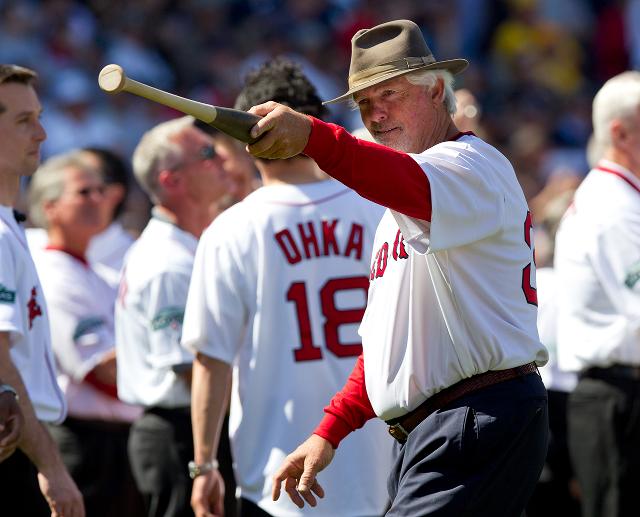
Ethics Hero: Bill Lee, “The Spaceman,” An Integrity Exemplar…And I Really Need One About Now

bill-lee

If you weren’t a baseball fan in Boston during the Sixties and Seventies you may never have heard of Bill Lee, but if you were, he was an unforgettable and unique source of pleasure. Lee joined the Red Sox in 1969 as a junk-balling left-hander with a hippie streak not previously seen in the sport.  He was prone to say things like, “I think about the cosmic snowball theory. A few million years from now the sun will burn out and lose its gravitational pull. The earth will turn into a giant snowball and be hurled through space. When that happens it won’t matter if I get this guy out.”  The college students around Boston loved him, the old school baseball management types not so much. But he was good, and in major league baseball, good will always trump weird.

Lee was an excellent a reliever for four years before becoming a Sox starter in 1973, then won 17 games that season and the next two as well. The success was secondary for his often-stoned fans than his non-conformist attitude and determination to be himself at all costs. He was well-read, well-educated, opinionated and funny, and at various points in his Red Sox career, wore a gas mask, a coonskin cap and a propeller-topped beanie onto the field. Once, when the umpires refused to halt play in a downpour, Lee came out of the dugout wearing rain gear and carried an umbrella to the mound. This and other exploits caused him to be nicknamed “The Spaceman.”

Twice, once with the Red Sox and later with the Montreal Expos, Lee went on strike, refusing to play to protest the elimination of one of his friends from his team’s roster. The last time he did it, it ended his career.

Lee made up his own rules and principles, so he’s a different kind of Ethics Hero.  Above all else, however, the Spaceman has integrity down to a life-style. When he was at his zenith with the Red Sox, he often said that baseball was a still just a game to him, that it was what he loved to do, and that he didn’t care about the money. He would play baseball for whatever was available, he said, or just for the love of it. My father, who didn’t get Bill Lee, thought he was grandstanding.

He wasn’t. Continue reading →

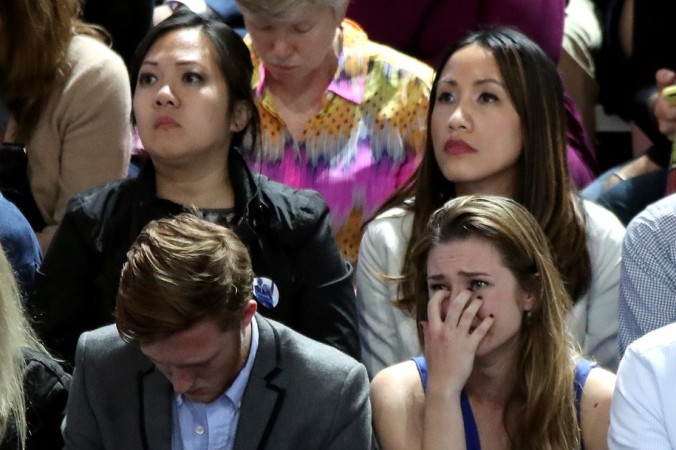
Short Takes As The Left’s Unethical Post-Election Freakout Continues

freakoutI admit it. I can’t keep up with all the progressive/Democrat/Hillary Corrupted/journalist and pundit freakouts over Donald Trump’s election, and I don’t want to. There is more to ethics and life than pointing out how completely so many have abandoned reason, fairness, proportion and their own previously stated principles because Donald Trump won the election. Well, that’s another beneficial effect of the result: Trump has inadvertently exposed how thin the veneer of decency and fairness was for a large number of institutions, occupations and individuals. Among the examples about which I could and probably should write complete posts, but won’t, are these:

New York Times columnist Charles Blow, he of the anti-Mormon slurs against Mitt Romney before the 2012 election. Remember how Rush Limbaugh was excoriated by journalists, progressives and Democrats for saying, after Obama’s election, that he hoped the new President would fail? Here is Blow, in my print Times this morning, declaring in advance his irrevocable hate:

I have not only an ethical and professional duty to call out how obscene your very existence is at the top of American government; I have a moral obligation to do so.I’m not trying to convince anyone of anything, but rather to speak up for truth and honor and inclusion. This isn’t just about you, but also about the moral compass of those who see you for who and what you are, and know the darkness you herald is only held at bay by the lights of truth….

So let me say this on Thanksgiving: I’m thankful to have this platform because as long as there are ink and pixels, you will be the focus of my withering gaze.I’m thankful that I have the endurance and can assume a posture that will never allow what you represent to ever be seen as everyday and ordinary. No, Mr. Trump, we will not all just get along. For as long as a threat to the state is the head of state, all citizens of good faith and national fidelity — and certainly this columnist — have an absolute obligation to meet you and your agenda with resistance at every turn.

This is the theme of the unethical response of the Angry Left—which increasingly appears to include everyone on the that side of the political spectrum. The double standard reigns. Conservatives should accept election results with grace and patriotism in the interests of national unity, but liberals can scream, protest, attack the system and claim fraud indefinitely. Republicans shouldn’t use fear as a political weapon, but Democrats can. Americans should give elected leaders a chance to  progress beyond the uncivil and excessive rhetoric on both sides during a campaign, with the exception of this President. Continue reading →

KABOOM! Did A School Really Try To Brainwash A Second Grader? [UPDATED]

kaboom-red

The comments to a perfectly sane article about the value of teaching logic and critical thinking in elementary school are fascinating, terrifying, aggravating and all too typical in some ways. For example, it takes just 25 comments or so before some of the participants start calling each other names based on their assumed political views. The entire thread is enlightening reading, but the most provocative part is the discussion sparked by this comment:

If you teach your kids logic they’ll have conflicts with their teachers lol. I know because all of mine have had issues and it should not be this way. My youngest corrected a teacher in the 2nd grade because she was teaching something wrong. My daughter ended up going to ISS(in school suspension). I was called and they said while your daughter was correct, she cannot correct a teacher. They had put my daughter in ISS and wrote on the whiteboard 4=eight and as soon as my daughter agreed with that statement she could go back to class. She was in ISS all day. I was proud of my daughter and disgusted with everyone that would treat a 2nd grade little girl the way they treated her. Was glad that she wasn’t in that school very long.

This is also the source of the KABOOM!, as you can see. North Korean brain-washing methods have apparently penetrated some parts of the American teaching establishment. My head exploded in protest, but I can’t say I’m surprised.

Some random observations, and then I’ll leave the reactions to you: Continue reading →

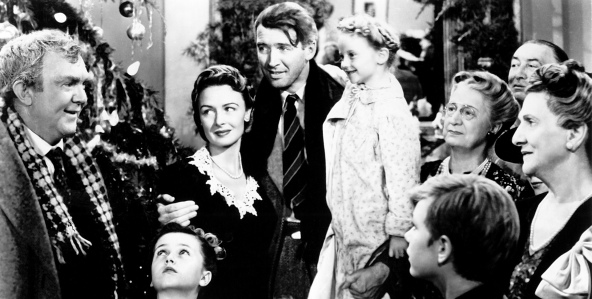
The Complete “It’s A Wonderful Life” Ethics Guide [UPDATED AGAIN! ]

 Once again, Ethics Alarms re-posts its ethics guide to Frank Capra’s 1946 masterpiece “It’s A Wonderful Life,”one of the great ethics movies of all time. It was written in 2011, and revised regularly since, including for this year’s version. I suspect we need it more in 2016 than usual.

It is fashionable now, and was even when the film was released, to mock its sentiment and optimism. On one crucial point Capra was correct, however, and it is worth watching the film regularly to recall it. Everyone’s life does touch many others, and everyone has played a part in the chaotic ordering of random occurrences for good. Think about the children who have been born because you somehow were involved in the chain of events that linked their parents. And if you can’t think of something in your life that has a positive impact on someone–although there has to have been one, and probably many—then do something now. It doesn’t take much; sometimes a smile and a kind word is enough. Remembering the lessons of “It’s a Wonderful Life” really can make life more wonderful, and not just for you.

Here we go:

1. “If It’s About Ethics, God Must Be Involved”

The movie begins in heaven, represented by twinkling stars. There is no way around this, as divine intervention is at the core of the fantasy. Heaven and angels were big in Hollywood in the Forties. Nevertheless, the framing of the tale advances the anti-ethical idea, central to many religions, that good behavior on earth will be rewarded in the hereafter, bolstering the theory that without God and eternal rewards, doing good is pointless.

We are introduced to George Bailey, who, we are told, is in trouble and has prayed for help. He’s going to get it, too, or at least the heavenly authorities will make the effort. They are assigning an Angel 2nd Class, Clarence Oddbody, to the job. He is, we learn later, something of a second rate angel as well as a 2nd Class one, so it is interesting that whether or not George is in fact saved will be entrusted to less than Heaven’s best. Some lack of commitment, there—then again, George says he’s “not a praying man.” This will teach him—sub-par service!

2. Extra Credit for Moral Luck

George’s first ethical act is saving his brother, Harry, from drowning, an early exhibition of courage, caring and sacrifice. The sacrifice part is that the childhood episode costs George the hearing in one ear. He doesn’t really deserve extra credit for this, as it was not a conscious trade of his hearing for Harry’s young life, but he gets it anyway, just as soldiers who are wounded in battle receive more admiration and accolades than those who are not. Yet this is only moral luck. A wounded hero is no more heroic than a unwounded one, and may be less competent as well as less lucky.

3.  The Confusing Drug Store Incident

George Bailey’s next ethical act is when he saves the life of another child by not delivering a bottle of pills that had been inadvertently poisoned by his boss, the druggist, Mr. Gower. This is nothing to get too excited over, really—if George had knowingly delivered poisoned pills, he would have been more guilty than the druggist, who was only careless. What do we call someone who intentionally delivers poison that he knows will be mistaken for medication? A murderer, that’s what.  We’re supposed to admire George for not committing murder.

Mr. Gower, at worst, would be guilty of negligent homicide. George saves him from that fate when he saves the child, but if he really wanted to show exemplary ethics, he should have reported the incident to authorities. Mr. Gower is not a trustworthy pharmacist—he was also the beneficiary of moral luck. He poisoned a child’s pills through inattentiveness. If his customers knew that, would they keep getting their drugs from him? Should they? A professional whose errors are potentially deadly must not dare the fates by working when his or her faculties are impaired by illness, sleeplessness or, in Gower’s case, grief and alcohol.

4. The Uncle Billy Problem

As George grows up, we see that he is loyal and respectful to his father. That’s admirable. What is not admirable is that George’s father, who has fiduciary duties as the head of a Building and Loan, has placed his brother Billy in a position of responsibility. As we soon learn, Billy is a souse, a fool and an incompetent. This is a breach of fiscal and business ethics by the elder Bailey, and one that George engages in as well, to his eventual sorrow. Continue reading →

The Ethics Of Threatening To Leave The Country…And Leaving It

leaving

Leaving the U.S. just because of the result of an election is an anti-American move for a citizen, a per se demonstration of poor character, ignorance, and a lack of understanding of history and how the government works. Primarily, it is an insult to everyone  in the country, the nation itself, and a rejection of the social compact.

We live in a republic where everyone agrees to participate in the process of government, and that means accepting the benefits, privileges, rights and the responsibilities flowing from that citizenship. Certainly anyone here has a right to try to live where they want to live. However, the nation is no different before an election than immediately after it.  If one doesn’t like living in American, I think you’re nuts, and obviously you don’t crave my association very much, but okay, bon voyage! The attitude of the post-election refugees, however, is “Democracy is only a good thing when I get my way.” Nope, that is not the deal.

If you are willing to accept what you think are the benefits of winning, then you are obligated to accept the results if you lose, and keep working to make your nation and society better as you and your like-minded citizens see it. Leaving after the votes are counted flunks the Kantian test: what would happen if everyone acted like that? It would make democracies unworkable, and ultimately extinct.

The ethical time to leave is before the election. Stupid, but ethical.

Speaking of stupidity, the current freakouts by people—including some of my close friends and relatives—demonstrate the ravages of civic ignorance. They are embarrassing. No, the election doesn’t mean “the end of legal abortions.” No, it doesn’t mean “the suspension of civil rights.” No it doesn’t mean that “Muslims will be put in camps,” or that there will be “mass deportations.” These kinds of wild apocalyptic claims are irresponsible, but mostly show a lack of comprehension of the law, the Presidency, the legislative process and the courts. Now, Donald Trump, who is similarly ignorant of our government and our legal system, may want to do some of these things, just as he may want to make the national language Swedish. But he can’t. If you think he can, your focus should be on improving the educational system, because it failed you mightily. As Barack Obama discovered to his chagrin, legislation is hard, takes skill and perseverance, and requires process,  moderation, compromise and broad consensus.

So the citizens who actually leave aren’t committed to democracy, have little pride in the culture and history of the United States, and when they don’t get what they want,  they pick up their marbles and quit. Good riddance. The nation is stronger and healthier without them. As for their less wealthy but more stout-hearted soulmates, those currently engaged in protesting the results of the election, the equivalent of a public hissy fit, they may have some societal value, eventually.

Maybe they’ll grow up.

And maybe not. “Not our President”— “Not our President”??? You see, children, that’s the bargain. He is your President, because that’s the deal you make with a democracy: you agree to accept the results of the election, whether you voted for the winner or not. Wait, wait, I’m so confused! Wasn’t one of the reasons you and your Party and your candidate’s media mouthpeices were saying that Trump was a Nazi was that he suggested that he might not “accept the results of the election”? Bill Maher, Professional Asshole, apologized to Bush, McCain and Romney last week for calling them fascists, because it was unfair—rump, he said, Trump is the real fascist!

I think I recognize who are acting like fascists, and the behavior fits the tactics of the party and the candidate they supported.

Yet I digress. For this post is not about those wan and selfish souls who do export themselves, but the rich and famous who threaten—promise, actually— to leave if their candidate doesn’t win. What’s going on with them? Continue reading →

Post-Election Morning Ethics, Early Edition [UPDATED]

hillary-loses

Initial ethics observations following an amazing night in American history:

1. Give Trump a chance, and take note of those who will not.

He is now in the most difficult job in the nation at the age of 70, with less relevant experience and preparation than any previous occupant of the office. For once, it’s a good thing that he’s an egomaniac and a narcissist, because otherwise he might be perseverating in terror right now. One cannot say that he begins with the most daunting set of problems any POTUS has ever faced, but it’s close. Give him a chance. Nobody becomes President wanting to fail, and not wanting to do a good job for his country and his fellow citizens.  Begin with that, and let’s see what happens.

2. Those who are capable of being fair and objective should salute the shades of Mr. Madison, Mr. Jefferson, Mr. Adams, Mr. Hamilton and their colleagues. The Founders wanted a system that was capable of peaceful political upheaval when the public was dissatisfied and demanded change, and their unique creation was strutting its stuff last night. So much has taken place over the last year—the last eight years, really—that has undermined our democracy that it is refreshing to see its resilience and vitality. As before, I still believe that Trump is a cautionary tale about the danger when people who don’t understand leadership, ethics and government become the majority. On the other hand, it’s their country too, and the “elites” (how I detest that word) forgot that, repeatedly, shamelessly, and in many ways.

Jefferson would have reviled Donald Trump, but he would approve of the uprising.

3. Trump’s victory speech last night was widely reviewed as statesmanlike and gracious, which it was. It was also unusually coherent for him. Still, who can’t give a gracious victory speech? The effusive praise being lavished on this shows how low expectations are.

4. Hillary Clinton’s decision to not to appear in person at her headquarters and concede, also graciously, was a failure of character. On CNN, ex-Trump campaign manager Corey Lewandowski and ex-Obama flack Van Jones got in an argument over this, but for once in his life, Lewandowski  was right. Given the backdrop of Clinton and the media questioning whether Trump would “accept defeat,” the decision by Clinton was just plain wrong: unfair to Trump, unfair to her supporters, hypocritical. Continue reading →