Comment of the Day: “Ethics Alarms Encore: ‘Aesop’s Unethical and Misleading Fable: The North Wind and the Sun”

AESOPSFABLNever let it be said that we aren’t eclectic on Ethics Alarms! Today’s Comment of the Day is a thoughtful response to my objections to Aesop’s “The North Wind and the Sun,” a 2011 post that I republished this week in fascination over how it continues to draw traffic. The thread here and on the original has touched on many diverse topics, including theology; commenter Rich (in CT), however, just submitted the most interesting analysis yet.

Here is his Comment of the Day on the post, Ethics Alarms Encore: “Aesop’s Unethical and Misleading Fable: The North Wind and the Sun:

”The comparison of God and Satan in Job to the Sun and Wind is an apt comparison, because the fable relies on “divine privilege”. An exercise of divine privilege should not be taken as an example of behavior that non-divine entities should emulate. Rather, they are external parameters that set up a hypothetical environment to illustrate the lesson of the story.

I specifically say “lesson”, because the objective of the story need not be a superficial “moral”. The “moral” that was selected here was a lazy plot device by an author who attempted to pigeon-hole the fable into his limited definition of a fable. While the particular moral in the version you share is useless, the fable perhaps might better illustrate both the use of strategic thinking and well as illustrate the role of moral luck in one’s success. A more apt “moral”, if any, might be to be clever, but acknowledge the limit of cleverness.

Ethical behavior never takes place in a vacuum, but must balance certain principles with the current circumstances. In the fable, an arbitrary task is selected, and the two actors use the tools at their disposal to attempt to achieve the task. The wind has two tools: blow hard or soft; the sun has analogous tools: beat hard or soft. Given the task, arbitrarily set up as a competition, only one had tools that could creatively solve the task.

The tale here thus illustrates a few important principles that are of value to a child; creative use of ones tools can lead to success, and that not everyone has a every tool available. A non-lazy author might use the fable to teach the value of cooperation, pooling a group’s tools to complete a task.

The particular task is irrelevant, and is set up as an exercise of divine privilege. Mere mortals have no right to manipulate the weather, but the fable’s embodiment of the solar rays and moving air manipulate these elements in an ethically neutral manner. The selection of a mere mortal as a target of task, might be to lead the reader indirectly, through empathy, to the conclusion that some circumstances are arbitrary and beyond one’s control. The objective might be to teach humility, that one is never entirely responsible for one’s success, no matter how clever one might be.

I thus agree that the particular version of the fable shared is unethical. This is, however, the result of a lazy author. The premise, if used wisely, is ethically neutral; Aesop, or some other interpreter, could use the premise of the story to teach a valuable lesson if so desired.


 

Irresponsible Gun Ownership and Consequences

smoking-gun

Here we go again:

A 15-year-old boy  shot and killed his younger brother during a game of “cops and robbers” using what they thought was an unloaded handgun. The boy called police to their home in Eagan, Minnesota, and told them he had shot his brother, who was pronounced dead at the scene. Though police said the facts would be presented to the Dakota County Attorney’s Office for review, but no one is in custody and no charges are expected.

Investigators say the boys found their father’s 9mm handgun, which had been hidden unloaded, with a magazine holding cartridges nearby. At some point, the handgun was loaded by one of the boys, and assuming it had been unloaded, the brothers  began to chase each other in a game of “cops and robbers.” police said. The 15-year-old unintentionally fired,  striking his brother in the chest.

The father should be arrested and charged with negligent homicide. Continue reading →

Ethics Alarms Encore: “Aesop’s Unethical and Misleading Fable: The North Wind and the Sun”

north-wind-and-the-sun-story-oil-painting

[ I vowed that the next time I got a comment on this post, I would publish it again. It hails from four years ago, when  Ethics Alarms got a quarter of the traffic it gets now. I confess that I wrote it on a whim, having been talking with my wife about how Aesop’s Fables were joining Mother Goose stories,  Edward Lear limericks and American folks song in the Discarded Bin of our culture and then stumbling upon a fable I had either never read before or forgotten about.  To my surprise the post attracted intense criticism from fans of the story—I even had to ban a commenter who got hysterical about it—and the post joined a very eclectic group of early essays here that get considerable and consistent readership every week. Apparently there are a lot of Sun-worshipers out there. Anyway, since you probably missed it the first time, here it is.]

Today, by happenstance, I heard an Aesop’s Fable that I had never encountered before recited on the radio. Like all Aesop’s Fables, at least in its modern re-telling, this one had a moral attached , and is also a statement of ethical values. Unlike most of the fables, however, it doesn’t make its case. It is, in fact, an intellectually dishonest, indeed an unethical, fable.

It is called “The North Wind and the Sun,” and in most sources reads like this:

“The North Wind and the Sun disputed as to which was the most powerful, and agreed that he should be declared the victor who could first strip a wayfaring man of his clothes. The North Wind first tried his power and blew with all his might, but the keener his blasts, the closer the Traveler wrapped his cloak around him, until at last, resigning all hope of victory, the Wind called upon the Sun to see what he could do. The Sun suddenly shone out with all his warmth. The Traveler no sooner felt his genial rays than he took off one garment after another, and at last, fairly overcome with heat, undressed and bathed in a stream that lay in his path.”

The moral of the fable is variously stated as “Persuasion is better than Force” , or “Gentleness and kind persuasion win where force and bluster fail.”

The fable proves neither. In reality, it is a vivid example of dishonest argument, using euphemisms and false characterizations to “prove” a proposition that an advocate is biased toward from the outset. Continue reading →

STUPIDITY SATURDAY Continues: Anti-Vaxxers Resurrect Measles With An Assist From California

jenny_mccarthy

The anti-vaccination crowd, let by such worthies as professional bimbo Jenny McCarthy (above), endangers the public health and undermines child safety by relying on various conspiracy theories and quacks to avoid a proven program of eradicating infectious diseases. Now measles, once considered extinct, has returned with a vengeance, with more reported cases in 2014 than any time since 2000.The reason is that not enough children are being vaccinated against it. Jenny and her pals are why.

Before measles vaccines became routine in 1963, between three and four million Americans a year got the disease, with 400 to 500 dying from it annually. So this isn’t a matter of kids getting the sniffles. Continue reading →

The Destructive, Useful, Unethical Presumption of Bigotry, Part I: California’s Anti-School Discipline Law

Last year, in September, California became the first state to prohibit by law the suspension of students for “willful defiance” unless the activities involved were certified by the school superintendent as meeting the specific standards enumerated in the law, all of them very serious, most of them already crimes. What was the rationale behind Assembly Bill 420? Well, it seems African American kids were being disproportionately suspended. They made up about 6 percent of total enrollment, but 19 percent of suspensions for defiance.

According to the Justice Department’s politically motivated embrace of the “disparate impact” approach, any policy that disproportionately affects a minority group adversely is presumptively racist. It couldn’t possibly be true that black students are, as a group, more likely to defy authority, especially the authority of white teachers, right? The fact that pundits, members of the Congressional Black Caucus, MSNBC, Al Sharpton and the President keep hammering on the idea that America is run by a racist cabal, and that the only reason we aren’t getting ready to replace Teddy Roosevelt with Barack Obama on Mount Rushmore is that his wonderful accomplishments have been denied and distorted by white racists, and that our police departments are hunting down and murdering unarmed young black men as the justice system looks the other way—none of this could possibly be feeding anger, frustration, and hate among  among young black students that is translated into willful defiance in class—why would anyone think that?

The law is lunacy. The California state government is endorsing the idea that the schools, especially white teachers, are bigots, and thus the government is reinforcing exactly the emotions and beliefs that feed African American classroom defiance in the first place. Now uncooperative minority students will be able to have their disruptive conduct validated (with disruptive conduct by non-minority students similarly encouraged), treated gently and with understanding, inevitably reducing the educational value of class by allowing more chaos and less discipline, undermining the education of well-behaved students black or white. Meanwhile, toxic behaviors, attitudes and conduct by students that will hamper their prospects of success after school will not attract trigger negative reinforcement.

And when the out-of-school defiant conduct occurs later in response to a lawful command by a police officer?

You might get Michael Brown.

This is such a good plan. Continue reading →

Ethics Hero Emeritus: Irena Sendler (1910-2008)

Sendler

I missed learning about the death of Irena Sendler (Irena Sendlerowa) in 2008, and this occurred because the mass news media barely took note of it. Lots of celebrities died that year whose passing prompted extended mourning in the press and examinations of their legacies: Paul Newman, Heath Ledger, Sir Edmund Hillary (a member of the Ethics Alarms Heroes Hall of Honor), Charlton Heston, Aleksandr Solzhenitsyn, and many others. There was no room for a final appreciation of the life of Irena Sendler, apparently. Today, the website Bio.com doesn’t list her among the notable deaths of that year, though it finds room for Fifties stunt singer Yma Sumac—remember her? She had a four octave range! And Arthur Showcross: he murdered 11 women from 1988 to 1990 in upstate New York, earning the nickname “The Genessee River Killer.”

All Irena Sendler did was save 2500 children from the Treblinka death camp. Continue reading →

QVC Shows Us Why We Are Becoming Stupid, Ignorant And Helpless

Cable shopping channel QVC just had an episode that should call a lot into question, but won’t.

In the segment above, QVC host Shawn Killinger demonstrates beyond a shadow of a doubt that she possesses nothing resembling a grade school understanding of astronomy. She is obviously not ashamed or embarrassed by this, as she is willing to expose it in horrible vividness on nationwide television. Launched with a statement that itself should never be uttered within earshot by any adult of normal intelligence who isn’t tripping or doing a cruel imitation of the late Anna Nicole Smith—“it almost kind of looks like what the Earth looks like when you’re a bazillion miles away from the planet moon”–Killinger engages in a debate over whether the moon is a planet, a star, or something else she doesn’t understand.

Over at Slate, astronomer/author Phil Plait provides a really smug and obnoxious explication of the issues involved, designed to make him look and feel superior: you see, the astronomic definitions of “moon” and “planet” are more complicated than the non-scientists mocking Killinger think they are, so he’s as much smarter than them as they think they are smarter than her! Wow, Phil, I’m in awe. And you are one of the reasons we are stupid: you make being educated look like a character flaw. Continue reading →

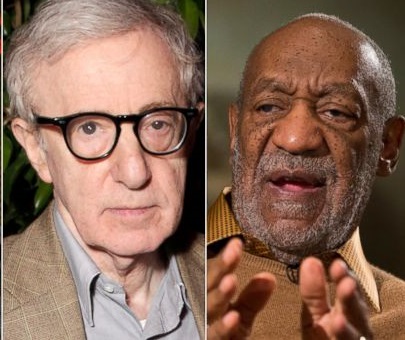
No, There’s No Comparison Between Bill Cosby And Woody Allen And No “Double Standard”

One of these things is not like the other....

One of these things is not like the other….

Newspapers should make us more informed and smarter, not less informed and dumber. Thus a Washington Post feature this morning qualifies as journalism malpractice, incompetence exemplified. Its theme: “Gee, why is Woody Allen signing a new deal to do a streaming comedy series for Amazon, while Bill Cosby lost his deal with NBC?” The print edition sub-heads: “Crisis responses may explain…”

No, they don’t. This is a false comparison based on superficial similarities: two comics who initially peaked in the same era, both in their seventies, shadowed now by sex scandals. The effort to use one to question the treatment of the other is either intellectually dishonest or so analytically unsound that it should forfeit the authors’ privileges of being assigned to write anything for mass consumption (the Post piece is by Stephanie Merry and Amy Argetsinger, and shame on them). The question of why Allen and Cosby are being treated differently in the court of public opinion isn’t worth asking, but since they asked, here are the obvious answers:

1. Woody Allen’s art, comedy, and persona have never had anything to do with virtue, stable families or being any kind of a role model. As a performer, he has presented himself as perpetually horny, neurotic, obsessed with sex and masturbation, prone to lying, and open to adultery, betrayal, stealing friends’ lovers; in “Manhattan,” he happily romanced a virtual child. In real life, he says things like “The heart wants what the heart wants,” which is a  rationalization for any act unethical or illegal, involving sexual or romantic desire. If you were ever a fan of Woody Allen after the age of 13, you were so because he was funny, accepting the fact that he is at best a sexually obsessed, maladjusted creep.

None of this is true of Cosby, who has always aimed his comedy at innocence, functional families and traditional virtues, and represented his own values as consistent with these when speaking for himself. Sex was not any part of Cosby’s art or image. He was an iconic good guy. Continue reading →

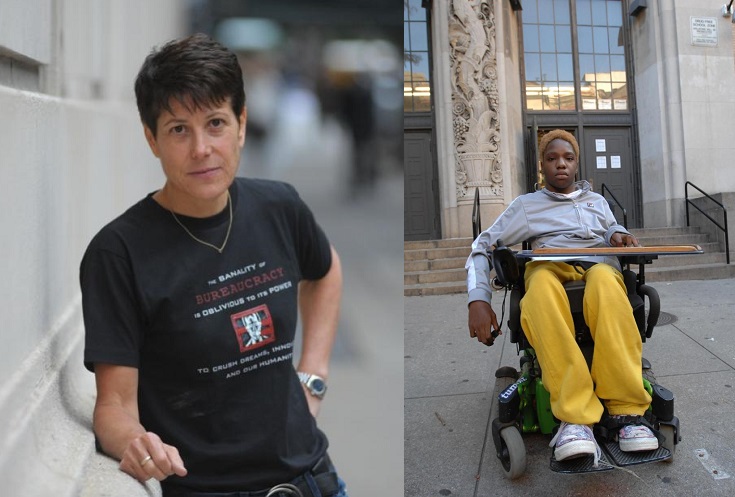
The Special Needs Student, the Compassionate Teacher and the “Awww!” Factor (UPDATED)

Debra Fisher

Regular readers here are familiar with the “Ick Factor,” the common phenomenon where a situation that causes an emotional response of revulsion, disgust or fear is labelled unethical when there is nothing unethical about it. Many kinds of conduct are icky, but still on the right side of ethics, if only one can put aside the gag reflex. The reverse of the Ick Factor is the less common “Awww!” Factor, where particular conduct seems loving, caring and nice, but is in fact unethical in one or more respects. Such is the case of New York City special needs teacher Debra Fisher.

In October, Fisher was suspended when e-mails were discovered on the school computer system showing that she had been spending school time raising funds for a special project on behalf of Aaron Phillip, a thirteen year old special needs student who is an aspiring animator with his own blog. The project’s goal was to raise $15,000 for a nonprofit devoted to developing Aaron’s talent, an organization called “This Ability Not Disability” founded and administered by Fisher.

Awww!

The problem was that while her efforts on behalf of the student were supported by the school, Fisher, an occupational therapist at Public School 333 with nine years of service, did not have permission to perform them during school hours. Thus she was suspended for six weeks. Now she is suing the school system for back pay, telling reporters, “I’m just trying to fight for what I believe is right.”

If she believes she is right, then she shouldn’t be working at the school at all, because she is in fact dead wrong.

But awfully nice. Continue reading →

The Sixth Annual Ethics Alarms Awards: The Worst of Ethics 2014 (Part 3)

ellen-selfie

2014 Conflicts of Interest of the Year

  • Conflicted Elected Official: Philadelphia State Senator LeAnna Washington. This is always an entertaining category. Washington was convicted of using her tax-payer financed staff to organize a yearly campaign fundraiser around her birthday party. When one staffer complained that this was illegal, she reportedly replied, according to his grand jury testimony:

“I am the fucking senator, I do what the fuck I want, and ain’t nobody going to change me. I have been doing it like this for 17 years. So stop trying to change me.”

  • Conflicted Journalist: CNN sent Jay Carney, fresh off his assignment as President Obama’s official spokesman, defender and spinmeister, to cover his ex-boss’s speech.
  • Conflicted  “Non-partisan” Watchdog: CREW. The Center For Responsibility and Ethics in Washington and its chief, Melanie Sloan, finally came clean (after falsely claiming non-profit status as a non-partisan organization for years) by making David Brock, head of the openly partisan, foaming-at-the-mouth anti-Republican media watchdog Media Matters its Chairman of the Board, essentially merging the two groups.
  • Appearance of Impropriety Award: Rep. Steve Scalise (R-La), Republican Whip. It is not certain yet whether Scalise knowingly spoke to a group of white supremacists in 20o2, inadvertently spoke to the group, or just spoke to another group meeting in the same venue before the David Duke-affiliated group of racists started comparing sheets. It isn’t even clear that Scalise knows, but everyone should agree that it looks awful no matter how you categorize it, making the fiasco a classic appearance of impropriety situation. If the Republicans were smart, they would dump him.

Unethical Attire of the Year

Offensive shirt

This.

Unethical Political Candidate of the Year

Wisconsin Democratic gubernatorial candidate Mary Burke, whose campaign materials were largely plagiarized from the materials other candidates.

Ethically Clueless Voters of the Year

New York’s 11th Congressional District, which contains Staten Island and parts of Brooklyn. These alert and ethical citizens sent back to Washington thuggish and crooked Rep. Michael Grimm (R), then facing a 20-count indictment by federal authorities for fraud, federal tax evasion, and perjury, having earlier distinguished himself by threatening to kill a reporter and being recorded doing so.

  Unethical Advertising of the Year

Lawyer Division:

Public Service Announcement Division:

TV Program Division:

The Discovery Channel’s campaign for “Eaten Alive!” which did not, in fact, feature anyone being “eaten alive,” or at all.

Private Sector Product Division:

Halos. Or perhaps this is the Child Abuse Division:

Political Campaign Division:

Wendy Davis, Democratic candidate for Texas Governor, offered an ad attacking her wheelchair- bound opponent that 1) appealed to bias against the disabled 2) misrepresented the duties of a state attorney general 3) misrepresented the facts of the cases the ad referred to and  4)  deceived the public regarding the ethical duties of lawyers, which Davis, a lawyer, presumably understands. Continue reading →