This isn’t an ethics quiz. It’s not ethics commentary. This is clearly an ethics episode, but, frankly, I’m exhausted. I’m fighting some kind of flu (no, not Wu-Flu); I have a pile of half-begun and half-thought out ethics stories on a cyber-pile, and I just feel overwhelmed and depressed. So I’m just going to present this weird event from the public [NOT ‘pubic,’ as I typoed once again] school chaos, and I invite readers to explain what ethics issues they see here.
Ready?
For the latest edition of the NPR’s podcast “Planet Money”, Shale Meadows Elementary School third grade teacher Mandy Robek was scheduled to read books reading “The Sneetches” to her class as part of about the theme of economics education from in children’s books. Amanda Beeman, the assistant director of communications for the Olentangy Local School District (in Ohio) prepared for the segment by choosing books from the school’s library. The district had stipulated that politics were off limits for discussion. “Pancakes, Pancakes!” by Eric Carle; “Put Me In The Zoo” by Robert Lopshire; a poem from “Where The Sidewalk Ends” by Shel Silverstein, and “The Sneetches” by Dr. Seuss were ultimately read to the class. Well…almost.
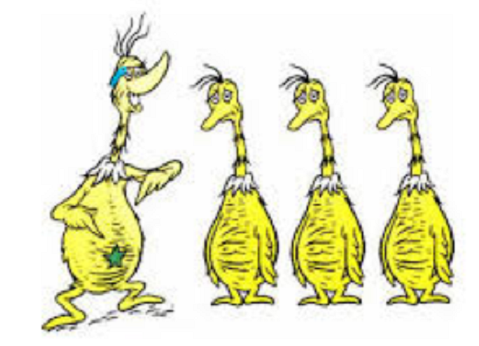
You know “The Sneetches,” right? Published in 1961, the story is about a community of long-necked birds that all look identical except that some have stars on their bellies and some don’t. The Plain-Belly Sneetches are traeted by the rest as inferiors, so entrepreneur Sylvester McMonkey McBean sells them stars so they can aspire to be Star-Belly Sneetches.The Star-Bellied Sneetches, resenting the intrusion on their select domain, then succumb to a scheme to have them pay to remove their natural stars. Now the once- Star-Bellied Sneetches will be Plain-Belly Sneetches, and can look down on the former Plain-Belly Sneetches all over again. Meanwhile, supply and demand makes the local capitalist rich.
“I don’t know if I feel comfortable with the book being one of the ones featured,” Beeman was heard saying on the podcast during the middle of “The Sneetches” reading by the teacher. “I just feel like this isn’t teaching anything about economics, and this is a little bit more about differences with race and everything like that.” As if on cue, a third-grade student soon piped up, “It’s almost like what happened back then, how people were treated … Like, disrespected … Like, white people disrespected Black people!” Continue reading






Gays Against Groomers is not a conservative group at all. The people in GAG are mostly gay or trans and stand against sexually inappropriate indoctrination of youth as well as against modifying the bodies of kids in the name of gender theory. This group has been denied services from several companies including payment processing and merchandise makers.
GAG’s crime, of course, isn’t that they’re “conservative” but that these renegade gays and trans citizens aren’t going along. In the world of progressivism, not knowing your place as a minority is even worse than being conservative. This is why people call GAG an “anti-gay transphobic hate group”— which of course makes no dang sense.
The Department of Justice has used the word Groomer for years. I read some of the DOJ’s reports on school grooming by teachers and other staff. This has been an unsaid issue for decades. The difference now is that the grooming is more diffuse in schools and done by woke staff who don’t see any issues down the road with exposing kids, including LGBT kids, to sex and gender identity concepts that are not age appropriate and that should be discussed with parents first.
Yes, this is grooming because such exposure seeks to eliminate innocence and circumvent parental moral teaching.
Continue reading →