Comment Of The Week #3 on”Open Forum (11/11/22)” Re: Armistice Day

Other Bill raised another aspect of Armistice Day ethics: is there such a thing as war ethics? Ethics Alarms has barely touched on the subject, as I absorbed the values of my father on this topic among so many others. He believed, like General Sherman, that war was such hell that the only ethical way to fight it was in a manner that would end it as quickly as possible. Dad supported the dropping of the first atom bomb (he was less certain about the second), admittedly with a bias: he was preparing to be part of the U.S. invasion force when Hiroshima was destroyed. He strongly felt that the Nuremberg Trials were hypocritical, and our many debates and arguments about that controversy led to my directing “The Andersonville Trial” twice and producing “Judgment at Nuremberg” at my late, lamented professional theater company. My father also thought the Geneva Convention was unenforceable, disingenuous, and naive.

Here is Other Bill’s Comment of the Week from this week’s Open Forum:

***

Armistice Day has me thinking about war ethics. How’s that for an oxymoron? Russia has been getting crap for targeting civilian infrastructure, including apartment buildings and the electrical grid. There has been talk about the Russians destroying a dam to flood an area and deprive the Ukrainians of a river crossing.

What’s the deal? What did the U.S. destroy during shock and awe in Iraq? Other than regime change, why did the U.S. invade Iraq? During WWII, the Allied strategic bombing campaign, which included bombing cities, was intended in large part to “discomfit” the German populous, thereby reducing Germany’s industrial output (not to mention the firebombing of wooden Japanese cities, purporte ly to destroy dispersed manufacturing facilities). A famous British operation “busted” a dam and flooded large parts of the Ruhr flood plain.

Continue reading

Comment Of The Week #2: Morning Ethics Warm-Up, 11/11/2022: The Ethics Post To End All Ethics Posts Edition

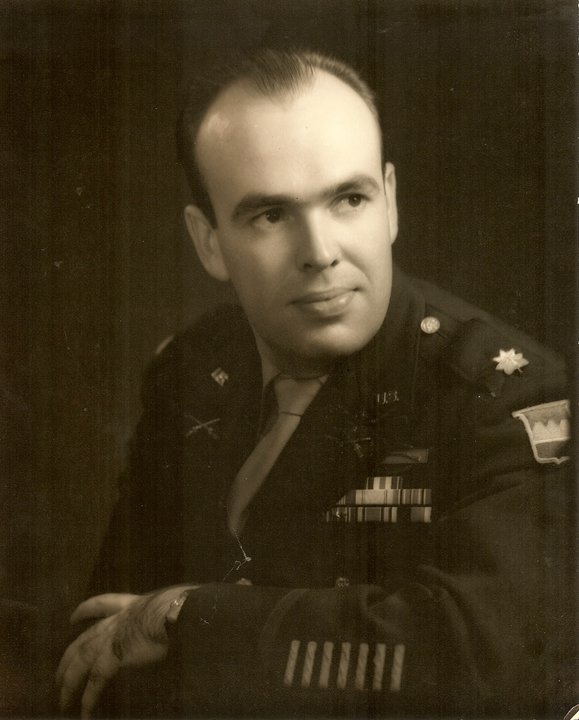
My father, now in Arlington National Cemetery, would have really liked Steve-O-in NJ’s post. the second of this weekends’s Comment of the Week. The great irony of his life was, as he once mentioned, that he hated war, but had a natural aptitude for it. Jack Sr. never boasted about his many war exploits, forcing us to drag them (definitely not all, though) out of him over nearly 6 decades. Nevertheless, he was more proud of fighting the Nazis in Africa and Europe than of anything else in his life, except, perhaps, of being a good father, unlike his own father.

Dad used to imitate FDR’s famous “I …hate… war!” speech (“My wife Eleanor hates war…”) , which he felt was ponderous and insincere—The Roosevelts all liked war, he believed—and said more than once that anyone who didn’t hate war was a lunatic. (This was just one of the many reasons he detested General Patton). But my father never hesitated to display reminders of his participation in the victory over Hitler and his minions.

We had beautiful, brilliant red curtains separating our play room from the laundry area in our basement in Arlington, Mass.when my sister and I were kids; it wasn’t until long after I had moved to the Washington, D.C. area that I learned that my mother had cut them out of the giant Nazi flag my father had brought home as a trophy. He felt that using the red portion of the menacing flag as a cheerful decoration in the most humble part of his all-American home was a nice, final, private “Bite me!” to the evil losers.

Here are Steve-O’s reflections on Armistice Day, prompted by the introduction to this post…

***

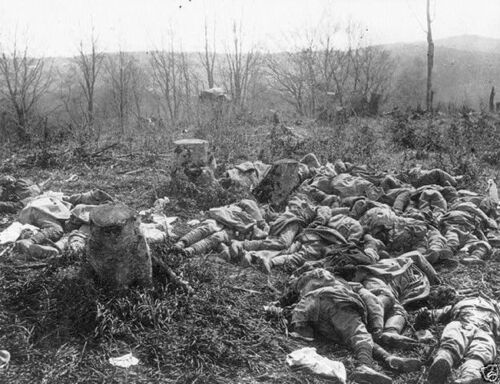
103 years ago, the guns finally fell silent at the eleventh hour of the eleventh day of the eleventh month, ending the greatest conflict to date, known as the Great War in Europe, as World War One here. The war that was supposed to end by Christmas 1914 had dragged on for more than four years, shaken civilization to its core, and thrown down no fewer than four empires, leaving chaos in their place. It had also killed six million and badly damaged a generation.

The world thought another war like this must not, could not ever happen again. In memory of what had happened, the allied nations proclaimed Armistice Day a year later, including the red poppy as the symbol of the fallen, the two minutes silence, and the continued hope for world peace.

Here’s the dirty little secret, though, the allied nations, weary of war and afraid of another one, turned their back on the problems left unresolved at the end of World War One. They made a few half-hearted attempts to deal with them, like the poorly organized Allied intervention in Russia to stop Communism before it took root, which accomplished nothing. For the most part, however, they either just looked the other way or threw up their hands. Turkey mopped up what was left of the Armenians and forced Greece into a population exchange that destroyed thousands more lives, and the allies just nodded. The Soviets attempted to conquer Poland, but they found themselves thrown back by a nation not inclined to give up the freedom it had just won under the leadership of the military and political genius Josef Pilsudski. France and the UK didn’t do or say anything. Ireland erupted in violence, and the UK all too quickly concluded a peace that left it embarrassed and Ireland bankrupt. Let’s also not forget the abandonment of the Finns, the Ethiopians, and the Austrians to tyrannical aggression. The major nations were too busy trying to come up with lofty promises and ways to prevent there from ever being a war again: the Washington Naval Treaty, signed with a smile by the Japanese and promptly violated, the Locarno Treaties, which were quickly ignored, and the Kellogg-Briand Pact, which supposedly outlawed war, and is still technically in effect, but which was ignored from its inception, and actually reads like a bad joke in hindsight.

Continue reading

Comment Of The Day: Ethics And The Diesel Crisis, From Open Forum 11/4/2022

I wasn’t even aware of the diesel shortage until I was alarmed by back-up White House paid liar John Kirby—he’s the competent one— was asked about it and he huminahumina-ed “I’ll have to get back to you on that.” This means, “Hey! That’s am embarrassing question; you’re supposed to be covering for us here, not causing trouble!” Then Tucker Carlson took up the topic as his scare of the day, but since I don’t trust him, I didn’t listen to it. Yes, I should have posted on the issue then: like so many of the current government fiascos, this one is about, most prominently, competence. The perils of running out of diesel fuel implicates at least four Cabinet Departments: Energy, Commerce, Transportation and Homeland Security. It is a big topic, and fortunately, a conscientious commenter, Sarah B., has done the research and analysis that I should have done.

Here is Sarah’s essential Comment of the Day regarding the diesel fuel problem, from the most recent Ethics Alarms open forum.

***

I think we should talk about a topic near and dear to my heart: the looming crisis caused by the diesel shortage in our nation. I will say right out that I do not have a solution to this crisis, but instead, I want to discuss how we got here, and the issues that stand in the way of fixing it. Getting here was an ethical failure on many levels, most of which can be laid without much hesitation at the feet of our current President and his party, but not to the exclusion of Trump, Obama, Bush, Clinton, etc. I know this is long, but I’d love to start communication on this issue.

The first thing to know about the diesel shortage is that it isn’t just diesel. In refining terms, the shortage is of all distillates. Light and medium distillates include kerosene, heating oil, jet fuel, aviation fuel, and diesel. Each of these are competing products from similar oil breakdowns, so a shortage of one results in a shortage of all. Many of these products seem as though they are the same thing with different names, and to an extent they are. But the government regulates and licenses each one slightly differently with slightly different specifications on each product, so aviation fuel and jet fuel can both run an airplane, but depending on the airplane, one is legal, the other isn’t. The point, however, is that the diesel shortage extends beyond what we typically recognize as diesel usage.

What is the extent of this problem? Some sites note that we have a 25.9-day supply of diesel, which is the lowest point we’ve been, comparatively, in a very long time. Generally speaking we tend to want to run at about 35-40 days. More specifically, the diesel supply is at the lowest point this nation has ever seen coming into winter. Some pundits argue that we are fine, that we’ve seen years with similar shortages, but they are being either ignorant or disingenuous. The shortages they cite occurred in April of their respective years, such as 1925. April shortages are a different beast than October and November shortages. April is at the far end of the cold season; October is at the very beginning. April is at the tail end of most major southern refinery turnaround season, whereas October is just entering into turnaround season. In other words, a shortage in October is like have a food shortage right after harvest and going into the lean months, whereas a shortage in April is expected because we’ve just emerged from the lean months, but we expect new crops soon. And if the shortage is bad now, how bad will it be by April?

Continue reading

Comment Of The Day: “For Some Strange Reason, The Playwright Didn’t Think ‘N-Word’ Carried The Same Dramatic Punch…”

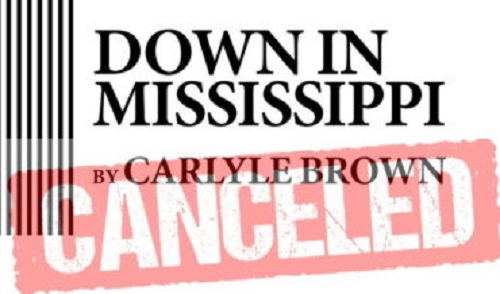
Confession: before I wrote the post that Curmie fashioned into his Comment of the Day, I emailed him the underlying story in advance, given his unofficial position as the Ethics Alarms dramaturg. I almost asked him to write a guest post on the head-exploding tale of a university banning a black playwright’s work about the civil rights movement because it has white characters using the word “nigger,” but I guessed, fortunately correctly, that he would provide a Comment of the Day on the topic whatever I wrote.

And do he did, very well indeed.

Here is Curmie’s Comment of the Day on “For Some Strange Reason, The Playwright Didn’t Think ‘N-Word’ Carried The Same Dramatic Punch…

***

The first comment on this post, by JutGory, is especially apt. [ JutGory wrote: “The Woke Paradox: We must teach ‘real history’ even if it might hurt the feelings of white kids/We can’t teach ‘real history’ if it will hurt the feelings of black kids.”]

But, as someone who taught college-level theatre courses for over forty years and continues to do some scholarly writing in the field, I’d like to take the analysis a little further.

In the interest of full disclosure, I should mention that I have directed two plays which contain the word “nigger.” Both, Tennessee Williams’s Cat on a Hot Tin Roof and Athol Fugard’s ”Master Harold”… and the boys, are widely anthologized and both are regarded as among the greatest works of 20th-century drama. The latter, which includes a particularly crude racist joke, is also unquestionably an anti-racist play, as Down in Mississippi appears to be (I confess I haven’t read it or seen it).

I was also asked by a recently-graduated black student a decade or so ago to play the role of a slave-owning plantation owner in a short film he had written and was directing. The character probably used the dreaded epithet at least a half dozen times in a four- or five-minute scene. I agreed to play the role, but for whatever reason the film shoot never happened.

My first question, unanswered by the linked article, is precisely who made the decision to cancel the performance. It certainly wasn’t the (black) playwright, who said that “maybe you should be less fragile. And try to listen to what your former generations are trying to teach you for the well good being of all of us,” and it’s unlikely to have been the theatre department, given that they were the ones who decided to produce the play to begin with.

Administrators above the level of department chair are almost never involved in the process of selecting a production season. But they will stick their noses into the process if there’s a potential controversy, even a fallacious one. We can reasonably surmise that it’s a dean, a vice president, or a president who is the Designated Weenie in this case. It certainly wasn’t the chairman of the Board of Trustees, Glenn O. Lewis, himself a black man, who points out that censorship is not a solution, and that “you don’t learn anything new until you get out of your comfort zone, and I think that is what Mr. Brown intended for this play to do.”

Continue reading

Comment Of The Day: “It Looks Like Donald Trump Was Betrayed By Another One Of His Lawyers, Someone Else…Or Himself”[Corrected]

I really don’t want to contribute to the Donald Trump glut in the media and the web, and if everyone else would just ignore the guy like ex-Presidents, non-elected officials currently in office should be ignored, I wouldn’t have to post about him at all. This video from the Ethics Alarms clip archives is relevant..

But the news media won’t stop, simultaneously fueling Trump’s continued influence and prominence and claiming that he is an existential evil who must be destroyed. This obsession was excusable, sort of, when he was President, but now it is pure hypocrisy. Trump, of course, publicity junkie and narcissist that he is, loves the attention, and it makes him stronger. The other side of this weird coin is that he has also been grievously mistreated politically, journalistically  and by the culture, to a historical degree. As with Bill Clinton when he was beleaguered by the Monica scandal, I have to grudgingly admire Trump for his resilience, endurance, and resolve. Clinton, however, only went through such travails for a year or so. With Trump, it has been constant since 2015. His defiance is Churchillian.

In his Comment of the Day, Steve-O-in NJ came up with something I’ve been searching for: a good analogy for the hate that Donald Trump has been subjected to. Tellingly, Steve’s analogy is a nation, not another human being. But in Steve’s example, only one man was demanding destruction, not whole institutions and sectors of society: Cato the Elder, also known as Cato the Censor and Cato the Wise.
Boy, I would much rather write about Marcus Porcius Cato ( Born: 234 BC, Tusculum, Italy; Died: 149 BC, Rome) than Trump. His best quotes alone should pique your interest, among them:
  • “After I’m dead I’d rather have people ask why I have no monument than why I have one.”
  • “An angry man opens his mouth and shuts his eyes.”
  • “Anger so clouds the mind that it cannot perceive the truth.”
  • “Grasp the subject, the words will follow.”
  • “He is nearest to the gods who knows how to be silent.”
  • “He who fears death has already lost the life he covets.”
  • “I can pardon everybody’s mistakes except my own.”
  • “I prefer to do right and get no thanks than to do wrong and receive no punishment.”
  • “If you are ruled by mind you are a king; if by body, a slave.”
  • “Patience is the greatest of all virtues.”
  • “The hero saves us. Praise the hero! Now, who will save us from the hero?”
  • “The worst ruler is one who cannot rule himself.”
  • “Those who are serious in ridiculous matters will be ridiculous in serious matters.”
  • “‘Tis sometimes the height of wisdom to feign stupidity.”
  • “Wise men learn more from fools than fools from the wise.”

Here is Steve-O’s Comment of the Day on the post, It Looks Like Donald Trump Was Betrayed By Another One Of His Lawyers, Someone Else…Or Himself”:

***

Continue reading

Comment Of The Day: NetChoice LLC v. Paxton (Item #4 In “Sunday Consequential Ethics Epiphanies, 9/18/2022”)

I am enmeshed in a disagreement with esteemed and long-time Ethics Alarms commenter Chris Marschner regarding Texas’ HB 20 signed into law last year. It prohibits social media platforms with over 50 million monthly U.S. users from censoring posts based political positions and viewpoints. To my surprise (although considering the Court, maybe it shouldn’t have been) the Fifth Circuit helding that the right to free speech didn’t include the right to censor speech, a privately-owned platform. That opinion is here. I wrote that I didn’t understand the opinion at all, meaning that while I find the way social media platforms employ bias and partisan favoritism to censor posts using double standards profoundly unethical, I also think the Texas law is screamingly unconstitutional, and is likely to be held to be so by the U.S. Supreme Court. However, I understand the opinion better than I did thanks to Chris’s advocacy.

Here is his Comment of the Day on Item #4 of the post, “Sunday Consequential Ethics Epiphanies, 9/18/2022: On Incompetence, Diversity, Censorship And More..”

***

You and I are in complete agreement on the issue of viewpoint discrimination. I will counter that the service provided is not free. It is true that monetary compensation is not used but the Users barter for the service by providing valuable personal data and rights to the content they post online on an ongoing basis.

While Facebook does not sell users data directly it does so indirectly by serving as a middleman using its algorithm to serve up targeted advertising. That is the foundation of the business model from which the service derives its income.

One might argue that the perceived value of this trade is lopsided in favor of the user because of the billions of dollars needed to create and maintain the platform while all the user exchanges for access is giving the Service intelligence about the User. The problem with that argument is that it only appears lopsided because until the business model was developed the user has no individual means to collect financial compensation for them being subjected to an endless barrage of advertisements. Through this business model Users obtain an exchange of value by creating a social media account. In a sense, Facebook, et al serves as a medium of exchange which is the primary defining characteristic of money. Continue reading

Comment Of The Day: “Comment Of The Day: ‘Labor Day Weekend Ethics Warm-Up, 9/2/2022…’ [Item #4: Ranked Choice Voting]”

Esteemed commenter Extradimensional Cephalopod spent an admirable amount of time and effort last week exploring and debating the desirability (or not) of ranked choice voting systems. As a special gift to Ethics Alarms readers, E.C. summed up all of the issues in a single epic comment, and I have added his addendum to that comment as well.

Here is his Comment of the Day on his own Comment of the Day on the post, “Labor Day Weekend Ethics Warm-Up, 9/2/2022: Which Are The Pod People And Which Are The Fascists?”:

***

Alright, I’ve collected the arguments people have brought against ranked choice voting and condensed my counterpoints. What do you think?

1. RCV is more complicated than voters can follow.

Counterpoints: Not if we educate them competently, like we already sometimes do with regular ballots. If they’re not capable of comprehending ranked preferences and a ballot that accepts them, then their vote would be meaningless noise even under a first-past-the-post system. If that describes most voters, we’ve got a bigger problem. However, standardized testing indicates that many children can understand and fill out bubble-sheets correctly, so adults should be alright. Continue reading

Comment Of The Day: On Queen Elizabeth’s Death (“Friday Open Forum)”

Steve-O-in NJ has some time on his hands, and he made Ethics Alarms the beneficiaries with this Comment of the Day, an excellent overview of the late Queen Elizabeth’s life, reign, and service to her nation.

I enthusiastically second virtually all of it, though I would have liked to see him mention Princess Anne in a positive light. She has been a tireless working royal for her entire adult life, and she has managed to avoid the scandals that tarnished the Royal Family at the hands of her siblings and aunt.

I also agree with Steve that the Queen earned a place in the The Ethics Alarms Heroes’ Hall Of Honor, which hasn’t had a new inductee in a while. I will add his essay to that page as soon as I can.

Here is Steve-O’s Comment of the Day on the life of Queen Elizabeth 1, in today’s Open Forum.

***

Elizabeth II wasn’t born to be queen. She was the elder daughter of Albert, the Duke of York, second son of the formidable (although no brain-trust) George V, who led the United Kingdom through the Great War and the beginning of the end of empire. His eldest son, known as “David” among his friends, but whose name has gone down in history rarely as Edward VIII, more often as the Duke of Windsor, almost always as the Edward of “Edward and Mrs. Simpson” and without exception as a failure (sometimes even as a potential traitor) lasted no more than a year before he let an unprincipled whore pull him down from his throne and into the shadow of disapproval. Hearing the announcement, the precocious princess, barely 10 years old, remarked to her younger sister Margaret that “Papa is to be king.” Supposedly Margaret said something to the effect of “then you’ll be queen? Poor you.” Continue reading

Comment Of The Day: “Keep Talking And Tweeting, Sam: Eventually Almost Everybody Will Figure Out That You’re Ridiculous…Won’t They?”

I wasn’t able to get three Extradimensional Cephalopod Comments of the Day up yesterday as I said I was trying to do. Sorry. This is the intended #2: EC’s excellent outline of how to have a rational discussion with someone who is gratuitously calling people and groups he or she disagrees with “fascists.”

I strongly suspect that most people one would have this conversation with are too far over the metaphorical moon to respond in an encouraging manner, but the theory is sound, and as many have said in many ways, you never know unless you try.

Here is Extradimensional Cephalopod‘s Comment of the Day on the post, “Keep Talking And Tweeting, Sam: Eventually Almost Everybody Will Figure Out That You’re Ridiculous…Won’t They?”

***

As one of the tiny percentage of competent philosophers on this planet, I recommend that we start asking people to explain what fascism means to them–after putting them in a calm frame of mind, that is. It’s part of the deconstruction method: 1) make them comfortable; 2) make them think; 3) make them choose. In this case, we don’t have to make them choose. We can just gather information.

Example:

Step 1: Make them comfortable. Continue reading

Comment Of The Day: “Labor Day Weekend Ethics Warm-Up, 9/2/2022: Which Are The Pod People And Which Are The Fascists?” [Item #4]

Extradimensional Cephalopod might break an Ethics Alarms record today with three COTDs—I’m not sure yet: stay tuned. This one the earliest of the three, includes his cogent analysis of ranked choice voting systems, which I am on record as hating. As I have learned more about the Democrats donating to the nuttier Trump-endorsed Republicans in state primary contests, my hatred is even more entrenched. The more opportunities a system creates to game it, the less trustworthy it is. In my view, ranked choice voting asks the voter to try to game the system. Count me out.

Here is EC’s Comment of the Day on the Alaska special election item in “Labor Day Weekend Ethics Warm-Up, 9/2/2022: Which Are The Pod People And Which Are The Fascists?”

***

At first I took issue with your characterization of the Alaska election, on the basis that ranked choice voting would have removed the spoiler effect. However, I realized that’s not quite true.

Under first-past-the-post voting, if 60% of voters preferred the Republican party but were evenly split across two Republican candidates, then the Democratic candidate would have won with a 40% plurality.

In the same scenario but with ranked choice voting, one of the Republicans would have been eliminated and their votes would have gone to the other Republican candidate, who would have won. In that situation a Republican wins, just like in the FPTP scenario, but also the Republican voters get to vote on which Republican wins without risking their party losing. That is, if they all have a Republican as their second choice.

Continue reading