Comment Of The Day: “Ethics Quiz: The Good Hoax?” (1)

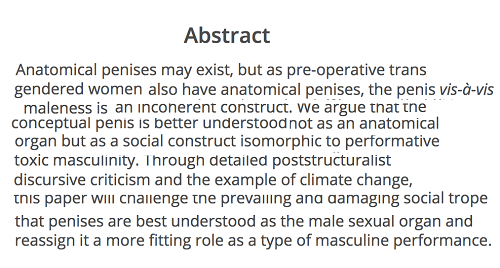
It’s 2:04 am…3:04, really but Daylight Savings Time has fallen…and I can’t sleep. I decided that it must be a guilty conscience for falling so far behind in posting Comments of the Day, so here is one of the more recent ones, Ryan Harkins on the question of whether deliberately fooling academic journals to show how vulnerable they are to  bogus research is ethically defensible. Another COTD will be along on the same post, but this one is by Ryan, on Ethics Quiz: The Good Hoax?:

Other professionals read the articles, and surveys of results are typical to show that there is a body of evidence supporting a particular conclusion. If a bunch of bunk is being passed off as good science, that feeds into further papers and can eventually influence public policy. This is especially true in softer sciences, where results are much murkier than than in the hard sciences, but even the hard sciences suffer from the problem.

The question is, how do you show that there is a problem in the peer review process, and that articles are being discarded because they don’t toe a party line, and articles are being accepted not on their merits but because they do toe the party line? You can’t write a good paper and show bias by having it rejected, because the rejection is supposed to be proof that the paper is bad. But you can deliberately write a bad paper, and if it is accepted, you can call foul because you can show you deliberately put together a bunch of garbage.

Is this ethical? I think it would certainly be ethical if the system were intentionally built so that some people were tasked with creating bogus papers to keep peer-reviewers on their toes. It is sort of like secret shoppers in the service industry. But we don’t currently have this built into the system. Is playing vigilante in this effort unethical, then? Continue reading

Comment Of The Day: “A Sudden Impulse Poll On Cultural Literacy”

To all of those waiting to have their Comments of the Day posted, all I can say is that I’m sorry, and that I’m having trouble getting my own posts up lately. The languishing COTDS will appear in unpredictable order, but they will appear.

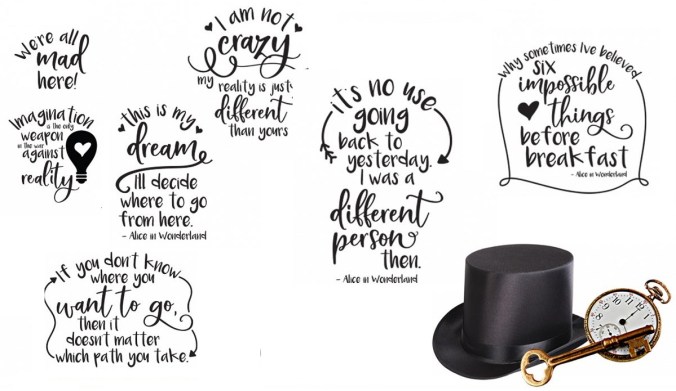
Extradimensional Cephalopod had, as usual, fascinating observations to convey on the question of the importance of cultural literacy I raised based on a reference to “Alice in Wonderland.” I don’t agree with his position–some cultural scaffolding is permanent, and must be—but it’s well worth pondering.

Here is his Comment of the Day on the post, “A Sudden Impulse Poll On Cultural Literacy.”

Incidentally, a majority of those answering the main poll recognized the quotes, which cheered and surprised me. As for the complaint that the second poll was limited to parents, that was the point. Do parents pass along cultural touch points like Lewis Carroll? Do the schools? That poll was for parents.

I’m eventually planning to write an article about this sort of thing. It’s essentially a concern that we’ll all end up like Ozymandias. (Cultural references can help compress concepts into easily transmissible packages, for better or worse, case in point.) For now, since I don’t have much time tonight, these somewhat disjointed thoughts will have to do.

Is the ultimate fate of all classics to become footnote? To a large extent, yes. As Nassim Nicholas Taleb would put it, fame is in Extremistan. For comparison, Mediocristan is the domain of physical properties, which often follow a normal distribution (e.g. most people are average height, and there are fewer and fewer people at heights that vary more and more in either direction from the average). Fame, however, doesn’t do that. Necessarily you have many people who are known by few and the people with the most fame are few in number.

My perspective on this issue is that everything in civilization is a scaffold. It exists to help us to get to the next place, hopefully a better one, and then it is taken down. This includes even memories, since memory is a resource that culture uses and we only have so much memory to go around, at least in our day-to-day lives. What we remember must have some functional benefit, even if that function is nostalgia. We can learn about the past, but only inasmuch as we enjoy it or as it helps us create the future. Its value is considerable, but can be concentrated more efficiently than having everyone know all the esoteric details of it at all times. Anything about the past that doesn’t help us or make us feel anything can be temporarily forgotten until such time as it becomes relevant again (hopefully before it’s too late for us to use that remembered knowledge). Continue reading

Comment Of The Day: “Racist Political Correctness, Casting Ethics, Double Standards, And The Rock”

Yes, this comment has little to do with ethics, but it’s so interesting as a supplement to the main post that it deserves greater circulation.

Here is Pennagain’s fascinating Comment of the Day on the weekend’s post, Racist Political Correctness, Casting Ethics, Double Standards, And The Rock:

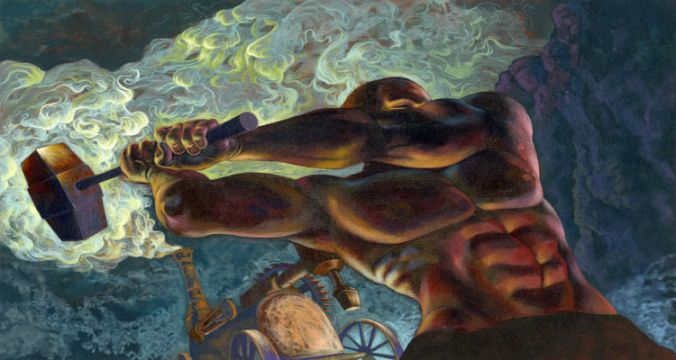
I knew there were at least two versions of the song, “The Ballad of John Henry,” but I’ve so far found dozens more online, most of them having umpteen verses, and a work-song rhythm – the most basic of which my 7-year-old self stomped in that driving stop-rhythm around the classroom (chanting?), with that hammer-driving oomph! at the end of each line, to lyrics like “gonna die with the hammer in mah han’, Lord, Lord”.

For what it’s worth, a “real” John Henry is pretty well authenticated in at least one version of the story, ending fatally at the C&O’s Big Bend Tunnel in Talcott, West Virginia.

From KPBS’ “The African-American Railroad Experience”, built on Theodore Kornweibel’s photographic history: The entire southern railroad network built during the slavery era was built almost exclusively by slaves. Some of the railroads owned slaves, other hired or rented from slave owners [later from contracted freedmen or convict work-gangs]. And. . . women as well as men were actually involved in the hard, dangerous, brutal work. … several of the song versions finish with John Henry telling his wife to pick up the hammer and continue the job.

Negative evidence of Henry’s race would be that none of the many, many verses of the songs (recorded by 38 singers besides Ives) nor folk references – negro dialect aside (arguably stretched to “Suthun,”) – refer to that figure as being other than black. And as a black man, and a real, live “Everyman” working-man’s hero, he is proudly and fiercely claimed by South Carolina, Alabama, Virginia, Georgia, Kentucky . . . and Jamaica. Continue reading

Comment Of The Day: “The Jehovah Paradox Strikes Again!”

I confess, I’m stalling.  I’m really sick of writing about the oozing unethical pustule that is the assault on Brett Kavanaugh, and I’m just as sick of reading wildly irrational justifications for it from once-intelligent and fair people who once were capable of better. It is times like these where I regret my relative insignificance in the nation and the culture. It’s like seeing a crime being committed right in front of me, and knowing that no matter how much I jump up and down, point, yell, and call for assistance, nothing will happen. I know lotsof American feel this way.

I felt like that through all of 2016, now that I think about it.

Luckily,  Ethics Alarms has a backlog of excellent Comments of the Day, including this effort from Steve-O-in NJ, who was writing about  the cnstriction of language and thought in an era where verbal and conceptual taboos are proliferating.

Here is his Comment of the Day on the post, The Jehovah Paradox Strikes Again!:

When sports mascots are considered insulting, and seeing a statue is considered harmful, the idea that even speaking a word is an unforgivable sin is the next logical, or illogical step. Presumably all who are enlightened know which words are considered taboo, and, even when discussing them, know appropriate alternatives. If you know them, you need to use them, or risk being labeled someone who is unenlightened. “Nigger” is simply a word that’s not permitted under any circumstances.

The ancient Greeks referred to the mythical god of the dead as Plouton (the rich one) or Clymenus (the notorious one) because they feared that if they actually spoke his given name of Hades they might attract his attention and he might send for them. In one city the fire department’s engine companies are odd numbered by battalion, so in the Second Battalion you have Engine 21, 23, etc. up to 27, but in the First it goes Engine 11, Engine 15, etc., because 13 is considered bad luck. Growing up I bet many of us begged off the dare to light a candle before a mirror and say “Bloody Mary” three times, because the thought of the consequences was just too awful.

Come on here. Objectively almost nobody believes in the Greek gods anymore, the idea that a fire engine would be in greater danger simply because of the number it bore is pretty silly, and no evil ghost is going to leap out of a mirror no matter what we do. Yet we have to actually think about this, because we learned these superstitions as kids. We got brainwashed, and now its hard to get it out of our systems. Continue reading

Comment Of The Day: “Morning Ethics Catch-Up, 8/22/18: Manafort, Cohen, and Mollie”

No, I wasn’t just looking for an excuse to post a photo of Stormy. This is an ethics blog!

Chris Marschner authored a Comment Of The Day this morning, which reminded me that another of his Comments Of The Day had been waiting on the runway for almost a month.

I’m glad of this, because the topic has nothing to do with the Kavanaugh hearings. Chris was writing about the then-popular impeachment plan–Plan K-— raised by Michael Cohen’s fixing activities. Would I rather think about Michael Cohen or Christine Blasey Ford? Would I rather be kicked in the head by a Clydesdale or a musk ox?

Here is Chris Marschner’s Comment of the Day on the post, Morning Ethics Catch-Up, 8/22/18: Manafort, Cohen, and Mollie:

In your post regarding Gulliani’s quote “the truth is not the truth.” I opined that the truth was what one wishes to believe.

The entire question of whether a payment made by or on behalf of another to obtain an NDA for acts that may be embarrassing is an election law violation begs the question regarding taxpayer funded settlements made to congressional staffers to settle harassment claims by members of Congress. These settlements appear to have similar codicils for non disclosure for the express purpose of avoiding personal embarrassment that could influence their reelection bid.

Michael Avenatti claims his fees are being paid through a crowdfunding site but there appears to be no way to determine if much of those funds that flow through the site are from 10,000 unique people or one person or group. For all anyone knows large sums could becoming from Tom Steyer, George Soros, or even the Russians. Mr. Avenatti does not publicize the fact that he claimed to be the originator of “The Apprentice” and sued Trump years ago. He also does not publicize the fact that he is closely tied to Rahm Emmanuel and the Obamas.

Continue reading

LATE Comment Of The Day: “Ethics Dunce: MSNBC’s Rachel Maddow”

My inexcusable failure to previously post this Comment of the Day by Curmie, originally offered nearly two months ago, is especially bad because of the rapidity with which the news media concocts, hypes, or otherwise featured new tangential assaults on President Trump every day. I had forgotten about this one: the White House posted an incorrect version of the Helsinki press conference transcript. Boy, that seems like a hundred scandals, real, manufactured, and imagined, ago!Allow me to refresh your memory and mine:

MSNBC hostess Rachel Maddow, along with many of her fellow journalist members of “the resistance,” pounced on the mistake, accusing the White House of intentionally editing the transcript. Then, after the Washington Post explained  that the omission was not the fault of the White House, Maddow, who is often cited as a trustworthy left-wing journalist simply because she is so much less flagrant than her MSNBC colleagues, denied that her reporting was incorrect, saying,

“This is one possible explanation for why the White House transcript & video from Helsinki doesn’t include Putin saying he wanted Trump to win. But Putin really did say that in Helsinki…..and the White House transcript & video still does leave it out. WaPo now says it has updated its own transcript. Will the White House? After more than a week of reporting on the bad transcript (see link below)…

(1): White House has let it stand uncorrected, and

(2): POTUS now asserts that Putin wants *Dems* to win, not him.

I love WaPo with the heat of 1000 suns, but nothing here from WaPo disproves our report.”

 Washington Post reporter Philip Bump, quickly pointed out Maddow’s dishonesty, writing,

“Your report asserts that the video was edited and implies that the incomplete transcript was posted intentionally. There’s no evidence for the first point and my piece provides context to suggest that the second was unintentional.”

With that background, here is Curmie’s much delayed Comment of the Day on the post, Ethics Dunce: MSNBC’s Rachel Maddow. He also gets extra points for the baseball reference at the end…

Apparently I’m one of the few lefties who comment here even occasionally these days. I trust I will not become an “exile.”

This story becomes an intriguing example of the partisan fragmentation of the country that has been happening for about a generation. Some people will believe everything Rachel Maddow (or Sean Hannity, or…) says; some will believe nothing. Too few will parse the content.

Maddow’s allegation that someone intentionally edited the tape/transcript is unsupported by facts, and her smug reassertion of a discredited argument is, to say the least, problematic.

But I’ve written on my blog about two variations on what I call the Christine Vole effect, named for the character in the Agatha Christie short story/play and subsequently Billy Wilder movie who intentionally allows her absolutely truthful testimony describing her husband’s guilt to seem instead to be the vengeance of a jealous wife. The jury was influenced by the implosion of her testimony, which was, by the way, unnecessary to the prosecution’s case; they acquit.

The variation, as we saw often in the likes of James O’Keefe, and here with Maddow, is the unintentional corollary: by making an extreme statement, the speaker undermines the rest of an otherwise persuasive argument. Continue reading

Comment Of The Day: “Ethics Quiz: The ‘Racist, Sexist’ Cartoon”

Occasionally I request a comment from a regular reader who has special expertise; for example, I have asked “Curmie,” a drama teacher, director and superb blogger when he has the time, to weigh in on theater and casting ethics controversies. (And I just remembered that the last time he commented, he submitted a Comment of the Day that I neglected to post! Arghhh! I’m sorry, Curmie…it will be up today.) This time, the surprisingly lively debate over the allegedly racist Serena Williams cartoon prompted me to send out a Bat Signal for the reactions of King Kool, aka Jeff H., who is a long-time reader and a cartoonist himself. (His submission for “Everybody Draw Muhammad Day” periodically appears in the Ethics Alarms header.) He answered the call, and did so superbly.

There have been some new developments. The cartoonist, Mark Knight, has suspended his Twitter account because of all the hate coming his way.  Knight said he was amazed at the reaction to his drawing. “I drew this cartoon Sunday night after seeing the US Open final, and seeing the world’s best tennis player have a tantrum and thought that was interesting,” he said. “The cartoon about Serena is about her poor behavior on the day, not about race.”

Popular Australian Broadcaster Neil Mitchell, among others, defended Knight, saying, “This shows an awful misunderstanding of Mark Knight and this country. I looked at that cartoon and it didn’t even cross my mind it was about race. It was a sports bully, a petulant child throwing a tantrum about losing…I drew her as an African-American woman. She’s powerfully built. She wears these outrageous costumes when she plays tennis. She’s interesting to draw. I drew her as she is, as an African-American woman.”

As I have explained elsewhere on the Ethics Quiz thread, the reason I made the issue a quiz rather than an ethics  position post is that Knight’s  cartoon struck me as racially provocative.

I believe it is racially insensitive, but I am not certain that in the field of opinion cartooning racial sensitivities should be ignored. If a white, male player who behaved like Williams—it is astounding that so many pundits are defending her—a mocking, tough cartoon, showing ugly conduct  by portraying its perpetrator as symbolically ugly would be appropriate. I do  not think it is fair or healthy for special immunity to be granted to a similarly misbehaving player, especially a repeat offender like Williams, because of her race and gender. This why my vote in the poll accompanying the quiz was the somewhat tongue-in-cheek, “Whatever it was, she deserved it.” 

That response has gleaned 13% of the votes, with over 72% voting for the position that it’s just a cartoon. Against the 85% that are inclined to support Knight (all old white men who are constitutionally unable to recognize sexism and racism, according to one unbiased, unbigoted commenter), 14% agree that the cartoons is “racist.”

To its credit, Knight’s paper, the Herald Sun, took the remarkable step of devoting its entire front page to Knight’s defense, which you see above.

Here is Jeff H.’s Comment of the Day on the post, Ethics Quiz: The “Racist, Sexist” Cartoon:

One of the reasons I didn’t pursue doing political cartoons is because… no matter how much I practiced at it, I am absolutely awful at caricature. I tried drawing John Kerry dozens of times, and could never get it down. (Not that it ended up mattering.)

The image of Serena Williams has been called ‘something out of 1910,’ which I think it an exaggeration. However, the large lips, even the ponytail pointed straight up… to me, it does invoke some insensitive imagery of old caricatures and similar things. Maybe even the pose itself, her being completely in the air, maybe that is bothering some people for possibly comparing her motion to that of primitive man, or even that particular animal that racist jerks compare persons of color to. But that might be a stretch.

Again, that’s just my interpretation. I am not ascribing blame or intention. All I’m saying is… if the cartoon looked indubitably like Serena Williams, people would have a lot less to complain about, even if you could focus on part of it and say it parallels older racist art.

If it were me drawing this cartoon, I would have had Serena facing away from the ‘camera’ if I couldn’t make it look like her. The whiny facial expression isn’t important visually. We see her stomping the racket to pieces and the pacifier. The intention is clear. And thus, now that face is all we’re talking about. Continue reading

Comment Of The Day: “Morning Ethics Catch-Up, 8/22/18: Manafort, Cohen, and Mollie” (#2)

This is the second Comment of the Day on this post, also item #2, regarding the Michael Cohen machinations. The news media is doing a negligent job examining exactly what’s going on so that the average voter with an IQ in three figures has a fighting chance of understanding it. Greg’s comment,  like Michael Ejercito’s before him, helps explicate what the politicized and biased profession that we foolishly trust to inform us does not.

Here is Greg’s Comment of the Day on the post, Morning Ethics Catch-Up, 8/22/18: Manafort, Cohen, and Mollie:

I read the plea agreement and was mystified. It has been known for months that the National Enquirer paid Woman #1 (I forget her real name) for the exclusive rights to her story and that Cohen paid Woman #2 (Stormy Daniels) for a non-disclosure agreement. Democrats have been claiming that these hush money payoffs were illegal campaign contributions, but that theory is tenuous.

The mystifying news in the plea agreement was that before the election, Cohen bought the rights to the non-disclosure portion – not the story rights, which the Enquirer kept – of the Enquirer’s agreement by paying the Enquirer’s back their entire cost for the full agreement. Then after the election, Cohen sold the Enquirer the rights to the non-disclosure agreements of both Woman #1 and Stormy Daniels at his own cost, plus a tax gross-up payment that doubled the price to the Enquirer, plus a substantial fee for himself.

Has anybody offered an explanation for this odd series of payments? Why did the Enquirer sell the Woman #1 rights to Cohen in the first place, since buying them back with a tax gross-up made it much more expensive to them than just keeping the rights to the story? Why did they also buy Stormy Daniels’ NDA from him, again along with a tax gross-up? Why did they pay Cohen a big fixer fee for the trivial amount of work that he performed in buying and selling back the NDA rights? I haven’t yet thought of a good reason why they would do that. The plea agreement says that the buybacks were prearranged before the election, which could arguably be a campaign violation, rather than after the election, which certainly would not be a campaign contribution (although of course we have only Cohen’s word for that). But it never offers any purpose for the buybacks were arranged in the first place. Continue reading

Comment Of The Day: “Morning Ethics Catch-Up, 8/22/18: Manafort, Cohen, and Mollie” (#2)

Kudos to Michael Ejercito for flagging an excellent discussion of how election finance laws and the Cohen case intersect. He selected the key section that constitutes the bulk of his Comment of the Day, but by all means, read the whole piece at the link, including this:

The best interpretation of the law is that it simply is not a campaign expense to pay blackmail for things that happened years before one’s candidacy—and thus nothing Cohen (or, in this case, Trump, too) did is a campaign finance crime. But at a minimum, it is unclear whether paying blackmail to a mistress is “for the purpose of influencing an election,” and so must be paid with campaign funds, or a “personal use,” and so prohibited from being paid with campaign funds.

Normally, given this lack of clarity, we would not expect a prosecutor to charge those involved with a “knowing and willful” violation, which means a criminal charge with possible jail time. Typically, at most a civil fine for an unintentional violation would be the response. But prosecutors may be using a guilty plea from Cohen as a predicate for going after the bigger fish, and our simultaneously vague, sometimes contradictory, and incredibly complex campaign finance laws give them that opening.

Of course, it is unethical for prosecutors to use the law to “go after” any citizen, never mind an elected President.

Here is Michael’s Comment of the Day on the post, Morning Ethics Catch-Up, 8/22/18: Manafort, Cohen, and Mollie:

http://reason.com/archives/2018/08/23/trumps-campaign-finance-catch-22

“In the Cohen case, the prosecutors hung their hat on FECA’s definition of “contributions” and “expenditures” as anything spent or contributed “for the purpose of influencing any election.” That’s a pretty broad definition, and certainly it may have been thought that paying hush money to Trump’s old memories would “influence an election.” Thus, they argue, payment of the hush money was subject to limits on the size of contributions used to pay, could not include corporate funds, and had to be reported to the FEC.

“But there is another provision in the statute that prohibits a candidate from diverting campaign funds to “personal use.” “Personal use,” in turn, is defined as any expenditure “used to fulfill any commitment, obligation, or expense of a person that would exist irrespective of the candidate’s election campaign.” These may not be paid with campaign funds, even if they are intended to influence the election. Continue reading

Comment Of The Day: “Sunday Ethics Reflections, 8/12/2018: Division And Divisiveness”

Yes, but you have to understand the context…

Well, that was embarrassing. The following epic comment on divisiveness was stuck on the tarmac for a few days, and then I compounded the indignity by quoting a lesser pundit on the same topic in the previous post. If it’s any consolation, Jonah Goldberg gets more web traffic than I do, too. There is no justice.

Here is Chris Marschner’s excellent Comment of the Day on “Sunday Ethics Reflections, 8/12/2018: Division And Divisiveness: 

“Keep being intentionally divisive, and eventually you’ll get division.”

No truer words were ever spoken.

On the anniversary weekend of the incident in Charlottesville the media hammered home the point that I am not worthy to live in their civil ideal society. Why do I interpret their coverage this way you may ask? Perhaps it is because I reject the notion that any person’s opinion should be silenced and I stand with those that reject the proposition that select populations should have the ropes of past injustice be perpetually hung around the necks of those that have neither the personal history, desire nor ability to economically discriminate or oppress anyone. I have no problem with refutations of opinions – I would encourage them – but my tolerance for those that suggest that only they have the right to determine what is good and proper is waning; especially in light that those people often cast wide nets in their sanctimony; which is no different than the behaviors of others they claim results in their oppression.

Why would many marginalize me for my belief that I simply do not believe that because one gender or race is in greater or fewer numbers relative to their overall population than another in a given population it is prima facie evidence of discrimination and bias. For if I did, I would have to believe that males are discriminated against in teaching positions within the primary and secondary grades, in most health occupations today, and within the administrative support positions in many public and private institutions. I would also have to believe that white sports team owners discriminate against whites because they are under-represented on most teams with the exception of perhaps hockey and soccer. Numbers in any occupation are a function of human choices and capabilities. Even if one feels fully capable of running a fortune 500 firm as the CEO, one’s choice is the primary gatekeeper because if one never applies to reach that goal then only those that do stand a chance.

Bias is only ever seen in others and not in themselves.

No group sees bias when deriving benefits of bias as a group. For example, women see no bias when they are treated as superior care-givers and thus courts favor them more frequently in child custody cases. No one sees the abject bias in the violence against women act. Why is that? What makes an assault on a woman worse than an assault on anyone for that matter? I might be able to see different charges based on differential physical stature but not on gender. Why not a violence against the frail and weaker act? I see no outcry from women and minorities when most of the SBA programs favor women and minorities even though the data show that they are creating more new businesses than their white male counterparts for almost the last twenty years. There are no special programs to increase male enrollment in post secondary education even when their numbers are being outpaced by female enrollment and graduations. No one is running to change the selective service rules that create lifetime bars to federal employment, education grants and other federal benefits for failure to register for the draft by age 26 even though women fought for the right to be in forward combat so that promotional opportunities can be afforded to them. Commerce department data show that women control 60 percent of the wealth in the U.S. and 80% of all Consumer spending. One can see the evidence of this in the thematic content in most mass media advertisements. Each of us sees bias through our own lens. Therefore, if a group of white men protest what they think is bias against them that is their right. We can reject or accept their arguments based on the facts presented. When we begin to go down the path of silencing critics we find objectionable we will lose the right to petition for redress of grievances.

Is there any wonder why a growing number of white males may feel less sympathetic to advancing the current notions of progressive policies when the noose of a legacy perpetrated by others is believed to be unfairly tightened around their necks today; which brings me back to Charlottesville. Continue reading