Prison Labor Ethics

Prison labor is an ethics issue that I have never considered before. Apparently that’s true of a lot of people. In Massachusetts, an Amherst-Pelham Regional High School  student named Spencer Cliche (great name!) was challenged to undertake an investigative journalism project, He eventually published a 3,000-word exposé  on prison labor topic in his school’s newspaper.

The high school, it seems, had contracted with a local prison to re-upholster its auditorium seats,  taking its low bid for the job over another bid by a local business. As a result of the uproar sparked by Spencer’s work, the school superintendent issued a statement to school staff members promising never to contract with the prison again.

It does not appear, however, that this decision was based on  careful balancing of the ethics issues involved, but rather, as usual, a lazy capitulation to avoid an emotion-based controversy.

The local  newspaper, The Daily Hampshire Gazette, eventually picked up the story. as did a local radio station that featured Cliche’s report as the “question of the morning.” Then the issue was raised by The Marshall Project, a prison and justice system reform project.

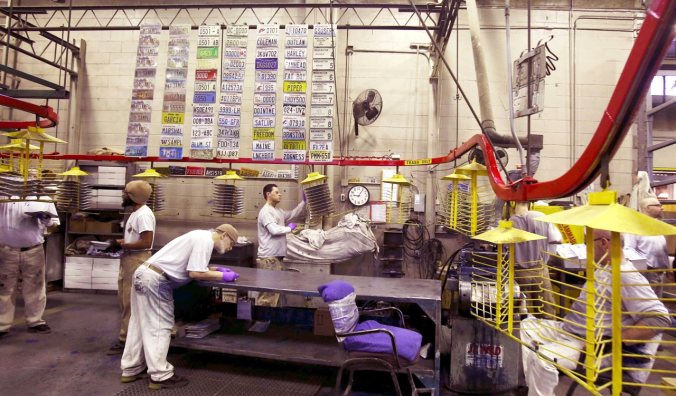
In addition to routine prison labor, which is usually handled in a prison facility, there are also state-run “correctional industries,” such as MassCor, which arranges for inmates to do work for  schools, nursing homes, towns, non-profits and other institutions. Obviously, their costs are lower than competing businesses, because prisoners earn less than a dollar an hour on average for their labor, according to Prison Policy Initiative.

Thus we have multiple looming ethics issues, among them…

  • Is it ethical to force prisoners to work at all?

I don’t see how an honest argument can be formulated that argues that it is not. Work organizes the time and attention of the jailed, keeps them occupied, minimizes boredom and the opportunity to get into trouble. Social justice advocates seem to think that prisons should be like summer camps, with sports, crafts, and other pleasant diversions. That approach is both expensive and undeserved. Prison, among other things, is and ought to be punishment.

  • Is it ethical to pay prisoners less than the minimum wage? Isn’t forced labor with no compensation or minimal compensation virtual slavery?

Convicted prisoners forfeit most of their constitutional rights. Some forms of forced labor might rise to the level of cruel and unusual punishment, and prison labor is ripe for abuse (just ask Andy Dufresne, the protagonist of “The Shawhsank Redemption”), but criminals are a burden on society, and warehousing them is expensive. There is nothing unethical about requiring those who have imposed that burden to help alleviate it.

  • Are prison-based businesses like MassCor unethical?

 Cara Savelli, a spokeswoman for the Massachusetts Department of Correction interviewed by the student journalist, defended the program, saying,
Continue reading

Independence Day Morning Ethics Warm-Up, 7/4/19: Jefferson, Amash, Snyder [UPDATED]

Happy birthday, USA!

1. Thomas Jefferson’s Day. Since Nike chose this time to announce that it was ashamed of the Revolutionary War flag, and Charlottesville similarly picked this week of all weeks to distance itself from it most famous and accomplished son,  it is appropriate to recall why Thomas Jefferson is the single American who should be most honored on the Fourth of July.

At the Foundation for Economic Education site (excellent site, by the way), the organization’s president, Lawrence W. Reed, offers a cogent rebuttal to those who would metaphorically (or literally) tear down Jefferson’s memorials because he could not find it in himself to stop practicing slave-holding while publicly making the case against it. Reed writes in part,

More than any other man or woman, July 4 belongs to Thomas Jefferson. As the principal author of the charter that proclaimed America’s independence and the reasons that impelled it, his spirit and his words are essentially what we celebrate on this day.

That such praise is not deemed “politically correct” in some quarters and may even evoke hostility in others is not a pleasant commentary on the state of current political dialogue. A kind of intertemporal bigotry is loose in the land. It prompts the virtue-signaling self-righteous to judge people of the past against the conventions of today. Isn’t it strange that evolution is accepted as natural in the biological world but often not in the realm of human thought?

…[H]umans didn’t support slavery one day and then oppose it when they all woke up the next. Some people never saw the light; others were against it from the moment it first entered their minds. Millions in the late 18th and early 19th centuries were somewhere in between, and lots of them evolved on the issue over the course of their lives. In other words, they learned and they changed. That’s how humanity progresses.

Thanks to visionaries like Jefferson, Americans were forced eventually to end the contradiction between the words of the Declaration of Independence and the reality around them. Jefferson’s own words were evoked to accomplish that.

Historian Jim Powell, in his FEE article of July 1, 1995, titled “Thomas Jefferson’s Sophisticated, Radical Vision of Liberty,” addressed the slavery issue thusly.

“Though Jefferson had personal failings—in the case of slavery, a monstrous one—they don’t invalidate the philosophy of liberty he championed, any more than Einstein’s personal failings are evidence against his theory of relativity. Moreover, every one of Jefferson’s adversaries, past and present, had personal failings, which means that if ideas are to be dismissed because of an author’s failings, Jefferson and his adversaries would cancel each other out. When historians finish dumping on Jefferson, they still won’t have cleared the way for Karl Marx or whomever they admire. Jefferson’s accomplishments and philosophy of liberty must be recognized for their monumental importance.”

So yes, Thomas Jefferson wasn’t perfect. And neither are his critics. They should hope that across their entire lives, they might accomplish for liberty what Jefferson achieved in a few weeks of literary genius. He marshaled the English language on behalf of ideas, and they sparked liberty’s loudest thunderclap in human history….

2. Yes, Rep. Amash is an Ethics Dunce. One reason the Tea Party movement ran out of gas is that the elected officials who rose to power under its banner were mostly unqualified, doctrinaire, simplistic grandstanders who seemed to think bumper-sticker slogans are a substitute for reasoning. Amash is typical of the breed. He recently gained the praise of the Trump Deranged by declaring that the Mueller Report proves that the President engaged in “high crimes and misdemeanors” (it doesn’t, but any effort to undermine President Trump qualifies as heroic  to “the resistance”).  This predictably attracted a furious backlash in his district and his party, and Amash’s prospects for re-election in 2020 now appear to be about on par with John McCain’s.

His solution? Amash has declared that he is “disenchanted” and “frightened” by party politics, so he is leaving the Republican Party and becoming an Independent.

Party flipping mid-term is per se unethical, as I have pointed out here before.  He has a contract with his voters to serve in the party whose banner under which he presented himself for public service, and the party that helped fund his campaign. One of the few party-switchers in political history who did the deed ethically was former Texas  Senator Phil Gramm. [CORRECTION NOTICE: I had originally written “the late” here, because I was sure Gramm was dead. He’s not. I’m glad.] From my post about West Virginia’s Governor Jim  Justice, who switched from Democrat to Republican in 2017…

Just days after  he had been reelected to a House seat  as a Democrat in 1982, Gramm was thrown off the House Budget Committee in a dispute with party leadership. In response, Gramm resigned as a Representative, changed parties, and ran for his old seat as a Republican in a special election. He won easily, and  was a Republican ever after. That’s the honorable way to do it.

Rep. Amash isn’t honorable. He isn’t ethical. And after Election Day 2020, he won’t be in Congress.

Good. Continue reading

When Bad Ideas Grab The Culture By The Throat: San Francisco Gives A Demonstration

In my one lucky private audience with genius and futurist Herman Kahn, he mused about how societies periodically forget important lessons of conduct that had been that absorbed by the culture over decades or even centuries. The result, he said, can be disastrous, even fatal to a civilization.

At the time he was talking about the Sixties-sparked cultural amnesia about the reasons sexual promiscuity and having children out of marriage were societal poison–forgetting THAT has worked out well, don’t you think?  Yet I have thought about Kahn’s observation a lot lately, as for the second time in my life the nation I live in appears to be suffering from a cultural nervous breakdown.

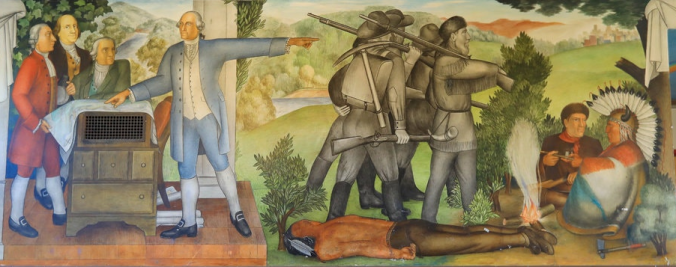
As toxic as it is, the embrace of historical airbrushing is far from the most dangerous of the  examples of this phenomenon that threaten the U.S. today, but it is one of the flagrant. Not for the first time, San Francisco is giving us a vivid demonstration of what happens when, as Herman put it, “whole cultures go stupid.” If the right lesson are learned  before it is too late, maybe the ultimate effects will be positive.

I am not optimistic.  After all, San Francisco’s peculiar version of social justice has led to a city culture that regards human feces on sidewalks and public places as acceptable. Continue reading

Morning Ethics Warm-Up, 6/27/2019: Illegal Immigration Trainwreck Edition

Good Morning!

Once again I am trying to get a post up while furiously preparing for a program, this time a super-sized version of “Ethics Rock Extreme” for a federal agency, in collaboration with the marvelous Mike Messer, my rock/country/pop singer and guitar virtuoso partner of almost 20 years….I’ll begetting to ethics observations on last night’s debate when I return, if I return.

1. “Think of the children!” porn.  I’m sure you’ve seen this…

…and have read or heard some of the shirt-rending and hair-tearing prompted by the viral photograph of a drowned “migrant” and his infant son. The injection of pure, unreasoning emotion and sentimentality into the illegal immigration debate is cynical but predictable, and this is just an escalation of the media campaign to frame all illegal immigration in romantic and sentimental terms.

The photo should change nothing. The death of an infant irresponsibly and recklessly taken on a dangerous journey (as well as an illegal one) is the fault of the parent who brought him, not the Presient of the united States, not ICE, not immigration officials. Democrats like Chuck Schumer who exploit such a photo are unconscionable. “Seeking a better life” is not now now has ever been a justification for breaking the law. The photo of an adult and an infant who die in the course of a dangerous attempt to break U.S. laws should prompt pity for the child and anger at the adult, no more, no less.

Those taking up the “Think of the children!” cry need to be asked if their solution is to provide ferry rides across the Rio Grande for children who are forced to accompany their parents in attempts at illegal immigration. Or U.S. lifeguards stationed on the shore, perhaps. Continue reading

Morning Ethics Warm-Up, 6/25/2019: The Greatest Morning Warm-Up Ever Blogged!

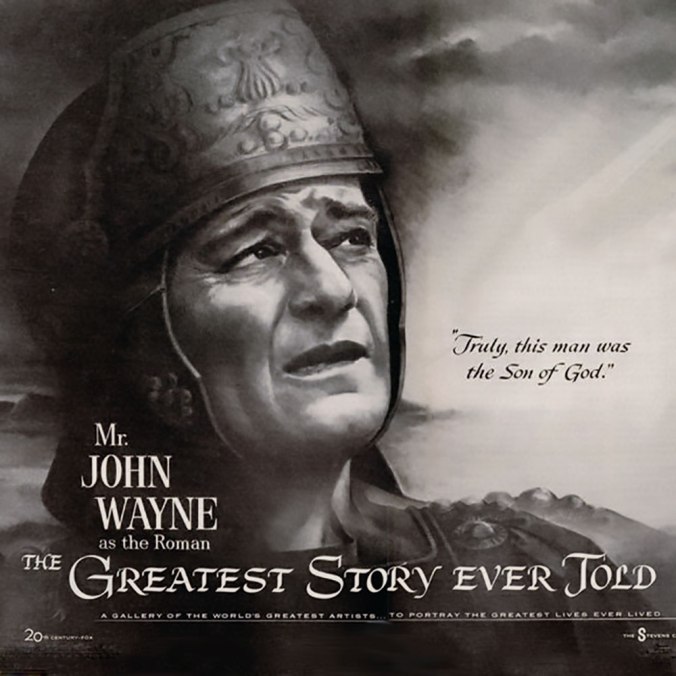
The movie “The Greatest Story Ever Told” was far from the “Greatest Movie Ever Made,” as the Duke’s casting as a Roman soldier demonstrated vividly.

OK, not really, but it better be good after yesterday’s potpourri never made it off the launch pad due to a series of unfortunate events. I’m using “The Greatest Legal Ethics Seminar Ever Taught!” as a title for an upcoming program I’m writing now, so the rhetoric is on my mind. My teaching partner complained that the title really puts the pressure on us to be outstanding. And that’s the point…

1. Harvard’s new President punts. Of course. The Harvard alumni magazine this month was notably light on criticism of the Ronald Sullivan fiasco, with only two critical letters on the topic, one of which made the suggestion that it might be a “conflict of interest” for someone who is defending a #MeToo villain to also serve as a residential faculty member (what was previously called a “House Master,” but that triggered some delicate students who felt it evoked slave-holders. No really. I’m serious. I don’t make this stuff up. Organizations capitulate to these complaints now, like Major League Baseball changing the name of the “Disabled List” because disabled rights activists complained). It is assuredly NOT a conflict of interest, though, by any definition but an erroneous one.

Deeper in the magazine, we learn that new President of Harvard, Lawrence Bacow, was asked during a faculty meeting about his views on the episode. His response was essentially a Harvard version of Ralph Kramden’s immortal “huminhuminahumina” when “The Honyemooners” hero had no explanation for some fiasco of his own engineering. Bacow said he would respect “the locus of authority,” meaning College Dean Rakesh Khuratna, who fired Sullivan after joining in student protests over the law professor and lawyer doing exactly what lawyers are supposed to do.

So now we know that, not for the first time, Harvard is being led by a weenie. What should he have said?  How about “I am firing Dean Khuratna, and offering Prof. Sullivan his position back. Any Winthrop House students who feel  “unsafe” are welcome to transfer to Yale”?

Most news media gave inadequate coverage to this story, and none, in my view, sufficiently condemned the university’s actions or the un-American values they represent. At least the New York Times is keeping the episode before its readers by publishing an op-ed by Sullivan titled Why Harvard Was Wrong to Make Me Step Down.”

2. Insuring the life of a son in peril. Is this unethical somehow? It honestly never occurred to me. When I had to give a speech in Lagos, Nigeria, one of the most dangerous cites on Earth, my wife tried to take out a policy on my life with her as the beneficiary. I thought it was a good and prudent idea. But in Phillip Galane’s “Social Q’s” advice column, a son writes that he is still angry, decades later, that his late father did this , writing in part, Continue reading

Saturday Ethics Catch-Up, 6/22/2019: “The Rifleman” Whiffs. A Paralegal Spills, The Commies Like Democrats, But Students Hate Pioneers

I am so, so far behind, both here on Ethics Alarms, and elsewhere, like prepping for some upcoming seminars, writing new programs, and trying to get the business and home budgets to work. Last week involved the car dying, getting a new one, enduring a six hour, 17 inning loss by the Red Sox, some lingering new computer glitches, and a major video shoot for which I had to write and refine the script, acquire the props and costumes, and rehearse the actors, then assist the team of seven who handled the shoot itself, all while being sick, and progressively exhausted. (This project would not have all happened without the brilliant and tireless work of my business partner and love of my life, Grace.)

Ethics Alarms was lower on the priority list this week than I would have liked it to have been. I’m sorry.

1. “The Rifleman” Ethics: As I have mentioned here before, “The Rifleman,” the 30 minute TV Western drama, starring Chuck Connors as Lucas McCain that ran from 1959-1962, was all about ethics, with almost every episode teaching an ethics lesson to the Rifleman’s son Mark, played by the charming juvenile actor Johnny Crawford.  I just watched an episode from the show’s final season that I hadn’t seen before. Guest-starring Mark Goddard (best known as the hot-headed young co-pilot in the original “Lost in Space” on ABC), the story involved a charismatic young huckster whom Mark admires but his father distrusts. This causes rare friction between father and son. Eventually, Lucas is proven right: the young man is a liar and a crook who was taking advantage of Mark’s guilelessness.

Mark shamefully but manfully tells his father, “I apologize for being wrong.”

NO! One shouldn’t apologize for being wrong. One  has an obligation to apologize for doing wrong, which includes making a bad decision because of laziness, carelessness, poor reasoning, inadequate analysis, or through some other failing. There is no shame or blame in being wrong in the kind of situation laid out in the episode, however.

Until the final moments, the audience couldn’t tell whether this would be one of the episodes where Chuck screws up, with the lesson to Mark being, “Jumping to conclusions and judging strangers harshly before you know anything about them is unfair, Mark. You were right. I’m proud of you.”

In fact, after Mark apologized, I expected his father to come back with exactly what I just wrote. This was moral luck: Mark had nothing to apologize for.

Boy, I’m never going to catch up if  I let issues jump in line like that… Continue reading

Last Resort Ethics Catch-Up, 6/19/2019

Desperately trying to salvage the day with the next one looking worse, and a lot of important ethics matters being swept toward the falls, were they risk being swamped by rapidly moving events…

1. Great sequence, unethical to make it…Not only was D.W. Griffith a film pioneer and a racist, he was also quite mad. If you haven’t see this sequence from D.W. Griffiths’ “Way Down East,” you must. That’s Lillian Gish on the ice floe, and actor Richard Barthelmess trying to rescue her for real. It was  shot on a frozen river as the ice broke up,  and Gish was really headed over the falls, though they were only a few feet high.  No stunt actors were used; Gish’s hair froze and she lost feeling in her hand from the cold. Her right hand was never quite right after that.

Things like this are what made actors’ unions necessary.

2.  What a mess.  The President’s Secretary of Defense nominee, Patrick Shanahan, resigned from the Acting-SOD role and removed his name from consideration in order to keep his family from being dragged through some awfully ugly mud, very little of which, it seems was of his making or germane to his qualifications for office.

Before their divorce, Shanahan’s ex-wife was arrested after punching him in the face; after the divorce, his son was arrested after attacking and nearly killing his mother with a baseball bat.  The Waltons this wasn’t. Shanahan tried to defend his son after that episode, arguing in a message sent to  his ex-wife’s brother  that his son had acted in self-defense and writing…

“Use of a baseball bat in self- defense will likely be viewed as an imbalance of force,” However, Will’s mother harassed him for nearly three hours before the incident.”

It was expected that Democrats would weaponize the memo against him in hearings, #MeToo-style.

Shanahan told  The Washington Post  that he wrote the memo in the hours after his son’s attack on his ex, before he knew the full extent of her injuries, to prepare for his son’s initial court appearance. He said  never intended for anyone other than his son’s attorneys and his brother-in-law to read it, but, of course, by showing the message to his brother-in-law it was no longer confidential.

Somehow, in a civilized culture, private tragedies like these should not become an impediment to public service. Yet it is hard to imagine how Shanahan thought it would not, since this is not a civilized political culture. Continue reading

Ethics Quiz: The Revoked Harvard Acceptance

Kyle Kashuv is the  Parkland, Florida student who bucked the trend and took the side of the Second Amendment while his fellow students were being hailed as moral exemplars for attacking the NRA and touring the country as vocal and self-righteous anti-gun activists.  While David Hogg and the rest became go-to guests on CNN and MSNBC’s talking head shows, Kashuv  launched a career as a junior conservative pundit, hanging out on Fox News.  Harvard College, which never found a young celebrity it didn’t want to recruit as long as he or she could spell C-A-T, accepted him for its 2023 Class.

Then some text  messages using racial epithets and expressing anti-minority sentiments that  he exchanged with other Marjory Stoneman Douglas High School students months before the massacre “surfaced online.” That means some of his classmates who don’t like his non-conforming politics decided to sabotage his academic aspirations.

Harvard contacted Kyle and demanded that he explain himself.  Kyle resorted to the old “that’s not who I am” trope so well-worn by celebrities and sports figures who have faced public relations crises created by social media posts they made when they were nobodies with a handful of followers. Kashuv’s problem is that in those cases, an adult was saying that he or she was “not the same person” as the foolish child from the misty past, while in his case, he is disavowing who he was just two years ago. Continue reading

The Constitution, Law, Rationalizations And Ethics—One Of These Things Is Not Like The Other, I: The University Of Houston Steals A Photo

Two recent cases illustrate how law and even Constitutional law can be perverted toward indefensible ends if compliance is the only objective, and ethics are left out of the equation. The first case comes to us from Texas, University. of Houston System .v.Jim Olive Photography.

Houston photographer Jim Olive  discovered during an online check of his copyrighted works that the  University of Houston had appropriated one of his photographs and was using it extensively in its  web and print promotional materials. It was an overhead, aerial image of the City of Houston at dusk in 2005 that Olive went to great expense and effort  to produce.  He rented a helicopter, hired a pilot, and utilizing special photography equipment, suspended himself from the helicopter with a harness.

The university admired it, and found the shot ideal for its purposes, so it  downloaded the photo from Olive’s stock library, removed the copyright markings, and did not credit him when they used it. Olive sent the school a take-down letter and a bill, and the university refused to pay. Then he sued, but the university responded  that it has sovereign immunity, and can’t be sued, because he isn’t a citizen of Texas. The Eleventh Amendment reads in part,

The Judicial power of the United States shall not be construed to extend to any suit in law or equity, commenced or prosecuted against one of the United States by Citizens of another State, or by Citizens or Subjects of any Foreign State.

The photographer had no right to sue under the U.S. Constitution unless the school waived its sovereign immunity or the act of using the photograph constituted a “taking” of property, the University’s lawyers  argued. When the trial court sided with Olive, the University appealed.

The Court of Appeals has ruled against Olive, declaring  that the school’s actions wasn’t a “taking.” Not only can’t Oliver sue to be paid for the use of his photograph,  he will have to pay the university’s legal costs.

“It just doesn’t seem fair to me,” says Olive.  I’d say his instinct is accurate, but this is the law: fairness is beside the point. To make the ruling even more disturbing from an ethics perspective, the University has a page on its site directing readers to  report copyright infringements – and also to request permission to use UH intellectual property, like the photograph it stole from Jim Olive,

Nice. Continue reading

Morning Ethics Warm-Up, 6/17/19: Abusers, British Morons, O.J., And A Commie

Good morning.

1. Update! The teachers and the principal responsible for the cruel “award” for the autistic boy (discussed here) are in the process of being fired.

Good.

2. This is what happens when a country doesn’t have a First AmendmentA law goes into effect in Great Britain making it illegal  for advertisements to include “gender stereotypes which are likely to cause harm or serious or widespread offense.” Complaints will be assessed by the Advertising Standards Authority. British broadcasters are bound by the terms of their licenses to comply with its rulings.

The aim, we are told,  is not to ban all gender stereotypes, just the harmful ones, because, said a spokesman,  “put simply, we found that some portrayals in ads can, over time, play a part in limiting people’s potential.”

Right.

Observations:

  • This also shows why progressives in the U.S. see the First Amendment as an impediment to their objectives.
  • Writes Jazz Shaw,

These guidelines don’t provide much to go on. They make reference to images that might suggest women do most of the housework and men being clueless about similar tasks. So I guess you’re no longer allowed to hire a female actress for any advertisements involving vacuuming, filling the dishwasher or operating the washing machine? This should indeed provide new employment opportunities for male actors, but somehow I don’t think that’s what they were going for here. Besides, won’t you just raise a new generation of kids who grow up thinking only men do chores around the house?

Oh, the unintended consequences of controlling what ideas and norms the pop culture can put into people’s heads are marvelous to behold.

  • The best part, you see, is that “authorities” get to decide which portrayals of stereotypes are “harmful.” In the U.S., such a law would be void for vagueness.

I like to keep these kinds of stories within reach when someone arguing for nationalized health care or a death penalty ban uses the “the U.S. is the only first world country that…” tactic. Yes, the U.S. is different.

3. Signature significance for a sociopath. Alternate title: “One more reason to stay away from Twitter.” O.J. Simpson has joined Twitter, saying in a video link,

“Hey Twitter world, this is yours truly. Coming soon to Twitter you’ll get to read all my thoughts and opinions on just about everything. Now, there’s a lot of fake O.J. accounts out there, so this one @TheRealOJ32, is the only official one. So, it should be a lot of fun — I’ve got a little getting even to do.”

And you know what O’J’ does when he decides to get even…

This is signature significance. A normal person in O.J.’s circumstances just doesn’t act like this. Then again, no normal person murders his ex-wife and her boyfriend with a hunting knife.

I don’t understand how O.J. can be active on Twitter and still hunt down the real killer, though…

4. Unethical Quote Of The Month That Doesn’t Deserve The Prominence Of A Stand-Alone Post: Newly Elected Denver City Council member Candi CdeBaca.

“I don’t believe our current economic system actually works. Um, capitalism by design is extractive and in order to generate profit in a capitalist system, something has to be exploited, that’s land, labor or resources. And I think that we’re in late phase capitalism and we know it doesn’t work and we have to move into something new, and I believe in community ownership of land, labor, resources and distribution of those resources. And whatever that morphs into is I think what will serve community the best and I’m excited to usher it in by any means necessary.”

“By any means necessary.”

Yes, she’s a communist. Imagine: Nearly all the communist nations ended up with their economies in ruins, with the larger ones  engaging in murder and political oppression on an epic scale, and this woman proclaims that system superior to capitalism while calling the failed ideology “new.” What kind of American votes for someone like this?