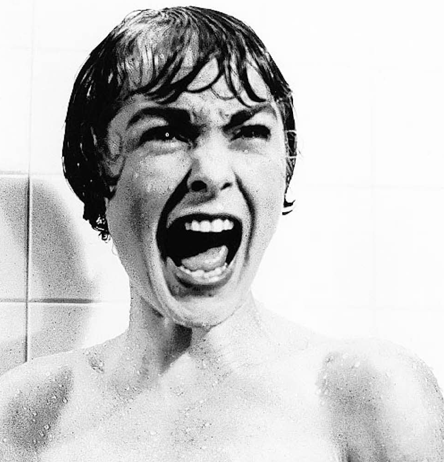
This belongs in an emerging sub-category: future legal weenies. We have already seen black law students insisting that they be able to defer exams because the Eric Garner death has them too preoccupied to concentrate, and other law students protest an “insensitive” exam question involving the Ferguson riots. This trend does not bode well for the ability of citizens to receive competent representation in years to come. The latest entry was revealed by Harvard law professor Jeannie Suk, who registers her observations in the New Yorker. Suk says rape law is becoming impossible to teach and may be dropped from criminal law courses because many students can’t handle the stress of the subject matter. Criminal law professors at several schools confirmed that they are no longer teach rape law because they fear student complaints. Suk writes, “Many students and teachers appear to be absorbing a cultural signal that real and challenging discussion of sexual misconduct is too risky to undertake—and that the risk is of a traumatic injury analogous to sexual assault itself.” Continue reading →
Regal Cinemas, Cinemark, Cineplex, Bow Tie Cinemas, Carmike and AMC Theatres will not show “The Interview” because the North Korea-based hackers that breached Sony Pictures Entertainment e-mail security threatened movie theaters and moviegoers who attend screenings of the satire. More theater circuits are expected to follow, because terrorism works especially well against weenies.
Leading the way for this disgusting weenieism display were first, Sony itself, which reportedly toned down the film in response to earlier threats from the group, and then the stars of the comedy, James Franco and Seth Rogan. They both cancelled all their publicity appearances and are evidently hiding under their beds, caving to the dictates of unknown critics who are almost certainly not in the country. Oooh, but they’re so scary!
First they stole emails from Sony executives to retaliate for the comedy’s story line, which involves an assassination attempt on the life of North Korean leader Kim Jong-Un by two morons. Then the group issued a warning referencing 9-11 and warning Americans, to stay away from theaters showing “The Interview”:
“We will clearly show it to you at the very time and places The Interview be shown, including the premiere, how bitter fate those who seek fun in terror should be doomed to. Soon all the world will see what an awful movie Sony Pictures Entertainment has made. The world will be full of fear. Remember the 11th of September 2001. We recommend you to keep yourself distant from the places at that time. (If your house is nearby, you’d better leave.) Whatever comes in the coming days is called by the greed of Sony Pictures Entertainment. All the world will denounce the SONY.”
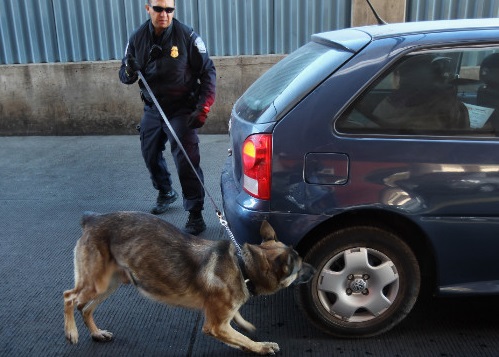
“Not there, you idiot! Remember, my cousin said to find those drugs he planted UNDER the car!”
To give you further faith that our justice system is in good hands, this guy was formerly a judge, too. In fact, it was his forced resignation from the bench that inspired him…well, let me begin at the beginning.
Georgia’s Judicial Qualifications Commission investigated Bryant Cochran, then the chief judge of Murray County’s Magistrate Court, after a woman said Cochran had made inappropriate sexual advances toward her when she came to his chambers to seek some warrants. She alleged that Cochran told her he needed a mistress and wanted her to come to his office wearing a dress and no underwear.
Smoooooth.
The results of the inquiry led to Cochran’s resignation from the bench in August of 2012. To get his revenge, Cochran persuaded one of his tenants to plant a box containing meth under the car of his accuser. Cochran then called police with a tip that she was carrying drugs. Police stopped her car and used a drug-sniffing dog to turn up the illegal substance, but the dog’s sniffing came to naught. A police officer who just happened to be Cochran’s cousin—hmmmmmm— informed his colleagues that the drugs were in a magnetic container attached under the vehicle. Continue reading →
I try to be fair to Dick Cheney, whose character has been distorted beyond all recognition by his partisan foes. Sunday, however, he was apparently attempting to validate all the most terrible things anyone has said about him, as well as providing future students of ethics real life examples of ethical fallacies.
The one quoted above is the pip: so much for the jurisprudential principle that “It is better that ten guilty persons escape, than that one innocent suffer.” Chuck Todd reminded Cheney that 25% of those detained were apparently innocent. The Cheney variation: “It is OK if some innocent persons are unjustly punished as long as the bad guys get what they deserve.”
It is hard to pick the most unethical assertion, however; there are so many horrible statements to choose from. Such as: Continue reading →
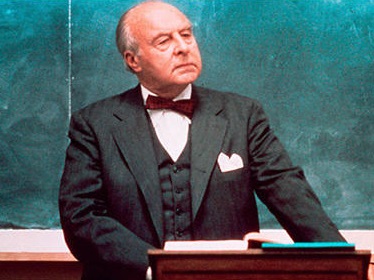
“Go ahead, tell Prof. Kingsfield that his exam is unfair because it triggers your emotions and you can’t think straight. I dare you.”
A Constitutional Law exam at UCLA Law School included this question:
CNN News reported: On Nov. 24, St. Louis County prosecuting attorney Robert McCulloch announced in a publicized press conference that Police Officer Darren Wilson (who has since resigned) would not be indicted in the August 9 shooting of Michael Brown. Michael Brown’s stepfather, Louis Head, was with hundreds of protesters assembled outside the police station, listening on loudspeakers and car radios when they learned Officer Wilson was not being charged. Standing on the hood of a car, Mr. Head embraced Michael Brown’s mother. Mr. Head asked someone for a bullhorn but it was not passed to him. He turned to the crowd, stomped on the hood and shouted, repeatedly, “Burn this bitch down!”
Police Chief Tom Jackson told Fox “News,” “We are pursuing those comments … We can’t let Ferguson and the community die [as a result of the riots and fires following McCulloch’s announcement]. Everyone who is responsible for taking away people’s property, their livelihoods, their jobs, their businesses — every single one of them needs to be prosecuted to the fullest extent of the law.”
County Attorney Robert McCulloch asks lawyers in his office whether to seek an indictment against Head by relying on a statute forbidding breach of the peace and another prohibiting rioting (six or more persons assembling to violate laws with violence). A recent hire in the office, you are asked to write a memo discussing the relevant 1st Amendment issues in such a prosecution. Write the memo.
The question is a fair and legitimate one, and very typical of law school exams, which often ask students to apply course content to current events. Nonetheless, it provoked a controversy.
Shyrissa Dobbins, a second-year law student in the course and is chair of the Black Law Students Association, complained, “Daily I think about Michael Brown and Eric Garner, and I have a challenge. Every day I think about this injustice and how I’m in a law school that won’t even make a statement about it.” Hussain Turk, a second-year law student who took the exam, argued that exams should not ask students to address controversial events, and that the question was unfair, as it could be more emotionally difficult for black students to answer. “These kinds of questions create a hostile learning environment for students of color, especially black students who are already disadvantaged by the institution,” Turk said.
There is only one proper rebuttal for this foolishness:
“Grow up, deal with your biases, start thinking like lawyers or find a profession you can handle.”
Pathetically, the law professor, Robert Goldstein apologized in an email in an e-mail to students, saying, “I recognize … that the recent disturbing and painful events and subsequent decisions in Ferguson and New York make this subject too raw to be an opportunity for many of you to demonstrate what you have learned in this class this year,” and promised to discount scores students receive on the question if it lowers the overall score of the student.
Law school Dean Rachel Moran added to the misplaced sensitivity-fest, and her e-mail, said…
“In retrospect, however, he understands that the question was ill-timed for the examination and could have been problematic for students given the anguish among many in our community over the grand jury decisions in the Michael Brown and Eric Garner cases.”
“Agreed, then: you can call us racist murderers, as long as you keep the donations coming….”
Let us be undiplomaticly clear about what the five St. Louis Rams players did when they came onto the field at the start of a Monday Night Football games with their hands in the air like the fictional, idealized, sanitized, imaginary and politically useful version of Michael Brown—you know: the angelic young college-bound African-American male who did nothing whatsoever to cause the circumstances of his own death.
The players were saying, on national television, with millions of people watching, that Officer Darren Wilson executed Mike Brown in cold blood; that the St. Louis police do such things, want to do such things, and will do such things, because they routinely target young black men for harm; and that police generally, around the nation, are virulent racists. That’s what the gesture meant, and that is what it was devised to convey. Continue reading →
When we left naturalist and filmmaker Paul Rosolie, we were told that he journeyed to the Amazon, donned a special suit, slathered himself in pigs’ blood, and allowed himself to be swallowed whole by an anaconda on “Eaten Alive,” in a two-hour special produced by the Discovery Channel that would air December 7. Rosolie would be removed from the snake by a cord attached to his suit, presumably before he was digested. Animal rights groups and zoologists objected, quite accurately, that this was cruelty to animals for sport.
What did viewers see on December 7? (I’m sorry: my sock drawer desperately needed organizing that day. I’m basing this on published accounts.) Rosolie found an appropriately large and hungry snake and attracted its attention in the water. The 20-feet long reptile attacked, wrapped around him and then began to constrict. Then the snake started to try to eat the naturalist head first: Rosolie’s helmet camera provided a lovely shot of the anaconda’s gaping throat.
At that point, Rosolie did a terrific imitation of Gene Wilder as “Young Frankenstein” after he had himself locked in a room with the Monster with instructions that nobody should let him out no matter how much he begged. (“Let me out! Let me OUT OF HERE!!! GET ME THE HELL OUT OF HERE!!!….Mommy!” ) Rosalie’s team rushed in and pulled him away, disappointing the snake. Continue reading →
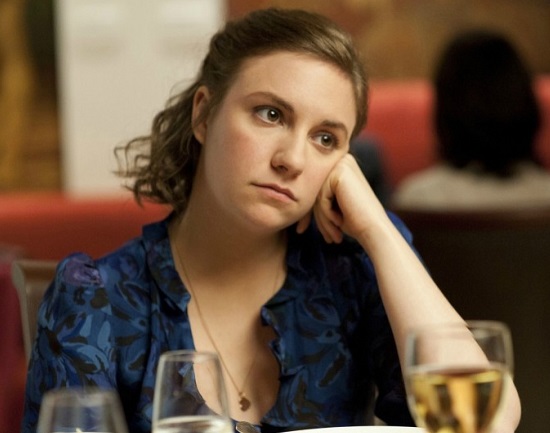
In case you have not followed the latest ethics scandal involving the over-praised creator and star of HBO’s “Girls,” what occurred is this:
In one chapter of Dunham’s memoir “Not That Kind of Girl,” the feminist actress describes as factual an episode of sexual assault or rape that she says she experienced while an undergraduate at Oberlin. Her assailant was a well-known campus “Republican,” she says, a conservative whom she refers to as Barry—without the conventional quotes that would indicate a pseudonym.
There was, as it happens, a real Oberlin college graduate from the same period named Barry, then well-known as a conservative, which then as now, is a species about as common at Oberlin as velociraptors. Besides his name and campus reputation, Barry fit some of the other details given by Dunham, such as wearing cowboy boots and sporting a flamboyant mustache. Now the 28-year-old man (the same age as Dunham) is being tarred as a rapist, and has been forced to take down his social media accounts. He has hired a lawyer named Aaron Minc, with the help of donations from GoFundMe to help pay his legal fees, and has promised that any money he receives from the suit exceeding legal fees will go to charities assisting survivors of rape and sexual assault.
Dunham has not had the courage or decency to say anything, to or about Barry. But yesterday Random House did, in an extraordinary statement and admission:Continue reading →
Abuse of power, abuse of position, disrespect, unfairness and old-fashioned pettiness—these are just some of the ethics fouls the Kennedy Center’s George Stevens, Jr. committed during the 37th Kennedy Center Honors program last night in Washington, D.C.
“Take this job and shove it” is a pleasing anthem of the abused and disaffected in the workforce, but acting on the sentiment is usually a bad idea, and in some cases, like this one, a terrible idea. The Kennedy Center Honors program was Stevens’ baby from its inception nearly two decades ago, a gala honoring the greats of American culture with a star-studded stage show attended by the glitterati of Washington and Hollywood. Through his skill and showmanship—it runs in his family: he is the son of the great Hollywood director George Stevens, who directed “Shane,” among other classics–he had made the annual event an institution. The awards were considered the official confirmation of icon status, and the program was one of the few culture-related presentations remaining that was deemed worthy of a yearly network telecast. Apparently, Stevens felt that he made the Honors what they were, so he had the right to warp it to his own selfish ends.
Kennedy Center Chairman David Rubenstein thanked the audience for its support, and then, in a gesture unchanged from past years, thanked producers George Stevens Jr. This time, however, instead of waving from the audience as in past years, Stevens came on stage and announced that Rubenstein was forcing him out as producer after 37 years. “We accept that this will be our last Honors,” Stevens said. “This is our good night.” It was hardly a spontaneous show of pique, for he had programmed his comments into the teleprompter.
The sour note interrupted the flow of the evening, and cast a pall over the tributes to honorees Lily Tomlin and Sting, which had not yet begun. (The celebrations of the careers of Tom Hanks, ballerina Patricia McBride and soul singer Al Green had been completed.)
Stevens had been engaged in contentious talks with Kennedy Center management, which wanted to move the Honors show in a new direction and sought a fresh creative vision. In a messy split redolent of Jerry Lewis’s divorce from the Annual MS Labor Day Telethon, an aging creator of a cherished tradition was being retired against his will, and felt betrayed.
Jerry Lewis, however, did not crash the telethon to announce his departure.
This kind of petulant and vindictive exit may feel good in the doing, but is always destructive. The victims included the honorees, the audience, and Steven’s own good will and reputation, as well the event itself. Can this be justified by the momentary satisfaction of telling his foes at the Kennedy Center off, and holding them up for brief, unwanted criticism? Of course not. All this act accomplishes is to make it clear why the leadership of the Kennedy Center concluded that it was time for Stevens to go. This was not the act of a professional nor the act of a gentlemen. It is the act of an egotist, or perhaps that of someone who has stayed too long and through age or complacency forgotten that maxim of both the theater and life, that you always want to leave your audience wanting more.






 Ethics Alarms