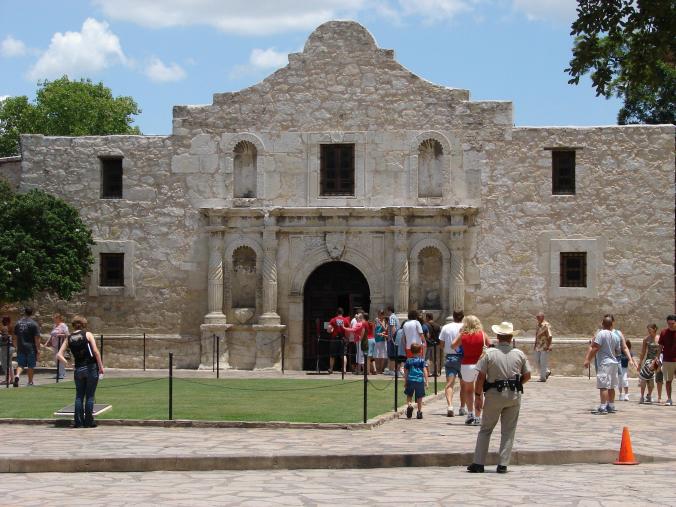
Ethics Dunce: Me. I Forgot The Alamo

It is now April, and though I vowed at the end of February to finally post a thorough essay on the significance of the Alamo to U.S. culture, ethics, traditions and ideals at some point during the dates corresponding to the fort’s siege and fall on March 6, 1836.

I never did.

I thought I had posted an earlier essay about the Alamo. No, I haven’t. This is as inexplicable as it is inexcusable. The Alamo is by far my favorite historical landmark, and one of the events in American history that most inspires and fascinates me, beginning from when I looked on in horror as Fess Parker, as Davy Crockett, desperately clubbed Mexican soldiers as the last Alamo defender standing, and hundreds more charged toward him, as I heard on the soundtrack,

His land is biggest an’ his land is best, from grassy plains to the mountain crest

He’s ahead of us all meetin’ the test, followin’ his legend into the West

Davy, Davy Crockett, king of the wild frontier!

I learned all about Davy, of course, the real Davy, America’s first pop culture celebrity who created a legend about himself and by fate, irony or justice, inadvertently placed himself in a situation where he had to live up to his own hype—and by all accounts,did. Then there was Jim Bowie. I had seen several dramatized versions of his famous last stand, fighting off soldiers from his cot, finally dispatching one last attacker with his Bowie knife. It is one of the great examples of a scene so good it should have been true, though it wasn’t: Bowie was dead or unconscious by the time the Mexican burst into his sick room. Never mind: that’s how an American hero goes down, fighting. “Print the legend.” Later I learned how Bowie really was one tough, brave SOB, the perfect man for the Alamo, if he hadn’t been dying of cholera.

My impression of William Barrett Travis was biased by Lawrence Harvey’s portrayal of him as a martinet (with a British accent that supplanted his Southern one after the first scene) in the John Wayne film “The Alamo”, my favorite movie as a kid. The real Travis was a pefect example of someone who had failed in everything, including as a father and a husband, but redeemed himself magnificently at the end. His final letter to the world is one of the great proclamations of defiance, dedication and courage in all of history.

I will never forget my first visit to the Alamo, and seeing Texans weeping, openly, proudly, as they read the plaque with Travis’s words engraved on it:

Commandancy of the Alamo
Bejar, Feby. 24, 1836

To the People of Texas & All Americans in the World

Fellow citizens & compatriots

I am besieged, by a thousand or more of the Mexicans under Santa Anna I have sustained a continual Bombardment and cannonade for 24 hours & have not lost a man The enemy has demanded a surrender at discretion, otherwise, the garrison are to be put to the sword, if the fort is taken I have answered the demand with a cannon shot, and our flag still waves proudly from the walls. I shall never surrender or retreat. Then, I call on you in the name of Liberty, of patriotism and everything dear to the American character, to come to our aid, with all dispatch. The enemy is receiving reinforcements daily & will no doubt increase to three or four thousand in four or five days. If this call is neglected, I am determined to sustain myself as long as possible and die like a soldier who never forgets what is due to his own honor & that of his country VICTORY OR DEATH.

William Barret Travis.

The story of the Alamo isn’t taught in schools outside of Texas. It wasn’t taught in my school, either: like most American history, I learned about the event though a thick mixture of pop culture, reading (Walter Lord’s “A Time To Stand” was a birthday present in 1961) and ongoing research. I recently completed “Texas Rising,” which was also just broadcast on cable as a mini-series starring the late Bill Paxton as Sam Houston. Historian Stephen Moore is a plodding writer, but he nicely puts to rest the currently popular politically correct slander that the defenders of the Alamo and the Texas rebels were fighting to keep their slaves, and trying to steal Mexico’s land. The Texians were opposing a dictator who had changed the terms under which they had come to the territory, and anyone familiar with the American character could have predicted what would happen when a despot demanded that they submit to unelected authority. The Alamo was a fight for liberty and democracy, and its martyrs exemplified sacrifice for principle and country.

I let them down. The story of the Alamo should be told and retold, with its ethics lessons made clear and bright. Next year, on March 6. 2018, Ethics Alarms will honor Davy, Bowie, Travis, Bonham, Almaron Dickinson and the rest of the 220 or so heroes who died that day, and do it the right way, not as an afterthought.

Don’t let me forget.
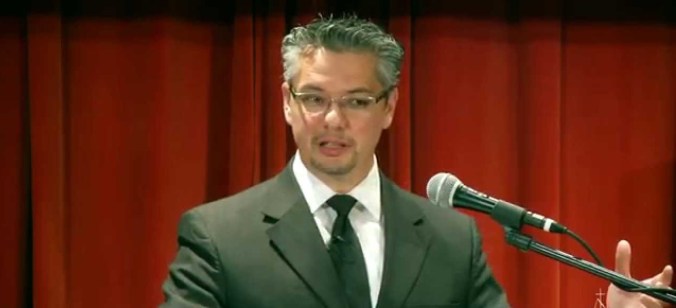
 

Ethics Hero: Notre Dame Political Science Professor Vincent Phillip Muñoz

Vincent Phillip Muñoz is the Tocqueville Associate Professor of Political Science and Concurrent Associate Professor of Law at The University of Notre Dame. Following the violent protest that prevented his announced lecture at Middlebury College earlier this month, Prof. Muñoz invited Murray to speak at the University of Notre Dame next week. This occasioned some protests and objections from students and faculty at his own college, and he responded with an essay at RealClearPolitics, writing in part…

Charles Murray is speaking at Notre Dame because I and another Political Science professor assigned his book “Coming Apart” in our classes. His visit is one of several outside lectures that are part of this semester’s Constitutional Studies offerings. My class, “Constitutional Government & Public Policy,” addresses some of the most important and divisive issues in American politics: abortion, gay marriage, religious freedom, inequality, freedom of speech, death penalty, race and the meaning of constitutional equality, immigration, euthanasia, and pornography.

 The class is designed to prompt students to think more deeply and thoughtfully about contemporary moral and political issues. I don’t assign a textbook or “neutral” readings that summarize the issues; I require students to read principled thinkers who advocate vigorously for their respective position. I want my conservative students to read smart, persuasive liberal thinkers, and I want my liberal students to read thoughtful conservatives. Educated citizens can give reasons for their beliefs and can defend intellectually the positions they hold. That requires that we understand and articulate the positions with which we disagree.

…“But Murray is controversial and will make students feel uncomfortable,” my faculty colleagues say. Don’t I know that he has been accused of being racist, anti-gay, and a white nationalist? I’m told that bringing him to campus is not fair to Notre Dame’s marginalized students.

I have no desire to inflict unwanted stress or anxiety on any member of the Notre Dame community, especially our minority students. I appreciate the concern for student well being that motivates some of the opposition to Murray’s visit. But I believe what is most harmful to students—and, to speak candidly, most patronizing—is to “protect” our students from hearing arguments and ideas they supposedly cannot handle.To study politics today requires handling controversial, difficult, and divisive topics…

The price of a real education is hearing powerful arguments that make us realize our opinions are based on untested assumptions. Only then, when we realize that we do not know as much as we think we know, can genuine learning occur.

I invited Dr. Murray to Notre Dame months ago…Given what happened at Middlebury, it would be cowardly to disinvite Murray now. Rescinding his invitation would communicate that violence works; that if you want to influence academia, sharpen your elbows, not your mind. It would tell those who engaged in violence—and those who might engage in or threaten violence—that universities will cower if you just appear intimidating. Rescinding Murray’s invitation would teach exactly the wrong lesson…

Notre Dame faculty critical of Murray have implored me to think about the larger context of what his visit means. I am. That is why I will not rescind his invitation. As a professor and program director, my job is to do what we are supposed to do at universities: pursue the truth through reasoned dialogue and discussion. Whether you find Charles Murray’s scholarship persuasive or objectionable, his visit offers an opportunity to learn. That is why I invited him to speak at Notre Dame. After Middlebury, it’s all the more important that he do so.

It is almost an insult to academia to call Prof. Muñoz ‘s statement heroic. It should be obvious. Dissenters from the position he articulates should be instantly recognizable as regrettable outliers, the opponents of academic freedom and freedom of thought, the advocates of censorship and ideological indoctrination. Yet increasingly it is this traditional view of higher education that Muñoz advocates that is under attack. Continue reading

A Tale Of Two Hotels: Same Problem, Different Responses

A couple of weeks ago, I stayed at Atlanta’s sumptuous Lowe’s hotel downtown. I like the hotel a great deal, but room service at breakfast is ridiculous: essentially you might as well order the deluxe pig-out, which could feed a family of three. The way the menu is set up, you pay the over $25 for any other choice and get half as much food. This is primarily because a pot of coffee costs more than ten dollars, and only the deluxe breakfast has coffee included.

Even though all expenses were being paid by the client, I hate this, so I decided to order a couple of muffins (still about $15 without coffee, not counting tax and the automatic service charge) and tolerate the free instant coffee that is  offered by the little single cup machines in the room. I was a good plan, but the damn thing wouldn’t work. The water didn’t heat. Annoyed (no coffee, 6 AM, brilliant money-saving scheme foiled), I called the front desk to complain. They sent up a young man—he arrived in about 15 minutes, after the continental breakfast—who fiddled with the coffee machine. It was obvious that he had never seen one before.  Eventually he gave up, apologized, and left to get another one. By the time he returned, I had finished most of the muffins, but I made a cup of (lousy) coffee anyway.

Last night, I had to stay in a hotel to make sure that D.C.’s $%^&$#@! Rock and Roll Marathon didn’t stop me from getting to my early morning presentation to new D.C. bar members. The streets around the venue were blocked off, and weird traffic was expected; hard experience dictated the expense was the better part of valor. There was breakfast provided at the bar event, so all I needed was some coffee in my room to wake me up sufficiently so that I didn’t wander onto 14th street and die.

This time, the hotel was the J.W Marriott, and again the little one cup coffee machine didn’t work. Just like in Atlanta, I called the front desk, sounding even more annoyed about the inconvenience than the before. (This was unfair, of course; there is no reason the Marriott should inherit my upset with Lowe’s.) The response from the desk was identical after I described my plight: she would send someone up to my room to check on the machine. Great.

When the knock came and I opened the door, I was greeted by the head of guest services, in a uniform. He had a new coffee machine with him, and also handed me a bag containing two large cups of Starbuck’s coffee, ten creamers, napkins, utensils, and two hot pastries. He replaced the machine after confirming that it was broken, apologized profusely, and took his leave.

Wow.

Now that’s service.

Ethics Hero: St. Louis Pitcher Adam Wainwright

nissan

It’s Spring Training for Major League Baseball, and all over Florida and Arizona established millionaire baseball stars are getting in shape, while impoverished minor league veterans are hoping to nab a big league roster slot that will alter their finances, careers and lives. The dirt wages teams pay their minor league players is an ongoing scandal, as life in the minors still consists of bus rides, crummy motels and cheap eats, with no job security, no pensions, and little respect. Most of the latter is reserved for the hot young prospects expected to be stars within a couple of years.

These two worlds of Lexus-driving superstars and subsistence-level grunts merge in March,  as the Cactus League and the Grapefruit League play exhibition games before retirees and out-of-state fans.

Ryan Sherriff, 26, is from that Other World. He is  a non-roster invitee to the St. Louis Cardinals camp, hoping to establish himself on the team’s pitching depth chart for a mid-season call-up when there is an injury or a trade. At his age, time is running out. Ryan  also is at camp on his own dime. Every day, Sherriff  made the 10- to 15-minute walk from his rented condo to the ballpark. He then walked  back after workouts.  When he needed food, he walked 15 minutes in the other direction to get groceries.

On one of those walks last week, Cardinal starting pitcher Adam Wainwright was driving by, noticed Sherriff walking and realized that he had seen him do this several times. Wainwright stopped and inquired, and learned that this was his temporary teammate’s mode of transportation as long as he was in Florida.

A couple days later, a Nissan Altima rental was delivered in Sherriff’s name  at the ballpark, all expenses paid by Wainwright. Continue reading

Ethics Hero: Ohio Bus Driver Damone Hudson

Driving his route in Dayton, Ohio,  bus driver Damone Hudson saw a woman standing on the other side of the rail on the Main Street Bridge that spans the Great Miami River. He could have continued on. He could have ignored her. Instead, he made an unscheduled stop, and as his passengers waited and watched, spoke to the woman, then left the bus  to get closer to her.

He said, gently, in an exchange that was partially captured on video,

 “Why don’t we come back over on the side of the rail? … Hey miss, why don’t we come back on this side of the rail for me?…Ma’am, you look like you’re having a bad day, you know. Can I give you a hug?”

Someone  called 911 as Hudson kept talking  until a Dayton Police Department crisis intervention specialist arrived. The potential suicide stepped back over the railing, and was taken to safety and a medical evaluation. The driver got back in his bus and continued the route.

“He did a great job,”  Dayton police detective Patty Tackett told reporters.

Later Hudson said in an interview,
Continue reading

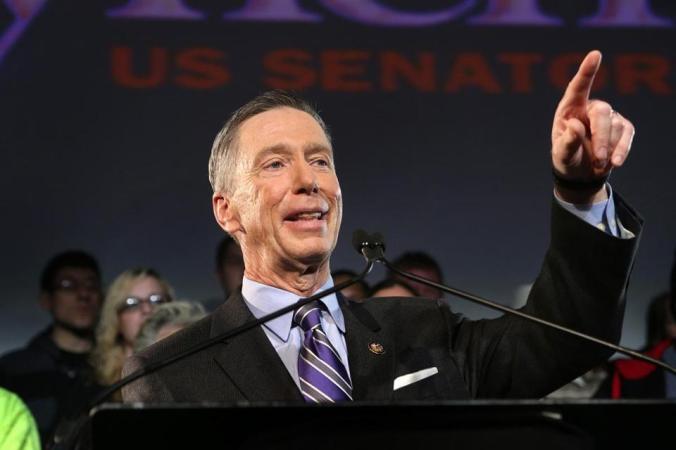
Ethics Hero: Rep. Stephen Lynch (D-Mass.)

lynch7


I am obligated to name as an Ethics Hero any Democratic official  who is principled enough to try to lead his party, its supporters and the complicit mainstream news media away from their current dangerous and destructive scorched earth efforts to destroy the President of the United States.

Ethics Alarms has been calling for responsible leadership in this matter since November 9th, to no avail. President Obama is backing “the resistance,” behaving unlike any previous  ex-President since John Tyler joined the Confederacy. Hillary still has her own confederates calling for preemptive impeachment. The new Vice-Chair of the DNC claims that President Trump can and should be impeached immediately.  The new Chair thinks it fair and honest to call Trump “the worst President” in history after a single month in office, and issues outright lies like claiming the President wants to eliminate overtime pay. (Come back, Debbie! All is forgiven!) Schumer and Pelosi look the other way, or gently applaud, their most outrageous and uncivil colleagues. Senator Warren reads a decades old letter to call a Senate colleague a racist, and becomes a feminist martyr through some twisted logic.

In this vacuum of integrity, statesmanship, decency, fairness and responsibility, even an obscure House Democrats stands out for just meeting minimal standards of fairness and rationality.

Moreover, this obscure House member is from Blue on Blue Massachusetts, where presumably he risks partisan fury for not following the “Trump is Nazi Satan Hellbeast and Must be Detroyed By Fire! ARGHHHHHH! “ narrative.  Congressman Stephen Lynch didn’t exactly celebrate the President’s recent address, he was just open-minded, thoughtful, and responsible—you know, unlike everything else we have heard from his party and colleagues. He said in part,

“I think his words were a significant shift from his previous, sometimes inflammatory rhetoric. I thought he was much more conciliatory.He urged us at one part to get past the trivial differences and work together. That’s not been his mode of operating, at least up until this point.”

Lynch went on to say that he remains skeptical of the President’s agenda and ability to achieve it, and that is fine. He’s a Democrat. He should feel that way.

“We’ll just have to wait and see if his actions are similar to the speech last night, or more akin to what we’ve seen thus far,” Lynch said.

Fair enough. Continue reading

Ethics Hero Emeritus Desmond Doss, And “Hacksaw Ridge,”

desmond-doss

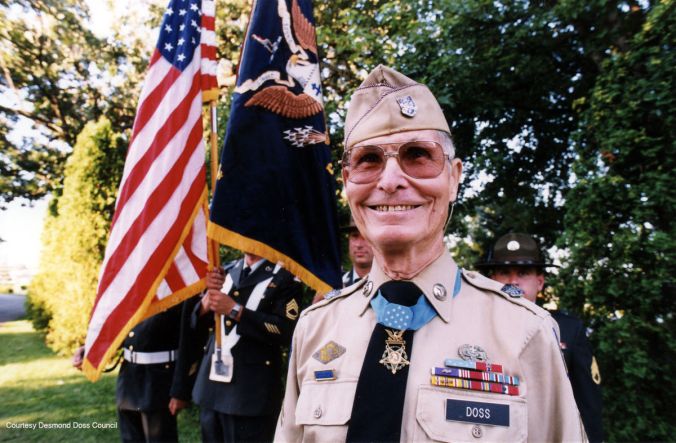
Desmond Doss, who died on March 23, 2006 at the age of 87,  was the very first hero to be enshrined in the Ethics Alarms Hall of Heroes. I wrote about him before there was an Ethics Alarms, shortly after he died.  I had never heard of Doss before, and I remember being angry that I had never heard of him. Everyone should know about him. There literally are no Americans who were any more heroic, and whose ethical conduct was any more astounding, than Desmond Doss.

If the values of this nation, and especially Hollywood, were healthy and correctly aligned, he would be a household name, and the film about his World War II heroism would have been made long ago. Finally “Hacksaw Ridge” was produced in 2016, and has been nominated for an Academy Award, although it will never win.

When I first read about Doss, I couldn’t get my mind around what he had done to be awarded the Congressional Medal of Honor, the only conscientious objector ever to achieve that honor during combat. During the battle of Okinawa, we were told that he survived heavy enemy fire as he struggled to carry seventy-five wounded soldiers to the sheer cliff at Hacksaw Ridge, personally picking up each one and lowering them over the edge the cliff 400 feet to safety.   How is that possible? Now that I’ve seen the film, it still seems impossible.

Desmond Doss proved that principled opposition to violence against his fellow human beings need  not be based on fear, self-interest or self-preservation. It is often impossible to tell whether those who oppose armed combat really object to the spilling of all human blood in battle, or only their own. With Desmond Doss, there was never any doubt. He didn’t like the term “conscientious objector,” preferring the term “conscientious cooperator.” He enlisted in the army following Pearl Harbor, believing that the war against the Axis had to be fought and wanted to be part of the war effort despite believing, as a devout a Seventh Day Adventist, that it was a sin to kill, with no exceptions. Thus he refused to carry a rifle (or shoot one, even in training) but yet insisted that he be involved in combat as a battlefield medic. He achieved conscientious objector status  but would hot accept a deferment. Assigned to the 307th Infantry Division as a company medic, Doss was hazed, abused and  ridiculed  for his dedication to non-violence, and as the Mel Gibson-directed film shows, many of his tormentors eventually owed their lives to his astonishing heroism. All of his compatriots were amazed by his evident fearlessness under fire and remarkable dedication to duty, never hesitating to go after a wounded soldier no matter what the personal risk. As a combat medic on Guam and at Leyte in the Philippines, Doss had already been awarded the Bronze Star  before the three-day battle at Hacksaw Ridge.

Many of the soldiers in Doss’s 307th Infantry, 77th Infantry Division were driven off the ridge by a furious Japanese counter-attack, and  wounded G.I.s were stranded atop it. Doss remained with the wounded, and, according to his Medal of Honor citation refused to seek cover, carrying them, one by one, to the edge of the ridge in the face of enemy fire, some of them from behind enemy lines. He lowered each man on a rope-supported litter he improvised on the spot, using double bowline knots he had learned as a youngster and tying the makeshift litter to a tree stump to serve as an anchor. Every wounded man was lowered to a safe spot 35 feet below the ridge top by the 145 pound medic. Finally, Doss came down the ridge himself, incredibly, unharmed. Continue reading

I Forgot George Washington’s Birthday! In Penance…

portrait_of_george_washington

If there is any American whose birthday none of us should fail to note and celebrate, it is George Washington. In my case, he is in good company, since I have had difficulty my whole life remembering birthdays of close family members and friends, with the exception of my son’s, once the Boston Red Sox finally won their first World Series in 86 years on the same date, and my own, which I have been trying to forget ever since finding my dad dead in his chair on that date eight years ago. Nonetheless, my failure to salute the first and indispensable President is especially disgraceful for an ethics blog, and I apologize both to George and to all of you.

Time flies: I hadn’t issued a post specifically devoted to George’s remarkable character since 2011. (Something has gone seriously wrong when one has 287 posts on Donald Trump and only six about Washington.) In penance, allow me to atone with my favorite entry’s on the list of ethical habits some historians believe made him the remarkably trustworthy and ethical man he was, ultimately leading his fellow Founders to choose him, and not one the many  more brilliant, learned and accomplished among them, to take on the crucial challenge of creating the American Presidency.

Directed to do so by his father, young Washington had copied out by hand and committed to memory a list called “110 Rules of Civility & Decent Behavior in Company and Conversation”  It was  based on a document  composed by French Jesuits in 1595; neither the author nor the English translator and adapter are known today. The elder Washington was following the teachings of Aristotle, who held that principles and values began as being externally imposed by authority (morals) and eventually became internalized as character.

The theory certainly worked with George Washington. Those ethics alarms installed by his father stayed in working order throughout his life. It was said that Washington was known to quote the rules when appropriate, and never forgot them. They did not teach him to be a gifted leader, but they helped to make him a trustworthy one.

The list has been available at a link here (under Rule Book, to your left), almost from the beginning of Ethics Alarms. Would that readers would access it more often. Here are my 20 favorite highlights from the list that helped make George George, and also helped George make America America: Continue reading

Finally, A 2017 Inspiring Ethics Story! A 5th Grade Basketball Team Teaches Adults About Priorities And Values

st-johns-vote

I love this story out of New Jersey.

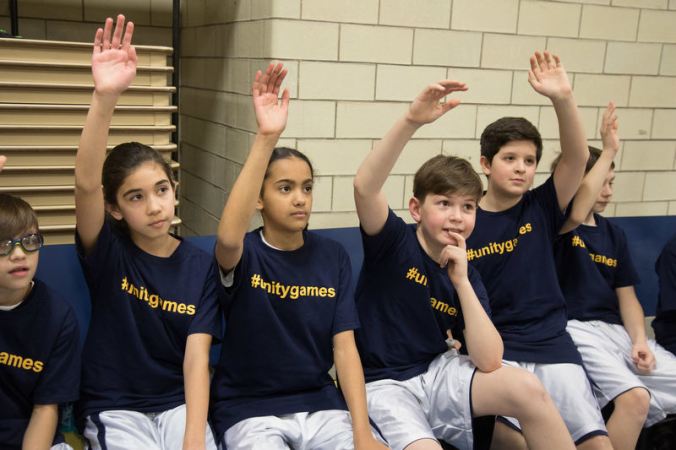
A Catholic Youth Organization 5th grade basketball team out of Clark, New Jersey had played all season with an 11-child roster including nine boys and two girls. In late January the director of the CYO league informed the team that the word had come down from the archdiocese that playing as a coed team offended Jesus or something and thus violated league protocol T team would either have to remove the two girls from the team or forfeit the rest of its season.

The adults running the team had screwed up, you see.

Oops. Sorry kids. Our bad, you pay for it.

These options were unacceptable, and any 10-year old would see it. In fact, any 10-year old did. Continue reading

Ethics Hero: Hillary Clinton

hillary-inauguration

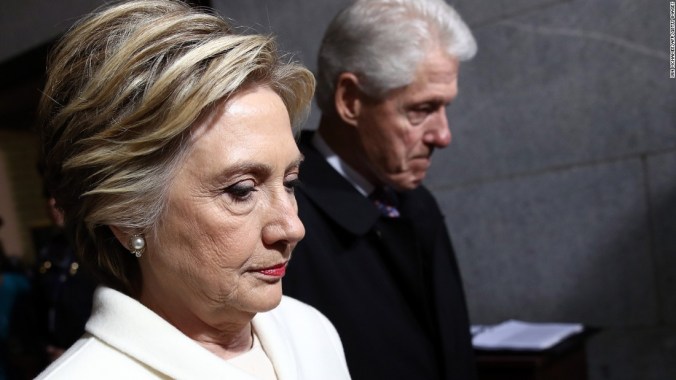
The criteria for an Ethics Hero honor here includes doing the ethical thing despite significant countervailing non-ethical considerations, and often at some personal sacrifice. It was Bill Clinton’s duty to be present at Donald Trump’s Inauguration yesterday, but not Hillary’s.  While defeated Presidential candidates usually attend, they sometimes don’t, especially when they feel  particularly aggrieved byt the way the successful campaigns against them were handled. Recent inauguration no-shows include Mitt Romney and Michael Dukakis, both of whom felt, with some justification, that they had been ill-treated on their way to defeat.  Four Presidents didn’t even attend the swearing in of their successors: John Adams (bitter), John Quincy Adams (bitter, and Andrew Jackson hadn’t attended his inauguration, so there!) Andrew Johnson (impeached), and Richard Nixon (persona non grata).

Nobody, especially her supporters, would have blamed Mrs. Clinton if she had passed. However, it was important that she be there, as her presence symbolized acceptance of the result and the orderly transfer of power as much as Barack Obama’s presence did. She came, she was seen, and it was the right thing to do.

It could not have been easy or pleasant. Some in the audience were heard to chant “Lock her up!” when her name was announced. (See: “A Nation of Assholes”) Bill may have embarrassed her by being caught on video seeming to ogle Ivanka Trump. (I wrote a satirical song about Clinton ogling Julie Eisenhower at Nixon’s funeral in 1994, but that was a joke. Good old Bill. ) Jerkish journalists pestered Hillary with the predictable and needless questions: “Madame Secretary, how does it feel to be here today?” and  “How are you feeling, Madame Secretary?” Ann Althouse made me laugh out loud with her comment:

What’s she supposed to say? I’ll say it for her: How the fuck do you think it feels?