Jerks, Liars, Hypocrites, Fools and Hoosiers: 10 Ethics Observations On Indiana’s Religious Freedom Restoration Act Controversy

Indiana5

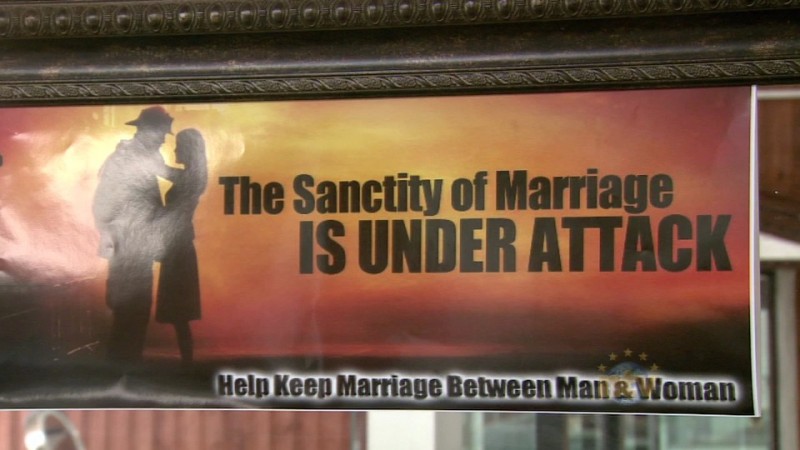
1. The law was passed to make discrimination against gays, trans individuals and especially same-sex couples seeking marriage if not easier, to at least seem easier. Anyone claiming otherwise is lying, or being intentionally obtuse. Would Indiana be passing this law without the Hobby Lobby decision or the various court rulings requiring photographers, bakers, and other businesses to provide the same products and services to gay couples that they do to heterosexuals? Yes, you say? Tell me another.

As GLAAD alertly pointed out, Governor Pence was surrounded by anti-gay activists when he signed the bill:

GLAAD Pence

This is res ipsa loquitur, and doesn’t speak well for the Governor’s candor or intelligence.

2. Context matters. The original laws of this sort (the Federal law signed by President Clinton is also called the Religious Freedom Restoration Act) were part of the left’s long range pro-drug strategy, like medical marijuana. It was essentially a hippie law designed to create a slippery slope to recreational drug legalization by allowing fringe religious groups, specifically Native American tribes, to use peyote in tribal ceremonies. Now you understand why Clinton signed the bill.

Oops. Excuse me if I enjoy the spectacle of the clever members of the Church of the Perpetually Stoned—including the ACLU, which once supported such laws as long as they pointed the way to their young lawyers being able to have their Saturday night joints legally but now opposes them—being hoisted on their own petard.

“When the federal government adopted a religious protection act in 1993, same-sex marriage was not on the horizon,” whines the New York Times. Well, competent, well-considered, properly drafted, responsibly passed laws don’t suddenly become unbearable, then fine, then unbearable again with every shift of the cultural winds. The intent of the law was never to protect mainstream religions, but cloaked itself in language that did. It backfired.

3. That being stipulated, the good states need to read their own laws before they start grandstanding. Connecticut Governor Dan Malloy just announced on Twitter that he plans to sign an executive order banning state travel to Indiana in response to its Religious Freedom Restoration Act. Yet Connecticut, hippie enclave and bedroom community of rich, white, liberal New Yorkers that it is, happily jumped on the religious freedom train with a law of its own, one that, as the Federalist points out, makes discrimination on the basis of religion easier than the Hoosier version, which only prohibits the government from substantially burdening religion. Connecticut’s law does not include the word “substantially,” meaning that all government-enacted burdens on religion are theoretically illegal.

I wonder how Malloy is going to ban government travel to Connecticut? Is the theory that the same law can be good when liberal states pass it and evil when those bad conservative states pass it? It is more likely that the governor hasn’t looked at his own state’s law.

4. The hysteria being stirred up over the supposed horribles Indiana’s law will lead to is irresponsible. Jonathan Adler explains on The Volokh Conspiracy: Continue reading

Ethics Quiz: What’s Fair Punishment For The Chick-Fil-A Video Vigilante?

orestes

I previously wrote about Adam M. Smith, the ex-CFO of  a Tucson medical supplies manufacturer who filmed himself dressing down a Chick-fil-A drive-in employee and placed the video on YouTube. I said in part…

“He’s a vile bully and a jerk, who thinks it appropriate to embarrass and abuse an innocent employee of a restaurant because he happens not to agree with the politics and moral positions of the company’s owner…The video served to alert millions to beware of this rude, rabid and self-righteous champion of gay rights, who equates faith-based advocacy for the current law of the United States of America with “hate.”

I was more accurate than I knew. Now we learn that since that August, 2012 fiasco which cost him his job, Mr. Smith has fallen on hard times. His self-posted indictment of his own character has poisoned his reputation and career. When he found a new job, he was later fired for not alerting his employers about the incident. When he has raised the video to potential employers, they have declined to hire him. Where he was once earning a six-figure salary, had $1 million in stock options, and lived in a stylish home, he now lives in an RV with his wife and four children, and is existing on public assistance.

It all sounds like the plot of an Adam Sandler movie.

Your Ethics Alarms Ethics Quiz today is…

Is Adam M. Smith the victim of excessive social media punishment for one ill-considered act?

Continue reading

Harry Reid Hatred And The Tit-For-Tat Addiction

mob enforcer

Once again, the ethically disabled in conservative punditry are forcing me to come to the defense of one of the most loathsome politicians extant. Senator Harry Reid’s announcement that he is leaving the Senate after his current term expires in 2016 has inspired a spate of baseless speculation that the serious facial injuries he sustained on New Years Day were not the result of an exercise equipment mishap, and may have been the souvenirs or a beating by Vegas mob goons to teach “Dirty Harry” to deliver the goods when the Godfather ask a favor.

As Basil Fawlty would say, “Oh, thank you! Thank you so VERY MUCH!” I love wasting a good hour of sock drawer organization explaining why its wrong to mistreat the likes of Harry Reid. Continue reading

Musings On The “You Can’t Even Spell” On-Line Debate Tactic

dooleyIn a debate on a live thread here between two esteemed commentators, one of the contestants expressed vivid annoyance when the other derided the quality of his text in a retort. I’ve witnessed this many times online, as have you, I’m sure: someone registers an opinion while making a blatant typo, a bad misspelling, a misuse of a word, or a grammar gaffe and the opponent immediately focuses on it. What is this, exactly, and is it always wrong?

1. What is it? As I mentioned on the thread in question, it’s pretty close to an  ad hominem attack once removed, right? The sense of such a comment is, “Why should I respect your opinion? You can’t even spell “inaugural!” which in turn suggests that the individual is an ignoramus rather than a worthy adversary. It needs a name though. Is there one?

2. Is the tactic ever justified? Clearly it is not fair and indeed an unethical deflection if the issue is a typo or two. Or, in my case, or six. Anyone who visits here often knows that I have a serious typo problem, paired with an even worse proof-reading problem. I have dinged job applicants for resumes and job letters that contain “your” for “you’re” and “recieve” for “receive”? Indeed I have. Is there a difference? I think so: if someone wants to make a good impression and still makes these mistakes, I am justified in concluding that this is really the best that applicant can do, or, in the alternative, that he or she doesn’t care very much.

I wasn’t blogging 2000 words a day then, however.

3. Mentioning a gaffe seems to be mandatory if the comment or text containing it was complaining about carelessness, illiteracy or stupidity generally. Again, though, what does this mean? Is it essentially another variation of an ad hominem attack: “Hey, you’re so dumb you make the same kind of error you’re bitching about! Your argument must be dumb too!”? I think it is, but it also falls in the category of “Boy, I asked for that!” In “Twelve Angry Men,” the bigoted Juror 10 derides the character of a witness, saying, “He’s an ignorant slob! He don’t even speak good English!” Whereupon the heavily-accented naturalized citizen in the group corrects him, saying, “He doesn’t even speak good English,” humiliating his fellow juror. Ethical? In that setting perhaps; generally, however, I would think that the Golden Rule should apply, but most of us can’t resist the hanging curve over the center of the plate. Continue reading

Sign Language Interpreter Ethics

Let’s see, I haven’t gotten disability advocates angry at me in a while. It might be time.

Jonathan Turley posted the video above in a blog post titled “You Decide: Which Is The Greater Draw – The Singer Or The Signer?” The title, and especially the video, reminded me of a live entertainment phenomenon that has annoyed me for decades. I had forgotten about it, because producers learned long ago that I wouldn’t tolerate it in shows I was involved in. The ethics issue: showboating sign language interpreters for deaf audience members.

I have no objection to having signers at special performances of live stage presentations, as long as those signers understand their purpose and obligation. Their purpose is to communicate the words to hearing-impaired audience members. Their obligation is to do so as unobtrusively as possible, so as not to draw focus from the performance itself, or  interfere with the integrity of the production.

Unfortunately, a large percentage of the sign language interpreters who specialize in signing plays and operas don’t see their job this way. They think they are supposed to be as flamboyant–that is, obtrusive–and demonstrative as possible. Well, they’re not going to do that in one of my shows.

I’m not going to work over a grueling six week rehearsal schedule to perfect audience focus, the arc of the show, the lighting, sound, stage picture and all the other artistic elements that need to be coordinated to fully realize a work of live performance art  only to have someone show up who I have never seen before and improvise his or her own act in competition with the performance on stage. If I thought it would enhance “A Steetcar Named Desire” or “The Music Man” to have Marcel Marceau or Red Skelton jumping around and waving their arms next to the performers, I would have staged the shows that way. Continue reading

Unethical App: Yik Yak

The cute Yik Yak mascot, hanging out at a fraternity, where ethics go to die.

The cute Yik Yak mascot, hanging out at a fraternity, where ethics go to die.

Yik Yak is a suddenly surging social media app that is running viral on college campuses. The app allows users to post anonymous messages (“yaks”) that only appear to users within a 1.5-mile radius. The New York Times called it “ a virtual community bulletin boardor maybe a virtual bathroom wall at the student union.”

Yik Yak is unethical.

There.

Yik Yak was created in late 2013 by Tyler Droll and Brooks Buffington, fraternity brothers (and based on their names, escapees from a Dickens novel) who came up with the idea after seeing that there were only a handful of popular Twitter accounts at Furman College, where they were frat brothers, almost all belonging to campus big shots and athletes. With Yik Yak, they say, they hoped to create a more “democratic social media network” where users didn’t need a large number of followers or friends to have one’s thoughts read widely. Continue reading

Fair vs Fair: Ethics and the “No-Tip” Restaurant

You know, this looks like a place that would believe that dishwashers deserve as much pay as waiters...or as bankers, for that matter.

You know, this looks like a place that would believe that dishwashers deserve as much pay as waiters…or as bankers, for that matter.

William Street Common is a new restaurant in Philadelphia, and is getting publicity for, we are told, experimenting with a different and (maybe?) fairer compensation model. Owner Avram Hornik  pays all of its employees, from the servers to the dishwashers, at least $15 an hour plus paid sick leave and health insurance benefits. There is a 20 percent service charge for drinks, and that goes into a common fund that makes that  $15 an hour wage affordable. Money left over at the end of a pay period is divided up among employees based on a point system related to various factors.

Hornik came up with this structure, he says, to deal with the well-debated problems of tipping. “Some people just tip the same amount, but some people base it on how quickly the food was there, whether we were out of something, whether the server was there when they wanted them to be,” he says. “So much of that is out of the control of the individual server… So why would it be fair for the service employee to be responsible for the poor decisions of management?”

Hornik argues that his model “essentially creates a guaranteed floor. But we’re also capping the ceiling,” he points out, because the tipping gets shared equally with all employees. “We didn’t think it was fair [that] in some places you have dishwashers earning 10 dollars an hour and the bartender earning 30 dollars an hour.” He also is convinced that the customers will benefit.  “That atmosphere among the employees, a sense of community and empowerment and happiness with the job, is going to translate into a better environment for customers,” he said. “By having happy staff customers are going to be happier too.”

Is this system really fairer than the current one? Progressives are cheering it, because it represents a “living wage,” or at least something close to it. OK, but it would be nice not to feel hyped: ThinkProgress, for example, had headlines that the William Street Common “got rid of tipping” and writes “tips aren’t mandatory.”

Inept reporting or lies, take your pick. A 20% “service charge” is a mandatory tip, so tips ARE mandatory. The reports don’t explain how voluntary tipping has been eliminated, or whether a server would be prohibited from keeping a ten-dollar bill that a diner hands him, saying, “You know, the food was lousy, but you were so gracious and accommodating that you single-handedly made the evening bearable. Thank you. If I ever come back, it will be because of you.” If so, is that fair?  I don’t think so. In fact, it’s exactly as unfair as a diner not rewarding excellent service, and tipping a dime. Continue reading

Sooner Ethics Quiz: Abuse Free Speech Rights, Or Ignore Them?

David Boren, the president of the University of Oklahoma, announced that two students would be expelled from the school for leading a racist chant that was preserved on a video and went viral on YouTube. The video shows tuxedo-clad men from the Sigma Alpha Epsilon fraternity  on a bus chanting :

There will never be a nigger at SAE
You can hang him from a tree
But he’ll never sign with me
There will never be a nigger at SAE

Who would want to be in a house with these assholes?

 The national fraternity apologized and closed the OU chapter. That was a proper response. (Tell me again what’s good about fraternities.) First Amendment specialist Eugene Volokh, however, pointed out on his blog that the expulsion was unconstitutional:

First, racist speech is constitutionally protected, just as is expression of other contemptible ideas; and universities may not discipline students based on their speech. That has been the unanimous view of courts that have considered campus speech codes and other campus speech restrictions …The same, of course, is true for fraternity speech, racist or otherwise…Likewise, speech doesn’t lose its constitutional protection just because it refers to violence — “You can hang him from a tree,” “the capitalists will be the first ones up against the wall when the revolution comes,” “by any means necessary” with pictures of guns, “apostates from Islam should be killed.”

To be sure, in specific situations, such speech might fall within a First Amendment exception. One example is if it is likely to be perceived as a “true threat” of violence (e.g., saying “apostates from Islam will be killed” or “we’ll hang you from a tree” to a particular person who will likely perceive it as expressing the speaker’s intention to kill him); but that’s not the situation here, where the speech wouldn’t have been taken by any listener as a threat against him or her. Another is if it intended to solicit a criminal act, or to create a conspiracy to commit a criminal act, but, vile as the “hang him from a tree” is, neither of these exceptions are applicable here, either.

Hey, Oklahoma…Rodgers and Hammerstein just called. They’re officially changing the name of the musical and the song to “North Dakota!”

Your Ethics Alarms Ethics Quiz:

Which is the greater ethics breach: the students abusing their First Amendment rights, or the University of Oklahoma violating them?

Continue reading

No Judgment At Planet Fitness

They mean what they say!

They mean what they say!

In Midland, Michigan, a Planet Fitness gym revoked a woman’s membership because she complained that a man—actually a man who identifies as a woman— was in the woman’s locker room.

Company officials explained that she violated its “no judgment zone” policy. Planet Fitness  policy also states members and guests may use all gym facilities based on their self-reported gender identity.

Fine.

It’s their business, and they can make whatever silly and irresponsible rules they want. If they want to make members dress like chickens, wear noodles on their heads and speak only pig latin, that’s their choice. The establishments Planet Fitness wants to run, apparently, are ones where a woman can go into the ladies locker room and run into some hairy, naked guy with his dong hanging out, and she gets dinged because she objects, not knowing that he is really all girl at his creamy nougat center.

Okaaaaay…. Eventually Planet Fitness will have a membership that is all trans, all blind, or all pathologically politically correct, or perhaps have no establishments at all. When the company says “no judgment,” it really means it, because this shows a ludicrous lack of judgment. But ethical! The policies were all communicated to all members, so the woman violated the “don’t react negatively to the showboating trans individual in the ladies locker room who shows no respect or consideration for others who might not be quite ready for a full frontal” policy, and has no defense, except offensive normalcy.

Clearly “Men” and “Ladies” labels on locker rooms and bathrooms are no longer unambiguous or effective.

What do you think about “Penis” and “No Penis” signs? I think that solves the problem, especially in places where there’s no judgment.


Unethical Quote Of The Month (and most idiotic, too!): Two Unnamed American Tourists

“We did not imagine it was something so serious!”

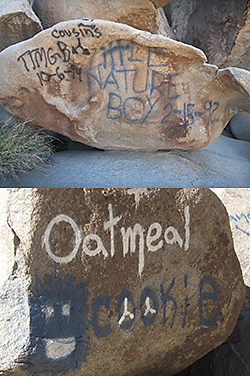
–One of two young California women, ages 21 and 25 , after being arrested by Roman authorities for carving their initials “J” and “N” about four inches high into a wall of the Colosseum.

Get this guy a ticket to Rome. I've got a little job for him....

Get this guy a ticket to Rome. I’ve got a little job for him….

Naturally, as is the current practice among morons everywhere, they posed for a selfie with their “artwork.”

Well, you have to sympathize with them: why would anyone get upset over a couple of letters  carved into a 2,085-year-old irreplaceable iconic architectural structure?

I find myself unable to discern the upbringing, education and cultural conditioning that would produce two adults from our nation capable of such a pointless, stupid, destructive act against history, art and civilization.

I am similarly incapable of arriving at an appropriate punishment that recognizes the enormity of their crime and their proven worthlessness to society that does not resemble the screenplay of “Saw.”

Would it be too cruel to pass a law that allows the U.S. to just revoke the citizenship of people like this?