Well, let’s see: blog traffic is dead today, like most Sundays,, my in-progress post about the Big Lie that President Trump is a racist needs to be cut approximately in half (though it could easily be twice as long), and my current inventory is made up of either “too silly to write about,” yet more “2016 post election ethics train wreck” insanity, or stuff that’s two complicated to handle working on half a brain, which is what I woke up with, now seems like as good a time as ever to see how the newspaper advice columnists are doing…
Philip Gananes (Social Q’s)advises a teenage son who is embarrassed by his mother’s “R-rated” tattoos “all over her arms and back.” The teen has asked Mom to cover up around his friends, and her reply is “if people don’t like her tattoos, that’s their problem.” He asks the advice columnist if he is out of line.
Gananes says in part, “As an adult, she is free to make her own choices about her body and body art. You’re entitled to have feelings about her tattoos. But to ask her to hide them to save you embarrassment is like asking her to pretend to be a different person — because you’re ashamed of the one she is. That has to sting…The next time one of your pals makes a crack about your mom’s tattoos, say: “I’m not crazy about them, either. But she’s a great person and a terrific mother.” When you can say that and really mean it, Brian, you will be a terrific son.”
The Ethics Alarms verdict:
Whiff!
I was surprised that Gallanes, who is usually on target, would embrace the “that’s just who I am” rationalization. The issue isn’t tattoos, but “R rated” tattoos. “Mom, would you please not fart and belch loudly around my friends?” “That’s just who I am! If people don’t like it, that’s their problem.” “Mom, would you stop saying “fuck” and “cock-sucker” when my friends are here? “That’s just who I am! If people don’t like it, that’s their problem.” “Mom, would you stop coming on to my male friends?….Mom, would you please stop dressing in a halter top and going bare midriff with your gut hanging over your belt when my friends are here? You’re 56 years old and weigh 212!…Mom, would you please not come out to talk to my friends when you’re drunk”?
That’s just who I am! If people don’t like it, that’s their problem.” Continue reading →
Is it unethical for an ethics speaker to drop trow during a program? I think so. It was a situation I narrowly avoided this morning. I am a rather animated speaker, and after I slammed the D.C. ethics rules into the floor to illustrate a point, my effort to retrieve the volume resulted in the rear snap of my galluses pulling loose from the back of my pants. With an unpantsing imminent (and about to be streamed live to hundreds), I asked my moderator to come down from his platform and rescue me by reclipping the devices on, which he did.
Hilarity ensued.
1. “Asshole” ethics. In another episode today, I referred to Harvey Weinstein as an “asshole,” in the context of discussing the multiple David Bois ethics problems in handling the Hollywood mogul’s representation. The exact statement was “Even assholes deserve competent representation.” This came closely after I had mentioned that lawyer incivility was an ethics problem whether there were explicit rules against it or not. One of the attendees in cyber-space texted a query as to whether it was uncivil for me to use the term “asshole.”
I answered that I was reminded of the moment in “1776” when one of the members of the Continental Congress challenges Thomas Jefferson’s use of the term “tyrant” to describe King George. Is it really necessary, Jefferson is asked, to use such a harsh word? Why resort to an insult? “Because the King is a tyrant,” Tom replies.
I went on to say that I have found that in certain situations, only certain harsh words are sufficiently accurate. What should I call Harvey, a miscreant? A jerk? No, the man is an asshole, I said. I’m not using the term as an ad hominem attack, but as the most accurate term I can think of for someone who has done the things he has done to so many women while indicating no remorse at all. I do not use the term indiscriminately, and would not use it in certain forums, such as open court. But I do not believe in word taboos, and when the description, however harsh, fits, it is not uncivil to make a Harvey Weinstein wear it.
2. Now, what’s the right word for THIS? In the Washington Post, Dan Hassler-Forest reflects on the themes of “The Lion King” and asserts that the lions, hyenas, and gazelles are “stand ins for human societal organizations” and that the themes of the movie “incorporates the white supremacist’s worldview.” Hassler-Forest is an author and public speaker on “media franchises, cultural theory, and political economy” who works as assistant professor in the Media Studies department of Utrecht University in the Netherlands. “No matter how you look at it, this is a film that introduces us to a society where the weak have learned to worship at the feet of the strong,” his article asserts. Continue reading →
1. All-Star Game ethics reflections (with a dash of women’s soccer):
Competence.Can someone tell me how many different keys MAX wandered into while trying to sing the National Anthem at the MLB All-Star game last night? He was flat, he was sharp, he fluctuated mid-phrase. My rule is that I don’t care to hear a singer’s self-indulgent riffs at the end of the anthem if he couldn’t sing the real notes accurately earlier. That was awful. I know: it’s a tough song to sing on pitch without accompaniment, but these people are supposed to be professionals, and that was an amateurish, sloppy job.Incredibly, MAX has performed the Star-Spangles Banner at other sporting events.
Somebody tell him.
A saving grace: at least he remembered all the words (more or less) and didn’t kneel.
[ Speaking of kneeling: Women’s soccer team captain Megan Rapinoe “explained” her disrespecting the National Anthem (in defiance of her own team’s rules) while representing the nation abroad, telling Anderson Cooper last night (of course Anderson had neither the wit nor integrity to challenge her nonsense,
“I think that protest is not comfortable ever. It’s going to force people to look inward and question everything they thought that they knew….taking care of others, standing up for yourself and other people if they don’t have the ability to do so, is very uniquely American…I don’t think anybody can deny the horrors of racism and Jim Crow and mass incarceration and what’s happening on the southern border and gay rights and women’s rights.”
This is a sub-breed of Authentic Frontier Gibberish, the increasingly common species called the Self-Righteous Virtue-Signaling Authentic Frontier Gibberish, or “Kaepernick-speak,” SRVSAFG for short.. If an athlete hates the country because of its past mistakes more than he or she is proud of the country because of what it stands for, aspires to, and has accomplished, then it is hypocritical to play for a national team. “What’s happening” on the Southern border is an under-funded law enforcement and security agency doing the best it can to handle a flood of deliberate law-breakers who have chosen to endanger their own children. “What’s happening” in gay rights is that they are stronger now than they were during the first term of the previous administration. “What’s happening” in women’s rights is a healthy national debate over whether those rights should include an upon-ended right to end the life of another human being—none of which has anything to do with soccer.
But I digress–we were talking about an American sport, baseball…
Integrity. Fox’s baseball broadcasting is marginally better than ESPN’s but only because Fox doesn’t include a sociopathic steroid cheat like Alex Rodriguez on its broadcast team. However, the devise of having live interviews with the players on the field during the game is offensive and insulting. MLB is foolish to allow it.
2. Oh for God’s sake...In her review of “Dog Man: The Musical,” New York Times reviewer Laurie Graeber writes, “[M]y only quibble is the same one I have with the novel: All the really interesting characters are male.” Okay, it’s only a quibble, but it’s an offensive and biased quibble, and since her editor–if the Times still uses editors; I see no sign of them of late—didn’t have the sense to slap her down, it’s up to the rest of us. What does she want, EEOC quotas in every story now? Yes, that’s exactly what she wants, and the idea is creatively stultifying. This quibble leads to other similar quibbles, and the next thing you know, a production of “Twelve Angry Men” or “That Championship Season” or “The Fantastiks” will be labelled racist, sexist, homophobic or “ablist” because it does’t perfectly balance its casting with an equal number of men, women, blacks, Asians, Hispanic, gay, transgender, non-binary, “differently-abled” characters. If there aren’t enough characters to get them all in, then eliminate the white males.
Graeber’s “quibble” is based on tribalism and bigotry, and she should not be allowed to get away with it without a fight.
3. Apparently Labor Secretary Acosta is resigning today. GOOD. Ethics Alarms covered the reasons this is necessary and now long-past due in a November 2018 post about the revelations involving Jeffrey Epstein’s unconscionable plea deal. I wrote then..
I do not see how Acosta can remain as Secretary of Labor following these revelations, incomplete as they are. I don’t see how we can trust his judgment, and even if, somehow, he could justify the deal with Epstein on legal, technical or pragmatic grounds, I doubt that the general public would be reassured. He should resign.
Yet it took eight more months and a new set of charges against Epstein for President Trump, or Acosta to accept the obvious and to do the right thing. There’s no excuse for this.
Dr. Tisha Rowe, an African-American family physician from Houston, was pulled off a recent American Airlines flight and required to cover herself with a blanket before being allowed back on the plane, which was traveling from Jamaica to Miami. You can see above what Dr. Rowe was wearing, thanks to her angry tweet about the episode.
I have no idea why this outfit was found so objectionable; I’ve seen much worse on many flights. On the other hand, a little taste and decorum while flying in close quarters with strangers is basic manners and civility.
Yesterday she said that she had been humiliated in front of her 8-year-old son, and asserted that racial bias was behind the incident. “Had they seen that same issue in a woman who was not a woman of color, they would not have felt empowered to take me off the plane,” Dr. Rowe said. “In pop culture, especially black women with a body like mine, they’re often portrayed as video vixens. So I’ve had to deal with those stereotypes my whole life.”
SHE looks like a “video vixen?” Okay! Whatever you say, doctor! Continue reading →
—Accused ice-cream carton-licker, Lenise Lloyd Martin III, a 36-year-old unemployed man who has been arrested in Louisianan for making a video of himself licking a carton of ice cream in the Big B’s Supermarket in Belle Rose.
“It’s a shame,” commented Matt Walters, who works at the store. “A grown man doing something like that.” Yes, that’s a shame, but a greater shame is a grown man thinking like that, and a culture that raises its children to believe that fame itself is an accomplishment, regardless of what one is famous for.
The internet and social media have spread this disease of ethics and the mind, but it began long before the web took over our lives. Andy Warhol’s prescient quote, “In the future, everyone will be world-famous for 15 minutes”, first appeared in the program for a 1968 exhibition of his work at the Moderna Museet in Stockholm, Sweden. We saw the hints of the cultural malady with the advent of television, as we saw ordinary Americans getting a thrill from acting like giddy fools behind announcers and TV journalists when they saw a TV camera.
This compulsion spawned such pop culture freaks as “Rocken Rollen” also known as Rainbow Man, who somehow managed to get himself and his rainbow-hued Afro on camera at dozens of live sporting events. At least he stayed in the stands; another example of the phenomenon was fans who ran out on the field mid-game hoping that a TV camera would capture their moment of “fame.”
Clearly, the culture is sending a toxic message to our youth. The movie and subsequent TV series “Fame,” following the travails of aspiring teenage performers, both pushed the false concept that being famous itself is an achievement:
Baby, look at me And tell me what you see You ain’t seen the best of me yet Give me time I’ll make you forget the rest … Don’t you know who I am Remember my name! Fame! I’m gonna live forever I’m gonna learn how to fly, high I feel it comin’ together People will see me and cry, Fame! I’m gonna make it to heaven Light up the sky like a flame, Fame! I’m gonna live forever Baby, remember my name Remember, remember, remember, remember Remember, remember, remember, remember…
1. From what cultural hell in America did this conduct ooze out of? A family got in a brawl in the middle of Disneyland, as on looking children screamed. See?
Nice.
The family was escorted out of the park, and criminal charges are being sought.
This entire family is so devoid of functioning ethics alarms that it lacked the basic civilized instincts not to a) physically attack each other b) physically attack each other in public c) physically attack each other in a family venue that represents the opposite of what they were doing.
In some kind of record for inappropriate understatement, Disney said that the company “does not condone this type of behavior.” That’s reassuring.
2. Congratulations to the U.S. Women’s Soccer Team, but its captain is still an asshole. I fully endorse—well, 95%— Washington Post columnist Mark Thiessen, who had this to say about Megan Rapinoe, the team captain who has been grandstanding her hatred for President Trump by refusing to respect the National Anthem abroad. He writes in part,
Rapinoe is not playing for the Trump administration; she is playing for the United States. It’s one thing for a professional athlete to protest the national anthem, but quite another for a member of Team USA to do it. Rapinoe is protesting the Stars and Stripes while wearing the Stars and Stripes. That’s not OK. Representing your country is a privilege, not a right. If she really feels she can’t show respect for the U.S. flag and anthem, then she shouldn’t wear the U.S. jersey. Here’s the worst part: What she’s doing is selfish. Her protest comes at a time when the U.S. women’s team has taken an important stand against gender discrimination. They are suing the U.S. Soccer Federation because, despite being more successful on the field than the men’s team, and bringing in more revenue, they are paid significantly less than the men. They have a point, and the World Cup is a chance to rally the country behind their cause. But instead of unifying Americans behind her team’s admirable fight for gender equity, Rapinoe is dividing Americans with her anthem protests. Untold numbers of Americans who might have been inspired to support the team’s cause have been alienated by its leader.
Thiessen is talking about cognitive dissonance here: he’s pointing out, correctly, that people are less like likely to rally with even a just cause when its advocates are assholes.
My 5% objection is that the women’s team will have a strong claim to equal pay when they prove that they can play soccer as well as the men’s team. Continue reading →
Ethics Alarms does not endorse any organized boycott efforts against any product, business or organization. However, if any corporation is begging to be boycotted, it’s Starbucks…
In case you missed it:
On July 4th, six Tempe, Arizona police officers visited a local Starbucks to get some coffee. The officers paid for their beverages and stood together, sipping coffee and chatting. A barista approached one of the officers, whom she apparently knew by name because he is was a frequent customer, and informed him that a customer currently in the store “did not feel safe” because of the police presence. She asked the officers to move out of the customer’s line of sight (!) or to leave entirely.
The officers left, but apparently reported the incident to the Tempe Officers Association, which described the incident on Facebook and added,
This treatment of public safety workers could not be more disheartening. While the barista was polite, making such a request at all was offensive. Unfortunately, such treatment has become all too common in 2019. We know this is not a national policy at Starbucks Corporate and we look forward to working collaboratively with them on this important dialogue.
The Tempe Police put out their own statement:
Starbucks, proving at least that it has not completely lost its mind, quickly apologized to the Department, with a representative meeting with the police chief. The statement:
“When those officers entered the store and a customer raised a concern over their presence, they should have been welcomed and treated with dignity and the utmost respect by our partners (employees). Instead, they were made to feel unwelcome and disrespected, which is completely unacceptable,”
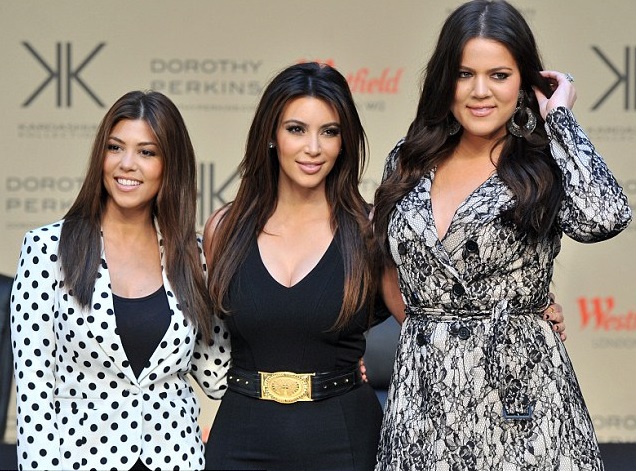
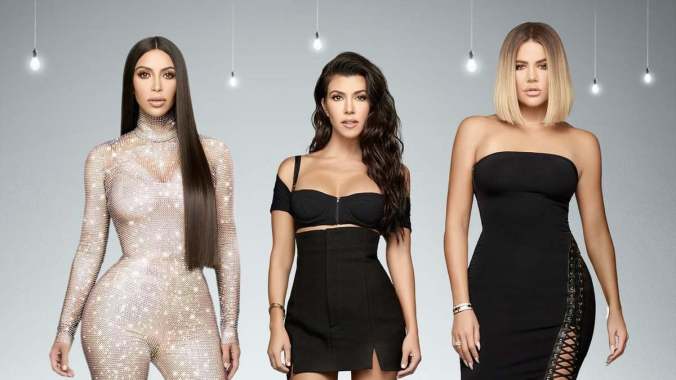
Khloé Kardashian–thatr’s her on the right— was long the ugly duckling of the Kardashian sisters—taller, chunky, cruder features. Her travails at dieting and her insecurities in comparison to her more glamorous—but equally trivial and useless—sisters Kim and Kourtney was an ongoing theme in the brain-meltingly crude and cretinous reality TV show “Keeping Up With The Kardashians,” which has been making Americans idiotic for 16 years, enough time for Khloe’s half-sisters Kendall and Kylie Jenner to grow from little girls into professional sluts too.
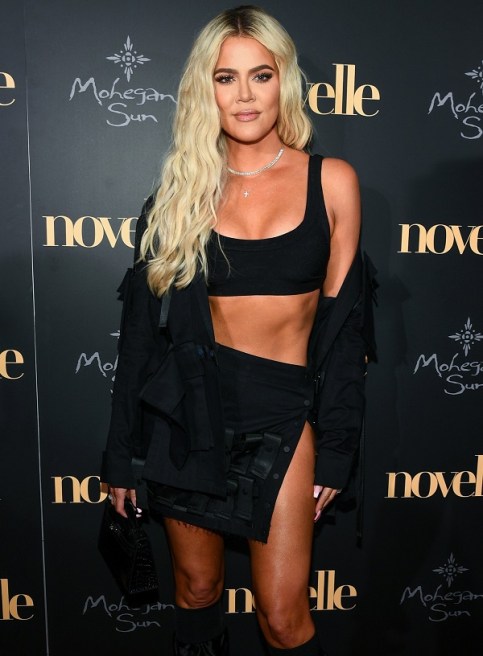
After yo-yoing on the weight spectrum in full view of America, Khloé found the right combination of cosmetic surgery, exercise and diet to transform into Khloé 2.0:
Well, good for Khloé . Now she fits right in! See?
But I digress. Here’s the scandal:Khloé’s various sexual liaisons are hard to keep up with—she’s partial to NBA players—and the various affairs and infidelities her love life involves are reliable tabloid fodder. Lately a model named Jordyn Woods has become a Kardashian bete noir for her romantic involvement with one of Khloé’s exes, Tristan Thompson of the NBA’s Cleveland Cavaliers. Continue reading →
1. Any ideas about what was going on here? I’m stumped. This is New Orleans public defender—that is, former New Orleans public defender—Ashley Crawford:
She began working for the Orleans Public Defenders last October, and since that time apparently handled over a hundred cases without having ever acquired a license to practice law. The Orleans Public Defenders said the bar certificate of good standing she presented to the office last fall when she was employed had been falsified, and Ashley used the bar number of another attorney. She’s fired now, and facing charges.
Crawford graduated from the Loyola University New Orleans College of Law in 2016, then clerked for a New Orleans judge beginning that fall. Judicial clerks are not required to pass the bar exam, though many do.
Why would she—would anyone—do this? Now she is facing criminal penalties, and will never be able to practice law legally. It should be far easier to pass the bar exam and be admitted properly than to fake having a law license. She also has caused havoc for the judicial system: any defendant convicted while being represented by Crawford has an automatic right to a new trial.
There’s a lesson, a tragedy, a made-for-TV movie here; I just wish I knew what the lesson is. Continue reading →
Ethics Alarms received another one of its periodic racist comments today. As with most of them, it was generated by this post, about the racist site Chimpmania.
Unlike most of the comments I get of this ilk, this one is reasonably well-written: the writer probably has most of his teeth and would beat the kid who plays the banjo in “Deliverance” handily in Scrabble.
I routinely spam these kinds of comments, even the articulate ones. For a while I would allow the first one in, with a warning, but for more than a year I’ve just refused to publish them. Is that both ethical and wise, though? I am liking all forms of viewpoint censorship less and less of late, especially since Ethics Alarms is a victim of it. If there are substantial numbers of people who think like this bigot, shouldn’t the rest of us know about it, and learn what we can about their reasoning and motivation?
The contrary view is that this comment and the others like it are res ipsa loquitur, inarguable examples of uncivilized discourse that society reasonable and legitimately refuses to tolerate for its own safety The problem with this construct is that there are no clear standards to block the slide on the slippery slope. If it is legitimate to put racism, anti-Semitism, Holocaust denial and misogyny in the category of the properly censored, why not, according to another censor’s sensibilities, climate change skepticism or support for President Trump?







 Ethics Alarms