Estate Tax Ethics

This was not my father. For one thing, he was shorter.

My sister and I finally settled up the estate of our parents after over a year of paper signing, meetings with accountants, and mind-numbing calculations. The estate, as my folks wanted it, was divided 35%-35%-30%, with the last portion going into a trust for the three grandchildren. The amount of money in the estate was a shock to my sister and me, and a very pleasant surprise, though for all the problems the money will solve, we would have forfeited all of it to have Mom and Dad alive today. Still, being able to give over substantial assets to their children and grandchildren was one of their lifelong goals, and they would have been satisfied and proud that they succeeded so spectacularly.

My sister, a good, reliable liberal, asked me whether I felt guilty about the inheritance. I said yes, in the sense that I wish our parents hadn’t been so resolutely frugal in their retirement, and had spent more of the money they earned and saved on more of their own pleasure and enjoyment rather than squirreling it away for us. But did I feel any pangs of conscience because the money wasn’t going to Uncle Sam’s coffers?

Absolutely not. Continue reading →

Ethics Article of the Week: George Will On His Son’s Birthday

Happy birthday, Jon.

Conservative columnist George Will has only occasionally mentioned his Down Syndrome-inflicted son Jon in his columns, but when he has, it has provided an extra dimension to Jon’s father, who usually comes across in print and on TV as cynical, dour, and archly intellectual. Today is Jon’s birthday, so Will devotes the full column to him, his challenges, and, when all is said and done, ethics.

It’s a beautifully written piece, as Will’s columns often are, and a tender one. More importantly, however, it is an essay that should provoke thought, beginning with the fact that the only reason Will wrote this column is that he and his wife chose, 40 years ago, to do what 90% of all parents informed that their gestating child has Down Syndrome refuse to do: allow the child to be born.

The column is here

__________________________________________________

Graphics: Richmond Times-Dispatch

The Jack Berghouse Cheating Conundrum: Bad Father? Good Father? Ethics Corrupter?

Should we condemn Jack Berghouse for being a good lawyer?

Should a parent defend a bad egg? A cheating bad egg?

Berghouse has intervened to keep his son, a sophomore at Sequoia High School in Redwood City, California, from being kicked out of the honors program for copying his homework assignment from the work of another student. He doesn’t dispute that his son cheated—-his son admits it, and was caught red-handed. Dad is suing the school because he says its policies are conflicting, and thus his son was deprived of due process. He may be right about that. He is also doing it because, as a father concerned about his son’s future, he worries that the blemish on his record will affect his ability to get into an Ivy League college. He’s probably right about that, too.

But is it right—that is to say, responsible and ethical— for parents to use lawyers and the court system to intimidate schools into whitewashing a student’s records? The vast majority say no, which is doubtlessly the reason why Berghouse reports that he is getting hate mail. Continue reading →

Grandparent Ethics: Too Drunk and Stupid To Be Unethical?

On the bright side, at least it wasn't a dog...

My parents were intelligent, caring, responsible people. But after they drove my 2-year-old son in their car while he sat on a small, fold-down jump-seat in the back without any seat belt, my wife and I never let them baby-sit him again. It was a generational blind-spot that could have gotten our child killed, and even though this was a source of tension and resentment between us for the rest of my parents’ lives, I didn’t think my wife and I had any other choice. I still feel guilty about it. Luckily, my mother always blamed my wife.

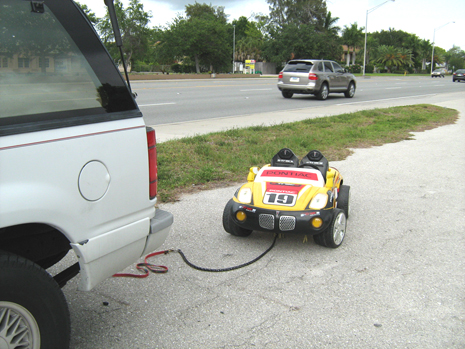
Then there is the case of grandparents Paul and Belinda Jean Berloni, who were arrested over the weekend when a sheriff’s deputy managed not to have a stroke as he watched them tow a plastic Hot Wheels toy car, resembling a Pontiac Solstice, with a 7-year old girl at the wheel behind their SUV. The car was attached to the back by a couple of dog leashes, and the SUV was clocked at between 5 and 10 miles per hour. The child, their granddaughter, was only wearing a swimsuit. Continue reading →

Dear Abby Follies: Ethically Frightening Question, Ethically Inadequate Response

Oh, yeah,THIS is going to turn out well...

How is this for a letter that makes proposals to require licensing for parents seem reasonable?

“DEAR ABBY: I have a beautiful wife, a dog and an 8-year-old son I love to watch sports with. My son loves sports, but he has trouble accepting a loss. He’ll take out his disappointment by beating the dog. My wife doesn’t want to get rid of “Patches” because she has had him since college. I don’t want to put my son through counseling because he said he’ll hate me forever if I do. I’m afraid if the problem isn’t controlled, my son’s life goals may be affected. What can I do? — GOOD DAD IN CLEVELAND”

What can you do? Well, to begin with, you can seek counseling for yourself and your wife, and read some books on Parenting 101. Continue reading →

Unethical Quote of the Week, Trayvon Martin Ethics Train Wreck Division: Dr. Boyce Watkins

“Sybrina’s words have opened the door for millions of people to understand when George Zimmerman is let off the hook with either an acquittal or a plea bargain for a lesser charge.”

—Syracuse University Professor Boyce Watkins, in a blog post complaining that the comments of Sybrina Fulton, Trayvon Martin’s mother stating that she thought the shooting of her son was “an accident” were devastating to the chances of convicting George Zimmerman of second degree murder.

Unmasked at last!

I must confess, I love this quote and the post that generated it. I love it because a race-baiting scholar who later defenders cannot credibly claim didn’t write what he meant, has confirmed what I have argued in multiple posts, in the course of also validating my assessment that Fulton’s comment was itself unethical, though not for the reasons Dr. Watkins objects to it.

In the rest of his post, Watkins confirms my assessment of Fulton’s irresponsible and despicable willingness to stir up hate toward Zimmerman. Continue reading →

“Blue Bloods” Ethics: The Good Lie?

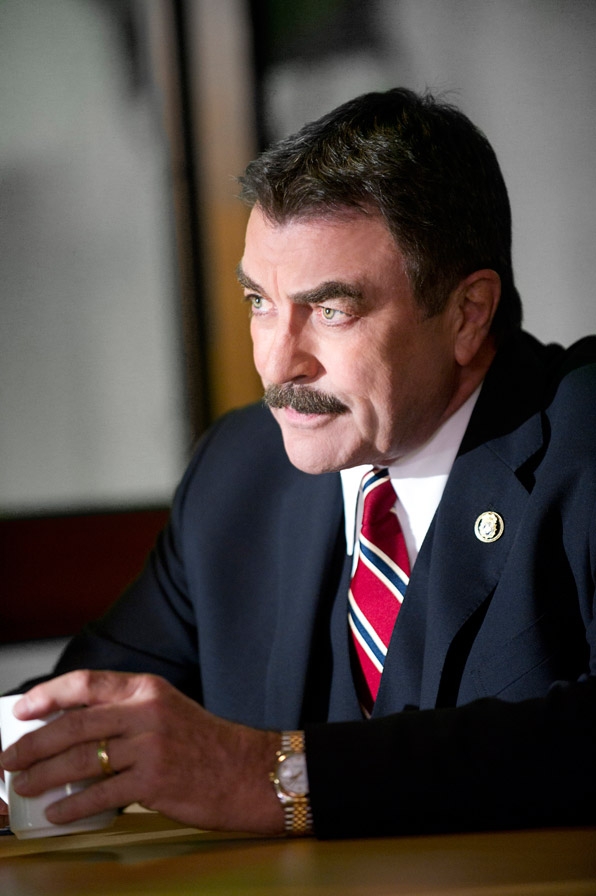
Tom Selleck as NYC Chief of Police Frank Reagan

Tom Selleck’s CBS drama “Blue Bloods,” chronicling the exploits of  the Reagans, an improbable fictional New York City family that dominates NYC’s law enforcement, featured an excellent example of a necessary lie last night, in which utilitarian principles would hold that the lie,  a rather serious and extensive one—many interlocking lies, really—was the most ethical option available.

The situation arose because the Chief of Police (Frank Reagan, played by Selleck) learned that his police officer son, Jamie Reagan, had rescued a child from an explosion, and the press and city were clamoring to know who the hero was. (Nobody saw the rescue, which is a contrived detail, but necessary to set up the ethical dilemma.) But Jamie was also working undercover in a serious and dangerous operation, having infiltrated an organized crime family. (Why was a uniformed cop allowed to stay on the street while leading a double life? Seems reckless to me, but Father Chief knows best.) To protect the undercover operation and his son, Frank Reagan decides on an elaborate deception, persuading his son’s partner, who was on the scene of the rescue, to take the credit and even accept a commendation in a public ceremony.

Lying to the public and the press to such an extent is almost always inexcusable, but protecting an anti-crime effort in the public interest, as well as the imperiled officer involved in it,  is a rare case in which the balance tips away from the truth. The “Blue Bloods” solution was the best one available given the situation and the law enforcement priorities.  But… Continue reading →

Ethics Quiz: What To Do With a Bad Seed?

A horror story from Cowlitz County, Washington:

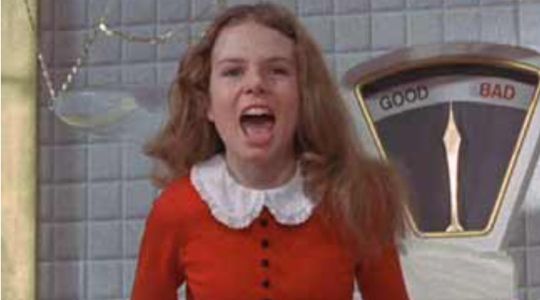
Little Rhoda didn't know what she was doing was bad! Suuuuuure she didn't...

When she was was 11 years old, Cassandra Ann Kennedy decided that her father didn’t love her enough, and that she would have a happier life if he wasn’t around any more. So that she made up a story that her father had raped her, told police, and..voila! In 2002 her father was convicted of rape and  sent to 15 years in a Washington state prison.

In January of 2012, Cassandra, now 23,  confessed that it was all a lie. “I did a horrible thing,” Cassandra told detectives. “It’s not OK to sit and be locked in this horrible place for something you didn’t do. It’s just not right.”

Figured that out all by yourself, did you, Cassie? Continue reading →

Jimmy Kimmel Is Still An Evil, Child-Abusing Jerk, and Apparently I’m The Only One Who Notices

I have written twice before about ABC late night talk show host Jimmy Kimmel’s penchant for urging his viewers to inflict emotional distress on their trusting children, because Jimmy and other mean-spirited jerks get a big kick out of watching kids scream and cry following cruelty from their parents. As I wrote the last time Kimmel issued one of his “challenges,” which was to spoil Christmas for your kid by giving them  horrible gifts (like a half-eaten sandwich):

“Children are not props for Jimmy Kimmel’s sadistic amusement, and parents who are willing to use their children this way… are, to be blunt, rotten, despicable, and untrustworthy parents. Something important—Compassion? Kindness? Empathy? Loyalty? Responsibility? Love? — is absent in their parental make-up, and that void is being cynically exploited by Kimmel, who has crossed the threshold from arrested adolescent to full-fledged villain. Since Kimmel has twice been rewarded with positive publicity for egging on parents to harm their kids, what can we expect next from Jimmy?…There’s almost no limit to the great YouTube videos one can create when you’re willing to lie to your kids to upset them.”

Well, now we know. Jimmy asked parents to pre-chew their kids food and serve it to them, to see their horrified reactions. Last night, he showed the hysterically funny “winners.” One disgusted and enraged teenage girl, finally told by her folks that the prank was Jimmy Kimmel’s idea, said to the camera, resoundingly, “You suck, Jimmy!”

Indeed he does. Continue reading →

A Facebook Suicide and the Duty To Rescue

One takeaway from Claire Lin's death: it's a good idea to have Facebook friends with character.

In Taiwan, a distraught young woman sent streaming photos* of her suicide attempt as she conversed with nine Facebook friends. Some urged her to stop, but none tried to contact police or rescue professionals as she asphyxiated herself with burning charcoal fumes. Yes, her attempt was successful. You can read the disturbing story of Claire Lin’s Facebook suicide here.

Would this happen in America? I wouldn’t be surprised. Sociologists are already weighing in with opinions about the isolation of social media and how the internet makes reality seem less real. I doubt that any of that was especially important in this incident. There have been so many other examples of people left to die with potential rescuers aplenty that were documented on Ethics Alarms and elsewhere, from the Mount Everest climbers who walked past their dying companion, to the more recent case of the Apple store employees who listened to a women get beaten to death in Maryland, that teach us that too many people have the natural inclination not to take affirmative action to help another in distress, and that the instinctive rescuers are the exception, not the rule.

Our culture should teach and reinforce the shared societal duty to come to the assistance of others in peril, but in fact it teaches the opposite. Most of us are told to mind our own business, to think of “Number One”, and  make reverse Golden Rule calculations to rationalize inaction (“He wouldn’t have lifted a finger to help me!”) We are taught to fear lawsuits, to wait for professionals (even if they aren’t coming), and to be fearful of making a bad situation worse. And, of course, we are conditioned to let the other person take the risk, so we can have our cake (not get involved) and eat it too ( see the situation resolved without anyone being harmed). And if we wait just a bit too long for that other person to do the right thing, we can always blame him (or her), saying, “I thought someone else would do it!” Continue reading →