Comment of the Day: “The Priorities of U.S. Higher Education Defy Understanding”

When the topic on Ethics Alarms is education, Michael frequently scores a Comment of the Day, and he did it again following the post on the University of Maryland spending a fortune on its president’s residence. Here is his effort to help us understand the conduct discussed in The Priorities of U.S. Higher Education Defy Understanding. And I’ll have a closing comment at the end.

“I have asked these questions about what is driving up college costs. Here is what I have found: Continue reading

Economists Start Getting Serious About Ethics

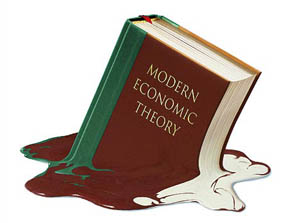
Charles Fergusen’s documentary about the 2008 financial collapse, “Inside Job”, chronicled the maze of deceit, conflicts of interest, greed, recklessness and self-serving maneuvers across multiple professions and sectors of the economy that led to the meltdown. Among the professions that were implicated in the account was that of economists, who in many cases advised Congress and others regarding economic policies without disclosing their own ties to special interests and various players in the drama. The debacle was a severe blow to the credibility of economists as a group and economics as a discipline. Many have since called for the profession to put in place conflicts of interest rules to guide practitioners and to build public trust.

For my part, I was surprised to learn that there was not such a code already in place. As a lawyer, I am  spoiled—the legal profession, as with judges, doctors, researchers, psychiatrists, accountants, legislators and government workers, has recognized the need for formal ethics guidelines for a very long time. The number of fields without ethics codes continues to amaze me, although one of those professions is…ethics.

Economics, however, is making strides. At its annual meeting in Chicago last week, the American Economic Association  issued  principles for disclosure of potential conflicts of interest and conflicts related to published academic papers. Here they are: Continue reading

A Frightening Figure, Setting Off Ethics Alarms

We don't even know how to play Russian Roulette responsibly.

On Friday, the day before Christmas Eve when much of America was thinking about sugar plums,  lay-away plans, and protesting Christmas pageants, the Federal Accounting Office released its analysis of  the net present value of the nation’s Social Security and Medicare obligations, “net present value” being  the total funds that would have to be set aside today to pay the costs of these programs in the future. Seldom do figures so clearly indict the unethical practices and statements of so many.

In fiscal 2011, the cost of the catching up on the required funding of Medicare and Social Security rose from $30.9 trillion to $33.8 trillion. That $2.9 trillion increase should be regarded as adding to the $1.3 trillion cash deficit for fiscal 2011, making a $4.2 trillion deficit—and this coming in a year in which the rising national debt was supposedly recognized, at last, as a threat to America’s stability, prosperity, and welfare. The costs of Social Security and Medicare are rising at a frightening rate, nearly doubling in the last decade, with little or nothing being done to address the problem. And there is good reason to believe that the Medicare estimates are based on unrealistic assumptions. The GAO report also includes an alternate, less rosy scenario (or perhaps “more putrid” is a better phrase) in which the projected Social Security-Medicare debt is more than $46 trillion. How serious is that? Well, the combined value of the equity in U.S. homes and the value of all publicly-traded companies is less than 20 trillion dollars.

What do these figures tell us about the ethics of the various players on the national scene? Continue reading

Punishing Corrupt Companies Without Punishing the People Who Make Them Corrupt

By all means, fine corrupt companies, but we need a new dress code for their management.

From The National Law Journal, December 8:

“The Justice Department has announced that Wachovia Bank N.A., now known as Wells Fargo Bank N.A., will pay $148 million to federal and state agencies after admitting to anti-competitive activity in the municipal bond investments market.”

I understand why the Justice Department, the SEC and other federal agencies fine companies huge amounts for what is essentially criminal conduct, choosing negotiated settlements rather than engaging in time-consuming trials that would cost taxpayers money and risk failing for reasons ranging from investigator error to skillful defense strategy. Nevertheless, the policy encourages rather than discourages unethical conduct by corporate decision-makers. It  does nothing to improve a culture that tends to define a bad business practice as a gamble that doesn’t work, or a scheme that gets discovered. Continue reading

So Who Do We Trust To Fight Crony Capitalism?

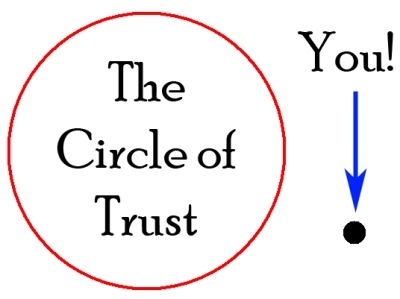
Shut out of the last Iowa debate because of low poll numbers, earnest, honest, ethical, reasonable, intelligent and boring candidate Jon Huntsman gave his assessment of the event to ABC’s Christiane Amanpour, saying that the main issue facing the country was a trust deficit:

“The most important issue of all was not even touched upon and that is the deficit of trust we have in the United States, in fact it may have played right into the trust deficit. That is, nobody trusts Congress anymore. We need term limits in Congress, we need to close the revolving door that allows members of Congress to move right on into the lobbying profession. No one has trust anymore towards the executive branch, no one trusts Wall Street with the banks that are too big to fail. So I would argue that the issues that are most salient in our political dialogue today were not even touched upon last night…”

Huntsman is right. It was especially astounding that this issue wasn’t addressed in the debate (and that those crack moderators Diane Sawyer and George Stephanopoulos  didn’t mention it) after more than a month of Occupy Everywhere protests that sorta-kinda dealt with the trust issue (oh,  what a little focus could have wrought!)  and the recent “60 Minutes”  expose on insider trading by members of Congress. Also preceding the debate was this trust-buster: in July of 2008, Bush Treasury Secretary Hank Paulson held a meeting with select Wall Street fund managers and gave them advance notice of government action that they could use to make significant profits: Continue reading

Occupy Manny

Sing it, Manny! "You load 16 tons, and what do you get? Another day older and a pro-rated 20 million dollars a year.."

I admit it: Manny Ramirez’s existence is a constant irritant to me. I regard him as epitomizing the worst tendencies of professional sports stars, and the attitudes of the most conscience-free who walk among us who make/ society and the culture a little bit worse every day. I was thrilled when his baseball career came to an appropriately sordid end, with his being caught using performance enhancing drugs and retiring o avoid having to serve his suspension, and nauseated when he announced the end of his retirement a few weeks ago, hoping to lure some addled team owner into paying him a million dollars or so to hit home runs and loaf.

Now, thanks to the research skills of baseball blogger Craig Calcaterra, my morning began by learning that Manny is also akin to the recording stars, Hollywood actors, rich politicians and toadying business executives who have tried to pass themselves off as Occupy Wall Street’s virtuous and harshly exploited 99% despite all reason and evidence to the contrary. In an interview in Spanish, Manny was explaining that he might have to travel to Japan to play ball again, and said,“Somos un obrero y donde quiera que haya trabajo hay que ir a trabajar;” in English: “We are the working class and must go where there is work.”

“Working class!” Continue reading

Albert Pujols: Yes, He’s Disloyal, Greedy, and Confused.

I'm sorry! This was supposed to be a picture of Albert Pujols, not King Midas. Well, six of one, half-dozen of the other...

Cardinal free agent first baseman Albert Pujols, generally regarded as the most talented baseball slugger alive, just jumped from his supposedly beloved St. Louis to the Los Angeles Angels because they offered him several more millions of dollars per year that he couldn’t possible spend if he tried than the Cardinals did. The attitude of most players, fans and sportswriters, not to mention the players’ union (naturally), is “Of course! Who wouldn’t?”

Who wouldn’t? A more ethical, less greedy, more thoughtful human being, that’s who.

The Angels won Pujols with an offer of $254 million dollars for ten years, making him the highest paid player on captivity. The Cardinals. on the other hand, whose fans had cheered him, embraced him and worshipped him, and which had established Pujols as one of the franchise’s icons fit to stand with Stan the Man Musial, Bob Gibson, Dizzy Dean and Lou Brock, had offered a measly $204 million for nine years, or about 23 million a year. The difference between the two offers is minimized, if not eliminated, by the cost of living disparity between the two locales: housing, for example, is about 250% more expensive in LA. Continue reading

Sorry, Mystery Thief: You’re No Ethics Hero

In fact, you’re still a thief.

That C-note isn't worth the $20, Mystery Theif. Nice try.

The UPI reported that an elderly Seattle man who stole money from a store more than 60 years ago “returned it last week — with interest.”

Aw. Except he didn’t.

The manager of a downtown Sears store says the man handed over an envelope containing a hundred dollar bill and a note to the customer desk, reading..

“During the late [1940s] I stole some money from the cash register in the amount of $20-$30. I want to pay you back this money in the amount of $100 to put in your theft account.”

I’m not impressed. He’s had the use of the money for more than 60 years, and now he’s financially secure, so he thinks he can make everything square and clear his conscience. He can’t. Theft is a wrong when it occurs, and unless it is voluntarily undone before any consequences result, there is no going back that clears the ethical slate. But this guy didn’t even try very hard. According to the useful calculator you (and he) can find here, the current day worth of $20 in 1948 is…

    $181.0  using the Consumer Price Index
   $153.00 using the GDP deflator
   $309.00 using the unskilled wage
    $375.00 using the Production Worker Compensation
    $510.00 using the nominal GDP per capita
   $1,080.00 using the relative share of GDP

…and that’s without interest.

So now he’s stealing brownie points.

(By the way…nice work, UPI. Was it really such a stretch to check out the “with interest” claim?)

“It’s A Wonderful Life” Ethics, Part I (of 3)

“It’s A Wonderful Life” made its now traditional holiday season appearance on network television, and naturally, I watched it. The movie is one of the great ethics movies of all time, as well as being one of the great American movies of all time, perhaps director Frank Capra’s masterpiece. One of the markers of a classic film is how one can find new things in it upon every viewing, and that is certainly true of “It’s A Wonderful Life.” I was struck this time around by how many ethics issues are raised in the screenplay, some, no doubt, unintentionally.

1. “If It’s About Ethics, God Must Be Involved”

The movie begins in heaven, represented by twinkling stars. There is no way around this, as divine intervention isat the core of the fantasy; heaven and angels were big in Hollywood in the Forties. Nevertheless, the framing of the tale advances the anti-ethical idea, central to many religions, that good behavior on earth will be rewarded in the hereafter, bolstering the theory that without God and eternal rewards, doing good is pointless.

We are introduced to George Bailey, who, we are told, is in trouble and has prayed for help. He’s going to get it, too, or at least the heavenly authorities will make the effort. They are assigning an Angel 2nd Class, Clarence Oddbody, to the job. He is, we learn later, something of a second rate angel as well as a 2nd Class one, so it is interesting that whether or not George is in fact saved will be entrusted to less than heaven’s best. Some lack of commitment, there—then again, George says he’s “not a praying man.” This will teach him—sub-par service! Continue reading

The Selfish, the Irresponsible and the Cowardly, Pushing the US to Fiscal Disaster

Greek food, America! Better get used to it, becuase we'll have to swallow what the Greeks are swallowing we can't find some leaders with courage.

Failure is now all but ensured by the so-called Super Committee, a gimmick designed by our leadership-averse President and his pathetically inept legislative counterparts in Congress (both parties, now) to provide themselves with bi-partisan political cover when they again ducked their obligation to solve the nation’s fiscal mess. For those of you who, like me, have wondered how Greece and Italy could reach their current miserable status when the fiscal disaster now facing them was obvious years ago, the answer is plain. They tolerated a fatal combination of selfish interest groups, pampered and lazy voters, and elected leaders who distorted, dithered and ducked their duties, until it was too late. And that is exactly what happening here.

There is no need to waste invective on the committee itself, which is beneath contempt. What they have come to was predictable, and I, along with many others, predicted it. But the predictions still did not have to come true, if, for example, these hostages to toxic ideologies really cared about the country as much as keeping the power to ruin it, or if President Obama hadn’t calculated that his best chances of re-election would be to let the committee founder with him being able to claim no role in its betrayal. rather than to do his job—leading–and try to make sure it succeeded at the risk of failing himself…again.

Betrayal is the word that I use, and that is what it is. Continue reading