End Of Week Ethics Bombs, 8/6/21

Hiroshima

August 6, 1945 is one of the most important ethics days of all, and among the most controversial. The United States bomber Enola Gay—now on exhibit in a hangar near Dulles Airport, dropped the first atomic bomb on the Japanese city of Hiroshima. Approximately 80,000 people were killed in seconds, and another 35,000 were injured. More than 60,000 would be dead by the end of the year from the effects of the fallout. Was the launching of the nuclear age by the United States ethically justified to save American lives (an invasion of the Japanese mainland had been estimated to risk a million U.S. casualties) and end the war? Was President Harry Truman guilty of a war crime, as non-combatants, including children, constituted most of the deaths? Did the horrible results of the new weapon prevent World War III, or make it more likely? These are still intensely debated questions by scholars, historians, theologians, military strategists, philosophers and peace activists.

1. Well, I’ve been spoiling for a fight, shopping around Northern Virginia and fining myself one of the few unmasked. So far, nobody’s said a word, but anyone who does is in for it. I’ve been vaccinated twice and probably had a mild, symptom-free infection before that. I have always been unusually resistant to viruses. Mask fog up my glasses and make me miserable. If you have chosen not to get your shots, swell, that’s your choice, but your exercise of personal liberty is not going to restrict mine without a fight. And don’t tell me I have to wear a mask so phobics feel “safe.” That’s not my problem either. I am not inclined to “social distance,” either. The mask fetish is going to strangle community, society and the joy of life unless we draw some hard lines. I’m drawing.
Continue reading

Questions, Theories And Observations On The End Of The Simone Biles Affair [Corrected]

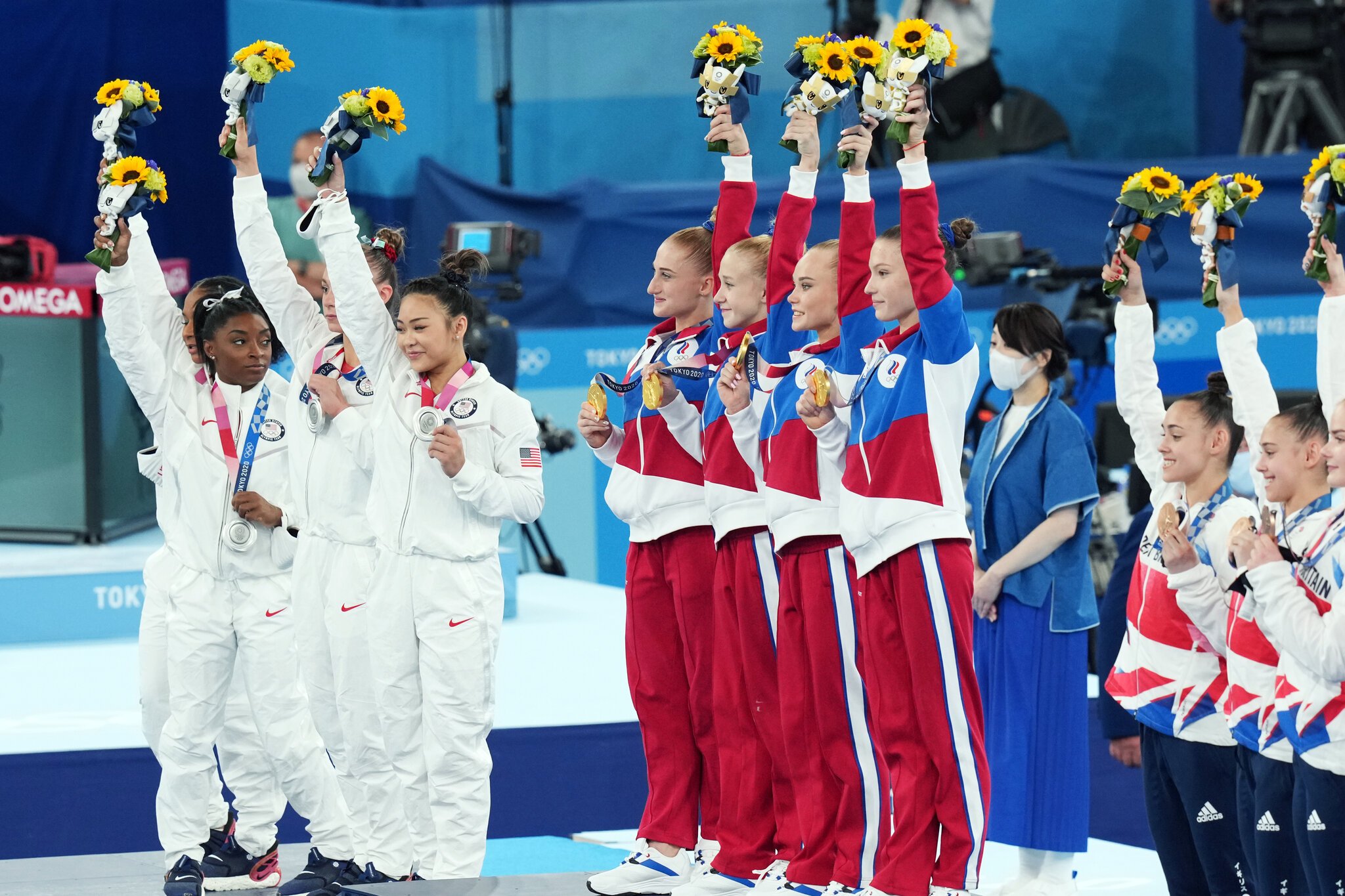
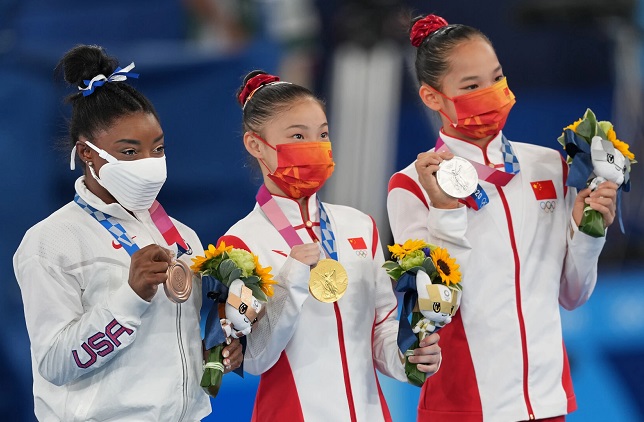
Biles medal ceremony

Well, the last on Ethics Alarms, anyway, I hope. I wish I could justify not dealing with the “rest of the story,” but I can’t: too much metaphorical ink has been spilled here, there and everywhere over this annoying Ethics Train Wreck.

To bring you up to date, Biles returned to Olympics competition on the balance beam today (well today in Japan) and did well enough to win the bronze medal. She performed back handsprings, flips, split leaps and a double back flip for her dismount, but it was a safe routine not calculated to win. She did not, for example, dismount with the signature move named after her.

What’s going on here? Damned if I know. After debating a number of Biles defenders and reading the relentless spin being offered up by the mainstream media, it is clear to me, at least, that whatever Biles did or didn’t do, said or didn’t say, these people would stick to the established compassionate narrative. Biles, meanwhile, would follow a scripted effort to salvage some of her value as a celebrity cash cow after an Olympics disaster that would have sunk any similarly acclaimed male athlete, and most female ones.

Here’s how the New York Times began its story about Biles, the Greatest Of All Time, aka GOAT, not being able to be better than the third best in a single Olympics gymnastics event:

“Simone Biles didn’t want her Olympics, and perhaps her career, to end with her in the stands and not on the competition floor. It couldn’t end that way, after all, considering everything she had sacrificed to make it to the Tokyo Games. She suffered through years of self-doubt as a sexual abuse survivor after realizing that Lawrence G. Nassar, the longtime U.S. national team doctor, had molested her. And she had endured an extra year of training on aching muscles and painful ankles and dealing with U.S.A. Gymnastics, the entity that failed to prevent her abuse.”

Such shameless framing of an elite athlete’s failure in order to ensure minimal accountability has surely never appeared in print before in a reputable publication. Did any account of Babe Ruth failing to come through for his team in a big game ever begin with a reference to his traumatic upbringing in a shabby Baltimore orphanage? Was Ty Cobb excused for attacking a fan during a game because of the trauma he suffered when learning about the tragic death of his father? [ Notice of Correction: In the original post, I wrote that Cobb’s father had committed suicide, which is what I thought I knew. I was wrong, and should have checked. I apologize for putting more misinformation into the web. Much thanks to LoSonnambulo for alerting me.] No, because the various traumas and tragedies athletes have suffered on their way to triumphs, celebrity, fame, and wealth are irrelevant to their performance in their chosen sports—except for Simone Biles.

Continue reading

A Simone Biles Thought Experiment I Dare Her Apologists To Try…

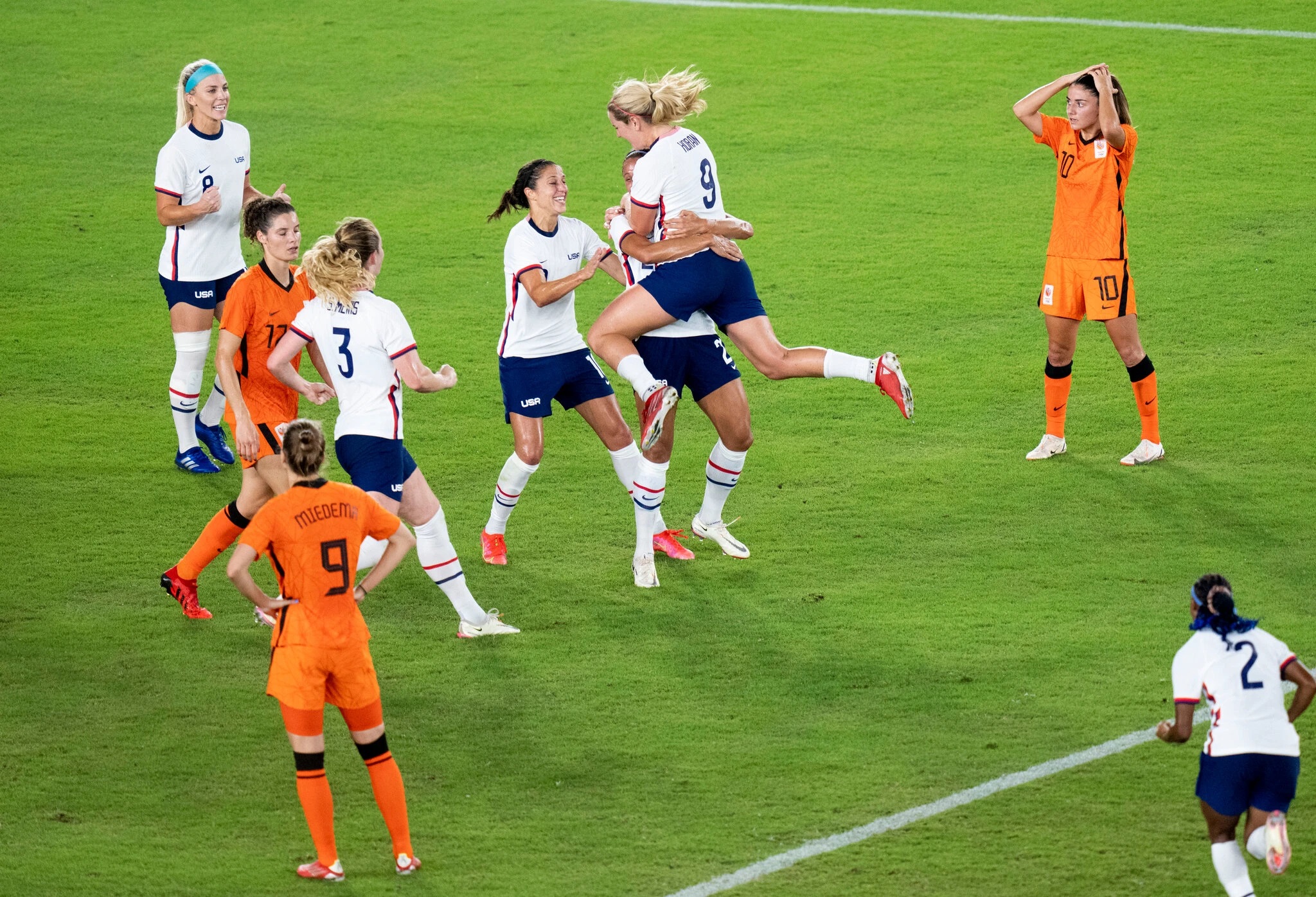
Womens soccer goalie

The New York Times writes of the U.S. Women’s Soccer team’s desperate-needed victory over the Netherlands in the Olympics:

“It was only afterward that Alyssa Naeher let down her guard. After she had dived to saved the penalty kick late in the game. After she had dived again to push aside the header in extra time. After she had turned away not one but two penalties in the shootout. Naeher’s teammates count on her to do her job as well as they do theirs every time they take the field. Better than they do even, since their mistakes have a tendency to wind up in the back of her net.

In the quarterfinals of the Olympic tournament on Friday, facing a dangerous Netherlands attack, that had already happened twice. Now the United States needed Naeher to save them again. After the teams played a 2-2 tie, a penalty kick shootout would decide who would go to the semifinals, and who would go home. The Americans turned to Naeher. Save us, they said. Just like you have before. “There’s no one else I’d rather have in the net than her,” midfielder Rose Lavelle said later. “She’s saved us so many times.” And so Naeher, who had saved her teams in big games and small ones, in World Cups and friendlies, saved them again.”

Now imagine that Naeher suddenly announced when the game was a tie that she would not guard the goal in the shootout, but was quitting the game. “It’s been really stressful, this Olympic Games,” she says. “I think just as a whole, not having an audience, there are a lot of different variables going into it. It’s been a long week, it’s been a long Olympic process, it’s been a long year. So just a lot of different variables, and I think we’re just a little bit too stressed out. But we should be out here having fun, and sometimes that’s not the case. I truly do feel like I have the weight of the world on my shoulders at times.”

So she quits, just as her team is depending on her. The back-up goalie takes her place, and the American Women’s Soccer Team loses, and is out of the Olympics.

Would Naeher be hailed as a hero and a role model? Would her team mates say afterwards that they support her decision 100%?

Comment Of The Day: “Gee, Jason Whitlock, What Do You REALLY Think About Simone Biles’ Quitting On The Olympics?”

Yes, I guess this is the sixth post related to the Simone Biles controversy. Isaac’s Comment of the Day elaborates on one of the many reasons this episode bothered me so much and continues to, especially as the excuses and rationalizations for Biles’ conduct appear to be taking over the “narrative” in the absence of what I consider persuasive facts and arguments. The next ugly shoe to drop, I predict, will be when the female American gymnast who won a gold in Tokyo gets endorsement contracts in preference to the “Greatest of All Time” who somehow couldn’t access that greatness when the spotlight was on, and chose not to try. The preference for the winner over the “hero” will be attributed to malign influences. Just wait.

Giving women appropriate power and influence in American culture has been generally beneficial to all, but the ascension of traditional female virtues has had the unfortunate effect of diluting some of the the very values that allowed the United States to come into existence and succeed over the centuries. The disastrous handling of the pandemic has been one example of how this development is not an unalloyed good, and the fact that Biles’ conduct is not merely greeted with sympathy, which is nice, but praise, which is offensive, is another.

Here is Isaac’s Comment of the Day on the post, “Gee, Jason Whitlock, What Do You REALLY Think About Simone Biles’ Quitting On The Olympics?”

***

America used to be associated with very masculine qualities: toughness, stoicism, risk-taking. This reputation did not exclude American women. Harriet Tubman, Sojourner Truth, Calamity Jane, Amelia Earhart.

It’s easy to point out the Generation X and millennials’ glaring lack of these qualities, but to me it’s their parents who steered America wrong. Specifically every boomer who jumped on the socialist bandwagon and participated in the 1960s and 70s revolutions against marriage, Christianity, monogamy, patriotism, sobriety, and hard work. The ones who think Woodstock was some kind of beautiful, transformative event. The ones who wax nostalgic about the “Summer of Love” when their poorly-raised grandkids turn chunks of Seattle into murder-dystopias. The generation that necessitated the invention of the term “latch-key kid” to describe their neglected children.

So I perused Simone Biles’ Wikipedia page, and, sure enough…in and out of foster care…abandoned by Mom…no Dad ever in the picture. Showed incredible talent that was her ticket to a secure future, only to be one of the gymnasts sexually exploited by serial abuser and boomer Larry Nassau. Diagnosed with ADHD; currently on medication. These are the symptoms of growing up in a world created by the values of the 60s and 70s. We can mock them for not knowing how to talk to girls, change a tire, be in a stable relationship, or cope with stress…but these are things people learn from their dads, their faith, and their stable community of neighbors, extended family, and church. Younger generations were not only not given those things; they were taught they didn’t need them.

Continue reading

Friday Late Morning Ethics Warm-Up, 7/30/2021: Pot, Bribes, “Advocacy Journalism,” Baseball’s Domestic Abuse Policy, And How Did A Woman Win The Gold In The Men’s Decathlon?

White rabbit 2

I often check multiple websites to see what of ethics significance occurred on given dates. This July 30 isn’t a major ethics day, though the fiasco that resulted in 1864 when the serially incompetent Union General Ambrose Burnside made his third major blunder of the Civil War in the Battle of the Crater carries a crucial leadership lesson that apparently is impossible to learn: don’t give incompetent leaders second (or third) chances to lead.

However, on one of the sites, “This Day in History,” the headline on a note reads, “1976: Caitlyn Jenner wins Olympic decathlon.” That may be politically correct, but it’s cowardly (would the trans activist mob pounce if the event was stated straight?) and absurd on its face. Bruce Jenner won the Olympic decathlon, and it was a men’s event. Caitlyn was, as far as we know, not even a twinkle in his eye. Bruce fathered children after winning the gold; the event and the other events in his life when he was a he were not magically altered by his later transgender journey, like “Back to the Future.”

1. “Nah, there’s no mainstream media bias” note of the day. Frequent commenter and invaluable tipster Steve Witherspoon sent me a link to a Jonathan Turley column I had missed. The law professor covers a lot of issues we have discussed here as he notes that “Professional ethics, it seems, has become entirely impressionistic in the age of advocacy journalism.”

It seems? There is no question about it. Turley also points out the hypocrisy of the Times with several examples, writing, “If none of this makes sense to you, that is because it does not have to make sense. Starting with the [Senator Tom] Cotton scandal, the New York Times cut its mooring cables with traditional journalist values. It embraced figures like Nikole Hannah-Jones who have championed advocacy journalism.” He also notes that “while the Times has embraced advocacy journalism, its has not updated its guidelines which state that “Our journalists should be especially mindful of appearing to take sides on issues that The Times is seeking to cover objectively.”

Read it all, and I recommend sending it to any friend or relative who calls assertions that the news media is a left-wing propaganda machine at this point “conservative disinformation.”

Continue reading

Not Cakes, But Advocacy: The Tenth Circuit Rules That Compelled Expression Is Constitutional

compelled speech

I will state up front that I am confident that this decision will get to the U.S. Supreme Court, and that if and when it does, it will be reversed.

The 10th U.S. Circuit Court of Appeals at Denver ruled 2-1 that website designer Lorie Smith and her company, 303 Creative, violated a Colorado law by refusing to create a website celebrating a same sex union. She was represented by Alliance Defending Freedom, a conservative Christian nonprofit, who also represented Christian baker Jack Phillips, who refused to bake a cake for a same-sex wedding. There is a material difference, however, between a cake and a website. A cake is not generally thought of as expression, and there is a colorable argument that a bakery is a public accommodation. But Smith, whose company designs wedding websites, argues that forcing her to make one that supports a same-sex marriage violates her religious beliefs. It isn’t frosting and cake shades at issue, it’s words.

A Colorado public accommodation law bars public accommodations from refusing to provide equal access to services because of sexual orientation. The law’s communication clause also says public accommodations cannot publish any communication indicating that full access to services will not be provided because of sexual orientation. The appeals court majority decreed that neither provision violates Smith’s free speech and free exercise rights under the First Amendment, even though it acknowledged that Smith’s websites are pure speech that involve her unique creative talents. But, the Court claims, indulging in an “it isn’t what it is” rationalization, Colorado “has a compelling interest in protecting both the dignity interests of members of marginalized groups and their material interests in accessing the commercial marketplace…We agree with the dissent that a diversity of faiths and religious exercise, including appellants’, ‘enriches’ our society…Yet a faith that enriches society in one way might also damage society in other ways, particularly when that faith would exclude others from unique goods or services.”

This opinion is way, way over the traditional judicially-drawn line between compelling public accommodations to be equally accessible to all and compelling artistic expression. Under this theory, a singer who performs at weddings would have to warble at a same-sex ceremony, even if her faith held that such a ceremony was a sin.

Continue reading

Comment Of The Day: “Simone Biles Betrayed Her Team…Stop Making Excuses For Her”

USA gymnastics

Well, I can write about the great issues of the day here or universal ethics principles, and attract crickets, but when a spoiled superstar female gymnast chokes on the Olympics stage, THAT attracts the most comments in a 24 hour period that Ethics Alarms has seen in months.

Actually, there is more of ethical significance to the Simone Biles Affair than is immediately apparent. The main issue, I think, may be the hypocrisy of feminists and sports journalists who rush to rationalize conduct by a young woman that no male athlete of any note would ever get away with. There are also profound issues of character, duties to one’s team, the ethics of sport and the the narcissism that celebrity creates. There are also some issues that I expect to emerge down the metaphorical road. For example, I haven’t yet encountered anyone arguing that criticism of Biles’ choke is racist, but given the response in Japan to Naoimi Osaka’s shocking loss in tennis, I expect that is coming. I also have written in my head the Ethics Alarms post responding to any post-Olympics product endorsement deals that come Biles’ way.

Yet another issue is raised by the Comment of the Day by JStevens, in what appears to be his inaugural contributions here, as his reaction to the post, “Simone Biles Betrayed Her Team…Stop Making Excuses For Her”…

***

Continue reading

Simone Biles Betrayed Her Team…Stop Making Excuses For Her

Biles

Here is the jaw-dropping opening to the New York Times report updated a few minutes ago:

In the biggest upset for the United States at the Tokyo Games, Simone Biles withdrew from the gymnastics team competition after it had started on Tuesday, handing Russia’s squad a path to the gold medal and ending American domination of the event for more than a decade. Biles, Team U.S.A.’s star, said she pulled out of the event because she wasn’t in the right place mentally to perform the difficult and often dangerous skills she is known for, after feeling so much pressure to be successful. She had been struggling with the stress of being the greatest gymnast in history, she said, and outside expectations were just too hard to combat. It is not clear whether she will compete in her individual events.

I have been following sports, and especially team sports, since I was 12-years-old. I cannot imagine any male athlete withdrawing from his team during a crucial series or before a pivotal game because he “wasn’t in the right place” mentally, or because he was feeling “pressure to be successful.” Any male athlete behaving like this would be universally condemned by the sportswriting establishment, team members and fans, and rightfully so. But The Boston Glob’s Tara Sullivan this morning provided another jaw-dropping article headlined, “Bravo to Simone Biles for taking care of herself when she needs it most.”

When she needed it most? The entire concept of a team, be it in sports or in any other pursuit, is to sacrifice one’s own desires and comfort when the team needs it most. In the 1996 Summer Olympics, female gymnast Kerri Strug sucked it up and preserved her team’s medal by performing a vault despite a seriously injured ankle. This was hailed as the epitome of sportsmanship and athletic courage. Now Biles quits her team because, as she wrote on Instagram before her decision, “I truly do feel like I have the weight of the world on my shoulders at times.” Indeed, every star and superstar on any team seeking the distinction of a championship facing top competition feels the weight on his or her shoulders. Only Biles not only decided that this was ample justification to abandon her team mates, but is being praised for it. Astounding. Astounding. I keep thinking about how I would react as stage director to the leading actor in a stage production who came to me on opening night and said, “I just can’t go on. The pressure is too much!”

Continue reading

Two From The “When Ethics Alarms Don’t Ring” Files: The Women

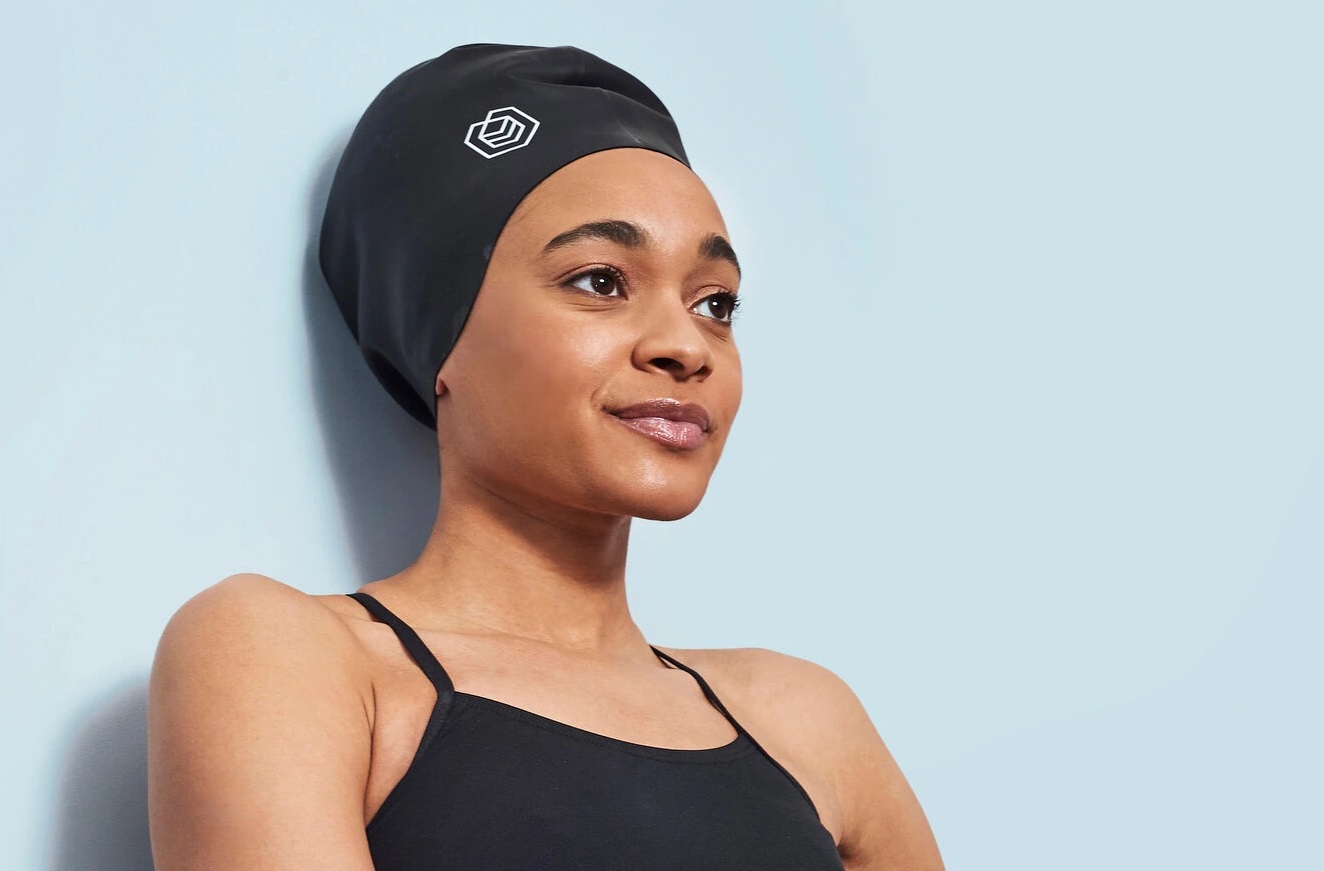
Soul Cap

I. The Cap.

There aren’t a lot of competitive black swimmers, for a number of reasons, but wouldn’t you think that authorities in the swimming field would have some sensitivity to their special needs when the situation presents itself? I would, or did, and is often the case, I was wrong.

A women’s swim cap designed for African-American hair, called the Soul Cap (above), is meant to accommodate the thicker, curlier hair of black women to provide a better fit and protect hair from chlorine. Ahead of the Summer Olympic Games in Tokyo which begin later this month, the International Swimming Federation (FINA) banned the use of the cap,  ruling that “athletes competing at the international events never used, neither require to use, caps of such size and configuration,” and that the Soul Cap does not follow “the natural form of the head.”  This is, of course, ridiculous, since the number of black women who have competed in swimming events in the Olympics can be counted on the fingers of one hand, so of course the caps break with tradition and common use. Whatever their bone-headed logic, how could the FINA hacks not figure out that such a ruling would appear tone deaf at best and racist at worst, especially in the middle of the George Floyd Freakout?

After the completely predictable (and fair) backlash, now the body says that it is “currently reviewing the situation with regards to ‘Soul Cap’ and similar products, understanding the importance of inclusivity and representation.”

There have never been any allegations that the caps confer any competitive advantage. This is how people with dead ethics alarms fuel claims of “systemic racism.”

II. The All-Women Broadcast Team

Continue reading

Dress Code Ethics (Again) From The “Oh, Come ON!” Files: The Immodest Fitness Model

bodybuilder-1

Two days ago, American Airlines denied boarding for Deniz Saypinar, a Turkish-born fitness model traveling from Dallas-Fort Worth to Miami because, the carrier explained to her, its conditions of carriage require all customers to dress “appropriately,” and her outfit wasn’t appropriate.

Ya think? That photo above shows how she presented herself at the gate.

“The customer was advised of our policy and was rebooked on a subsequent flight. The customer has since arrived in Miami,” the airline’s rep said.

Deniz is in great shape; I wonder why, if she was going to grandstand like this, she didn’t just wear a g-string and pasties and go all the way with it. I do not believe for a second that she expected to be allowed on the plane dressed like that. She wanted to set off a controversy and win herself Andy Warhol’s 15 minutes of fame, while giving feminists something to shout about.

“You will never believe what happened to me at Texas Airport,” first non-American citizen to win the US National Bikini Fitness Competition in 2021 wailed to her 1 million followers on Instagram as she posted her attire.

Oh yes I will!

“I am an athlete, and now I have to wait here until the morning,” she wrote. “I like to wear feminine clothes that reveal my femininity, but I never dress in a way that will offend anyone. I’m mature and civilized enough to know what I can and cannot wear. I don’t deserve to be treated like the worst person in the world for wearing denim shorts What separates us from animals if humans can’t control even their most primitive impulses? I feel insulted. They wouldn’t let me on the plane because I wore these shorts in the United States.”

Uh, I wouldn’t call that an exactly fair description of what happened. She wasn’t treated “like the worst person in the world,” although she should have been treated as a narcissist and ruthless self-promoter who deliberately wasted the time of airline staff and caused a pointless controversy just to get her name and figure publicized. And she wasn’t rejected as a passenger for “wearing denim shorts.”

” What separates us from animals if humans can’t control even their most primitive impulses? ” has to win an irony award: it is the model who can’t control her primitive impulse to display herself in places where such displays are rude and disruptive. Decorum and manners in public also separate us from animals. Wearing reasonably modest clothing in public is basic civility, showing respect for others.

What do you want to bet that she wears that kind of outfit and then, when some little fat guy stares at her, gets indignant?

Continue reading