Ethics Heroes: The US Conference of Catholic Bishops

Bishops

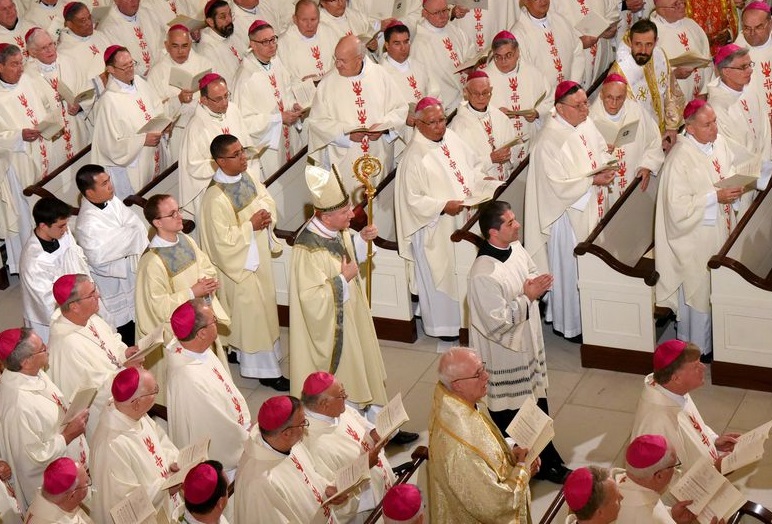
It is unusual to call an organization’s decision to follow its own rules heroic, but I have low expectations of the Roman Catholic Church. The US Conference of Catholic Bishops voted 168-55 to draft a document on “Eucharistic coherence,” because the Church has been anything but coherent regarding the status of allegedly devout Catholics who support abortion.

Catholics are forbidden from participating in the ritual of the Eucharist if they are in a state of sin. Abortion is considered a very serious sin in the Catholic Church, which holds that life begins at conception. Thus a public figure, indeed an elected official, indeed a President, who openly supports abortion cannot take holy communion, because he is endorsing and enabling a serious sin. This isn’t hard. The much publicized “controversy” over the Bishops’ decision to follow their own Church’s ancient rules ( and those of the New Testament: “Wherefore whosoever shall eat this bread, and drink this cup of the Lord, unworthily, shall be guilty of the body and blood of the Lord. But let a man examine himself, and so let him eat of that bread, and drink of that cup. For he that eateth and drinketh unworthily, eateth and drinketh damnation to himself, not discerning the Lord’s body. For this cause many are weak and sickly among you, and many sleep.” — 1 Corinthians 11:27-30 ) resembles the current controversy in baseball over the MLB decision to enforce the hundred-year-old rule against pitchers doctoring the ball.

I know, everything reminds me of baseball, which has played a much greater role in my life than religion. But this is the same situation at its essence. The Catholic Church ducked, weaved and looked the other way while many U.S. politicians professed their belief in Catholicism as they openly and directly contradicted and actively undermined the Church’s core beliefs. They sought to have the benefit of appealing to the religious while simultaneously advocating a practice that their own Church condemns.

The New York Times—my wife keeps asking me why we pay 80 bucks a month for this shameless propaganda device, and I am running out of reasons—says that the Bishops’ vote is a “move to target a president, who regularly attends Mass and has spent a lifetime steeped in Christian rituals and practices, is striking coming from leaders of the president’s own faith, particularly after many conservative Catholics turned a blind eye to the sexual improprieties of former President Donald J. Trump because they supported his political agenda.”

Continue reading

Glenn Greenwald Is Now Apparently A Traitor Because He Calls Out Journalists And Democrats On Their Lies

Pulse massacre

Even before he quit The Intercept, the investigative news organization that he helped found, in protest of its refusal to report the Hunter Biden laptop story so it wouldn’t hurt Joe Biden’s prospects in the 2020 election, journalist Glenn Greenwald was calling out the mainstream media for flagrant dishonesty and partisan reporting during the Trump administration. Greenwald, who is a non-partisan critic and a libertarian muckraker, is now being accused of being a “traitor” by progressives because he’s doing what reporters used to regard as their duty. How dare a journalist deliberately undermine a false narrative being advanced by the news media for “the greater good”?

His recent exposé shows why Greenwald is an ethics hero as well as a possible savior of his profession, which looks like it is going down for the proverbial third time.

Since it is “Pride Month”—yes, we have a special month celebrating how people have sex and who they have sex with—politicians decided to use the approaching five year anniversary of the PULSE massacre in Orlando to grandstand about LGBTQ hate crimes, and, by extension, those evil conservatives who clearly hate gays and transsexuals. Omar Mateen shot and killed 49 people on July 22, 2016 at an Orlando gay nightclub, so the narrative has become that Mateen, was motivated by anti-LGBT hate. This is simply untrue; it isn’t even a matter of controversy. Mateen was an Islamic terrorist, and his motive was to punish innocent Americans for President Obama’s bombing campaigns in Syria, Iraq and Afghanistan. He made that undeniable in what he wrote and said. He probably didn’t even know PULSE had a gay clientele. All evidence shows that he chose PULSE at random.

Continue reading

Tuesday Afternoon Ethics Tunes, 6/8/21: The Mean Fundraiser, And More

Quite a while ago—I’m afraid to check—I asked readers to submit nominees for popular songs with an ethics theme or lesson. Lorne Greene’s one hit recording ( his vocal version of the “Bonanza” song did not fly off the shelves) was “Ringo,” a pretty blatant rip-off of Jimmy Dean’s “Big John,” was one of the first on the list. I received quite a few suggested songs but events overtook me, and I never finished the project. It is in a growing list of promised future content that I have yet to deliver, including missing parts to multi-part posts. I apologize to readers for all of them, but I also intend to make good on all of them, though the ethics songs compilation is understandably low priority. I was happy to finally finish the Ethics Guide to “Miracle on 34th Street” after it languished for a year. The top priorities on the catch-up list right now are Part II of Three Ethics Metaphors: The Rise, The Presidency And The Fall Of Donald J. Trump—that will be on the “Animal House” parade plot metaphor for Trump’s election—and, of course, the long-delayed Part III of The Pandemic Creates A Classic And Difficult Ethics Conflict, But The Resolution Is Clear.

Back to Lorne: I met him once, on a Santa Monica beach. He was in swimming trunks, and with his family, extremely friendly, tanned and wearing his hairpiece, which was fantastic. Like several other stars I have met in person, Greene was so strikingly attractive that he would make anyone turn their heads on a street even if you had no idea who he was. Unlike most of the others, he appeared to be a genuinely nice guy.

1. Proud to be off Twitter, Reason #569: After Twitter received notice of its noncompliance with India’s information technology laws, demanding that the company remove content critical of the government’s handling of the pandemic and about farmers’ protests, including tweets by journalists, activists and politicians, Twitter pulled itself up to its full metaphorical height, puffed itself up like blowfish, and protested in part, “We are concerned by recent events regarding our employees in India and the potential threat to freedom of expression for the people we serve.”

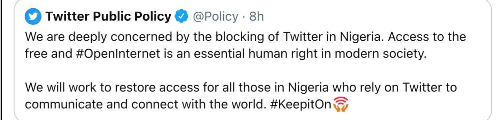
Twitter actually said that it cares about freedom of expression! Then, last week, after Nigeria blocked Twitter, it had the gall to tweet…

Twitter Nigeria

This, from the platform that censored the Hunter Biden laptop story and banned President Trump. The Hanlon’s Razor question of whether these are bad people or just stupid people now becomes irrelevant. It’s unethical to operate a powerful communications platform when you are so stupid.

Continue reading

Ethics Dunce: Yahoo! Sportswriter Shalise Manza Young

Naomi-Osaka interview

The withdrawal of female tennis star Naomi Osaka from the French Open because she wasn’t allowed to ignore rules all the other players were forced to play by has inspired a revealing amount of criticism…of the concept that stars should have to abide by the same rules and laws as everybody else. Since this is a massive ethics blind spot that defies persuasive advocacy, I’ve been somewhat surprised that so many commentators and athletes have been willing to put such an unethical position in print.

I shouldn’t have been, I guess. Osaka (predictably) played the victim, suddenly revealed that she suffered from depression (the old reliable “I’m not bad, I’m sick!” ploy satirized in “Officer Krupke”), and she had the triple benefit of being Asian, Black and female, the “Get Out Of Accountability Free” hat trick (that’s hockey, but you get the point) in the Age of The Great Stupid.

I was originally going to dedicate this post to the fatuous commentary of New York Times columnist Kurt Streeter, to whom all sports is about race, on l’affaire Osaka. “Using social media posts, first last Wednesday then on Monday, Osaka called out one of the most traditional practices in major sports: the obligatory news conference, vital to reporters seeking insight for their stories, but long regarded by many elite athletes as a plank walk. After monumental wins and difficult losses, Osaka has giggled and reflected through news conferences and also dissolved into tears. In Paris, she said she wanted nothing to do with the gatherings because they had exacted a steep emotional toll,” he wrote. “She sent a message with significant weight: The days of the Grand Slam tournaments and the huge media machine behind them holding all of the clout are done. In a predominantly white, ritual-bound sport, a smoothstroking young woman of Black and Asian descent, her confidence still evolving on and off the court, holds the power. Get used to it.”

Get used to what? Star athletes (and politicians, and other celebrities) thinking that if they are successful enough and popular enough, they get to break rules and get away with it? We’re used to that. But the point is that she doesn’t have the power. Tennis authorities fining her and threatening to kick her out of upcoming tournaments proved it. So she threw a tantrum, quit, took her ball and went home, and that’s admirable to Streeter, or anyone else? Well, but, you see, “it is impossible to know the depth of Osaka’s internal anguish” as “the rare champion of color in a tennis world dominated by fans, officials and a press corps that is overwhelmingly white.” Oh, gag me with a spoon. I’d be willing to suffer a lot of internal anguish in an enterprise I could make over 50 million dollars in a year, as Osaka has. Who wouldn’t?

Continue reading

Two Wins For Law And Ethics Over Ideology

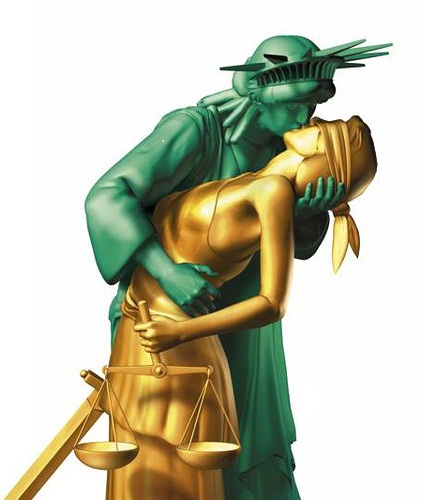
DC RULES_blind justice

Judges are proving less partisan and ideologically driven than the increasingly totalitarian Left had hoped.

1. In Vitolo v. Guzman, the 6th U.S. Circuit Court of Appeals at Cincinnati ruled last week that the federal government violates the equal protection clause when it considers race or sex in in allocating Wuhan virus relief funds. Following the same track as the earlier case discussed here, the Court agreed that the U.S. Small Business Administration violated the Constitution by giving preference to minority- and women-owned restaurants.

Antonio Vitolo and his wife own a restaurant called Jake’s Bar and Grill. Vitolo is white, his wife is Hispanic, and they each own 50% of the restaurant. Of course, Jake could have gamed the easily manipuated SBA system by just handing his wife the extra 1%. The government requires small businesses to be at least 51% owned by women, veterans or “socially and economically disadvantaged” people to jump to the head of the line, because someone is presumed to be socially disadvantaged if they are a member of a designated racial or ethnic group. A person is considered economically disadvantaged if they are socially disadvantaged, and they face diminished capital and credit opportunities. In such a system, whether the business owner being given preference has actually been disadvantaged doesn’t matter. He or she is presumed to be disadvantaged. This nicely follows the circular logic of Critical Race Theory.

The group preferences are taken into consideration during the first 21 days in which the Small Business Administration awards the pandemic grants to restaurants. After priority applications submitted during that period are processed, the Small Business Administration processes grant requests in the order that they were received. That is, white men come last.

The 6th Circuit majority said Vitolo and his wife are entitled to an injunction forcing the government to grant their application, if approved, before all later-filed applications, and that their color and gender should be irrelevant. The government did not demonstrate a “compelling interest” justifying preferences based on race or sex.

Continue reading

Comment Of The Day: “The Classical Music Critic Of The New York Times Thinks That Symphony Orchestras Should Choose Members According To Race, Gender, And ‘Other Factors’ That Have Nothing To Do With Music”

The Comment of the Day that follows by David Rohde is welcome for many reasons. First, he is a professional musician, and a skilled one. Second, he defends the author of piece I criticized vociferously (and will continue to). Third, I think this is an important issue. Fourth,, a new voice here is always welcome, and we haven’t been getting as many as I would like of late. Finally,, as required for COTD, it is well written and worthy of considerations and debate.

Not that I agree with it, but that has never been a criteria for Comment of the Day honors. Here’s David Rohde’s Comment of the Day. on the post,The Classical Music Critic Of The New York Times Thinks That Symphony Orchestras Should Choose Members According To Race, Gender, And “Other Factors” That Have Nothing To Do With Music.”(I’ll be back with my reaction at the end.)

***

It may be that using blind auditions has elevated the performance level of symphony orchestras. Or it may be serious overkill in an era of a supply-demand imbalance for classical musical talent. But either way, simply rolling this issue into what I know is this blog’s current obsession with – in other words, against – identity issues misses a lot that’s going on here.

First of all, you have to admit that hiring people without knowing who they are in ANY field is kind of strange. In particular, you certainly wouldn’t use blind auditions to cast people in a show, now would you? I know I know, different genres, different requirements. Roles in theater are individual, while 30 or 40 violinists in a symphony orchestra are doing much the same thing.

But I would argue that live classical music IS showbiz, and the sooner that people in that field realize it, the better. If the product is just “the music,” and many people assert that the overall technical performance level is higher than ever, then why is classical music struggling at all?

Second, I think you have to remember what the main impetus of blind auditions was in the first place. While I’m oversimplifying, the essential problem was (or shortly became) the inability of women to secure places in symphony orchestras. A quick check on YouTube of recent orchestra performances now versus 30 or 40 years ago will demonstrate the resulting change. Part of Tommasini’s argument is not to let solutions to problems become so institutionalized that they run past their sell-by date while different problems fester.

Continue reading

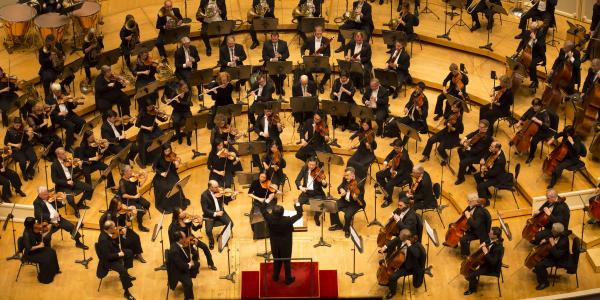
The Classical Music Critic Of The New York Times Thinks That Symphony Orchestras Should Choose Members According To Race, Gender, And “Other Factors” That Have Nothing To Do With Music

Just what we need: another area of society where progressives are clamoring for illegal discrimination.

Anthony Tommasini, the New York Times senior classical music critic, argues in an essay whose thesis would have been laughed out of the paper just a few years ago—you know, before the dawn of the Great Stupid—that…

“…ensembles must be able to take proactive steps to address the appalling racial imbalance that remains in their ranks. Blind auditions are no longer tenable….now more than ever, the spectacle of a lone Black musician on a huge, packed stage at Lincoln Center is unbearably depressing. Slow and steady change is no longer fast enough.”

Orchestras now have blind auditions, with those seeking employment playing behind a screen. In the epitome of results-based reasoning, Tommasini believes that auditions must allow unscreened auditions so “diversity” can be achieved, and ensembles “reflect the communities they serve.” In other words, quotas. In other words, hiring lesser musicians because they are the “right” color or gender. This, in an institution that has only one goal and aspiration: to play beautiful music as well as possible. The clear meaning of Tommasini’s conclusion is that it is more important that an ensemble be made up of the right kind of people than it be able to serve the function for which it was created. It is better to have a worse orchestra that ticks off the right EEOC boxes than to have one that sounds good.

Oddly, nobody has ever made this argument regarding, say, NBA basketball teams. Hop-hop music groups. Heart surgery teams. In fact, if I had to pick the perfect example of a field in which requiring racial and gender diversity is self-evidently bats, a symphony orchestra might be it.

Continue reading

Memorial Day Ethics Warm-Up, 5/31/2021…

It will be interesting to see if the news media discusses the Tulsa Race Massacre of 1921 any more this May 31 than it has in the past. Discussing this horrible mass murder of blacks in Oklahoma over Memorial Day weekend has always been seen as sufficiently tasteless that the story has suffered the equivalent of a historical airbrushing. When did you first learn about it? I didn’t encounter the episode in elementary school, high school, college or law school. I was 50, and furiously researching the life of Clarence Darrow so I could churn out a one man show (that was already in rehearsal) after Leslie Nielsen pulled the rights we had paid for on the Darrow show performed on Broadway by Henry Fonda. I was looking for the context of Darrow’s epic closing argument in the Sweet case (1925), in which he referenced examples of white mob violence against blacks. That was my introduction to the tragedy. How was this possible? I was and am a voracious consumer of American history, movies, and television. Yet the facts of the Tulsa Race Massacre never entered my consciousness.

Here’s one useful resource…there are many others available online. A brief summary: After World War I, Tulsa’s African American community was notable for its affluence. The Greenwood District was known as “Black Wall Street.” But on May 30, 1921, an incident between a white woman and a black man on an elevator—nobody knows exactly what happened—was reported in the Tulsa newspapers as an attempted rape. The young African-American, Dick Rowland, had been arrested, and members of the community believed that he might be lynched. When an angry white mob gathered in front of the courthouse, a group of over 70 back men, some of them World War I veterans with weapons, confronted them. A gun went off in a struggled, and chaos descended on Greenwood. A white mob of thousands overran the Greenwood District, shooting unarmed black citizens in the streets. It burned an area of some 35 city blocks, and more than 1,200 houses, numerous businesses, a school, a hospital and a dozen churches. It is estimated that 300 people were killed in the rampage, though official counts at the time were much lower. 300 is the same death toll as the 1871 Chicago fire. I knew about that tragedy by the time I was 8.

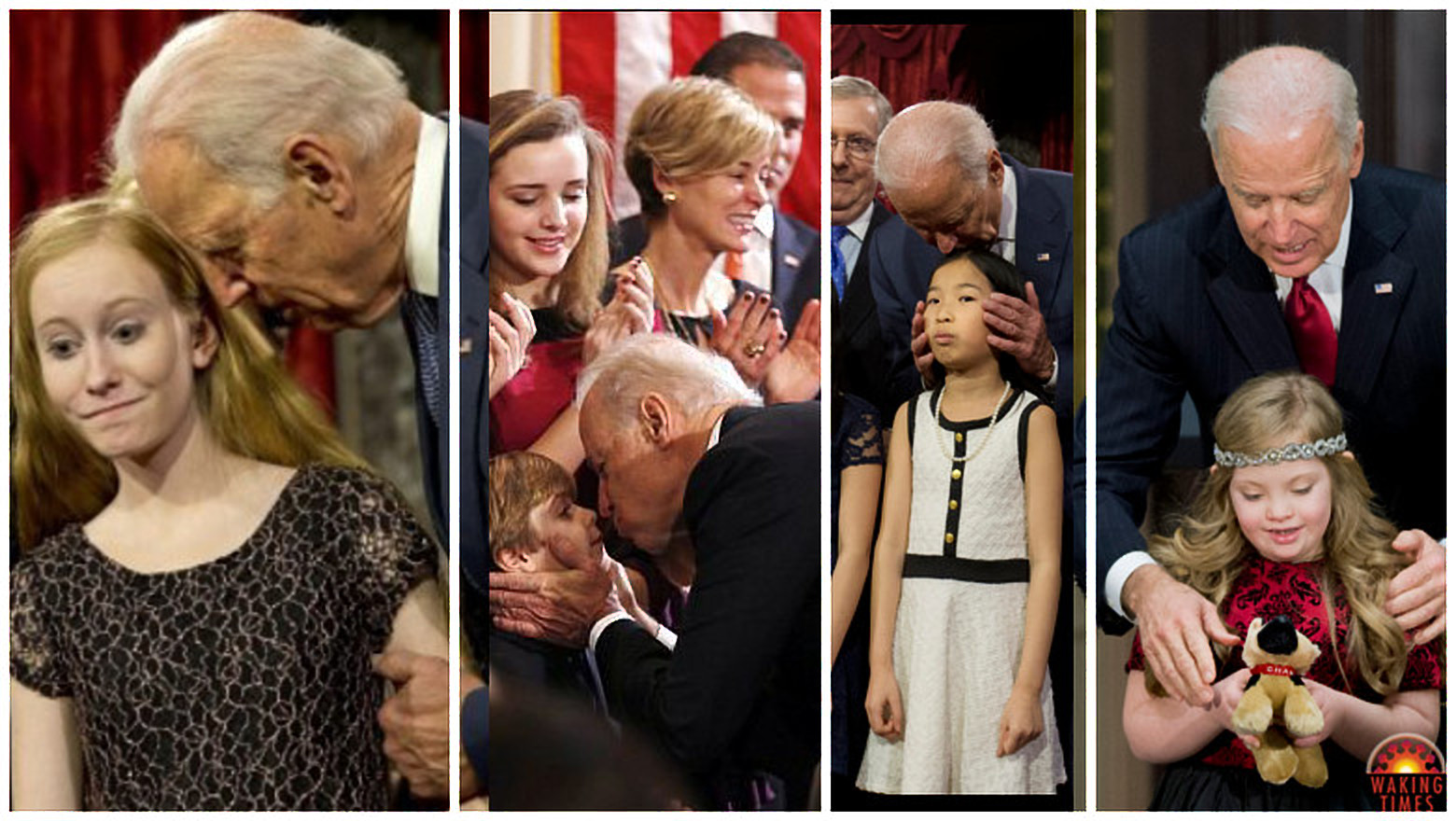
1. IIPTDXTTNMIAFB! That’s short for “Imagine if President Trump did X that the news media is accepting from Biden…”, introduced here. The current example: during a speech at Joint Base Langley-Eustis in Langley,Virginia two days ago, President Biden began spontaneously complimenting a pre-teen girl who had joined her parents and two older brothers on the stage after her mother had introduced Biden to the crowd. Biden said, inappropriately and creepily, “ I love those barrettes in your hair, man. I tell you what, look at her. She looks like she’s 19 years old sitting there like a little lady with her legs crossed.” Republicans pounced, as the MSM cliche goes whenever Democrats are legitimately criticized. The episode was barely mentioned by the media dedicated to propping up Biden—that is, almost all of it—at all. IIPTDXTTNMIAFB…and President Trump didn’t even have a photographically preserved series of encounters like this:

Creepy-Joe-Biden-President

2. AHHHH! It’s a virus ! Get a gun!!! The headline on the front page of the NYT website yesterday read, “Pandemic Fuels Surge in U.S. Gun Sales ‘Unlike Anything We’ve Ever Seen.'” Incredible. People bought guns for the first time because rioting was going on all over the country, and in many places the police were doing little or nothing to stop it. Buildings were burning and being looted; citizens were being threatened. Who gets a gun to fight a pandemic? (There was never any threat of the kind of civic breakdown from the virus like that portrayed in the movie “Contagion.” Toilet paper riots?)

The degree to which the Times—the “paper of record’!—continues to distort reality to mislead the public and warp public opinion is astounding. Later in the same article, the Times said, “While gun sales have been climbing for decades — they often spike in election years and after high-profile crimes — Americans have been on an unusual, prolonged buying spree fueled by the coronavirus pandemic, the protests last summer and the fears they both stoked.”

Continue reading

A Deeper Dive Into The Western Washington University “No Exit” Protest

empty seast

Guest Post by Rick Jones

[Before I turn the floor over to Rick, also known here as “Curmie,” a couple of comments are in order. I had hoped that the post yesterday about the Western Washington University student protest over the decision to produce “No Exit,” the 1944 existential drama by Jean-Paul Sartre, would generate commentary from Rick, for several reasons. First, he is one of my favorite bloggers on his own, the proprietor of Curmudgeon Central, which has a new post up right now regarding the George Floyd incident one year mark. More relevant to our topic right here and now, Rick is a distinguished college professor, drama teacher and stage director, who has special insight into university students and live theater. As he reveals in the article to come, he also is better qualified to discuss “No Exit” than I; indeed, he has now convinced me to give the work another chance, since it has been decades since I read or saw it.

I also was thrilled to receive this submission from Rick because I feel very strongly that live theater is imperiled in the U.S. I know most readers here do not share my dedication to theater; few Americans do, and fewer all the time. But I have lived a double life (as a character in Tom Stoppard’s “The Real Inspector Hound” adds “At least!”), spending  as much of my passions and energies on theater as any other pursuit from high school until to five years ago, when I ended the 20-year run of my small, maverick, professional theater company. My timing was excellent, because the panic-driven lockdown has killed many of The American Century Theater’s competitors here in the D.C. area, maybe most of them, and a year of using Zoom and streaming services has undoubtedly convinced many one time audience members that live theater isn’t worth the time, inconvenience or expense. In the same period, toxic political correctness, political obsession and woke fanaticism has grown exponentially, and these were existential threats to theater already.

The “No Exit” controversy is a symptom of a very serious threat to live performance art, which has been a force for uniting societies and enlightening the public for centuries. We need it more than ever now. A lot is at stake. JM]

***

My department has produced “No Exit”(which, by the way, I like a lot more than you do, Jack) twice in the last decade.  The first of these was directed by a talented and intelligent female student (an ardent feminist, by the way) who went on to earn a Master’s from a prestigious university overseas.  And we also did an online-only production last fall, directed by a colleague who’s one of the smartest people I’ve ever known, with a PhD in Theatre from arguably the best doctoral program in the country.  Oh, did I mention that she’s a lesbian? 

And, of course, the sense of isolation in the play was a major reason the play was chosen: because we all have a greater understanding of that phenomenon now than even the most creative thinkers could have managed a year earlier.  Moreover, please forgive me if I think that perhaps my colleague, who has published and taught courses on Queer Theatre, might have a more sophisticated understanding of the concepts at play in that particular theoretical framework than would a gaggle of pretentiously woke undergrads.

I am apparently lucky not to be at WWU.  When I announced my show for this spring as Jean Genet’s “The Maids”and described the two central characters as “would-be murderers who engage in sado-masochistic lesbian incest,” it generated interest on the part of most of our best actresses; if there was any dissent—from either very liberal students or a very conservative larger community—I never heard about it.  (Side note: although it wasn’t produced until later, “The Maids” was chosen and announced prior to”No Exit” which was a late substitution for a play we were unable to do.  I wouldn’t have chosen to do two existential French dramas from the 1940s in the same season, but that’s what we ended up with.)

But revenons à nos moutons.  When I started this response, I intended to go point by point through the students’ commentary, but that got really long, as virtually everything they say is nonsense.  So: a few general points:

Continue reading

Ethics Half-Hero: Western Washington University

noexit07a

When it comes to colleges and universities standing up to political correctness and woke demands for intellectual non-diversity, half-heroes are still better than the norm. The norm is abject cowardice and the ethical integrity of a sea sponge.

At Western Washington University, theater students attempted to cancel the Theater Department’s fall production of “No Exit,” the 1944 existential drama by Jean-Paul Sartre. (Full disclosure: I would rather be cursed to organize a thousand sock drawers than watch or read that play again.)

A letter of protest from students echoed many of the rationalizations for censorship and political cleansing of the arts that have metastasized into serious threats to intellectual freedom and creative liberty across the nation. Not to keep you in unnecessary suspense, the school did not cave to the student demands, nor grovel an apology for daring to arouse their ire, as most colleges (and high schools) would do today. “No Exit” will still be produced in the Fall. The school still only gets a half-hero rating for its verdict of no exit from “No Exit,” however, because it has agreed to provide “trigger warnings” for audience members.

As to the latter: Yecchh. By capitulating to this degree, the school has allowed the camel’s nose of faux ideological trauma into the metaphorical tent of the arts. Art, especially performance art, is intended to provoke strong reactions by introducing new and unexpected experiences and ideas into the unique dynamic of an audience. Someone who is so emotionally (read “politically programmed to be..) fragile that they have to be warned so they can avoid uncomfortable, jarring or, more frightening yet to crypto-totalitarians, non-conforming ideas should avoid the theater, like a tone deaf man who only appreciates commercial jingles should avoid the opera. By pandering to this part of the student demands, the school has abandoned a crucial principle without which theater cannot survive.

Continue reading