More than two weeks into the heralded launch of the Affordable Care Act, the roll out of the Healthcare.gov website still qualifies as an ongoing fiasco. The Obama administration was fortunate that this was largely, though not completely, overshadowed by the silly, misconcieved and mishandled government shut-down protest by Congressional Republicans, thanks in part to a pliant and biased newsmedia that welcomed the opportunity not to focus proper attention on yet another inexcusable Administration botch. Nonetheless, it is inexcusable. A business that launched a much-ballyhooed new product this way would be out of business; the executive in charge of such a miserable failure would be toast. The fact that Obamacare is still in business after this competence and diligence betrayal speaks only to the benefits of a governmental monopoly. The fact that no executive is yet toast, however, is less explicable. Perhaps the more accurate statement is that the explanation for it is horrifying. Continue reading
Government & Politics
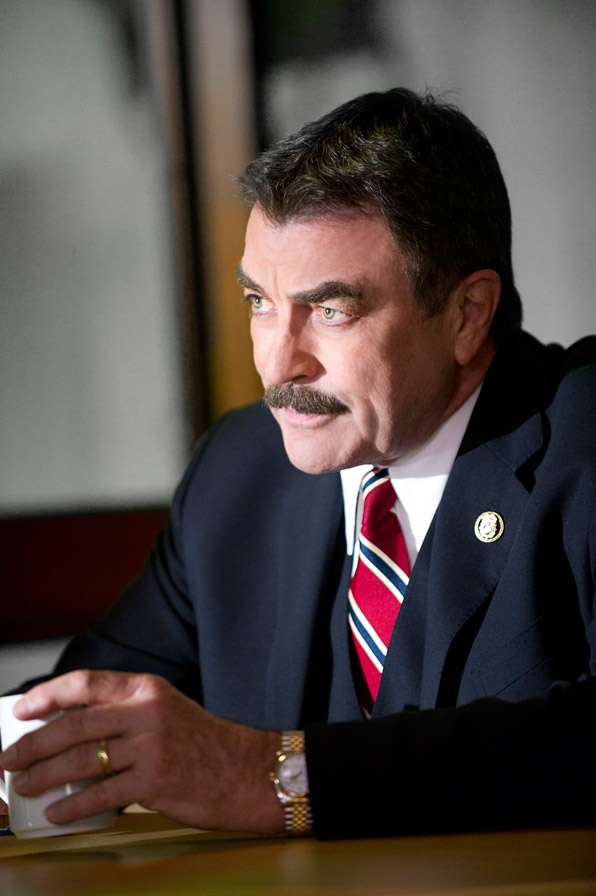
CBS’s “Blue Bloods”: Endorsing the Saint’s Excuse and Polk County Justice
“Blue Bloods,” Tom Selleck’s New York police family drama on CBS, began as a paean to the core values of public service, nobility, justice, courage and honesty as it chronicled the work and lives of three generations of the Reagan family. The Reagan men are all cops, the one female is a DA, and Selleck is the paternal Chief of Police. Based on last night’s episode, “The Truth About Lying,” series creators Mitchell Burgess and Robin Green have permitted the show’s writing staff to be infiltrated by the Dark Side in its fourth season, and now its calling cards will include the enthusiastic promotion of the abuse of power and the celebration of lying as long as it’s all for a good cause. That’s the Saint’s Excuse, one of the most deadly of the rationalizations, in which “good” people decide that they are empowered to do unethical things in the pursuit of what they believe are worthy goals. The Saint’s Excuse is something of a theme in the United States these days. Now “Blue Bloods” is making sure popular culture spreads the word.
The episode, which you can watch here, was ostensibly about Selleck’s Chief’s efforts to foil the city’s newly appointed “inspector general,” installed in the wake of a “ripped from the headlines” court rejection of an effective “stop and frisk” program by New York’s finest. Continue reading
What’s Wrong With The Florida Cyber-Bullying Arrests? Everything.
“Bullying, as they are supposed to teach you in school, is when someone uses their superior power to subordinate and humiliate someone weaker than themselves. This is wrong, and it is always wrong.”

The Sheriff of Polk County…wait, no, that’s Tom Cruise, searching for pre-criminals in “Minority Report.” Well, close enough.
This is a quote from an Ethics Alarms post earlier this year, about a school that forced students to do embarrassing things in a warped effort to discourage bullying. There is a disturbing societal consensus brewing that opposition to bullying justifies all sorts of extra-legal, unethical, excessive, abusive and unconstitutional measures, and there are a dearth of persuasive voices point out that this consensus is dangerous and wrong. Those potential voices are being stilled by a kind of cultural bullying. How can you defend bullies! Look at the victims! Think of the children! What a horrible, unfeeling person you are!
This is the only explanation I can generate for the fact that none of the commentary and media coverage regarding the Florida arrests of a 14-year-old girl and a 12-year-old girl on trumped-up charges of “stalking” following the suicide of Rebecca Ann Sedwick pointed out that the arrests were a travesty of the justice system, an abuse of power, child abuse, legally and constitutionally offensive, and, yes, bullying of a different kind. Continue reading
Unethical Quote Of The Week: Mediaite Reporter Tommy Christopher
“When I had a heart attack a few years ago, I was uninsured and I haven’t been able to get insurance ever since then. Listening to all the pressure on the President to negotiate, some of it coming from inside this room, made me think: Is there a chance the President would be willing to delay Obamacare for a year if Republicans would agree to delay heart attacks for a year?”
—- Tommy Christopher, Mediaite reporter, questioning White House spokesman Jay Carney in this week’s press briefing.
Naaa, there’s no media bias! That’s just a right wing myth!
So let us just say that Christopher’s question is unprofessional, evidence of a conflict of interest, unethical journalism and worthy of employer sanctions, if not outright firing. That wasn’t a question; that was a pro-Administration talking point and outright advocacy. It was an abuse of his position and obligation to the public.
The shutdown isn’t about his personal needs, and whether or not the Affordable Care Act is especially helpful to his health problems shouldn’t influence his coverage of the dispute or his questions to Carney. Since Christopher is apparently incapable of keeping his personal biases from influencing the performance of his job, at least on this issue, he needs a different assignment, as well as a refresher course in journalism ethics.
____________________________
Source: The Blaze
Annals Of The Ethics Incompleteness Theorem: The Snuggle House And “The Dress Code Effect”
Almost any rule, low or ethical principle can be deconstructed using what I call border anomalies. The first time I was aware of it was as a Harvard freshman in the late Sixties, when all assumptions, good and bad, useful and not, were considered inherently suspect. The college required all students to wear jackets and ties to meals at the student union, and up until my first year, nobody objected. But that fall, my classmates set out to crack the dress code, so they showed up for meals with ties, jackets, and no pants, or wearing belts as ties, or barefoot. (Yes, there were a lot of future lawyers in that class.) Pretty soon Harvard gave up, because litigating what constitutes ties, jackets and “proper dress” became ridiculously time-consuming and made the administration look petty and stupid. Of course, there are good reasons for dress codes—they are called respect, dignity, community and civility—-but never mind: the dress code couldn’t stand against those determined to destroy them by sending them down the slippery slope.
If any rules are to survive to assist society in maintaining important behavioral standards, we have to determine how we want to handle the effects described by the Ethics Incompleteness Theory, which holds that even the best rules and laws will be inevitably subjected to anomalous situations on their borders, regarding which strict enforcement will result in absurd or unjust results. The conservative approach to this dilemma is to strictly apply the law, rule or principle anyway, and accept the resulting bad result as a price for having consistent standards. The liberal approach is no better: it demands amending rules to deal with the anomalies, leading to vague rules with no integrity—and even more anomalies. The best solution, in my view, is to regard the anomalies as exceptions, and to handle them fairly, reasonably and justly using basic principles of ethics, not strictly applying the rule or law alone while leaving it intact. Continue reading
“Print the Legend” Ethics (Again): Does It Matter If Matthew Shepard’s Death Was Really A Hate Crime?
It apparently matters to a lot of people for the wrong reasons—unethical reasons, in fact. As a result, legitimate efforts to determine what really happened to the gay rights icon, then a 21-year-old University of Wyoming student, who was beaten, tortured and murdered in Laramie, Wyoming in 1998, have been exploited for ideological goals by adversaries of gay rights, and attacked by the media, gay rights advocates and good progressives everywhere. Just as it is important to the civil rights establishment, the black grievance community and anti-gun advocates that Trayvon Martin be seen as the innocent victim of a racist vigilante with murder in his heart—a characterization of Martin’s murder at war with all known facts and rejected by a jury after a fair trial—thus is it crucial to gay advocacy groups and others that Shepard be remembered as the victim of a hate crime, brutally killed because he was gay.
And facts be damned. Continue reading
Psychic Found Guilty Of Fraud: Did She Know This Would Happen?
Now that the required joke is out of the way, I can more soberly state that the New York conviction of psychic Sylvia Mitchell for larceny and fraud opens up a welter of ethical, legal and religious issues. Law prof-blogger Ann Althouse is troubled by the result, writing,
“In my book, this is entertainment and unconventional psychological therapy. Let the buyer beware. Who’s dumb enough to actually believe this? Should the government endeavor to protect everyone who succumbs to the temptation to blow a few bucks on a fortune teller?”
Clearly not, and that’s where courts and states generally land in this matter, as in the case I wrote on three years ago, Nefredo v. Montgomery County. There the courts ruled (in Maryland) that it was an infringement of free speech for Maryland to ban what is, for most, just an exercise in supernatural entertainment. But the New York case involved a little bit more than that: Mitchell apparently bilked some clients out of significant amounts, getting $27,000 from one in an “exercise in letting go of money,” $18,000 from another to put in a jar as a way to relieve herself of “negative energy,” and thousands from other clients to purchase “supplies” for various rituals—what does the eye of a newt go for these days?
Admittedly this seems to cross the line from harmless, if stupid, entertainment into preying on the stupid and gullible, but that doesn’t convince Althouse that the conviction, or the prosecution is a legitimate use of government power. She reminds us about the Supreme Court case of U.S. v. Ballard, in which the Court upheld the conviction of a faith healer for fraud. The SCOTUS majority, headed by William O. Douglas, held that if the faith healer didn’t believe in her claimed powers, then she was a fraud, and thus could be prosecuted under the Constitution if she used a claim of false powers to take money from her clients. In a sharp and thought-provoking dissent, Justice Robert Jackson wrote in part… Continue reading
Ethics Quote of the Month: Illya Somin
“Democracy is supposed to be rule of the people, by the people, and for the people. But in order to rule effectively, the people need political knowledge. If they know little or nothing about government, it becomes difficult to hold political leaders accountable for their performance. Unfortunately, public knowledge about politics is disturbingly low. In addition, the public also often does a poor job of evaluating the political information they do know. This state of affairs has persisted despite rising education levels, increased availability of information thanks to modern technology, and even rising IQ scores. It is mostly the result of rational behavior, not stupidity. Such widespread and persistent political ignorance and irrationality strengthens the case for limiting and decentralizing the power of government.”
—Illya Somin, Professor of Law at George Mason University School of Law, from his paper and 2013 book of the same name, “Democracy and Political Ignorance.”
Somin, who writes frequently on the mostly libertarian law wonk blog The Volokh conspiracy, is a political scientist, but big government progressives should restrain themselves from dismissing his statement (and my endorsement of it) as right wing or partisan rhetoric. Facts and logic should not be partisan or ideological, and it seem inarguable to me that Somin’s statement is correct, and that certain ethical truths follow. If one is going to dispute his conclusion, one must be able to fairly contest the assertions leading up to it. Let’s examine them in that light:
- “Democracy is supposed to be rule of the people, by the people, and for the people.” Yes, we can agree on that, can’t we?
- “But in order to rule effectively, the people need political knowledge.” True… at least this was the conviction of Madison, Adam Smith and virtually all of the political philosophers who championed democratic government. I have never heard it seriously questioned. Continue reading
The Associated Press And The Scandal That Wasn’t
Over the local evening news came a stunning report: Terry McAuliffe the Democratic candidate for Governor of Virginia, where I vote and make my home, had been accused in federal documents of lying to investigators checking the facts behind a Rhode Island death benefits scheme. Confirmation bias being what it is, I had no trouble giving the report full credence ( I long ago concluded that McAuliffe is sleazy and will lie whenever there is a perceived up-side for him, though I never thought he was stupid), and informed my dog, Rugby, for whom I am organizing a write-in campaign, that his chances of being Governor were looking up. Then, less than two hours later, I was preparing to write about this latest development in the most ethics-free governor’s race in the country, and checked online for more details. I discovered only this:
RICHMOND, Va. (AP) — The Associated Press has withdrawn its story about documents in a federal fraud case alleging that Virginia Democratic gubernatorial nominee Terry McAuliffe lied to a federal official investigating a death benefits scheme. The indictment did not identify McAuliffe as the “T.M.” who allegedly lied to investigators.
Wait…how could this happen? How could the Associated Press, the nation’s premiere news agency, essentially accuse a candidate for high office in a highly contested election of a felony less than a month before votes are cast, just in time for the story to be the lead story all over the state in question, and then withdraw it shortly thereafter? Don’t tell me about “mistakes”: the AP and the profession of journalism have standards and procedures of long-standing that, if followed diligently, ensure that this never happens. Facts must be checked and confirmed by reliable sources. Supposition must not be stated as truth. Here is the AP’s distillation of its ethical framework: Continue reading
Ethics Dunce: California
The reductio ad absurdum of the debate over illegal immigration has reached its apotheosis in California, where Governor Brown actually signed into law a provision allowing illegal immigrants to be awarded licenses to practice law in the state. The law was designed to render moot the case of illegal immigrant Sergio Gomez, who was brought into the country as a child, managed to evade detection and enforcement through law school and the bar exam, and is now fighting to be admitted to the California Bar.
Garcia has said that being able to obtain a law license “is my life’s dream come true. One of two. I’m going for the U.S. citizenship next. I want to be a full part of this country.” Well, why stop at that bizarre sequence? Why not let Mexican citizens first become U.S. lawyers, and then aspire to sneak over the border some day and become U.S. citizens? Continue reading