Comment Of The Day: “Saturday Ethics Warm-Up, 10/12/2019…” Item #2, Dan Hudson’s Paternity Leave

“Wait, What??? YOU’RE SKIPPING THE GAME THAT WILL DECIDE THE PENNANT???”

In a post sparked by the the current National League Championship Series (boy, I hope I don’t have to add that the sport is baseball) I had written in part,

“The ethical thing would have been [for Washington Nationals relief pitcher Daniel Hudson, the team’s closer] to pass on the opportunity to take the game off. The Nationals major weakness is a terrible bullpen, and Hudson is one of the few reliable  relief pitchers on the team. As it happened, the Nats won a close game, but that’s just moral luck. They might have lost because of his absence. That loss might have cost the team its chance to go to the World Series. Millions of dollars would be lost to the franchise that pays Hudson seven figures to improve its fortunes. The careers, lives and family fortunes of his team mates would be affected; the jobs and income of hundreds of merchants and others who rely on the success or failure of the team would have been put at risk. How could anyone argue that the emotional support Hudson would lend his wife during childbirth outweighs all of that, or constitutes a superior ethical obligation?”

Who? Why reader Tim Hayes, that’s who, who not only argued thusly, but did so at a Comment of the Day level, and then responded to my subsequent challenges with equally excellent responses. This gave him the Ethics Alarms equivalent of a three home-run game, and I’m going honor him with the whole sequence.

Here is Ethics Alarms slugger Tim Hayes‘s three-dinger Comment of the Day, on Item #2 in “Saturday Ethics Warm-Up, 10/12/2019…” :

Counter-argument on the Hudson situation – For the Nationals to have placed themselves in a position where a single player taking advantage of a promised benefit at his job (the paternity leave) created a realistic chance of them losing the game (due to their lack of hiring sufficient healthy talent into their bullpen) is inherently unethical as an organization, because it creates a situation where all the groups you mentioned can be placed in dire straits by what happens to a single performer. Attaching the consequences for the team’s unethical staffing decision to Hudson’s personal behavior is unfair; The team did not choose to get him to negotiate away the benefit he invoked (which, for the appropriate compensation, they presumably could have), and was therefore at least aware of the possibility that something outside their control could sideline Hudson. That it was his wife giving birth, and not Hudson being hit by a self-driving car, which resulted in their not having access to him, was merely a result of luck (pregnancy and births being both notoriously difficult to plan, and the Nationals presence in the playoffs being, from the admittedly little I understand of baseball, something which was unexpected to say the least). Continue reading
Monday Ethics Musings, 10/7/2019: Questions, Questions…

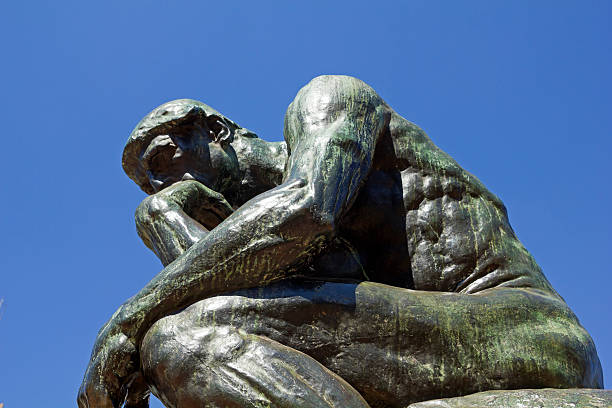
Thinking…

Wait, where are my clothes???

1. When will Mrs. Q make her debut as a regular contributor to Ethics Alarms? I’m working out the details. She’s ready, I’m behind, we’ll get it done. Very excited.

2. If everything is going to be done online, is it reasonable to expect those companies who force us to interact that way to be competent? Case Study: The Boston Globe just offered me a 6 month digital subscription for a buck. But an old password connected to my email address prevented me from entering the new one necessary to accept the deal. All links went to current subscription or subscribing at the regular price. It took 40 minutes of online chats with robots and a human being (who disconnected me one) to fix the problem, which was in how the Globe set up the offer acceptance page. I ended up using a password made up by “Sherry” because I couldn’t reset my password myself. This kind of thing happens all the time. I wouldn’t have a clue how to set up a website response system, but if that was my job, I would be obligated to do better than this.

3. What good are movie critics whose opinions and tastes aren’t shared by their readers? My view: not much. The job of a critic is to let readers know if readers would appreciate the movie or not. A critic who can’t or won’t do that, and most don’t, is useless. I was thinking about this when I encountered this article in The Guardian listing the films for which audience ratings and critical ratings diverged the most.

Much of the disparity today is caused by critics who allow their ideological biases to dominate their judgment: yes, bias makes them stupid. Another problem, harder to over-come, is that the judgment of people who see hundreds of movies a year and who are often steeped in the art of film-making often has no relevance to the movie average audience member at all. Yet another is the unavoidable fact that few critics are equally qualified to review all genres. Horror movies are especially frequent victims of this problem.

Incidentally, yesterday I watched a new horror movie, “A.M.I.” that exploited the inherent creepiness of online personal assistants like Siri and Alexa. It was pretty bad, but the final scene was so ridiculous (and predictable) that it almost justified the film. Almost. Continue reading

Sunday Ethics Warm-Up, 10/6/2019: Fan Ethics, Hospital Ethics, Vandalism Ethics, And Diplomatic Immunity

Well, I woke up…

…and as my father was fond of saying, that should be enough. Of course, he adopted that philosophy during combat in World War II…

1. I have been asked, “With your beloved Red Sox out of the post-season, are you paying attention to the play-offs?” The answer is, “Oh, sure.” I’m not like Yankee fans, what my dad called “summer soldiers.” In fact, the post-season is a more enjoyable, less anxious, purer experience for a fan when his or her team is absent. I can just enjoy the beauty, suspense and constant surprises of baseball without being distracted by my emotions, conflicts of interest, and bias. Post-season baseball is the best of the game; when I am trying to introduce baseball to neophytes, this is the best time to do it. Yes, the dumbed-down broadcasting by the networks is annoying, but it’s always been that way. And yes, I still have some rooting biases: most of my friends  are Washington Nationals fans, do a piece of me is supporting them. I like underdogs, so the Twins, Rays, and every National League team but the Dodgers have my sympathies. The Yankees have had such a courageous, astounding season, winning over a hundred games despite having more significant injuries than any MLB team in history, that I even find myself rooting for them, because if any team deserves a championship, the 2019 New York Yankees do.

2. First, do no harm. Second, don’t be an asshole...This is incredible. Employees at a St. Mary’s Regional Medical Center in Lewiston, Maine  created a “wall of shame” where they displayed confidential medical records of disabled patients in 2016, the state Human Rights Commission has found.

The records posted on the wall concerned sexual activity, photos and descriptions of  body parts and bodily functions of patients. St. Mary’s told CNN that it is “fully committed to ensuring this doesn’t happen again.”

Gee, that’s comforting. How did this happen in the first place?

The Shame Wall was revealed as part of a harassment complaint. MyKayla McCann, an employee who had been treated at the hospital, said that the existence of the “wall of shame” constituted an “abusive environment” where hospital staff displayed open hostility to those with disabilities.

“Coworkers constructed a workplace display ridiculing patients with disabilities. [McCann] encountered the display every day as part of her regular environment, making harassment pervasive,” the investigation said. “The information posted on Shame Wall was intended to demean and humiliate and included supposed ‘jokes’ about the hospital’s physically and mentally disabled patients.”

One employee was fired and another was given a warning in response to the incident. It took the hospital  four months after McCann’s complaint to take the Shame Wall down, according to the report. How caring. How efficient.

Continue reading

Morning Ethics Warm-Up, 9/27/2019: Five Indefensible Ethics Breaches, In Approximate Order Of Harm Done [Corrected]

And it’s a beautiful day…

1. Probably the last Boston Red Sox baseball ethics note of the 2019 season…In yesterdays’ meaningless afternoon game with the Texas Rangers, the Sox, who will finish the season an incredible 24 wins or more worse than last season’s championship team despite essentially the same squad and no major injuries, faced starter Mike Minor, who was seeking to end his season with 200 strikeouts, a milestone that might earn the free-agent-to-be an extra million or so on the open market this winter.

Minor entered his last start of the season at 191 strikeouts, and began the top of the ninth inning with 199 and a solid lead. Sox catcher Sandy León flied out to left field for the first out, bringing up sub-.200 hitter Chris Owings.

[Notice of Correction: Apologies to Chris Owings fans, if there are any, for originally misstating that Owings was a minor league call-up. In fact, he had been a journeyman infielder with the NL Diamondbacks. for six seasons until landing in the AL this season.Thanks to Other Bill for setting me straight. ]

With a 1-1 count, Owings popped up a pitch  halfway down the first base line in foul territory. Rangers first baseman Ronald Guzmán appeared to let it drop, trading out #2 for strike #2, and thus giving Minor a shot at his 200th strikeout. Minor got it when routinely incompetent home plate umpire CB Bucknor called strike three on a ball well out of the strike zone.

Manipulating the game’s results so a player can fatten his stats is unethical and hurts the integrity of the game. Guzmán  and the Rangers should be fined by MLB.

2. Our unprofessional, biased and untrustworthy public schools. Watson B. Duncan Middle School in Palm Beach Gardens, Florida is investigating a teacher who included this question on a test:

Continue reading

Afternoon Ethics Flotsam And Jetsam, 9/16/2019: Ethics Movies, Clowns And Harvard Professors

…As I prep for a CLE road trip…

1. I finally saw “Doubt,” the film adaptation of the John Patrick Shanley stage drama about a parish priest suspected of child abuse. It’s an ethics film, and unlike many ethics films, made a profit at the box office.

I had seen the play on stage, and found it didactic and contrived; the film did not, I’m sure because the cast was so excellent. Meryl Streep, Viola Davis and Phillip Seymour Hoffman as the priest were all wonderful, especially Davis, whose single scene in which she runs down a series of desperate arguments and rationalizations to justify allowing her son to be molested—maybe—is an ethics cornucopia. Unlike the stage production I saw, the movie benefits by having its protagonists appear less sympathetic than its apparent villain.

This goes on the ethics movie list, which is due for an update.

2.  Yet another ethics movie of more recent vintage is 2019’s “The Challenger Disaster,” a fictionalized recounting of how the decision was made to allow the doomed space shuttle to launch despite the warnings of Morton Thiokol engineers.  I wrote about this depressing ethics case study here , in a tribute to the primary Cassandra in the tragedy, Roger Boisjoly, and here,  about his troubled colleague, Bob Ebeling. The film’s hero appears to be an amalgam of the two. Here is an excerpt from a review on The Engineering Ethics Blog:

Even if you are pretty familiar with the basics of the story, as I was, the film is almost agonizing to watch as the launch time draws closer….The focus is always on Adam [the fictional hybrid of the engineers opposing the launch]: his belief going in that the truth is always a sufficient argument (it’s not, as it turns out), his doubts that he’s done enough to stop the launch, and his retrospective descriptions of what went on in the hours leading up to the launch…. the generally underlit atmosphere symbolizes Adam’s darkening mood as the critical conference call comes and goes, and the decision is made to launch. After Adam drives home that evening, he just sits out in the driveway in his car until his wife comes and gets into the seat beside him. …Later, during the  hearings that Adam and his fellow engineers attend, they come forward out of the audience and interrupt the proceedings after they hear a Morton-Thiokol manager lie about his knowledge of the seal problem. After the hearing, a sympathetic commission member finds Adam and reassures him that there are whistleblowing laws to protect him from repercussions of his testimony.

While it is never good to kick a man while he is down, I wish the film had taken time to show in more detail the intensity of the ostracism that forced the real-life Boisjoly to resign from Morton-Thiokol after his participation in the hearings made him persona non grata at work. … Boisjoly made a new career out of giving talks to engineering students about his experiences. …For a complex, historically accurate, and thought-provoking take on the Challenger disaster, I cannot think of a better medium than “The Challenger Disaster”  for conveying the seriousness of the emotion-laden decisions that have to be made at critical times. It is not a fun movie, but it’s a good one. And I hope it does well in video-on-demand release, because engineers need to see it.

Also lawyers, doctors, corporate executives, military officers, government officials, journalists, students… Continue reading

Comment Of The Day: “The Euthanasia Slippery Slope: A Case Study”

 Ethics Alarms master commenter Mrs. Q has the highest ratio of Comments of the Day to comments of any of the erudite participants here. If she would consider it, I’d love to feature her ethical musings in a regular column on the blog. This is the first of two Mrs. Q compositions you will see this weekend; it concerns the issues of euthanasia and consent, which were explored in twoposts this week, and a poll. Regarding that: here is the still live survey regarding the hypothetical I posed in this follow-up to the one about the Dutch doctor:

As you can see, those supporting the opposite position of Mrs. Q (and me) are in a distinct minority.

Here is Mrs. Q’s Comment of the Day, a reply to another commenter,  on the post, “The Euthanasia Slippery Slope: A Case Study.”

My God fearing Catholic grandma had the opposite response to yours. She was 102 & 7mo. and after breaking her hip it was too late to even think of surgery. She continued to weaken & lose weight yet she fought by drinking milkshakes & trying to greet her many family/visitors.

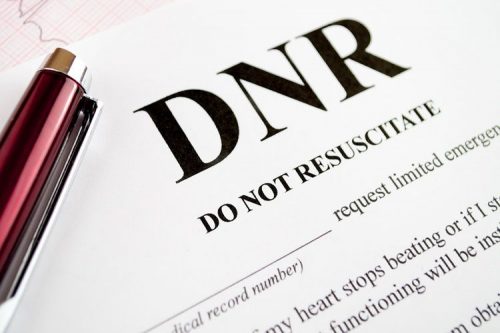
Before she got to this point a few years prior, her care coordinator somehow changed her directive to DNR, which as a Catholic she wouldn’t have agreed to, yet this person tried to convince the family that my grandma said yes to the change. If my family hadn’t checked the paperwork, my grandma’s incorrect and unauthorized change would have remained; however our family changed it back. My understanding is such acts are not uncommon in these facilities.

Fast forward to her last days. She was increasingly given higher doses of morphine & we weren’t allowed to even give her sips of water, though she was clearly thirsty. Her last words ever spoken while she gripped onto me, and heard by everyone in the room were “I don’t want to die.” She didn’t want to go and the nursing home was killing her and she knew it.

I still feel complicit in her death, as I tried to “go along” with staff who I assumed knew best. Continue reading

Addendum: To “The Euthanasia Slippery Slope: A Case Study,” Hypothetical And Poll

The Euthanasia Slippery Slope: A Case Study, this morning’s post, has attracted a wider range of opinion than I expected. I considered attaching a poll to the original post; now I’m going to go a step farther, and base that poll on a hypothetical of the kind that I use in my legal ethics seminars.

Speaking of those, on Tuesday, September 17, in Richmond, VA, and Wednesday, September 18, in Fairfax, VA, I’ll be presenting  “The Greatest Legal Ethics Seminar Ever Taught!” for three hours of legal ethics CLE credit to Virginia lawyers and others. The title reflects, other than my own warped sense of humor (“The Greatest Story Ever Told” is one of the worst movies I’ve ever seen), the fact that the legal ethics hypotheticals being discussed cover what I have found to be many of the most contentious, fascinating legal ethics issues extant over 20 years of doing these things. Moreover, I am being joined by my friend and colleague, John May, who approached these issues from the perspective of a practical litigator as well as one who often defends lawyers accused of ethical improprieties. He’s also one combative and clever pain in the ass who loves disagreeing with me, so I recommend bringing popcorn. The details are here.

Now here’s your hypothetical:

Continue reading

Funky Winkerbean vs. The NFL [CORRECTED]

The National Football League is moving inexorably toward another brain-wrecking season with scant resistance from the mainstream media or the ethics-blind public. It is heartening, therefore, to see comics section stalwart (since 1972) “Funky Winkerbean,” drawn and written by cartoonist Tom Batiuk, try to educate society, especially children, regarding the perils of football.

One of the rare comics that allows its characters to age and even die, “Funky Winkerbean” is beginning a 10 week story involving the deterioration of a regular character who once played in the NFL, as the symptoms of chronic traumatic encephalopathy, or CTE, take over and destroy his life.

Such enlightening of the nooks and crannies of our culture is vital if the public is ever going to stop enabling this unconscionable sport, in which, on the professional level, the disabling of young athletes is monetized by paying them to risk a slow, early, horrible death that is far enough in the future that they can rationalize their choice to accept the deal.

The New York Times article about the strip’s latest story arc is odd, as well as suspicious. It never mentions the NFL. It refers to CTE as the result of “sports-related concussions” that “in extreme cases, can lead to chronic traumatic encephalopathy, a form of degenerative dementia.”

I classify this a deliberate misdirection, and I wonder why the Times would stoop to it. This is primarily a football problem that also can affect those who play soccer, hockey, boxing, lacrosse and baseball, but the CTE threat in pro football is hardly restricted to “extreme cases.” There is evidence that the condition may begin at the high school level of football or even earlier, and that nearly all NFL players may suffer from it to various degrees. Is the Times burying the lede here because its readers are passionate NFL fans, and in denial over their beloved barbaric sport? New York City does have two NFL teams.

When a comic strip shows more responsibility and candor than the nation’s “paper of record,” there is a problem.

Sunday Ethics Warm-Up, 9/8/2019, As Tumbleweeds Roll Through The Deserted Streets Of Ethics Alarms…

Is anybody out there?

1. What’s going on here? The AP deleted a tweet on September 5 tweet attributing the murders of Israeli athletes  to undefined “guerrillas.” Someone complained: it then tweeted, “The AP has deleted a tweet about the massacre at the 1972 Munich Olympics because it was unclear about who was responsible for the killings and referred to the attackers as guerrillas. A new tweet will be sent shortly.” Finally, this was the tweet decided upon:

“On Sept. 5, 1972, the Palestinian group Black September attacked the Israeli Olympic delegation at the Munich Games, killing 11 Israelis and a police officer. German forces killed five of the gunmen.”

2. Wait: ARE there really “AI ethicists,” or just unethical ethicists grabbing a new niche by claiming that they are any more qualified for this topic than anyone else?

From the Defense Systems website:

After a rash of tech employee protests, the Defense Department wants to hire an artificial intelligence ethicist. “We are going to bring on someone who has a deep background in ethics,” tag-teaming with DOD lawyers to make sure AI can be “baked in,” Lt. Gen. Jack Shanahan, who leads the Joint Artificial Intelligence Center, told reporters during an Aug. 30 media briefing.

The AI ethical advisor would sit under the JAIC, the Pentagon’s strategic nexus for AI projects and plans, to help shape the organization’s approach to incorporating AI capabilities in the future. The announcement follows protests by Google and Microsoft employees concerned about how the technology would be used — particularly in lethal systems — and questioning whether major tech companies should do business with DOD.

I’m hoping that the Defense Department isn’t doing this, as the article implies, because some pacifist, anti-national defense techies at Microsoft complained. [Pointer: Tom Fuller]

3. Campus totalitarians gonna totalitary!  University of Michigan students and alumni aare demanding that the University to sever ties with real estate developer Stephen M. Ross , who is the largest donor in the University’s history. This would presumably include removing his name from  Ross School of Business, which he substantially funded. (His name is on other buildings as well) Did Ross rape women willy-nilly? Has he been shown to be racist? No, he held  a re-election fundraiser for the President of the United States. Continue reading

Joe Biden’s Eye

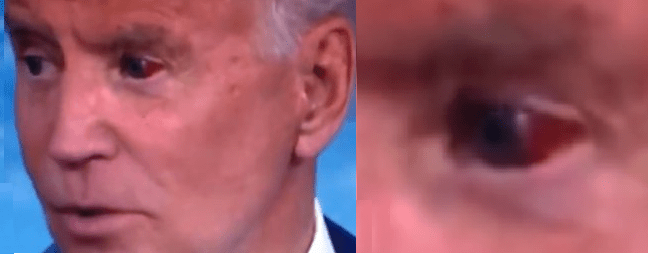
“Joe Biden’s eye just started bleeding? This isn’t a joke what in the hell just happened,” tweeted one individual who for some reason had nothing better to do than to watch CNN’s “climate change town meeting.” Indeed it had, and in some universes, like social media, this was the big story of the night. The Washington Times and Washington Examiner reported it; so did Fox News and The New York Post.  If you couldn’t figure it out from those clues, it was the conservative news media that thought this was an event worth knowing about. In the parallel an corrupt universe of the mainstream news media—you know, the ones determined to  influence the election so Donald Trump is a one-term President? That one?—it was “Eye? What eye?”

The New York Times hasn’t mentioned it yet. On Memeorandum, the useful news aggregator that I thought was non-partisan but now I’m wondering, didn’t have a single link about it. Even CNN, which hosted the debate, ignored the moment. I couldn’t believe it, so I searched for “eye” in the debate coverage  on the CNN website, and got only “At times, candidates waged a bidding war to show liberal activists their plan was the most audacious — and even expensive. But with an eye on November 2020, others warned against throwing the economy out of the window.” The story was headlined “What happened during CNN’s climate town hall and what it means for 2020,” so as far as CNN is concerned, nothing happened. Politico, the left-leaning website, at least alluded to the eye by joking, “Even the shallow matter of what we now call “optics” went badly for Biden. He chose to sit through his appearance—Harris, Sanders, and Warren all stood—and by the end of it, a burst blood vessel in his left eye was noticeable.” Optics, get it? AOL, which I would call anti-Trump, distingished itself by importing coverage from the Wrap headlined, “Biden’s mysterious bloody eye overshadows CNN climate town hall.”

Wait: how could something “overshadow” the event, and simultaneously not be worthy of news coverage? Continue reading