Ethics Hero: Bill Lee, “The Spaceman,” An Integrity Exemplar…And I Really Need One About Now

bill-lee

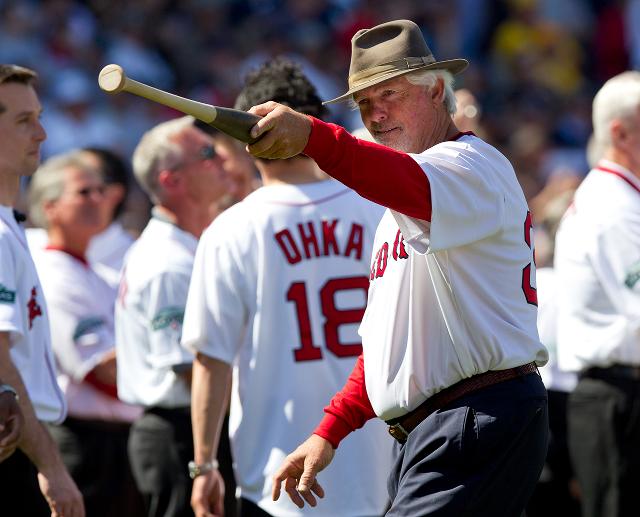
If you weren’t a baseball fan in Boston during the Sixties and Seventies you may never have heard of Bill Lee, but if you were, he was an unforgettable and unique source of pleasure. Lee joined the Red Sox in 1969 as a junk-balling left-hander with a hippie streak not previously seen in the sport.  He was prone to say things like, “I think about the cosmic snowball theory. A few million years from now the sun will burn out and lose its gravitational pull. The earth will turn into a giant snowball and be hurled through space. When that happens it won’t matter if I get this guy out.”  The college students around Boston loved him, the old school baseball management types not so much. But he was good, and in major league baseball, good will always trump weird.

Lee was an excellent a reliever for four years before becoming a Sox starter in 1973, then won 17 games that season and the next two as well. The success was secondary for his often-stoned fans than his non-conformist attitude and determination to be himself at all costs. He was well-read, well-educated, opinionated and funny, and at various points in his Red Sox career, wore a gas mask, a coonskin cap and a propeller-topped beanie onto the field. Once, when the umpires refused to halt play in a downpour, Lee came out of the dugout wearing rain gear and carried an umbrella to the mound. This and other exploits caused him to be nicknamed “The Spaceman.”

Twice, once with the Red Sox and later with the Montreal Expos, Lee went on strike, refusing to play to protest the elimination of one of his friends from his team’s roster. The last time he did it, it ended his career.

Lee made up his own rules and principles, so he’s a different kind of Ethics Hero.  Above all else, however, the Spaceman has integrity down to a life-style. When he was at his zenith with the Red Sox, he often said that baseball was a still just a game to him, that it was what he loved to do, and that he didn’t care about the money. He would play baseball for whatever was available, he said, or just for the love of it. My father, who didn’t get Bill Lee, thought he was grandstanding.

He wasn’t. Continue reading
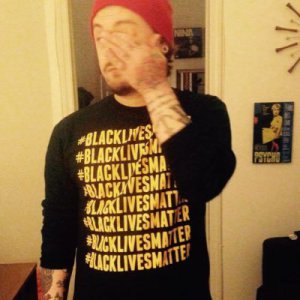
Ethics Zugswang And The Vicissitudes Of Moral Luck: The Rutgers Prof’s Scary Tweet

Careless tweets matter...

Careless tweets matter…

Rutgers University lecturer Kevin Allred tweeted,

“Will the 2nd amendment be as cool when i buy a gun and start shooting at random white people or no…?”

The University had him arrested and sent to Bellevue mental hospital for a psychiatric evaluation.

His defenders, and of course Allred, say that his tweet was just a rhetorical question to make a point. The University says that he left them no choice, or no good ones, anyway.

They both are right. This is what comes of being in Ethics Zugswang, when one is thrust into  a position where no course of action is fully responsible, fair, and ethical.

The university decided that it could not responsibly assume that the tweet was benign and not a threat. What if the school did nothing, and Allred then  took high ground and became Charles Whitman 2016? Having him arrested, however, looks unfair and like a punitive reaction to free speech. There was literally no course the university could take that was completely ethical. Rutgers sacrificed its  teacher’s dignity for the safety of the students and to protect the institution’s liability.

The other alternatives—talking to him, shrugging it off as a poorly considered social media gaffe—placed the fate of the school and perhaps many students at the mercy of moral luck. These would seem like reasonable  decisions only if the moral luck dice did not come up snake eyes. Allred didn’t say “if” I buy a gun, he said when. He added race to the equation, and there are a lot of people who seem to be losing their grip in the wake of the election. What were the odds that he meant what he wrote? 100 to 1? 1000 to 1? 5000 to 1? Is it worth the remote chance that this was a warning of an impending catastrophe not to take the safe route, and have him arrested and examined? Is it worth gambling with students’ lives? Continue reading

Ethics Quiz: Dr. Phil, Shelley Duvall, And Exploitation

shelley-duvall

A 30-second promotional clip for today’s episode of “Dr. Phil” is disturbing, beyond question. It shows Shelley Duvall, from “The Shining,” “Popeye,” “Nashville” and other well-known films talking to the fake doctor about her mental illness.The syndicated advice show’s promo shows Duvall, almost unrecognizable, talking about how her “Popeye” co-star, the late Robin Williams, is alive and “shape-shifting.” She says she is being threatened by Robin Hood’s Sheriff of Nottingham, and that a “whirring disc” is inside her.

The ad ends with Duvall, 67, telling Phil McGraw, “I’m very sick. I need help.”

She certainly sounded like it, and looked like it too.

Now Dr. Phil is being criticized for exploiting a vulnerable mentally ill woman for her audience drawing powers. The daughter of Stanley Kubrick, who directed Duvall in her most famous role as Jack Nicholson’s terrorized wife in “The Shining,” is leading the charge. Vivian Kubrick called for a boycott of the popular daytime program, tweeting, “You are putting Shelley Duvall ‘on show’ while she is suffering from a pitiable state of ill health. Unquestionably, this is purely a form of lurid and exploitative entertainment — it’s appallingly cruel.”

Your Ethics Alarms Ethics Quiz of the Day:

Is it unethical for “Dr. Phil” to feature Shelley Duvall this way?

Continue reading

Ethics And The Broadway Star’s “Accidental” Pregnancy

In July, just four months after the show opened to rave reviews, producers closed the hit Broadway musical, “Shuffle Along, Or The Making of the Musical Sensation of 1921 and All That Followed.” “Shuffle Along,” with 10 Tony nominations this year, had the makings of a long-running bonanza, but producers decided that when its acclaimed star, multiple past Tony Award winner (six!) Audra McDonald, had to leave the cast due to a surprising pregnancy (the actress was 45), it was too risky to continue. As soon as a replacement was named, ticket sales plummeted.

The show, which was capitalized for up to $12 million, had purchased a $14 million insurance policy from Lloyd’s of London to cover any damages arising if McDonald “was unable to perform because of an accident or illness.” Now producers are asking Lloyd’s to pay up, covering losses created by the pre-mature closing of the musical and by the  effects on the production occasioned by other health issues related to McDonald’s pregnancy while she was still performing.  “Since the beginning of previews of the Show, Ms. McDonald was unable to appear in numerous performances of the Show due to circumstances related to illness, a knee injury, and her pregnancy,” a lawsuit says. Her role was a strenuous one, requiring, among other things, a lot of tap-dancing.

Why the lawsuit, you ask? Lloyd’s says that the policy’s terms haven’t been met, arguing that the actress’s pregnancy and the associated medical conditions were neither due to an ‘accident’ nor an ‘illness’ under the policies.” The show’s position, as articulated by a lawyer representing the show, is that”‘Shuffle Along’ bought an insurance policy to cover it in the event that Ms. McDonald was unable to perform, and she was unable to perform.”

I love this story! It has everything—cold-eyed insurance executives, a perhaps manipulative diva, the sanctity of pregnancy, buck-passing, Hail Marys, feminist taboos, and Broadway!
Continue reading

The Doctor, The Emergency And The Flight Attendant: A Depressing Ethics Tale With No Ethical Resolution In Sight

Was it race, gender, youth, all of them, or none of them?

Was it race, gender, youth, all of them, or none of them?

Tamika Cross, a young OB-GYN flying Delta from Detroit to Minneapolis,  heard flight attendants calling for medical assistance when a passenger  man two rows in front of her was found to be unconscious. Dr. Cross raised her hand, only to be told, according to Cross’s subsequent Facebook post on the incident, “Oh no, sweetie, put your hand down. We are looking for actual physicians or nurses or some type of medical personnel. We don’t have time to talk to you.”

Cross says she tried to  explain that she was a physician, but was “cut off by condescending remarks,” from the attendant. A moment later, when there was a second call for medical assistance and Cross again indicated that she was ready to help, the same flight attendant said, according to Cross, “Oh wow, you’re an actual physician?” She then quizzed Cross  about her credentials, area of practice, and where she worked. In the meantime, a white, middle-aged male passenger appeared, and Cross, she says, was dismissed.

On her now viral Facebook post, Dr. Cross concludes:

“She came and apologized to me several times and offering me Skymiles. I kindly refused. This is going higher than her. I don’t want Skymiles in exchange for blatant discrimination. Whether this was race, age, gender discrimination, it’s not right. She will not get away with this….and I will still get my Skymiles….”

What’s going on here?

Stipulated:

1. This was an emergency situation.

2. Dr. Cross sincerely felt insulted and treated with disrespect.

3. She also feels that she was the victim of stereotyping,, bias and prejudice.

4. Her account can be presumed to be an honest recounting of how she experienced the episode.

5. The Roshomon principles apply. We do not know how the flight attendant perceived the situation as it developed, and will never know, since the incident is already tainted with accusations of racism.

6. This was an emergency situation.

7. There is no way to determine what the flight attendant was thinking.

8. Despite all of the above, observers, analysts and others will be inclined see the event as confirmation of their own already determined beliefs and assumptions.

9. This was a single incident, involving a set of factors interacting in unpredictable ways.

Next, some ethical observations…. Continue reading

Here Are Two Victims I Am Happy To Blame: The Late Christopher Dilly And Jessica Lally

overdose3Tell me more about how drug use is a victimless crime. I’m sure these assholes loved that argument

Lally 25, and Dilly, 26, were found dead of overdoses in the den of their McKeesport, Pennsylvania home this week,  with three young children elsewhere in the house. They had recently posted on Facebook about how much they loved their children.

Not more than getting high, of course.

The parents may have been dead for a day or more before their bodies were found, after their 7-year-0ld daughter had told a school bus driver that she didn’t want to go inside her home because she couldn’t wake up her parents before dressing herself and heading to school. The  bus company notified the school, and school officials called the police.

The girl,  her 9-month-old girl, a 3-year-old boy and a 5-year-old boy were examined at a hospital, and  social welfare officials assumed custody of the children. All in all, this is a good development for the children, whose parents were irresponsible, irredeemable, reckless fools. Continue reading

Ethics Dunce: Northern Michigan University

"...but just shut the hell up abut it, or we'll have to suspend you.  Love, The Administration"

“…but just shut the hell up about it, or we’ll have to suspend you.
Love, The Administration”

Episodes like this, coming out of the wreckage we call higher education, raise at least three troubling questions:

1. If universities are this ignorant of the principle of free speech, why is anyone surprised that our younger generations are so willing to sacrifice it for political ends?

2. How can institutions run by administrators this immune to basic ethical decision-making reasoning be trusted to competently educate their students?

3. How many equally outrageous policies do schools inflict on their students that we don’t hear about?

Northern Michigan University installed threatens students with discipline if they share suicidal thoughts with other students.

FIRE, as usual, is on the case, and has written to the school to explain to them why this is abusive and a flagrant First Amendment violation. One student who had received a warning about her discussing about her suicidal feelings with her friends on campus, and was told not to have such conversations. She asked for clarification from Associate Dean of Students Mary Brundage, writing,

Just to clarify, the email said that if I spoke to students about it that it would create a distraction—which could create disciplinary action against me. . . . I was also wondering if I respond to concerned people, is that enough to get me in trouble? I do not want to worry others by not responding and I do not want to have the possibility of getting expelled by reaching out to my friends during this emotionally trying time and I see the possibility of misunderstanding or getting more concerned.

Continue reading

Without Courage, Integrity And Professionalism In The Legal Profession, The Rule Of Law Hasn’t A Prayer: The House of Representatives v. Burwell Saga

" Nice law firm you got here. Too bad if something were to happen to it..."

” Nice law firm you got here. Too bad if something were to happen to it…”

As I explained  here and here in 2015, the process of judicially determining whether the Defense of Marriage Act was constitutional or not was unethically sabotaged by  threats to and improper lobbying of the law firm that had agreed to defend it. The Justice Department and the President had refused to do their sworn duty to uphold the laws of the United States, and same-sex marriage activists pressured the biggest client of the firm that had accepted the case to pass the pressure along. It worked. The firm dropped the case, precipitating a resignation by the partner handling it and this ringing assertion of traditional legal ethics:

“…[D]efending unpopular positions is what lawyers do. The adversary system of justice depends on it, especially in cases where the passions run high. Efforts to delegitimize any representation for one side of a legal controversy are a profound threat to the rule of law.”

This was, we are learning, not an anomaly. On the Volokh Conspiracy, law professor Josh Blackmon relates how the same strategy of applying of unethical political pressure, and the unprofessional capitulation of major law firms to it, nearly made a legitimate challenge to illegal payments to insurers under Obamacare impossible. He explains in part: Continue reading

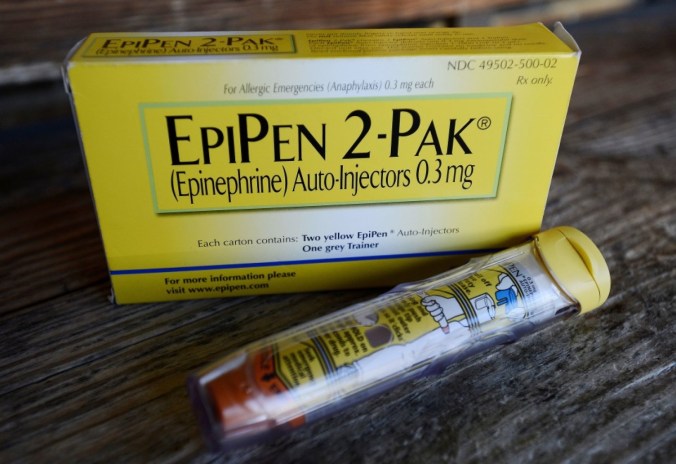
The Discouraging Mylan Epipen Ethics Breakdown

epipen

My economics professor in college was the late John Kenneth Galbraith, a best-selling author, New Frontier favorite and celebrity, to the extent that an economist can be a celebrity. One of the foundations of his fame was his theory that big corporations were becoming the successors to nations. They were, he said, on the way to becoming more powerful than nations, and the working people of the world would begin being more loyal to them than nations or religions.There were a lot of economic and management consequences of this, but it was the ethical implications that most interested me.

Corporate cultures would increasingly steer individual beliefs and behaviors, and strong forces would push these industrial giants to be less driven by profits and more ethically reponsible, since employees would want to be a “citizens” of a corporate state in which they could take pride. Similarly, stockholders wanted to be able to be proud of their holdings, as well as make money with them. His book explaining this theory, “The New Industrial State,” was a sensation. Part of the motive behind the book, my professor being a big government advocate too, was to lay the foundation of the case that these new “states” had to be carefully guided and regulated lest one go rogue and abuse its power to disastrous effect. Still, the position of the book was optimistic: the new giant corporations were scary, but there were forces at work that would make them want to be good and do good while making all that money.

Well, so much for that college course. The unfolding ethics mess that is the Epipen fiasco shows us an ugly company with an unethical culture run by an unethical CEO and invested in by people who don’t give a damn that the company is despicable, as long as they make money. The regulatory system that could have been built on Galbraith’s fantasy has failed utterly.

To make a long, complicated and depressing story shorter, here is a summary with some links at the end. Continue reading

The Latest Unethical Tactic: Attacking Journalists Who Don’t Actively Try To Promote Hillary Over Trump [UPDATE: Hillary’s Health]

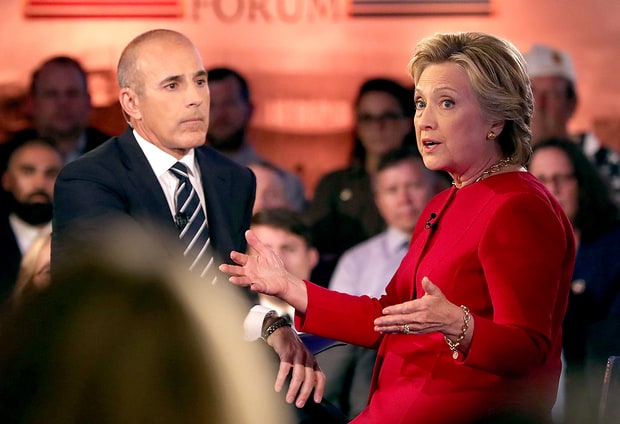
matt-lauer-hillary-clinton

Once the New York Times embraced the rationalization “Ethics is a luxury we can’t afford” and announced that journalists had a duty to bias their reporting to block Donald Trump’s election, this result was foretold. It was really foretold in 2008, when the news media first abandoned even the pretense of fairness and objectivity to ensure the election of our first black President.

Matt Lauer, of all people, became the object of furious invective after he hosted a live prime-time forum with Trump and Hillary. He was accused of unfairness, gullibility and even sexism in his handling of the event. His main offenses: not “fact-checking” Trump, as when he said, not for the first time, that he opposed the Iraq invasion from the beginning (he didn’t), and grilling Hillary about her e-mail machinations.

The only way the transcript supports the latter contention is if one is Bernie Sanders and believes Hillary’s “stupid e-mail” is irrelevant. Lauer didn’t spend an inappropriate time on this issue, given what a perfect example it is of Clinton’s Arrogance, deviousness, lack of transparency, and, apparently, incompetence and recklessness.  I’d say he was easy on Hillary: he didn’t mention her sleazy conflicts with Clinton Foundation donors at all, and she is much less adept at spinning that slam-dunk conflict of interest and ethical violation than with her e-mail, which she has been lying about for more than a year. Pro-Clinton news media, which is to say, news media, howled about Lauer not challenging Trump’s thoroughly disproven claim about opposing the Iraq War, but Clinton already had done this, saying, “Now, my opponent was for the war in Iraq. He says he wasn’t. You can go back and look at the record. He supported it. He told Howard Stern he supported it.” Maybe Lauer thought that was enough; it should have been: Trump’s lie on this score has been well-publicized, including here, on Ethics Alarms.

Meanwhile, he did not challenge Clinton on her obviously false claim that emails cannot be considered classified if they do not contain formal classification markings, and worst of all, he did not challenge her unconstitutional call to ban citizens who are placed on a no-fly list from exercising their Second Amendment rights. This is especially important, because this fact isn’t understood by most Americans, and a Presidential candidate advocating defiance of the Constitution is, or should be, a big deal. Never mind, though: Lauer wasn’t supposed to be tough on Hillary. He was only supposed to be hard on Trump, and because he wasn’t “hard enough,” a.k.a., “harder,” a.k.a. “biased like the rest of the mainstream coverage,” then it means that he was incompetent. Continue reading