Health and Medicine
The False Lesson Of The GOP Failure To Replace Obamacare

“They called off the Charge of the Light Brigade, the incompetent fools!”
Ethics Alarms feels obligated to state what should be obvious, but increasingly is not, as abuse is heaped on the Republican House and President Trump for failing to be able, for now at least, to agree on a replacement/repeal/fix for the Affordable Care Act, “Obamacare” its close friends….enemies too, come to think of it.
The headlines on stories all over the web describe the lack of a GOP bill are brutal:The failure of the Republican health care bill reveals a party unready to govern (Vox)…Republicans Land a Punch on Health Care, to Their Own Face (New York Times)…Inside the GOP’s Health Care Debacle (Politico). Those are the nicest ones. The conservative media’s headlines are even more contemptuous. This only reflects how much the prevailing delusion on the Left and by extension the Left’s lapdog media and punditry, has infected political common sense, leaving a Bizarro World* sensibility about what ethical governing is about.
It may be futile to point this out from this obscure corner of the web, but hell, I’m a fan of quixotic endeavors: the House health care bill was a bad bill. Virtually everyone who examined it thought so. If the thing had somehow been passed by the Senate (it wouldn’t have been, so this meltdown just got all the abuse and gloating out of the way early) and signed by the President (who admits that he has no idea what a “good” health care system would be), it would have thrown millions of lives and the economy into chaos. It isn’t responsible governance to pass bad laws. (Why is it necessary to even say this?) It’s irresponsible. The Republicans wouldn’t show they were “ready to govern” by passing an anti-Obamacare bill that made a bad mess messier; they would have shown that they were fools, reckless and incompetent.
You know: like the Democrats when they passed the Affordable Care Act. Continue reading
And The Obamacare Ethics Train Wreck Rolls On…

Barack Obama’s legacy is a series of ethics train wrecks of remarkable and depressing longevity. The oldest of them, the Obamacare Ethics Train Wreck. may never stop rolling, leaving destruction in its wake forever..
Observations:
1. It is clear that the Republicans will not be able to repeal, undo, repair or reinvent Obamacare, aka The Affordable Care Act, consistently with their rhetoric and the wishes of the thoroughly messed-up law’s abundant critics. The many bills passed by the GOP-controlled House to that end during the Obama Administration were grandstanding only: they passed because there was 100% certainty they would be vetoed. Now that such bills actually risk becoming law, Republicans are, reasonably enough, not willing to take the leap into the void.
2. The President has told Congress that if they are not prepared to deal with the repeal and replacement of the ACA now, he will move on to other priorities. This is entirely responsible, both politically and pragmatically. Passing a sweeping law in haste that will affect millions of Americans would be irresponsible.
3. This means, of course, that the President’s campaign pledge to repeal Obamacare and replace it with something “great” “on Day One” was nonsense. On one hand, it was reasonable for him, or anyone, to assume that after seven years of complaining the party’s legislators had a viable plan ready to replace the affordable Care Act. On the other, it was dishonest to make such a pledge without ascertaining with certainty that what Candidate Trump was promising was within the realm of possibility. “Day One” is obvious hyperbole, but anyone making such a statement must assume that it will be widely interpreted as “before the next Ice Age,” and thus should not be uttered unless the pledge can be fulfilled eventually. Continue reading
A New Way To Be Unethical On An Airplane, Courtesy of “The Hamilton Effect”
I’m in O’Hare, with about 20 minutes to post something, and amazingly, I just witnessed something of ethics significance.
As my United flight from Sacramento was at the O’Hare gate, with passengers waiting for the jetway to be set up, a young man stood up in the middle of the plane and launched into a loud sales pitch for his depression counseling services!
Let’s call this ‘The Hamilton Effect,” in which people assume that a captive audience is there to be inflicted with their particular rants, business promotions and other intrusions.
The flight attendants had no idea what to do. He was behind me, and I didn’t feel like fighting my way to him, intervening, and telling him, “You’re depressing ME. Shut up. We’re not your infomercial audience, and we didn’t consent to being bombarded by propaganda or marketing blather.”
Now I’m ticked off that I didn’t. Next time, I’ll be ready. This has to be nipped in the bud.
Oh, this probably wasn’t really sparked by “Hamilton’s” ambush of Mike Pence, but I’m going to blame the production and cast anyway. And all the ethics-challenged theater professionals who applauded this breach of trust.
On another topic, David Cay Johnston,the journalist who revealed the President’s 2005 tax returns, offers a rebuttal to my recent post, here. What fun!
It’s Trenchant Original Reader Commentary And Plausible Conspiracy Theory Thursday!
I don’t have time to come up with a better name.
It’s 4:40 AM, I’m in Sacramento, and my cab is on the way. I’ll be on a plane for about the next 8 hours, and I can’t plan in in-flight internet, so you are on your own for the day. Ethics issues only, please. No political rants. Substance, and please, keep it civil.
Meanwhile, tell me what you think of this.
Particularly, I am interested in hearing from those who would discard it as conservative nonsense what they would call it IF it were true.
See you soon.
Comment Of The Day: “Catching Up On “Instersectionality,” And Finally Paying Attention”

These do not exist.
My heart sank when the I saw that the extremely lively debate following yesterday’s post about “intersectionality” had sparked a posting of “White Privilege: Unpacking the Invisible Knapsack” by Paula McIntosh, who either was time traveling from 1947 or who was awakened from a coma in 1988 and set it to paper. The list was out of date then, and it is 29 years old now: one of my favorite aspects of perpetual victim-mongers is that they always pretend that no progress has been made in ethics and human relations, because progress puts them out of business.
I had to debunk this thing, but there were other priorities hanging over me. Fortunately, reader Isaac took up the challenge. This is often the case in Ethics Alarms, where the remarkable reader base either assists me in doing my job, or, as in this case, does it for me, often better than I could. Isaac chose humor to do the job here, and looking over the material, that might have been the kindest course.
Here is Isaac’s epic Comment of the Day on the post, “Catching Up On “Instersectionality And Finally Paying Attention.” (I’ll have a few comments at the end.)
I wish to thank Deery for sharing about the “Invisible Knapsack” of 26 White Privileges invented by someone named McIntosh. I had never heard of it and am eager to unpack all of unseen ways that the White-spiracy has gifted me with an implicit advantage over my colored people friends. By knowing what my white privilege affords me, I can now exploit it and achieve my highest potential! Let’s dive in.
—-“1. I can if I wish arrange to be in the company of people of my race most of the time.”—-
That can’t be right, and I don’t just mean the sentence structure. My neighborhood in Riverside County, California is about 65% Latino and 15% Black. And I can’t afford to move. I like it here. But if I did want to move to Orange County or Malibu or whatever and hang around fellow Whites all day, I can’t afford it. Maybe McIntosh can connect me to the secret White Privilege Office that will hook me up with a McMansion in Irvine.
—-“2. If I should need to move, I can be pretty sure of renting or purchasing housing in an area, which I can afford and in which I would want to live.”—–
Seriously, McIntosh? I just went over this. If it costs more than a one-bedroom apartment in Perris, I CAN’T afford it. Who is McIntosh and why does she believe that being White gets you real-estate discounts?
—-“3. I can be pretty sure that my neighbors in such a location will be neutral or pleasant to me.”—-
My neighbors have been pretty cool except for the three or four people who have robbed me or smashed some of my property. Is this the realization of my White privilege or do I still have untapped benefits?
—-“4. I can go shopping alone most of the time, pretty well assured that I will not be followed or harassed.”—-
I got kicked out of a gift store once as a teenager, but to be fair, I WAS shoplifting at the time.
I’ve only been unfairly followed or harassed while shopping a few times. But I checked with some of my Brown and Black friends, and they ALSO had only been followed or harassed while shopping a few times. That number should be WAY higher for them than for me. What kind of white privilege is this? Why are my benefits not notable?
—-5. “I can turn on the television or open to the front page of the paper and see people of my race widely represented.”—-
To check my privilege in this area I turned on the television and looked at a newspaper, and was surprised to find that yes, there were quite a few white people there. Sweet, privilege! But it gets better! I checked Wikipedia and found out that White people make up almost two thirds of the population of America! Wow! How can a group of people that make up 63% of a country’s population also be seen on the television and newspapers constantly? It’s gotta be a conspiracy, baby! A sweet, sweet, white conspiracy.
—-“6. When I am told about our national heritage or about “civilization,” I am shown that people of my color made it what it is.”—- Continue reading
KABOOM! Unethical Quote Of The Month, And Maybe Hypocrisy Of The Century: Nancy Pelosi

I’m stunned. I honestly did not think it was possible for Nancy Pelosi to surprise me any more, as my expectations for her utterances are so low as to be subterranean. I certainly didn’t think she could make my head explode again. Pelosi accomplished the impossible, however, by including this astounding line in a letter to Paul Ryan regarding a GOP replacement for the Affordable Care Act. She actually wrote…
“The American people and Members have a right to know the full impact of this legislation before any vote in Committee or by the whole House.”
KABOOM!
1. This is the same woman whose most famous quote, regarding the ACA, is “We have to pass the bill so that you can find out what’s in it….”
2. The law the Republicans want to replace with something the “American people and Members have a right to know the full impact of … before any vote in Committee or by the whole House” was one that almost no Democrats read before voting for it, so even they didn’t understand its “full impact.”
3. The ACA passed in this manner included a mandate that Pelosi and her party swore was not a tax but a penalty, and then when the law was challenged argued to the Supreme Court that it wasn’t a penalty, but a tax.
4. The President of the United States who signed the ACA materially misrepresented the impact of the law repeatedly by stating that it allowed Americans who wanted to keep their current health plans to do so.
How dare Nancy Pelosi make that demand? How astoundingly hypocritical, overflowing with gall, and immune to self-awareness can any human being be? This is like Bill Clinton lecturing Donald Trump about avoiding intimate relations with subordinates, but worse.
Of course she’s right, but Pelosi is the last person on earth, literally the last person, entitled to demand transparency regarding health care bills. How can she say something like this? Is she senile? Is she trying to look ridiculous? Is she so completely devoid of integrity that she can advocate the exact opposite of her own conduct and that of her party without a twinge of irony or shame? Does she believe that her followers are so blind, stupid an unable to hold a memory in their heads that they won’t see how offensive this is, coming from her?
Are they that blind and stupid?
Few Political Stories Make Me Angry. This One Makes Me Angry. And Frightened.

In these three posts—Blame Everyone for Infrastructure Ruin: Unethical, Irresponsible Priorities from Reagan to Obama (2010); Ethics Heads-Up: When the President Talks About “Investment in Infrastructure,” Pay Attention (2011); Hole-in-the-Roof Ethics: If Obama Asks For Massive Infrastructure Renewal, the GOP Must Support It. (2011), I laid out the unanswerable case for making national infrastructure renewal a priority. Let me just quote from the three, to save me typing time…
In the early Eighties, I oversaw an independent study funded by the Highway Users Federation and the National Chamber Foundation called “Transport Tomorrow,” exploring the immediate need for transportation infrastructure repair and expansion in all modes of transportation: roads, railway, waterway, and airports. In the process of learning how dire the need for massive construction and repair was if America’s future commercial needs were to be met, the study commission made a disturbing discovery: urban water and sewer systems were crumbling too. There was literally not enough money to fix all the roads, bridges, tunnels, water mains and sewer pipes that had to be fixed, and the consequences of not doing so would be economic paralysis and worse, disease and even social unrest.In the face of this looming and undeniably real disaster, the Reagan Administration did—pretty much nothing. Neither did the Bush, Clinton and Bush II administrations…
Seldom is a solution to a problem so obvious, and so conducive to bi-partisanship. It is a solution to two problems, really: America’s dangerously rotting infrastructure, and the nation’s dismal unemployment rate. Spend the money, trillions if necessary, to repair and replace existing roads, railway beds, waterways, sewer systems, airports and bridges. It still won’t get us where we need to be, but we’ll be much better off than if we let the current deterioration continue, and we’ll save money in the long run, too—real savings, not phony health care reform savings that evaporate once reality kicks in.
There is no justification not to do this, nor is there any legitimate excuse for any elected official not to vote for it. (And no, not wanting to give the President a victory is not legitimate…or ethical, or patriotic.) Repairing the infrastructure isn’t “discretionary spending,” it is essential, unavoidable and cost-effective spending, unless it is diverted into new boondoggles and pork. No new structures, unless they replace unrepairable old ones. No light rail systems or bullet trains; what is needed is basic maintenance and repair….everywhere. It is already late, but “better late than never” has seldom been as appropriate.Will fixing the infrastructure add to the deficit? Not really, because it already is an expense that we know will have to be made, or else. If the sewer systems and waterworks break down, we start dying. If bridges collapse, we die too. That isn’t even mentioning the increasing costs in energy and commerce caused by a decaying transportation system. The sooner we pay for it, the less it will cost, so sooner is per se better for the economy, and it is perfect timing given the employment crisis.
Yes, Obama better have a way to pay for it, with real budget cuts and reasonable taxes. If he plays politics with the proposal by making it impossible for the GOP to support (as some pundits, like the Post’s Eugene Robinson, have advised), shame on him. This has to be paid for, but it also has to be done…If Obama puts a fair, reasonable, relatively pork-free proposal on the table, Republicans would be despicably unethical to reject it.
As we now know, the Obama Administration proposed, and the GOP Congress opposed. This is a long-term bi-partisan failure, but it must be remembered that Obama had no credibility on this issue, and he never did propose a a way to pay for it “with real budget cuts and reasonable taxes.”
I was reminded of this issue when I read yesterday about how engineers have concluded that over 9% of the nation’s bridges are structurally deficient. Bridges are just part of the infrastructure disaster to come—just wait until the 200-year old sewer and water systems in some cities start breaking down, and we have Flint, Michigan times a thousand—but they are illustrative of our government’s failure. Continue reading
Two Unethical And Unconstitutional Laws On Guns, One From The Right, One From the Left, Bite The Dust. Good.

I.
As last year’s flat-out demagoguery about banning gun ownership for citizens placed on the FBI’s no-fly list proved, Democrats will never let the Constitution get in the way of an emotion-based attack on gun rights. A rule implemented by former President Obama after the 2012 Sandy Hook shooting (“WE HAVE TO DO SOMETHING!!!”) would have required the Social Security Administration to report the records of some mentally ill beneficiaries to the FBI’s National Instant Criminal Background Check System. Those who have been deemed mentally incapable of managing their financial affairs — roughly 75,000 people — would have then been prevented from owning guns.
The American Civil Liberties Union and advocates for the disabled opposed the restriction, which was so broadly drawn that an Asperger’s sufferer could have his Second amendment rights taken away. And what, exactly, is the link between not being able to handle one’s financial affairs and violence? Hell, I can barely handle my financial affairs.
By a 57-43 margin, the Republican-led Senate voted last week to repeal the measure, and it now heads to the White House for President Trump’s signature.
Iowa Sen. Chuck Grassley, a leading Republican critic of the rule, said that it was filled with “vague characteristics that do not fit into the federal mentally defective standard” that could legally prohibit someone from buying or owning a gun. “If a specific individual is likely to be violent due to the nature of their mental illness, then the government should have to prove it,” Grassley said
Sen. Chris Murphy, a Democrat from Connecticut where the Sandy Hook massacre occurred, and thus obligated to grandstand regardless of the fact that he’s on shaky 2nd Amendment, 5th Amendment and also Equal Protection ground, declaimed on the Senate floor,
“The [Congressional Review Act] we have before us today will make it harder for the federal government to do what we have told them to do for decades, which is to put dangerous people and people who are seriously mentally ill on the list of people who are prohibited from buying a gun….If you can’t manage your own financial affairs, how can we expect that you’re going to be a responsible steward of a dangerous, lethal firearm?”
Well, I guess nobody in Congress should own a gun either, right, Senator? Continue reading
The 8th Annual Ethics Alarms Awards: The Worst of Ethics 2016: The Last Of The Worst
Ethics Alarms wraps up the Worst in 2016 Ethics with the usual education and journalism breaches, Ethics Dunce of the Year, and more delights for the sadistic…
Unethical Government Fiasco Of The Year
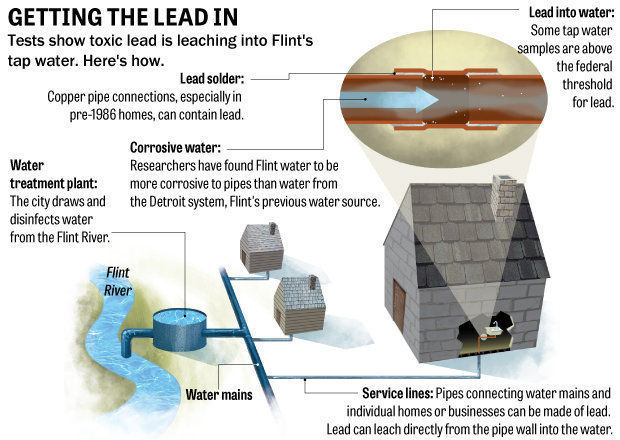
The Flint, Michigan water crisis. A failure of competence, diligence, responsibility and honesty, compounded by bureaucrats, elected officials, the city of Detroit, Michigan Governor Rick Snyder and the EPA made people sick and cost billions.
Good job, everybody!
Scam of the Year
Sen.Ted Cruz’s fake “official” mailer before the Iowa Caucus. Cruz’s campaign sent out mailers labeled in all capital letters, “ELECTION ALERT,” “VOTER VIOLATION,” “PUBLIC RECORD,” and “FURTHER ACTION NEEDED.” On the other side, the mailer said, in red letters at the top, “VOTING VIOLATION.” The text read:
You are receiving this election notice because of low expected voter turnout in your area. Your individual voting history as well as your neighbors’ are public record. Their scores are published below, and many of them will see your score as well. CAUCUS ON MONDAY TO IMPROVE YOUR SCORE and please encourage your neighbors to caucus as well. A follow-up notice may be issued following Monday’s caucuses.
This is why Trump’s nickname for Cruz, “Lyin’ Ted,” was crude but accurate.
Ethics Dunces Of The Year
All the social media users and others who ended Facebook friendships, genuine friendships and relationship over the 2016 election. Haven’t they ever seen “It’s A Wonderful Life”? Morons. Shame on all of them.
Weenies of the Year
The college students who demanded that exams be cancelled, therapists be available, safe spaces be found, puppies be summoned and cry-ins be organized because the awful candidate they supported in the Presidential election lost, as candidates often do.
How embarrassing.
Unethical University Of The Year
Liberty University. This is the most competitive of categories, with all the schools that railroaded male students based on questionable sexual assault claims while quailing in fear of the Dept. of Education’s “Dear Colleague Letter,” and all the schools that signaled that the results of a simple election justified PTSD treatment for their shattered charges, as well as making it clear to any students who dared to tilt Republican that they were persona non grata. Nonetheless, Liberty University takes the prize with its unique combination of greed, hypocrisy, and warped values. From the Ethics Alarms post:
Last week, with great fanfare, Liberty hired Ian McCaw as its new athletic director. “My vision for Liberty is to position it as a pre-eminent Christian athletic program in America,” McCaw said during a news conference.
This is his first paying assignment since May, when he left his job as the athletic director at Baylor, also a Christian university. His departure was made essential after a thorough investigation that found that those overseeing Baylor’s football team as well as the management of the athletic department—that is, McCaw— had been informed of multiple gang rapes and sexual assault by team members and had ignored it, as any good football-loving Christian would….especially when a star was involved.


There were not one but three excellent, informative, detailed comments, one after the other, in response to the post about the GOP’s elimination of the recent Obama FCC regulations of Big Data gathering by broadband providers. Technology competence is, I believe, the greatest looming ethics issue for the professions, and it is important for the general public as well. All three of these Comments of the Day are educational. If only the news media and elected officials were as well-informed as Alex, John Billingsley, and Slick Willy.
I am very proud of the level of the discourse on Ethics Alarms, and these three Comments of the Day on the post Ethics Quote Of The Month: Tech Dirt’s Mike Masnick On The Internet Privacy Bill are prime examples.
First, here’s slickwilly:
How to be safe with electronic data
Now John Billingley’s contribution:
Continue reading →