Comment of the Day (1), on Surrogate Ethics: “The Strange Case Of The Unwanted Triplet”

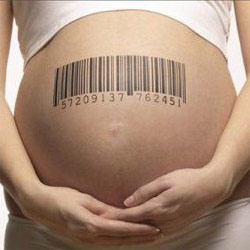
surrogate-motherIt’s very thoughtful of Ethics Alarms readers to provide such high level content so I have a chance of completing the 2015 Ethics Alarms Awards before March. I am awash in potential Comments of the Day all of a sudden, and this is the first of nesting COTDs, both inspired by the recent post on the surrogate with gestating triplets who is blocking the attempt of the biological father to abort Eenie, Meenie, or Miney, he doesn’t care which.

New commenter J. Jonah Jameson—presumably not really Peter Parker’s employer—submitted a helpful personal story that puts much of that drama in perspective. Here is his Comment of the Day on the post, The Strange Case Of The Unwanted Triplet:

I am the biological father of a child born of a surrogate mother. I’m sure ResurrectedToday is correct that the father fully knew that there was a chance of triplets. But the surrogate knew the same thing, and I’m almost 100% certain that she agreed in advance that she would have an abortion if the father requested it. (If not, then there are a lot of lawyers, doctors and other professionals who did not do their job.) Either she changed her mind, or she never really intended to abide by that agreement.

I can say a few things about my own experience:

1. There were a lot of people involved in the process: me, the surrogate, the donor, the three lawyers representing us, the doctors, and the psychologists and social workers at the lawyers’ and doctors’ offices. In almost every conversation that I had with any of these people, the subject of multiple births was discussed. Everybody involved understood clearly that there was a very high possibility of twins, triplets or even more.

Continue reading

Epilogue: The Boo-Boo Hoax, Blues Blindness, and Trust

The comments on the boo-boo hoax post have me so upset that I can't see this...

The comments on the boo-boo hoax post have me so upset that I can’t see this…

Every now and then, and it is never on a post that I am especially keen on or that I expect to catch fire, a link to an Ethics Alarms essay is suddenly being clicked on by a lot of people who have no interest in ethics, but a particular interest in a topic I happened to stumble into, as I am wont to do. Usually these waves of traffic contribute nothing of substance to our ethics colloquy, produce no new regular readers, and  they depress me, as did the so-called “Instalanche” of a few years back when Glenn Reynolds deigned to link to a post.  A bigger group of nasty right wing jerks I have never encountered before or since: I lost a bit of respect for Professor Reynolds that day (His avid followers maintained it was ethical to spread a web rumor that Harry Reid was a pederast in retribution for Reid’s “Romney hasn’t paid taxes” lie. It’s not.)

The current ‘-lanche’ has arrived courtesy of my post of a couple days back about an unlabeled hoax study published by The Journal of Evaluation in Clinical Practice, a (formerly) respectable scientific journal. Of the few new readers who have commented, most have distinguished themselves by making the typical threadbare rationalization used for all web hoaxes, to wit:  “Anyone who didn’t figure out it was a gag isn’t as smart as I am.” If these people typify the ethical acumen of scholarly journal readers, we have trouble my friends, right here in River City.

See, Brilliant Advanced Degree-holders, the problem with respectable journals (if there are such things) publishing inside jokes without proper labeling is that the false studies are read and believed by journalists, who spread the misinformation like an oil slick over the culture and public consciousness. It doesn’t matter if you got a chuckle out of it; what matters is that a lot of people were made to believe false information, and it is the purveyors of that false information, not the oh so gullible and ignorant victims of it, who are at fault. Continue reading

The Strange Case Of The Unwanted Triplet

I want to hear the ethical analysis of this messy situation from abortion advocates/apologists/activists/feminists. In fact, I can hardly wait.

Melissa Cook is a surrogate mother whom a man paid $33,000 to have  his child by in vitro fertilization, using his sperm and the eggs of a 20-year-old donor. The 47-year-old California woman was implanted with three embryos, a not infrequent approach, but when all three developed normally and apparently healthily,  the birth father began to freak out. He didn’t want three kids, only two at most, and directed Cook to have one aborted. When she refused, he began threatening her  with threats of financial penalties if she did not comply with his demands that she undergo a one-third abortion. Continue reading

The Seventh Annual Ethics Alarms Awards: The Best of Ethics 2015, Part I

Sweet Briar montage

Welcome to the Seventh Annual Ethics Alarms Awards, our blog’s retrospective of the best and worst in ethics over the past year, 2015.

It was a rotten year in ethics again, it’s fair to say, and Ethics Alarms, which by its nature and mission must concentrate on episodes that have lessons to convey and cautionary tales to consider probably made it seem even more rotten that it was. Even with that admission, I didn’t come close to covering the field. My scouts, who I will honor anon, sent me many more wonderfully disturbing news stories than I could post on, and there were many more beyond them. I did not write about the drug company CEO, for example, who suddenly raised the price of an anti-AIDS drug to obscene levels, in part, it seems, to keep an investment fraud scheme afloat. (He’ll get his prize anyway.)

What was really best about 2o15 on Ethics Alarms was the commentary. I always envisioned the site as a cyber-symposium where interested, articulate and analytical readers could discuss current events and issues in an ethics context. Every year since the blog was launched has brought us closer to that goal. Commenters come and go, unfortunately (I take it personally when they go, which is silly), but the quality of commentary continues to be outstanding. It is also gratifying to check posts from 2010 and see such stalwarts who check in still, like Tim Levier, Neil Dorr, Julian Hung, Michael R, and King Kool.  There are a few blogs that have as consistently substantive, passionate and informative commenters as Ethics Alarms, but not many. Very frequently the comments materially enhance and expand on the original post. That was my hope and objective. Thank you.

The Best of Ethics 2015 is going to be a bit more self-congratulatory this year, beginning with the very first category. Among other virtues, this approach has the advantage of closing the gap in volume between the Best and the Worst, which last year was depressing. I’m also going to post the awards in more installments, to help me get them out faster. With that said….

Here are the 2015 Ethics Alarms Awards

For the Best in Ethics:

Most Encouraging Sign That Enough People Pay Attention For Ethics Alarms To Occasionally Have Some Impact…

The Sweet Briar College Rescue. In March, I read the shocking story of how Sweet Briar College, a remarkable and storied all-women’s college in Virginia, had been closed by a craven and duplicitous board that never informed alums or students that such action was imminent. I responded with a tough post titled “The Sweet Briar Betrayal,” and some passionate alumnae determined to fight for the school’s survival used it to inform others about the issues involved and to build support. Through the ensuing months before the school’s ultimate reversal of the closing and the triumph of its supporters, I was honored to exchange many e-mails with Sweet Briar grads, and gratified by their insistence that Ethics Alarms played a significant role in turning the tide. You can follow the saga in my posts, here.

Ethics Heroes Of The Year

Dog Train

Eugene and Corky Bostick, Dog Train Proprietors. OK, maybe this is just my favorite Ethics Hero story of the year, about two retired seniors who decided to adopt old  dogs abandoned on their property to die, and came up with the wacky idea of giving them regular rides on a ‘dog train” of their own design.

Ethical Mayor Of The Year

Thomas F. Williams. When the Ferguson-driven attacks on police as racist killers was at its peak (though it’s not far from that peak now) the mayor of Norwood, Ohio, Thomas F. Williams, did exactly the opposite of New York Mayor Bill de Blasio in response to activist attacks on the integrity of his police department. He released a letter supporting his police department without qualification. At the time, I criticized him for his simultaneously attacking activists as “race-baiters.” In the perspective of the year past, I hereby withdraw that criticism.

Most Ethical Celebrity

Actor Tom Selleck. In a terrible year for this category, Selleck wins for bravely pushing his TV show “Blue Bloods” into politically incorrect territory, examining issues like racial profiling and police shootings with surprising even-handedness. The show also has maintained its openly Catholic, pro-religion perspective. Yes, this is a redundant award, as “Blue Bloods” is also a winner, but the alternative in this horrific year when an unethical celebrity is threatening to be a major party’s nominee for the presidency is not to give the award at all.

Most Ethical Talk Show Host

Stephen Colbert, who, while maintaining most of his progressive bias from his previous Comedy Central show as the successor to David Letterman, set a high standard of fairness and civility, notably when he admonished his knee-jerk liberal audience for booing  Senator Ted Cruz

Sportsman of the Year

CC Sabathia

New York Yankee pitcher C.C. Sabathia, who courageously checked himself into rehab for alcohol abuse just as baseball’s play-offs were beginning, saying in part,

“Being an adult means being accountable. Being a baseball player means that others look up to you. I want my kids — and others who may have become fans of mine over the years — to know that I am not too big of a man to ask for help. I want to hold my head up high, have a full heart and be the type of person again that I can be proud of. And that’s exactly what I am going to do.”

Runner-up: MLB Commissioner Rob Manfred, who dismissed the ethically-addled arguments of Pete Rose fans to reject his appeal to be have his lifetime ban for gambling lifted.  For those who wonder why football never seems to figure in this category: You’ve got to be kidding.

Ethics Movie of the Year

SpotlightTIFF2015

“Spotlight”

Runner-up: “Concussion”

Most Ethical Corporation

Tesla Motors, the anti-GM, which recalled all of its models with a particular seatbelt because one belt had failed and they couldn’t determine why. Continue reading

From The Pot Obsession Files, Or “If The Only Tool You Have Is A Hammer, Every Problem Looks Like A Nail, You Morons”

stoned-santaI hardly know how to begin describing how–what? Sad? Dumb? Irresponsible? Satisfying because all my predictions about how legalizing marijuana will screw up society in all sorts of ways is coming true?–this story is.

Denver nonprofit Cannabis Can gave away a thousand free, pre-rolled marijuana joints to the homeless and anyone else who wanted one on Christmas Eve. This was all for a “good cause,” of course —raising awareness about homelessness and getting people to donate  money to buy several RV’s and provide restrooms and showers for destitute. And getting the homeless high, because making everyone in the U.S. high or wanting to get high  is the most important thing in the world to the marijuana obsessed.

“‘Cannabis can make a difference,’ is kind of what we’re standing for,” said Nick Dicenzo, proud founder of Cannibis Can, nicely illustrating the verbal dexterity one is capable of once you’ve had a couple of joints before breakfast for a decade or so. “A lot of the people we spoke with really were just like, ‘if I had regular access to a shower, and a haircut my life would be so much better – I’d have so much more opportunity’,” Dicenzo continued.. I wonder how many of those homeless were on the streets in the aftermath of drug abuse and addiction. I wonder how many would have enough money to buy a suit, or rent a room, if they hadn’t blown so much money on drugs, or gotten themselves fired for showing up stoned for work. Continue reading

Fetuses In Landfills: “Ick” or Unethical?

"Rest in Peace, my potential son"

“Rest in Peace, my potential son”

From the a press release from Ohio’s Attorney General, Mike DeWine:

(COLUMBUS, Ohio)—Ohio Attorney General Mike DeWine today announced that his office has concluded its investigation into the alleged sale of fetal tissue by Planned Parenthood affiliates. While the investigation did not find any indication that fetal tissue was sold by Planned Parenthood affiliates in Ohio, the investigation did reveal that that aborted fetuses from Planned Parenthood facilities are ultimately disposed of in landfill sites.

…Mike DeWine directed his Charitable Law Section to investigate whether Planned Parenthood affiliates … were violating Ohio law by selling fetal tissue…in violation of Ohio Revised Code 2919.14….The investigation showed that the disposal methods documented by the Planned Parenthood affiliates violate Ohio Administrative Code 3701-47-05, adopted in 1975, which requires that a “fetus shall be disposed of in a humane manner.” Specifically:

  • All three Ohio Planned Parenthood affiliates have sent fetal remains to companies which disposed of the fetuses in landfills.
  • Additionally, the Planned Parenthood facility in Bedford Heights stated it uses only one company for disposal. However, that company stated to investigators it does not accept fetal remains for disposal as a corporate policy.

Interesting! Continue reading

Jessica Rabbit Ethics

From Left: Jessica, Pixie Before, Pixie After

                          From Left: Jessica, Pixie Before, Pixie After

Who could have predicted, when “Who Framed Roger Rabbit?” opened in theaters, that one of its greatest legacies would be a continuing obsession of young women to emulate her exaggerated, uh, features? Yet here is another example—and there have been quite a few—of a woman mutilating herself in pursuit of looking like the sexy Toon.  Model Pixee Fox—I’m sure that’s her real name—wore a waist-training corset for 24 hours a day and spent $120,000 on various cosmetic procedures including a recent operation to have six of her ribs removed in order to achieve Jessica’s apparent 48-14-40 figure.

“I’ve always been inspired by cartoons and Disney movies, all the curves and tiny waists,” Fox told reporters. “People often, they come up to me and say, ‘Don’t take this the wrong way, but you look like a cartoon.’ For me that’s a compliment. My inspiration started with Tinkerbell, but with my transformation, I’ve been starting to look like Jessica Rabbit.”

If you say so, Pixee!  Pixee is ill, it’s fair to say, so the ethical issues fall on the shoulders of  Dr. Barry Eppley, the Indiana surgeon who admits handling Fox’s surgery and also defends it.

I covered this the last time Ethics Alarms covered a wannabe Mrs. Rabbit (Jessica is a human Toon married to a member Leporidae Family). In that case, the happy aspiring Toon looked like this when all was done…

Lips Continue reading

What Lawyers Can Teach Doctors About Ethics

So THAT'S why they wear masks!

So THAT’S why they wear masks!

Sandeep Jauhar is a cardiologist, the author of “Doctored: The Disillusionment of an American Physician” and “Intern: A Doctor’s Initiation.”and a contributing op-ed writer for the New York Times. He recently penned a column for the paper that raised concerns about threats to doctor-patient confidentiality, specifically from the case, in Washington state, of Volk v. DeMeerleer.

Howard Ashby, a psychiatrist, was sued after his patient, Jan DeMeerleer, shot and killed an ex-girlfriend and her 9-year-old son before shooting himself.  The estate of the victims, Rebecca and Phillip Schiering sued Dr. Ashby, alleging that he breached a duty to warn DeMeerleer’s victims even though the killer had made no specific threats toward the Schierings during his treatment.  Last year, however,  that judgment was reversed by an appeals court, which held that doctors could be required to warn “all foreseeable victims” of their potentially dangerous patients in their care.

It’s a terrible decision, and Jauhar does a good job explaining why. Unfortunately, he also writes this..

“I once took care of a business executive in the emergency room who had hired call girls during a weekend drug binge. When he saw a police officer outside his room, he quietly handed me an envelope containing a large amount of white powder. I wasn’t sure what to do with it, so I discarded it. For the next several hours the patient eyed me suspiciously, probably wondering whether I had ratted him out. But it never occurred to me to do so.”

Well, it should have. Confidentiality is one thing, assisting in a crime is another. The Hippocratic Oath says“What I may see or hear in the course of treatment, I will keep to myself.” That only means, however, that doctors who learn about criminal activity a patient may be involved in is bound not to report it (lawyers have the same obligation).  Jauhar did more than not report criminal activity; he participated in it. He crossed the line by disposing of contraband. Continue reading

Your Ethics Alarms Cognitive Dissonance Guide To The Planned Parenthood Shooter Spin Game


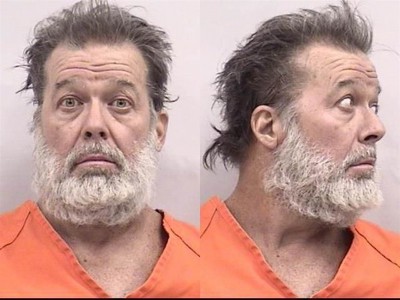
Robert Dear

Cognitive DissonanceTo the left is a simplified version of Leon Festinger’s Cognitive Dissonance Scale. Most of the people and institutions who use the scale to mislead and manipulate public opinion neither know this diagram nor have heard of Dr. Festinger, but it is what they are employing in the daily wars to win ideological political converts by distorting the significance of current events.

Robert Dear’s as yet unexplained shooting rampage within a Colorado Springs Planned Parenthood facility has immediately created an opportunity for cognitive dissonance manipulation. Festinger’s research showed that our minds will always try to resolve dissonance when something with a high, or positive score—say, “Free Speech,” appears to be closely associated with something else that is low on the scale, such as “hateful speech.” How the dissonance is resolved will depend on the scores of the two dissonant objects or beliefs.

If you want the public to decide that something it approves of is less worthy of approval, attaching it to something the public believes is reprehensible will do the job by creating cognitive dissonance and pulling the well-regarded object down the scale. If you want the public to move its opinion of a person, organization or concept from negative territory into positive, identifying someone or something the public regards far more negatively who opposes the person, organization or concept will tend to move the object of the negative entity’s opposition upward on the scale. In these situations, the mind seeks distance from the reviled entity. I hate broccoli; I learn that Donald Trump hates broccoli; I don’t want to have anything in common with Donald Trump. Pass the broccoli, please.

The latter is the process repeatedly applied by the protesters of police shootings when African Americans are the victims. The public correctly opposes abuse of power and wrongful violence by law enforcement officials; it is far below the mid-point on the scale. It also a opposes criminal activity and resisting legitimate law enforcement. With rare exceptions, every black victim of a questionable police shooting was engaging in or had engaged in criminal activity, and had resisted arrest. These have been criminals, but because the alleged misconduct of the police is far lower on the scale than the criminal activity involved, the criminal victims are propelled by cognitive dissonance into the scale’s positive territory. (The media assists the process by publicizing the most benign images of the victims they can find. The most frequently used photo of Laquan McDonald, who was executed by a Chicago cop, shows him in his high school graduation gown, for example. The cop didn’t shoot a criminal who refused to stop when ordered to, he shot a smiling young man with a bright future. The police officer is thus a monster; the victim a martyr and a hero.)

Now let’s look at the current use of cognitive dissonance in the wake of the shooting by Robert Dear. Continue reading

An Ethics Mystery: Why Can’t Democrats Be Honest Or Responsible Regarding The Syrian Refugees??

"Repeat after me:  WE CAN SCREEN THE SYRIAN REFUGEES! THERE IS NO DANGER! NO DANGER"

“Repeat after me: WE CAN SCREEN THE SYRIAN REFUGEES! THERE IS NO DANGER! NO DANGER”

The question of whether to accept Syrian refugees is not, or should not be, a partisan one. It’s simple logic, duty and priorities, as I wrote here. A needy group has an unknown component of deadly members capable of killing Americans. Until or unless those members can be identified and separated from that group, it would be irresponsible to admit them into the country. The Paris bombing vividly illustrated the risk of ignoring these facts. So why are Democrats and their pundit allies making statements attacking those who acknowledge them? You know, just because they are conservatives and Republicans who tend to think that all of President Obama’s policies are misguided doesn’t mean they can’t be right occasionally.

I have been searching for a single persuasive, fact-based argument that justifies the risk of accepting thousands of Syrians. In fact, I have been searching for one that wasn’t dishonest, an appeal to emotion over reality, or a cheap excuse to engage in race-baiting, now the Democratic Party’s favorite pastime.

I’d love to hear one. I’d love to be convinced. If the nation can take in the suffering refugees without vastly increasing the chance of a bomb going off in the a restaurant I’m eating with my family, hurray!

Such arguments just aren’t there, however. Instead we are hearing: Continue reading