Planned Parenthood Videos Surprise: Forced To Defend Abortion Ethics Acknowledging The Existence Of A Second Human Life In The Equation, Advocates Run Out Of Arguments (Part One)

The Center for Medical Progress released a trailer yesterday promoting its yet to be released eighth undercover investigative video, this one, like the last, focusing on StemExpress, a biotech company in northern California, that has worked with Planned Parenthood to obtain aborted fetus tissue to be used in research. In the clip, StemExpress CEO Cate Dyer explains that her company receives “intact” aborted fetuses from the abortion clinics they work with.

“Oh yeah, I mean if you have intact cases – which we’ve done a lot – so we sometimes ship those back to our lab in its entirety,” Dyer says on the trailer.

Later, she jokes about shipping little aborted heads. “Tell the lab its coming,” she chuckles. “They don’t want to open the box, go, ‘Oh God!’”

I can’t wait.

Undoubtedly the allies of abortion-on-demand feminists and progressives will attack this video as they have the rest, focusing on anything and everything but the single powerful issue it raises that the abortion movement has successfully obscured, denied and obscured since Roe v. Wade and before. These are small, helpless, innocent human beings being killed, chopped up and distributed like prime beef, and the adults doing it and insisting on it have devolved into callous, cold-eyed mutants incapable of considering what their conduct is. They have not had the courage or integrity to confront the ethical conflicts that abortion raises. These videos are making that avoidance increasingly difficult. As I wrote yesterday, bravo for the The Center for Medical Progress and their allies, who are finally forcing the passive public and cynical political class to consider the issues.

The most fascinating revelation is how weak the case for abortion appears to be, once its advocates are required to stop pretending that there is only one human being—the mother—involved. We know it is weak because the attacks on the videos have largely not addressed the ugly fact on display in them—that human, unborn babies with beating hearts and functioning organs are being killed—nor found a persuasive justification for it.

They haven’t had to do either since Roe v. Wade. “It’s my right!” has been enough, though this is a rationalization that does not address the question of right and wrong. Meanwhile, by adopting the deceitful and misleading label “pro-choice,” aided by lazy and sympathetic journalists to facilitate a deceptive framing of the issue (we are seeing the same process now as “immigrant” is substituted for “illegal immigrant”), the pro-abortion lobby has warped all policy debates into a discussion of the effect of an unwanted pregnancy on women, and never about the effect of ending those pregnancies on the women’s’ off-spring. (They die.)
Suddenly, the videos have made the existence of other human beings in the abortion dilemma is unavoidable, so what are the pro-abortion advocates and their allies doing? Let’s survey them; I’m not going to rehash all the earlier deflections of the videos by Planned Parenthood and pundits (“All medical procedures are hard to look at!”) and the usual hyperbolic accusations of evil motives (“This is a war on women! They want to control our bodies!”). I’ve covered them before, and they should be self-rebutting anyway.

“The videos are illegal!”

Continue reading

Ethics Hero, Maybe For The Ages: The Center for Medical Progress

As I said with the release of the first surreptitious “sting video” of Planned Parenthood released under auspices of the anti-abortion group, the Center for Medical Progress, such videos are, in principle, unethical. However, while the unethical should be used in pursuit of a greater good only with great reluctance, moral certainty and a minimum of harm, there are instances when utilitarianism must apply.

This is one of them.

In the case of abortion, the prospect of saving the lives of millions of unborn is certainly worth the incursion on the ethical values of honesty and respect for privacy implicated by these videos. Indeed, it is worth a great deal more. With the seventh video, released yesterday, the conclusion is unavoidable that we, the public, the nation, and humanity, owe a debt of gratitude to the Center for taking radical action to force  confrontation with the reality of abortion so that there can be a real, open and honest debate  that doesn’t duck the central issue. That issue  is not women’s control over their lives, but the ethics of killing innocent human beings to achieve it.

The latest video, like the earlier ones, compels any fair, emotionally functioning and rational observer to accept the brutality and near complete callousness towards human life that the abortion machine creates and requires. In this respect the seven videos—with more to come— are abortion’s equivalent of “Uncle Tom’s Cabin,” forcing genteel, moral, good people by their own confident assessment to confront the horrors that have been occurring under their noses with their passive approval. Because they chose not to think about what abortion really involved, just as so many Americans had no idea what  slavery was like until Harriet Beecher Stowe forced them to consider it as more than an abstraction, abortion advocates, passive and active, have an ethical obligation to watch these videos. Those who refuse are admitting that they are incapable of letting facts disturb their ideologies. Continue reading

Disrespect And Assault In The Operating Room: Our Nightmares Are Real

clown-in-the-operating-room

“A few moments later, the anesthesiologist walks in the room and asks, ‘What do you got?’ Dr. Canby says, ‘Vaginal delivery. Uterine atony. External massage failed. Give her some ketamine.’”…I look at Mrs. Lopez—her eyes are half-closed and vacant. Dr. Canby instructs me to hold her knee. A fellow medical student holds her other knee….Canby then performs an internal bimanual uterine massage. He places his left hand inside her vagina, makes a fist, and presses it against her uterus. I look down and see only his wrist; his entire hand is inside her. Canby puts his right hand on her abdomen and then massages her uterus between his hands. After a few minutes, he feels the uterus contract and harden. He says something like, ‘Atta girl. That’s what I like. A nice, tight uterus.’ And the bleeding stops. The guy saved her life…But then something happened that I’ll never forget. Dr. Canby raises his right hand into the air. He starts to sing ‘La Cucaracha.’ He sings, ‘La Cucaracha, la cucaracha, dada, dada, dada-daaa.’ It looks like he is dancing with her. He stomps his feet, twists his body, and waves his right arm above his head. All the while, he holds her, his whole hand still inside her vagina. He starts laughing. He keeps dancing. And then he looks at me. I begin to sway to his beat. My feet shuffle. I hum and laugh along with him. Moments later, the anesthesiologist yells, ‘Knock it off, assholes!’ And we stop.”

This is an operating room anecdote related in an anonymously authored article published this week in the Annals of Internal Medicine, a respected medical journal. The publication says that the piece is intended to shine light in a dark corner of the medical profession. Oh-oh. The essay is anonymous, I assume, because the author is afraid that there would be professional repercussions from his revealing this—what? Bad habit? Dirty secret? Crime? Reason for us to go stark, raving mad? Continue reading

Fake Charities Update: The Unethical Conduct That Makes All Of Us Worse

scamsIt’s one of the world’s oldest scams, one of the most lucrative and perhaps the most damaging: people preying on the best instincts of human beings to take their money for personal gain. The internet has made it easier to do than ever, and the  con is flourishing. I don’t often write about the incidents when they arise, in part because there’s nothing to argue about: everybody agrees that it’s not just unethical conduct, but bordering on evil. Fake charities are worse than scams, however, because they actively make people less kind, generous and caring for their own protection. Every fake charity exposed makes it harder for real charities to help people who genuinely need it. Like a friend of mine who never helped a homeless person again after seeing a beggar whom he had just given 20 bucks on a New York City street briefly get out of his battered wheel chair and nimbly run over to get a cigarette from a compatriot, those who stop trusting pleas for help seldom start trusting again. The fakes make us less kind and generous, and that makes society worse for everyone.

Fake charities large and small have been much in the news lately, so a little catch-up is warranted. Continue reading

Interview Ethics: CNN’s Alisyn Camerota Shows Why News Anchors Need Training In Basic Ethics, Not To Mention Journalism Ethics

Alisyn

This morning, as I rush to get my act to together to fly, sick, to Rhode Island where the bar will allow me to teach ethics to its members in the first two of three planned seminars, I made the mistake of checking in on CNN’s New Day to see what trouble Chris Cuomo and Alisyn Camerota could get themselves into. Sure enough, there was Allison interviewing Oklahoma Senator Jim Lankford regarding Republican efforts to de-fund Planned Parenthood over the revelations of the surreptitiously taken “sting” videos showing various Planned Parenthood personnel seeming to haggling over the prices for tiny little human organs successfully harvested from embryos whose tiny wittle heads have been crushed juuuust right. These individuals discuss unborn human beings with the sensitivity a normal person bestows on a Jimmy Dean sausage, but Planned Parenthood acknowledges that they need to practice a more pleasant tone in case somebody who cares about these inhuman organ bags is listening.

Is that an unfair characterization?

Let me know why you think so.

But I digress…

Camerota’s questioning demonstrated in multiple ways just how ethically ignorant the highest levels of our broadcast journalism are: Continue reading

Further Ethics Observations On The Planned Parenthood Videos

hand

1. The fourth in a series of surreptitiously obtained videos depicting Planned Parenthood officials discussing the sale of fetal body parts for research has been released. The Center for Medical Progress is the anti-abortion group that has created these videos: it defines itself as a “citizen journalist” project. Since these videos have been made using deception and without the safeguards of established journalism ethics by untrained and non-objective journalists, Ethics Alarms has consistently held that they are the result of unethical conduct, regardless of the motives behind them or what they show.

I am, reluctantly, reversing that verdict. The reason is the now undeniable refusal of the mainstream media and professional journalists to do their duty regarding the abortion issue in general and Planned Parenthood in particular. Despite the significance of these videos, the attack on Planned Parenthood and the fact that abortion is the most contentious and least resolved moral-ethical issue of our time, the news media, broadcast and print, have intentionally and unconscionably avoided covering the Center for Medical Progress videos and the issues they raise. The average American who does not monitor the news over the internet probably isn’t aware of the videos at all, and certainly has no sense of their content.

Journalism ethics codes state that deception and surreptitious means are only justified as investigative methods of reporting when more open and transparent reporting cannot obtain the facts. When professional journalists shrink from their duty to obtain the facts and report the truth, citizen journalists must take over, because democracy requires truth and transparency. Journalists should have made these videos. Because reporters abdicated their duties, those who picked up the dropped banner of probing investigative journalism regarding vital national issues should not be condemned. They should be praised, and by everyone, including journalists. If a fire fighter refuses to enter a burning building to rescue a child, and a citizen knocks down a door to do the job, I don’t want to see that citizen charged for the cost of the door, or criticized for acting. The videos are a public service, and necessary perspective on our society’s war against the unborn. Continue reading

“I think abortion is evil, but it is a necessary evil.” Discuss.

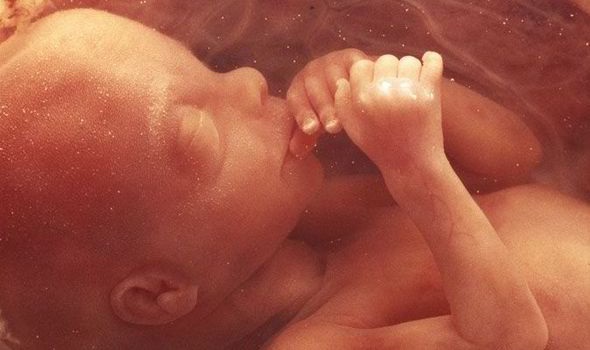
Foetus-435110

This blog doesn’t discuss evil very often because it is not a term appropriately associated with ethics. Evil is a concept related to morality. In an ethics discussion, I would take evil to mean something extremely, irredeemably unethical by any ethical analysis or system. The statement “I think abortion is evil, but it is a necessary evil” appeared parenthetically in a comment by Beth, a frequent commenter on Ethics Alarms who is a mother and a lawyer, regarding the Planned Parenthood videos. Though the news media appears to have successfully distorted that story by focusing only on whether the videos were evidence of illegal “trafficking in body parts” by Planned Parenthood, that was not the reason I posted the essays, and it is not the reason those videos are significant in the ongoing debate over abortion rights. Two high ranking individuals in the organizations casually discussed the crushing and crunching of the heads and torsos of living and helpless individuals with the sensitivity I would associate with stepping on a roach. If this doesn’t disturb you, it should. If it does disturb you, as it did Beth, what does that mean?

Abortion is one of the most important and difficult ethics issues in the culture, indeed in world culture. It involves millions of lives and millions of deaths, law, bioethics, religion, social policy, science, human rights and feminism, as well as society’s ultimate respect for life itself. I have written about the ethics of the abortion debate frequently (you can find most of the relevant posts here), but to summarize the Ethics Alarms views on the topic:

1. Abortion is an ethics conflict, meaning that there are ethical principles in opposition to each other, requiring society to set priorities.

2. The absolutist position on the anti-abortion side is that abortion involves the taking of innocent human life, which begins from conception, and is thus unethical in all cases. It is a strong position if one accepts the underlying assumption.

3. However, no absolute position is really absolute. Every ethics absolute has an exception, or several: there must be some circumstances when abortion is necessary and right. (This is not true of moral absolutes, since moral absolutes are self defining. If the power dictating a moral precept says it is absolute, it is so.)

4. The absolutist position on the abortion side of the argument holds that a woman’s right to have complete dominion over her body, reproductive activity and health justifies abortion in all cases. This is not a strong position, and in fact is one that cannot be honestly argued or sustained. It supports abortion on demand for any purpose or preference, entirely at the mother’s discretion.

5. To make that argument, extreme pro-abortion advocates have had to deny the humanity and human rights of unborn children, even to the point of arguing that they are not individuals at all, but mere “parasites,” or “tumors.” The removal of a second life from the equation that is at the core of the abortion problem makes the abortion decision easy and guilt-free; it also settles the debate by pretending the central issue doesn’t exist. That issue is that there is another life involved, not just the mother’s.

6. The debate over the ethics of abortion has been handicapped by the tactic of both sides to pretend a legitimate interest championed by the other doesn’t exist. A woman’s ability to control her own life, career and what happens to her body is an important societal issue, yet the term “pro-life” ignores it entirely. It is not the only important interest involved in the abortion decision, however, as the term “pro-choice” suggests.

7. Neither absolute position, whatever its theoretical virtues, is practical from a policy perspective. Desperate women who are pregnant will seek abortions, people will help then (or exploit them, or kill them), and public policy cannot pretend otherwise. Society will not tolerate punishing women for aborting their unborn children, whether they deserve to be punished or not. Yet allowing mothers to have unborn children killed on a whim leads to the callous, ugly, dangerous attitude toward innocent life on display in the Planned Parenthood videos. Callousness toward any human life, history has shown us, is a slippery slope with the potential of doing terrible harm to the culture.

8. Roe v. Wade was a premature Supreme Court decision and a badly reasoned one. Until and unless it is overturned, abortion is a right. That does not mean, and never meant, that abortion necessarily is right.

9. Because absolutism fails here, abortion is a problem that demands utilitarian analysis–balancing of interests and values, in the best interests of society, long and short-term, and everyone in it, according to the facts as we understand them.

10. Balancing requires an honest acknowledgement that there is something to balance. The “pro-choice” and “pro-life” dichotomy doesn’t acknowledge that in their most extreme incarnations, and since abortion is currently a right, the pro-choice lobby detects no reason to yield to logic, science and reality. Continue reading

Comment of the Day: “A Single Mother’s Irresponsible Defense of Single Motherhood”

fertility

Coming in on a four month-old post, first time commenter Amanda Bonarrigo’s Comment of the Day describes how she was pushed toward single motherhood by a system that operates in willful ignorance of the personal and societal problems the condition creates. These are some of the best and most enlightening comments that Ethics Alarms receives, when an individual with a personal experience related to the topic of an essay here reveals a relevant personal experience in frank and passionate term.  Opinions are great, but this is the most helpful of all.

Here is Amanda’s Comment of the Day on the post, A Single Mother’s Irresponsible Defense of Single Motherhood:

Continue reading

Why Ethics Rules Are Useless Without Common Sense

HIPAA

An ethicist’s pet peeve: People who misuse formal ethics rules to justify unethical or stupid behavior because they never thought about what why the rule exists.

This happens a lot. My favorite example was the famous athlete enmeshed in a scandal. Ay a press conference, he said that he couldn’t answer specific questions because of “atttorney-client privilege,” and not one of the reporters had the education to say, “Huh? You’re the client! The attorney-client privilege prevents your lawyer from revealing what you told him. It doesn’t stop you from revealing anything, you cretin.” In my seminars, when an attendee cites a professional ethics rule as the reason why he shouldn’t do something, I often ask, “And why is that a rule? What’s wrong with what it forbids?” Often, disturbingly often, the individual has no idea.

The New York Times today featured another example: medical providers and others not even subject to the law using HIPAA to avoid giving out information they could and should give out, in mots cases misinterpreting the law to do so. Among the examples in the Times story:

  • A retirement home refusing to tell friends of a resident that the resident had died (only health care providers, health insurers, clearinghouses that manage and store health data, and their business associates are covered by The Health Insurance Portability and Accountability Act of 1996. a.k.a. HIPAA)
  • A hospital that  refused to accept information about a patient’s allergies from the patient’s daughter (Wow: hospitals can receive medical information; HIPAA restricts the ways they can disclose it)
  • Another relative of a patient reprimanded by hospital staff for talking about her loved one’s medical problems in the cafeteria, because, she was told, it was a HIPAA violation.
  • A minister told a church staff not to announce the names of ailing church members because it was would violate HIPAA  (That’s right: he really thought it was against the law to tell congregation that someone was sick.)
  • Some providers cite HIPAA to block patients from seeing their own records.

This is why morality alone doesn’t make people ethical, especially if they aren’t very bright. Continue reading

More On The Planned Parenthood “Sting” Video: A Fake Apology, The News Media Embargo, Misdirection, Another Dishonest Defense…And New Rationalization #38 A : “Mercy For Miscreants”

Side issue: Newsbusters used this photo of Petula Dvorak. Is that unethical, as in gratuitously mean? There are nicer ones. (Of course, I'm using the photo to raise the issue. Honest.)

Side issue: Newsbusters used this photo of Petula Dvorak. Is that unethical, as in gratuitously mean? There are nicer ones. (Of course, I’m using the photo to raise the issue. Honest.)

The surreptitiously filmed video of a Planned Parenthood official talking about butchering babies like Ed Gein talking about how to make lampshades out of a human face presented anti-abortion advocates with smoking gun evidence of the callousness and disregard of fetal life the pro-abortion movement has cultivated. One cannot think about fetuses, even advanced fetuses, as living, human beings and blithely encourage their destruction. The recorded comments of Deborah Nucatola, Planned Parenthood’s senior director of medical research, released in the shortened version of a three hour video, should inform a national debate regarding abortion, a debate that the pro-abortion forces desperately want to avoid. The video itself makes it clear why.

Thus the news media is determined to bury the story, just as it barely covered the abortion House of Horrors of Dr. Kermit Gosnell. The ugly reality of abortion is not supportive of abortion, just as the reality of slavery was rejected and avoided by slavery proponents until Uncle Tom’s Cabin shocked the culture out of its denial. Abortion advocates focus on the beneficial results of abortion– freedom for women, workforce flexibility, family planning, personal power—and it is the equivalent of slavery advocates pointing to the Old South’s agricultural affluence and pleasant lifestyle to justify keeping hguman beings in chains. The news media shouldn’t be picking winners in this cultural debate. It has a duty to report facts, especially facts that might shock the public out of ignorance and apathy on such a vital issue involving law and ethics.

As activists are wont to do in their passion, the Live Action-affiliated group that released the video over-reached in its interpretation of it, thus giving the news media, Planned Parenthood and the pro-abortion lobby an easy path to deflection. The video doesn’t prove, or even strongly suggest, that Planned Parenthood is selling baby parts for research. By making that accusation, the group opened the door to attacks on the legitimacy of the video. Every media report says that it is “heavily edited,” a phrase intended to suggest that it is deceptively edited. The video is heavily edited because the raw video, which is available to view as well, is three hours long and watching it is like watching paint dry while being hit in the face by an occasional rock.

Unless the media defenders of Planned Parenthood think that the unedited video contains moments when Nucatola says, “Oh, by the way, I didn’t mean what I just said, even though I sounded like I did,” the woman displayed a callous, core attitude that killing a human embryo is as ethically significant as stepping on a cockroach. That’s what is so disturbing about the video, why it is important, and why abortion foes should make certain it is viewed by as many U.S. citizens as possible. Political figures, candidates for office and elected officials should also be forced to confront the video, with “well, that’s heavily edited” being immediately called what it is: a dodge.

On the topic of dodges, we have Planned Parenthood’s apology for Nucatola. Cecile Richards, the group’s president, stated in a video:

“Our top priority is the compassionate care that we provide. In the video, one of our staff members speaks in a way that does not reflect that compassion. This is unacceptable, and I personally apologize for the staff member’s tone and statements. As always, if there is any aspect of our work that can be strengthened, we want to know about it, and we take swift action to address it.”

On the Ethics Alarms Apology Scale, this is a solid #9,“apologizing for a tangential matter other than the act or words that warranted an apology.” Compassion toward whom? The issue in the video is the disgusting lack of compassion for the unborn who are being reduced to body parts for medical research, not lack of compassion for the mothers of those little bundles of body parts.

As with the Slate’s attempted defense of the indefensible, Washington Post columnist Petula Dvorak was propelled by the perceived threat to Planned Parenthood and abortions galore into a near hysterical condemnation of the video, one that, also like the Slate column, nicely illustrated the ethical and logical deficits in the pro-abortion position.

She begins by defining the latest addition to the Ethics Alarms Rationalizations List with her very first sentence: “Planned Parenthood has become one of the most attacked groups in America.” The simple rejoinder to that is, “So what?” Either the group deserves a particular criticism, or it doesn’t. The fact that some criticism is unfair or excessive does not invalidate legitimate criticism, or suggest that it is unfair or cruel to offer it.

Nonetheless, we see this rationalization often. It is favorite dodge of Hillary Clinton’s supporters: “There they go, attacking Hillary Clinton again!” they say, as if the frequency of criticism can only be attributable to the unfair zeal of her critics, and her conduct has nothing to do with it. I call this rationalization “Mercy For Miscreants.”

Its theory is that it is only fair to assign a criticism quota to groups and individuals: at a certain point, no more criticism is allowed, because nobody should have to be criticized that much. It is so darn mean to keep heaping abuse on someone, even if they deserve it. This new rationalization  is #38 A,  classified as a sub-rationalization under rationalization number 38. The Miscreant’s Mulligan or “Give him/her/them/me a break!”  “Mercy For Miscreants,” or “Why don’t they pick on someone else?is arguably more sinister and illogical that its parent, because it is based on the Bizarro World theory that the more someone is criticized, the less they should be criticized. On occasion, this rationalization also appeals to #21. Ethics Accounting, on the batty theory that if someone, or a group like Planned Parenthood, has been unfairly criticized in the past, that should count in their favor and relieve them of being legitimately criticized later.

Petula is just getting started, however. Here next two paragraphs are about how unfairly Planned Parenthood has been attacked in the past, and what wonderful things it does, neither of which are even faintly germane to the current controversy, which involves a high-ranking executive saying things like…

“We’ve been very good at getting heart, lung, liver. . . . So I’m not gonna crush that part, I’m gonna basically crush below, I’m gonna crush above and I’m gonna see if I can get it all intact…”

…about unborn children. That’s what she is crushing. And she is crushing the life out of them, beyond question. Continue reading