6-year-old Gage Berger was being bullied by his first grade classmates because he had protruding ears, and was often derided as “Elf Ears.” His Salt Lake City parents decided to address the problem here and now, before, they say, his self-esteem (I almost wrote elf-esteem…) was permanently damaged, so they had his ears de-elfed to look like everyone else’s.
Now he’s bullying other funny-looking kids.
Kidding.
I hope.
But seriously, folks, the story has aroused a controversy over societal and medical ethics. Did the parents choose plastic surgery too early and for the wrong reasons? Is that how we want society to be, where bullies and critics can pressure individuals to conform to a narrow standard of acceptible appearance? Doesn’t this give them power? Does it not encourage bullying? Is a first-grader old enough to meaningfully weigh these issues? Isn’t this a choice he should make, when he’s old enough to make it?
Ethics Alarms is about ethics. It is about what is right, wrong and how to decide which. Here, we go where the facts, ethical systems, valuable and logic take us, as convoluted as the process may be. There is no other cause, here. occasionally I have pointed out a developing case of ethics perverted, and by dint of timing or good fortune, it has had some tangible effect. The Sweet Brier College rescue was such an example, I am told. There have been others.
The cruel and ignorant persecution of dog breeds grouped under the category of “pit bulls’ and the “dangerous breed” litigation that has been passed by hysterics bullying craven legislators is another ethics issue that Ethics Alarms has tried to alert the public about for years. I am not an activist however; the idea of labeling something as wrong is meant as education. If it also engages activism, that is a bonus. Activism in pursuit of a more ethical society is an unequivocal good, much to be desired by us all. In addition to spur much needed activism, the dog breed bias story is also unusually relevant to other issues: racism, genocide, ignorance, government over-reach, gun control, profiling, fear-mongering, misinformation, cowardice among elected officials…it’s a long list. There will be more about this issue in coming months.
I’ve been reflecting, since yesterday, on the bizarrely angry and intellectually dishonest protests registered here and on his own blog by trial lawyer Eric Turkewitz regarding the aunt who sued her 12-year-old nephew. His arguments, if you can call them that, consisted of constantly shifting the issue from ethics (what the aunt should have done) to law (what the aunt had a legal right to do), denying the core problem (Why would anyone assume that a child is harmed by dragging him into court, subjecting him to examination in front of strangers, and focusing on him as a wrongdoer and responsible for his aunt’s alleges misery, all mandated by the aunt who supposedly loves him?), and appealing to a dizzying list of rationalization and fallacies. He then made his exit by accusing me, a lawyer, of “knowing nothing about the law” (I made no assertions about the law at all—this is not a legal issue) making everyone stupid, and being a narcissist, a full-bore ad hominem attack ending in an ominous “May God have mercy on your soul!” Why would he act like that?
The reason, I realize, is that my posts challenge the basic belief system of the plaintiff’s bar, which I know very, very well having worked in an executive position and run such diverse programs as the research data base, conventions, sections, litigation groups and more over seven years with the Association of Trial Lawyers of America. Now ATLA is called “The American Association for Justice,” a name chosen purposefully to disguise the fact that it is a plaintiff’s lawyer’s lobby by keeping “trial lawyers” out of the name because it had a negative response in marketing studies. (I kid you not.)
Trial lawyers have done a lot of good and important things and continue to, but the profession is corrupting. There is a lot of money to be made, and ATLA–excuse me, AAJ, is devoted to eliminating any limits on their members’ ability to sue anyone for any amount, no matter what harm it does to the economy, the nation, the cost of health care, the bonds of trust in society, personal liberty, or public respect for the civil justice system. Individually, members of AAJ are among the top donors to the Democratic Party, in part to make sure that they can block all Republican efforts to limit jury awards, spurious lawsuits, and damages that have to be paid by negligent corporations when they destroy lives through shoddy products, conspiracies, and other conduct. The other reason is that Democrats support the redistribution of wealth, and trial lawyers profit by it.
In the matter of keeping corporations accountable, the AAJ is, as they will constantly remind us, on the side of the angels. But like other interest groups (the NRA, the ACLU, NOW, and may more) that stake out extreme, self-serving and unethical positions in defense of legitimate rights, trial lawyers often feel that they must take the position that every injury and misfortune deserves compensation by someone else. Eventually, they believe it. Justice is taken out of the equation for all but the plaintiffs bar’s clients. Justice means that someone else is always at fault. Continue reading →
Donald Trump was speaking at a Jon Huntsman / The Hill “No Labels” event, a female audience member later identified as Lauren Batchelder posed as a feminist Trump antagonist. You can see the exchange in the video below…
But she was not a typical audience member; she is a paid staffer of a GOP Senator and a volunteer for the Jeb Bush campaign, as a recent tweet demonstrated.
The news media, looking desperately for someone to embarrass Trump, began framing the narrative an a pro-choice audience member who “Trumped Trump.”
A little research, however, showed that Lauren Batchelder is a current staffer for pro-life Senator Kelly Ayotte (R-NH), and is currently also working in New Hampshire as a volunteer for the Jeb Bush campiagn. In other words, she was a plant, she was misrepresenting herself, and this was a contrived cheat to mislead the American people while undermining Trump for the benefit of Jeb Bush. Batchelder, like any good conspirator, tried to cover up, deleting her tracks on social media. The Last Refuge, however, preserved some:
The Bush fallback position, not surprisingly, is that she was a rogue staffer, acting on her own. The campaign’s words, however, were more focused on changing the subject. Allie Brandenburger, a spokeswoman for Bush’s campaign, said Batchelder is not a paid staff member ( OK, she’s a volunteer, a distinction without a difference) and attended the convention on her own (or so he claimed), but then immediately tried to change the subject, saying in an e-mail, “We can’t help but notice Mr. Trump does seem to be very sensitive about being challenged by women.”
Yes, we understand; That’s why you set this up. This was obviously a talking point, since Tim Miller, Bush’s spokesman, tweeted nearly the exact same thing, saying, “For what its worth, Lauren is not a Jeb staffer but the Jeb staff is amused by how sensitive Donald is to being challenged by women.”
Funny, I’m not amused. At best, Bush, Ayotte and the Republican establishment failed to properly train and supervise a staffer and volunteer sufficiently. More likely, she was given signals, like the IRS was in its illegal sabotage of Tea Party groups, that encouraged her to engage in unethical conduct. Most likely, it was a Nixonian dirty trick by a desperate, flailing, failing candidate. Unless Bush can prove that it was a case of negligent management on his part, and that proof cannot consist of Batchelder falling on her sword, and apologize appropriately to Trump and the public, then we must assume that the worst explanation is the right one.
As before, I consider making Donald Trump appear to be a victim an irresponsible and incompetent act. As of now, I consider Jeb Bush to be desperate, untrustworthy, and foolish. He has no credibility as a leader, a campaigner, or a potential President.
“War is peace, freedom is slavery, ignorance is strength”—I wonder how George Orwell missed “Segregation is Integration”? Maybe because that was too obviously ridiculous even for Big Brother to pull off….or so he thought.
Apparently yoga and meditation studios in multiple locales in the U.S. are running “no whites allowed” classes in the interests, say the operators, of making Eastern self-help disciplines more accessible to “people of color” [ I detest this phrase, but I’m quoting] by excluding people of less valued color—that is, whites. The New York Times just published an uncritical profile of such a place in Oakland, by a reporter who shrugged off the fact that she was refused in her request to attend a class because she was too little “of color.” Incredibly, the Times reporter just accepts the Bizarro World logic and utter hypocrisy fed to her as if it makes as much sense as “freedom is slavery” makes to poor Winston after his brain cells have been scrambled by the threat of rats eating his face.
“Specific classes at the center bar white or straight people — in order to be inclusive of some, they exclude others. Those who run the center say that the practice ultimately makes the center community more diverse…Brenda Salgado, the director of the center, said that as part of its diversity efforts, the center has four different sitting groups that meet weekly. “An L.G.B.T.Q.I. sitting group, one for people of color, a Friday open sit, open to everyone — those can fluctuate between 50 or 100, Ms. Salgado said. “We also have the Every Body Every Mind group, for people with disabilities and chronic illness.”
For all but the “open sits,” the expectation is that only people who identify with the target group will attend. (I learned as much when my request to attend People of Color Yoga was turned down.) And for open sits, organizers use a Web application to ensure that white people do not crowd out others. When the spots allotted for white people fill up, registration is capped to save spots for others.”
“Being an adult means being accountable. Being a baseball player means that others look up to you. I want my kids — and others who may have become fans of mine over the years — to know that I am not too big of a man to ask for help. I want to hold my head up high, have a full heart and be the type of person again that I can be proud of. And that’s exactly what I am going to do.”
Nobody outside of the Yankees organization and Sabathia’s family was aware that he was suffering from this malady until the announcement. Here is his whole statement, which speaks for itself: Continue reading →
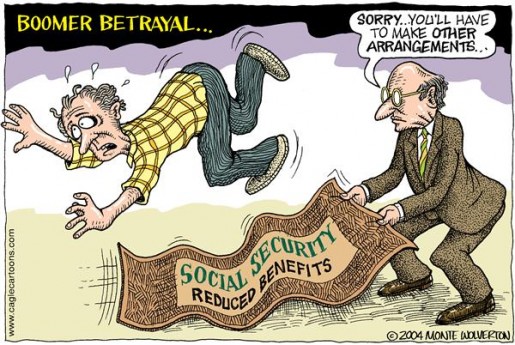
My father was in the private pension business before he died, and the idiocy of how Social Security was set up drove him to distraction. I’m pretty sure he voted for Ross Perot in 1992 because Perot argued that it made no sense not to means test the program. I’m tempted to take a copy of Robert J. Samuelson’s op-ed last week to Arlington National Cemetery and leave it on his gravestone.
Samuelson is reliably one of the most rational, thoughtful and probing of all the op-ed columnists. Last week he wrote about how the life-expectancy gap between the wealthier segments of U.S. society and the poorer ones made Social Security as it is currently constituted a significant contributor to the income gap that progressives desperately want to make a key issue in the 2016 election, because dividing the nation by class (and race, ethnicity, religion and gender) is a big part of their playbook.
“The figures come from a new report by the National Academies of Sciences, Engineering and Medicine, which estimated life expectancies for workers born in 1930 (now 85) and 1960 (now 55) at age 50. The findings are stark. For the richest fifth of men, there was a 7.1-year increase in life expectancy, from 81.7 for those born in 1930 to 88.8 years for those born in 1960. Meanwhile, for the poorest fifth of men, life expectancy fell slightly, from 76.6 years for those born in 1930 to 76.1 for those born in 1960. The changes for the remaining men also parallel income: For the second richest fifth, the increase was 8 years to 87.8 years; for the third richest, 5.3 years to 83.4 years; and for the fourth richest, 1.1 years to 78.3 years.”
Nobody should be surprised that wealth equals health. It is difficult to pinpoint why the gap is so large, but should we have to? It seems intuitively obvious. Many disadvantages–race, upbringing, family stability, good roles models, education, character, intelligence, opportunities, culture, neighborhoods—that undermine quality of life simultaneously or in combination with each other handicap earning ability and health before we even get to the question of medical care.
[ NOTE:This is a correction. The original version of the post gave the wrong impression that hospitalizations were up: this was not my intent. Thanks to Humble Talent for being persistent. Ethics Alarms apologizes for the error. We’ll try to do better.]
Now 11% of Colorado’s 12 to 17 year-olds use pot, 56% higher than the national average.There has also been a 40% increase in drug-related suspensions and expulsions in school, primarily from marijuana.
Mercy, what a surprise! Who could have predicted that? Well me, for one, as well as others neither dedicated to getting their periodic recreational buzz nor addled by moldy Sixties cant.
Of course making pot legal and widely available for adults would cause an epidemic of use by kids, who, the evidence increasingly shows, may suffer long term adverse effects. Of course it is causing accidents. Of course adding a third harmful legal drug to the devastating and deadly duo of alcohol and tobacco is going to make society dumber, less safe and less productive. Continue reading →
Researchers with the Department of Veterans Affairs and Boston University have now identified the degenerative disease known as chronic traumatic encephalopathy, or CTE, in 96 percent of NFL players that they’ve examined and in 79 percent of all football players. The disease is widely believed to stem from repetitive trauma to the head, and can lead to conditions such as memory loss, depression and dementia.
In total, the lab has found CTE in the brain tissue in 131 out of 165 individuals who, before their deaths, played football either professionally, semi-professionally, in college or in high school.
Any other non-essential industry that carried this much risk of crippling injury and death for its employees would be immediately the object of public protests, activist action, new government regulation and major fines and sanctions. Because of all the money involved and because of an ongoing effort by the NFL to deflect attention from its unconscionable business (there was more uproar over Tom Brady’s suspension than there has been over the concussion scandal), players are still getting brain-injured every Sunday, Monday and Thursday while the crowds cheer, the beer flows and the networks cash in. Parents still steer their kids into playing tackle football, and the carnage continues.
Yes, pro football is an exciting game. Too bad that keeping it exciting kills people, but it does. The game isn’t worth it.
No game is.
I wonder how long it will take for that to sink in?
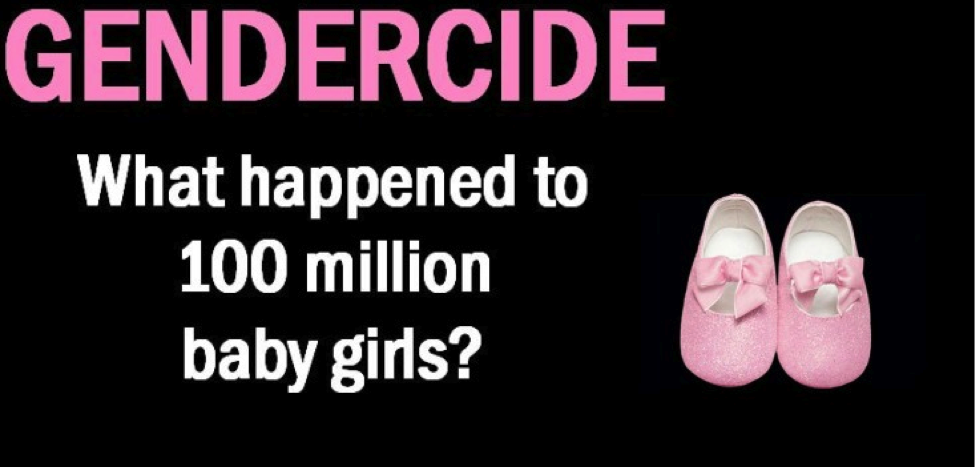
You’re exaggerating: they were just potential baby girls…
Driving from Boston to Providence, I had an opportunity to listen to a Public Radio International report (via Boston’s NPR station, WGBH) about the shortage of women in India as a result of sex-selection abortion. I heard an interview with an activist in Mumbai who was fighting to get more laws passed to prevent the process as a violation of women’s rights. “The most basic right of all,” intoned a female reporter. “The right to exist.”
Waiiit a minute. As the Robot used to say on “Lost in Space,” “That does not compute.”
This same network routinely features angry, self-righteous and mocking feminists who condemn as the paleolithic enemies of women any one who dares to question the ethics of abortion on demand. The unborn have no right to exist, says NOW, NARAL, Nancy Pelosi, the casual harvesters of little livers at Planned Parenthood, and when they are talking about the U.S., NPR.
In India, however, there is a right to exist, and feminists are fighting for it.
Sorry to be obtuse, and I realize I may be missing something, but what is the outrageous distinction here that makes an Indian mother’s abortion of a healthy, gestating girl because dowries are too expensive and boys are more lucrative a human rights violation, worthy of that special tone of sadness and superiority NPR announcers get, but Laura from Nebraska’s abortion of her healthy, gestating boy because she doesn’t want to interrupt graduate school and isn’t wild about the father a noble expression of modern female power?Continue reading →