Morning Ethics Warm-Up: 8/12/17

Good morning, all!

1. I can’t keep writing the same post repeatedly as the politically correct, the historical censors, the Soviet-style Left and the gallactically stupid continue to tear down statues and eliminate honors to significant Americans who are predecessors deemed worthy.  Just hunt for the “airbrushing history” tag here and you’ll find too many already. We should note, however, how the cognitive dissonance scale is coming into play to the benefit of the unethical airbrushers.

In Charlottesville, home of the University of Virginia, this weekend will witness thousands of white nationalists and neo-Nazis demonstrating to protest a plan to remove a statue of Robert E. Lee  from a city park, because, Lee’s sub-21, infinitely wise undergrads insist, erasing Lee from history will undo the legacy of racism, or something. Of course, for the Racist Right to be the ones protesting makes this position look reasonable. White supremacists organizing the protests unjustly associates Lee with their cause, making his statue mean something it never did, and attaching him to  cause that was not his. The protests against tearing down Lee’s statue–UVA’s founder, Thomas Jefferson, will be next on the non-person list, or close to it—should be coming from historians, scholars, liberals, believers in fairness, nuance, and integrity, and those who are literate enough to understand that the life of Robert E. Lee has much to teach every child and American about loyalty, hubris, hard choices, tragic choices, hypocrisy, courage and more. Why aren’t they protesting? Two reasons, now: they don’t want to be shoulder to shoulder with the scum of the earth, and they are too timid to stand up for crucial ethical principles, unlike the censors of Charlottesville, who don’t understand them, and the Neo-Nazis and white supremacists, who don’t have them.

2. And speaking of historical airbrushing and censorship: Last year, I designated the Smithsonian Institute’s National Museum of African American History and Culture in Washington, D.C as an Ethics Dunce for omitting the second African American SCOTUS justice, Clarence Thomas from mention while devoting an exhibit to his unsubstantiated accuser, Anita Hill.  Now the museum has announced plans to honor Jim Vance.

Come on, you all know who Jim Vance is, don’t you? (D.C. area residents: shut up!) Jim Vance, who transformed America for blacks? Give up? Vance was a long-time popular local D.C. television news broadcaster, with a nice screen presence and a casual delivery.  He just died, and he was black. The museum’s founding director, Lonnie Bunch, said the broadcaster “symbolized that it was really important that America was changing and his presence was a symbol of that change.” Right, sort of….although Vance was hardly the first or the most prominent black newscaster in D.C. Clarence Thomas, however, was the first conservative black justice…which is, of course, why is being shown such disrespect by the “Nation’s Attic.”

I haven’t visited the huge, striking new museum on the mall yet, and I won’t until its shows signs of being am objective chronicler of history rather than a tool of interest group propaganda. Continue reading

Ethics Dunce: West Virginia Governor: Jim Justice

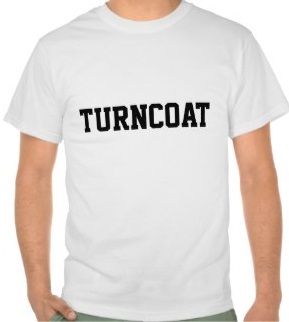
Gov Justice went to a Republican rally, and all he got was this T-shirt…seemed to fit, though…

I’ve written about party-switching by elected officials before; unfortunately, it was on the old Ethics Scoreboard, which is temporarily in limbo thanks to an incompetent web hosting service and some corrupted old disks. I can summarize the proper ethics standard for the practice, however. It was demonstrated perfectly by the  now retired former Republican U.S. Senator from Texas, Phil Gramm. Just days after  he had been reelected to a House seat  as a Democrat in 1982, Gramm was thrown off the House Budget Committee in a dispute with party leadership. In response, Gramm resigned as a Representative, changed parties, and ran for his old seat as a Republican in a special election. He won easily, and  was a Republican ever after. That’s the honorable way to do it.

Or, you could be like West Virginia Governor Jim Justice, who announced that he was flipping  from the Democratic Party to the GOP at last night’s  rally with President Trump. Continue reading

Al Luplow And The Duty To Remember


A culture is defined by what it chooses to remember and what it chooses to forget. Ideally, a culture would remember everything, because knowing the past, as Santayana famously observed, was insurance against repeating its mistakes.  But time is a huge eraser, as Shelley told us:

I met a traveller from an antique land,
Who said—“Two vast and trunkless legs of stone
Stand in the desert. . . . Near them, on the sand,
Half sunk a shattered visage lies, whose frown,
And wrinkled lip, and sneer of cold command,
Tell that its sculptor well those passions read
Which yet survive, stamped on these lifeless things,
The hand that mocked them, and the heart that fed;
And on the pedestal, these words appear:
My name is Ozymandias, King of Kings;
Look on my Works, ye Mighty, and despair!
Nothing beside remains. Round the decay
Of that colossal Wreck, boundless and bare
The lone and level sands stretch far away.”
This is why historians have such a crucial role to play in preserving our culture, by preserving stories, lives and memories along with the inspiration and wisdom they can provide.Sometimes a lost memory is rescued from neglect. Today we remember Colonel Joshua Chamberlain as one of the central heroes of the Battle of Gettysburg for his desperate stand with the 20th Maine Volunteer Infantry Regiment at Little Round Top, culminating in his using his knowledge of military history (he was a college professor) to improvise the bayonet charge that held his position and turned defeat into victory. That was not the case for almost a century, however, until the historical novel “The Killer Angels” retold the story so vividly that Chamberlain’s entire career became the object of new scholarship and admiration. This was truth emerging, but it was also justice. Chamberlain deserved to be remembered.

Unfortunately, Chamberlain is an exception. Once a life, a deed, a remarkable moment is forgotten, it is usually gone. That is a tragedy for the culture. The duty to remember, which I have discussed here before, is the duty to protect the culture and its riches. It is also based on the Golden Rule. We all would like our lives to be remembered as long as possible, especially when we accomplished something that future generations could and would appreciate or benefit from recalling.

This brings us to Al Luplow.

Two nights ago, in an outrageously antic and entertaining game between the Cleveland Indians and the Boston Red Sox, Indians outfielder Austin Jackson robbed Hanley Ramirez of a home run by leaping in the air at the right centerfield bullpen fence reaching over it mid-air to catch the ball, and tumbling over it. He still held on to the ball—he could have easily broken his neck—and the home run became an out.

Although outfielders have fallen over that fence from time to time, notably in the 2013 play-offs…

Continue reading

Morning Ethics Warm-Up: 8/3/17

Baaaaad Morning for me, GOOD MORNING to you, I hope.

1.  The New York Times, I thought, has an unusually fair story on the two phantom Trump phone calls that roiled “the resistance” yesterday. The President had said that he had received “calls” from the President of Mexico and the Boy Scout leadership, the former to salute him for getting tough at the border and the other to praise his controversial remarks at the annual Jamboree. There were no such calls, as the Mexico and the BSA had strongly suggested, and the White House confirmed this yesterday. In its piece this morning, the Times included a germane quote from pre-politics Trump in his 1987 book “The Art of the Deal”:

“People want to believe that something is the biggest and the greatest and the most spectacular. I call it truthful hyperbole. It’s an innocent form of exaggeration — and a very effective form of promotion.”

Germane, except that we already know that he thinks this way—and I don’t think referring to a conversation (in the case of Mexico) or multiple members of the Boy Scouts leadership”praising his speech in person after he was done (“Nice job!” “Great speech!” “The boys really appreciated it!”) as phone calls qualifies as “hyperbole,” truthful or otherwise.

These are examples of the President’s well-established addiction to speaking in word clouds and approximations. He “saw” (well, maybe not literally) “thousands of Muslims” (Okay, maybe he didn’t see them, but they were there! ) celebrating the doom of the Twin Towers in New Jersey. He never supported the Iraq invasion (saying otherwise to Howard Stern doesn’t count). Now add the hundreds of others we either discussed here or that were flashpoints during the campaign. The President’s attitude toward these little and large imprecisions of language has been, apparently since childhood, “Whatever.” He really doesn’t think they matter, because to him the difference between, for example, “calls” and other communications doesn’t matter.

It’s a terrible habit. It undermines his credibility. It weakens his ability to persuade and lead. It makes him look foolish, careless and stupid, and shows a lack of discipline. It gives his intractable foes easy bullets to shoot at him. It’s also an established trait, at this point. This is, again, the Julie Principle. This is how he is, and both his supporters and detractors know it. What  is accomplished by treating each new example as a major scandal? “Well, you can’t just let him get away with it!” is the reply.

He doesn’t get away with it. It undermines his credibility. It weaken his ability to persuade and lead. It makes him look foolish,  careless and stupid, and shows a lack of discipline.

2. The Times seems to make a mild “everybody does it” excuse for the President, citing the examples of two Presidents the Times also hated, LBJ and Reagan, mostly Reagan. “It is hardly unprecedented for a president to use a story to inspire or motivate, or to embellish a yarn for the sake of punctuating a poignant message,” the Times says. Then it recounts this: Continue reading

File This In The Niggardly Principles Files: The Family That Helped Build Portland’s Public School System Is Condemned To Oblivion Because The Schools Are Afraid To Teach

I really hate this story, and all stories like it. I hope you do too.

In a perfect and perfectly disgraceful breach of the First Niggardly Principle, the Centennial School District in southeast Portland will be excising “Lynch” from three schools before the beginning of this school year: Lynch Meadows, Lynch Wood, and Lynch View elementary schools. The schools were named to honor the family that originally  donated land for the the  schools to be built upon over a century ago. What, however, is the obligation to appreciate and honor those who selflessly seek to assist public education, compared to the need to cater to those whose education was inadequate? Nothing, apparently.   Superintendent Paul Coakley explains that “many newer families coming into the district associate the name with America’s violent racial history.”

Well, that should settle it, then! Why burden these narrow-minded and easily-triggered products of the victim culture with facts, knowledge and perspective?

More from Coakley: “There were an increasing amount of questions and some complaints from families of color around the name…there is no connection between the Lynch family and the practice associated with the term” but the name has still “been a disruption for some students.”

Here’s a creative alternative solution: educate them. How about that? Is that too challenging for the students? For Portland’s schools? From Wordorigins.com: Continue reading

Ethics Hero: The Chicago Cubs Organization

This was a wonderful gesture of kindness and reconciliation. It won’t mean much to those who don’t follow baseball, and that is Reason #478,653,222 why it’s a mistake not to follow baseball.

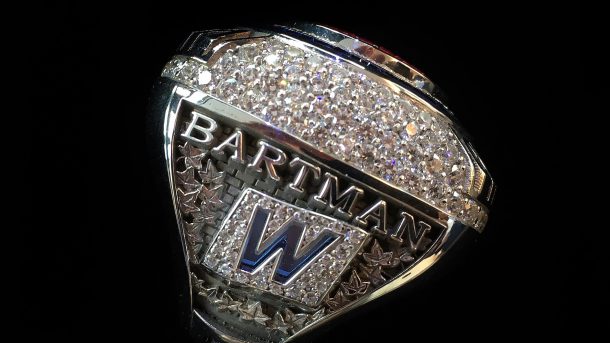
I’ve written about the Steve Bartman fiasco several times.  I am not in the “Steve Bartman was an innocent victim of circumstance” camp, though he was a victim of moral luck. He was an  incompetent baseball fan, not paying sufficient attention to the game and interfering with it as a direct result. On the other hand, for members of the 2003 Cubs to use him as a scapegoat for their blowing a lead,  the game, and the play-offs, and for Chicago fans to hound him out of town and into hiding, was far worse than his negligence, the most disproportionate and vindictive treatment of a fan in sports history.

Here was my summary of the saga to date before the Cubs finally won the World Series after more than a century of failure:

Bartman, for those of you who have lived in a bank vault since 2003, was the hapless young Chicago Cubs fan who unintentionally interfered with a foul ball that might have been catchable by Cubs outfielder Moises Alou in the decisive game of 2003 National League Championship Series. In a perfect display of the dangers of moral luck, Bartman’s mistake—it didn’t help that he was wearing earphones and watching the ball rather than the action on the field—began a chain of random events  that constituted a complete collapse by Chicago in that very same half-inning, sending the Miami Marlins and not the Cubs, who had seemed comfortably ahead, to the Series. Bartman, who issued a sincere and pitiful apology, was widely vilified and literally run out of town. He then became part of Cubs and baseball lore, one more chapter in the sad saga has been called “the Billy Goat Curse,” the uncanny inability of this team to win it all.

Yesterday the Cubs announced that the team had privately awarded Bartman  an official Chicago Cubs 2016 World Series Championship ring as a special gift from the the Cubs organization. These things contain 214 diamonds at 5.5 karats, three karats of genuine red rubies and 2.5 karats of genuine sapphires, and are worth about $70,000. Even so,  the symbolism is worth far more.

Tom Ricketts, the Cubs owner, issued a statement: Continue reading

Morning Ethics Warm-Up: 7/27/17

Good Morning!

1. Explain to me, Oh Ye Defenders of the Biased and Incompetent Media, why it’s unfair to call this “fake news.”

A Facebook friend whose entire output of late is posting links to anti-Trump screeds posted this one, which appeared on the feed as “Donald Trump’s behavior is abnormal”—ah, I see the “resistance” is transitioning again to the 25th Amendment approach to overturning the election, because the news on the impeachment front isn’t good–with a cut-line that referenced him “calling immigrants ‘animals'” at yesterday’s rally in Ohio.

No, Trump didn’t refer to immigrants as animals. Unlike most of those in my friend’s left-wing, Trump-hating echo chamber (she’s an artist and arts organization executive), I checked the speech. Indeed, it’s an ugly, undignified, over-heated, un-presidential mess that makes Trump’s Boy Scout speech look like Lincoln’s Second Inaugural Address. BUT HE DID NOT SAY THAT IMMIGRANTS WERE ANIMALS! He did say this;

“One by one we are finding the illegal gang members, drug dealers, thieves, robbers, criminals and killers. And we are sending them the hell back home where they came from. And once they are gone, we will never let them back in. Believe me. The predators and criminal aliens who poison our communities with drugs and prey on innocent young people, these beautiful, beautiful,innocent young people will, will find no safe haven anywhere in our country. And you’ve seen the stories about some of these animals. They don’t want to use guns, because it’s too fast and it’s not painful enough. So they’ll take a young, beautiful girl, 16, 15, and others and they slice them and dice them with a knife because they want them to go through excruciating pain before they die. And these are the animals that we’ve been protecting for so long. Well, they’re not being protected any longer,folks.”

Now, I don’t like that rhetoric. It is typical of  President Trump, but inexcusable in a public appearance. However, as muddled and incoherent as he often is, this section could not be clearer: he is calling violent and criminal ILLEGAL ALIENS animals, meaning that they lack respect for human life, are uncivilized, and dangerous. I hate that terminology, but violent illegal immigrants are not the same as illegal immigrants generally, and illegal immigrants are not the same as legal immigrants, aka, immigrants.

The column in question does quote the passage from the speech I just did, so the Chicago Tribune’s summary isn’t even accurate about the article it describes, though the pundit still writes,

“The intent of the tale that Trump told his rabid fans in Ohio was simple: foment hatred for immigrants. You present the innocent characters who are part of the “us,” and you have them ravaged and destroyed by the murderous “them.” You call them animals, something peddlers of hate have done for ages.”

False, and unquestionably false. An editor on a fair and ethical paper wouldn’t permit this to get into print. Trump’s intent is to demonstrate how dangerous and irresponsible it is to allow illegal immigrants to cross our borders confident that they can stay here. He’s not fomenting hate for violent criminals: who needs assistance hating violent criminals, whether they are illegal immigrants or not? He was, in a particularly inflammatory way, pointing out how irresponsible it is to allow illegal immigrants easy access to our streets, especially since some of them—the “animals”— are dangerous. That’s clear as a bell, and intentionally misrepresented by the Tribune, the columnist and my friend to foment more hatred for the President of the United States.

THAT’S perfectly all right, though.

2 I point out this blatant misrepresentation to my friend, who responds, “Argue with your friends on your own page; I have no intention of arguing with you on mine.” Oh, no you don’t. You post your virtue-signaling fake news as a substitute for making your own argument—appealing to authority, and the authority, Rex Huppke, is a partisan hack by the evidence of his column—making your little echo-chamber erupt in “likes” and seal flipper applause. Then this lazy excuse for an argument  it shows up in my Facebook feed, polluting it, and I’m not permitted to point out that the linked story is dishonest, misleading crap?

This is the epitome my dad’s favorite rejoinder to such people: “My mind’s made up, don’t confuse me with facts.” Then she went off on the President’s “using lies to obscure the truth”—you know, like the column she posted just did. Yet she could write this with no sense of the irony and hypocrisy at all. This is smart woman, and The Anti-Trump Hate Virus has her IQ points and integrity dripping out of her ears.

I don’t aspire to being the Facebook police, but if you just want echo-chamber cheers for dishonest and biased assertions, keep them off of my Facebook feed.

You are warned.

3.  The criticism of John McCain’s plea for a return to comity, compromise and bi-partisanship in Congress  was met with embarrassing criticism from the Right, some of it appearing on Ethics Alarms, authored  by people who should know better. Criticizing that speech is criticizing ethical government and a functioning democracy, and embracing  the “Everybody Does It,” “They are just as bad,” “They started it,” “They have it coming,” “It can’t get any worse,” “It’s for a good cause,” “These are not ordinary times,” “Ethics is a luxury we can’t afford right now” rationalizations for wrongful conduct rather than agreeing that it’s time to start reforming the culture to reward responsible and professional conduct. This is, in short, adopting the state of war mentality promoted by the Ace of Spades in this revolting post, which I have condemned more than once. Continue reading

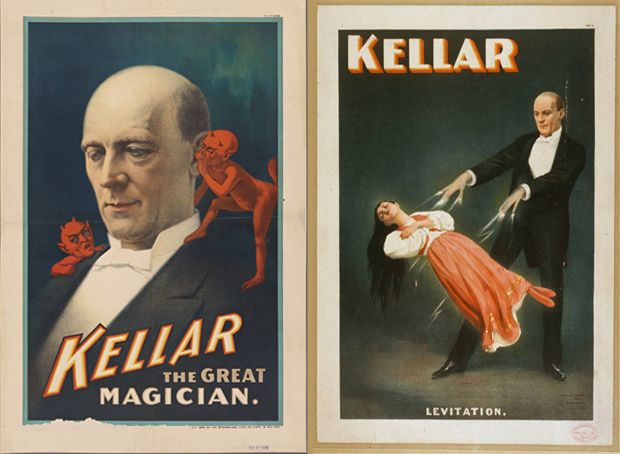
The Strange World Of Magic Ethics

A recent controversy surrounding a hit magic show on Broadway has resurfaced an ethics tangent I was aware of but had forgotten about: magician ethics.

Magician Derek DelGaudio accused another magician of surreptitiously recording a video of an effect during a performance last month of his one-man show, “In & Of Itself.” The rival magician denied the allegation—it’s complicated, and you should read the whole tale here-–but the basic problem arises from the nature of magic tricks. They can’t be patented, because the patent would reveal how the magic trick was done in a publicly available source. This means, however, that a magician whose unique illusion he or she labored on and developed at great expenditure of time and expense can be stolen by another magician with the illusion’s creator having no legal recourse.

For a field that is all about fooling and deceiving people (who have consented to being deceived), magic has old and well-developed ethical traditions. Houdini, who took his name from a french magician named Robert Houdin, later exposed his role model as an unethical magician whose most famous illusions were stolen from other conjurers without payment or credit. Still, if a magician can figure out how another magician’s trick is performed by simply watching it, nothing legally or ethically dictates that that magician can’t perform the illusion as well. However, since magic is practiced by people who deceive for a living, it should come as no surprise that unethical practices are rampant. Continue reading

From The Law vs Ethics Files: The July 24, 1983 Pine Tar Incident, When Baseball Chose Ethics Over Law, And Was 100% Wrong

I have written on this topic before, but this is the famous incident’s anniversary, and I have come to believe that the lesson learned from  the pine tar incident is increasingly the wrong one, and the consequences of this extend well beyond baseball.

On July 24, 1983, the Kansas City Royals were battling the New York Yankees at Yankee Stadium. With  two outs and a runner on first in the top of the ninth inning,  Royals third baseman George Brett hit a two-run home run off  Yankee closer  Goose Gossage to give his team a 5-4 lead.  Yankee manager Billy Martin, however, had been waiting like a spider for this moment.

Long ago, he had noticed that perennial batting champ Brett used a bat that had pine tar (used to allow a batter to grip the bat better) on the handle beyond what the rules allowed. MLB Rule 1.10(c) stated: “The bat handle, for not more than 18 inches from the end, may be covered or treated with any material or substance to improve the grip. Any such material or substance, which extends past the 18-inch limitation, shall cause the bat to be removed from the game.” At the time, such a hit was defined in the rules as an illegally batted ball, and the penalty for hitting “an illegally batted ball” was that the batter was to be declared out, under the explicit terms of the then-existing provisions of Rule 6.06.

That made Brett’s bat illegal, and any hit made using the bat an out. But Billy Martin didn’t want the bat to cause just any out. He had waited for a hit that would make the difference between victory or defeat for his team, and finally, at long last, this was it. Martin came out of the dugout carrying a rule book, and arguing that the home run shouldn’t count.  After examining the rules and the bat, home-plate umpire Tim McLelland ruled that Brett used indeed used excessive pine tar and called him out, overturning the home run and ending the game.

Brett’s resulting charge from the dugout (above) is video for the ages. Continue reading

Morning Ethics Warm-Up: 7/20/17

Καλημέρα!

[This is pronounced “Kaliméra!,” not to be confused with “Calamari!” My father frequently got them confused when he visited Greece with my mom, the former Eleanor Coulouris, and embarrassed her by greeting the natives some mornings by cheerily saying, “Squid!]

1. The newspaper Arts section headline says, “Mayor Ties Arts Money To Diversity.”

The mayor in question is New York City’s DeBlasio, and since his own family is “diverse,” naturally every other entity has to be, or it is baaaad. This is why I oppose government funding of the arts unless it guarantees that the nation, state or city will not attempt to use its support to control the arts organizations in any way.  Of course, governments will never do that, because manipulating the arts to advance  political agendas is usually the underlying motive in arts grants. Ideologues like De Blasio—wow, he’s terrible—will constantly be grandstanding and doing everything in their power to manipulate artists and their art to ensure that they send the “right” messages—you know, like Nazi art and Communist art. It is exactly the same theory and practice: art as political indoctrination.

Quick: who thinks that De Blasio will be focusing on “diversity” in the management (or on the website) of the Dance Theater of Harlem? Even if the government doesn’t attach strings to its support, arts organizations know that there are more of them than there is tax-payer money to disperse, so there is terrible and often irrsistable pressure to distort their product to give their state funders what the artists think they want—just to be safe.

My professional theater company refused to do that, sticking to the integrity of our mission and not resorting to tokens and virtue-signalling. My now defunct professional theater company, that is.

2. Yesterday, I highlighted the head-blasting comments of New York Times film critic A.O. Scott and his alternate-universe pronouncements about the Obama presidency. To be fair to A.O., his entire profession is packed with historical and political ignoramuses who make their readers dumber with every review. I once created a theater reviewer’s code of ethics, which I mailed to a critic, who sent it back to me with a note that said, “Mind your own business.” Years ago, I published an essay that was called “Why Professional Reviewers Are Unethical,” that began,

When Variety announced that it was firing its in-house film and drama reviewers, there was much tut-tutting and garment-rending over the impending demise of professional reviewing in magazines, newspapers and TV stations. The villain, the renders cry, lies, as in the Case of the Slowly Dying Newspapers, with the web, which allows any pajama-clad viewer of bootleg videos to write film reviews, and any blogger who cares to write a review of a play. “I think it’s unfortunate that qualified reviewers are being replaced,” said one movie industry pundit, “but that’s what’s happening.”

I say, “Good. It’s about time.”

It’s not happening quickly enough, though. “Dunkirk” is opening this week, and, as I predicted, film reviewers are showing their utter historical ignorance. The Washington Examiner skewers them deftly in an essay called “Why the (True) History of Dunkirk Matters.” Highlights, or rather lowlights:

  • USA Today critic Brian Truitt complains that “the fact that there are only a couple of women and no lead actors of color may rub some the wrong way.” He is not the only film critic to observe this.

Morons.

  • Slate.com critic Dana Stevens claims that the British Army at Dunkirk was the “last bulwark against Nazi invasion of the British mainland.”

Not even close to true. Continue reading