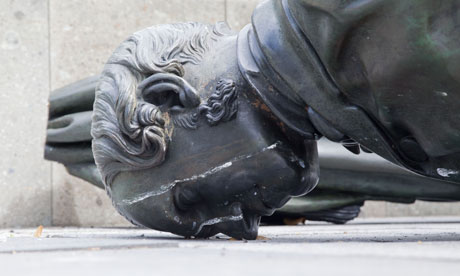
November 22, 1963—The Dawn of American Distrust

In November of 1963, the American public’s trust in its government stood at over 75%. The previous President had been a revered general who guided the Allied forces to victory over Japan and Germany. We were united against a sinister, common enemy, world Communism, led by a shoe-banging dictator who promised to bury us. The new President was a young, glamorous and inspiring man of wit and vision, whose signature policy initiatives embraced American exceptionalism and virtue—the Peace Corps, space exploration. Even in a city with more JFK foes than fans, the President and his wife drove through the streets of Dallas in an open limousine. And on a bright and beautiful fall day, two rifle shots blew John F. Kennedy’s brains out.

Today, 48 years later, public trust in the government is below 15%, an all-time low. Protesters are in dozens of American cities, challenging the foundations of American progress and success. Large numbers of the public believe that the U.S. Supreme Court assisted in a successful plot to steal a presidential election, and that a U.S. President planned the attacks on the World Trade Center and the Pentagon in 2001; that the CIA invented AIDS to kill African-Americans; that Barack Obama’s presidency is illegal; and, of course, that there was a massive government cover-up of a conspiracy to assassinate Kennedy, a conspiracy that might well have involved his successor, Lyndon Johnson.

It is the lack of trust, more than any single factor, that feeds the ruinous hate and partisanship that has made American government impotent at the worst possible time, with crises intentional, domestic and spiritual surrounding us. Continue reading

Incompetent Elected Official of the Week: Rhode Island State Rep. Lisa Baldelli-Hunt

Funny, she doesn't LOOK vicious...

The Penn State scandal will have one good effect: it will embolden victims of sexual  molestation to confront those who harmed them. Unfortunately, it will also embolden political grand-standers  to propose draconian and unconstitutional measures that will encourage fear, bigotry, hate and persecution.  Rhode Island’s Lisa Baldelli-Hunt, D-Woonsocket, is ready for her close-up.

Baldelli-Hunt proposed a law this year that would allow local police to place signs on public sidewalks or streets in front of the homes of sex offenders, designating them as threats. This shows a nice 17th Century strain, placing her in the ranks of town elders of the past that encouraged various forms of branding former offenders to ensure their perpetual mistreatment.  To give her credit, though, she also can claim international inspiration from the past, and may want to consider requiring registered sex offenders to wear, say, brightly colored star-shaped badges.

The Anti-Golden Rule logic of such a proposal is stunning: how would you like a sign proclaiming the worst thing you ever did in your life in front of your home? How would Baldelli-Hunt like a sign in front of her house that says, “Outspoken endorser of persecution and hate”?

An elected official who has no concept of ethics is not only unqualified for office and incompetent, but dangerous, because there are always a lot of ethically-challenged people to lead. Baldelli-Hunt is squarely in the “the ends justify the means” camp with every brutal dictator, vigilante killer, and mad scientist fictional and real, from Dr. Frankenstein to Josef Mengele. “I have some concerns regarding sex offenders because, quite frankly, they don’t walk around with signs telling people they are sex offenders,” Baldelli-Hunt told reporters. “I’m not interested in their rights or protecting them. I have no concern for them because they are the worst of the worst.”

Baldelli doesn’t walk around with signs telling people she is a vicious fool, either, but her words do the job:

1. She doesn’t know who “they” are or what “they” did. The vast majority of former sex offenders have paid their debt to society and are not dangers to anyone. She is, therefore, selling and facilitating bigotry.

2. Every registered sex offender did not commit an offense of equal seriousness. An 18-year-old boy who has consensual sex with a 15 year-old girl is not “the worst of the worst,” or any kind of worst at all.

3. Elected officials in a community are obligated to care about every citizen’s rights, not just the citizens they like and admire. Officials like Baldelli-Hunt brought America witch trials, lynchings and segregation.

She, in fact, is this worst of the worst.

Consider this her sign.


Ethics Quote of the Week: Charlie Chaplin

I’m heading to New York City shortly, and will make an effort to check out first hand the state of Occupy Wall Street. The nationwide protest seems to be waning in both intensity and public support, despite some hopeful, futile voices (like the New York Times editorial page) who persist in claiming that its message is “important.”

I’m not denying that it could be. At this point, however, it is in danger of redefining itself as (or, in my case, confirming the diagnosis) a self-indulgent, expensive mess that never succeeded or even tried to articulate its goals clearly enough to avoid overtaken by the worst side-effects of such protests: violence, damage to property, threats to safety, and harm to innocent bystanders. Yesterday, for example, having failed to disrupt the operations of Wall Street, the New York contingent decided to disrupt the subway system—the mode of transportation overwhelmingly used by “the 99%.”

Stupid.

Words and clear thinking are not only helpful, but an obligation for those seeking social change.  As an example of how words can inspire, I offer this, the speech that Charlie Chaplin wrote and delivered at the end of his film, “The Great Dictator.” I am far from four-square with Chaplin’s politics, but he knew how to craft an inspiring rally to change—exactly what the “Occupy” should have done. Then, at least, we would recall it for what it aspired to, rather than all the annoyance and cynicism it launched. Here is a link to an editorially enhanced version of the scene and here is the text: Continue reading

Now THIS Is An Offensive Team Name

The London, Ontario independent baseball team has decided to rename itself “The London Rippers.”
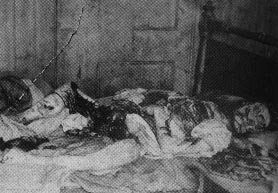
Jack's last victim: a logo, perhaps?

The city’s mayor has expressed concerns about the name, and good for him. This isn’t a manufactured political correctness complaint, based on the dubious logic that it demeans a group to honor it with an athletic team name. This is the opposite: a team name that honors a serial killer who disemboweled poor women in the slums of London in 1888. Misogyny isn’t cute or funny, and anyone who thinks that making Jack the Ripper a team symbol is anything but one more outrage perpetrated against his pathetic victims but gets indignant over the Atlanta Braves has his head on upside-down and backwards.

Now, I suppose it’s possible that an association of serial killers will protest that the name “London Rippers” dehumanizes them and puts them in the same category with lions, tigers and bears. In such an eventuality, I would side with the associations of lions, tigers and bears protesting that the name denigrates them. Sportswriting lawyer Craig Calcaterra, a sharp baseball mind whose NBC column alerted me to this story, somehow misses the point by a mile, writing:

“…Jack the Ripper did his work, like, 130 years ago. Murder is murder and it’s always awful, but at what point has enough time passed to where this kind of thing isn’t a problem?  And yes, I note the mayor’s nod to ending violence against women, but does a reference to a 19th century British serial killer who is more often fictionalized today than dealt with in his brutal reality really undermine those laudable aims?
I’m not saying it’s 100% fabulous. But really, kids were singing about Lizzie Borden taking an axe and giving her mother 40 whacks within a few years of that going down. Is it really too soon to be able to use a  long-dead historical figure as a mascot? There are a bunch teams called “crusaders” and the crusades were brutal. We still have Chief Wahoo around, and you can make an argument that the thinking behind that mascot (i.e. Indians are somehow less-than-human) represented way more death and destruction than anything Jack the Ripper did.”

Ugh. How many rationalizations are in this passage? Playground chants about Lizzie Borden (or the Black Plague, which is what “Ring around the rosey” is about) are not remotely comparable to naming a community’s baseball team after a serial killer. Playground refrains don’t become part of a community’s identity, and they don’t in any way bestow prestige on the dark subjects of their rhymes. Teams named after crusaders, warriors, braves and pirates don’t aspire to honor the deaths caused by these groups, any more than teams are named the Lions or Tigers because they have mauled people, or the Cardinals and Orioles are so named because the birds poop on our heads. There one reason, and only one, Jack the Ripper is famous. He slit the throats of desperate prostitutes and dissected them,: in the case of Mary Kelly, he minced his victim, leaving her internal organs on her night table. The London Ripper sent body parts of one victim to police, and taunted them. He didn’t possess a single admirable quality to justify a connection to a sports team, unless there are professional misogyny, mayhem or maniac leagues somewhere.

And Craig’s argument that is an expiration date on the offensiveness of trivializing tragedy is the worst of all. Seriously, Craig? So Penn State can call its wrestling team “the Molesters” in 100 years or so? What he’s really endorsing is ignorance. Kids who chant about the bubonic plague don’t realize it, and neither do their parents. That a lot of people don’t know the truth behind all the fictional Jack the Ripper tales is an argument for enlightening them, not pretending that killing prostitutes is just fun and games.

The mayor of London is right, Craig  is wrong, and if there ever was an inappropriate and harmful  team name, the London Rippers is it.

(Pssst! GOP? Awful Human Beings Are Not Qualified To Be President!)

Coincidentally, this newt is also a miserable human being...

I suppose that it was inevitable that the “Anyone but Mitt” bloc of Republican voters would eventually give Newt Gingrich a second look. After all, he can put a complete sentence together and stays current on world events. He doesn’t take pride in being inarticulate (like Rick Perry) or think it’s cute not to know a thing about foreign countries (like Herman Cain).  Unlike Michele Bachmann, he could pass a junior high exam in American History; unlike Ron Paul, he doesn’t live in a parallel universe. Newt isn’t bland and weightless, like Rick Santorum, and he doesn’t appear to be a holograph, like Jon Huntsman. He’s obviously smart.

This is all true, and yet Newt is a wretched choice. Not because he has virtually no executive experience (and we should be learning what that means.) Not because in his only extended attempt at filling an important and challenging leadership position when he was Speaker of the House, he squandered a position of strength with ethical misconduct and unrestrained hubris worthy of the House of Atreus.  Newt is unqualified to be president because he is demonstrably an awful human being. Continue reading

William Aramony and the Fallen Hero Dilemma

As he usually did, the extraterrestrial, mutant, collective or whatever he was William Shakespeare (no human could be that wise) had it exactly right, and a long time ago: “The evil that men do lives after them; The good is oft interred with their bones.” In a dispirited column on the CNN website, obviously inspired by the Paterno debacle, ESPN writer L.Z. Granderson writes that he has become afraid to watch the news, fearing that another of his heroes will be shown to be a fraud:

“And when we find out our gods are not perfect, we’re confused. We don’t know what to do with a storyline where the perceived protagonist is complex. Heroes aren’t supposed to do bad things. That’s what villains are for. So either the good supersedes the bad, or the bad makes it impossible to remember the good. We don’t like it when such duality exists in one person. We don’t want to know our heroes are human.” Continue reading

My 15 Hollywood Cures For A Paterno-Penn State-Sandusky Hangover, Part 2

Part 1 listed the first seven of my 15 cinematic remedies for Penn State-inspired ethics ennui. Part 2 includes the final eight. Please don’t take the order too seriously; I could have shuffled the whole batch. I also tried to include as many genres as possible. When it comes to ethics, good lists can be compiled using all Westerns, all sports movies, all war movies, courtroom drama or science fiction. Here we go…

8Spartacus (196o)

The raw history is inspiring enough: an escaped gladiator led an army of slaves to multiple victories over the Roman legions in one of the greatest underdog triumphs ever recorded. Stanley Kubrick’s sword-and-sandal classic has many inspiring sequences, none more so than the moment when Spartacus’s defeated army chooses death rather than to allow him to identify himself to their Roman captors (“I am Spartacus!”)

Ethical issues highlighted: Liberty, slavery, sacrifice, trust, politics, courage, determination, the duty to resist abusive power, revolution, love, loyalty.

Favorite quote: “When a free man dies, he loses the pleasure of life. A slave loses his pain. Death is the only freedom a slave knows. That’s why he’s not afraid of it. That’s why we’ll win.” [Spartacus (Kirk Douglas)] Continue reading

Paterno, Hoover, and Jones’s First Law

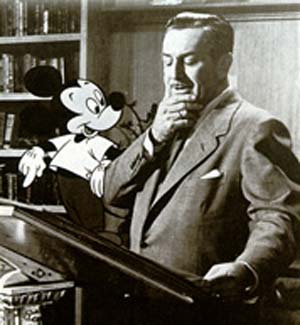
Would Uncle Walt have resisted the curse of Jones's First Law?

Jones’ First Law, one of many useful corollaries to Murphy’s Law (“Anything that can go wrong, will.”) is usually stated:

“Anyone who makes a significant contribution to any field of endeavor, and stays in that field long enough, becomes an obstruction to its progress – in direct proportion to the importance of his original contribution.”

This week was a good one for Jones (whoever he was; I can’t seem to find out) if not for the rest of us, because two classic examples of his principle were on display:  Penn State coach Joe Paterno, who managed to stay coach long enough to unravel his legacy and help lay the groundwork for an ethical, moral, legal, public relations, and financial catastrophe for the institution he had dedicated his life to, and J. Edgar Hoover, the subject of a newly-released Clint Eastwood directed film that shows how he too stayed long enough as the key figure of an institution he built—the FBI—to become an embarrassment to it. Continue reading

Penn State Primer: 15 Ethics Alarms on the Duty to Rescue and the Bystander Problem

Tiring of the smug and remarkably vicious Paterno defenders who have designated Mike McQueary for infamy because he failed to stop the Penn State child rapist in action, and who have accused me of supporting such inaction in rescue situations when my position, record, writings, belief and life experience proves the opposite, I offer these previous Ethics Alarms posts on the topics of rescue and bystander inaction. It is a useful, if sometimes disturbing review of various aspects in a complex issue. I don’t really expect the commenters previously referenced to allow rational thought to interfere with their certitude and vendetta, but most visitors here are not so wired.

A new post, focusing especially on McQueary, will be along soon, but today is Veterans Day, and I have my own duty to attend to: honoring Maj. Jack Marshall, Sr., 1920-2009, WWII veteran, Silver Star, Bronze Star and Purple Heart veteran, a true hero his entire life, in every way imaginable.

I am quite confident that he would not only have stopped Jerry Sandusky from molesting the boy, he might well have shot him.

Here are the 15 selected essays: Continue reading

Hitler’s Paintings, Dirty Money, and an Ethics Quiz

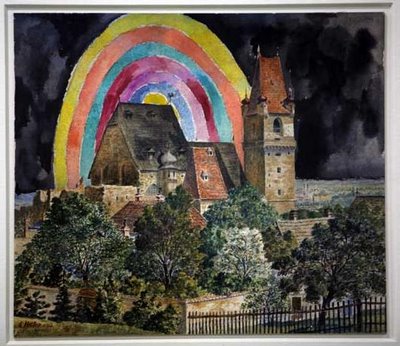
A Hitler masterpiece during the artist's controversial "Care Bears" period

As readers here probably know, I don’t do much commentary on Swedish ethics, but this intriguing story touches on a couple of Ethics Alarms topics of continuing interest: so-called dirty money and political correctness.

Sweden’s debt collection agency had planned to sell seven paintings by that noted 20th Century artist Adolf Hitler to bring the government some extra cash to pay off debts. A genuine Hitler can fetch $40,000 or more on the global art market. The intended sale never happened, because the agency concluded that the paintings were fakes, but never mind: what is ethically provocative is that Stockholm’s Jewish association protested that it would be morally offensive for the government to make money off of Hitler’s artistic labors. “It is symbolically unfortunate that people earn money on these items,” said the group’s spokesperson. Continue reading