
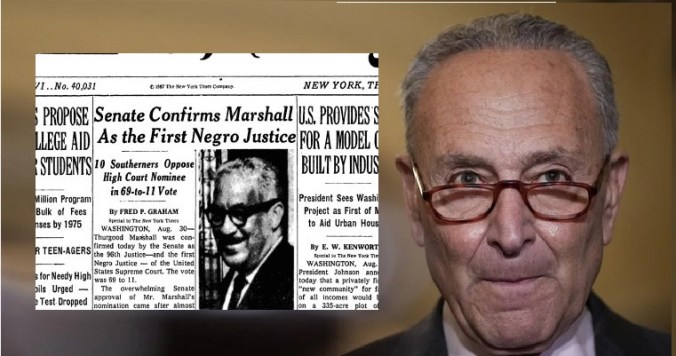
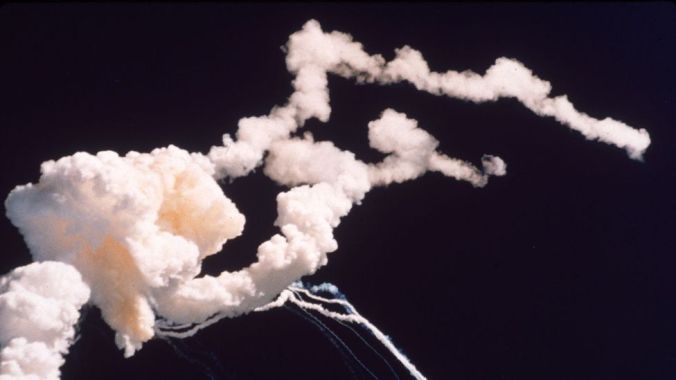
Because of non-ethical matters in the Marshall household, I missed posting about the January 28 anniversary of the Challenger disaster, as it is labeled among the thousands of Ethics Alarms tags. I have written about and alluded to the completely avoidable explosion of the Space Shuttle in 1986 many times (you can check here), and there may be no other incident that so perfectly encapsulates the complexities of professional ethics, especially in a bureaucracy. In 2016, I offered an ethics quiz on the topic.
In 2020, Netflix presented an excellent, if extremely upsetting, docudrama on how the fiasco unfolded, “The Challenger Disaster.”
I have used the tragedy in my legal ethics continuing legal education courses to force attendees to consider what might make them decide to breach legal ethics and place their careers at risk when an organizational client is hell-bent on what the lawyer knows, or thinks he or she knows, will be disastrous. Legal ethics rules are different from engineering ethics, though the latter has caught up considerably since the Space Shuttle explosion, and in part because of it. However, I view the ethics conflict in parallel situations in both professions the same, as well as situations in medicine, organized religion, the military, and government. When would, and should, professionals decide to do everything in their power to stop the consequences of a terrible decision when it is outside their role and authority to do so?
In my legal ethics seminars, a majority of lawyers ultimately say they would have done “whatever it took” to stop the Challenger’s launch, whatever the consequences, if they knew what the engineers knew. They said they would go to the news media, or chain themselves to the rocket if necessary. Of course, saying it and doing it are very different things.
Here is the most recent incarnation of my Challenger disaster legal ethics question, which I presented to government lawyers a year ago. What would you answer? It is called “The Launch.”
***
In 1986, Roger Boisjoly was a booster rocket engineer at Morton Thiokol, the NASA contractor that, infamously, manufactured the faulty O-ring that was installed in the Space Shuttle Challenger, and that caused it to explode. Six months before the Challenger disaster, he wrote a memo to his bosses at Thiokol predicting “a catastrophe of the highest order” involving “loss of human life.” He had identified a flaw in the elastic seals at the joints of the multi-stage booster rockets: they tended to stiffen and unseal in cold weather. NASA’s shuttle launch schedule included winter lift-offs, and Boisjoly warned his company that sending the Shuttle into space at low temperatures was too risky. On January 27, 1986, the day before the scheduled launch of the Challenger, Boisjoly argued for hours with NASA officials to persuade NASA to delay the launch, only to be over-ruled, first by NASA, then by Thiokol, which deferred to its client. Another engineer, Bob Ebeling, joined Boisjoly and begged for the launch to be postponed, only to be overruled.
That night, Ebeling told his wife, Darlene, “It’s going to blow up.”
Question 1: Should one or both of the engineers have “blown the whistle”?
- They did.
- Only the engineer who was sure that it would be a disaster.
- No, that’s not their role, their decision, or their call.
- After the explosion, but not before.
- I have another answer.
Question 2: How are the ethical obligations in such a situation different for government lawyers than engineers?
- Government lawyers have to disclose when human life is threatened, engineers don’t.
- Engineers have to disclose when human life is involved, government lawyers don’t.
- Lawyers get kicked out of their profession for blowing whistles, engineers just get blackballed.
- There is no difference.
- I have another answer.




 Ethics Alarms
Steve-O-in NJ’s Comment of the Day inspired by the discussion of “Black Lives Matter” (and Black Lives Matter without quotes, which thrives on the confusion) requires no introduction. Here it is, a comment on “Ethics Quote Of The Week: American Thinker…(With A Flashback And Regrets)”:
***
“There is no god but God, and Muhammad is His Prophet!”
“Deus vult!”
“Workers of the World, Unite!”
“The World Must Be Made Safe for Democracy!”
“Peace, Bread and Land!”
“Asia for the Asians!”
“Make Love, not War!”
“Give Peace a Chance!”
“Black Lives Matter!”
On their faces, all these slogans sound benign and inspirational. Maybe even the intent behind them was good, or at least the true believers thought so. Muhammad was looking to move the Arab world, forward, not back, when he introduced his own brand of monotheism, and I don’t doubt he thought he was creating a framework for a good and honest life when he wrote it all down and proclaimed this the complete record, with nothing more to come. However, there is no doubt he was also using it to cement his own power, and the evil that was later done in his name and that of his early slogan is history.
When Pope Urban shouted “Deus vult!” (God wills it!) on that hill outside Clermont, there is no doubt he thought that he was doing the right thing by rallying the attending nobles and knights to form and army and take back the Holy Land from the Muslims, who had stolen it away from the Byzantines and were not respecting the rights of Christians there. History also tells us what happened after that, and none of it is humanity at its best.
When Karl Marx wrote “Workers of the World, unite!” he probably meant it, but it was clear he hadn’t really thought it through. He himself was no working-class hero, just an expatriated writer and philosopher who avoided bankruptcy more than once because his well-to-do fellow traveler Friedrich Engels bailed him out. In 1848 he published the Communist Manifesto, fuel to the fire of the already smoldering problems that became the Revolutions of 1848, which you can look up. We all know what came later as a result of his crazy and unrealistic ideas.
“The World must be Made Safe for Democracy!” So shouted Woodrow Wilson to Congress as he led this country into a war that he had campaigned months before to keep it out of. I don’t doubt he really meant to do this world some good as a missionary for his rigid, hypocritical morality. I also don’t doubt that America’s contribution to WWI was a net positive for many people in Europe who would have suffered longer or more without it. However, it was also the first of a series of dominoes that led this world into a lot bigger problems later on, and arguably made the world less self for democracy in the long run.
Continue reading →