Oh, fine. Now Professor Jonathan Turley, whom Ethics Alarms often relies on for sound, unbiased reasoning and constitutional expertise, is perpetuating an apparently unkillable progressive false narrative. And there is no excuse for it. Not for Turley, not for anyone.
I was going to reference his commentary regarding the idiotic and ignorant claim being pushed by deplorables—like Trump lawyer Sidney Powell, a real embarrassment to the legal profession—that Trump could be “reinstated” as President once it is proven that the 2020 election was stolen and he really won. As shouldn’t even need to be explained, not by Turley, not by a community college volunteer civics teacher with a losed head injury, that cannot happen. Never. Even if it could be shown that Trump won, which is also so close to impossible that it’s not worth discussing, there is still no way to undo a Presidential election. Then, right in the middle of Turley’s explanation, I read this:
“In Florida, later tallies indicated that Al Gore likely won that state. It did not matter. George Bush was already sworn in as president.”
Et tu, Turley? That’s something Trump might write, but he’s not a professor or a lawyer. It’s something Powell might write, but she’s an idiot. Hey, I know blogging takes a lot of time, and checking the accuracy of what you write when you just want to get a post up is a pain, but people trust you, damn it. You have an obligation not to be careless. You have an even greater obligation not to perpetuate Left-wing lies and propaganda.
I trust Turley to such an extent that I began to doubt my own knowledge and research. Wait, could that be true? How did I get that wrong for all these years? It took me 42 seconds to confirm that Turley repeated an easily-checked partisan falsehood, probably because so many of his leftist colleagues at the George Washington law school believe it. From that infamous conservative lie machine, PBS:
June 5, the day before D-Day, is another date chock full of ethics history. It doesn’t count, but Ronald Reagan died on this date in 2004: I was just thinking that the Great Stupid would have killed him. In Presidential history, this was the day, in 1888, President Grover Cleveland vetoed a bill that would have given a pension to war widow Johanna Loewinger, whose Civil War vet husband died 14 years after being discharged from the army. He was discharged a little less than a year after enlisting for what the army surgeon’s certificate called chronic diarrhea. Loewinger received his pension until he cut his throat in 1876. When Johanna applied for a widow’s pension it was denied; his suicide was not considered to be caused by his military service. Johanna argued that the death was part of the insanity triggered by his war service, and appealed to a member of Congress to petition Cleveland with a bill. But the President declared all previous inquests into the former soldier’s unfortunate death to be satisfactory. Mrs. Loewinger got no pension.
I always thought this was gutsy of Cleveland (or something), since he had paid someone to serve in the Union army for him after he was drafted. But there were bigger ethics landmarks on June 5:
Well, I’m thankful it’s Friday, at least: what an awful week, culminating in an inexplicably sleepless night. Oh—that’s two out of the three things I’ve received reader complaints about in the last few days—yes, EA has a complaint desk: my occasional use of CAPS, bolding and italics for tone and emphasis, and the inclusion of “personal stuff.” The third is that I reply to comments too much, or so some critics think.
Now, hoping to prompt a complaint that I shouldn’t taint the purity of an open forum by mentioning a topic, I’ll point out this, since I’m going back to bed and may not be in any shape to get back here for a long time: today’s headlines about the U.S. government finally admitting that it has no idea what a lot of the UFOs are is infuriating. THAT’s something that Congress should investigate; not the potential flying saucers themselves, but how the policy of lying to the public about them, calling them swamp gas, domestic aircraft and hallucinations and generally gaslighting the American people, was allowed to continue for decades. Who approved that? Who allowed it to continue? What news organizations assisted in the cover-up? Is there any wonder that the public doesn’t trust our institutions, and that conspiracy theories abound? This was a conspiracy, one that the military and every President from Ike to Trump—that’s twelve!— allowed to continue. Give Joe some credit on this one.
Now feel free to ignore me , and write about the ethics issues you want to.
What’s the ethical reaction to this story? Angelia Mia Vargas, 24, has been charged with deadly conduct with a firearm after she accidentally shot her 5-year-old son while trying to shoot an over-enthusiastic 6-month-old boxer puppy that got loose from a neighbor and was running through her yard. Neither the dog nor the boy were seriously injured. My reflex reaction, I confess, was, “HA! That should teach this idiot something about gun safety!” and then I instantly regretted it. The child was innocent: what really would have been condign justice was if her shot hit her car’s gas tank and it blew up. Shooting herself in the foot would have been good. “She could have handled it differently,” said Bruno the puppy’s owner. Ya think? Here’s the terrifying beast that Angelia thought justified deadly force:
Should this woman have custody of a child? [Pointer: valkygrrl]
1. The rest of the story….There were a record number of Tulsa Race Massacre demonstrations on Memorial Day, as one might expect with “hate whitey” being the current fad. What was supposed to be the biggest one, in Tulsa of course, was cancelled after three survivors demanded $1 million each to appear. The May 31st Remember & Rise event was also supposed to feature John Legend and Stacey Abrams—boy, if only my sock drawer hadn’t been in such bad shape!– but it was called off because Viola Fletcher, 107, her brother Hughes Van Ellis, 100 and Lessie Benningfield Randle, 106, increased their appearance fee from $100,000 each to $1 million each. Their lawyers also demanded that a reparations fund be increased from the agreed-upon $2 million to $10 million. What does this tell us about how reparations would turn out if the U.S. were ever so unhinged as to agree to them?
I did learn that the young African-American, Dick Rowland, whose arrest after a white woman accused him of rape (or something) during an encounter in an elevator was the fuse for the violence wasn’t prosecuted. He was released, left Tulsa, and never returned.
I wonder why…
2. Here I go, obsessing about group identity again...In New York, the “Career Opportunities in the Accounting Profession” program, sponsored by the New York State Society of Certified Public Accountants and the Moynihan Scholarship Fund, will introduce 250 “promising underrepresented high school students” to the accounting profession. The program will include virtual sessions about forensic accounting, interviewing skills, public speaking, networking, and an “accounting profession overview” featuring a panel discussion with experts in the profession. What a great idea! Nine institutions, including Ithaca College, Medgar Evers College, Rochester Institute of Technology, St. John’s University, Siena College, SUNY New Paltz, SUNY Oswego, the University at Buffalo, and Westchester Community College co-host the program, which is free of charge for students.
Oh—white students may not apply. The online application for the program includes options for Hispanic, Black, Asian, and Native American students, but no option for white students. When confronted about the apparent discrimination involved, SUNY Oswego Provost and Vice President for Academic Affairs Scott Furlong huminahumina-ed that “SUNY Oswego participates in supporting the program and sees this as a beneficial service to the profession, but we strongly believe that all disadvantaged students would benefit from the COAP program.While we do not participate in recruiting the student participants in COAP or in the setting of policy for student membership, SUNY Oswego would prefer a more inclusive perspective regarding membership in COAP and the NYSSCPA policy…[which would] “align with SUNY Oswego’s ethos that is rooted in diversity of thought and people, equitable practices and policies, and inclusive experiences.” Furlong said that the matter “merits much future discussion for the purposes of having SUNY Oswego reassess our involvement and reconsider our sponsorship.”
Meanwhile, his institution will continue to participate in a program that discriminates against white students.
It will be interesting to see if the news media discusses the Tulsa Race Massacre of 1921 any more this May 31 than it has in the past. Discussing this horrible mass murder of blacks in Oklahoma over Memorial Day weekend has always been seen as sufficiently tasteless that the story has suffered the equivalent of a historical airbrushing. When did you first learn about it? I didn’t encounter the episode in elementary school, high school, college or law school. I was 50, and furiously researching the life of Clarence Darrow so I could churn out a one man show (that was already in rehearsal) after Leslie Nielsen pulled the rights we had paid for on the Darrow show performed on Broadway by Henry Fonda. I was looking for the context of Darrow’s epic closing argument in the Sweet case (1925), in which he referenced examples of white mob violence against blacks. That was my introduction to the tragedy. How was this possible? I was and am a voracious consumer of American history, movies, and television. Yet the facts of the Tulsa Race Massacre never entered my consciousness.
Here’s one useful resource…there are many others available online. A brief summary: After World War I, Tulsa’s African American community was notable for its affluence. The Greenwood District was known as “Black Wall Street.”But on May 30, 1921, an incident between a white woman and a black man on an elevator—nobody knows exactly what happened—was reported in the Tulsa newspapers as an attempted rape. The young African-American, Dick Rowland, had been arrested, and members of the community believed that he might be lynched. When an angry white mob gathered in front of the courthouse, a group of over 70 back men, some of them World War I veterans with weapons, confronted them. A gun went off in a struggled, and chaos descended on Greenwood. A white mob of thousands overran the Greenwood District, shooting unarmed black citizens in the streets. It burned an area of some 35 city blocks, and more than 1,200 houses, numerous businesses, a school, a hospital and a dozen churches. It is estimated that 300 people were killed in the rampage, though official counts at the time were much lower. 300 is the same death toll as the 1871 Chicago fire. I knew about that tragedy by the time I was 8.
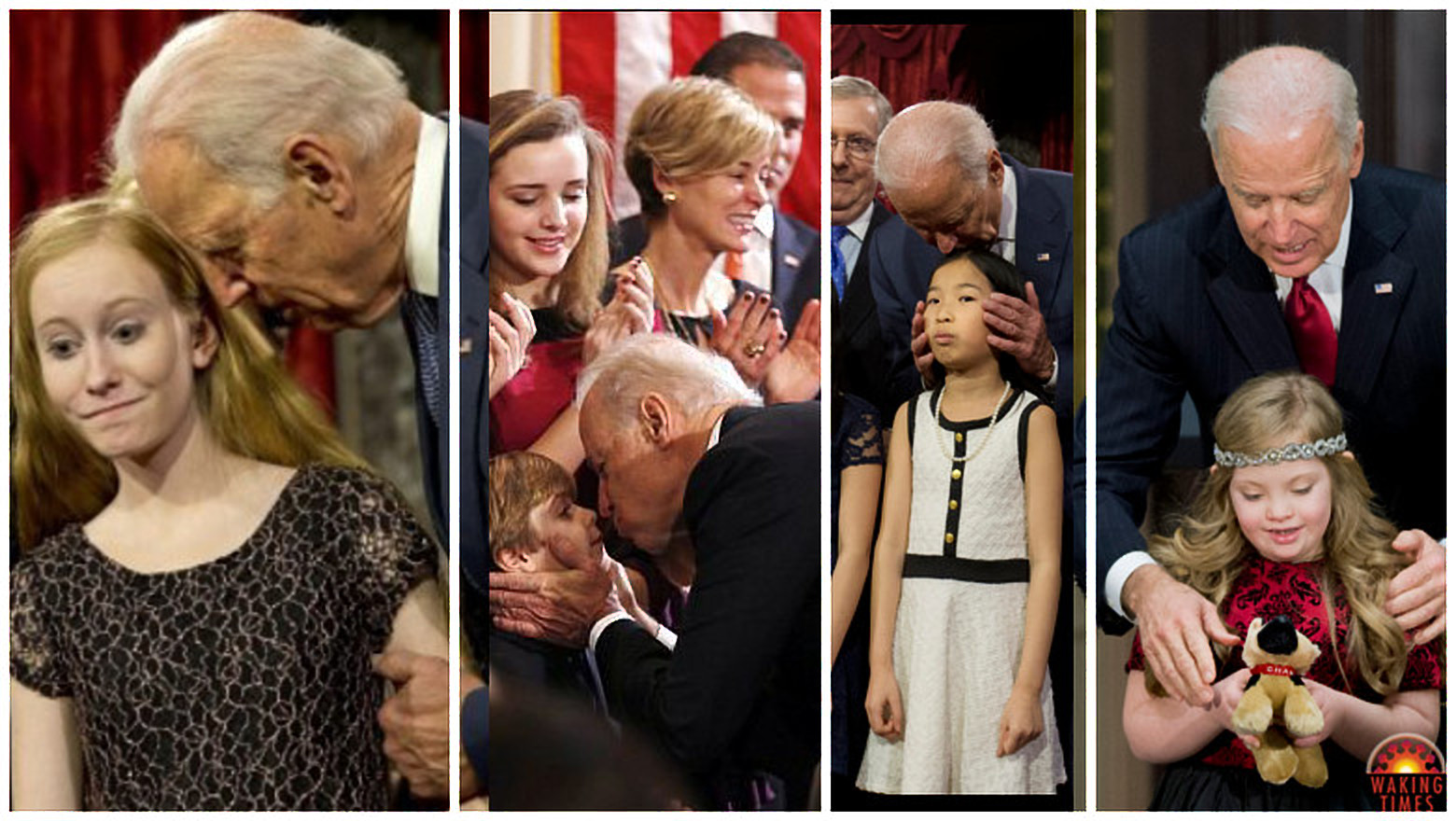
1. IIPTDXTTNMIAFB! That’s short for “Imagine if President Trump did X that the news media is accepting from Biden…”, introduced here. The current example: during a speech at Joint Base Langley-Eustis in Langley,Virginia two days ago, President Biden began spontaneously complimenting a pre-teen girl who had joined her parents and two older brothers on the stage after her mother had introduced Biden to the crowd. Biden said, inappropriately and creepily, “ I love those barrettes in your hair, man. I tell you what, look at her. She looks like she’s 19 years old sitting there like a little lady with her legs crossed.” Republicans pounced, as the MSM cliche goes whenever Democrats are legitimately criticized. The episode was barely mentioned by the media dedicated to propping up Biden—that is, almost all of it—at all. IIPTDXTTNMIAFB…and President Trump didn’t even have a photographically preserved series of encounters like this:
2. AHHHH! It’s a virus ! Get a gun!!! The headline on the front page of the NYT website yesterday read, “Pandemic Fuels Surge in U.S. Gun Sales ‘Unlike Anything We’ve Ever Seen.'” Incredible. People bought guns for the first time because rioting was going on all over the country, and in many places the police were doing little or nothing to stop it. Buildings were burning and being looted; citizens were being threatened. Who gets a gun to fight a pandemic? (There was never any threat of the kind of civic breakdown from the virus like that portrayed in the movie “Contagion.” Toilet paper riots?)
The degree to which the Times—the “paper of record’!—continues to distort reality to mislead the public and warp public opinion is astounding. Later in the same article, the Times said, “While gun sales have been climbing for decades — they often spike in election years and after high-profile crimes — Americans have been on an unusual, prolonged buying spree fueled by the coronavirus pandemic, the protests last summer and the fears they both stoked.”
This post was supposed to go up yesterday, May 29, but as has happened too often in recent months, the vicissitudes of existence got in the way of Ethics Alarms. May 29 is the anniversary of the epic moment when, at 11:30 a.m. on May 29, 1953, Edmund Hillary of New Zealand and Tenzing Norgay, a Sherpa of Nepal, become the first explorers to reach the summit of Mount Everest. At 29,035 feet above sea level, the peak of Everest is the highest point on earth. Hillary and his Sherpa guide were part of a British expedition, and the two completed their successful assault after spending a perilous night on the mountain at 27,900 feet.
Hillary’s tribute is included in the The Ethics Alarms Heroes’ Hall Of Honor, but for several years had been unavailable, unbeknownst to me, because I hadn’t connected some dots. The essay about him was a link to my 2008 post on the predecessor of Ethics Alarms, The Ethics Scoreboard, which was offline. I had forgotten that (and if anyone tried to access the article and failed, they never let me know), so the first Ethics Hero to be awarded that Ethics Hero Emeritus title was also the only such hero dishonored by my carelessness.
I apologize, Sir Edmund.
The Ethics Scoreboard is back online (and worth a visit), but I am finally putting the 2008 piece here, on Ethics Alarms, where it should have been long ago.
Ethics Hero Emeritus: Sir Edmund Hillary 1919-2008
Ghost Ethics! I just watched an Amanda Seyfried Netflix movie called “Things Heard And Seen,” which I recommend neither seeing nor hearing. What I got out of it—spoiler alert, if indeed a crummy movie can be spoiled—is that ghost ethics are a little bit “problematic” as Prof. Turley would say. The spooks don’t quite get the “Fix the problem before it’s too late” obligation. In this movie, the benign ghost of a murdered woman who had been the original owner of an old house bought by an ambitious, sociopathic college professor takes the professor’s victimized wife under her spectral wing, knows that the husband is up to no good, but only does anything proactive to get rid of the husband after the monster has killed F. Murray Abraham (who still looks like Salieri!), run a woman who was on to him off the road, putting her in a coma, and finally chopped up lovely Amanda, who plays the wife, with an ax. THEN the ghost drags the husband to Hell, which we know the ghost knew was going to be his fate before Amanda got the Lizzy Borden treatment.
Talk about locking the barn door after the horse is gone…
1. Isn’t it good to know that news readers all over the world are just as ignorant and incompetent as ours are? Bill Shakespeare, the first man to get a pandemic vaccine, died last week of non-virus causes. A Spanish newscaster, Noelia Novillo, as photos of the Bard’s namesake flashed on the screen, announced the story this way:
‘We’ve got news that has stunned all of us given the greatness of this man. We’re talking about William Shakespeare and his death. We’ll let you know how and why it happened.As we all know, he’s one of the most important writers in the English language – for me the master. Here he is. He was the first man to get the coronavirus vaccine. He’s died in England at the age of 81.”
No word yet regarding whether the station fired this ignoramus. Why bother? She’ll just get a job at CNN…
2. Speaking of locking barn doors…actually more like locking the cellar door after the horse has escaped from the barn…Southwest Airlines announced yesterday that it will not resume alcohol service in June as previously announced, because a woman attacked a flight attendant on a recent Southwest flight in an incident that had nothing to do with alcohol consumption.
Ethics Alarms is so fond of the practice of punishing innocent members of the public for the isolated conduct of a single wrong-doer (Should I call it “The Chauvin Solution”?) and this is even worse. There is no nexus between the incident and Southwest’s response at all, except the unproven theory that if passengers have become unusually cranky during the pandemic (with Southwest insisting that passengers re-mask between sips of Coke), they’ll be even crankier once they’ve had a few little bottles.
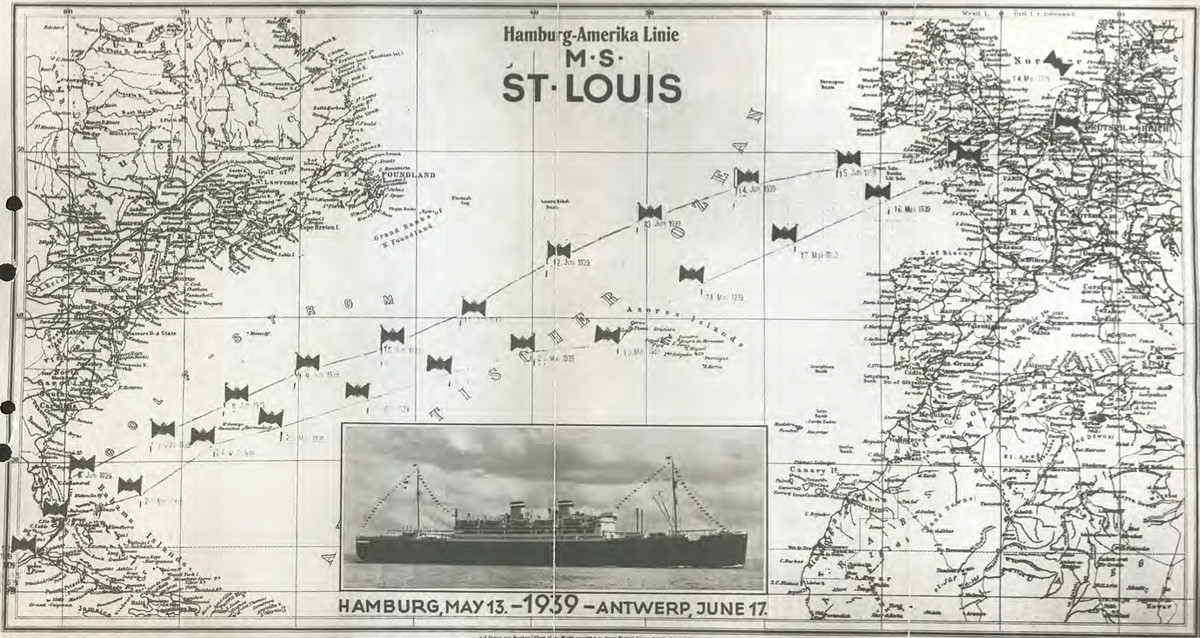
May 27, 1939, qualifies as a “day that shall live in infamy” in Franklin Roosevelt’s famous phrasing, except that he was deeply involved in this particular infamy, and thus would have been unlikely to so describe it.
On May 13, the S.S.St. Louis had sailed from Hamburg, Germany on a route Havana, Cuba. The ship was carrying 937 passengers, most of them German Jews escaping their escalating persecution under the Third Reich. Kristallnacht had hit the German Jewish community just six months earlier, killing 91 Jews and destroying hundreds of business and homes. The Final Solution was just months away from being aggressively implemented.
The official destination of the St. Louis was Cuba, but the real objective of the desperate refugees was to reach the U.S., Land of the Free and the Brave, as George M. Cohan put it. They had applied for U.S. visas and were only going to stay in Cuba until they could enter the United States legally. Cuba definitely did not want them. There had been a huge anti-Semitic demonstration in Havana before the ship set sail, and rumors were spread in the German press that the Jews on board were Communists.
It really is amazing: I have already read three references today to George Floyd’s death as a cultural watershed in the U.S. society’s recognition of racial injustice, yet there remains not a single piece of evidence or a logical argument that Floyd’s death had any relationship to his race whatsoever. This was a manufactured narrative that the news media deliberately advanced in flagrant defiance of the facts. I have challenged more indignant progressives than I can count to justify treating Floyd’s death as anything but negligence and brutality by a local cop who should never have been allowed to keep his badge. All they can come up with is that the officer was white, and Floyd was black—in other words, presumed racism based on skin color, which is itself racism, or that the episode had a positive impact, justifying treating it as something it was not. That, of course, is an “ends justifies the means” rationalization.
The ugly episode is a lesson, not in “racial reconciliation,” but in how events can be manipulated for political gain—in this case, involving violent protests and virtual societal extortion— if there is no trustworthy news source to keep the public informed.
Today is also the anniversary of another ethics low in U.S. history. It was on this date in 1861 that President Lincoln suspended the right of habeas corpus so he could keep a Maryland state legislator locked up on the charge of hindering Union troops.
SCOTUS Chief Justice Taney issued a ruling stating that President Lincoln did not have the authority to suspend habeas corpus, but Lincoln, channeling his inner Andrew Jackson, just defied the Court. Five years later, another Supreme Court case held that only Congress could suspend habeas corpus.
1. The Confederate Statuary Ethics Train Wreck misses its biggest target. Good. The giant images of Jefferson Davis, Robert E. Lee and Stonewall Jackson carved into Stone Mountain as Confederate nostalgia’s answer to Mount Rushmore have survived the latest effort to tear them down. The Confederate flags at the base of Georgia’s Stone Mountain, placed there by the United Daughters of the Confederacy, will be removed, and new exhibits will offer a more thorough history of the park, including the role the Ku Klux Klan and resistance to desegregation played in its creation. Also good. The thing is a pro-Confederacy monument to be sure, a defiant one, but it also is a piece of history that should be seen, debated and thought about.
Many dedicated historical censors are upset that the mountain art will not be blown up any time soon. arguing that racist anger, not a desire to honor the South’s heroes, inspired the monument’s creation. OK, and so what? It is a vivid historical relic. Fall River’s Joe Aronoski, 82, told the New York Times after touring Stone Mountain, “It’s American history. It shouldn’t be destroyed. What are you going to do? Make-believe the Civil War didn’t happen?”
Well yes, that’s the general idea behind statue-toppling: make believe any events that make some people “uncomfortable” didn’t happen.
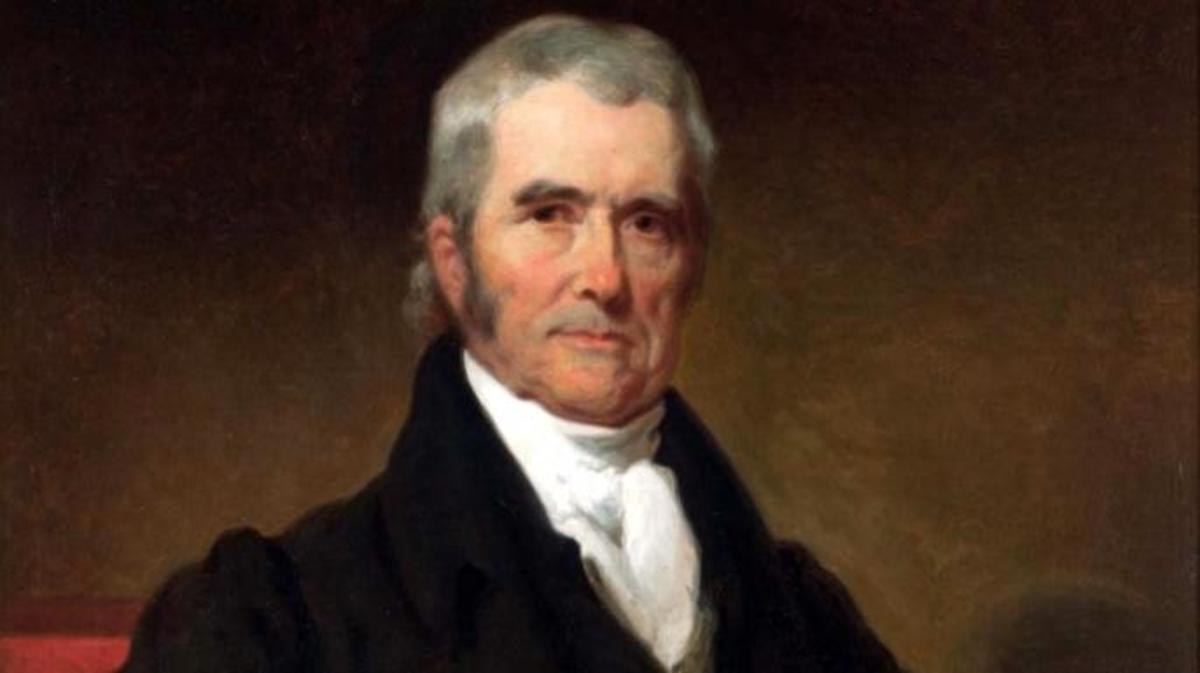
The UIC John Marshall Law School is officially changing its name to the University of Illinois Chicago School of Law. The decision, a capitulation to the unethical mentality of the cancel culture and historical air-brushing strategy embraced by the political Left, comes after months of review by a task force. The resulting report noted, “that despite Chief Justice Marshall’s legacy as one of the nation’s most significant U.S. Supreme Court justices, the newly discovered research regarding his role as a slave trader, slave owner of hundreds of slaves, pro-slavery jurisprudence, and racist views render him a highly inappropriate namesake for the Law School.”
The most influential and important jurist in U.S, history is a highly inappropriate namesake for a law school. Got it.
John Marshall was the fourth chief justice of the Supreme Court, (1801 – 1835), and the only essential one. He authored the majority opinion in Marbury v. Madison (1803) that established judicial review, giving the Court power to declare legislative acts and executive actions unconstitutional. Without Marshall, the Constitution wouldn’t work. He took a bold and controversial step to ensure that basic rights and principles would not be wiped out by a rogue Congress or a dictatorial President. How many landmark SCOTUS decisions does the nation owe to Marshall as a result? How different would our lives be without his deft adjustment to the balance of the Branches? Would the United States of America even exist at all?