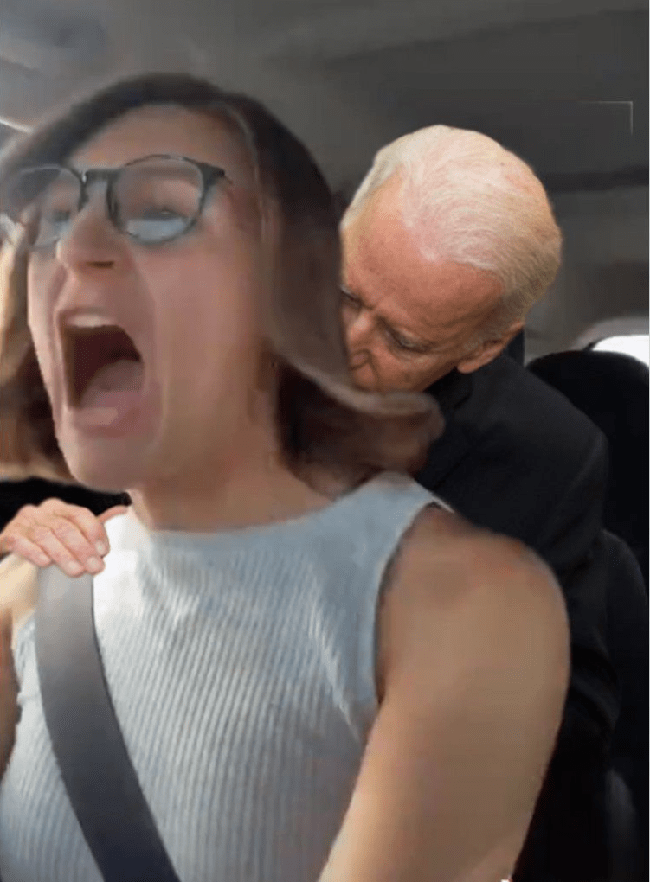
1. Yes, these are the people who want to have power over our lives. Imagine: this woman isn’t mourning the death of a human being, she’s angry because that human being can no longer serve her interests. The human being in question continued to work for the public long after she could have retired with dignity and comfort, and this woman is furious that she wasn’t physically able to do so “until 2021.” Not only that, she posted this repulsive video with no apparent comprehension that it exposes her as a horrible human being. She just assumes that most who share her political persuasion are just as incapable of empathy and compassion as she is. Maybe she’s right.
Again I must ask, “How do people get like this?”
***
Okay, I just stumbled on some timely satire. I generally hate memes, but this is genuinely funny. Forgive me.
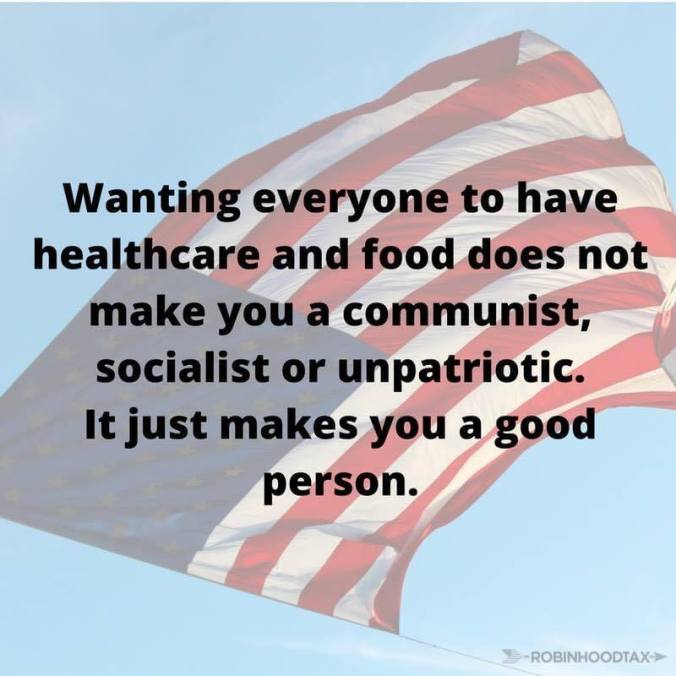
2. Speaking of memes and The Great Stupid, what can you say about an adult who would post this on Facebook in all seriousness, as if it was profound or true?
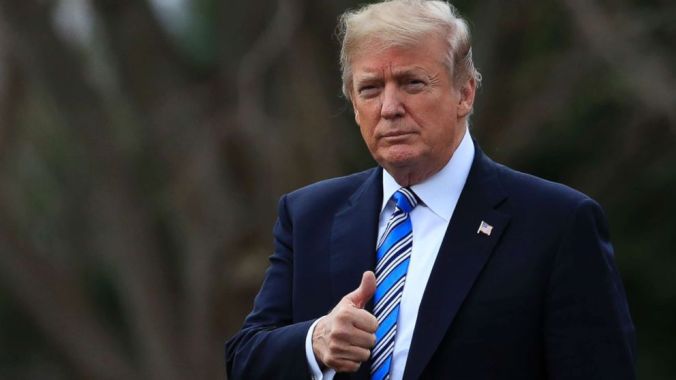
“Ladies and Gentlemen, the President of the United States…”
I’ve been thinking about what would be the fair and expository Ethics Alarms nickname for Joe Biden, and I’ve settled on “The Lawn Chair,” or TLC for short.
In 2016, I wrote repeatedly in posts and comments that I would vote for a lawn chair over Donald Trump, using the same standard that I had applied in the past to first term Presidents who I had found unacceptably incompetent or untrustworthy (Nixon, Carter, Bush I, and Bill Clinton). Joe Biden, in his drastically diminished 2020 model, is the closest thing a U.S. Presidential contest has had to an actual lawn chair, and it is clear that those preparing to vote for him to lead the nation at this critical time would literally vote for a lawn chair over President Trump. In this there is epic hypocrisy.
Feminists who once proclaimed that sexual harassment and sexual assault, determined on the basis of unsubstantiated accusations, were sufficient to disqualify a man for high public office are supporting Biden, who has been photographed numerous times engaging in sexual harassment as Vice-President, and has been accused “credibly” (as they said about Brett Kavanaugh’s less than credible accuser) of sexual assault. Heck, one such feminist is his running mate. Soft coup proponents who have argued that President Trump is sufficiently cognitively handicapped that the 25th Amendment should be employed to remove him are supporting Biden, who is obviously more mentally impaired now than Trump has ever been even in the fever dreams of progressives.
On this day, September 14, in 1814, Francis Scott Key was inspired to write the poem that was eventually set to music and, by act of Congress in 1931, became America’s official National Anthem, “The Star-Spangled Banner.” The poem, originally titled “The Defence of Fort M’Henry,” was written after Key witnessed the Maryland fort standing up to furious bombardment by the British during the War of 1812. A lone, tattered U.S. flag was still flying over Fort McHenry at daybreak, giving rise to the anthem’s most bracing line, “And the rocket’s red glare, the bombs bursting in air, Gave proof through the night that our flag was still there.”
I’ve listened to the Anthem being attacked more or less my whole life—it’s bellicose, it’s too hard to sing, it’s set to the music of a drinking song, it was written by a slave-holder. What matters is that the Anthem, unlike so many others nations’ anthems, has a authentic historical origin linked to an existtential crisis in our history, and that it eloquently represents the American character and its dedication to hope, perseverance, and resilience. The Star Spangled Banner may be hard to sing, but when a crowd sings it with passion, or when a singer knocks it out of the park like the late, great Whitney Houston, only France’s Marseillaise can equal it for sheer chills.
The current assault on the Anthem, and the use of it for cheap political theatrics by refusing to stand and convey proper respect for what it represents, is an attack on American history, values and culture. Nothing less.
1. It’s called “paying one’s debt to society.” I have no intense objection to allowing convicted felons to vote once they have served their sentences. I also have no intense objection to banning convicted felons from voting for life. In 2018, Florida’s voters decided to end the disenfranchisement of those convicted of felonies, except for murder and sexual offenses. Then the battle became whether convicted felons should be required to pay all the fines related to their crimes before they became eligible to vote again.
Well, of course. Isn’t that intrinsically obvious? You can vote when you have paid society’s requirements as a punishment for the felony: whether that is time in prison, or time on probation, or a cash fine, it’s all part of the “debt to society.” Pay that debt, and then you can vote.
But Democrats are expert in representing legitimate requirements and safeguards for voting as sinister voting suppression schemes, so in May a Florida court ruled that requiring convicted felons, many of whom are indigent, to pay court-ordered fines before they could regain the vote was unlawful discrimination, by imposing an unconstitutional “pay-to-vote system.”
What an astoundingly deceitful and dishonest argument! Is requiring people to pay for their groceries a vicious “pay not to starve to death” system? The fines have nothing to do with voting. The fines have to do with completing the punishment for the felonies. Calling the fines the equivalent of a poll tax is clever but deliberately misleading, yet a court bought it. Fortunately, the U.S. Court of Appeals for the 11th Circuit in Atlanta overturned that decision, and ruled that the 2019 Florida law requiring ex-felons to pay their fines before being re-enfranchised was indeed constitutional.
I saw it in my print Times, and wasn’t going to waste time with it: it’s another smug media bubble scream about how horrible the President is (just like they decided before he was sworn in) and how essential it is to elect a sexual harassing dementia case to replace him and restore honor to the office. Isn’t it amazing how so many people keep saying this as if it isn’t completely hypocritical and actually makes sense? That’s what hate and bias does to you.
A genuine friend on Facebook recently went on a rant about how “unfit”President Trump is. I’m also amazed that people keep saying this as if the fact that the people who didn’t vote for him think he’s unfit should matter at all. So vote against him in November then! The victory of a candidate you thought was “unfit” means you lost the argument, and you don’t get a chance to deal with that supposed lack of fitness until the next election. Democrats never accepted that, despite the fact that it is the way our system has always worked. They, like my friend, convinced themselves that they have a unique right, indeed a mission, to remove an elected President before an election, or, failing that, to make it impossible to govern, because their assessment of what constitutes fitness is the unquestionable right one.
Assholes. This is the beating, rotten heart of the totalitarian impulse that has divided the nation and now threatens our strength as a nation and liberty as a people.I am sick of hearing, reading about and watching it, but it is important to realize what it is. My friend is too marinated in a biased and emotional peer group to see the phenomenon for what it is. Continue reading →
Movie impresario Mike Todd’s greatest legacy is the 1956 film adaptation of Jules Verne’s novel, “Around the World in 80 Days.” The movie was a cultural phenomenon: the title song was inescapable, it was a “must see” for everyone, it dominated the Academy Awards the following year. Todd’s brilliant innovation was that he stuffed the movie with celebrity cameos. Current and past stars showed up in tiny bits and appearances. It was a clever gimmick: in a long, leisurely film, it gave the audience a “Where’s Waldo?” game to play, and the raft of VIPs provided a sense of grandeur and importance. Some of the appearances were inside jokes; some completely gratuitous. The effect, after one has seen, for example, Buster Keaton, Frank Sinatra and Edward R. Murrow show up in the same movie, was to wonder, “Who will be next? Donald Duck? Harold McMillan?” (No, but Noel Coward arrived.) It was like a party.
Since the trick worked (ATWIED was a huge hit), the obvious drawbacks of the concept were not considered, prime among them being that focusing attention on actors as actors rather than the roles they are playing risks destroying the crucial suspension of disbelief. The other problem is that playing the star game tempts film-makers into using the gimmick as a substitute for making a good movie.
In fact, an argument could be made that this is what Mike Todd did. Today, it is almost inconceivable that “Around the World in 80 Days” was regarded in its time as a great movie, or that audiences would sit still for it. Personally, I find it nearly unwatchable, and I recognize all of those stars, The average viewer under the age of 80 will not. Mike’s innovation has a limited shelf-life.
Ah, but “Around the World in 80 Days” not as unwatchable today as some of the movies it spawned, not even close. After Todd’s triumph, the idea that having many famous performers in small parts was a formula for a hit took root. It worked sometimes, in cases where the story was an epic or particularly important, as in “How the West Was Won” and “the Longest Day.” It created a fun “Which celebrity will die next?” game in the better disaster movies of the Seventies. However, the legacy of “Around the World In 80 Days” includes several of the worst big budget Hollywood films ever made, with some of the most stellar casts ever. Continue reading →
I remember this date, all right. I was scheduled to do a three hour CLE legal ethics seminar in Rhode Island on the 13th, and all the flights were cancelled. The bar association assumed I would cancel too, but I’m a “The show must go on” guy, and I said, “I’ll be there if I have to drive all night.” And I drove all night.
1. This date also had significance in the history of misguided utilitarian solutions to the problem of racial disparities. In his June 1974 ruling in Morgan v. Hennigan, U.S. District Judge Arthur Garrity held that Boston’s geographically segregated public schools created de facto school segregation that discriminated against black children. He ordered the busing of African American students to predominantly white schools and, punishing innocents for “the greater good,” white students to black schools. Forced busing began on September 12, and was met with massive protests, particularly in South Boston, the city’s main Irish-Catholic neighborhood. Protests continued unabated for months, and many parents, white and black, kept their children at home. In October, the National Guard was mobilized to enforce the federal desegregation order.
The rest of the story: Boston’s draconian and unfair busing plan lasted for fourteen years, and (those who fail to learn from the mistakes of the past are doomed to repeat them) didn’t work. Racial divisions were exacerbated, parents pulled their children out of public schools, and many families moved to the suburbs. Continue reading →
Soon after I designated Diego Garcia’s comment on this post a Comment of the Day, I realized that it had to have the context of the Chris Marschner comment that Diego was responding to in order to be appreciated. So this is another rare tag team Comment of the Day on the post, “The Insidious News Media Disinformation Campaign.” I’ll have a brief comment at the end of the two COTDs.
First, Chris:
What exactly was the purpose of our involvement in Viet Nam? I know what we were told that it was to stem the rise of Communism in the world where countries in Asia would fall like dominoes if we did not intervene. If Communism will collapse upon itself because it is inherently flawed why do we need to hurry it along by killing people? You don’t win hearts and minds with coercion.
Wasn’t it learned that General Westmoreland falsified data to show we were actually winning when in fact we were mired down in a quagmire that only benefitted the military industrial complex that Eisenhower warned us about?
Maybe we were all duped. Maybe we are still being duped. Maybe we were all seen as suckers by Kennedy and Johnson. Maybe politicians and the public have been being duped for years by guys with scrambled eggs on their hats and stars on their epaulettes whose retirement plans include running Lockheed Martin or Boeing or just sitting on boards as they collect millions for a few days work because of what they know about defense contracts.
Maybe the smart parents were the ones that spirited their 19 year old’s off to Canada or paid their way to college and then on to Canada. I have no idea. However, those who served did so as patriots but even patriots can be suckered by politicians. I got suckered by Romney and McCain. I thought they were honest brokers of information until Trump forced them to expose themselves. I learned that integrity takes a back seat when someone challenges their power.
Why are we still in Afghanistan after nearly 20 years? Why is it that modern warfare lasts for generations while a poorly resourced rag tag bunch kicked the British ass in far less time? How could we defeat two enemies, forcing them to unconditionally surrender at the same time in roughly the equivalent of one presidential cycle? Could it be that the wars prior to Korea were existential imperative while today profits from equipment and expended munitions help keep the defense industries highly profitable? One has to ask, with all the budget hikes to improve the military’s readiness along with the positive changes in services for veterans, why do all these Generals have an ax to grind with the President who sees war as wasteful. Could it be that their business is war and part of their mission is to keep the public believing that these never ending wars are beneficial because it keeps them all in business. Tell me General’s Mattis and Kelly, which wars did you win to make you both experts on ending war?
If I recall correctly John Kerry told school kids to work hard and study because if they don’t they will wind up in Iraq. Maybe, just maybe Kerry and Trump have something in common. They can see when war is a gross waste of blood and treasure. They just have different ways of stating it.
It may be hard for Americans to get inspired to celebrate Labor Day for what it is supposed to honor, especially with teachers unions working to keep America locked down and students barely educated in pursuit of a partisan political agenda, and pro athlete unions bullying sports leagues into ruining their product by turning them into political propaganda vehicles, and the postal workers union partisan bias eroding trust in the upcoming election. Nonetheless, there is a good reason to celebrate Labor Day.
This Ethics Alarms post from 2012 explains what that reason is.
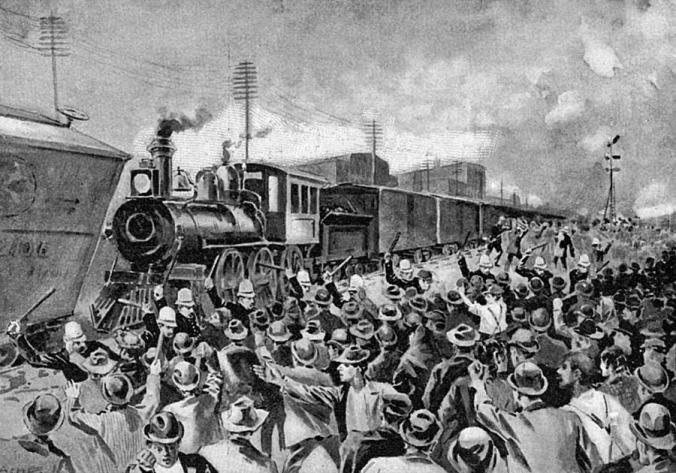
Labor Day commemorates one of the great ethical victories of American society, and not one in a hundred Americans know it. Labor Day marks the end of summer, and a time for retail store sales, and the last chance to get away to Disney World, but few of us think about the real meaning of the word “labor” in the name, and how it is meant to honor brave, dedicated men and women who fought, sometimes literally, the forces of greed, political influence, wealth and privilege in this country to ensure a measure of safety, consideration, fairness and justice for the hardest working among us.
Today labor unions are controversial, and with good reason. Many of them have been run as criminal enterprises, with deep connections to organized crime; many operate in a blatantly coercive and undemocratic fashion. Union demands and strong-arm tactics, while providing security and good wages to members, have crippled some American industries, and limited jobs as well. Today the unions get publicity when one of them tries to protect a member who should be punished, as when the baseball players’ union fights suspensions for player insubordination or even drug use, or when school districts are afraid to fire incompetent teachers because of union power, or when the members of public unions protest cutbacks in benefits that their private sector counterparts would be grateful for. It is true that today’s unions often embody longshoreman philosopher Eric Hoffer’s observation that “Every great cause begins as a movement, degenerates into a business and ends up as a racket.” *
That not what Labor Day honors, however. It is celebrating the original labor movement that began at the end of the 19th century, and that eventually rescued the United States from an industrial and manufacturing system that was cruel, exploitive, deadly and feudal. Why the elementary schools teach nothing about this inspiring and important movement, I do not know. I suspect that the story of the American labor movement was deemed politically dangerous to teach during the various Red Scares, and fell out of the curriculum, never to return. Whatever the reason, it is disgraceful, for the achievements of the labor movement are every bit as important and inspiring as those of the civil rights movement and the achievements of our armed forces in the protection of liberty abroad. Continue reading →
In the document below, the product of The District of Columbia Facilities, and Commemorative Expressions Working Group, appointed I really don’t care when by Mayor Muriel Bowser, an arrogant and juvenile committee recommends the “cancelling” of, among others, in our nation’s Capital, by removing all mention of their names, as well as their statues and memorials,
Christopher Columbus
Benjamin Franklin
Francis Scott Key
Alexander Graham Bell
George Mason
President Andrew Jackson
President Thomas Jefferson
President James Monroe
President Woodrow Wilson
President William Henry Harrison
George Mason
President John Tyler
President Zachary Taylor, and, of course,
George Washington, after whom the city itself is named, and without whom the nation would not exist. Continue reading →
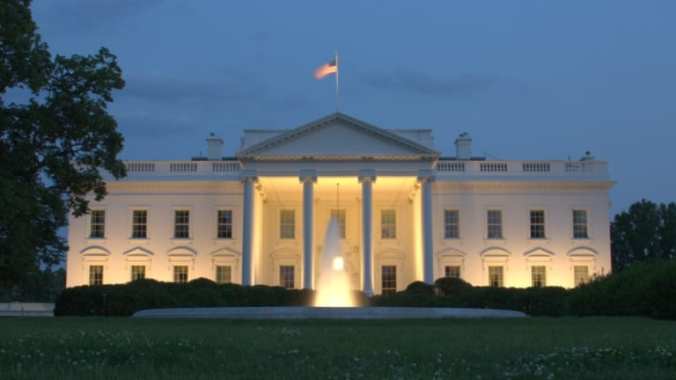
The question that spawned this long post [ Part 1 is here, Part 2 is here] was, “What’s your opinion of Trump using the White House as a political prop?”
D. The White House
Senate Minority Leader Chuck Schumer said that Trump will further “destroy” American precedents if given a second term in office. “This is what we can expect in a second Trump administration,” Schumer said. “All the rules, norms, values that have made this country great, Donald Trump will destroy them. He doesn’t care. He only cares about himself. The rules are you shouldn’t sit in the White House and give a speech at a convention. Donald Trump says, ‘I want to do it.’ So they do it.”
There’s no such rule. The President isn’t covered by the Hatch Act, and given all the political uses of The White House by previous Presidents, I’d love to hear the argument that a speech being delivered to a virtual convention during a pandemic using the White House as a backdrop is unconscionable, or even unethical.
Professor Julian Zelizer, whose field is history and public affairs at Princeton University, said that using the White House as a “prop” at a party convention is “unprecedented” in recent times. “There still is a boundary between politics and governing, and the Oval Office and White House are a public site meant for the country that isn’t meant to be a political backdrop,” Zelizer told ABC News. “To just use it as the major site for a convention speech seems like a lot with President Trump — you just take all the guardrails down.”
Cite, please. That something is “unprecedented” doesn’t make it unethical. The White House has been used as a political prop many times, just not at a convention. Nothing has been quite as grubby as Bill Clinton selling nights in the Lincoln bedroom for big money donations, but way back in the Kennedy Administration, the nation gushed over lovely Jackie Kennedy hosting a televised tour of her “home,” bolstering the developing legend of how graceful and refined the young First Couple were. (Jack was probably banging a starlet while Jackie was being filmed.) Go ahead, tell me that “special” wasn’t “unprecedented” or political. Continue reading →