Ethics Dispatches From The Sick Ward, 5/26/2020: Arg! Yechh!

Ugh.

I was supposed to be all better yesterday, and instead I took  a step back.

Sorry.

That photo above is from the last scene in “It’s a Mad, Mad, Mad, Mad World,” after all of the comedians and Spencer Tracy have ended up in the hospital with horrible injuries following  their self-created disaster on an out-of-control fire truck ladder at the supposedly hilarious climax of the Sixties epic chase comedy. The film-makers were very creative in their uses of bandages, casts and traction, but even as a kid, I was struck by how it just isn’t possible to make injuries seem very funny.

1. Since everyone is watching as much TV now as I usually watch routinely, I’ll mention this: have you noticed that several commercials show parents playing pirates with their kids? Did you ever play pirates with your parents? Have you ever seen anyone play at being pirates?

The reason this is being forced on the culture as a thing is that political correctness has robbed kids of almost all fantasy outlets, so someone decided that pirates were safe and inoffensive–especially since Disney had to remove the rapey stuff from the “Pirates of the Caribbean” rides. (Pirates are actually murderous thieves, today as always; what a weird safe haven to choose!)

In “Parasite,” Oscar’s Best Picture last year, the little South Korean son of the wealthy family was obsessed with playing “Indians,” complete with feathered headdress and arrows. I wonder if this feature would have disqualified an American film for cultural insensitivity. American kids can’t be cowboys anymore, since they were genocidal; soldiers are taboo, as are cops and robbers; even space invaders are verboten, since they involve guns. As my friends and I discovered long ago, you can try to play superheroes but they don’t leave you much to work with. Sword and sorcery games, like acting out fairy tales, trip on too many anti-feminist stereotypes.

I wonder what the next generation will turn out to be like, absent any symbolic fantasy villains and conflict to instruct their play. Pirates are not the answer, and again, I doubt any kids are playing pirates like the imaginary families in Bounty commercials. The iconic pirate novel “Treasure Island,” once a standard assignment in grade school, has been purged from the canon—too male, or something.  (It’s still a terrific book.) The other classic with pirates is “Peter Pan,” and that one is in the process of being scrubbed and gender-twisted beyond recognition. There still are Johnny Depp’s weird pirate movies, I guess, though his drunken, bumbling pirate slob anti-hero seems unlikely to inspire normal kids into flights of fantasy.

Our culture just is not in competent hands, and what the end result will be, nobody knows.

2. I’m not sure if this is unethical, exactly, but something’s definitely wrong… Continue reading

Bad Day Ethics

Here I am, getting the first Ethics Alarms post up after 2:00 am, and feeling guilty. There are about ten important ethics issues and stories to be covered, and I feel I am obligated to get them covered.

But it’s going to be more difficult than usual. We just learned that two members of our household have tested positive for the Wuhan virus. I am sick with some other damn thing, basic flu symptoms plus traveling, intermittent pain in the muscles of my back and legs (no fever, no dry cough, really no Wuhan symptoms at all other than being tired). I also have a sudden backlog of paying consultant work, which takes me twice as long as it should when I’m drugged and run-down, and I am really drugged and run down.

My father and the various cultural and historical models that formed my own values, caused me to place soldiering through these kinds of  obstacles high among my life’s priorities. My dad went though his post-military life walking, hiking, playing with his children and other activities with a roughly reconstructed foot—the result of a W.W. II hand grenade’s carnage—that looked like some kind of demonic potato. He never complained or used it as an excuse to beg out of what he considered his duties; I remember saying to my mother, “It’s amazing that Dad does everything he does with a foot that looks like that. I would think it would hurt him.” She said, “Are you kidding? His foot hurts him terribly all the time.” My father’s attitude was that tough times, seemingly overwhelming challenges  and misfortunes were inevitable and were such intrinsic aspects of life that to overreact to them or allow yourself to be paralyzed in their wake was foolish.  One of his favorite quotes was Joan Howard Maurer’s tale,

“One day as I sat musing, sad and lonely without a friend, a voice came to me from out of the gloom saying, ‘Cheer up. Things could be worse.’ So I cheered up and sure enough—things got worse.”


Continue reading

Ethics Quote Of The Month: Carol Roth

“I am so sick of the media trying to create celebrity politicians. Public service should be about representing us as citizens, not creating stardom for the person in office. Nobody “deserves” to hold an office. The focus should be on policies, principles, experience, etc.”

—Radio host and author Carol Roth on Twitter, commenting on the recent Washington Post puff piece on Stacey Abrams

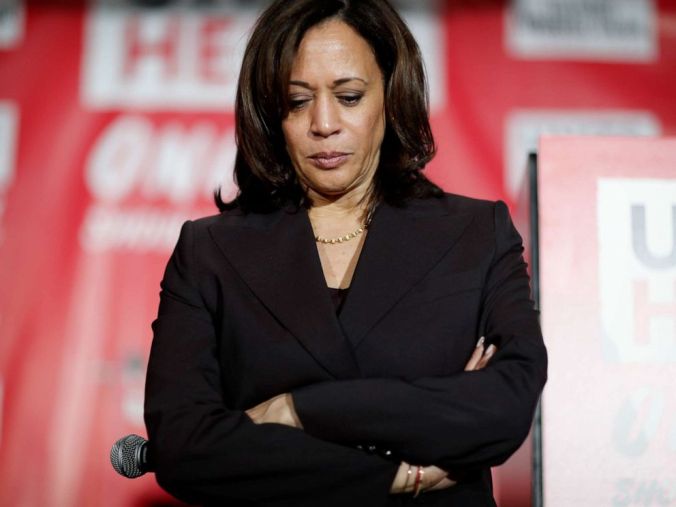
Yes, that ridiculous photo above really accompanied a Washington Post magazine profile on Stacy Abrams. It really did. A few excerpts from the article:

  • “Whether or not she’s chosen as Biden’s running mate, she has moved into a unique space in American politics. DuBose Porter, former chair of the Georgia Democratic Party, told me she is “brilliant,” praise that comes in spite of what some view as a relatively thin political résumé”

Some view!” It’s a ridiculously thin résumé for someone who, we are told,  predicts that “she’ll be elected president by 2040.” It was a thin résumé for someone running for governor of Georgia.

  • “When she is finally introduced the women shout and leap to their feet. Young women stand on chairs, camera phones flash. Abrams, who appears both amused and slightly disturbed by the fuss over her, takes control of the chaotic scene. I’ve witnessed this level of affection for very few political leaders in the Democratic circles I’ve been in since the 1980s. They have the last names Clinton (both Hillary and Bill), Sanders, Warren, Jackson and Obama (both Michelle and Barack).”

Con artists all.

  • “Pandemonium ensues as she walks to the far left of the stage, like a runway supermodel, stops on a dime, poses, tilts her head slightly and smiles. Camera flashes explode. She next pivots and walks slowly to the center of the stage, freezes there and repeats the pose. Again, the flashes explode. Abrams is summoning her inner actress, and she is both enjoying the moment and getting through it to get to the conversation. She then pivots and walks to the far right of the stage, same. You wonder whether she has done this before, because it is not necessarily what one would expect from a 46-year-old politician who was nearly elected the first black female governor in U.S. history.”

Yup, that’s the first thing that leapt to my mind when I saw that photo: supermodel! Continue reading

Hollywood Ethics: The Top 45 Movie And TV Clips Used On Ethics Alarms [Last Update: 1/25/26]

Here is the updated list of iconic movie and TV clips that I turn most frequently to when the circumstances demand.

That’s #25 above, from “Saturday Night Live,” expressing the truth that fixing ethics problems is like sticking one’s finger in a leaking dike...

1. To illustrate the folly of suspending or violating the rule of law, the Constitution, or due process for “the greater good” as it appears to some to be at the time…

From “A Man For All Seasons”:

2. To comment on a strikingly incompetent argument, theory or proposal:

From “Murder by Death”:

3. When I feel I should resist the impulse to attack an ethics miscreant with special vigor, but decide to go ahead anyway…

From “McClintock!”

4.  To explain the conduct of some individuals or organizations that cannot be justified by facts, principles of logic, or any other valid motivation:

From “Blazing Saddles”:

5.  To illustrate the impulse to respond to injustice and the abuse of power by resorting to symbolic acts of pure defiance, even when they are likely to fail…

From “Animal House”:

6. When a individual abandons integrity or other ethical values for a non-ethical consideration…

From “A Man For All Seasons”:

7. When an individual feigns indignation and disapproval of conduct that he or she has either participated in or enabled:

From : “Casablanca”:

8. Used to signal that a politician, journalist or scholar has intentionally or negligently used such impenetrable rhetoric as to be completely incomprehensible.

From “Blazing Saddles”:

9. When an incident or argument makes no sense whatsoever, or that drives me to the edge of insanity:

From: “The Bridge Over The River Kwai” :

10. When a politician, a pundit or someone else  uses a term or word incorrectly to support an unethical action or argument:

From “The Princess Bride” :

11. Warning that a likely event or revelation will contribute to an Ethics Train Wreck already in progress or about to get rolling, or that something is so outrageous that reading or seeing it might prompt cognitive damage in the rational and ethical…

From “Jurassic Park”:

12. Commenting on a particularly incompetent, irresponsible, or otherwise unethical decision with disastrous consequences:

From: “Indiana Jones and the Last Crusade”:

13. To make the point that deciding who are the “good guys” is often hopelessly subjective.

Continue reading

Cemetery Ethics: The German POW Gravestones.

If you encountered that gravestone in a cemetery, would it move you to file a protest? Or to start an advocacy group dedicated to having the marker removed or taken down?

There are two such  gravestones marking the resting places of German prisoners of war in Fort Sam Houston National Cemetery in San Antonio, and another one is in Fort Douglas Post Cemetery in Salt Lake City. They are located among the graves of American veterans, some of whom fought against Germany in World War II. A retired colonel visiting his Jewish grandfather’s grave at the Texas cemetery saw one of the markers with the swastika symbol,  and his complaint moved  the Military Religious Freedom Foundation, which obviously does not have enough on its plate, to demand that the Veterans Administration “do something.”

Apparently in the throes of a strong attack of common sense and possessing functioning ethics alarms, the VA’s National Cemetery Administration has responded to the protest  by stating that it “will continue to preserve these headstones, like every past administration has. All of the headstones date back to the 1940s, when the Army approved the inscriptions in question.”

Mike Weinstein, the founder of the MRFF and a former Air Force officer, deeply feels the pain of having to allow buried soldiers have the emblems of the nations they fought for on their headstones, and is apoplectic about the decision.  “It’s intolerable,”  he said. “This should not require explaining why this is wrong.”

Baseball writer Bill James once wrote that when someone says that that their proposition shouldn’t require explaining, it usually means that they have no valid arguments.

“But..but…” Wienstein sputters, if you translate the German phrase on the the headstones, they read, “HE DIED FAR FROM HOME FOR FUHRER, PEOPLE AND FATHERLAND”! I know I always enjoy translating the foreign languages on headstones over the graves of strangers just in case I can find them offensive. Continue reading

Friday PM Ethics Discoveries, 5/15/2020: A Coup Option On The Way Out, A Narrative Reappears, Trump Tweets, Reasonable Discrimination Opposed, And More

Well let’s check the ol’ ethics box and see what we have today!

1. That’s one coup option down the drain! Based on what reporters heard during the phoned-in oral arguments on Chiafalo v. Washington and State v. Baca, it appears that the Supreme Court is going to rule that states can require electors to vote for the candidates the state’s voters instructed them to vote for. If so, good. That will eliminate at least one of the unethical coup options that were attempted after Trump upset Clinton. You will recall that there was a mass effort to hijack the Electoral College using the rationalization that Alexander Hamilton would have approved.

Lawrence Lessig, the wacko Harvard law professor we have discussed here more than once, represented the electors who were blocked from voting against the electorate’s wishes. Maybe its just me, but if I’m going to be represented before the Supreme Court, I think I’d choose a lawyer who hadn’t announced that he was running for President  as a “referendum president” who would serve only as long as it took to pass some pet progressive legislation, and then would quit and let his VP take over. Lessig obviously does not take elections seriously; no wonder he thinks electors should be free to vote for Chucky Cheese.

2. “Nah, there’s no mainstream media bias!”, Fake History Division.  Adam Liptak, long-time SCOTUS reporter for the Times, writes in his story about #1 above,

“A swing by just 10 electors would have been enough to change the outcomes in five of the previous 58 presidential elections, according to a Supreme Court brief. In the 2000 election, after an assist from the Supreme Court, George W. Bush beat Al Gore by just five electoral votes.”

See how Liptak pushes a progressive narrative in what is supposed to be a news story? There was no “assist”; we now know that Bush would have won Florida’s electoral votes with or without SCOTUS halting the recount. What the ruling in 2000 assisted was the nation having an orderly transfer of power within a reasonable time. Even though the “Bush and the Supreme Court stole the Presidency” lie has been thoroughly exposed as such, Democrats and the news media keeps injecting it into the public’s consciousness by constant repetition. Continue reading

Fake History Ethics, Baseball Division.

Yesterday was the anniversary of a famous day in baseball and American race relations history. From Nationalpastime.com:

May 13, 1947: During the pregame infield practice, a barrage of racial slurs is directed at Jackie Robinson by the Cincinnati fans during the Dodgers’ first visit to Crosley Field this season. Brooklyn shortstop Pee Wee Reese, a Southerner from Kentucky with friends attending the game and captain of the team, engages the black infielder in conversation, and then put his arm around his teammate’s shoulder, a gesture that stuns and silences the crowd.

This  episode in the well-known saga of Jackie Robinson breaking the color line in baseball has taken on the status of legend. It is in the (excellent) biopic about Robinson, “42.” It was re-told in Ken Burns’ documentary “Baseball.” Most enduring of all, the moment is memorialized forever in the statue outside Dodger Stadium—well, forever until Robinson or Reese is cancelled because something unforgivable is unearthed in their past, whereupon UCLA students will pull the thing down as progressives cheer.

I’m preparing a program for the Smithsonian Associates on how baseball has influenced American values, culture, politics, language and society, so it is of special interest to me that there is considerable controversy over whether Reese’s mid-game gesture ever happened. Writes much-lauded baseball essayist Joe Posnanski,

“There is no mention at all of the embrace in the newspapers. Quite the opposite, in fact. The Cincinnati Enquirer wrote that very day that Robinson “was applauded every time he stepped to the plate.” Meanwhile, there is no mention of it in the black press either; Burns insists that the embrace had happened, the black papers “would have done 15 related articles.” There is no photo of it. Robinson’s 1948 book about his first season called “Jackie Robinson: My Own Story” does not mention any such incident….There isn’t a single contemporary account of the embrace in any of the newspapers or magazines.”

Theories abound. The episode happened on a different date. It happened, but not in view of the fans. It is a story that accurately describes what Reese’s support of Robinson—Reese was a white southerner and a team leader, and he and Robinson did become close friends—meant to the black rookie as he battled abuse and racism in that first season of 1947, but there was no literal arm around the shoulder.  Craig Calcaterra, recycling  the controversy yesterday on his NBC blog, theorized, Continue reading

Sexist Broadway Musical Lyric Ethics: Carousel’s “Soliloquy”

“Soliloquy,” also known as “My Boy Bill,” may be my favorite Broadway musical song of all time. (I don’t know, it’s between that and “Losing My Mind” from Sondheim’s “Follies.”) It certainly is among the most ambitious of all the songs from the genre, an emotionally wide-ranging, musical equivalent of a Shakespearean  monologue. Both the song’s lyricist, Oscar Hammerstein, and especially its composer, Richard Rodgers, were at the top of their form when they created it, and the top of their form can match any songwriter who ever lived. It’s also a tour de force for the singer, a seven-and-a-half minute musical mountain that only the very best even dare try to scale

The song comes at a key moment in the plot of “Carousel,” when the brutish and none-too-bright hero, Billy Bigelow, has learned that his wife is pregnant. The arrested-development adolescent muses about the joys and ultimately the responsibilities of his impending fatherhood, and having accepted the fact that his child might be a girl, makes a fateful vow at the song’s climax: Continue reading

Ethics Warm-Up, 5/13/2020….Oh, So WHAT If It’s Morning Or Not? Who CARES? Who Cares About ANY Of It?

1. I miss Ken. Ken White used to troll people who would ask him to post their sponsored content on Popehat. Now that he’s writing for The Atlantic, which morphed into a “resistance” organ and which I refuse to read on principle unless a particular screed is brought to my attention, I no longer get to chuckle at his nonsense mockery post about ponies and the rest. Now I’m getting this junk too. Faith Cormier writes,

I was visiting your website, ethicsalarms.com, and it had me wondering: do you accept outside submissions? If so, we’d love to create an original piece for you!Because it would include a totally natural reference to one of our clients, we’re prepared to pay you $100 for your time and effort. (Payments made through PayPal.) Shall we send you a draft, Jack? Alternatively, if you have any questions, please don’t hesitate to ask.

Yeah, I have a question, Faith. How could you read this blog, with the title “Ethics Alarms,” and make a proposal like that? “Totally natural reference” means a promotion, and that this would be deceptive marketing.  My integrity may have a price some day, but if it does, it will be a hell of a lot higher than a hundred bucks.

2. Ethics movie spoiler.  “Standoff,” is a 2016 film that critics mostly slammed because critics don’t understand ethics movies. A hit man (Lawrence Fishburne) who is chasing a 12-year-old girl who took a photo of him while he was executing people tracks her down to a run-down house where a depressed and alcoholic veteran (Thomas Jane) is living. The veteran, who has some facility with firearms (and who lost his own young son, sending him into his tailspin) decides to protect her, though the hit man demands that he turn her over to be shot. The veteran faces several ethics conflicts after making the altruistic decision to risk his own life to try to save a child who showed up on his doorstep by random chance. The hit man captures a police officer and tortures him to force the girl’s surrender. He then threatens to kill the officer, and does, as the veteran rejects the proffered exchange. Finally, the hit man captures the veteran’s ex-wife, and says he will kill her if he doesn’t get the little girl. (“How do I know I can trust you?” the vteran asks as they are negotiating. “You can’t!” the hit man replies.)

Now that’s an ethics conflict! Continue reading

Sunday Ethics Scripture, 5/10/2020: It Doesn’t Include “Forgiveness”

1. You know…Kool-Aid! Rep. Adam Schiff (D-CA) finally was forced into releasing the transcripts from the House’s investigation “collusion,” one of the more extensive of the multiple Democratic coup attempts. The Federalist explains, :

Former Obama administration defense official Evelyn Farkas testified under oath that she lied during an MSNBC interview when she claimed to have evidence of alleged collusion, a newly declassified congressional transcript of her testimony shows. Farkas testified before the House Permanent Select Committee on Intelligence on June 26, 2017, as part of the committee’s investigation into Russian interference in the 2016 presidential election between Donald Trump and former Secretary of State Hillary Clinton.

Lawmakers keyed in on an appearance Farkas made on MSNBC on March 2, 2017, in which she urged intelligence community bureaucrats to disseminate within the government and potentially even leak to media any incriminating information they had about Trump or his aides.

“I had a fear that somehow that information would disappear with the senior [Obama administration] people who left…[that] it would be hidden away in the bureaucracy,” Farkas said.

[…]

“Why don’t we go back to that sentence that I just asked you about. It says ‘the Trump folks, if they found out how we knew what we knew about their staff dealing with Russians,” [Rep. Trey] Gowdy said. “Well, how would you know what the U.S. government knew at that point? You didn’t work for it, did you?”

“I didn’t,” said Farkas, a former mid-level Russia analyst who left the federal government in 2015.

“Then how did you know?” Gowdy responded.

“I didn’t know anything,” Farkas said.

Writes Matt Vespa, in a distinctly partisan tone but completely accurately,

“Everyone who isn’t Trump deranged knew this was a pile of crap. How many “bombshells” have there been? How many have turned out to be nothing burgers, not even lasting 36 hours in the news cycle because there was never solid evidence to prove such a conspiracy? This is what happens when the entire myth was based on a political opposition research document—the Trump dossier—which was compiled by an ex-MI6 spook Christopher Steele, whose anti-Trump efforts were funded by Democrats and the Hillary Clinton campaign. It was probably never vetted by the FBI, given the glaring errors in it, and it was used as credible evidence to secure a spy warrant against Carter Page, a former Trump campaign official. It was biased political propaganda. This collusion delusion was already debunked in the original Mueller report, which said there was no evidence of Trump-Russia collusion and shredded what was left of the unverified Trump dossier. The Department of Justice Inspector General’s report on the FISA abuses during the Obama administration also took a tomahawk to the dossier. The core of this collusion myth was already dead, but with the exoneration of Michael Flynn, President Trump’s former national security adviser, more pieces are falling off this dead collusion carcass. 

2. And no..I will not forgive, nor will I forget, the arrogant, biased and ignorant people who called me partisan and worse for fairly, objectively and correctly analyzing this historic attack on democracy and accurately calling it a soft coup attempt, one of many. Allowing people who behave this badly to expect forgiveness encourages them to keep being as destructive,  reckless and lazy, and to assume there are no consequences for their conduct. There are, and there should be.

There is a great deal that I will forgive. Not that.

3. Nah, there’s no mainstream media bias! Here’s Friday’s Times headline: “U.S. Drops Pursuit Of Flynn, In Move Backed By Trump.” Shameful. The case was dropped because there was irrefutable evidence that it was illegal and a set-up; that it was the epitome of a wrongful and corrupt prosecution. Never mind: the Times chooses to fuel the desperate spin the AUC (“Axis of Unethical Conduct”) is trying to put on this despite unequivocal evidence and documentation. This is a cover-up by Barr and Trump! Except it isn’t. But the New York Times, the self-proclaimed paragon of American journalism, is using its reputation and visibility to deceive Americans that it is.

I’m not forgiving or forgetting this, either.

4. I finally watched “The Post,” the star-studded film hymn to the glory of our newsmedia that recounts the mostly accurate tale of how the Washington Post and the Times published the Pentagon Papers.  The movie is dominated by progressive Hollywood icons Tom Hanks ( as Ben Bradley) and Meryl Streep (as Katherine Graham). The problem is that it falsely conveys to audiences—and, I believe, was intended to convey—the propaganda that the the Post and the Times are still serving the interests of the nation, the public and democracy by their relentless, courageous and objective search for the truth. As the entire “collusion” debacle proved, they are not (if they ever were). Let’s assume for the sake of argument that was what print journalism was like when the Pentagon Papers were published….in 1971. That was 50 years ago, a full half-century. Today’s journalism is as materially different from journalism then as today’s entertainment, drug laws, sexual mores and fashion would be  unrecognizable to a Seventies time-traveler.