Sunday Ethics Warm-Up, 9/22/2019: Five Ugly Ethics Stories (Sorry!) [Corrected]

A pleasant Sunday…

as long as I don’t read the newspaper or watch the Talking Heads…

1. Before I finish a long post about the most recent contrived Brett Kanavaugh smear by the New York Times, ponder this quote from the Times review of “The Education of Brett Kavanaugh”: “[The authors] come to a generous but also damning conclusion, which is that Blasey Ford and Ramirez are believable and were in fact mistreated by Kavanaugh as teenagers, but that over the next 35 years he became a better person.”

Ugh. The conclusion is “damning” because it relies almost entirely on confirmation bias: Blasey Ford’s own lawyer revealed that her motive in using her “recovered memory” against Kavanaugh was to discredit any future anti-abortion opinions he participated in as a member of the court. The accusation by Ramirez isn’t, apparently, even believable to Ramirez herself, since she says she isn’t certain that the Mad Penis-Dangler was Bret Kavanaugh. Why then, do the authors find the claims “believable”? Oh, because they want to believe them, of course; they work for the New York Times, and they certainly weren’t going to get their book promoted by their employer and snatched up by its readers if they concluded, as objective reporters would, that there is no more reason to believe Justice Kavanaugh did these things than there is reason to believe he didn’t.

The real ugh is this, however: if even these biased analysts conclude that the accusations, even if true, do not have any relevance on the grown man who was nominated to the Supreme Court because they relate to a minor who existed 35 years ago—and who has, as most children do, grown up—then the episodes that their book focuses upon literally don’t matter, shouldn’t have been brought into Kavanaugh’s hearing,  and should not be used now to denigrate and discredit him.

2. From “Social Q’s,” a glimpse of what a malfunctioning ethics alarm is like. Prompting the frequently appearing question in my mind, “How does someone get like this?” was the query into Phillip Gallane’s advice column from a woman who threw herself a birthday party, directed guests not to bring gifts but to make a donation to a charity she supports instead, and was annoyed that some brought gifts anyway. She asked if it would be inappropriate to send the gifts back with a disapproving note so they “would listen” to her “next time.”

I know what I would do “next time”…

3. Hey, sounds great, Facebook! Why wouldn’t everyone trust your judgment? Facebook announced  a series of changes last week to squelch hate speech and extremism—meaning what Facebook and its allies consider such— on its platform in a letter to the chairman of a House panel. Facebook said it would prevent links from the fringe sites 8chan and 4chan from being posted on its platform—you, know like it blocks links to Ethics Alarms!  Then it explained how it would develop an oversight board of at least 11 members to review and oversee content decisions—like the decision that a wide-ranging ethics blog that has no political affiliation or agenda, written by a professional ethicist of some note, doesn’t meet the Facebook “community standards.”

In other, unrelated news regarding the obstacles being thrown in my path, the Appeals Court in Massachusetts finally alerted me that it was taking “under advisement” the request for an appeal of the rejected frivolous defamation suit filed about two years ago by a banned commenter here whose boo-boo I wounded.

(I am not concerned.) Continue reading

Reporting The Mysterious Ukraine “Scandal”: Once Again, I’m Fighting The Urge To Conclude That These Are Just Corrupt, Terrible People


And losing.

When the first notice of the unnamed whistle-blower’s complaint about—well, something involving the President and the Ukraine surfaced on the New York Times front page, in an article that was so devoid of facts, details and corroboration that its only excuse for publication was to titillate Trump-Haters, I wrote,

“This is what the Times considers front page news now. Instantly, “resistance” members and Democrats will leap to the conclusion that whatever it is, it’s impeachable. Those who are thoroughly sick of the successive coup attempts will assume that this is one more concocted sliming by the Deep State, so we can have a “Russiagate” style investigation that will hamstring President Trump’s second term… For my part, I’ll wait for actual facts, thanks. I don’t trust “the intelligence community” not to manufacture ways to undermine the Presidency, not after Comey, McCabe, the FISA fiasco, the FBI lovebirds texts, and Mueller’s statements, among other smoking guns. I don’t trust the Times reporting, I don’t trust President Trump not to do or say something that crosses ethical or legal lines, and I certainly don’t trust Congressional Democrats to determine what are serious transgressions by this President and what are typical maneuvers that have only become ominous because he isn’t Barack Obama.”

Well, I’ve been waiting. As predicted, Democratic impeachment-mongers and Presidential hopefuls are screaming to the skies, and the mainstream media has been flogging the as-yet non-story, another species of fake news, as if it were the Second Coming. Yet here is how the New York Times itself explained the alleged scandal:

What did Mr. Trump do?

In a July 25 phone call, Mr. Trump is said to have pressed the president of Ukraine, Volodymyr Zelensky, to investigate Mr. Biden’s younger son, Hunter, who sat on the board of a Ukrainian energy company. Mr. Trump has seized on an unsubstantiated theory that Mr. Biden was trying to protect the company from prosecution when he called for the firing of Ukraine’s top prosecutor in 2016. Rudolph W. Giuliani, one of Mr. Trump’s personal lawyers, has pushed the Ukrainian government to investigate the matter.

Is “said to have”? By whom? This is not news reporting, it’s gossip. The Biden theory is unsubstantiated? The theory the Times has published multiple stories about regarding the President’s interactions with the Ukraine is far less substantiated.

Why is this coming up now?

Because of an intelligence community whistle-blower who filed a complaint last month about the president’s actions. An inspector general deemed the complaint “credible” and “urgent” and forwarded it to the acting director of national intelligence, Joseph Maguire, who has refused to share it with Congress….

Amazingly, it has now been revealed that the “whistle-blower” did not have  direct knowledge of the communications between President Trump and the foreign leader in question. An official who has been briefed on the matter, however, told CNN that the whistleblower “didn’t have direct knowledge of the communications.” The official said that the concerns and subsequent complaint came in part from the whistleblower “learning information that was not obtained during the course of their work.” That’s hearsay by definition, and means that the report has no probative or evidentiary value whatsoever until it is independently verified. Until then, it is also not news.

What did the whistle-blower claim?

The full extent of the whistle-blower’s complaint, as well as the whistle-blower’s identity, is not publicly known. Reporting by The New York Times and others has established that the complaint involves Mr. Trump’s interactions with Ukraine and a phone call with a foreign leader — possibly, but not necessarily, Mr. Zelensky. It is not clear if it includes other matters.

This is really what the Times itself says. A “whistleblower” from the intelligence community made a complaint about something he was told by an an unnamed party about a private phone call with a yet to be identified official.

Here’s my favorite, though: Continue reading

Comments Of The Day: “Open Forum, Or ‘I Guess I Picked The Wrong Time To Start Driving All Over Virginia!’” (“Profession Of Journalism” Thread)

Today we have a rare tag team Comment of the Day: JutGory raised the provocative ethics issue of what constitutes a profession and whether journalism qualifies, and Rich in Ct, who has been on fire of late, responded with a sharp analysis.

This was all especially propitious, since the I had a dispute with my legal ethics teaching partner during our (very well-received) “Crossfire”-style seminars last week on just this question. He maintains that it is a a myth to pretend that a profession like the the law is called such for any reason other than the fact lawyers engage in it for compensation. Well, he’s wrong. Professions are not merely occupations, but pursuits one undertakes for the good of society. That is why the hallmark of professionals is that they are trusted and trustworthy, and why their compensation is of secondary priority. The desire for profit undermines professionalism by creating conflicts of interest.

My answer to the question posed by JutGory is that journalism must be a profession, because the public must be able to trust journalists for journalism to benefit society. However presents day journalists are driven by motivations far removed from the public good: their personal political agendas, the pursuit of fame and power, and the love of money. It can be a professiona, and should be a profession, but as currently practiced, it isn’t a profession.

Here are JutGory’s and Rich in Ct.’s  Comments of the Day on the “profession of journalism” thread in the post, “Open Forum, Or ‘I Guess I Picked The Wrong Time To Start Driving All Over Virginia!’”

First, here’s JutGory…

Can journalism be a profession?

My profession, law, has a set of ethical rules. It is a club, and it is self-regulating. Is it self-regulating? Yeah. My state gets about 1000 complaints per year, and about 10 percent each year get disciplined. Every year, you get a handful of disbarments. Not overbearing but I know a lawyer who got a 60-day suspension for a “non-legal” infraction and basically threw in the towel. I can empathize. It is like being accused of a crime; it can be hard to deal with. And, you are held to standards.

The press? You can’t be de-pressed? Dis-presses? Unimpressed?

In a free society, with a free press, can you have a profession where there is no way to regulate its participants.

A shorter way to ask the question: can the press be a true profession if Dan Rather can’t be barred from the profession?

Similar question for teaching. The wrinkle with teaching: can a profession governed by labor unions really enforce ethical standards and discipline?

Rich in Ct’s response… Continue reading

The Lying Game Continues: Was There A 9-11 Switcheroo In North Carolina?

A Paul Krugman column this week titled Republicans Don’t Believe in Democracy” began,

Item: Last week Republicans in the North Carolina House used the occasion of 9/11 to call a surprise vote, passing a budget bill with a supermajority to override the Democratic governor’s veto. They were able to do this only because most Democrats were absent, some of them attending commemorative events; the Democratic leader had advised members that they didn’t need to be present because, he says, he was assured there would be no votes that morning.

Elizabeth Warren (via tweet), the Washington Post and other news outlets repeated the same story. It wasn’t true. NPR’s North Carolina affiliate checked the facts with local reporter Paul Specht of the Raleigh News & Observer. He explained how the rumor—for that’s what it was, despite Warren, Krugman, the Washington Post et al. reporting it as fact—got started.

“It’s hard to tell where it started,” Specht told NPR.  “You know, in some cases the news and reporters and other observers were victims of circumstance.’

Baloney, by the way. The “circumstance” here was that reporters didn’t verify the story. Specht is covering for his habitually unethical colleagues.

“The vote happened the morning of September 11. And that morning, as we all know, there’s a national moment of silence…And you, know, I think people just took all that information — they heard keywords, they heard, you know, “Republicans vote,” “Democrats absent,” “9/11,” morning of. And then people jumped to assumptions about where the Democrats were. There were a few outlets both locally here in Raleigh, WTVD, and then national outlets, too, they got it wrong. Whether it was Now This, which posts viral videos, the Washington Post, also, its headline was inaccurate. It took it a little while to correct so misinformation was all over the place.”

Wow! Is American journalism terrific, or what? Continue reading

Morning Ethics Warm-Up, 9/19/2019: Easy Ethics Edition [Corrected]

I’m baaaack!

Ann Althouse has boasted that she has only missed one day of blogging since she started the Althouse blog, long before Ethics Alarms took its first metaphorical breath. This has enlightened me regarding how much time tenured professors must have on their hands. Missing a full two days of ethics commentary, as I did this week, makes me feel like an irresponsible slug-a-bed who is betraying loyal readers who depend on a service, but it was literally impossible for me to research a post, never mind write one, between hotels, meetings with my teaching partner, meals, travel and the seminars themselves. When I finally arrived at home and office, I almost immediately had to handle a long conference call in which I was quizzed on some tricky legal ethics issues, and then was officially brain dead for the rest of the evening. It is hard to think clearly about ethics when one is exhausted. And I still am, but the warm-up format is a relatively safe way to ease myself back into the saddle.

Thanks for your patience and understanding.

1. Getting the really important stuff out of the way first...Sean Spicer made his debut on “Dancing With The Stars.” I posted last month about the double -standards and bias of the pundits who criticized the show for having the former White House spokesman as a contestant, and their animus is still one more example of unethical mainstream media partisanship. However, Spicer taking a pay-off to look ridiculous on national television—he gets $125,000 for each week he “dances” before he is mercifully voted off—is unprofessional, even though increasing numbers of public servants are doing it. Spicer is giving media critics of the President another stick to beat him with, and denigrating his own role as well as the administration by casting himself as a clown.

Spicer was a slow loris even by the miserable recent standards of press secretaries, and emblematic of how the President’s pledge to appoint and hire “the best people” appears in retrospect as a cruel joke. I can’t say I feel sorry for him, still, in presenting himself as target, he has provoked the mistreatment media into exposing its pettiness and apparently irrepressible gratuitous hostility to the President. The New York Times covered Spicer’s terpsichoral misadventures in the politics section, so it could write sections like…

In the White House, Mr. Spicer held a job that has usually been considered a golden ticket to future respectability and financial comfort. His predecessors have landed in lucrative corporate gigs at Amazon and United Airlines, or become the hosts of their own television programs. But trading in his famously ill-fitting suit to become a trending neon GIF felt like the culmination of a different kind of post-White House journey, one that is q.uintessentially Trump.

The job has been a “golden ticket” for “respectability” for recent press secretaries of Democratic administrations, because the mainstream news media seldom had adversarial relationships with Presidents they helped elect. Of course, the Republican varieties who have been hired by Fox News aren’t respectable. Spicer’s fate is “quintessentially Trump” because the current President is the first that the press has refused to grant even minimal respect from the beginning of his administration. Continue reading

Open Forum, Or “I Guess I Picked The Wrong Time To Start Driving All Over Virginia!”

Today’s legal ethics smackdown in Richmond went swimmingly, but I only got home in time to change clothes and head off to the site of tomorrow’s repeat performance. I actually started a post about the unfolding New York Times smear fiasco (and the astounding number of pundits and pols who are trying to spin it away from the only possible and fair conclusion), but I just couldn’t get it done.

I’ll be back in the blog saddle til late tomorrow. Meanwhile, I am once again turning the keys over to you, dear readers. You haven’t let Ethics Alarms, or me, or ethics, down yet.

Go to it.

Signature Significance (Again) From the New York Times: A Trustworthy Newspaper Does Not Do This [CORRECTED]

That would be a more useful rule, of course, if there were any trustworthy newspapers.

The most recent Ethics Alarms filing under “Nah, there’s no mainstream media bias!” appeared yesterday.  A story headlined Brett Kavanaugh Fit In With the Privileged Kids. She Did Not appeared in the Sunday Times, with the sub-head, “Deborah Ramirez’s Yale experience says much about the college’s efforts to diversify its student body in the 1980s.” And why were Yale’s efforts to diversify in the Eighties suddenly worthy of a Times feature in September, 2019? Because the real purpose of the article was not to talk about Yale, but to smear Supreme Court Justice Brett Kavanaugh —again.

Ramirez was Kavanaugh’s Yale classmate  who had told The New Yorker last year during the justice’s confirmation hearings that she’d been severely inebriated at a party at Yale in her freshman year when “something” had happened. She said that “a male student pointed a gag plastic penis in her direction” and  a “third male then exposed himself to her.” The assumption is that the flasher was Kavanaugh, though Ramirez never directly named him. New York Times reporters Robin Pogrebin and Kate Kelly tried to verify the story, and could not. Never mind: they wrote a book anyway.

In “The Education of Brett Kavanaugh: An Investigation,”  they quoted the same individuals the New Yorker had tracked down who said that they “heard about” the incident, as well as Ramirez’s mother, who says—now this is a smoking gun if there ever was one—that  she was told at the time that “something happened” at Yale.

Nevertheless, the Times reporters are convinced that Ramirez’s claim is correct. They wrote,

A classmate, Max Stier, saw Mr. Kavanaugh with his pants down at a different drunken dorm party, where friends pushed his penis into the hand of a female student. Mr. Stier, who runs a nonprofit organization in Washington, notified senators and the F.B.I. about this account, but the F.B.I. did not investigate and Mr. Stier has declined to discuss it publicly. 

Not “fit to print,” apparently, was the that Stier was not only a non-profit executive but also had served as one of Bill Clinton’s defense attorneys. Heck, why should that be relevant to his credibility? But I digress… Continue reading

Ethics Hero: Dave Chappelle

I know: just a week ago, I began the last section of the  day’s warm-up with “He’s not exactly an Ethics Hero, but…Dave Chappelle’s new concert video, now streaming on Netflix, is thought-provoking, brave, and full of ethical insights and analysis. I could do a two hour ethics seminar using just his material.” Several things have changed since then, however…

  • I am desperate for ethics heroes. We all are. If the Democrat candidates debate proved anything, it was that.
  • Chappelle is being attacked, hard, by the very same cancellation culture and political correctness dictators he has been willing to  challenge.
  • There is an organized effort to try to discourage the public from watching his Netflix special “Sticks and Stones,” not because it won’t be funny to anyone still capable of finding things funny, but because it will inspire people to think. Can’t have that…
  • Only one reader, the usually intrepid and culturally aware Humble Talent, commented on the issue last week. Sometimes I think that including a topic in the warm-up rather than devoting a whole post to it causes some Ethics Alarms readers to gloss over the issues involved, or maybe miss the item itself, as if each warm-up topic  is only 20% of a serious ethics topic because there are typically five in a post. The benefit to me of this format is that it saves time (you would not believe how long it takes to set up an individual post after the text is written) and helps me avoid an ethics backlog, but sometimes whether a particular issue is covered in a warm-up item or in a full post is arbitrary, a matter of timing, what else has occurred and my mood at the time.
  • Upon further reflection, I have concluded that Chappelle is an Ethics Hero.

Continue reading

Regarding Felicity Huffman’s Slap-On-The-Wrist

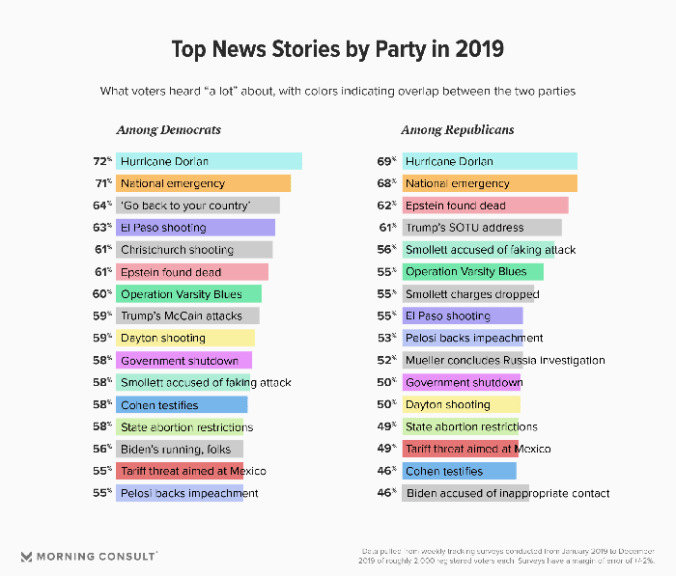
Before actress Felicity Huffman was sentenced for her participation in the rigged college admissions scandal, also known as “Varsity Blues”, the leftist website Salon had already pronounced her treatment by the justice system as racist. It said in part,

Back in 2011 Tanya McDowell was homeless and living in her van. She wanted her five-year-old son to receive a quality education, so she enrolled him in Brookside Elementary of the Norwalk School District. He was later kicked out due to a residency issue, so he transferred to Bridgeport schools.

Police investigated McDowell and charged her with fraud. A year later she pleaded guilty to first-degree larceny and conspiracy to commit first-degree larceny; for these offenses, she received a five-year sentence. Before McDowell started serving it out, she was charged with selling narcotics to an undercover police officer, an offense that killed her community support. McDowell was ultimately given 12 years, to be suspended after she served five, and followed by five years of probation; the narcotic sentence to run concurrently with a five-year sentence she had already received in the Norwalk school case. All of this story, from the over-policing of this mother to the severity of her sentence, along with everything she did, was obviously driven by poverty, which remains synonymous with “guilty” in our lopsided system of so-called justice.

On the other hand, you have a person like Felicity Huffman, who enjoys the many privileges that come with being a rich “Desperate Housewives” star…and having the resources to expose her daughter to educational advantages that McDowell may not have even been able to dream of: tutoring, unlimited books, technology, a safe learning environment, and even an SAT specialist who helps struggling kids obtain high scores. …[T]he actress was arrested in March on mail fraud and conspiracy charges as an outcome of the FBI’s Operation Varsity Blues investigation, and pleaded guilty to mail fraud, after paying $15,000 to allegedly rig her daughter’s SAT scores. Huffman is scheduled to be sentenced in Boston on Friday — for one month in prison, if the federal prosecutors’ recommendation is followed. Huffman’s attorneys have instead asked for a year’s probation, plus community service and a $20,000 fine.

Let’s begin with the fact that this is unethical and dishonest advocacy. Searching for an admittedly terrible prosecution from eight years ago  to contrast with Huffman’s case is contrived racism. The fact that the mother was later legitimately charged with selling narcotics renders the comparison a stretch at best.  In the absence of sufficient numbers of cases across the country to make a valid generalization, Salon’s assumptions are just cheap muckraking.

Stipulated: charging McDowell with larceny for trying to sneak her child into a better school district was a cruel and unethical prosecution; charging her with fraud and seeking a significant punishment was not. The idea was to discourage similar deceptions, no matter how well-intentioned they were.  That is a valid law enforcement objective, and an important one.

What Huffman’s attorneys proposed as appropriate punishment was irrelevant to Salon’s thesis. Their job is to get the actress as light a sentence as possible, and if possible, no sentence at all. We are not told what McDowell’s attorney’s argued on her behalf, because it is also irrelevant, but, I suspect, it was omitted because their recommendations were not that different from those of Huffman’s case. Continue reading

Sunday Ethics Warm-Up, 9/15/2019: Opinions, Ethical And Not

It’s a glorious day here in Northern Virginia!

Makes me feel like things are looking up, even though they probably aren’t.

1. I refer you to the most recent post about “the resistance’s” arsenal of big lies. specifically Big Lie #5, “Everything is terrible.” In the Times’ Sunday Review section, usually a resistance nest to one degree or another, though less so in recent months, Trump Deranged Times columnist Michelle Goldberg offers a long essay beginning with the assumption that current day America is a dystopian society. How does she justify this ridiculous assertion? Referencing the science fiction novel “The Handmaid’s Tale,” in which women in the U.S. “are stripped of their identities and consigned to reproductive slavery for the elite.” Goldberg writes,

“It’s hardly surprising that in 2016 the book resonated with people — particularly women — stunned that a brazen misogynist, given to fascist rhetoric and backed by religious fundamentalists, was taking power despite the wishes of the majority of the population.”

I especially like the “despite the wishes of the majority of the population” part, but the whole statement is dishonest  agitprop. Nobody “took power;” an election took place under Constitutional constraints. Goldberg cannot possibly gauge the “wishes” of the majority, since, as usual, the majority didn’t feel sufficiently concerned about the Presidential election’s outcome to bother to vote, meaning they didn’t “wish” for either candidate to win with enough seriousness or commitment to be  part  of any persuasive analysis. Meanwhile, the President was elected according to the system the United States has operated under since its inception. And describing Trump, who is about as religious as most recent Presidents, which is to say, not at all, was “backed by religious fundamentalists” is as accurate as saying that Barack Obama was backed by anti-white racists.

Read the whole stupid thing. It is irresponsible for a legitimate newspaper to publish such crap, but no more so than for one to employ a biased disinformation specialist like Goldberg as a regular contributor.

2. Once again, Andrew Sullivan finds his way toward calling out unethical journalism. In a recent essay for New York Magazine, the occasionally conservative, gay, religious, emotional but determined truth-teller—as he sees it, anyway—declares  the New York Times a publication that has abandoned journalism for activism.

Two quick reactions: a) Ya think, Sherlock? and b) THIS was your first clue?

He concludes strongly, though, writing, “To present a truth as the truth is in fact a deception. And it is hard to to trust a paper engaged in trying to deceive its readers in order for its radical reporters and weak editors to transform the world.”

Hard? The right word is “irresponsible.”

Related: This excellent essay by Peter Wood expounds further on the duplicity of the Times’ much heralded “1619 Project.” Continue reading